


This article describes the Cross-Chain “Intents” Protocols That Replace Manual Swapping and offer a simplified decentralized finance experience. These protocols offer users the opportunity to handle complex bridges and routes.
Intent-based protocols facilitate automated execution and solvers, resulting in faster transactions, lower fees, and improved pricing, which ultimately cross-chain transactions seamless, efficient, and simplified, regardless of the users’ experience across different blockchain ecosystems.
What is an intent-based protocol?
Protocols based on user intent allow participants to detail the end goal of a transaction as opposed to executing the individual steps. Users do not select pathways, connectors, or bridges. Instead, users input an intent to goal (e.g., perform an exchange of Token A on one chain for Token B on another).
Decentralized solvers or relayers then compete to satisfy the intent in the most efficient manner. The resulting intent completions abstract the complexity of an operation, optimize the available price offerings, and minimize the gas costs.

Combined with automated routing and execution, intent based systems provide simplification, speed and ease of operation for cross-chain interfaces in DeFi.
Key Point & Cross-Chain “Intents” Protocols
| Protocol | Key Point |
|---|---|
| Across Protocol | Uses intent-based bridging where relayers compete to fulfill user requests instantly, reducing latency and eliminating manual route selection. |
| UniswapX | Off-chain intent system with fillers executing swaps, enabling gasless transactions and better pricing through competitive Dutch auctions. |
| 1inch Fusion | Combines aggregation with intent-based execution, allowing resolvers to fill orders off-chain while minimizing MEV and slippage. |
| CoW Protocol | Matches user intents via batch auctions, preventing front-running and ensuring optimal pricing without manual trade routing. |
| Socket (Bungee) | Intent-driven cross-chain execution layer that abstracts bridges and DEXs, automatically finding the best route for users. |
| LI.FI Protocol | Aggregates bridges and DEXs into a single intent layer, enabling seamless cross-chain swaps without needing manual interaction. |
| Anoma | Fully intent-centric architecture where users define desired outcomes and solvers handle execution across chains privately and efficiently. |
| SUAVE (Flashbots) | A decentralized block-building and intent execution platform that separates order flow from execution to reduce MEV risks. |
| Essential (Intent-Based Infra) | Focuses on programmable intents where developers define outcomes and solvers compete to execute them efficiently. |
| Chainflip | Native cross-chain AMM that removes wrapped assets and enables direct swaps via validator-based intent fulfillment. |
1. Across Protocol
Across Protocol bridges cross-chain transactions by allowing users to create intents by defining the end result, rather than the steps involved in the cross-chain transaction.
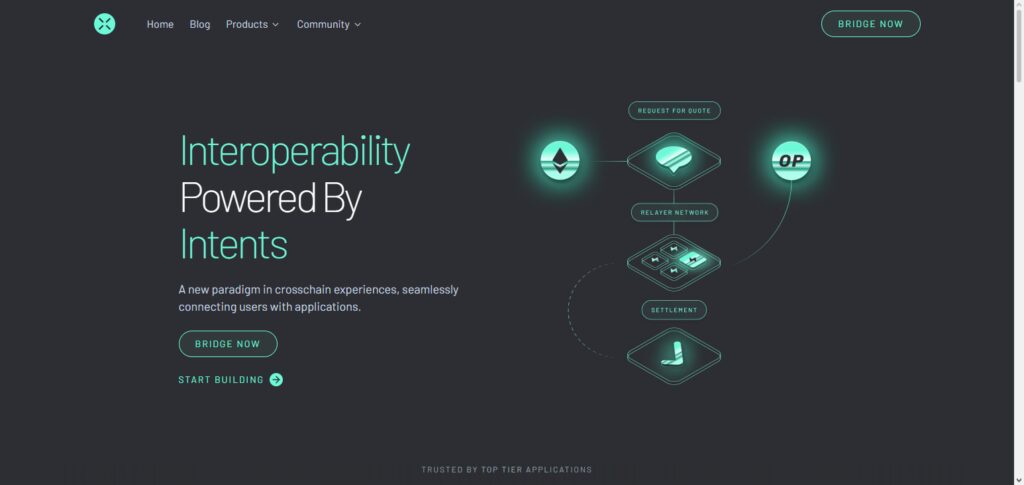
Using relaying networks and optimizing verification to ensure security. Across’s proprietary technology and optimized liquidity routing cross-chain, delivers low-cost and time-efficient transactions.
Its liquidity routing technology and verification to ensure disputed settlements, its user interface for speed and low-cost transactions, makes Across a high quality benchmark in cross-chain transaction.
Across Protocol Features, Pros & Cons
Features
- Cross chain transfers based on intent
- Utilization of a cross chain relay for quicker transfers
- security model based on optimistic verification
- Liquidity pools that are more efficient on capital
Pros
- Increased bridging speed
- Changed bridge cost
- Improved user experience. No more manual routing needed.
- Increased capital efficiency
Cons
- Relayer dependency
- Less chain coverage than most aggregators
- Possible delays for dispute resolution
- Ecosystem is still evolving
2. UniswapX
Uniswap X is a new decentralized exchange (DEX) built for cross-chain transactions and intent-based execution.
Uniswap X directs users to sign off-chain orders, then send the orders to fillers (3rd party traders) responsible for the price execution and order transparency.
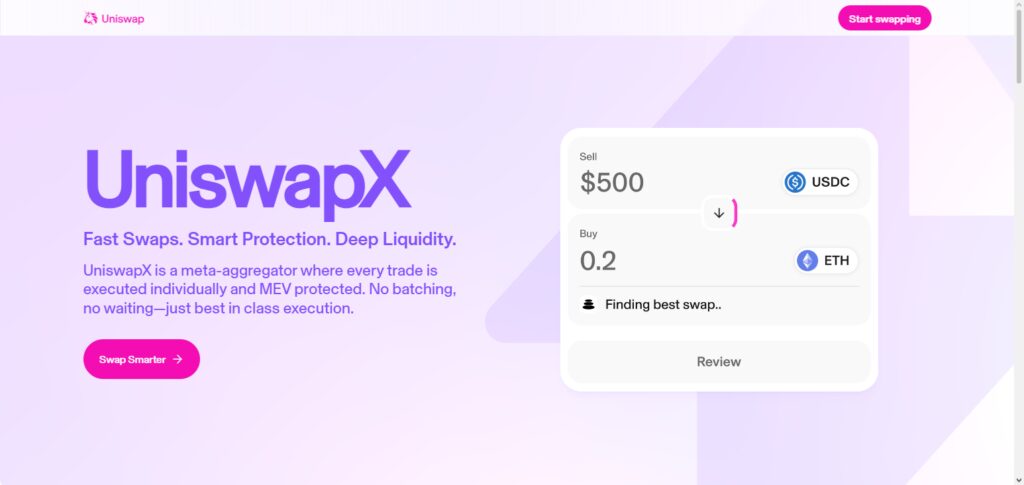
This method of trading reduces gas costs and avoids MEV attacks, allowing for decoupling of trading activities (order execution and price transparency) and settlement to be done on the blockchain.
https://coinroop.com/10-best-qzino-casino-alternatives-for-safe-online-gaming/Uniswap X adopts a user-centric trading method and better price execution and order transparency.
UniswapX Features, Pros & Cons
Features
- Order system based on intent that is completed off-chain
- Pricing mechanism based on dutch auction
- External fillers perform trade execution
- Users experience gas-free swaps
Pros
- Lower gas prices
- Massive protection against MEV
- Greater protection against unfavorably priced trades
- No more failed trades
Cons
- External fillers are the basis for this trade execution model
- Not all trades are supported and as a result chain trade execution is limited
- Complex trade routing is involved
- Adoption is still in the infancy stage
3. 1inch Fusion
The traditional aggregation model has been improved by 1inch Fusion due to the incorporation of intent-based trading.
Professional resolvers trade off-chain to achieve the best prices and the lowest slippage. 1inch Fusion is also designed to limit exposure to MEV by executing transactions privately.
Fusion’s most unique feature is order routing based on auctions where resolvers bid for the order at the best price.
There is no need for users to execute the strategy. This patent pending feature of aggregation, privacy and intent based design provides a unique swapping experience.
1inch Fusion Features, Pros & Cons
Features
- Swap execution is based on intent
- Order resolution based on a resolver system
- Pricing is based on auction models
- MEV protection is built into this system
Pros
- Trade execution is optimized
- Minimization of slippage
- Increased privacy
- No more need for manual routing
Cons
- Trust in the resolver is necessary
- Speed may be sacrificed for swaps that are instant
- Limited liquidity for less popular pairs
- Increased complexity for less experienced users
4. CoW Protocol
CoW Protocol (Coincidence of Wants) has implemented intent-based trading by creating direct matches between users.
Instead of routing trades to liquidity pools, the Protocol identifies overlapping intents, meaning less dependency on external liquidity.

At the center of the Protocol are solvers that optimize trade completion to protect users from front-running and MEV. This ensures better prices and equitable outcomes.
By consolidating trade orders and processing them simultaneously, the Protocol augments efficiency while lowering operational expenditures. Decentralized trading has been improved by shifting emphasis from execution to user outcomes.
CoW Protocol Features, Pros & Cons
Features
- Trading system based on batch auctions
- Matching based on a Coincidence of Wants model
- Execution based on a solver
- Protection against MEV is built into this system
Pros
- Strong MEV protection
- Pricing is optimized
- Reduced slippage
- Execution that is fair and transparent
Cons
- Execution speed may be sacrificed
- Highly efficient solvers
- Narrow token scope
- User education on batch model required
5. Socket (Bungee)
Socket is powering the Bungee interface and is the first intent-driven blockchain interoperability layer. Socket simplifies the user experience of bridges and decentralized exchanges by telling users what they can achieve as opposed to how they can do it.
As such, Socket (Bungee) has built-in liquidity and route optimization, which takes away manual decision making and lowers the likelihood of dead transactions.

Additionally, Socket has a modular style design that allows developers to seamlessly build cross-chain applications, making automation and user efficiency a priority.
This has allowed Socket to become the increasingly important layer of Web3 to allow users to interact cross-chain seamlessly.
Socket (Bungee) Features, Pros & Cons
Features
- Execution layer for intents cross-chain
- Multi-bridge and DEX aggregation
- Refined routing
- SDK for developers
Pros
- User experience cross-chain is unified
- Integration across ecosystem
- Efficient routing
- Transactions that fail are reduced
Cons
- More complex aggregation
- Third-party bridges become necessary
- Worse routing
- Exposure to smart contract risk
6. LI.FI Protocol
LI.FI Protocol is a cross-chain aggregation protocol that simplifies complex cross-chain swaps by merging multiple decentralized exchanges and bridges into one interface.
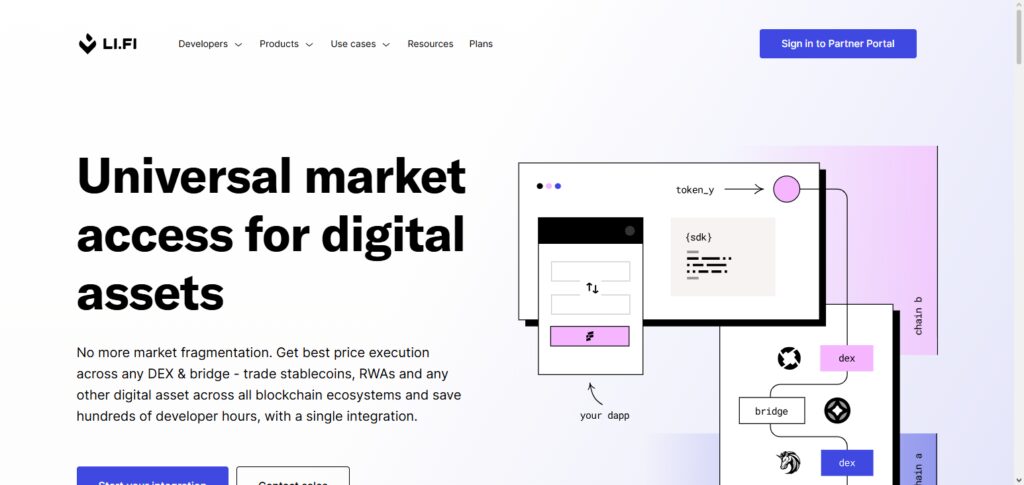
It also helps back-end processes by routing cross-chain swaps with minimal steps so that users do not have to select bridges, which lowers the likelihood of dead transactions.
Developers can add cross-chain functionality to their applications by incorporating LI.FI. Its focus on interoperability and automation has made it a simplified decentralized finance workflow.
LI.FI Protocol Features, Pros & Cons
Features
- DEX and Bridge aggregation
- Intent-based routing
- API/SDK available for developers
- Multi-chain protocol
Pros
- All chains available
- Cross-chain swaps made easier
- Integration made easier
- Routes are priced optimally
Cons
- External protocols relied on
- Routing dependent ecosystem are complex
- Route dependent fees
- Integration dependent security
7. Anoma
Noma introduces a new way to block the workflow based on the user’s intent rather than executing the transaction themselves. This means that the solvable outcomes are the only outcomes processed at the transaction layer.
Anoma is a privacy-centric system, which means the transaction layer is not privy to the details of sensitive private outcomes.

Anoma’s architecture, like other privacy-focused tech, is built on separating the expression of intent from the outcomes to allow for easier coordination across the ecosystem, which, in turn, allows for the coordination of complexities across multiple chains.
A new model for user-centric and scalable interactions with blockchains is the goal of Anoma to enhance the decentralized ecosystem.
Anoma Features, Pros & Cons
Features
- Privacy-preserving trans
- Cross-chain interoperability
- Decentralize solver networks
- Closed loops
Pros
- The model for execution is highly flexible
- excellent privacy
- Architecture that adaptable
- More complex use-case supported
- Scalable
Cons
- Adoption reality is limited
- Development of the system is complex
- Development & Design are early stages
- Requires developers to think differently/
8. SUAVE (Flashbots)
Flashbots SUAVE is a decentralized platform that is built on the separation of transaction ordering from execution. This is done in an intent-based way, whereby the user submits an intent order as opposed to an order flow themselves, which is acted upon by an order-flow executor.

Within the dominant chain, SUAVE (Flashbots) solves MEV by establishing an ordered competition for order-flow auctions, thus curtailing and compensating transaction manipulation, which enhances the system’s fairness.
It also provides the means for order-flow manipulation to be countered through cross-chain execution. SUAVE is a significant advancement for decentralized systems by establishing the means for blockchain transactions to be more efficient.
SUAVE (Flashbots) Features, Pros & Cons
Features
- Intent-based order flow
- Cross-chain execution layer
- Decentralized block-building system
- MEV risk mitigation
Pros
- Fairness of transactions improves
- MEV exploitation is less
- Advanced trading offers flexible execution environment
- Strategies
Cons
- The system is complex
- tools for end users are limited
- The ecosystem determines adoption
- Experimental
9. Essential (Intent-Based Infra)
Essential is a new layer of infrastructure focused on programmable intents across decentralized apps. It enables developers to set the outcomes and conditions and leave the execution to competitive solvers.
This model further decentralizes systems and adds to their flexibility and efficiency. Central to the framework of Essential (Intent-Based Infra) is modularity, which allows for the development of cross-chain and cross-application integrations.
It automatically solves execution logic, simplifying the construction of cross-chain solutions. With a focus on developer tooling and a scalable system, Essential is fostering the widespread use of intent-based technology in Web3.
Essential (Intent-Based Infra) Features, Pros & Cons
Features
- Programmable intent systems
- Modular infrastructure design
- Solver-based execution
- Cross-chain compatibility
Pros
- Well-structured developer tools
- Simple integration
- Less execution simplification
- Application scalability and execution simplification
Cons
- Ecosystem still developing
- Adoption is still low
- Technological understanding is needed
- Standards indefinite
10. Chainflip
Chainflip is a decentralized cross-chain automated market maker that allows direct asset swaps across blockchains without the need for wrapped tokens.
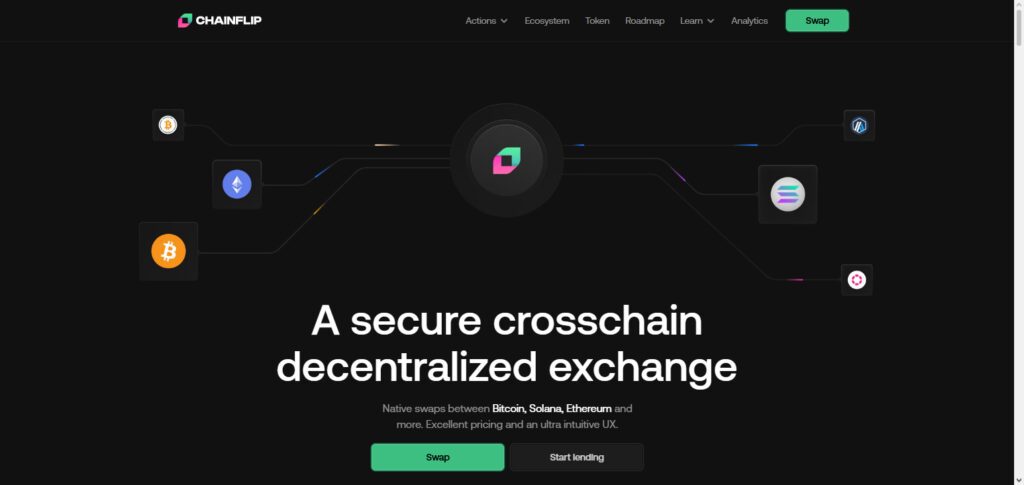
It utilizes a system of validators to execute and secure swaps. At its core, Chainflip employs intent-based systems for order matching and trade execution. This means there is no requirement for a central exchange or manual bridging to facilitate cross-chain trade.
The native liquidity pools of Chainflip guarantee competitive rates and sufficient liquidity. By minimizing the need for bridges and streamlining the process of cross-chain trading, Chainflip provides a safe and simple solution for users wanting to trade in decentralized finance.
Chainflip Features, Pros & Cons
Features
- Native cross-chain AMM
- No wrapped tokens required
- Validator-based network
- Direct asset swapping
Pros
- True cross-chain swaps
- Wrapped asset risk is eliminated
- Validators provide high security
- Price is low
Cons
- Validator reliance
- Limited liquidity
- Risk is higher with newer protocols
- Less ecosystem compared to DEXs
Criteria for Selecting the Best Intent Protocols
Cross-Chain Compatibility
Users should never have to switch networks for an execution to happen. An intent solution should enable the free movement of users’ assets across and within all operating blockchains.
Speed and Efficient Execution
Users should a. minimal waited time; and b. better success rate with the system to automatically choose the best relayer or cross-chain execution solvers to best routed a transaction.
Protection from MEV and Other Attacks
Protocols that protect their users from MEV, front-running, and other exploits are what users should go for. Those that have private mempools, auctions, and other transaction protection mechanisms.
Trade Execution and Pricing
Aggregating protocols give users the best prices with the least amount of slippage with optimal trade execution. This is without users having to do the hard work of checking bridges and DEXes.
Distributed Solvers or Relayers
By having a pre-distributed system, protocols can ensure without a single point of failure, unmonitored independence, and better execution distributed competitive, non-monitored pre-execution.
Developer Ecosystem and Integrations
The best intent protocols have strong developer tools, SDKs, APIs, and other documentation to easily integrate intent features within other applications. This is critical for DeFi to grow, and for protocols to expand.
Pricing Model and Value for Money
Clear and competitive pricing models are important. The protocol must minimize gas fees and hidden costs, and provide value through efficient execution and optimized routing.
Trustworthiness and Success Rate
Trustworthy protocols ensure consistent execution even when there is congestion or volatility which reduces the number of failed transactions and improves the user experience.
Adaptability and Long-Term Value
Protocols that are likely to lead in the long run are those that continue to adapt and add features such as AI, privacy, and better execution models in intent focused infrastructure.
Benefits of Using Intent-Based Cross-Chain Protocols
Streamlined User Journey
In this scenario, users only name the end goal they wish to achieve. Users should not have to make multiple manual inputs to assist them in these actions, including which bridge, which pathway, which exchange, etc., cross-chain interactions become vastly more user-friendly.
Quicker Execution of Transactions
In comparison to other protocols, intent-based approaches result in significantly better transaction completion time due to the relay system as users are incentivized to assist as quickly as possible.
Less Gas Fees
Less gas fees, less approvals, and less confirmations, are the result of off-chain logic, fewer unnecessary transactions, and more optimal pathways to execute transactional logic.
Pricing and Slippage Improvements
Optimized routing through Automation for Decentralized Exchanges not only assists in improving the overall price for a user due to less slippage, but also prevents the manual routing through the decentralized exchanges to an inadequate and inefficient level.
MEV Protection
Intent-based protocols are more frequent in front-running and sandwich attacks due to the use of private mempools, batch auctions, and off-chain execution.
Abstraction of Cross-Chain Functionality
Users no longer need to interact with complex cross-chain features to transact across multiple blockchains. Users aren’t required to understand the underlying technical aspects.
Transaction Failures Less Likely
The professional relay systems reduce the chances of transactions failing. Users are not required to manually execute any actions to save gas, time, and frustration, especially during volatile market conditions.
Efficient Use of Capital
Routing that has been optimized together with the strategic use of liquidity ensures that all available funds are used without leaving excess amounts liquid, thereby providing the ability to settle transactions without having to lock assets during cross-chain transfers.
Improved Security Paradigms
Relatively new bridges have better security than traditional bridges due to the use of fragmented execution, advanced verification, and new decentralized relayer security networks.
Cutting Edge Technology
Systems that are built to be intent-based and cut new pathways to be able to integrate new technologies, including Artificial Intelligence (AI) and Automation. This allows them to form the first building blocks for the new generation of decentralized applications.
Risks and Challenges
Reliance on Solvers/Relayers
Execution depends on the user intent relay. If there is low participation or centralization, there is the risk of delays, censorship, and a lack of competitive pricing.
Risks Related to Smart Contract Design
The protocols that process intent rely, like all DeFi systems, on complicated smart contracts. New and unaudited systems are particularly vulnerable to bugs, exploits, and poor fund protection as a result of a poor system design.
Risks with Cross-Chain Systems
Despite numerous advancements in the cross-chain environment, some risks remain. Exposed cross-chain systems are vulnerable to hacks and asset loss from unprotected transfers.
Distribution of Liquidity
Aggregation helps with some of the problems presented by cash flow being distributed across a range of chains and protocols, ultimately resulting in poor execution or higher slippage.
Anticipated Performance of Decreased Execution Speeds
The design of intent-based systems will likely require the following complex architectures: off-chain execution, auctioning, and a network of solvers. Each of these areas is likely to result in significant technical glitches or inefficiencies.
Delayed Execution for Final Settlements
Firms using optimistic systems will likely see the longest delays in execution, delays in the execution of final settlements, and delays in the verification that will be required to complete a transaction.
Risks of Limited Usage
For the time being, few protocols will enter the market due to incomplete development, and others will simply be less prepared to handle unexpected failures from extended stretches of low use.
Unclear Regulations
With the ever-changing landscape of cross-chain and intent-based systems, regulations remain to be seen. New rules may be applied to the inner workings of these protocols with regard to new actors like solvers.
Trade-Offs Between Transparency and Privacy
Certain protocols may be more private. This could lead to a decrease in the transparency of the execution process. Potentially, there may be more concerns regarding fairness and trust, the visibility of pricing, or the behaviors of solvers.
Issues with Integration and Compatibility
Intent-based systems are not yet widely adopted by all wallets, dApps, or chains. This creates friction for users and developers aiming to integrate these protocols or to engage with them in a fully unobstructed manner.
Conclusion
Cross-chain protocols based on intent are simplifying decentralized finance by removing the need for complex and manual swapping with simple, driven by outcomes, automated executions.
These infrastructures improve user experience and provide faster transactions, lower fees, and better pricing all by utilizing solvers, relayers, and aggregated liquidity. There are challenges, however, with reliance on third parties, security concerns, and adoption challenges remaining at the forefront.
The intent-based infrastructure, however, provides Web3 the ability to perform cross-chain simplistically with structured integrated technology. These protocols improve the decentralized ecosystem by placing focus on safety and technology in order to enhance the user experience, efficiency, and overall ecosystem.
FAQ
How do cross-chain intents work?
Users submit an intent (e.g., swap tokens across chains), and decentralized solvers compete to fulfill it. The protocol selects the best execution path, handling bridging, swapping, and settlement seamlessly.
Are intent-based protocols better than traditional swapping?
Yes, they simplify the process by removing manual steps, improving pricing, reducing gas fees, and minimizing transaction failures compared to traditional cross-chain swapping methods.
Do intent protocols reduce gas fees?
In most cases, yes. By optimizing execution and reducing unnecessary on-chain interactions, intent-based systems can significantly lower overall gas costs for users.
What is the role of solvers or relayers?
In most cases, yes. By optimizing execution and reducing unnecessary on-chain interactions, intent-based systems can significantly lower overall gas costs for users.
What is the future of intent-based DeFi?
Intent-based systems are expected to become a foundational layer in Web3, enabling automation, AI-driven execution, and seamless cross-chain interactions across DeFi, NFTs, and beyond.