


KYC Verification Brands Dominating Fintech has established itself as one of the critical pillars of the modern fintech landscape that enables secure digital onboarding, deprives criminals and fraudsters of financial oxygen, and allows governments to avoid wrack and ruin in regulatory compliance.
To cater to the growing population of digital banking and online transactions, advanced identity verification platforms are forming the pillar blocks between safety and trust.
Top players AU10TIX, Sumsub, and Onfido are responding to this need by changing how fintechs verify users by accurately identifying risk with the help of AI instantaneously in real-time.
10 KYC Verification Brands Dominating Fintech in 2026
| Brand | Key Point |
|---|---|
| AU10TIX | Known for enterprise-grade AI fraud detection, deepfake prevention, and 98%+ verification accuracy for fintech and crypto onboarding. |
| Sumsub | Dominates fintech and crypto with an all-in-one KYC, KYB, AML, and transaction monitoring ecosystem across 220+ countries. |
| Onfido | Popular among banks and fintech firms for AI-powered biometric verification and strong global compliance coverage. |
| Jumio | Trusted by regulated financial institutions for enterprise compliance, AML screening, and strong U.S. regulatory alignment. |
| Veriff | Excels in fast onboarding, video-based identity verification, and support for 12,000+ global ID documents. |
| Persona | Widely adopted for customizable KYC workflows, risk-based authentication, and flexible fintech integrations. |
| Trulioo | Strong cross-border verification provider with extensive international data coverage and AML screening capabilities. |
| Entrust | Expanding rapidly in fintech identity verification through integrated digital trust, identity, and cybersecurity services. |
| Shufti Pro | Recognized for automated KYC and AML verification with strong multilingual and global document support. |
| Stripe Identity | Gaining traction among fintech startups because of seamless API integration within the broader Stripe payments ecosystem. |
1. AU10TIX
AU10TIX is a giant and a well-established KYC verification brand that leads fintech in 2026, with events from AI-powered identity verification systems to ultra-advanced fraud prevention. The platform aims to assist banks, fintech startups, crypto exchanges, and payment companies in automating the customer onboarding process while minimising identity theft and document forgery risks. In fact its technology that real-time verifies passports, driving licenses, national IDs, and biometric data with super accuracy.


While the company focuses on all identity-related fraud, it has a prominent position for threat detection of synthetic IDs and deepfakes, as well as suspicious onboarding patterns utilizing machine learning and behavioral analytics. AU10TIX is the provider of choice by many global fintech firms looking to improve onboarding speed, strengthen AML compliance support and reduce operational costs while supporting international KYC across multiple countries and Financial sectors.
Core KYC Features
- AI-powered document verification
- Deepfake and fraud detection
- Biometric facial authentication
- Real-time AML compliance screening
Best For
- Crypto exchanges
- Digital banking platforms
- Fintech payment apps
- Online lending companies
2. Sumsub
Sumsub is among the fastest-growing brands in KYC verification for fintech since it offers an end-to-end identity verification ecosystem to digital finance platforms. Has KYC, KYB, AML screening on a single platform to provide an integrated solution for compliance management globally.
With this, it supports verification across 220+ countries and regions with multilingual document recognition & biometric authentication systems. With fast onboarding, excellent compliance tools in place, customizing workflows, and reducing customer verification friction while remaining compliant, Sumsub is a widely adopted solution for crypto exchanges, neobanks, digital wallets & trading platforms.
Core KYC Features
- KYC and KYB verification
- Transaction monitoring tools
- Liveness and biometric checks
- Automated AML risk analysis
Best For
- Global fintech firms
- Cryptocurrency platforms
- Neobanks and wallets
- Trading and investment apps
3. Onfido
Onfido is a leading fintech KYC provider that integrates AI-driven identity verification with biometric facial recognition technology. With its ID card verification that runs government-issued IDs alongside live selfie verification, this platform also helps businesses remotely verify users, thereby lowering impersonation risks during onboarding.

Onfido has become the leading document verification solution for financial institutions looking to win and retain customers with a frictionless onboarding experience while backing it up with some of the strongest fraud detection technology available.
To project the trust of customers, to automate manual verifications during onboarding processes and compliance with government anti-money laundering checks & identity verification, they cater their services for digital banks, insurance firms, online lending platforms, as well as providing lead management solutions, because these are all a part of incumbents in this ecosystem.
Core KYC Features
- Facial biometric verification
- Government ID validation
- AI-based fraud detection
- Automated customer onboarding
Best For
- Online banking services
- Insurance technology firms
- Digital finance apps
- Consumer lending platforms
4. Jumio
Out of the myriad brands, Jumio is one of the most trusted enterprise KYC verification brands used for banks, fintech companies, and regulated financial institutions worldwide. It offers AI-powered solutions that help businesses comply with specific, complex requirements related to financial regulations, such as identity verification, biometric authentication, AML screening, and risk assessment.

The firm is famed for its leading identity proofing technology that performs live document, facial biometric & digital id verification checks. Jumio is a provider of fraud prevention, fast onboarding, and regulatory compliance automation solutions across banking—cryptocurrency—insurance, online payments & more.
Core KYC Features
- Identity proofing technology
- Biometric authentication systems
- AML screening solutions
- Risk-based verification checks
Best For
- Enterprise banking institutions
- Regulated fintech companies
- Crypto trading platforms
- Financial compliance teams
5. Veriff
It’s time for your next visual breakthrough: Veriff has become the brand of KYC verification in a fast and accurate online identity verification technology. The business powers the validation of government-issued identification documents all over the world and utilizes AI systems to verify customers with facial recognition, document verification, and fraud detection systems.
Due to its rapid onboarding process and tight security infrastructure, the platform is a favourite with fintech firms, online marketplaces, and other businesses in sectors like crypto exchange or digital payments. Veriff provides video verification and risk analysis tools that prevent identity theft, account takeover fraud, and fake user registrations for companies.
Core KYC Features
- Real-time identity verification
- Video and selfie authentication
- Fraud prevention analytics
- AI-powered document checks
Best For
- Digital payment providers
- Online marketplaces
- Crypto finance platforms
- Mobile banking apps
6. Persona
Persona is a fintech identity verification company that has experienced incredible growth and now provides highly flexible, customizable KYC workflows. They will enable businesses to tailor their verification systems based on the risk posed by customers, regulatory requirements or whether onboarding is needed in various financial services sectors.
The firm provides document verification as well as selfie-authentication, database checks, AML monitoring, and fraud detection solutions using a developer-first infrastructure. Persona is a popular choice for startups and digital financial platforms in the fintech domain that want to deliver speedy customer onboarding experiences while retaining strong regulatory compliance controls, enabling global operations.
Core KYC Features
- Customizable KYC workflows
- Database identity verification
- AML monitoring systems
- API-based onboarding automation
Best For
- Fintech startups
- SaaS financial platforms
- Online service marketplaces
- Modern banking applications
7. Trulioo
Trulioo —Well-known for its strong international coverage and wide-ranging data verification network. It aids Fintech ventures in providing identity verification for individuals and enterprises, utilizing the power of ID doc, government database, watchlist & AML screening technology across multiple countries/jurisdictions.

The platform comes in especially, of course, for the cross-border fintech services as it makes international customer onboarding much simpler and easier to comply with regulations. With KYC and KYB solutions that scale, Trulioo helps digital banks, payment companies, crypto platforms, and online financial institutions lower risks of fraud while increasing confidence in their digital transactions.
Core KYC Features
- Global identity verification
- AML watchlist screening
- KYB business verification
- Cross-border compliance tools
Best For
- International fintech firms
- Payment gateway companies
- Digital banking services
- Global e-commerce finance
8. Entrust
With decades of experience in identity authentication, digital security, and cybersecurity services, combined with their new infrastructure solutions, the Entrust ecosystem has made great strides within fintech ID verification. The firm offers biometric verification, identity proofing, and user onboarding as well as authentication in banks, government departments, and fintech firms.
Enterprise-grade digital trust infrastructure and high-level security standards are hallmarks of the platform. Fintech companies in need of fraud prevention, digital transactions security with KYC and AML solutions across the world to comply with regulations can bring it on top of Entrust for a better user authentication solution as well.
Core KYC Features
- Digital identity proofing
- Biometric security authentication
- Fraud prevention systems
- Secure onboarding infrastructure
Best For
- Enterprise fintech providers
- Government financial systems
- Large banking organizations
- High-security payment networks
9. Shufti Pro
Shufti Pro is a global KYC verification solution that uses AI for identity authentication and AML compliance of fintech firms. It enables you to conduct document verification in several languages, authentication through facial recognition, and live customer identity checks around the globe within seconds.

Due to its speed of verification and automated compliance processes, it is widely used by crypto exchanges, fintech startups, online banking platforms, and e-commerce businesses.
It enables organizations to reduce onboarding delays by not having to wait for the availability of a verification staff member, and prevents identity fraud while remaining compliant with international financial regulations as well as anti-money laundering standards.
Core KYC Features
- AI-powered identity verification
- OCR document recognition
- Facial recognition technology
- AML compliance monitoring
Best For
- Crypto exchange platforms
- Online banking companies
- Fintech startup ecosystems
- E-commerce payment systems
10. Stripe Identity
Because Stripe Identity integrates seamlessly within the larger payment ecosystem that is provided by Stripe, it has grown into a highly effective KYC solution for fintech. This platform enables customers to verify identities through checks against government-issued documents, as well as with a selfie-based biometric verification, in the middle of payment and onboarding processes.
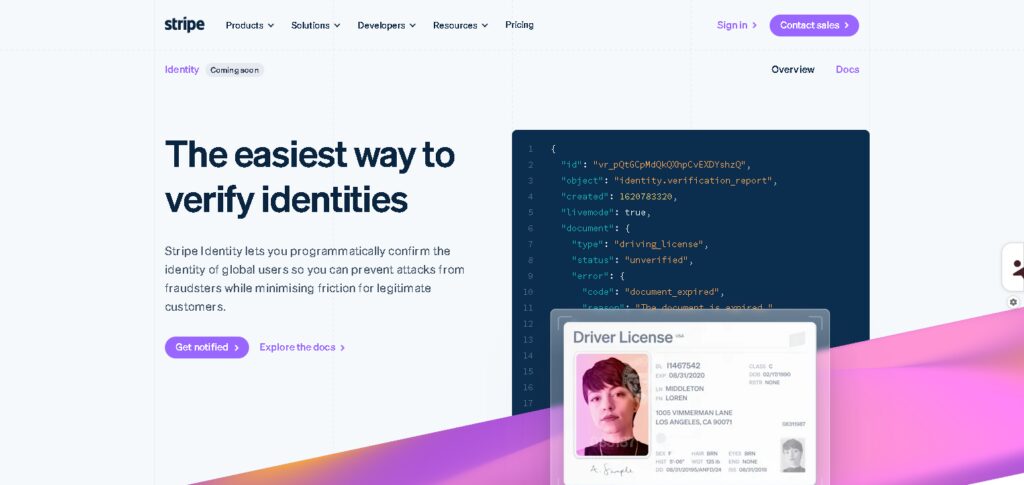
Stripe Identity is preferred by many fintech startups and online financial platforms for its simple mission API integration, developer-friendly tools, easy-to-understand pricing model & user experience. It aids businesses in mitigating fraud, increasing consumer trust, streamlining onboarding processes, and complying with various financial regulations as they grow global digital payment operations.
Core KYC Features
- Government ID verification
- Selfie-based authentication
- Fraud detection monitoring
- API integration for onboarding
Best For
- Stripe-powered businesses
- Fintech startup companies
- SaaS payment platforms
- Digital commerce applications
Importance of KYC Verification in Modern Fintech
Prevents Financial Fraud
Fintechs leverage KYC verification to catch fake identities or synthetic accounts in their initial stages, protecting themselves from fraud and huge financial losses by filtering suspicious users during the onboarding process.
Ensures Regulatory Compliance
This also enables compliance with international laws such as AML (Anti-Money Laundering) and FATF guidelines, which helps companies avoid penalties and retain the authority to operate.
Strengthens Customer Trust
Through validation, users are more confident in your digital financial platforms, and banking, payments, and investments are safer.
Improves Onboarding Security
KYC systems help restrict non-legitimate users from accessing financial services and prohibit unauthorized access to platforms when accounts are created.
Reduces Money Laundering Risks
KYC, or Know Your Customer, is a process that financial institutions employ to identify and authenticate their clients. KYC systems are instrumental in preventing illegal financial activities such as money laundering and terrorist financing by verifying user identities and monitoring transactions.
Enhances Risk Management
By having access to KYC data, fintech companies can identify the risk profiles of customers that may potentially be fraudsters and make informed decisions even before carrying out any transaction.
Supports Digital Growth of Fintech
KYC systems that are automated and secure enable fintech platforms to grow internationally while also making sure they stay within the law, remain safe against malfeasance, and run at maximum effectiveness.
Key Technologies Driving KYC Innovation
Prevents Financial Fraud
Fintechs leverage KYC verification to catch fake identities or synthetic accounts in their initial stages, protecting themselves from fraud and huge financial losses by filtering suspicious users during the onboarding process.
Ensures Regulatory Compliance
This also enables compliance with international laws such as AML (Anti-Money Laundering) and FATF guidelines, which helps companies avoid penalties and retain the authority to operate.
Strengthens Customer Trust
Through validation, users are more confident in your digital financial platforms and banking, payments and investments are safer.
Improves Onboarding Security
KYC systems help restrict non-legitimate users from accessing financial services and prohibit unauthorized access to platforms when accounts are created.
Reduces Money Laundering Risks
KYC, or Know Your Customer, is a process that financial institutions employ to identify and authenticate their clients. KYC systems are instrumental in preventing illegal financial activities such as money laundering and terrorist financing by verifying user identities and monitoring transactions.
Enhances Risk Management
By having access to KYC data, fintech companies can identify the risk profiles of customers that may potentially be fraudsters and make informed decisions even before carrying out any transaction.
Supports Digital Growth of Fintech
KYC systems that are automated and secure enable fintech platforms to grow internationally while also making sure they stay within the law, remain safe against malfeasance, and run at maximum effectiveness.
Conclusion
The rising frequency of digital transactions, stringent global regulatory guidelines, and growing threats posed by fraudsters have all made KYC verification one of the major pillars in modern fintech ecosystems.
The advent of such AI-powered identity checks without delay is revolutionizing exactly how economic institutions verify & onboard their customers; it is by large-scale investors into the mode of completion on leading marketplaces like AU10TIX, Sumsub, Onfido, Jumio, and lots of others.
In general, what the data indicates is that there has been a definite shift in the industry to toward automation, biometric authentication, and systems driven all over the world by compliance.
We use AI, OCR, and real-time risk score technologies to make the verification process faster, more secure, and scalable. Fintech continues to grow globally, and locations need KYC platforms to build trust, prevent financial crime, and promote safe digital finance development.
FAQ
What is KYC verification in fintech?
KYC (Know Your Customer) verification is a process used by fintech companies to confirm the identity of users using documents, biometrics, and AI-based checks. It helps prevent fraud, money laundering, and unauthorized access to financial services.
Why is KYC important in modern fintech?
KYC is important because it ensures regulatory compliance, reduces financial fraud, improves onboarding security, and builds trust between users and digital financial platforms.
Which are the leading KYC verification brands in 2026?
Some leading KYC verification brands include AU10TIX, Sumsub, Onfido, Jumio, Veriff, Persona, Trulioo, Entrust, Shufti Pro, and Stripe Identity.
What technologies power modern KYC systems?
Modern KYC systems use AI, machine learning, biometric authentication, OCR (Optical Character Recognition), blockchain identity systems, and real-time risk scoring engines to improve accuracy and speed.
How does AI improve KYC verification?
AI improves KYC by detecting fraud patterns, identifying fake or synthetic identities, analyzing behavior, and automating identity verification in real time with higher accuracy.