


In this article, I will be looking at The Best Crypto Identity Verification APIs for Web3 in 2026. Decentralized Finance (defi), NFTs, and blockchain relative exchanges are providing an unprecedented opportunity for users to interact with sophisticated financial services.
However, the unregulated nature of Web3 tends to create risks for users. Crypto identity Verification providers such as AU10TIX, Sumsub, Veriff, Jumio, Trulioo, iDenfy, ComplyCube, Chainalysis, IDnow, and Onfido provide KYC/AML services for Web3. They position themselves as trust and compliance providers for the global crypto ecosystem.
Benefits Of Crypto Identity Verification APIs for Web3
Improved Security
Identity verification APIs help guard Web3 apps from fraud, fake profiles, and identities made by computer programs through biometric validation and document validation and AI-driven liveness checks.
Regulatory Compliance
They help Web3 platforms and DeFi and crypto exchanges remove the hassle of violating KYC/AML regulations and FATF Travel Rule and support GDPR, and, therefore, avoid losing business and platform trust.

Wide Geographical Coverage
They provide solutions to support global coverage with providers like AU10TIX, Jumio and Trulioo covering 190+ countries to support onboarding globally across Web3 and decentralized systems
Simplified Onboarding
Web3 apps can use APIs like Veriff and Sumsub to lower dropoff rates by increasing verification speed and offering flexible anduser-centric verification workflows.
Blockchain-Based Risk Intelligence
Chainsalysis, for example, offers verification of Web3 wallet transactions and provides compliance tools for DeFi and DAOs, as well as NFTs.
Cost Effective
FINTRAIL offers pay-per-approval models for crypto verification APIs, making crypto verification easier for startups in Web3.
Framework Flexibility
ComplyCube and Sumsub API modules allow for increased flexibility in customizing verification chains based on cash flow management.
Key Points
| Provider | Best For | Key Features |
|---|---|---|
| AU10TIX | Enterprise-grade crypto compliance | Deepfake protection, Travel Rule compliance, 98.8% accuracy, fraud monitoring |
| Sumsub | High-volume exchanges | End-to-end KYC, AML monitoring, customizable workflows |
| Veriff | Frictionless onboarding | AI-powered verification, fast liveness detection |
| Jumio | Global compliance | 200+ country coverage, AML watchlist screening |
| Trulioo | Global data source coverage | 400+ data sources, cross-border identity verification |
| iDenfy | Cost-efficient startups | Pay-per-approval model, flexible integration |
| ComplyCube | Developer-friendly teams | API-first design, modular verification steps |
| Chainalysis | On-chain risk intelligence | Wallet screening, blockchain analytics, sanctions monitoring |
| IDnow | EU-regulated crypto firms | BaFin-approved eID verification, cryptographic identity assertions |
| Onfido | AI-powered verification | Document authenticity checks, biometric matching |
1. AU10TIX
AU10TIX is one of the first enterprise-grade identity verification APIs on the market, used by many crypto exchanges. AU10TIX offers protection against all modern fraud scenarios, deepfake detection, and capability to comply with the Travel Rule. Starting price is around $1.50 per verification and scales with enterprise volume.
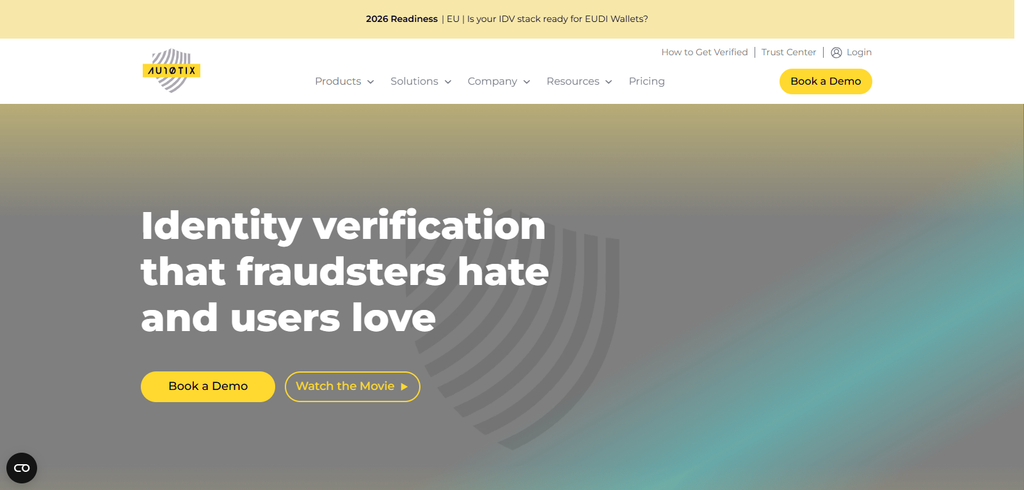
Supported regions include 200+ offering global coverage for Web3. AU10TIX has KYC/AML workflows, biometric liveness Assurance, document checking, and other features. They offer Web3 compliance for DEXs and marketplaces for NFTs without breaking user experience. AU10TIX has robust real-time onboarding while maintaining regulatory standards.
Characteristics
- Automated identity document verification and extraction of data.
- AI technology based on fraud and identity verification.
- Integration of API and Web/Mobile SDK.
- Identity verification is performed in real time.
- Designed for automated KYC and customer onboarding.
Advantages
- Automated verification with a focus on fraud documents can greatly shorten the time for customer onboarding.
- Focused on fraudulent document verification.
- Customer verification API integration can simplify the developer’s work.
- Suitable for a high volume of customer verification.
Disadvantages
- Company-focused solutions may not fit very small startups.
- Pricing may require a customized quotation.
- The implementation of various features can increase the complexity of the solution.
- Identity verification workflows will require careful implementation.
- The solution is not focused on an on-chain identity.
2. Sumsub
Sumsub is used for identity verification by many crypto exchanges and DeFi platforms. Sumsub pricing begins at $1 per verification and has enterprise options. Coverage for over 190 countries provides solid compliance coverage. Sumsub excels in KYC, KYB, and AML monitoring and offers flexible verification workflows.

Types of Web3 verification covered by Sumsub include NFT identity checks, screening of crypto wallets, and DAO member verification. Sumsub API has numerous verification steps that can easily be adapted to meet compliance requirements and maximize conversion. Sumsub excels at providing high-volume exchange verification that is reliable and fast.
Characteristics
- Offers workflows for KYC, KYB and AML, as well as identity verification.
- Includes verification of documents and biometric/liveness checks.
- Offers a REST API and a sandbox environment.
- Has flexible verification flows.
- Offers tools for fraud and compliance management.
Advantages
- Has a vast array of compliance functions for crypto businesses.
- Has flexible verification workflows.
- Has a solid combination of KYC and AML functions.
- Is applicable for exchanges and wallets as well as other Web3 services.
- Has developer-compatible API and webhook support.
Disadvantages
- May be too complicated due to the large number of available functions.
- Advanced compliance workflows may require configuration expertise.
- Pricing can become significant as verification volume grows.
- Some businesses may not need its full feature set.
- Compliance configuration still requires ongoing management.
3. Veriff
Veriff has built a name for itself for built for itself for AI-powered technology for frictionless user onboarding. Veriff’s packages for startups and enterprises start for $1.20 per verification. Veriff supports 220+ countries and regions, making it one of the most globally accessible options.
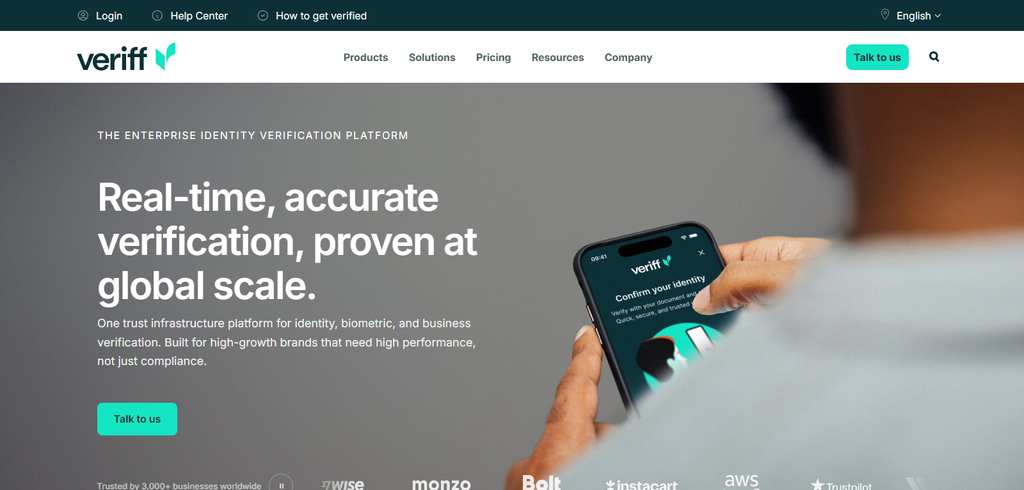
Veriff offers KYC, AML, and biometric liveness detection to provide strong anti-fraud technology. Veriff’s Web3 products provide instant verification for crypto wallets and NFT exchanges and apps. Veriff excels at speed during its verification processes, taking less than 30 seconds in most cases. Veriff’s speed helps crypto wallets and DeFi applications decrease drop-offs.
Characteristics
- Digital identity verification for online onboarding.
- Uses document and biometric verification technologies.
- Designed to detect identity and document fraud.
- Supports API-based integration.
- Provides automated verification workflows.
Advantages
- Can create a relatively smooth user onboarding experience.
- Strong focus on automated fraud detection.
- Useful for businesses operating across multiple markets.
- API integration can reduce manual verification work.
- Suitable for digital-first Web3 applications.
Disadvantages
- Advanced requirements may need additional configuration.
- Pricing may be less predictable for smaller companies.
- Verification performance can vary by document and market.
- Businesses may need additional AML tools depending on their compliance stack.
- Not specifically an on-chain identity infrastructure provider.
4. Jumio
Veriff’s counterpart, Jumio, has likewise built partnerships across a global spectrum of 200+ countries, with pricing packages starting at $1.50 per verification and offerings tailored for large exchanges. Jumio provides KYC and AML with strong suites for regulatory compliance and document verification. For Web3, Jumio provides integration for crypto exchanges, wallets, and tokenized assets.

Jumio also helps strengthen businesses of all industries and ability to onboard globally with compliance standards. Jumio’s strength is its AML watchlist screening, which helps crypto exchanges avoid defrauding sanctioned individuals. Jumio is a go to choice of Tier-1 crypto companies for its reliable and extensive verification processes.
Characteristics
- AI-powered identity verification and fraud prevention.
- Supports document, biometric and liveness verification.
- Provides REST APIs for integration.
- Supports multiple identity documents and verification workflows.
- Combines identity verification with AML-related capabilities.
Advantages
- Established identity-verification infrastructure.
- Strong document authentication capabilities.
- Useful for regulated financial and crypto businesses.
- API support enables integration with existing applications.
- Advanced verification can help reduce identity fraud.
Disadvantages
- May be more extensive than needed for simple KYC use cases.
- Enterprise-focused solutions can be costly for smaller startups.
- Integration may require development resources.
- Some advanced capabilities may need additional configuration.
- Not focused exclusively on Web3-native identity.
5. Trulioo
Trulioo’s 400+ data sources across 195 countries offer one of the most comprehensive network depths in the industry. Packages start at $1.30 per verification with an enterprise option. Trulioo offers KYC, KYB, and AML services, and has strong cross-border verification. Web3 services include identity checks for DEXs, NFT platforms, and DAOs. These services help providers meet compliance requirements for these offers.

With a focus on international coverage, Trulioo is an ideal provider for cryptocurrency companies that operate globally. It integrates easily with Web3 and offers real-time verification, helping crypto companies minimize friction during their client onboarding process.
Characteristics
- Global identity verification platform.
- Provides person and business verification capabilities.
- Supports KYC, KYB and AML-related workflows.
- Offers REST APIs, SDKs and customizable workflows.
- Uses multiple global data sources for identity verification.
Advantages
- Strong option for globally operating Web3 businesses.
- Broad geographic and data-source coverage.
- Supports both individual and business verification.
- Flexible API architecture for custom workflows.
- Useful for crypto companies expanding into multiple markets.
Disadvantages
- Large global feature set can increase implementation complexity.
- Data availability can differ between countries.
- Advanced workflows may require technical configuration.
- Pricing may depend on usage and selected services.
- Businesses may need additional specialized blockchain-risk tools.
6. iDenfy
iDenfy is a budget-friendly identity verification provider, often used by startups. Verification requests are $0.90 per request and, unlike most verification providers, iDenfy offers a pay-per-approval model, adding further value.
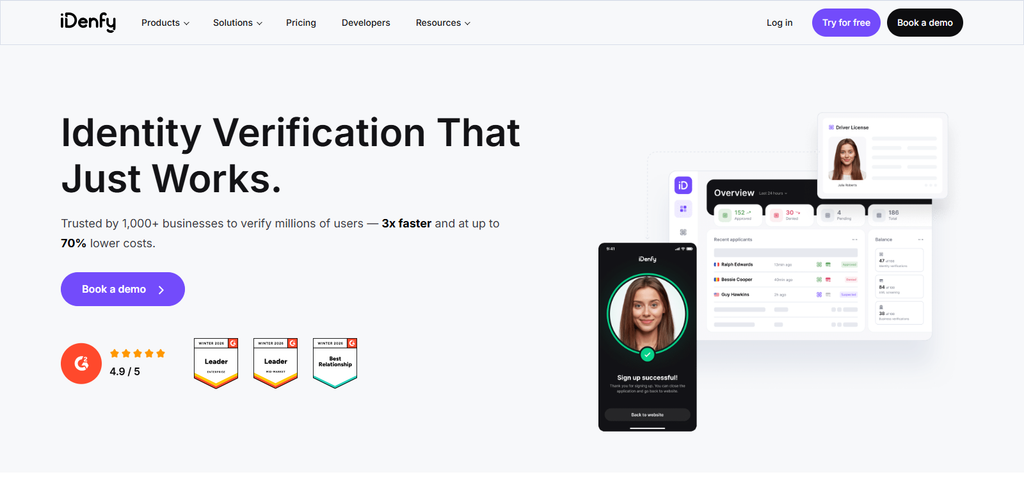
Supported regions include 150+ countries spanning major crypto markets. iDenfy offers KYC, AML, and biometric verification, and has flexible API integration.
kIts Web3 offerings include crypto wallet verification, identity checks for NFTs, and checks for DAO members. iDenfy’s primary offering is affordability, adding immense value for startups looking to minimize their early compliance costs. It is an ideal choice for Web3 startups.
Characteristics
- iDenfy offers identity verification and KYC automation.
- Has document and biometric verification.
- Includes AML and fraud detection.
- Has API and digital business integration for automation of customer onboarding and compliance.
Advantages
- Has identity and compliance tools in one automation suite.
- Has the potential to significantly decrease time spent on KYC.
- Can be used by all digital-centric businesses.
- Can be used for all customer onboarding scenarios.
- Can perform multiple verification checks.
Disadvantages
- Verification coverage varies depending on region.
- Some advanced requirements can need custom created workflows.
- Pricing depends on the selected verification services.
- Businesses with complex compliance structures may require extra tools.
- This offering is not primarily built around blockchain-native ID.
7. ComplyCube
ComplyCube is a hassle-free identity verification API with flexible modules. Starting at $1 per verification and with subscription packages for enterprises, their solutions cover over 190 countries. With a broad range of compliance regions covered, ComplyCube offers KYC, AML, and Biometric Verification.
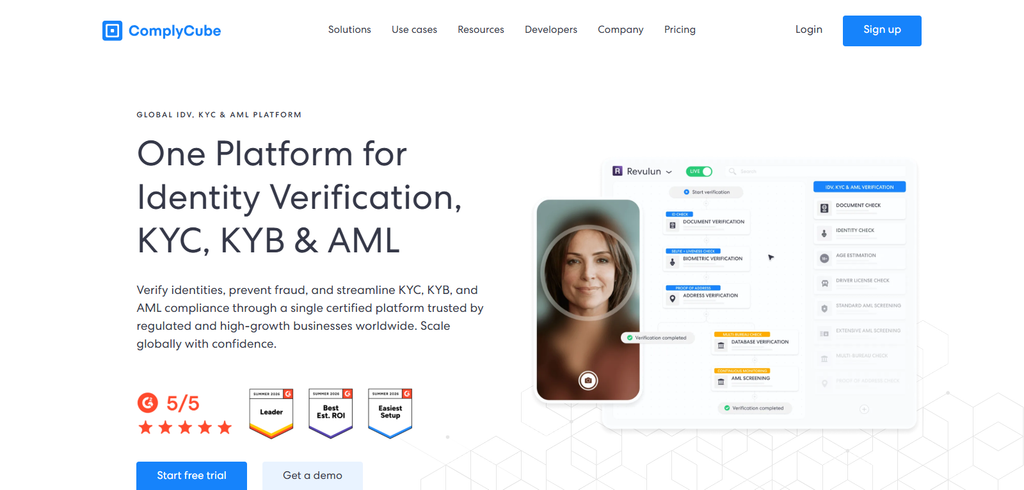
Their API-centric technology offers developers control to modify the onboarding flows. With their integrations geared towards cryptocurrency exchanges, NFT platforms, and Dapps, within the Web3 ecosystem, they provide solutions for compliance that maintain a high bar for the user experience. Their focus on developer flexibility makes them an excellent tool for teams building custom Web3 onboarding solutions.
Characteristics
- REST-based identity verification API.
- Streamlines KYC and AML processes.
- Conducts document and biometric identity verification.
- Offers webhooks and SDKs as well as hosted verification flows.
- Offers developer libraries and API documentation.
Advantages
- Flexible API architecture.
- Framework aimed at appealing to developers.
- Entails multiple programming frameworks.
- Well suited for startups looking to build their own onboarding.
- Integrates identity verification with AML.
Disadvantages
- May require significant development for small companies.
- More intricate compliance workflows still take considerable configuration.
- Not built as a full crypto identity solution.
- May require additional blockchain analytics.
- Total costs increase when multiple verification checks are enabled.
8. Chainalysis
Chainalysis differentiates itself from the competition by providing identity verification as well as on-chain risk intelligence. Their pricing for wallet screening starts at $2 per screening, and enterprise packages are available. Chainalysis covers the entire world, with a focus on blockchain analytics. They offer wallet screening, sanctions monitoring, and transaction risk scoring, and complement traditional KYC vendors.

In Web3, Chainalysis offers integrations with DeFi, NFT marketplaces, and DAOs, for blockchain-based compliance. Chainalysis has unique technological tools to help detect and understandwallets that engage illicit activity, which helpscrypto exchanges and other Web3 initiatives that deal with more advanced risks.
Characteristics
- Emphasizes blockchain intelligence and crypto compliance.
- Analyzes cryptocurrency transactions and individual wallets.
- Exposes illicit or high-risk blockchain activity and potential exposure.
- Optimized for compliance and investigation workflows.
- More geared toward on-chain risks as opposed to traditional document KYC.
Advantages
- Primarily built for crypto-native compliance.
- Offers an on-chain verification component.
- Helps organizations understand wallet and transaction risk.
- Used by financial services, Web3, and crypto institutions.
- Can be used in combination with traditional KYC providers.
Disadvantages
- Not a full solution for traditional end-to-end document KYC.
- A different provider might be necessary for ID and biometric verification.
- Enterprise solutions may be costly.
- Specialized blockchain compliance is needed for operational efficiency.
- Preferred to be used for on-chain risk service layers over standalone Identity APIs.
9. IDnow
IDnow shows its impressive record in EU-regulated crypto firms. The starting price for verification is from €1.50. Enterprise packages offer customizable solutions. Supported regions include the EU (and other areas). When it comes to compliance in the EU, IDnow is strong in BaFin and GDPR. IDnow provides KYC, AML and eID verification.
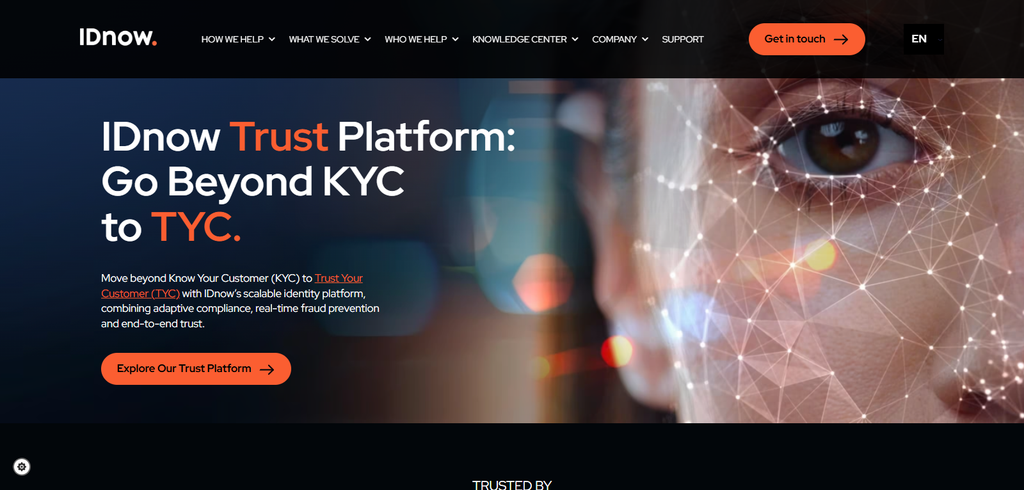
Its Web3 services allow for integration with EU-regulated exchanges, tokenized assets, and DAOs. Given strong European regulations, IDnow’s strength lies in the ** юрист** approval for services in Europe.
Characteristics
- IDnow verifies identities and performs KYC.
- IDnow verifies documents and biometrics.
- Has automated and assisted verification flows.
- Has API integration.
- Designed for regulated digital onboarding.
Advantages
- Strong emphasis on regulated identity verification.
- Good for businesses requiring identity workflows in Europe.
- Automates customer onboarding.
- Can verify customers using different methods.
- Suitable for financial and digital services.
Disadvantages
- Depending on the use case, geographic coverage may be an issue.
- Some workflows may require additional configuration.
- Security features may be overkill for smaller Web3 companies.
- Pricing is based on the customer’s specific needs.
- Additional blockchain analytics may be needed for risk screening in crypto.
10. Onfido
Onfido uses AI for high-quality identity verification, especially in detecting fraud. The starting price for verification is from $1.20. Customized enterprise packages are available. With compliance in 195+ countries, Onfido claims a large region for its services. Onfido ticks the boxes for KYC, AML, and biometric verification.
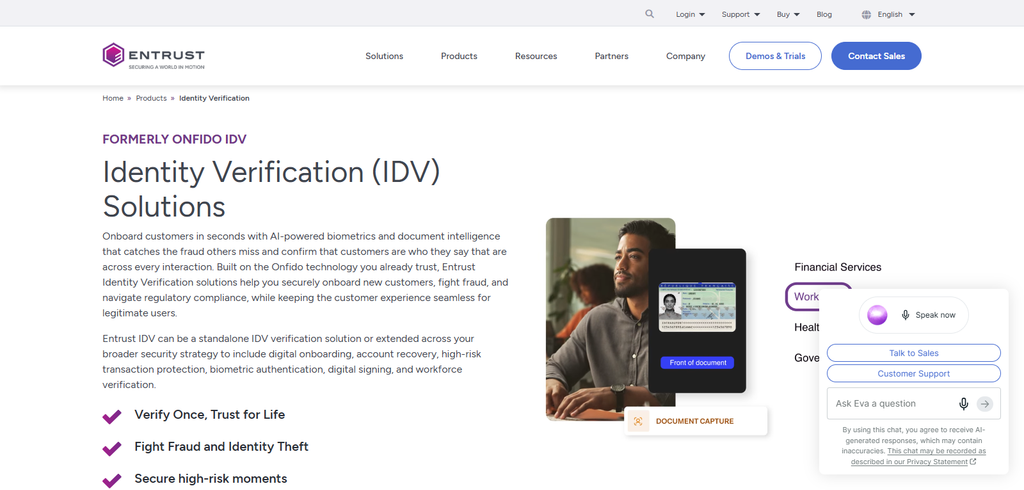
Advanced verification includes document authenticity checks. Onfido’s Web3 services provide compliance for use cases in the crypto exchanges and platforms, the NFT world, and the metaverse. Onfido’s strength is in the quality of its fraud detection and its ability to protect against synthetic identities, deep fakes, and more.
Characteristics
- Digital identity verification platform focused on online onboarding.
- Supports identity document verification.
- Uses biometric and facial verification technologies.
- Provides API and SDK-based integration.
- Designed to automate identity checks and reduce fraud.
Advantages
- Developer-friendly approach to digital identity verification.
- Useful for mobile and web onboarding.
- Automated checks can reduce manual verification.
- Biometric verification adds another identity-security layer.
- Can be integrated into broader fintech and Web3 onboarding systems.
Disadvantages
- Traditional identity verification is its primary focus.
- Crypto businesses may need separate AML and blockchain-risk solutions.
- Advanced integrations can require development work.
- Document support and verification performance can vary by market.
- Not designed primarily as a decentralized identity or wallet-verification platform.
Conclusion
In 2026, compliance, fraud mitigation and safe onboarding in Web3 will rely on crypto ID verification APIs. There are differences in strengths across the key players. AU10TIX and Sumsub offer differing capabilities for complex enterprise levels of fraud and deepfake detection, with Sumsub finding high volume exchanges more challenging to scale.
AI-based speed for low friction onboarding with Jumio and Veriff is followed by unmatched AML coverage with Jumio. Trulioo and iDenfy dominate in different regions for cross-border as well as cost-effective pay-per-approval models for startups.
ComplyCube’s offering is modular APIs whereas Chainalysis offers intelligence for blockchain-related risk. IDnow and Onfido have competing offerings to ensure compliance with EU regulations and advanced AI for fraud detection respectively.
FAQ
What is AU10TIX?
AU10TIX is an enterprise-grade identity verification API offering deepfake protection, Travel Rule compliance, and global coverage. It starts at $1.50 per verification and supports 200+ countries.
How does Sumsub work?
Sumsub provides scalable KYC, KYB, and AML monitoring with customizable workflows. Pricing begins at $1 per verification, covering 190+ countries, and integrates with Web3 wallets, NFTs, and DAOs.
What makes Veriff unique?
Veriff specializes in frictionless onboarding with AI-powered liveness detection. It starts at $1.20 per verification, supports 220+ countries, and is widely used in crypto exchanges and metaverse apps.
Why choose Jumio?
Jumio is a compliance powerhouse offering AML watchlist screening and KYC across 200+ countries. Pricing begins at $1.50 per verification, ideal for Tier-1 crypto firms.
What is Trulioo’s advantage?
Trulioo provides 400+ global data sources for cross-border verification. Starting at $1.30 per verification, it supports 195 countries and is perfect for international Web3 platforms.