
Singapore has rapidly built up its fintech infrastructure, and its tech offerings will continue to innovate businesses within the next 5 years. From local startups like Aspire and Funding_Societies to global companies like Nium and Airwallex, Singapore has tailored fintech solutions for all business needs.
With the MAS (Monetary Authority of Singapore) strictly enforcing regulations, new fintech trends like tokenization, AI-based finance, and stablecoins show that businesses need to align their fintech offerings to their business’s growth and international focus.
What Should Businesses Compare Before Choosing a Fintech?
Regulatory Compliance
Make sure the fintech is licensed by MAS or similar authorities to provide the trust, legal certainty, and financial strictness required for safe business conduct.
Cost Structure
Review the transaction fees, subscription models, FX costs, and all other hidden costs, as they reflect the total affordability and long-term value for SMEs or enterprises.

Scalability
Check if the fintech is able to provide growth, process a high number of transactions, and be available in further regions with a maintained service level.
Integration Capabilities
Check if the fintech is able to integrate with other business processes, mainly with ERP, accounting, payroll, and e-commerce systems to simplify processes and automate them.
Global Reach
Assess the various offered cross-border payment networks and fellow supported currencies and check if the offered scope will provide seamless global business operations.
Security Standards
Check the fintech’s offered services and assess if the offered financial data security meets modern banking standards.
Customer Support
Assess how the fintech offers customer support on how flexible they are regarding the offered languages and dedicated account management.
Singapore Fintech Trends Businesses Should Watch
Tokenization Infrastructure
MAS-developed projects Guardian and BLOOM facilitate the transition of tokenized assets from proof of concepts to full scale deployment of commercial services for the trading of wholesale CBDC-settled bonds, funds, and FX.
Stablecoin Regulation
The Single Currency Stablecoin Framework outlines how reserves should be held and redemptions should be offered to institutional market participants, thereby establishing Singapore as a leading global market for stablecoins.
Cross-Border Payments
Project Nexus improves traditional cross-border payments to align with the speed and efficiency of fintech payments to enable seamless cross-border business connectivity and integration across Asia.
AI Infrastructure
AI is being used in treasury, lending, and compliance to improve services and can help fintech progress beyond the “move fast” phase to Stable organ cities.
Fraud Prevention
With MAS’s Shared Responsibility Framework, a combination of advanced fraud detection, and consumer protection should sustain consumer trust in digital economic services and activities.
BNPL Regulation
BNPL is being regulated under the Code of Conduct, a SGD 2000 credit limit arrangement, and mandatory credit checks to mitigate debt obligations.
Investment Focus
Funding is increasingly focused on expanding a few large investments in payments, digital assets, and AI-based supplementary infrastructure.
Key Points
| Company | Core Focus | Key Point for Businesses |
|---|---|---|
| Grab Financial Group | Digital banking & payments | Operates GXS Bank with Singtel; offers SME loans, payments, and wealth tools. |
| Nium | Cross-border payments | Enables global payouts in 100+ currencies across 220 countries. |
| Airwallex | Global business accounts | Provides multi-currency accounts and borderless payments for enterprises. |
| Aspire | SME finance platform | All-in-one business accounts, corporate cards, and expense management. |
| Funding Societies | Alternative financing | Leading SME lending platform with crowdfunding and digital loans. |
| Endowus | WealthTech | AI-driven portfolio management, CPF-linked investing, and income-focused funds. |
| Thunes | Payments infrastructure | Builds global remittance and B2B payment rails for businesses. |
| Wise | Remittances & FX | Transparent cross-border transfers with low fees for SMEs. |
| YouTrip | Multi-currency wallet | Popular among SMEs for travel payments and FX savings. |
| Sygnum | Digital assets bank | Licensed crypto bank offering tokenization, custody, and regulated digital asset services. |
1. Grab Financial Group
Digital banking, SME loans, payments, and insurance solutions offered by Grab Financial Group through its partnership with SIngtel’s GXS Bank target small and medium enterprises (SME) as their primary clientele. By 2026, it scaled across Southeast Asia, serving millions of business accounts.

It’s also regulated by MAS and maintains high compliance standards. Some of their recent offerings include AI-driven lending and embedded finance APIs. They have low competitive pricing and have a significant value in bundled services, where clients are less likely to switch to other companies.
Businesses appreciate their easy integration of payments, lending, and wealth management services that establish their position as a fintech ecosystem for client growth and business expansion.
Grab Financial Group Features
- Lending for SMEs.
- Digital Banking Services via GXS Bank.
- Payment Integration for Grab Ecosystem.
- Insurance Services for Enterprises.
- Wealth Management Tools.
Pros
- One-stop ecosystem.
- MAS Regulations.
- SME Preference in SEA.
- Bundled Pricing.
Cons
- Less International Expansion compared to peers.
- High Dependency on Grab’s Ecosystem.
- Strong Competition from Traditional Banks.
2. Nium
Nium offers cross-border payouts in over 220 countries, in over 100 currencies and serves enterprise, banking, and fintech clients that require international payments. By 2026, Nium had partnerships with Visa and MasterCard that strengthened their B2B payment rails.
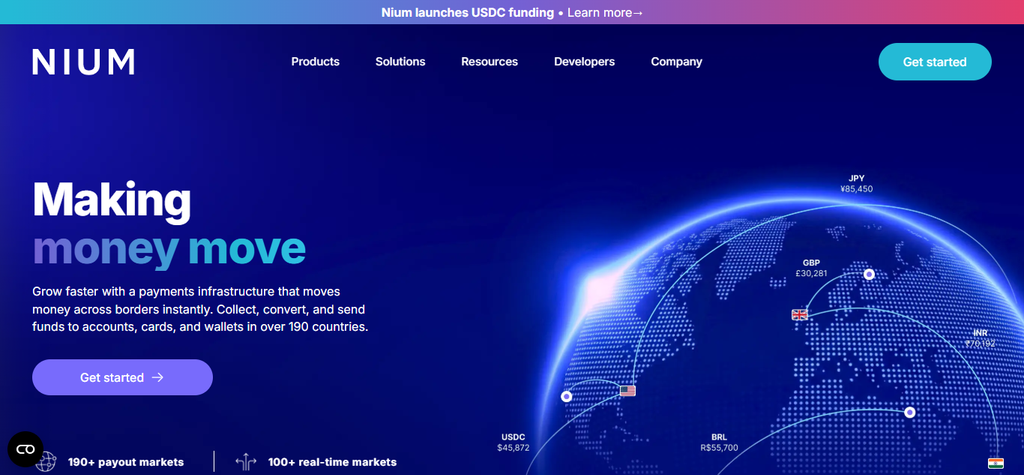
They operate with MAS and other global jurisdictions where required and cover AML and KYC related compliance. Recent product and platform enhancements include embedded treasury and instant payroll disbursements. Costs are transaction based and speed and transparency continue to be valued by clients globally.
They serve clients who require payment efficiency for global remittances and payroll related services as well as payments to their suppliers. Nium has established themselves as the foundation of international payments and commerce for digital first enterprises.
Nium Features
- Cross-border payment services in over 100 currencies.
- Payroll disbursement solutions.
- Treasury APIs.
- FX Management.
- Corporate cards.
Pros
- Global infrastructure in over 200 countries.
- Transparent pricing.
- Excellent AML and KYC compliance.
- Flexible corporate infrastructure.
Cons
- Expensive for SMEs.
- A long Onboarding process.
- FX market volatility.
3. Airwallex
Multi-currency accounts and borderless payments for businesses with an international clientele. By 2026, Airwallex covered the Asia-Pacific region, supporting thousands of companies with their FX and Treasury management.
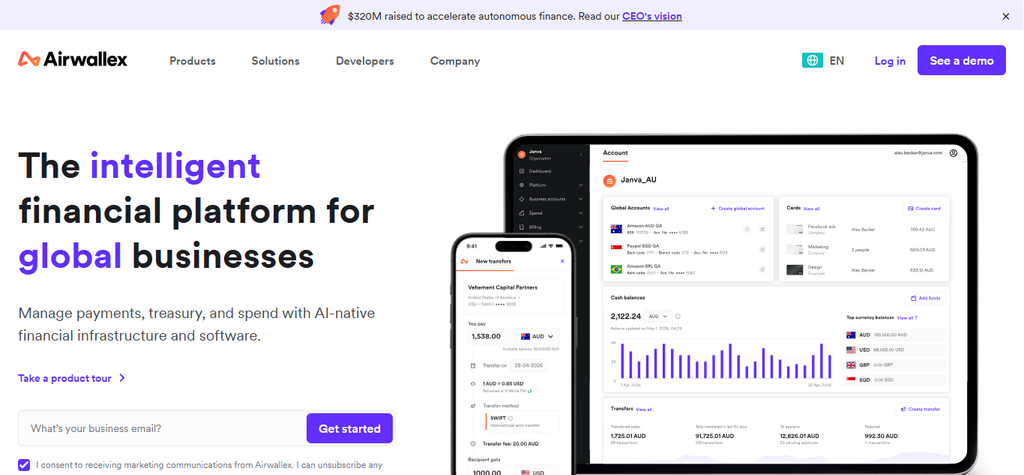
Regulated by MAS and other international bodies, it ensures that cross-border financial transactions are compliant. Some innovation’s include AI for the management of company expenditure and APIs for use by online vendors.
Airwallex competitively sets pricing with customer accounts that offer automatic currency conversion and known foreign exchange rates. Airwallex reduces the friction that banking systems create for cross border business operations thus, making it the preferred partner of growing enterprises in Singapore and beyond.
Airwallex Features
- Multiple currency accounts.
- Cross-border Payment Solutions.
- FX Services.
- Treasury Management.
- API integration for e-commerce.
Pros
- Transparent pricing for FX.
- Scalable for global enterprise.
- MAS Regulations.
- Excellent e-commerce services.
Cons
- Limited Banking Services.
- Expensive for businesses.
- Direct Competitor to Nium.
4. Aspire
Aspire offers all in one business accounts and corporate cards for business distributions with corresponding expense management. Targeted at startups and SMEs, the service simplifies business finances.
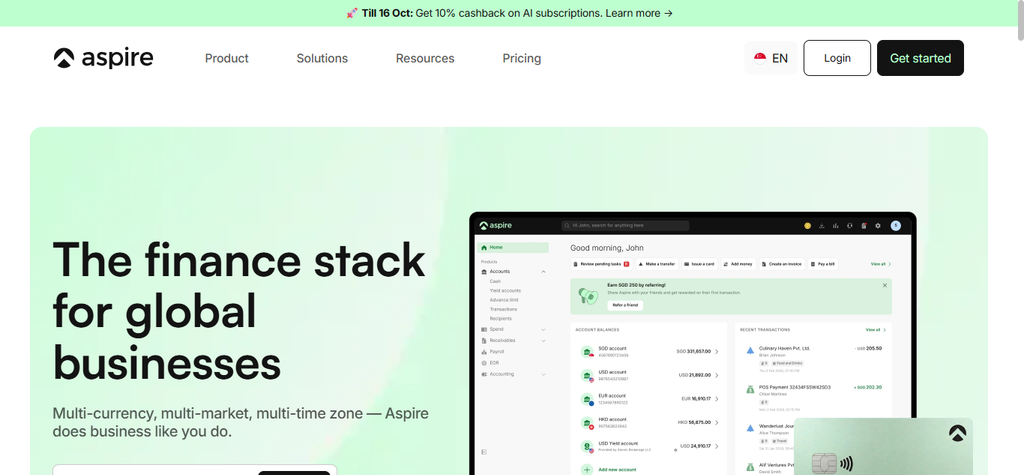
With innovation for cash flow management and embedded accounting, Aspire offers a range of corporate card management services. Costs are competitive with subscription and transaction fees.
Value is offered via reduced time and workload spent on business finances. Processing of transactions, expense tracking and real-time view of finances, are provided by Aspire. Competitive corporate card services make it the preferred SME fintech in Singapore.
Aspire Features:
- Business accounts for small and medium enterprise (SME) users.
- Corporate cards for SMEs.
- Expense management tools with automation.
- Cash flow forecasting using AI.
- Integration with accounting software.
Pros:
- Specifically designed for SMEs and startups.
- Administration burden is greatly reduced through automation.
- Attractive subscription rates.
- Trusted due to MAS license.
Cons:
- Limited international reach.
- Reliant on SaaS adoption by SMEs.
- Competition against large banks offering similar services.
5. Funding Societies
Funding Societies is the leading alternative funding destination for small-to-medium enterprises (SME) in Southeast Asia. Its services include crowdfunding and digital micro-business loans. With more than 200,000 SME clientele across the region, Funding Societies aims to scale by 2026.
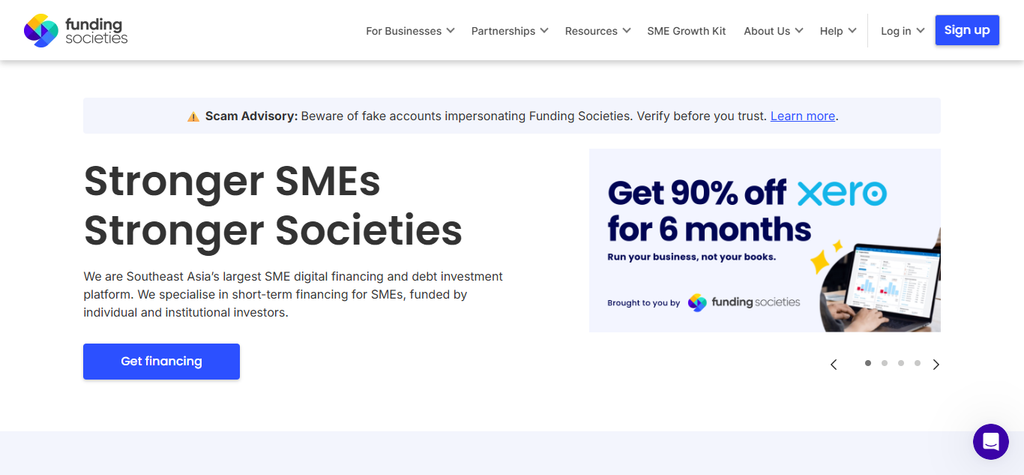
Its operations are regulated by MAS and as such, Funding Societies abides by rigid lending standards. The company has dedicated a significant portion of its resources to the development of the credit scoring framework.
It has also invested in using blockchain technology to streamline loan issuance. While loan models differ, Funding Societies competes with the traditional banking system as it refines and improves its lending processes and client experience.
Offering a wide variety of business financing models, Funding Societies is focused on improving the capital needs of SMEs in Singapore.
Funding Societies Features:
- SME crowdfunding loans.
- Digital lending.
- AI for credit scoring.
- Blockchain loan disbursement.
- Expansion through Southeast Asia.
Pros:
- Fast loans compared to banks.
- Fast and easy financing for SMEs.
- More diverse business financing.
- MAS-regulated practices.
Cons:
- Higher interest rates than banking loans.
- Exposure to large risk for investors.
- Focus is mainly on small businesses.
6. Endowus
Endowus is a wealth management technology platform. From a portfolio management standpoint, Endowus utilizes AI to enhance its offering when paired with Central Provident Fund (CPF) investing and income-centric investment funds.
Endowus offers its services to companies in the corporate retirement plan segment as well as individual high net worth clients.
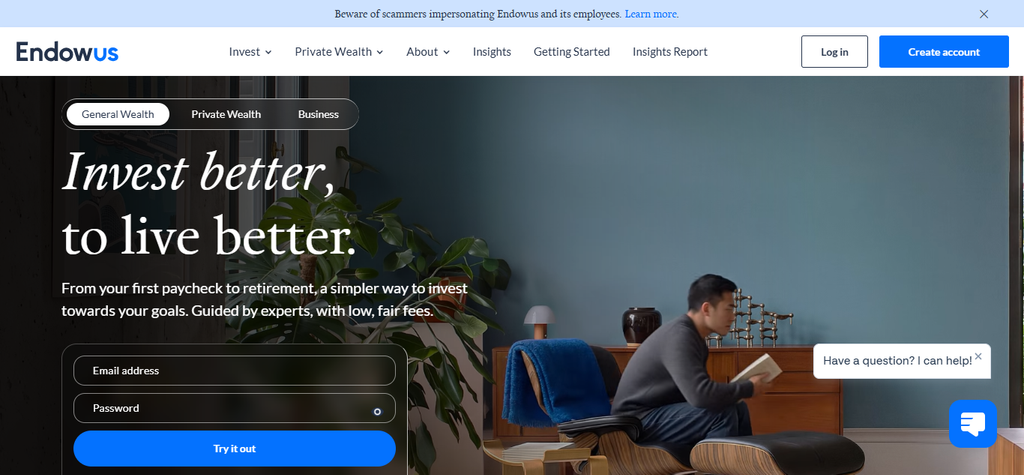
Endowus also aims to manage billions of dollars worth of assets by 2026. Endowus offers client-centric services through cost-efficient investments that generate superior long-term returns.
Endowus is the partner of choice in Singapore when an organization is in need of a wealth management platform that offers employee financial wellness programs and institutional investment services.
Endowus Features:
- AI for portfolio management.
- Investment opportunities linked to the Central Provident Fund (CPF).
- ESG investment opportunities.
- Tokenization for assets.
- Wealthtech solutions for institutions.
Pros:
- Reasonable advisory fees.
- Strong compliance with MAS.
- Scalable wealthtech.
- Trusted by large corporations and institutions.
Cons:
- High advisory fees.
- Limited utility for SMEs.
- Exposure to market volatility.
7. Thunes
Thunes builds cross-border payment infrastructure to facilitate remittances and B2B transactions to over a hundred countries. Their clientele comprises enterprise customers, banks, and fintechs.
Thunes has value added partnerships with telcos and e-wallets by 2026. Additionally, Thunes has a regulatory framework provided by MAS and other international regulators, and thus ensures compliance with cross-border payment standards.
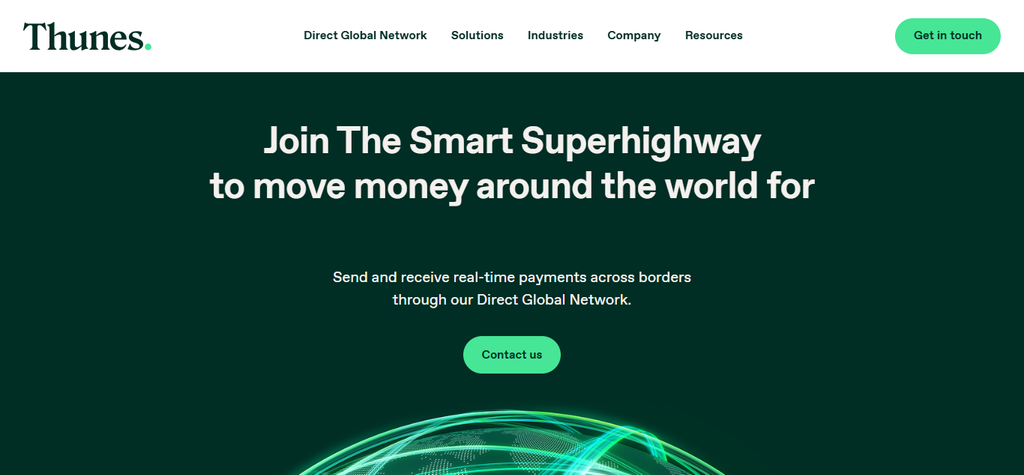
Some example innovation offerings include instant settlement APIs and embedded compliance solutions. Thunes’ pricing is transaction based, and value is provided through speed and a high degree of coverage.
Businesses leverage Thunes’ global payment infrastructure for their remittance and supplier payment needs. In Singapore, Thunes has created a strong backbone for international payments in the fintech sector.
Thunes Features:
- Global payments infrastructure.
- Remittance APIs for enterprise customers.
- Instant settlement offerings.
- Embedded compliance solutions.
- Partnerships with telcos and mobile money services.
Pros:
- Operates in 100+ countries.
- Focused on enterprise clients.
- MAS regulated.
- Strong focus on B2B payments.
Cons:
- High transaction fees.
- Reliance on third-party partners.
- Limited SME-specific solutions.
8. Wise
Wise, formerly TransferWise, provides cheap cross-border payments and transparent pricing. SMEs and consumers pay international transfers through Wise. Wise expanded their APAC operations by 2026 and served a high number of customers.

Wise has MAS regulation in Singapore, and is compliant with local payment regulations. Innovations include multi-currency business accounts and APIs for SMEs.
Wise’s pricing is low with high value provided for speed and transparency compared to international banking. Businesses become Wise customers through FX cost savings and expedited payments. Wise is preferred by SMEs for international operations.
Wise Features
- Visible cross border currency transactions.
- Multiple currency accounts for businesses.
- Tools for visibility on currency exchange.
- APIs customized for SMEs.
- Business debit cards.
Pros:
- Lower fees than banks.
- Faster international money transfers.
- Regulated by MAS.
- Used by a lot of small and medium businesses.
Cons:
- Tools for enterprises are lacking.
- Volatility in currency exchange affects costs.
- Competes with Airwallex and Nium.
9. YouTrip
The YouTrip multi-currency wallet offers FX savings for SMEs and travel in general. Its clientele consists of businesses where travel and cross-border spending comprise a substantial portion of their expenses.

YouTrip has become the go-to for more than a million users across Southeast Asia by 2026. With MAS regulation, it abides by the standards of an e-wallet.
YouTrip plans to generate additional revenue streams with corporate travel cards and AI-based FX optimization. YouTrip is a win-win location for SMEs in need of convenient ways to manage international travel at lower FX costs.
YouTrip Features:
- Multi-currency wallet for SMEs.
- Corporate travel cards.
- AI for FX optimization.
- Payment system designed for SMEs.
- Travel expense management services.
Pros:
- Low FX fees.
- Travel-centric SMEs love this.
- Compliance with MAS and licensing.
- Low FX fees save money.
- Easy to adopt.
Cons:
- Volatility of travel demand.
- Tools for enterprises lacking.
- Competes with Wise for FX services.
10. Sygnum
Sygnum is the first and only fully licensed digital asset bank in the world. They offer tokenization and custody with a regulated Crypto services division. Their clientele are enterprises, asset managers, and high-net-worth individuals.
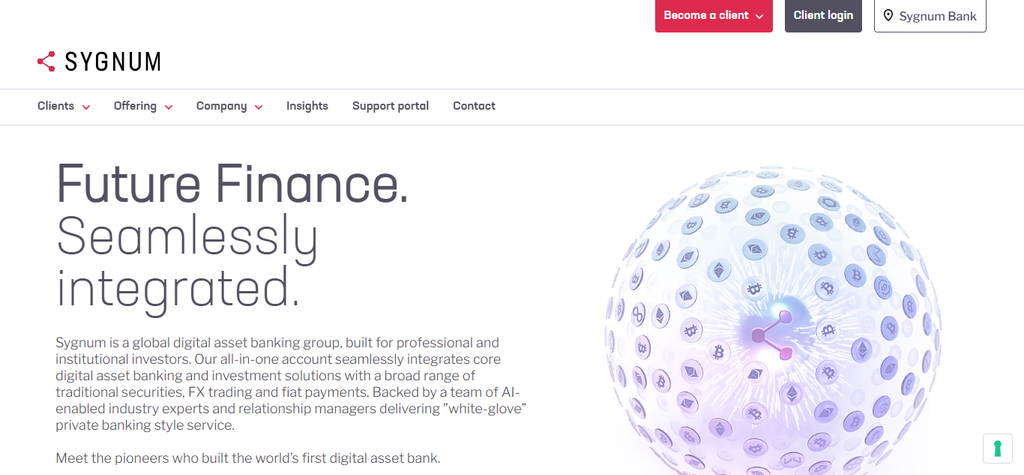
By 2026, Sygnum scaled to Asia and managed digital assets in the billions with operations spanning Switzerland. Regulated by MAS, they ensure compliance with the standards of crypto banking.
Tokenized securities and institutional DeFi are some of the services they plan to offer. Their value lies in the custody and low-cost trading with assurances of safe and secure digital asset management. Sygnum is the trusted first digital asset bank in Singapore’s growing fintech industry.
Sygnum Features:
- Digital asset custody.
- Tokenization of securities.
- Crypto banking.
- Institutional DeFi.
- Digital asset management.
Pros:
- Licensed crypto bank.
- Strong compliance with MAS and Swiss regulators.
- Enterprises trust this.
- Strong licensing and regulation.
- Great for digital asset custody.
Cons:
- High custody and transaction costs.
- Volatility affects stability.
- Limited use by SMEs.
Conclusion
Singapore’s digital finance ecosystem in 2026 is mature and innovative and is the global leader in fintech regulation attracting businesses within its borders. Companies like Grab Financial Group, Nium, and Airwallex dominate Payment Services and SME Solutions, with Funding Societies and Aspire providing Small Business financing.
Wealthtech platforms, Endowus, and banks, like Sygnum, provide digital investments and tokenization. The MAS regulations allow for trust and there are trends in AI, Stablecoins and Fraud prevention technology that will define the industry.
For an enterprise, the key factors in selecting the correct Fintech service are whether the service is scalable, compliant, and has a global footprint.
FAQ
What are the top fintech companies in Singapore?
Leading firms include Grab Financial Group, Nium, Airwallex, Aspire, Funding Societies, Endowus, Thunes, Wise, YouTrip, and Sygnum, each serving different business needs from SME finance to global payments.
How does MAS regulate fintech companies?
The Monetary Authority of Singapore (MAS) enforces strict licensing, compliance, and consumer protection frameworks, ensuring fintechs meet standards in payments, lending, wealthtech, and digital assets.
Which fintech is best for SMEs?
Aspire and Funding Societies are SME-focused, offering expense management, corporate cards, and alternative financing solutions tailored to small businesses.
Which fintech supports global enterprises?
Nium and Airwallex excel in cross-border payments, multi-currency accounts, and treasury management, making them ideal for enterprises with international operations.
Are digital assets regulated in Singapore?
Yes. Licensed banks like Sygnum operate under MAS and Swiss regulation, offering tokenization, custody, and institutional DeFi solutions with compliance assurance.