This article covers the best business banking platforms focused on banking partners that provide startup founders with banking partners that provide seamless financial management, pricing transparency, and cross-border payment systems.
Startups need banking partners that provide flexibility, integrations, and low cost per transaction. There are platforms that are tailored to startup banking and they include Mercury, Brex, Wise, Revolut, Qonto, Airwallex, Payoneer, Novo, and RazorpayX. Each of these platforms cover the core banking needs that founders have when operating in both local and international markets.
What is Business Banking Platforms for Startups?
Business banking services for startups provide digital services to streamline new or growing businesses’ cash management systems within a single application. These services go beyond basic business bank accounts to integrate corporate banking and spending management through a business checking account along with corporate cards, invoicing, expense reporting,
accounting, payroll, payment, and money transfer automation. With the proper banking service, growing startups can manage administrative work, gain visibility to their cash flow, control spending to better cash flow management, and remove the need for multiple financial tools.

How To Choose Business Banking Platforms for Startups
Total Banking Costs
Considering the fees with respect to monthly banking is only one of many variables that contribute to overall cost. There are costs regarding ACH, wire transactions, ATM, card, international transfers, foreign exchange, and numerous other transactions.
Check Startup Eligibility
Ensure the banking platform selected fulfills the business registration, the location of the founder, potential industry restrictions, documentation requirements, and minimum requirements.
Define the Stage of the Startup
Differing stages of startup funding may warrant differing banking needs. For example, a pre-revenue startup may be more cost-focused, while post-revenue startups and those with funding may be more interested in treasury services with corporate cards and controls.
Payment and Transfer Choices
See what banking platforms offer ACH, domestic wire, and international wire transfers. Consider payment links for the ability to receive funds and the transfer limits as well as the speed that a banking platform is able to settle funds.
Accounting Integrations
Consider how banking platforms integrate accounting software as this will save time with the manual process of reconciling information.
Virtual and Physical Cards
Consider the controls and approvals on spending, receipts, reimbursements, and the ability for a business to see transactions in real time.
Supported Currencies
Any potential impact that international transfers may have on foreign exchange should be considered as well as the payment rails the banking platform supports.
Check Security & Deposit Protection
What security and protection do deposits have? What regulated bank holds the funds in this case? What insurance system is relevant? What are the methods of detecting and preventing fraud, authentication methods, and controls or limitations for accounts?
Key Points
| Platform | Core Strength | Key Features | Best For |
|---|---|---|---|
| Mercury | US startup banking | FDIC‑insured accounts, API integrations | Tech startups & SaaS |
| Brex | Corporate cards + banking | Cash management, spend controls | VC‑backed startups |
| Wise Business | Global payments | Multi‑currency accounts, low FX fees | International startups |
| Revolut Business | EU/UK fintech banking | FX optimization, crypto integration | European startups |
| Qonto | French neobank | Expense management, invoicing | EU SMEs & startups |
| Airwallex | Cross‑border banking | Global accounts, FX APIs | Global SaaS & marketplaces |
| Payoneer | Global payouts | Marketplace integrations, multi‑currency | Freelancers & startups |
| Novo | US digital banking | Free ACH transfers, integrations | Small US startups |
| Starling Bank Business | UK neobank | Real‑time payments, SME lending | UK startups |
| RazorpayX | India fintech banking | API‑driven payouts, payroll | Indian startups & SMEs |
1. Mercury
Mercury was created in 2017 to serve the banking needs of startups in the United States. Mercury Provides business checking, business savings accounts and has a network that gives FDIC insurance up to 5 million dollars to their accounts.
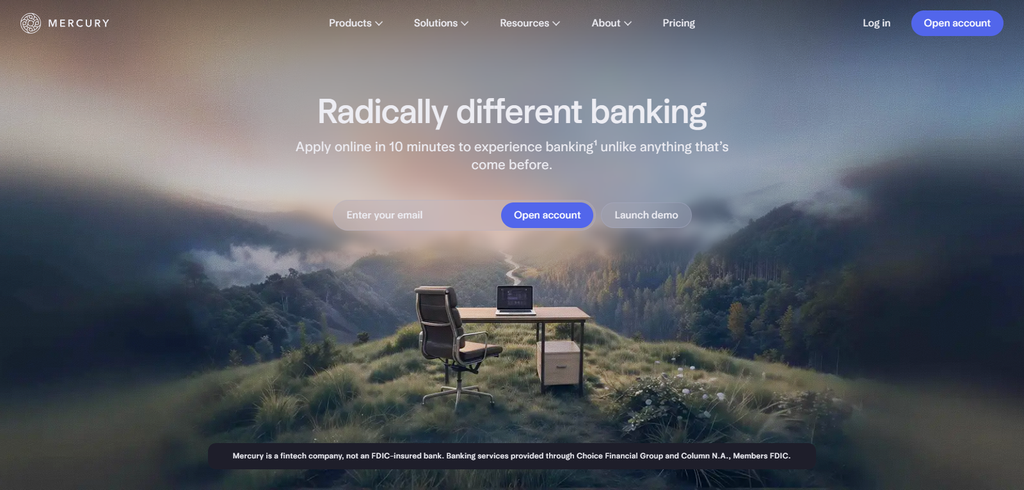
Plans are divided into Free, Plus (29.90/mo) and Pro (299/mo). Domestic wire transfers cost 5 dollars, international wire transfers cost 15 dollars, while ACH transfers are free. Balances over 250k earn treasury yields of 5%. Startup Fit Score: 70/100 — best for US-incorporated startups, especially YC-backed. No monthly fees, transaction fees are low.
Mercury Details
- Free accounts; FDIC coverage: $5 million
- Treasury management; earn up to 5% APY
- Free ACH; $5-$15 wire fees
- Integrates with Stripe, Shopify, QuickBooks
- Startup-focused; especially Y Combinator-backed
| Advantages | Disadvantages |
|---|---|
| Free accounts with FDIC coverage up to $5M | Limited to US‑incorporated startups |
| Treasury yields up to 5% APY | International wires cost $15 |
| No monthly fees on base plan | Premium tiers ($29.90–$299/mo) add costs |
| Integrations with Stripe, Shopify, QuickBooks | No physical branches |
| Startup focus for YC‑backed firms | Limited personal banking options |
2. Brex
Brex was founded in 2017 in San Francisco, offering corporate credit cards and is now a fully immersed finance solution provider. Brex’s offering consists of three pricing tiers: Essentials (free plan), Premium ($12/user/mo), and Enterprise (custom-made pricing).
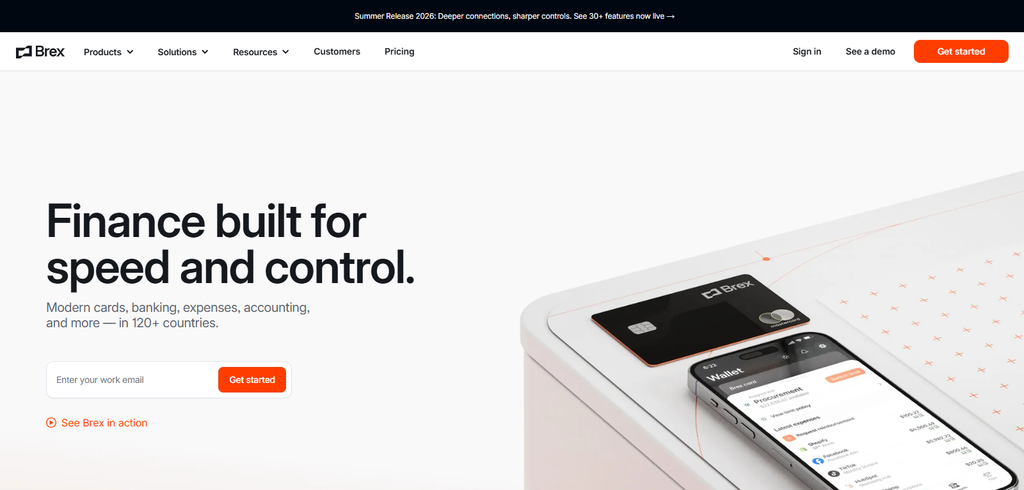
Brex provides FDIC insurance through its banking partner for up to $6M. Transaction fees are subsumed by FX and treasury margin (up to 4.36%). Startup Fit Score: 72/100 — excellent for VC-backed startups requiring a higher credit limit without asking for personal guarantees.
Brex Details
- High limit corporate cards
- Built in expense management
- FDIC coverage: $6 million
- Rewards program for startups
- No personal guarantees
| Advantages | Disadvantages |
|---|---|
| Corporate cards with high limits | Available mainly to VC‑backed startups |
| No personal guarantees required | FX fees embedded in spreads |
| Expense management tools | Premium plan costs $12/user/mo |
| FDIC coverage up to $6M | Limited support for small freelancers |
| Rewards program tailored for startups | Not ideal for bootstrapped founders |
3. Wise Business
Wise Business, founded in 2011 in London, offers multi‑currency accounts for 40 plus currencies. Wise multi-currency accounts have a one-time £50 fee and do not have monthly fees. FX costs are between 0.33% and 0.69% per transaction, and if you process batch payments to 1,000 recipients, Wise can integrate with Xero and QuickBooks to help your accounting for your dispersed teams.
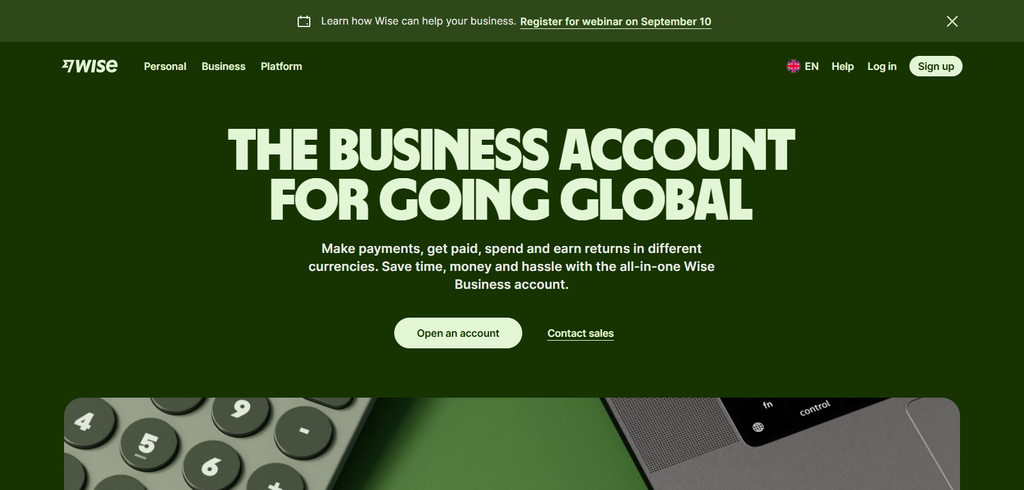
Startup Fit Score: 70/100 – best for startups that have international contractors or need to manage income across borders. Monthly fees are absent, and transaction costs are clear and consistent, helping global startups control their expenses. Wise excels in having a small FX spread and providing holding balances in different currencies without hidden costs.
Wise Business Details
- Accounts for 40+ currencies
- FX fees of 0.33–0.69%, depending on destination
- Batch payment transfers of 1,000 recipients
- No monthly fees; pay-as-you-go
- Integrations with Xero, QuickBooks
| Advantages | Disadvantages |
|---|---|
| Multi‑currency accounts for 40+ currencies | £50 one‑time setup fee |
| Transparent FX fees 0.33–0.69% | No credit or lending products |
| Batch payments up to 1,000 | Limited customer support for SMEs |
| No monthly fee | FX costs can add up for frequent transfers |
| Integrations with Xero, QuickBooks | No treasury yield options |
4. Revolut Business
Revolut Business started in the UK in 2017 offering multi-currency accounts and cards and invoicing and expense management. Their pricing tiers are Basic($10/mo), Grow($50/mo), Scale($180/mo) and Enterprise(custom). FX allowances vary with the plan. If you exceed these limits you are subject to added markup fees.
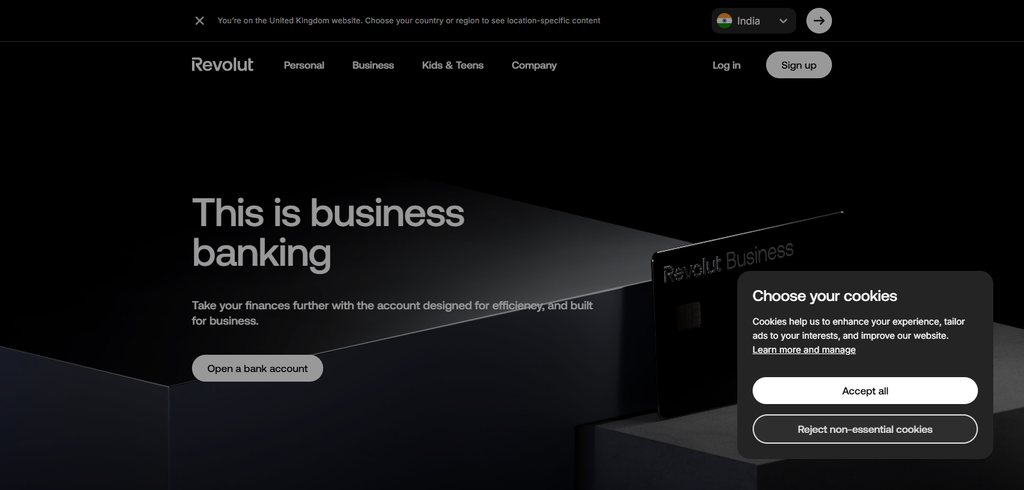
Revolut offers free domestic transfers while international wires have an FX spread. Revolut has integrations with Slack and Zapier and with other accounting software making it useful for startups. Startup Fit Score: 74/100 – strong for international startups with high FX needs. Monthly fees scale with usage, while transaction fees remain competitive, making Revolut a flexible option for SMEs and SaaS companies expanding globally.
Revolut Business Details
- Multi-currency accounts with FX allowances
- Tiered pricing from $10 to $180+
- Expense cards for teams
- International transfers with FX spreads
- Integrations with accounting tools and Zapier
| Advantages | Disadvantages |
|---|---|
| Multi‑currency accounts | FX markup after allowance |
| Tiered pricing from $10–$180+ | Free tier discontinued |
| Expense cards for teams | Higher fees for large FX volumes |
| Integrations with Slack, Zapier | Complex pricing structure |
| International transfers | Limited support outside Europe |
5. Qonto
Qonto, an app built to serve the financial needs of startups in 2016, helps manage both SMEs and freelancers across Europe. Qonto has five different pricing plans. These range from €9 to €109 and include additional features for each subsequent plan. With the most basic plan, qonto users get one account and five transaction fees.
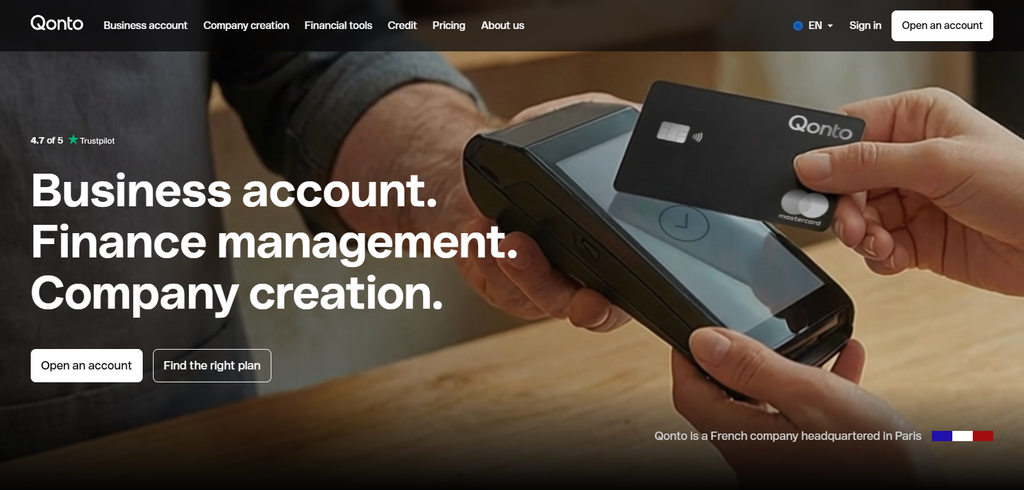
Pricing also depends on SEPA transfer fees (€0.56 – €1.80). Qonto also has expense cards, invoices, and accounting integrations. The fit score for this SaaS product for startups is 75/100. Monthly costs depend on the plan, but transaction costs stay the same at €0.56 for transfers under €500. Qonto’s strength lies in its flexibility to meet financial needs of freelancers and small businesses at different stages of growth across Europe.
Qonto Details
- Primarily serves European SMEs
- Tiered plans from €9 to €199
- SEPA transfers are included in each tier
- Expense management with cards and invoicing
- Accounting integrations for compliance
| Advantages | Disadvantages |
|---|---|
| European SME focus | Only available in EU |
| Tiered plans €9–€199 | FX fees 0.56–1.80% |
| SEPA transfers included | Higher cost for premium tiers |
| Expense management | Limited global reach |
| Accounting integrations | No free plan |
6. Airwallex
Airwallex began operation in 2015 offering cross-border payment services. It operates in Melbourne and Hong Kong. Prices: Explore (Free), Grow ($65/mo), Accelerate ($320/mo). FX fees: 0.5% above interbank price. SWIFT transfers cost $15–25. ACH and local transfers are free in supported countries.
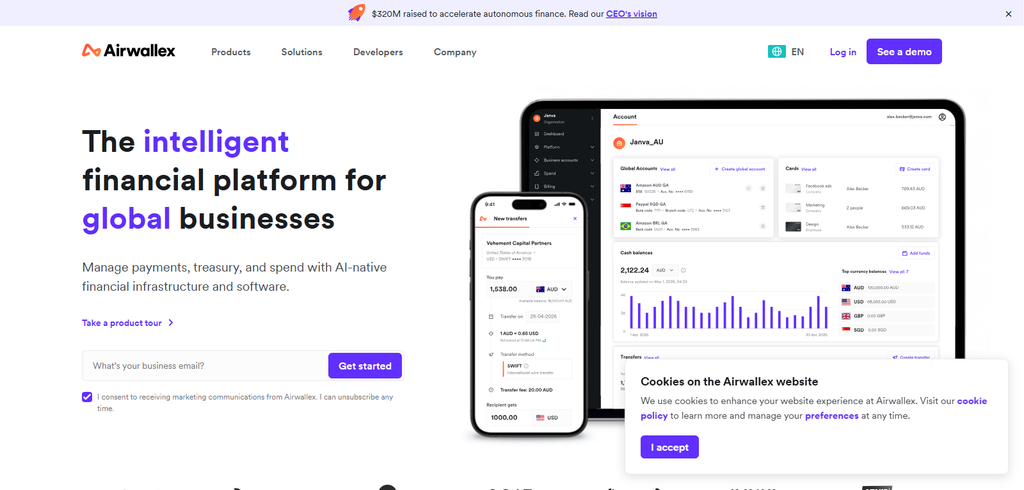
Airwallex has integrations with Shopify, Xero, and Stripe. This makes Airwallex an excellent option for SaaS and e-commerce startups. Startup Fit Score: 78/100 – excellent for globally distributed businesses. Monthly fees apply only for the advanced tiers, while transaction costs are still competitive, meaning startups can still manage and pay internationally with low costs.
Airwallex Details
- Low FX for cross-border payments
- Free basic plan; advanced tiers for a fee
- $15–$25 SWIFT transfers
- Global integrations with Shopify, Stripe, Xero
- Best for SaaS and e-commerce startups
| Advantages | Disadvantages |
|---|---|
| Cross‑border payments | SWIFT transfers $15–25 |
| Free base plan | Advanced tiers cost $65–$320/mo |
| Low FX fees 0.5% | Limited personal banking |
| Global integrations Shopify, Stripe, Xero | Focused mainly on businesses |
| Startup fit for SaaS/e‑commerce | No lending products |
7. Payoneer
Payoneer, founded in 2005 (New York), is a cross-border payment system for freelancers and marketplace sellers. Fees: $29.95 yearly inactivity fee, no monthly fee. Transaction fee: up to 2% for receiving payments, 1.5% for FX conversion.
Payoneer integrates with Amazon, Upwork, and Fiverr, with no issue for payouts. Startup Fit Score: 68/100 — strong for freelancers and small startups using marketplaces. With no monthly fees, it is a good choice for freelancers. However, for micro-startups and SaaS companies, Payoneer is adequate, but other options would be better for scaling SaaS.
Payoneer Details
- Integrations with Amazon, Upwork, and Fiverr
- No monthly fee; $29.95 fee if no activity
- Up to 2% fees for receiving transactions
- 1.5% fee for FX conversion
- Global payouts for freelancers and startups
| Advantages | Disadvantages |
|---|---|
| Marketplace integrations | $29.95 annual inactivity fee |
| No monthly fee | Receiving fees up to 2% |
| Global payouts | FX conversion 1.5% |
| Freelancer focus | Not ideal for scaling startups |
| Easy onboarding | Limited treasury or credit options |
8. Novo
Novo began operations in 2018 (Miami) and provides business checking accounts with free FDIC up to $250K. There are no monthly account maintenance fees, and ACH and incoming wires are at no cost.
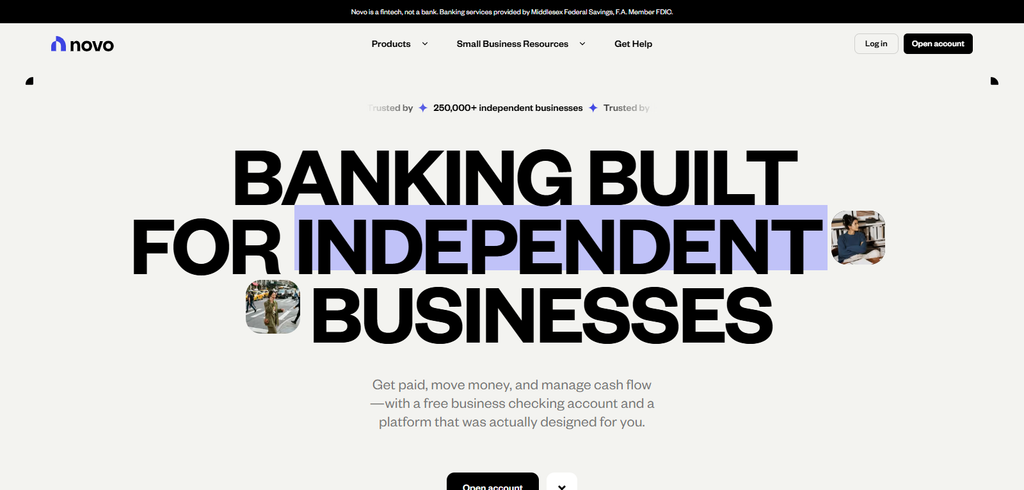
Domestic wire outs are $25, and international wire outs are $40. Novo easily integrates with Stripe, Shopify, and QuickBooks, making it more attractive for e-commerce startups. Startup Fit Score: 72/100 — is best for US solopreneurs and small businesses. Transaction costs are predictable which reinforces lean operations. Novo has the right offering for founders that want no unnecessary banking fees and simplicity.
Novo Details
- Free business checking with FDIC insurance
- No monthly maintenance
- Outgoing wires $25–40
- Stripe, Shopify, QuickBooks integrations
- Good for startups in the US solopreneurs and e‑commerce
| Advantages | Disadvantages |
|---|---|
| Free business checking | Outgoing wires $25–40 |
| No monthly fees | FDIC coverage limited to $250K |
| Integrations Stripe, Shopify, QuickBooks | No credit or lending |
| Simple setup | Limited international support |
| Startup fit for US solopreneurs | No treasury yield options |
9. Starling Bank Business
Starting in 2014, Starling Bank (UK) offers free GBP business accounts with limitless transactions. There are no monthly fees, and the FSCS protection is up to £85K–£120K. Cash deposits via Post Office cost 0.7% (min £3).
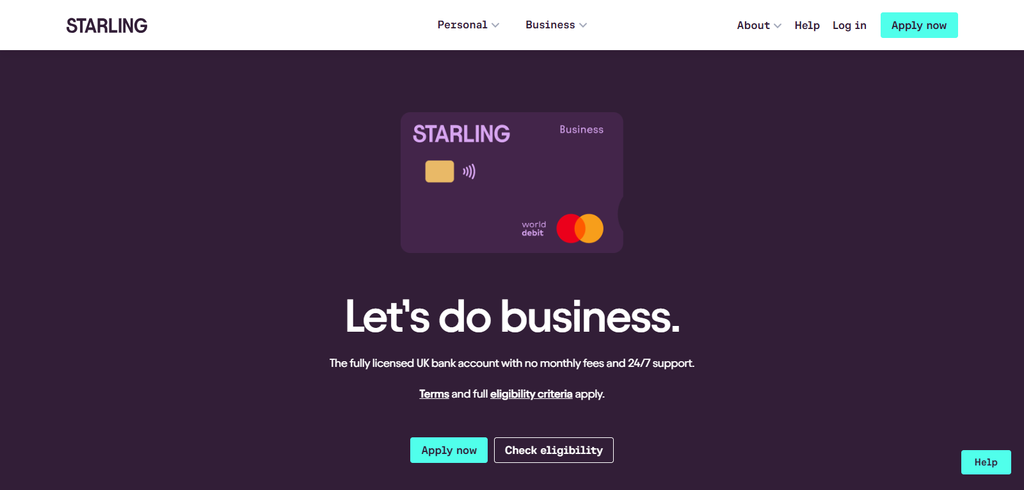
Additional features: EUR account (£2/mo), USD account (£5/mo), Business Toolkit (£7/mo). Startup Fit Score: 76/100 — this shows that Starling Bank is perfect for UK freelancers and SMEs. Monthly fees only apply to add‑ons, and transaction fees stay at a minimum. Starling Bank’s free core account offers a lot of value to businesses scaling across Europe.
Starling Bank Business Details
- Free GBP accounts with unlimited payments to the UK
- FSCS protection £85K–£120K
- Cash deposits via Post Office at 0.7%
- EUR, USD, Toolkit add-ons
- Good for startups in UK SMEs and freelancers
| Advantages | Disadvantages |
|---|---|
| Free GBP accounts | Only UK‑focused |
| FSCS protection £85K–£120K | Cash deposits cost 0.7% |
| Unlimited UK payments | EUR/USD accounts cost extra |
| Optional add‑ons Toolkit, EUR, USD | Toolkit £7/mo adds cost |
| Startup fit for UK SMEs | Limited global expansion tools |
10. RazorpayX
RazorpayX (Bengaluru, 2018) offers current accounts, payouts API, payroll, tax payments, and corporate cards, all from Razorpay. Pricing: Free account, payouts ₹2-5 per transaction, FX and card fees vary. RazorpayX has integrations with Tally, Zoho, and other accounting software in India. Startup Fit Score: 80/100.
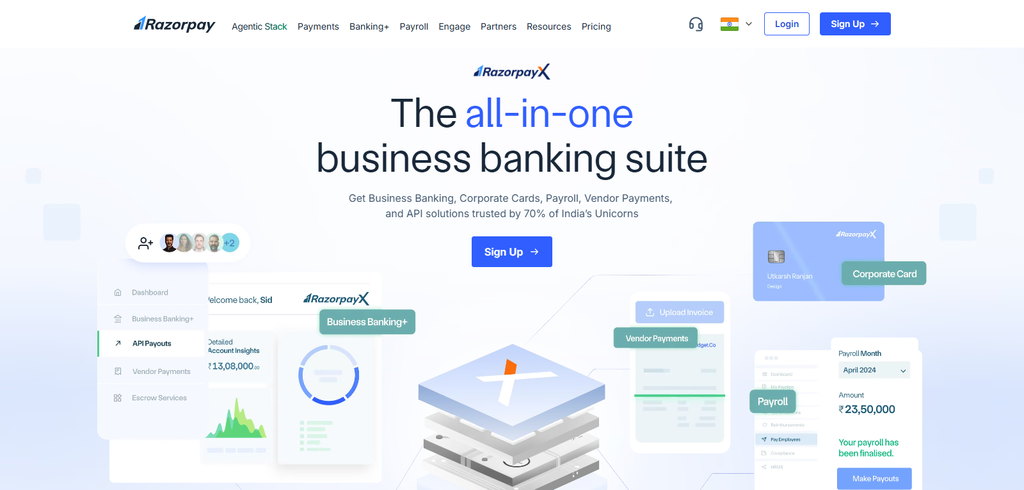
RazorpayX is the most popular option for Indian SaaS and internet startups, and has no monthly fees with low transaction fees, ensuring affordable scalability. RazorpayX’s strongest asset is deep integration of its offerings with the Indian fintech API ecosystem, making it the most startup friendly option domestically.
RazorpayX Details
- Accounts for startups
- Payouts API with ₹2–5
- Payroll and taxes automation
- Corporate cards for expenses
- Good for startups in Indian SaaS and internet
| Advantages | Disadvantages |
|---|---|
| Current accounts | Only available in India |
| Payouts API ₹2–5 per transaction | FX fees vary |
| Payroll automation | Limited global integrations |
| Corporate cards | No treasury yield options |
| Startup fit for Indian SaaS | Focused mainly on domestic startups |
Conclusion
For startups, selecting the correct business banking platform serves as an opportunity to create a more efficient infrastructure to manage payments, track company spending, facilitate accounting functions, and help with cash-flow management and financial operations.
By 2026, startups should be evaluating the cost-value ratio, payment, and integration functionalities, security, international capabilities, automation, and flexibility when selecting the best platform. The dependencies related to the startup’s phase, the business model, anticipated company spending, and anticipated company growth will likely dictate the type of banking platform and associated services.
FAQ
What is a business banking platform for startups?
A business banking platform helps startups manage business finances through services such as business accounts, payments, cards, expense management, transfers, accounting integrations, and financial automation.
Why do startups need a business banking platform?
Startups need a dedicated business banking solution to separate personal and company finances, manage expenses, receive customer payments, pay vendors, monitor cash flow, and simplify financial administration.
How much does startup business banking cost?
Costs vary by provider and plan. Startups should compare monthly fees, transaction charges, wire fees, ATM costs, foreign-exchange charges, card fees, and other potential expenses.
What features should startups look for in business banking?
Important features include low fees, business cards, payment processing, expense controls, accounting integrations, international transfers, security tools, automation, and scalability.
Are fintech business banking platforms safe for startups?
Many fintech platforms use security and compliance measures to protect business accounts, but startups should verify regulatory arrangements, deposit protection, authentication, fraud monitoring, and the banking partner where applicable.