The Best Crypto Blockchain Data Indexing Services that enable developers, businesses, and analysts to effectively access correct on-chain data will be covered in this article.
These platforms are crucial for DeFi, NFTs, Web3 development, and enterprise-grade crypto infrastructure throughout the developing blockchain ecosystem because they make blockchain data retrieval easier, allow real-time analytics, and support multi-chain applications.
Benefits Of Crypto Blockchain Data Indexing Services
Faster Data Access: No need to scan the entire chain, which allows for the data to be queried much quicker.
Reduced Development Time: No need to construct custom indexing structures.
Scalability: As applications grow, large volumes of on-chain data can be managed.
Multi-Chain Support: Unified access across several blockchains and networks.
Real-Time Insights: Live events can be tracked for analytics to be collected on the spot.
Improved Performance: Indexing data in different layers reduces latency when responding.
Cost Efficiency: Operation and infrastructure costs for teams go down.
Developer-Friendly APIs: Querying can be done more simply through GraphQL, REST, or SQL.
Enterprise Reliability: Data access is transparent while maintaining uptime, security, and compliance.
Better Analytics & Reporting: Dashboards, monitoring, and business intelligence.
Key Point & Best Crypto Blockchain Data Indexing Services List
| Platform | Key Points |
|---|---|
| The Graph (GRT) | Decentralized indexing protocol using subgraphs to query blockchain data efficiently across multiple networks. |
| Covalent | Unified API providing normalized, historical blockchain data across 100+ chains with minimal setup. |
| Moralis | Web3 development platform offering real-time data streams, indexing, and APIs for dApps and wallets. |
| Alchemy Subgraphs | Managed subgraph service enabling fast, scalable indexing with enterprise-grade reliability. |
| QuickNode | High-performance Web3 infrastructure offering indexed data, RPC endpoints, and analytics tools. |
| Infura (ConsenSys) | Trusted Web3 infrastructure provider delivering reliable APIs, node access, and data services. |
| Nansen Query | Advanced on-chain analytics platform combining indexed blockchain data with wallet intelligence. |
| Dune Analytics | SQL-based blockchain analytics tool enabling custom dashboards and community-driven insights. |
| Amberdata | Institutional-grade blockchain data platform offering market, network, and DeFi analytics. |
| SubQuery | Flexible open-source data indexing framework supporting multi-chain and custom query layers. |
1. The Graph (GRT)
The Graph (GRT) is a protocol that allows a decentralized approach to querying blockchain data using subgraph. Developers can access data from Ethereum, Polygon, Arbitrum, and a variety of other chains in a quick and safe manner.
Developers can create subgraphs which help index the state and events of smart contracts so that retrieving the needed data is easier and more efficient.
The Graph is one of the Best Crypto Blockchain Data Indexing Services as it eliminates the requirement of manual indexing and centralised servers. It is useful in Web3, DeFi, and NFT applications. Indexers, curators, and delegators make up the censorship-resistance network that The Graph is built on.
The Graph (GRT) Features, pros & Cons
Features
- There is a decentralized indexing protocol.
- Subgraph definitions for custom data needs.
- There is support for multiple EVM and non-EVM Chains.
- There are GraphQL APIs for querying data.
- Token-incentivized networks exist (GRT).
Pros
- Truly decentralized with no possibility for censorship.
- There is a standardized ecosystem for subgraphs.
- There is a robust community with governance.
- Data is efficiently retrieved for dApps.
- Participation in the ecosystem is incentivized.
Cons
- There is a learning curve for subgraph development.
- There are query fees on hosted services.
- There is a dependence on indexer performance.
- Onboarding may be complicated.
- There is limited non-EVM support compared to centralized APIs.
2. Covalent
Covalent functions as a ‘one stop shop’ by providing a single API that collects and standardizes blockchain information across more than 100 networks. They enable developers to pull historical and real-time data such as balances, transactions, logs, and token metadata, and do not require developers to manage and operate their own nodes.
Due to their deep historical data availability, Covalent has positioned itself as a market leader. Because of this, they are able to service analytical tools, compliance and portfolio tracking solutions. Covalent serves enterprises and Web3 developers by overcoming the engineering challenges and providing accurate, comprehensive, and rich blockchain data.
Covalent Features, pros & Cons
Features
- There is a unified multichain API.
- There are normalized data schemas.
- There is access to historical blockchain data.
- There are token balances and transactions.
- There are webhooks and real time triggers.
Pros
- Integration is simple for development.
- There are support and coverage for 100+ chains.
- There is no need for node maintenance.
- There is great documentation provided.
- Historical data and its coverage is deeply rooted.
Cons
- The infrastructure is centralized.
- There are no advanced analytics.
- On the free tier there are API rate limits.
- It is less configurable in comparison to open indexing.
- The enterprise pricing can be very high.
3. Moralis
Moralis provides a suite of products from Web3 development, real-time indexing and data API streams for dApps. Moralis can support the use case of a versatile wallet, NFTs, tokens and smart contract events across multiple, all-in-one blockchain.
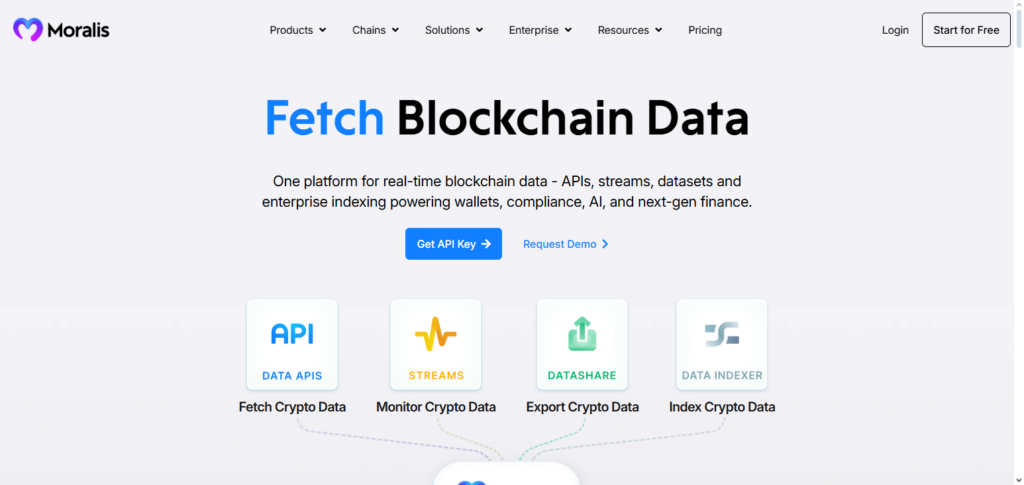
Moralis has earned the reputation as one of the Best Crypto Blockchain Data Indexing Services due to their application development tools, capability of instantaneous reaction to blockchain events, and real-time data listeners. It is commonly leveraged for blockchain games, NFT market applications and decentralized finance (DeFi) applications due to its simplicity and scalability.
Moralis Features, pros & Cons
Features
- They provide real time data streams.
- Wallet & NFT Indexing
- Smart Contract Event Listeners
- Cross-Chain Support
- Developer SDKs and Cloud Functions
Pros
- Fast Setup and Integration
- Tools Built for Developers
- Real-Time Applications
- Exceptional Examples and Community Support
- Nodes Managed for You
Cons
- Usage Limit in Free Tier
- Moralis Backend Dependency
- Smaller Ecosystem
- Less Historical Deep Data
- Potentially Expensive at Scale
4. Alchemy Subgraphs
Incorporation of The Graphs Framework, Alchemy Subgraphs, is an enterprise-centric cloud-managed subgraph indexing service and is one of the most reputable crypto companies for blockchain data indexing services for crypto. Operational neglect is made possible via provision of hosted infrastructure, detect-and-response monitoring and auto-scaling.
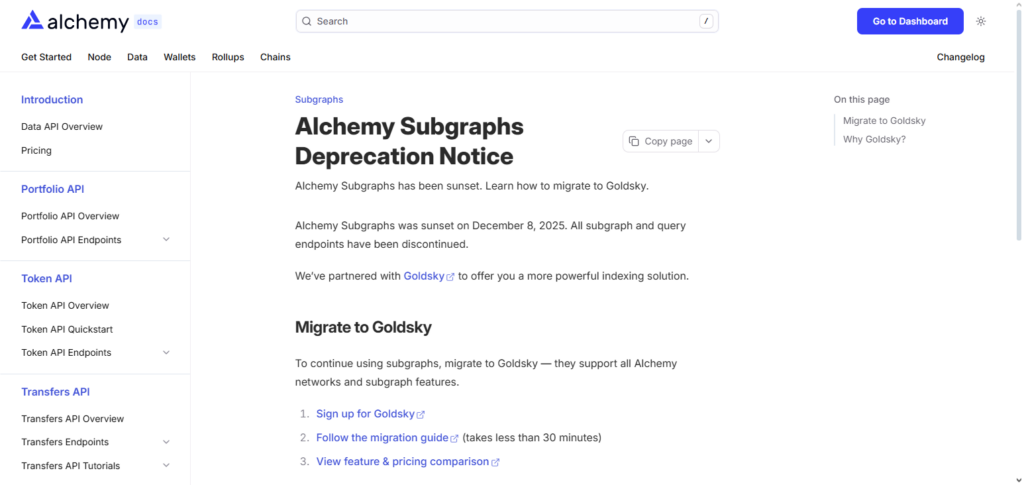
Alchemy Subgraphs offer enterprise-grade performance, and integration with the Alchemy ecosystem enables ease of development on production-grade distributed applications. Enterprises can rely on near real-time indexing, simplified maintenance, and operational uptime for cross-chain blockchain network indexing.
Alchemy Subgraphs Features, pros & Cons
Features
- Managed Subgraph Hosting
- Improvement in Performance and Uptime
- Real-Time Updates
- Part of Alchemy Suite
- Enterprise Support and Monitoring
Pros
- Reliable in Production
- Developer-Friendly
- Strong SLA
- Integrated Dashboard
- Faster Than Self-Hosted Queries
Cons
- Paid Service
- Less Decentralized
- Standardized Tuning
- Alchemy Ecosystem Dependency
- Public Subgraph Library is Smaller
5. QuickNode
With QuickNode, you can get into the blockchain ecosystem quickly and painlessly. The company is one of the best crypto providers for indexed blockchain data. The platform integrates seamlessly with external applications and services via modern low latency APIs.
The company offers enterprise-grade performance and provides data on token balance, NFTs, and other indexed datasets. The firm is best and most rapidly growing service in the blockchain of the DeFi ecosystem. All applications get fast, secure, and constant access to the blockchain data.
QuickNode Features, pros & Cons
Features
- High Performance RPC Endpoints
- Indexed Token/NFT Data
- Multi-Chain Support
- Analytic Dashboards
- WebSocket and Archive Nodes
Pros
- Ultra-Fast Performance
- Developer Simplicity
- Enterprise Scale Options
- High Uptime SLA
- Real-Time Indexing
Cons
- High Usage Will Cost You
- Not Fully Decentralized- Lower tier options have rate limits on their APIs
- The custom indexing is less than what is offered at The Graph
- Premium services include added features
6. Infura (ConsenSys)
Infura provides some of the most reliable and secure blockchain infrastructure and data services. It is backed by Consensys and runs scalable APIs for Ethereum and other networks without the need for node overhead.
It is One of the Best Crypto Blockchain Data Indexing Services as it allows developers to efficiently query blockchain data within parameters of high availability and security. It provides functionalities such as transaction history and smart contract analytical tools as well as event indexing. It is trusted by tens of thousands of Web 3.0 apps and used to power numerous wallets as well as DeFi apps and enterprise blockchain products.
Infura (ConsenSys) Features, pros & Cons
Features
- Maintained blockchain API endpoints
- Support for Ethereum & IPFS
- Access to history of transactions
- Infrastructure that is highly available
- SDKs for developers
Pros
- Apps have placed their trust in this service
- No need to worry about maintenance
- Scalable & highly available
- Works with other tools offered by ConsenSys
- Documentation is well made
Cons
- Centralized endpoint provision
- Doesn’t have many in depth analytics
- The depth of historical data is variable
- Increased volume of data will lead to higher cost
- Custom indexing is less flexible
7. Nansen Query
Advanced blockchain analytics and data indexing tools Nansen Query fit in the category of the Best Crypto Blockchain Data Indexing Services. It is the first and only product to integrate on-chain data with wallet tagging, and wallet tag behavioral patterns.
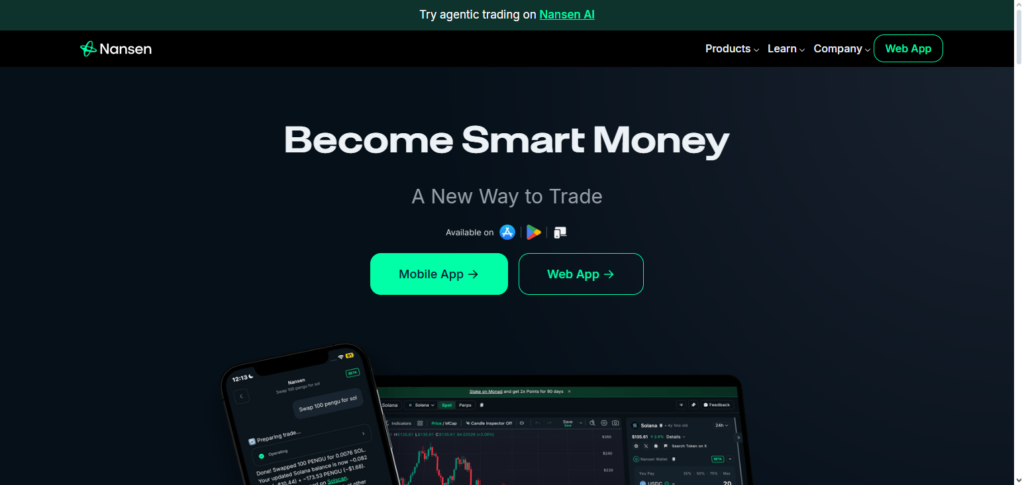
Users can query on-chain data using near SQL query functionalities and gain access to enriched datasets, Nansen is the only analytics product to provide context-rich analytics for DeFi, NFTs, and institutional research.
Nansen query analytics provides highly invaluable wallet tag intelligence to identify smart money on the move, and other wallet migration trends. There are thousands of near real-time traders that rely on on-chain intelligence to execute trades efficiently.
Nansen Query Features, pros & Cons
Features
- Queries on a blockchain in SQL
- Insights & labeling for wallets
- Analytics on behaviors
- Data on-chain that is enriched
- Dashboards that can be changed
Pros
- Very good tools for analytics
- Contains insights on wallets
- Helpful for both funds and research
- Queries can be customized
- Dashboards can be visual
Cons
- Costs more than average
- Not the best for basic data on API
- More complex than usual
- Real time triggers are limited
- Multi-chain indexing is not as broad
8. Dune Analytics
Dune Analytics allows users to assemble SQL-made queries and build on-chain interactive dashboards. This community analytics platform indexes multiple blockchains and makes them available on the frontend.
Dune is considered one of the Best Crypto Blockchain Data Indexing Services as the company provides considerable assistance to advanced analytics and data research teams to monetize and retrieve insights from unprepared blockchain data. Transparent data model and public dashboards Dune fosters collaboration among users. Dune is most loved for DeFi analytics, protocol surveillance, and insights on governance.
Dune Analytics Features, pros & Cons
Features
- Ability to use SQL to query
- Dashboards made by the community
- Support for multiple chains
- Datasets for free that can be shared
- Visuals that can be changed on demand
Pros
- Very flexible, can use analytics in many ways
- Dashboards are public & made in a transparent manner
- Contributions made by the community
- Doesn’t manage infrastructure
- Workflow is based on SQL and it is simple
Cons
- SQL is required
- Free tier limits queries
- Applications not in real time
- Absence of enterprise SLA
- For beginners lacking SQL it gets tougher
9. Amberdata
Amberdata is a blockchain analytics and data company providing an institutional level of services for the entire market, network, and DeFi data. Entities such as hedge funds, compliance teams, and other enterprises as well, use Amberdata’s performance, ranked one of the Best Crypto Blockchain Data Indexing Services.
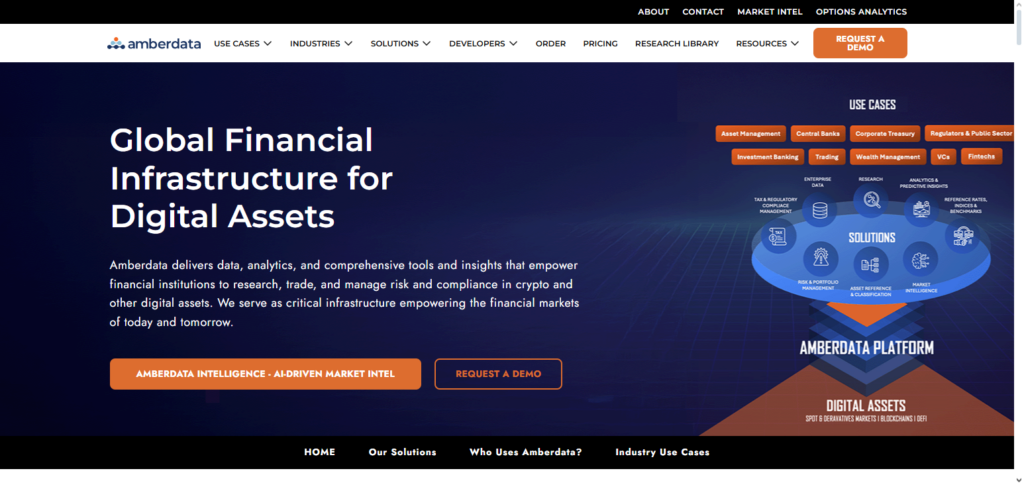
Amberdata provides on-chain indexed data, historical data, and real-time analytics, offered via APIs and dashboards. Products offered include integrations of blockchain data and other derivatives, pricing, and risk analytics. Amberdata’s infrastructure is one of the most effective in the market and allows for advanced research, efficient reporting, and regulatory use for multiple cases in the digital assets market.
Amberdata Features, pros & Cons
Features
- APIs for data of the entire institution
- Metrics in the market and the network
- Data on DeFi and on the derivatives
- Data is indexed historically
- Risk analytics at an advanced level
Pros
- Data sets that are deep and of great quality
- Use cases for compliance that are strong
- High-quality data indexing
- Good for enterprises and trading desks
- Coverage of many protocols
Cons
- Focus on enterprise and the price is high
- APIs are complex
- Not suitable for simple dApps
- Less tools for the developer compared to competitors
- Getting on is tougher
10. SubQuery
SubQuery is an open-source, versatile blockchain data indexing framework that allows developers to create custom data services. It allows indexing of various Layer 1 and Layer 2 networks and querying data using GraphQL.
Among the Best Crypto Blockchain Data Indexing Services, SubQuery offers more flexibility than traditional indexing, allowing developers to create their own schemas and custom logic. It offers both decentralized and hosted deployments, which offers flexibility tailored to the needs of both startups and enterprises. SubQuery is best suited for projects that require customized indexing solutions across multiple blockchain ecosystems.
SubQuery Features, pros & Cons
Features
- Custom index that is flexible and open sourced
- APIs that use GraphQL and are custom
- Support for various blockchains
- Options that are both hosted and decentralized
- SKDs for developers
Pros
- Very customizable
- Options that are community based and self hosted
- Best choice for complex indexing
- No vendor lockin
- Queries by GraphQL that are modern
Cons
- Configuration and setup required
- Less of a managed service when compared to the rest
- Less ecosystem
- Deployment determines performance
- Requires more effort from developers
Conclusion
Modern Web3 applications, analytics platforms, and enterprise blockchain solutions rely heavily on the Best Crypto Blockchain Data Indexing Services. By providing scalable, dependable, and developer-friendly indexing solutions, providers like The Graph, Covalent, Moralis, Alchemy Subgraphs, QuickNode, Infura, Nansen, Dune Analytics, Amberdata, and SubQuery make it easier to retrieve complex on-chain data.
These platforms allow real-time insights across many blockchains, cut down on development time, and do away with the requirement for proprietary infrastructure. Selecting the best data indexing solution is crucial for performance, accuracy, and long-term scalability in the cryptocurrency sector as blockchain ecosystems grow.
FAQ
What are crypto blockchain data indexing services?
Crypto blockchain data indexing services organize raw on-chain data into structured, queryable formats. They enable fast access to transactions, smart contract events, token balances, and historical data without running blockchain nodes.
Why are blockchain data indexing services important for Web3?
They reduce development complexity, improve performance, and allow developers to focus on application logic. These services are essential for DeFi, NFTs, analytics dashboards, wallets, and enterprise blockchain solutions.
Which are the Best Crypto Blockchain Data Indexing Services?
Leading providers include The Graph, Covalent, Moralis, Alchemy Subgraphs, QuickNode, Infura, Nansen Query, Dune Analytics, Amberdata, and SubQuery.
Are these services suitable for multi-chain applications?
Yes, most modern indexing platforms support multiple Layer 1 and Layer 2 blockchains, enabling seamless multi-chain and cross-chain data access.
What is the difference between decentralized and centralized indexing services?
Decentralized services like The Graph rely on distributed networks for data integrity, while centralized services offer managed infrastructure with higher control and enterprise-grade support.