


Decentralized lottery DApps are bringing a new way to play blockchain-based games by making the lottery process more transparent, accessible and automated. With faster transactions and lower network costs, Arbitrum offers an interesting ecosystem to explore decentralized lottery and prize-based applications.
In this article, I’ll discuss the Best Decentralized Lottery DApps on Arbitrum and will highlight their main features, lottery mechanisms, supported cryptocurrencies, prize structures and limitations to help readers understand their functionality and make more prudent choices.
How to Choose the Best Decentralized Lottery DApp?
Compatibility with Arbitrum Network: Select a lottery DApp that has been confirmed to be deployed on Arbitrum. Before depositing cryptocurrencies or buying lottery entries, check its supported network, smart-contract addresses, and wallet compatibility.
Smart Contract Security: Assess smart-contract audits, security reviews, and contract transparency. Choose platforms whose code has been independently reviewed and where the documentation is clear on how deposits, prizes and withdrawals are handled.

Verifiable Randomness: Make sure the platform uses trusted randomness tech like Chainlink VRF. The verifiable randomness enables participants to independently verify the fairness of the lottery results.
Supported Cryptocurrencies: Make sure ETH, USDC, and USDT are among the supported cryptocurrencies. When selecting platforms that provide easy payment options, consider token compatibility, transaction costs, and liquidity.
Lottery Participation Requirements: Find out about ticket prices, minimum deposits, rules for participation, and entry restrictions. Make sure the lottery structure fits your budget to avoid surprises in costs by checking these requirements.
Prize Pool and Rewards: Check prize pool funding, reward distribution, jackpot structures and winning conditions. Look for simple reward schemes that clearly explain how the prizes are worked out and given out.
Withdrawal and Payout System: Look into the withdrawal methods, payout speeds, accepted tokens, and related transaction fees. Choose platforms with clear payout procedures and smart contract withdrawal options that are easy to use.
Reputation and Transparency of the Platform: Check platform history, activity in development, community feedback and transaction history. I like projects that are already well-established, with transparent operations, clear risk identification and verifiable on-chain activity.
Security Tips Before Using Lottery DApps
Check Smart Contract Addresses Always check the official smart-contract address before connecting your wallet or buying lottery tickets. Be careful when interacting with unknown contracts that are shared through suspicious messages or unofficial platforms.
Check Security Audits: Look at independent smart-contract audit reports before depositing funds. Review known vulnerabilities, open security issues and whether important findings have been addressed by developers with verified updates.
Maintain a Separate Wallet: Think about maintaining a separate wallet just for playing the lottery. Hold minimum needed cash in it to minimize potential losses in case of a platform hack or smart contract hack.
Keep Private Keys Private Never share your wallet’s private keys, recovery phrases, and passwords. A legitimate lottery DApps does not need these confidential details to process entries or distribute rewards.
Check Randomness Mechanisms: Verify that the lottery uses verifiable randomness like Chainlink VRF. Before you trust winner-selection results, you must understand how random numbers are generated and validated.
Wallet Permissions: Be diligent in checking token approvals and transaction permissions before signing. Use trusted wallet management tools to revoke outdated permissions and avoid unlimited spending approvals when not needed.
Check network and transaction details: Make sure your wallet is connected to the right Arbitrum network. Before approving, verify the transaction amounts, recipient addresses, gas fees, and contract interactions.
Don’t Fall for Unrealistic Prize Offers Be suspicious of guarantyd winnings, unusually large jackpots, and suspicious promotional messages. Please check the research platform’s activity, withdrawal conditions and prize distribution rules before joining.
Key Points
| DApp / Protocol | Key Points |
|---|---|
| DecentraLotto | Decentralized USDT lottery, smart-contract entries, prize pools, and wallet-based participation. |
| Ample | Prize-linked savings, USDC deposits, yield-funded rewards, and recurring prize distributions. |
| PoolTogether V5 | No-loss prize savings, yield-based rewards, autonomous prize pools, and permissionless smart contracts. |
| Jackpet | Arbitrum-based decentralized lucky draw game, smart-contract prize management, and transparent game logic. |
| JackCo | No-loss USDC prize savings, weekly rewards, and yield-generating deposits. |
| Acumulou | Blockchain lottery, ticket purchases, locked prize funds, and automatic payouts. |
| PoolTogether V3 | Earlier-generation prize-linked savings protocol with deposit-based prize participation. |
| PoolTogether V4 | Earlier prize-savings architecture with vault-based deposits and prize distribution. |
| JustBet | Historical Arbitrum lottery-reward mechanism associated with the WINR ecosystem. |
| JackCo Protocol | Prize-linked savings protocol with USDC deposits and weekly rewards. |
1. DecentraLotto (DCLT)
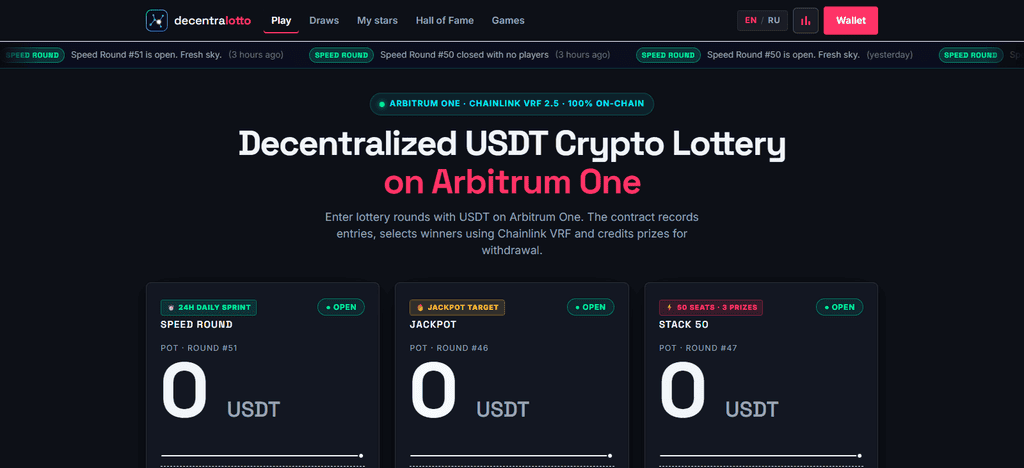
DecentraLotto is a crypto lottery and DeFi platform powered by blockchain that combines raffle-style draws with token incentives and staking. Compatible cryptocurrencies are used by users to purchase tickets. Intelligent contracts record entries and randomly select winners in a verifiable manner, removing the need for a lottery operator.
Its project has transaction-based mechanics such as burns, holder rewards, liquidity support and jackpot funding in the DELO token. The platform also has staking options to earn extra rewards too.
DecentraLotto aims to increase transparency in the lottery participation process by bringing ticket purchases, draw logic, prize allocation, and withdrawals on-chain, but users remain exposed to smart-contract and market risks.
Main Features
- Allows USDT-based lottery participation on Arbitrum One.
- Verifably picks a random winner using Chainlink VRF.
- Offers Speed Round, Jackpot and Stack lottery formats.
- Entries and prize details are recorded through intelligent contracts.
- Allows winners to withdraw credited prizes directly.
Constraints
- You need USDT and an Arbitrum compatible wallet.
- Stakes can be lost by the participants.
- You need ETH to pay for network transaction fees.
The winner is drawn randomly and based on the number of people who sign up
2. Ample
Ample is a prize-linked savings protocol inspired by the UK’s Premium Bond model. Users deposit USDC into non-custodial vaults, retain access to their principal and the protocol deploys these assets into short duration on-chain money markets to generate yield. Ample doesn’t distribute interest evenly, it pools the yield and distributes it in random weekly prizes with verifiable on-chain randomness.
Depositors get tickets to influence their odds and the underlying capital can still be withdrawn. This design turns regular savings yield into a lottery-style reward system, which means that most participants receive no direct yield, but don’t sacrifice their deposited principal to fund prizes.
Main Features
- Employs a prize-linked savings model.
- Offers deposit-based participation in prize opportunities.
- Connecting savings and rewards through blockchain infrastructure.
- Utilizes randomized prize distribution.
- Instead of traditional lottery tickets, it focuses on rewards.
Constraints
- There is no guaranty that all depositors will be rewarded.
- Users must grasp the underlying deposit mechanism.
- Prize amount is based on available reward funding.
- Verification of current Arbitrum deployment and availability
3. PoolTogether v5
PoolTogether V5 is the latest iteration of the no-loss prize-savings protocol, in which yield on deposits is distributed as random prizes, rather than paid out proportionally to savers. Users deposit assets into Prize Vaults and the yield generated is liquidated into prize tokens and sent to a shared Prize Pool.
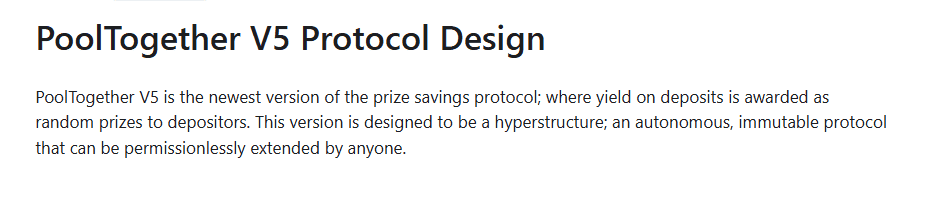
V5 improves usability by allowing users to swap or zap into prize tokens without activation, supports multiple assets in one larger prize pool, and automatically sends out prizes to winners without a separate claim. It is built as a permissionless, self-governing “hyperstructure” so anyone can build on it with new assets and sources of yield.
Main Features:
- Offers a no-loss prize savings protocol.
- Generates yield and redistributes it via randomized prize draws.
- Multi-token support in its prize pool architecture.
- Distributes prizes automatically to eligible wallets.
- Has a protocol design that is autonomous and immutable.
Limitations
- Prize values based on yield produced.
- Deposits must be in supported vaults and tokens.
- There remains smart-contract and underlying yield-source risk.
- Prize liquidity is isolated to each individual blockchain deployment
4. jackpet
Jackpet is a decentralized pet-themed lottery game built on Arbitrum that combines collectible gameplay with on-chain prize mechanics. Players buy a ticket for 0.01 ETH and select a multiplier of up to 100x, which increases the possible payout and risk. The game has 24 pets and 12 are drawn randomly for each round.

The results are generated using Chainlink VRF in a way that can be verified to be fair. Part of the losing tickets is allocated to a growing on-chain prize pool and rewards combining ticket multipliers with a share of that pool. It is not a no-loss savings product, but a game of chance, with its ultimate jackpot tied to the mythical pet combination.
Main Features
- Focuses on participation in the lotteries on the blockchain.
- Runs the lottery using intelligent contracts.
- Highlights fair prize distribution.
- Provides a wallet-based participation model.
- Must check specific randomness implementation.
Limitations
- The current Arbitrum deployment has to be independently verified.
- Prizes are subject to actual participation.
- Smart contract bugs can lead to financial losses.
- No guidelines are available for current activity and withdrawal reliability
5. JackCo
JackCo is a no-loss DeFi lottery, or prize-savings protocol, running on Base. Users can deposit USDC and other supported assets and the protocol will automatically allocate funds into yield strategies like Aave v3, Morpho Blue, Sky/MakerDAO and Pendle PT positions.

The yield generated weekly is pooled and paid out to randomly selected winners through Chainlink VRF, and the participants’ original principal is kept safe and can be withdrawn. JackCo says it’s easy to use for people who don’t know their DeFi from their elbow, with weekly prize draws and zero fees.
The core trade-off is that depositors get lottery chances instead of guarantyd interest, and take on smart contract and yield source risk.
Main Features
- The DeFi lottery model is no-loss.
- Accepts USDC deposits on Base.
- Yield generation through DeFi strategies.
- Random prize selection using Chainlink VRF.
- Distributes accrued yield from time to time through recurring prize draws.
Study limitations
- Known to be deployed on Base, not Arbitrum.
The prize amounts are a function of generated yield. - Deposited funds are still subject to risks from the DeFi strategy.
- Users are exposed to smart contract risk and liquidity risk
6. Acumulou
The sources here have limited publicly available information specifically naming ** Acumulou ** as a distinct crypto, DeFi, or lottery protocol. It could be a savings, accumulation or prize-linked product by name, but I cannot responsibly confirm its chain, token, prize mechanism, audit status or operational model without a reliable official source.
If you are talking about the Acumulou project, please share links to its website, whitepaper, Github or DeFiLlama listing and I can write an accurate 90-word description including deposit flow, yield source, randomness method, prize distribution, fees and principal-protection model.
Key Features
- Digital resources used for lottery entries.
- Concentrates on involvement in blockchain based lotteries.
- It provides a way to manage prizes through intelligent contracts.
- Stresses transparent lottery operations.
- Supported networks and randomness mechanism has to be verified.
Limitations
- There is no independent audit of the Arbitrum deployment.
- Check for supported tokens and entry requirements.
- Confirmation of terms of prize distribution is platform specific.
- Participation is subject to smart contract risk and operational risk
7. PoolTogether V3
PoolTogether V3 was a prior version of the protocol’s no-loss lottery design. Users would deposit assets like DAI into a pool and get tickets representing their balance. The pooled funds would be then lent to yield-generating DeFi markets like Compound. Depositors could withdraw their original capital at any time, with prizes funded by the interest earned during a draw period.
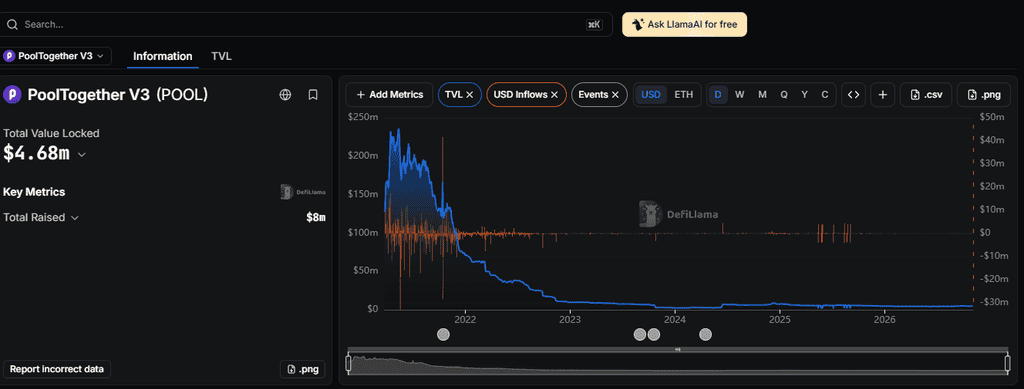
V3 brought “no-loss” prize savings to the fore, experiencing significant Total Value Locked and weekly participation during its growth phase. However, it was more fragmented across assets and chains than latter versions, which motivated PoolTogether’s subsequent architectural improvements.
Key Features
- Launched a no loss prize game model.
- uses deposited funds to create prizes opportunities
- It pays accrued interest as a reward.
- Support for various prize strategies and asset types.
- Enables users to withdraw deposited funds according to applicable pool rules.
Restrictions
- It’s older generation of protocol.
- Prize amounts vary based on accrued interest.
- The rules for participation may differ for different prize pools.
- Actual deployment and status of operation of Arbitrum unknown
8. PoolTogether V4
PoolTogether V4 released the “Tsunami” model to solve V3’s cross-chain deployment fragmentation. Instead of having discrete prize pools dividing rewards between networks, V4 introduced an abstraction layer allowing mutualization of deposits and prize liquidity across supported chains.
This allowed for bigger, more attractive prizes while maintaining the underlying no-loss mechanism – deposits earn DeFi yield, that yield funds prizes, and the user can withdraw their principal.
V4 also talked about more frequent smaller prizes and compounding winnings to keep long term saving engaging. This was a big step toward a more unified, scalable prize-savings system before the permissionless V5 redesign.
Main Features
- Offers prize-linked savings functionality.
- Pays prizes from yield generated from deposited assets
-Supports customizable prize pool settings. - Deposits and rewards management with intelligent contracts
- Provides a structure for different prize distribution strategies.
Limitations
- Rewards are based on performance of yield sources.
- Supported assets will differ between pools.
- Users are exposed to DeFi and smart contract risk.
- Need to do a deploy level check to verify current Arbitrum status
9. JustBet
Public search results did not provide an authoritative source identifying JustBet as a specific decentralized betting or lottery protocol. Other projects using the name are related to gambling and prediction markets, so it is not possible to reliably state details such as blockchain, supported assets, odds model, payout structure, and governance without ambiguity.

Most decentralized betting protocols use intelligent contracts to take bets, use oracle or user-supplied results to determine outcomes and distribute winnings, without a traditional bookmaker.
Main Features
- Related to blockchain gambling and betting.
- Has been involved with the WINR ecosystem.
- Employs digital resources in its gaming model.
- Provides opportunities to play games on the blockchain.
- been associated with lottery-style reward mechanisms.
Limitations .
- Current Arbitrum lottery availability is not verified.
- Need to confirm lottery specific functionality.
- Reward structures may vary depending on platform activity.
- Financial risks for users from smart contracting and gaming.
10. JackCo Protocol
The JackCo application on Base is powered by the no-loss prize-savings system called JackCo Protocol. It takes user deposits, puts them into curated DeFi yield strategies, collects the interest, and turns the yield into weekly prize pools. Chainlink VRF determines winners. The protocol is built to protect depositors’ principal and allow for withdrawal.

JackCo Protocol separates capital preservation from yield distribution and creates a fixed interest alternative where users retain their capital but trade off predictable yield for randomized opportunities to win. Risks include smart-contract vulnerabilities, strategy failures, oracle issues, and changes in the underlying DeFi yields.
Main Features
- Employs a prize-linked savings model.
- Accepts deposits in USDC.
• Earns rewards by using DeFi yield strategies. - Prize distribution randomized using Chainlink VRF.
- Prize draws that occur repeatedly based on the accumulated yield.
Limitations
- It is not created independently as a separate DApp from JackCo.
- Base, not Arbitrum, is its documented network.
- The prize values are based on the yield produced.
- DeFi integrations bring in smart-contract and protocol risks.
Comparison Table of Top Decentralized Lottery DApps
| DApp / Protocol | Main Function | Lottery Mechanism | Key Features | Important Limitation |
|---|---|---|---|---|
| DecentraLotto | Decentralized lottery | Smart-contract-based draws | USDT entries, jackpot, random selection | Winning is not guaranteed |
| Ample | Prize-linked savings | Randomized prize rewards | Savings-based participation, rewards | Prize availability depends on funding |
| PoolTogether V5 | No-loss prize savings | Yield-funded prize draws | Automated rewards, smart contracts | Rewards depend on generated yield |
| Jackpet | Blockchain lottery | Lottery-based winner selection | Wallet participation, prize management | Current deployment needs verification |
| JackCo | Prize-linked savings | Weekly prize draws | USDC deposits, yield-based rewards | Documented deployment is on Base |
| Acumulou | Blockchain lottery | Digital ticket-based participation | Smart-contract prize management | Arbitrum support needs verification |
| PoolTogether V3 | Prize-linked savings | Interest-funded rewards | Deposit-based participation | Older protocol generation |
| PoolTogether V4 | Prize-linked savings | Randomized prize distribution | Yield-based rewards, prize pools | Deployment availability needs verification |
| JustBet | Blockchain gaming | Gaming-based reward mechanisms | Digital asset participation | Current lottery functionality needs verification |
| JackCo Protocol | Prize-linked savings | Yield-funded prize draws | USDC deposits, randomized rewards | Not established as a separate DApp from JackCo |
Conclusion
Arbitrum decentralized lottery DApps feature blockchain-based participation, transparent prize distribution, smart contract automation, and crypto rewards. DecentraLotto, Ample and PoolTogether are all platforms that approach lottery games and prize-linked savings differently.
However, users should consider Arbitrum compatibility, smart contract security, randomness mechanisms, supported tokens and withdrawal conditions before participating. Winning outcomes and prize amounts are never guarantyd and financial risks are involved in blockchain transactions.
When choosing a reliable platform, it’s crucial to check its deployment status, reward scheme, and transparency. Prioritize security, understand the requirements for participation, and make informed decisions when looking into decentralized lottery applications.
FAQ
What Are Decentralized Lottery DApps on Arbitrum?
Decentralized lottery DApps are blockchain-based applications that use smart contracts to manage lottery participation, prize pools, winner selection, and reward distribution.
How Do Decentralized Lottery DApps Work?
Users connect compatible crypto wallets, purchase lottery entries or deposit supported tokens, and participate in prize draws managed through smart contracts.
Are Decentralized Lottery DApps Safe?
Their safety depends on smart-contract security, independent audits, randomness mechanisms, and platform transparency. Users should verify contracts before depositing funds.
Which Cryptocurrencies Can Be Used in Lottery DApps?
Depending on the platform, supported assets may include ETH, USDC, USDT, and other cryptocurrencies. Always check token compatibility before participating.
How Are Winners Selected in Decentralized Lottery DApps?
Some platforms use verifiable randomness solutions, such as Chainlink VRF, to select winners. Others may use different smart-contract-based selection mechanisms.