


Top Web3 Esports Tournaments with Token Prizes are changing how players compete, earn and own their rewards. Unlike traditional gaming events, these tournaments often pay out winners in crypto tokens, NFTs, stablecoins, or airdrops, giving players real digital ownership beyond trophies and cash prizes.
The ecosystem now features card games, shooters, racing titles and battle royales, from Axie Infinity’s DOJO and Parallel’s Prime League to YGG, W3GG, Community Gaming, Spider Tanks and Kafu Games. This guide delves into the top Web3 esports tournaments offering token prizes, discussing their organizers, formats, reward systems, eligibility, and competitive opportunities.
What Are Web3 Esports Tournaments?
Web3 esports tournaments are competitive gaming events driven by blockchain. Gamers participate individually or in teams to win cryptocurrency tokens, NFTs, and other digital rewards. These tournaments merge the traditional esports competitions with decentralized gaming ecosystems, where the participants can enjoy digital ownership and transparent reward distribution.
Players can jump into different gaming categories like strategy, shooting, racing and multiplayer battle games. Prizes may differ depending on the tournament, but could include native gaming tokens, valuable NFTs or other prizes. These competitions are new opportunities for gamers to show their skills and become part of the blockchain gaming communities.

How to Choose the Best Web3 Esports Tournament?
Definition: Web3 esports tournaments are competitive gaming events where players compete in blockchain-based games and earn rewards like crypto tokens, NFTs, stablecoins, or digital collectibles.
Integration with Blockchain: They use blockchain technology to verify ownership, record results, and distribute prizes, and sometimes give on-chain badges or credentials to participants.
Reward Types: Rewards can be in the form of cryptocurrencies, native game tokens, NFTs, airdrops, USDC, or fiat converted via crypto rails, and as such are transferable and tradable.
Types of Games: Popular titles include trading-card games like Parallel, shooters such as Nyan Heroes and Spider Tanks, racing games like REVV Racing, and battle-royale or strategy games.
Tournament Formats: Based on the game and size of the event, organizers may use single elimination, double elimination, Swiss rounds, round robin, leaderboards, qualifiers, and season-long points systems.
Organizers and Platforms: These events are hosted or automated by projects, guilds, publishers and platforms like Community Gaming, W3GG, Axie DOJO, Parallel League, YGG and Kafu Games.
Who can apply: Most of the time, players will need a game account, a compatible wallet and registration to participate in the event. Some competitions require NFTs, tokens, guild membership, ranked qualification or paid entry passes.
Pros and Cons: They offer ownership, global accessibility, and earnable rewards. Yet, players should consider token volatility, evolving game economies, regional regulations, and project viability.
Key Points
| Web3 Esports Tournament | Key Point |
|---|---|
| Axie Infinity DOJO Tournaments | Official competitive hub for Axie Infinity esports, featuring organized tournaments, rankings, and blockchain-based rewards for players on the Ronin network |
| Parallel Prime League (PPL) | One of the leading Web3 competitive circuits, offering seasonal tournaments, league points, qualification pathways, and substantial crypto-based prize pools. |
| Parallel Prime World Championship | Championship event for Parallel TCG, bringing top players together to compete for large prize pools and Web3 gaming prestige |
| W3GG Esports Tournaments | Web3 gaming tournament ecosystem with automated on-chain prize distribution, player identities, achievements, and blockchain rewards. |
| Yield Guild Games (YGG) Tournament Events | YGG-backed competitive gaming events regularly feature Web3 titles and blockchain rewards, helping gamers earn token-based prizes. |
| Community Gaming Web3 Tournaments | Popular blockchain esports platform hosting tournaments across multiple Web3 games with cryptocurrency prize payouts and automated rewards. |
| Spider Tanks Championship Series | Competitive esports circuit for the blockchain-based Spider Tanks game, where players compete for token and NFT rewards. |
| Nyan Heroes Competitive Tournaments | Solana-based hero shooter tournaments rewarding top performers with ecosystem prizes and digital assets. |
| The Harvest Championship Events | Web3 MOBA esports competitions featuring blockchain ownership, tournament rewards, and community-driven prize pools. |
| Kafu Games Crypto Tournaments | Mobile-friendly esports tournaments that allow players to compete for token prizes and other blockchain-powered rewards |
1. DOJO Tournaments on Axie Infinity
DOJO is Sky Mavis’ official competitive center for Axie Classic and related Axie modes in Axie Infinity. It allows players to join or host brackets with flexible formats, check-in flows, prize support, and live updates. Single elimination, double elimination, round robin or Swiss are common tournament formats.
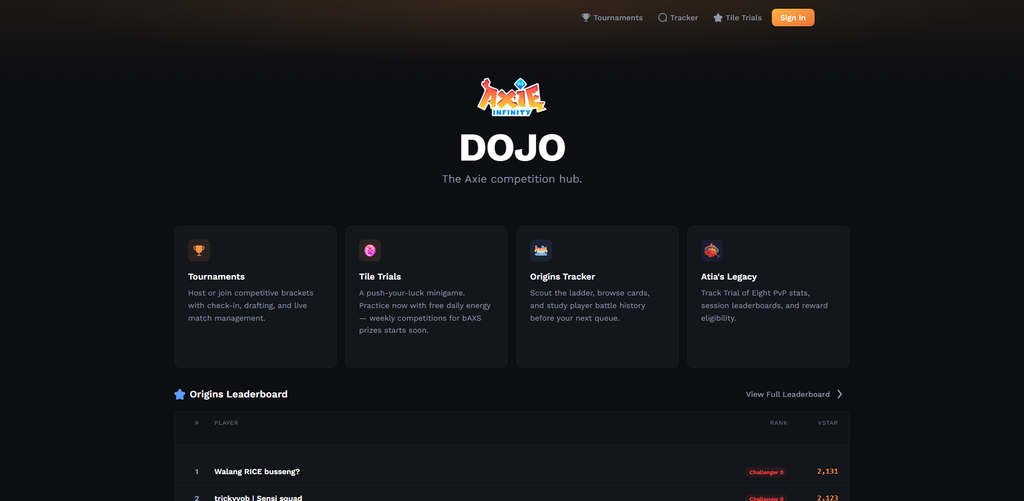
Recent Axie Classic seasons have included guild leaderboards, arena rankings, champion pools and daily mini-tournaments which have rewarded over 36,000 bAXS. An invitational of eight players had a double-elimination bracket of best-of-five matches with a pool of 5,000 bAXS. You generally need an Axie account and to qualify to participate, either through leaderboards, invites, or open events.
Advantages
- Offers competitive battles that reward the player for skill and strategic thinking.
- Supports Axie Infinity gaming ecosystem and its competitive community.
- Gives you chances to play for AXS and other tournament prizes when they are available.
- Encourages players to improve their team building and fighting skills.
- Encourages community engagement via competition and player participation.
Drawbacks
- Requires knowledge of Axie characters, abilities and battle mechanics.
- Some competitions may have limited entry slots available.
• Prize pools and token rewards may vary per event.
-NFT and in-game asset requirements may be a barrier to entry
2. Parallel Prime League (PPL)
The Parallel Prime League is the global competitive circuit for Parallel TCG, an Ethereum-based digital trading-card game from Parallel Studios. Opens, Minors and Majors structure play, providing entry points for new players while top players earn league points and qualification for the championship.
The league has pledged around $3 million in prize money spread over two years, with reports of larger championship funding coming in at around $3.25 million. Events come in various formats, but the standard for major tournaments is Swiss rounds into single elimination and Conquest-style matches. Qualification comes from ranked-ladder performance, qualifiers and Major invites.
Pros
- Establishes a competitive league for Parallel trading card game players.
- Provides a range of competition levels from Opens to Minors and Majors.
- Consistent tournament performance earns league points.
- It is an opportunity to qualify for higher level competitions.
- Helps to grow the competitive scene with organized matches, broadcasts.
Disadvantages
- Multiple decks and different strategies can take longer to prepare.
- Competitive formats require advanced deck-building skills.
- Good leaderboard performance may be required for higher tier tournaments.
- The qualification opportunities could be limited to the best players
3. Parallel Prime World Championship
The Parallel Prime World Championship is Parallel’s flagship final tournament of its competitive ecosystem, and is organized by Parallel Studios and the Parallel League. The first was February 28-March 2, 2025 at HyperX Arena in Las Vegas, where 16 players competed for a $250,000 pool and Jarla took home $100,000.
Ranked play feeds into qualifiers and Majors. The championship format is double elimination best-of-five Conquest matches. Players bring four decks from four different Parallels and ban one deck. The 2026 edition purportedly offered a top prize of $150,000. Eligibility must be gained through the PPL pathway.
Pros:
- Brings together the top-performing players from the Parallel competitive ecosystem.
- Provides championship prize opportunities with high value.
- Tests your deck building and tactical decision making skills.
- Uses a stepwise process of qualification and elimination.
- Gives international exposure on major competitive broadcasts.
Disadvantages
- Casual players may find it hard to qualify.
- Requires a lot of prep and knowledge of various card factions.
- It can be tough for new players to compete with the best.
- Only selected qualifiers will be allowed to compete in the Championship
4. W3GG Tournament
W3GG is a decentralized gaming and rewards ecosystem that hosts online and in-person tournaments, quests, guild events and progression systems. Its Autumn Season 2025 was October 6-December 6 with a $5,000 prize pool split between Web2 and Web3 games.
Participants win WXP, unlock Progression Badges on-chain and can join guild Raid Boss challenges or limited Premium Events, which are capped at 50 participants and cost 400 W3GG tokens.
Premium event tasks are divided into gameplay, social content and ecosystem sharing, with rewards like 500 WXP and $10 USDC. Requirements vary by event, some have token entry fees or guild participation.
Benefits
- Connects players to Web2 and Web3 gaming competitions.
- Gives access to seasonal challenges and leaderboard rewards.
- Lets you play with the community by joining guilds.
- Creates opportunities to earn rewards within the W3GG ecosystem.
- Encourages players to participate in Quests and competitive events.
Cons .
- Rewards may differ between games and seasonal campaigns.
- Certain opportunities could be gated by achievements in the game.
- Token rewards are subject to market volatility.
- Tournament availability is based on games that are participating and organizers
5. Event: YGG Tournament
Yield Guild Games runs esports and community tournaments via its worldwide guild network and YGG Play Summit. Among them are the $150,000 REVV Racing YGG Cup, which saw 1,000 prizes distributed at 67% in REVV and 33% in YGG tokens, and a $100,000 Parallel TCG event at YGG Play Summit 2024.
The Parallel event featured two 128-player global qualifiers, Swiss best-of-three Conquest rounds and a 16-player finale. YGG also hosted the $20,000 Vibes Asian Championship, which was open to 128 players and consisted of Swiss qualifiers and a top-eight single-elimination final. Rewards include crypto tokens, NFTs, league points and event prizes.
Advantages
- Connects gamers to an existing Web3 gaming community.
- Offers opportunities to play different blockchain games.
- Support for community tournaments and organized esports events.
- Potential Token and Game Related Rewards Offered.
• Supports collaboration among players, guilds, and gaming partners.
Cons
- Availability of the tournament varies in gaming communities.
- Some events have requirements for NFTs or guild membership.
- Partner games can have different reward structures.
- Players might require experience in different gaming ecosystems.
6. Community Gaming Web3 Tournaments
Community Gaming is a Web3 esports infrastructure platform that allows organizers to host tournaments and automatically pay winners via intelligent contracts. It supports games such as Valorant, Mobile Legends, PUBG, Hearthstone, Teamfight Tactics, Marvel Snap and Parallel with prizes settled in USDC, stablecoins, fiat or crypto across chains such as Base, Ethereum, Polygon, BNB Chain and Mantle.
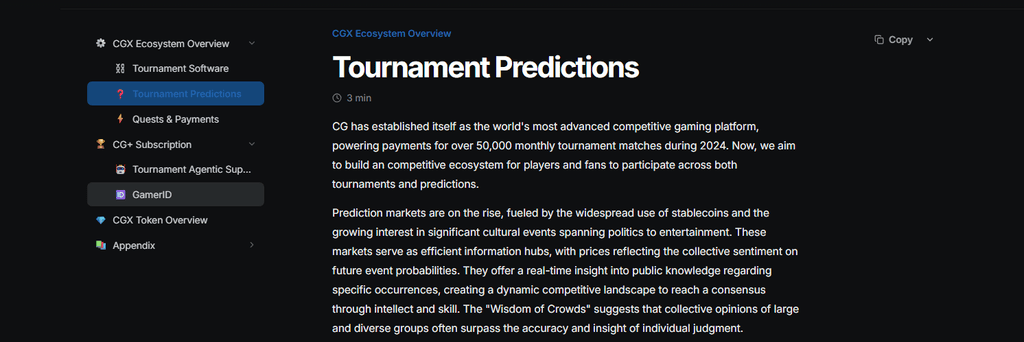
Over 30,000 competitions have been held on the platform and over $2.5 million has been paid out. Format is customizable (1v1, 5v5, battle royale, Swiss, single elimination). It is contingent upon the tournament . You need to connect your wallet to play . Rewards can be USDC , a project token , NFTs and loot-box rewards .
Benefits
- Supports competitive tournaments in a variety of gaming titles
- Offers competitive play for players of all skill levels.
- Provides opportunities to distribute prizes in cryptocurrency.
- Enables the management of tournaments and community engagement in competition.
- Organizers can host gaming competitions more easily.
Cons
- Prize pools are determined by the individual tournament organizers.
- Some competitions may have entry fees.
- Different games have different rules for players to follow.
- Entry barrier: The necessity of having a wallet and cryptocurrency
7. Spider Tanks Championship Series
Spider Tanks is Animalia’s PvP brawler released on the Gala Games ecosystem, and its Championship Series has served as the title’s organized competitive track. The series typically features teams competing in structured seasons or bracket tournaments, with matches emphasizing strategic hero and tank selection, map control, and objective based play.
Historically, prize support has been tied to Gala’s Web3 economy, with rewards typically paid out in game-linked tokens, NFTs or sponsored prize pools. To enter you must have a Spider Tanks account and abide by the rules of the event.
Some events may require that you own or have access to certain in-game assets. Spider Tanks or Gala official channels for the exact current pools and schedule as the details of Web3 events change frequently.
Benefits
- Features competitive PvP tank battles.
- Rewards players for match performance and Victory Points.
- Supports opportunities for SILK token rewards.
- Includes team-based and individual competitive gameplay.
- Allows for the possibility of earning gaming-related NFT rewards.
The cons
- Strong aiming and tactical gameplay skills needed.
- Team coordination is needed to be competitive.
- Some of the rewards could be NFT or Node involvement.
- Token rewards distribution may change with game economy updates
8. Nyan Heroes
Nyan Heroes is a cat-themed mech hero shooter from 9 Lives Interactive that is running on the Solana blockchain. Its most notable competitive campaign was Playtest 4, distributing 6.7 million NYAN tokens (valued at nearly $200,000) through the Challenger, Leaderboard, and Genesis NFT tiers.
Players could earn MEOW points from matches and missions, with the top-ranked player getting 250,000 NYAN, while Genesis NFT holders got multipliers.
The game included 60-player battle-royale and competitive shooter modes, eligibility for which was determined by playtest access, number of matches played, wins, rankings and NFT ownership. Importantly, Nyan Heroes was shut down on May 16, 2025, so its tournaments are no longer alive.
Pros:
- Merges competitive shooter gameplay with a Web3 gaming environment.
- Provides opportunities for competitive experiences within teams.
- Supports tactical combat and character-driven play.
- Links gaming activities with digital asset ownership.
- Promotes community-based esports participation.
Disadvantages
- Opportunities to compete may depend on game development and event scheduling.
- Requires understanding of shooter mechanics.
- Players might take some time to understand the NFT ecosystem of the game.
- Check for the availability of a token prize for each event
9. The Harvest Championship Events
The Harvest Championship is the name for Upland’s seasonal Harvest Championship Racing series, a competitive racing circuit based on weekly time-trial qualification and points-based racing. To be eligible to join the 2026 season , players purchase a Racing Pass for 30,000 UPX . Only 1,000 passes will be available . Registration fees create a common seasonal purse , courtesy of Upland .
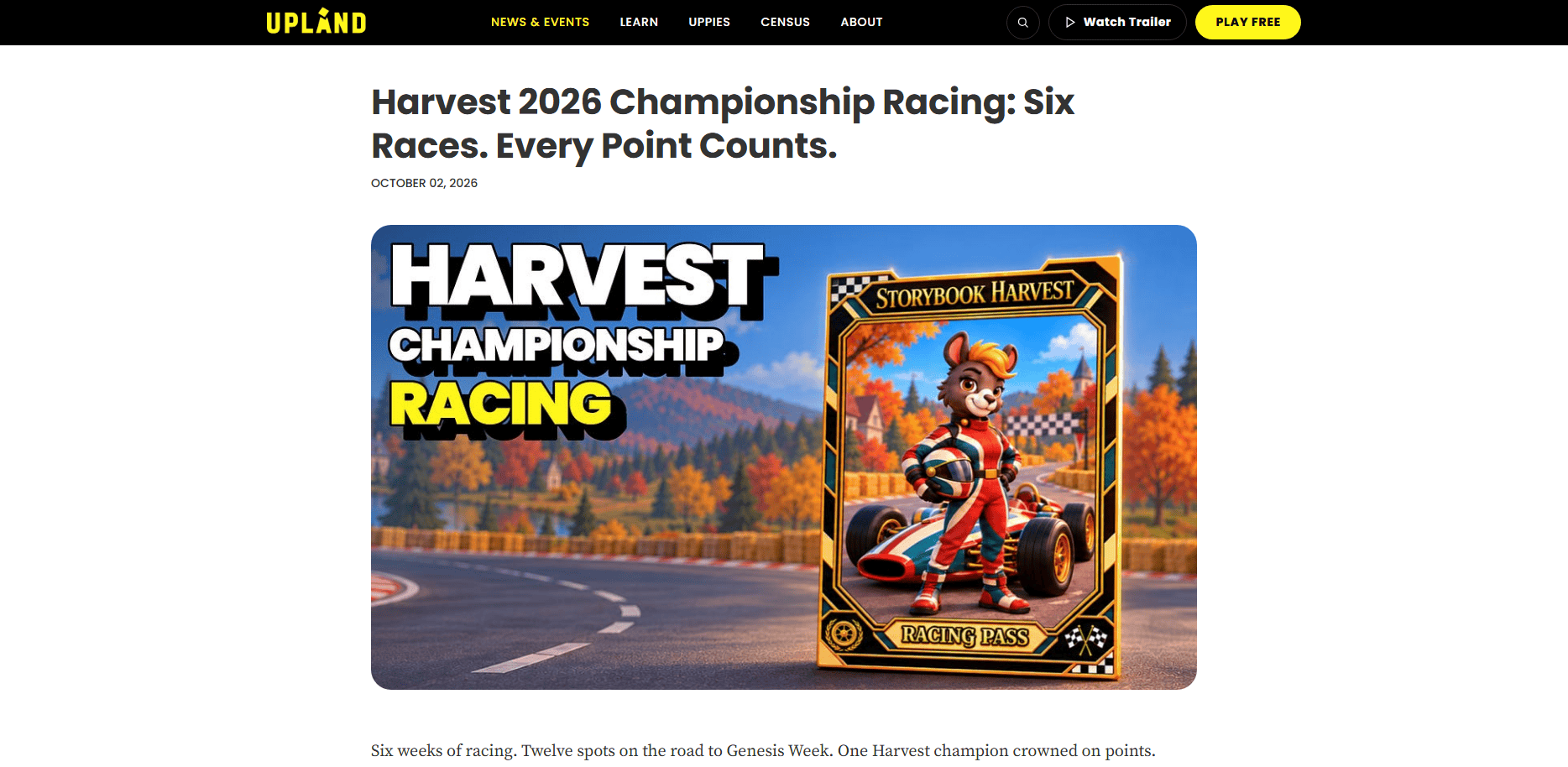
Then 24 of the fastest qualifiers race each week for points . At the end of 6 races the racer with the most points is crowned champion . No separate final . Rewards include weekly and seasonal UPX payouts, exclusive podium badges and creator rewards of 25,000 UPX for select track designers. To be eligible, you have to hold the Racing Pass via the eligibility snapshot.
Advantages
- Mixes multiplayer action with competitive gameplay elements.
- Encourages team work and co-ordinated battle tactics.
- Provides opportunities for competition according to ability.
- Enable participation in a Web3 gaming ecosystem.
- Offers potential opportunities for community tournament involvement.
Cons
- Needs to know character abilities and fight mechanics.
- Team chemistry can play a role in tournament play.
- Competitive events subject to availability and change.
- Token rewards might not be always guarantyd in each championship
10. Kafu Games Crypto Tournaments
Kafu Games is a crypto-focused esports tournament platform that hosts weekly competitions where players can win prizes in their favorite cryptocurrencies. The platform says it’s dedicated to community-run tournaments, blockchain innovation, NFT and token airdrop whitelists and winners donating prize money to charity.
Through its business offering it also enables organizations to create and run esports tournaments, and the site promotes over 10 million SAR in prizes across its ecosystem. Each event will have its own format, entry requirements, game categories, and reward tokens, so players should check each tournament page before entering. Common rewards include gaming gear, NFTs, airdrop opportunities, and crypto tokens.
Benefits
- Supports a number of popular competitive games.
- Provides access to multiplayer esports tournaments.
- Provides structured weekly tournaments.
- Offers a prize competition for players of varying skill levels.
- Encourages community engagement through gaming challenges.
Disadvantages
- Rewards can be of any type, it’s up to the tournament organizers.
- Not every tournament offers crypto or token prizes.
- Limited registration availability for some competitions.
- Different games have different qualification criteria for players to participate.
Conclusion
Web3 esports tournaments are competitive gaming events that incorporate blockchain-based ownership and rewards. Card games, shooters, racing titles and battle royales can all be contested on platforms like Axie DOJO, Parallel League, W3GG, YGG, Community Gaming and Kafu Games. Prize pools vary from small community prizes to six-figure championships, paid out in tokens, NFTs, stablecoins or crypto.
Formats include qualifiers, swiss rounds, leaderboards and elimination brackets. These events offer global opportunities to earn and own, but players should consider token volatility, entry requirements, game lifespan, and project sustainability before jumping in. Web3 esports, in general, is becoming a more accessible and incentive-driven extension of competitive gaming.
FAQ
What are Web3 esports tournaments?
They are competitive gaming events built around blockchain games. Players compete for crypto tokens, NFTs, stablecoins, airdrops, or other digital rewards, often with on-chain registration, rewards, or achievement records.
Which games commonly host Web3 tournaments?
Popular examples include Parallel TCG, Axie Infinity, Spider Tanks, Nyan Heroes, REVV Racing, Upland racing, and other Web2 or Web3 titles hosted through platforms such as Community Gaming and W3GG.
What rewards can players win?
Rewards may include USDC, native game tokens, cryptocurrencies, NFTs, Genesis assets, airdrop allocations, badges, or fiat-equivalent prizes. Some events also offer whitelist spots or community recognition
How do players join?
Players typically register through the organizer’s platform, connect a compatible wallet, meet eligibility rules, and compete in qualifiers, open brackets, leaderboards, or invitation-only events.