The Best Startup Equity Investment Platforms can make all the difference in the world to investors and entrepreneurs seeking to get in on private business funding. There are lots of platforms with different investment models, funding possibilities, ownership set-ups and investor requirements so it’s important to compare them carefully to find the right one. In this article, we’ll go over the best platforms for investing in startup equity. We’ll cover the key features, investment options, fees, eligibility requirements, and benefits of each platform to help readers make more informed investment decisions.
Benefits of Using Startup Equity Investment Platforms
Opportunities for Early Stage Investment: These platforms allow investors to discover promising early-stage startups across a range of industries and get involved in emerging businesses prior to the later stages of funding.
A Wider Pool of Investors: Startups can tap into a broader spectrum of investors beyond the typical venture capital firms, allowing founders to secure funding from individuals who are passionate about supporting new and innovative business concepts.
Reduce the investment entry barriers: Where regulations permit, many equity crowdfunding platforms provide relatively low minimum investment amounts, giving eligible non-accredited investors the chance to participate in startup funding opportunities.
Portfolio Diversification: Investors can distribute capital among various startups, sectors and business models, minimizing reliance on individual companies and accessing a range of growth prospects.
Simplifying the Digital Investment Process: Online platforms make it easier for investors to find startups, apply for investments, process payments and complete documentation, making it more convenient for investors to participate and easier for businesses to manage fundraising.
Alternative Fundraising Options: Startups can raise equity capital without solely relying on traditional banks, venture capital firms or institutional investors. This offers additional financing options for business development and expansion.
Opportunity to Back Innovation: Investors get to help new businesses bring to life new technologies, products, and services, and at the same time, gain from the possible financial returns from innovative companies and entrepreneurial projects.
Greater Investor Transparency: Many of the platforms offer company profiles, fundraising information, financial information, and investment documentation to help investors evaluate opportunities and understand key business information prior to the investment of capital.
How to Choose the Best Startup Equity Investment Platform?
See How Investment Models Stack Up: See if the platform provides equity crowdfunding, angel investing, venture capital syndicates or private placements. Select an investment model that matches your experience and financial objectives.
Check Minimum Investment Requirements: Review the minimum funding round investment amount for investment in startups. Choose a platform that matches your available capital and preferred investment strategy.
Account for Platform Fees: Compare investor fees, transaction fees, management fees and other fees. Understanding the full fee structure helps investors better estimate costs and evaluate potential returns.
Check Investor Eligibility: Find out whether the platform accepts accredited or non-accredited investors. Also, check residency requirements, identity verification procedures and applicable securities regulations before opening an investment account.
Startup Selection Overview: Consider how platforms vet startups, scrutinize business models and perform due diligence.
Verify Geographic Availability: Make sure the platform operates in your country and supports your residency status. Focus on opportunities with clear company details, trustworthy founders, and open financials. Participation may be affected by cross-border investment restrictions, local regulations and currency requirements.
Evaluate Investment Management Tools: Look for tools with features such as portfolio tracking, investment documentation, performance updates and reporting. These tools help investors track their holdings, review company progress and organize startup investments.
Know Your Liquidity and Exit Options: Check if investments have secondary market, buy-back provisions or potential exit opportunities. Understand holding periods before investing as startup equity is usually illiquid.
Key Points
| Platform | Key Point |
|---|---|
| Wefunder | Connects startups with everyday investors through equity crowdfunding. |
| StartEngine | Provides equity crowdfunding and access to a broad investor community. |
| Republic | Offers curated private-market investment opportunities across different industries. |
| Netcapital | Helps startups raise capital online while giving investors access to private-company offerings. |
| MicroVentures | Combines startup investment opportunities with a more curated investment approach. |
| DealMaker | Provides digital fundraising infrastructure for companies conducting regulated securities offerings. |
| AngelList | Connects accredited investors with startup deals, venture funds, and syndicate investments. |
| OurCrowd | Provides access to selected startup and venture investment opportunities through its global network. |
| Crowdcube | Enables investors to purchase equity in businesses through online investment campaigns. |
| FrontFundr | Connects Canadian businesses with investors through regulated online investment offerings. |
1. Wefunder
Wefunder is a U.S. equity-crowdfunding platform founded in 2012 that provides everyday investors the opportunity to buy shares in early-stage startups, small businesses and funds. The investment model is based on “Community Rounds” and typically uses Regulation Crowdfunding, SPVs or direct private placements.
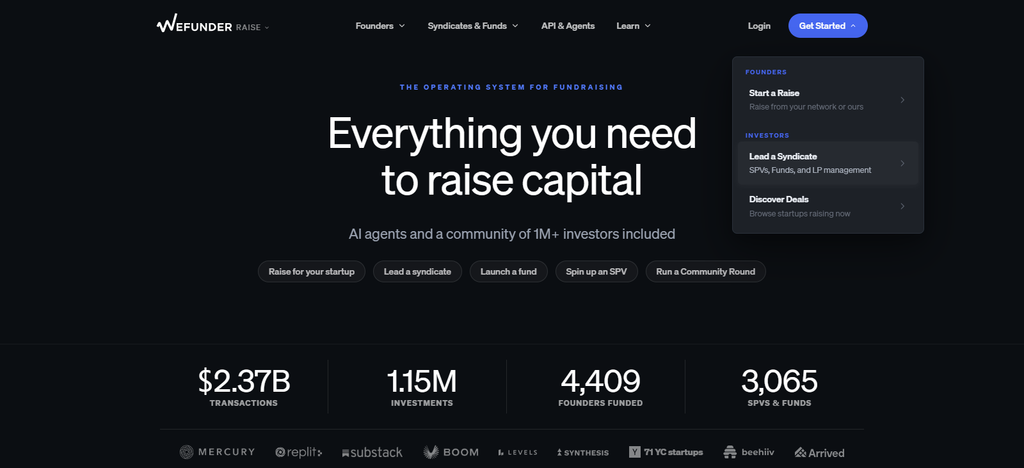
It assists founders in their campaigns, investor pitches and fundraising efforts, starting at $50,000. Each company sets its investor minimums, but they usually start at around $100. U.S. investors generally can participate. Non-accredited investors are subject to Reg CF annual limits. Fees are based on the payment method: 2% (min $8, max $150) for bank transfer, 5.5% + $2 for card payments.
Characteristics
- Permits equity crowdfunding under Regulation Crowdfunding (Reg CF).
- Provides private rounds to eligible accredited investors.
- Enables community members and customers to invest in startups.
- Supports SAFE agreements, convertible notes and priced equity offerings.
- It offers campaign pages, investor interaction tools and SPV structures.
Ideal for:
- Early stage startups seeking funding from a community.
- Founders who want to make customers investors
- Companies raising capital through Reg CF offerings.
- Startups looking for private fundraising and investor network assistance.
2. StartEngine
StartEngine is a leading U.S. equity-crowdfunding marketplace founded in 2014 that connects retail investors with startups in technology, consumer products, real estate and other sectors. It operates mainly through Regulation Crowdfunding and Regulation A+ offerings which allow both accredited and non-accredited investors to participate within legal limits.
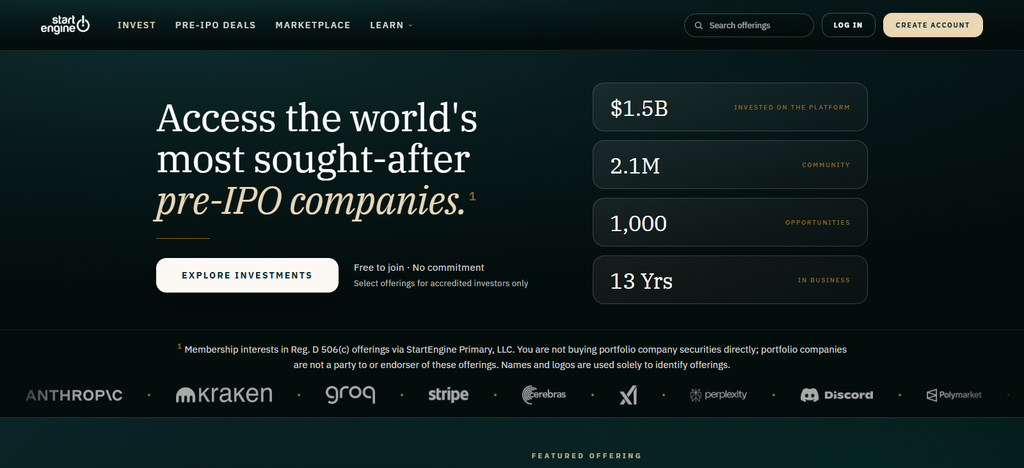
StartEngine gives founders the fundraising infrastructure, compliance support, marketing exposure and access to a large pool of investors. Minimum investment varies by campaign and typically starts around $100-$250.
Investors are charged a processing fee of 3.5% by the platform, with a maximum fee of $700. Its marketplace is mostly focused on U.S. offerings, though eligibility and availability may vary by campaign.
Main Features
- Supports Regulation Crowdfunding and Reg A+ offerings
- Gives access to a large community of retail investors.
- Provides access to investment opportunities in start-ups and privately held companies.
- Provides promotion support and fundraising campaign management.
- Conducts Secondary trading of applicable securities on StartEngine.
Ideal For
- Brands with established name recognition and customer communities.
- Consumer-focused startups seeking public investment.
- Companies looking for retail investors.
- Startups looking to run bigger equity crowdfunding campaigns.
3. The Republic
Republic is a global investment platform offering equity crowdfunding, tokenized assets, real estate, crypto and venture fund opportunities. Founded in 2016, Republic Its model allows retail investors to invest in private-market deals alongside professional investors, often using structures such as Reg CF, Reg A+ or Reg D.
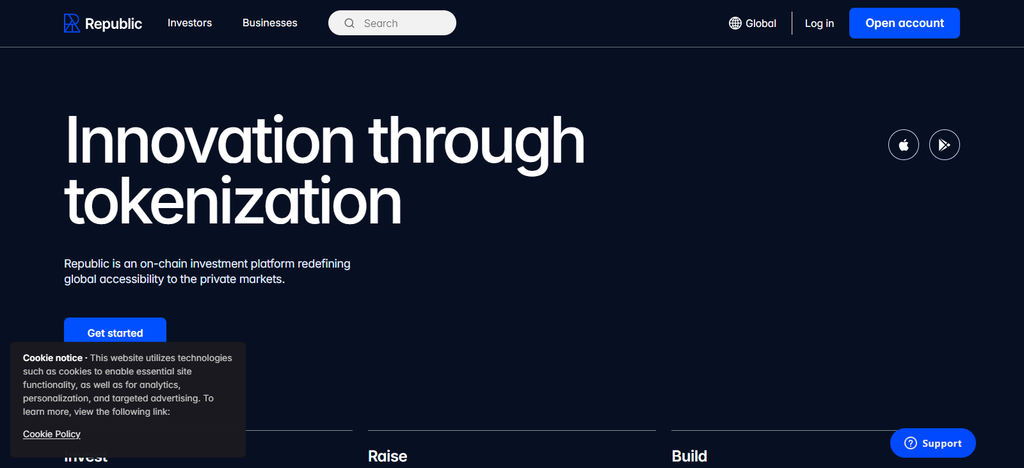
Republic helps startups create campaigns, stay compliant, manage investor relations and distribute to its community of investors. Minimum investments are specific to the deal and can be as low as about $10–$100.
Primarily for U.S. investors, with limited international access depending on the offering and securities rules. Investor fees are typically 2.5% with a minimum of $5 and a maximum of $250, but it really depends on the deal.
Main Features**
- Carefully selected private-market investment opportunities.
- regulation compliant Crowdfunding and other sales of securities.
- Coverage of startups in technology, fintech, consumer and emerging sectors.
- Connects companies to a global community of investors.
- It provides the investment infrastructure for equities, funds and other private market assets.
Best For
- Tech startups that are looking for outside investment.
- Innovative companies looking for exposure to investors.
- Companies with scalable business model
- Private-market opportunities for accredited investors.
4. Net capital
Netcapital is a U.S. crowdfunding platform that enables early-stage companies to raise capital from accredited and non-accredited investors. The company was founded in 2014 and runs an online funding-portal model under Regulation Crowdfunding, which allows investors to purchase securities in private companies for relatively low entry amounts.
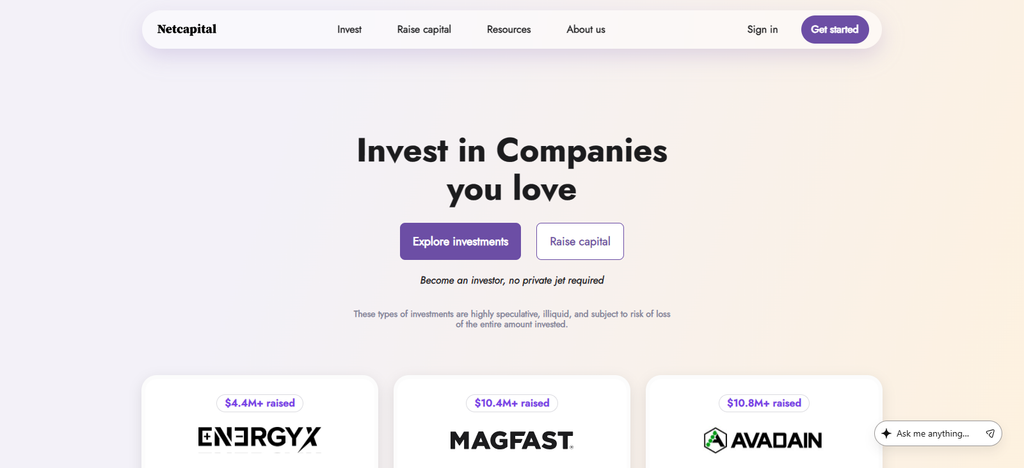
They help startups with offering prep, investor communications, compliance and campaign promotion. Minimum investment requirements vary by company but can begin as low as $99, making it accessible to smaller ticket investors.
Netcapital says it doesn’t charge a general investing fee, though payment providers may charge. Its offerings are generally available to eligible U.S. investors, with Reg CF investment limits for non-accredited investors.
Key Features
- Crowdfunding of equity in private companies online.
- Gives access to Regulation Crowdfunding offerings.
- Provides digital fundraising and investment processing.
- Enables companies to showcase business information to potential investors.
- electronic investment documentation and transaction processing.
Best suited for
- Early stage companies seeking to raise capital online.
- Technology start-ups seeking equity capital.
- Founders contemplating regulated crowdfunding.
- Investors looking for private company offerings.
5. Micro Ventures
MicroVentures is a U.S. investment platform that offers venture-capital-like access to startups, later-stage private companies and select funds. Founded in 2009, it mixes crowdfunding with a more curated, diligence-led approach than many open crowdfunding sites. Its investment model features Reg CF offerings for retail investors and Reg D placements for accredited investors, sometimes via funds or special purpose vehicles.
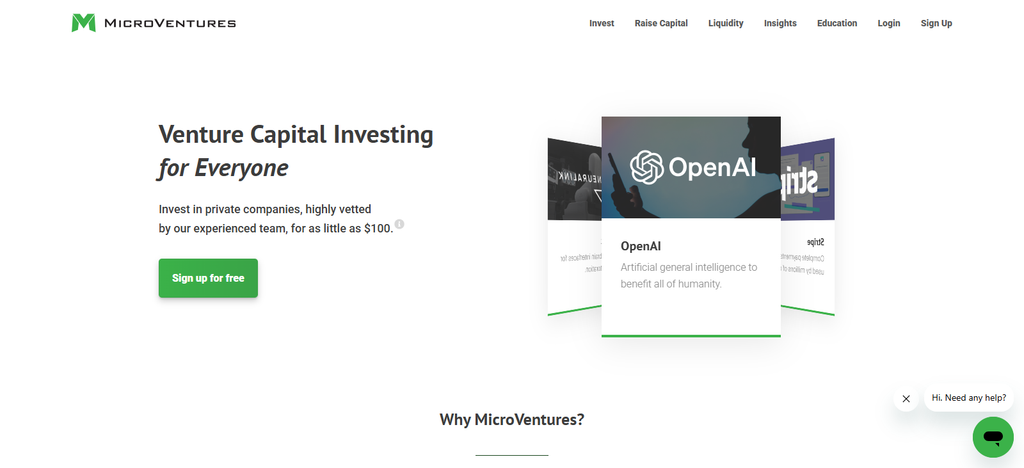
The platform provides startups with fundraising, investor matching and deal administration. Minimum investments vary by offering. Some entry-level deals are available to smaller investors, while premium private placements may require much larger commitments. Eligibility varies by offering type, and some deals require accredited investors. Each investment page will disclose fees and minimums.
Main Features**
- Offers access to early stage and late stage private investments.
- Provides equity crowdfunding through regulated securities offerings.
- Offers private placements to qualified investors.
- Investment opportunities in start-ups and mature private companies.
- Provides online access to investments, including deal screening and investment support.
Ideal For
- Startups with proven business traction.
- Companies seeking to raise money in the private markets.
- Accredited investors investing in startups.
- Investors looking for early-stage and pre-IPO opportunities.
6. DealMaker
DealMaker is a capital-markets technology platform that allows companies to raise capital through regulated online offerings including Regulation Crowdfunding, Regulation A+ and private placements. It’s particularly known for powering high-volume campaigns and providing issuers with investor onboarding, payment processing, compliance workflows and transfer-agent-related infrastructure.

DealMaker is more often the technology and broker-dealer infrastructure for a company’s offering rather than being primarily a curated marketplace. Each issuer sets the minimum amount you have to invest, so these vary widely.
Transaction Fee (Reg CF transactions only) 8.5% of the transaction amount which includes transaction processing and broker-dealer costs. Availability and eligibility to investors depend on the specific issuer, offering structure and applicable securities regulations.
Key Features
- Offers white-label fundraising technology to companies.
- Supports Regulation Crowdfunding, Regulation A+ and Regulation D offerings.
- Digital investment processing and payment management offered.
- Provides the infrastructure for investor onboarding and KYC and AML compliance.
- Campaign analytics, investor management and marketing support.
Best used for
- Companies preparing for major fundraising efforts.
- Companies looking for branded investment portals.
- Startups that raise capital through regulated securities offerings.
- Growing companies who have their own investor communities.
7. angellist
AngelList is a U.S.-focused private-market investing ecosystem with access to startup syndicates, venture funds and special-purpose vehicles. It was founded in 2010 and is mainly targeted at accredited investors who want to invest alongside experienced lead investors or fund managers.
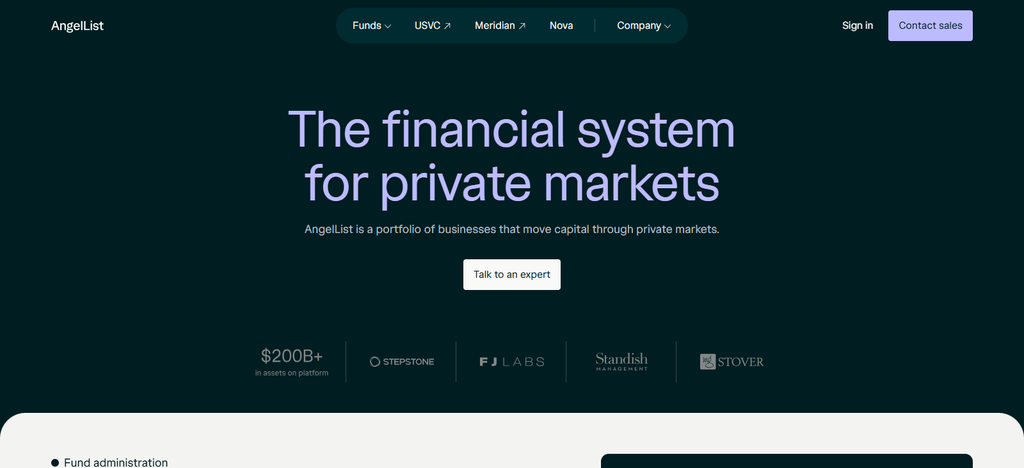
Its investment model is based on syndicates, rolling funds and SPVs, with a lead sourcing and negotiating deals, and investors committing capital. The minimums vary by syndicate lead or fund and can be as low as $1,000 although many require more than that.
AngelList requires investors to meet U.S. accredited-investor standards, which include specified income or net-worth thresholds. SPVs typically require a minimum of $80,000 to be raised. Its platform is primarily available to qualified U.S. and select international accredited investors.
Main Features
- Links investors with startup investment opportunities.
- Supports angel syndicates and VC funds.
- Provides administration of Special Purpose Vehicles (SPVs).
- Offers fund formation and investment management infrastructure;
- Portfolio tracking and investor administration tools are offered.
Best Suited For
- Angel investors looking for opportunities to invest in startups.
- Venture capital fund managers
- Investors with experience in syndicate deals.
- Founders seeking funding via angel investor networks.
8. OurCrowd
OurCrowd, founded in 2013, is a global venture-investment platform that provides accredited investors access to curated funding rounds in startups and growth companies. It does internal due diligence and often invests alongside institutional investors before giving opportunities to its members, unlike open crowdfunding sites.
It invests directly through equity, funds and co-investment opportunities in the technology, healthcare, climate and other sectors. The minimum investment is $10,000, so it’s a higher-ticket platform.
It is available to investors in most countries, excluding certain sanctioned or restricted jurisdictions. Some opportunities are available only to Qualified Purchasers. OurCrowd’s fees vary by investment and may include management, performance and other fund-level charges. Investors should review the documents for each deal.
Key Features**
- Curating investment opportunities in start-ups.
- Focused on technology and innovation focused enterprises.
- Offers access to venture capital investment opportunities.
- Connects investors and startups in global markets.
- Supports investment research and due diligence
Perfect For
- Accredited investors looking for private startup investments.
- Investors in tech companies
- Firms looking for venture capital contacts.
- Investors looking for international startup opportunities.
9. Crowdcube
Crowdcube is a UK-based platform for equity crowdfunding that was launched in 2011 to enable retail investors to buy shares in early-stage and growth businesses. Its investment model is based on publicly listed crowdfunding campaigns and investors can make relatively small equity investments in companies looking for growth capital.
Crowdcube helps startups with marketing a campaign, investor engagement, legal documentation and post-investment communication. Each campaign has its own minimum investment, but there are many offerings with modest entry-level investments.
The platform is for UK and eligible European investors only and subject to local securities rules. Crowdcube charges investors an investment fee of 2.49% – minimum £5 and maximum £500. Investors should understand that shares in private companies are illiquid and at risk of substantial loss.
Key Features
- Allows companies to raise capital by equity crowdfunding.
- Lets eligible investors buy shares in private companies.
- Management of online fundraising campaigns.
- Promotes investments in new and expanding businesses.
- Administers nominee-based investments for qualifying offerings.
Best suited for
- UK-based startups looking for equity investment.
- European companies seeking community investment.
- Shareholder communities from consumer brands.
- Private companies eligible for retail investors.
10. FrontFundr
FrontFundr is Canada’s equity crowdfunding and exempt market platform connecting Canadian investors with private companies seeking capital. It operates under Canadian securities exemptions, offering eligible retail investors access to private company offerings that were traditionally available only to the wealthy or professional investors.
Their investment model includes crowdfunding campaigns, private placements and fund opportunities from time to time. FrontFundr provides issuers with due diligence, listing, compliance, investor relations and capital raising services.
Investor minimums differ per campaign, and Canadian retail investors are generally allowed to invest up to $2,500 per company per campaign over a 12-month period, rising to $10,000 if deemed suitable by a registered dealer. Investors pay a processing fee of 3.0% with a minimum of $10 and a maximum of $350.
Highlights
- Offers online equity crowdfunding opportunities.
- Connects Canadian businesses to potential investors.
- Supports offers of controlled securities.
- Digital investment processing and documentation.
- Provides fundraising campaign support and tools for investor communications.
Ideal For
- Canadian start-ups looking for equity financing.
- Raising private capital by small and growing companies.
- Canadian investors looking for startup opportunities.
- Companies looking for community investment.
Conclusion
Platforms that allow equity investment in startups provide a great opportunity for startups that need alternative funding and investors who want to own shares in a private company. Platforms like Wefunder, StartEngine, Republic, AngelList and Crowdcube have their own investment models, fundraising solutions and access to investors.
But selecting the right platform means comparing minimum investment requirements, fees, eligibility, securities available, geographic availability and due diligence processes. Investors should also consider liquidity constraints and the potential for financial loss before they engage.
Which the best startup equity investment platform is will ultimately come down to your personal investment goals, risk tolerance, funding needs, and eligibility under regulations.
FAQ
What Are Startup Equity Investment Platforms?
Startup equity investment platforms are online services that connect startups with investors. They allow eligible individuals to invest in private businesses in exchange for shares or other securities.
Which Are the Best Startup Equity Investment Platforms in 2026?
Some leading platforms include Wefunder, StartEngine, Republic, Netcapital, MicroVentures, DealMaker, AngelList, OurCrowd, Crowdcube, and FrontFundr.
How Do Startup Equity Investment Platforms Work?
Startups create fundraising campaigns or investment offerings, provide business information, and invite eligible investors to participate. Investors review opportunities, complete verification, and invest under the applicable securities terms.
Can Beginners Invest Through Startup Equity Investment Platforms?
Yes, some platforms accept non-accredited investors, depending on applicable regulations and offering requirements. Beginners should understand investment risks, fees, and eligibility before committing money.
What Is the Minimum Investment Required?
Minimum investment requirements vary by platform and individual offering. Some crowdfunding opportunities allow relatively small investments, while private placements and venture capital deals may require substantially higher amounts.