


For applications that need fast RPC responses, consistent uptime and scalable node access, you want a reliable blockchain infrastructure. This article will cover the Top NodeReal Alternatives for High-Speed Nodes and what each platform offers.
I’ll go through their supported networks, node infrastructure, performance, API capabilities, scalability, pricing models, and key features so you can see how these providers compare to one another for different Web3 development needs.
What Is Node Infrastructure?
Node infrastructure is the hardware, software, networking and cloud resources used to operate blockchain nodes and deliver reliable access to blockchain networks. It allows applications to read the data on-chain, send transactions, subscribe to events and interact with intelligent contracts via RPC and API endpoints.
Modern node infrastructure can include full nodes, archive nodes, dedicated nodes, validators and globally distributed servers. Web3 applications and high-volume blockchain workloads require reliable infrastructure, where performance depends on latency, throughput, uptime, network coverage, and scalability.

How to Choose a NodeReal Alternative
Blockchain Network Support Choose a provider that supports the blockchains you want your application to connect to. This includes all major Layer-1 and Layer-2 networks, allowing you to support multiple ecosystems with consistent infrastructure.
Node Rate Compare RPC response times, latency, throughput, and request volume. The applications are thus able to efficiently process blockchain requests, particularly in times of high network activity, thanks to the high-performance infrastructure.
Reliable Performance and Uptime Look for published uptime commitments, redundancy, monitoring, failover systems and service-level agreements to ensure your application will have reliable blockchain connectivity during unforeseen infrastructure issues.
RPC and API Capabilities Evaluate JSON-RPC, WebSocket, REST APIs, archive access, advanced blockchain APIs, transaction services and other developer tools based on your application’s unique data and infrastructure requirements.
Scalability: Choose infrastructure that can scale to handle increasing numbers of requests, users, transactions and blockchain workloads. Flexible capacity, dedicated resources, and higher throughput limits can enable application development.
Price model: Look at free allowances, subscriptions, pay-as-you-go rates, request units, API credits, overage charges, and dedicated-node costs for a true picture of your anticipated infrastructure spending.
Infrastructure & Security: Check infrastructure security, control of access, network protection, node isolation, monitoring, and operational safety measures. These factors help to protect the blockchain connectivity and application infrastructure from disruptions.
Support for Developers: Check the documentation quality, SDKs, integration tools, technical support, troubleshooting resources and enterprise support. Strong developer support can lower deployment, maintenance, and infrastructure management.
Key Points
1. Alchemie
Alchemy offers managed blockchain node and RPC infrastructure for Web3 apps with support for 100+ blockchain networks. Its infrastructure exposes developers to standard JSON-RPC access, but also WebSockets and dedicated APIs for tracing, debugging and real-time data streaming.
Supported ecosystems include Ethereum, Base, Arbitrum, Polygon, Solana, Bitcoin, BNB Chain, Avalanche and more. Alchemy builds its node infrastructure for enterprise-grade reliability and large-scale applications, handling large on-chain transaction volumes.
Its APIs support read/write operations, transaction submission, event monitoring and blockchain-state queries. The platform can scale from development workloads to production applications requiring reliable multi-chain access.
Alchemy
| Pricing Element | Details |
|---|---|
| Pricing Model | Free + Pay-As-You-Go + Enterprise |
| Free Plan | 30M Compute Units (CU) per month |
| Pay-As-You-Go | $0.45 per 1M CU up to 300M CU; $0.40 per 1M above 300M |
| Free Throughput | 25 requests/second |
| Paid Throughput | Starts around 300 RPS |
| Enterprise | Custom pricing with volume discounts and signed SLAs |
| Billing Metric | Compute Units based on request complexity |
| Additional Costs | Throughput add-ons and certain specialized services can cost extra |
| Pricing Focus | Usage-based billing that scales with application consumption |
2. QuickNode
QuickNode is a Core RPC API that provides managed full and archive nodes for 80+ chains and 130+ networks on mainnets and testnets. It has low-latency blockchain access infrastructure with a globally distributed set of edge endpoints and reported sub-50ms latency to its Core API.
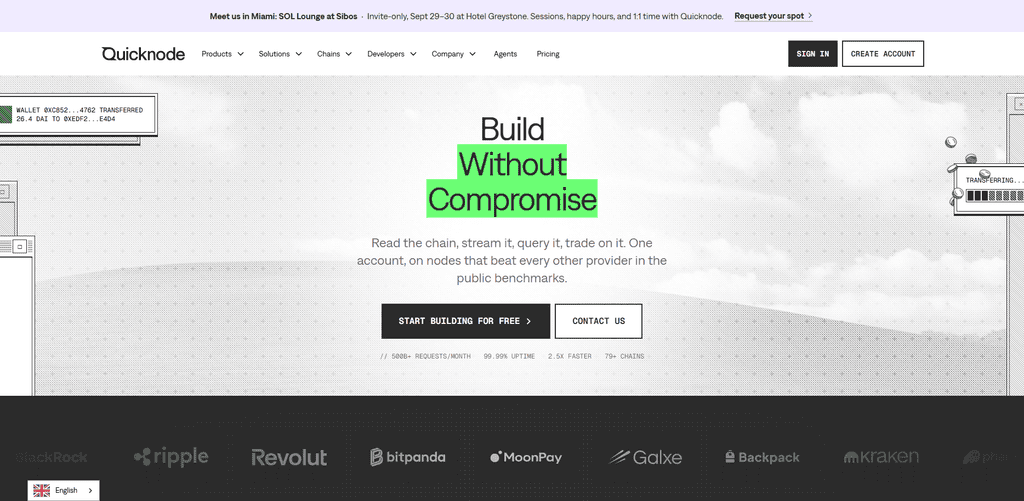
The blockchain can be queried by developers via JSON-RPC, REST and WebSocket interfaces, and includes both historical and real-time data. It supports networks like Ethereum, Solana, Base, Bitcoin, Polygon, Arbitrum, Optimism, Avalanche, BNB Smart Chain, TRON and others.
QuickNode also provides dedicated clusters for workloads that need isolated performance, predictable latency, and high request capacity.
QuickNode
| Pricing Element | Details |
|---|---|
| Pricing Model | API-credit plans + Flat-Rate RPS + Enterprise |
| Free Access | Free trial with limited API credits |
| Build | Around $49/month |
| Accelerate | Around $249/month |
| Scale | Around $499/month |
| Business | Around $999/month |
| Billing Metric | API Credits |
| Overage | Additional API credits charged according to plan |
| Flat-Rate Option | Fixed monthly pricing based on allocated RPS |
| Enterprise | Custom pricing and infrastructure |
3. Infura
Managed blockchain infrastructure with a focus on scalable RPC access and developer APIs It’s node infrastructure is optimized for the blockchain read and write operations, and includes specialized services for indexing, caching, request routing and handling blockchain reorganizations.
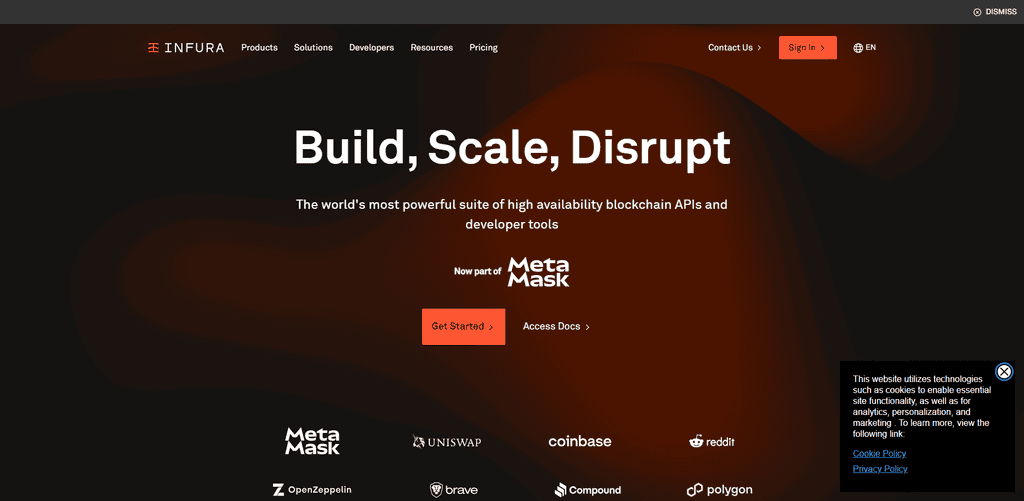
Infura boasts 99.99% uptime and in its comparisons claims its infrastructure can deliver response performance up to 10 times faster than self-hosted nodes. Through RPC endpoints and related infrastructure services, developers are able to connect to the major blockchain networks, and archive data is available as well.
Scalability is at the heart of its infrastructure model, as its architecture is built to accommodate growing application traffic without teams needing to manage their own nodes.
Infura
| Pricing Element | Details |
|---|---|
| Pricing Model | Daily credit quota |
| Free/Core | 3M credits per day |
| Developer | $50/month |
| Developer Credits | 15M credits/day |
| Team | $225/month |
| Team Credits | 75M credits/day |
| Enterprise | Custom pricing |
| Billing Metric | Credits based on API request complexity |
| Throughput | 500 credits/s on Free, 4K on Developer, 40K on Team |
| Extra Capacity | Add-ons and custom enterprise capacity available |
4. Chainstack
Chainstack offers managed blockchain nodes and RPC infrastructure for developers building multi-chain applications. The platform currently supports 70+ blockchain networks including Ethereum, Solana, Base, Polygon, BNB Smart Chain, Arbitrum, Hyperliquid, Unichain, Linea, Berachain, and other ecosystems.
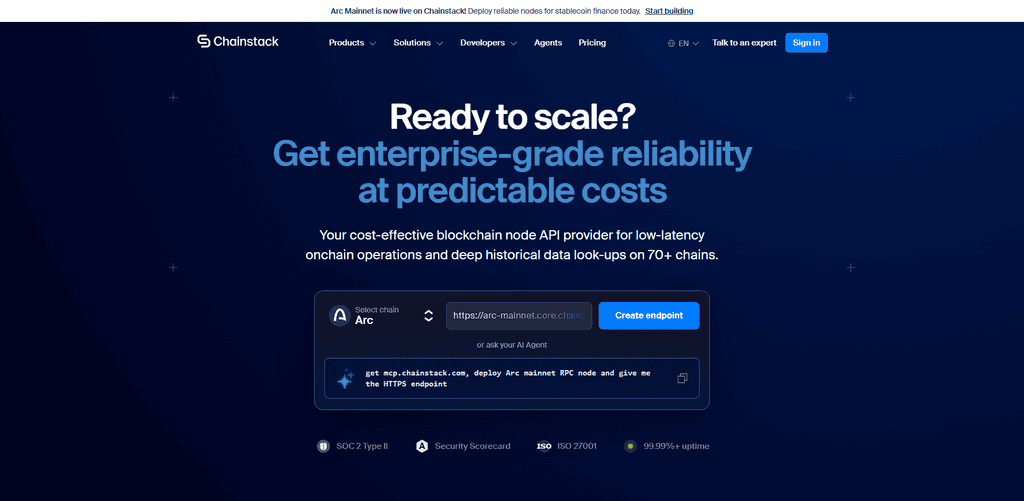
Developers are able to deploy nodes and receive automatically generated RPC endpoints to use with development frameworks and Web3 libraries like Hardhat, Foundry, web3.js and ethers.js.
Its infrastructure is built to offer reliability, scalability and global reach while minimizing the operational work of running blockchain nodes. Chainstack supports development and production workloads, and the higher plans offer increased throughput and more API capacity. Chainstack
Chainstack
| Pricing Element | Details |
|---|---|
| Pricing Model | Subscription + Request Units + Dedicated Node compute |
| Developer | Free; 3M request units/month |
| Growth | $49/month; 20M request units |
| Pro | $199/month; 80M request units |
| Business | $349/month; 200M request units |
| Enterprise | $990/month; 400M request units |
| Extra Request Units | From $20 per 1M RU on Developer, decreasing at higher tiers |
| Dedicated Nodes | From $0.50/hour |
| Annual Billing | Discounted monthly-equivalent pricing available |
| Billing Metric | Request Units |
5. Ankr.
Ankr’s Web3 API platform offers globally distributed blockchain nodes with 80+ supported networks via its Chain RPC API. Supported networks include Ethereum, Solana, BNB Smart Chain, Arbitrum, Base, Bitcoin, TRON, TON, Sui and many more… Ankr provides geographically distributed load balancers and nodes that forward requests to infrastructure that reduces network latency.
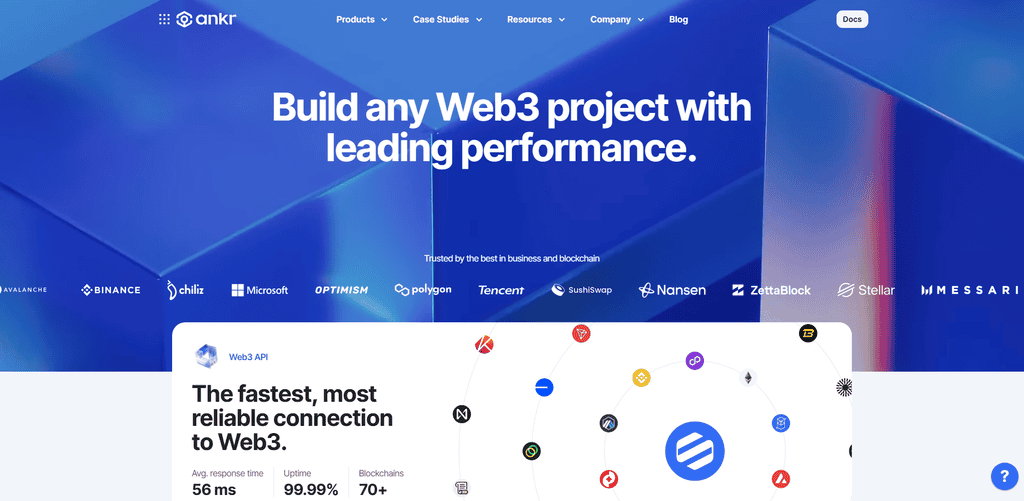
The platform offers standard JSON-RPC access, WebSocket connectivity and Advanced APIs for indexed blockchain data. The Advanced API is multi-chain ready and has out-of-the-box endpoints for common Web3 data needs. Node monitoring and auto-removal of bad nodes from load-balancing assists in preserving the reliability of the service as demand scales.
Ankr
| Pricing Element | Details |
|---|---|
| Pricing Model | Pay-As-You-Go + Deal subscription |
| Free Access | Free API-credit allowance is available |
| PAYG | Usage-based API-credit billing |
| Published PAYG Rate | Starting around $10 per 100M API credits |
| Deal Plans | Monthly commitment-based plans |
| Deal Range | Plans can begin around $500/month and scale upward |
| Billing Metric | API Credits |
| Enterprise | Custom requirements can be negotiated |
| Usage Flexibility | No fixed long-term commitment with PAYG |
| Pricing Focus | Multi-chain RPC and higher-level blockchain API usage |
6. Blockdaemon
Blockdaemon is a managed blockchain nodes and RPC infrastructure provider, focused on institutional & production workloads. Its RPC API gives JSON-RPC access to more than 20 blockchain protocols and its broader infrastructure supports over 80 protocols.
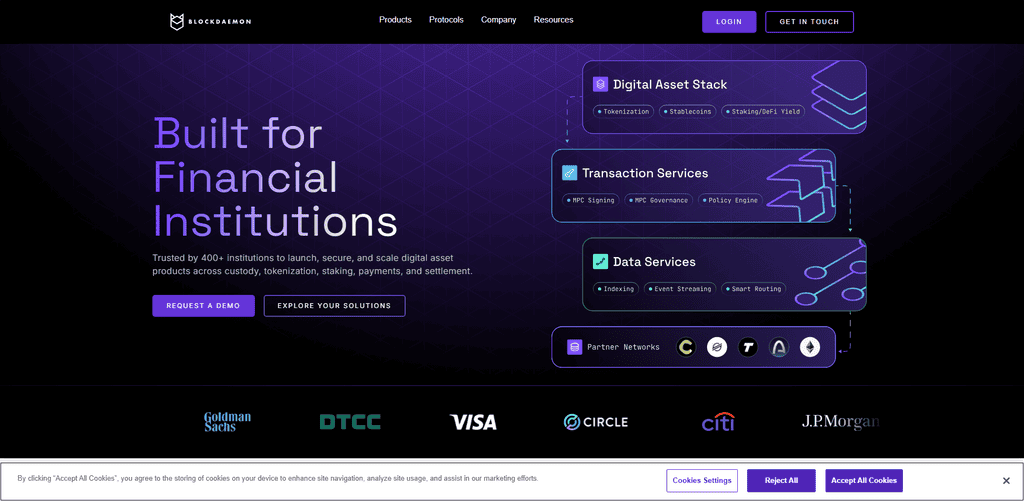
It supports the networks of Bitcoin, Ethereum, Solana, Polygon, Arbitrum, Base, Avalanche, Optimism, Polkadot, Litecoin, Dogecoin, Stellar, XRP and others. Blockdaemon utilizes load balancing, monitoring and failover mechanisms to provide high availability infrastructure. Its RPC service advertizes 99.9% uptime.
Developers are able to read blockchain data, send transactions, listen to on-chain events and read historical protocol data. Larger workloads can use customized request capacity, support, SLAs and infrastructure configurations for enterprise deployments.
Blockdaemon
| Pricing Element | Details |
|---|---|
| Pricing Model | Self-serve usage plans + Enterprise/custom |
| Free Allowance | Up to 3M Compute Units/month for eligible infrastructure access |
| Paid Plans | Self-serve paid infrastructure plans |
| Enterprise | Custom quotation |
| Billing Metric | Compute Units and infrastructure configuration |
| Dedicated Nodes | Available as dedicated infrastructure |
| Infrastructure | Cloud and bare-metal deployment options |
| Scale | Pricing can depend on workload and infrastructure requirements |
| Support | Higher service levels available for enterprise customers |
| Pricing Focus | Production and institutional blockchain infrastructure |
7. InfStones
InfStones is a blockchain infrastructure-as-a-service platform that provides node deployment, management, and API access. The company says it has 20,000+ nodes on 80+ blockchains, providing developers and enterprises with broad multi-chain infrastructure coverage.
It offers services like blockchain node hosting, RPC endpoints, validator infrastructure, and API-based access to blockchains. InfStones’ Fast API has dedicated endpoints for supported protocols, such as Ethereum, BNB Chain, Polygon, Sui, Neo, CORE, Theta and ZetaChain.
Its worldwide infrastructure is built for dependability, speed, security, and scalability, enabling projects to grow node infrastructure on separate networks without having to handle the underlying hardware and operational requirements themselves.
InfStones
| Pricing Element | Details |
|---|---|
| Pricing Model | Customized infrastructure pricing |
| Standard Public Pricing | Limited compared with standardized RPC providers |
| Node Pricing | Depends on blockchain, node type, resources, and deployment |
| API Pricing | Can vary according to API and infrastructure requirements |
| Validator Infrastructure | Custom configuration and pricing |
| Enterprise | Tailored quotations |
| Scaling Cost | Depends on number of nodes and required resources |
| Deployment | Infrastructure can be configured for specific workloads |
| Billing Basis | Infrastructure and service requirements |
| Pricing Focus | Large-scale blockchain infrastructure |
8. NOWNodes
NOWNodes offers managed full-node and RPC infrastructure on 120+ blockchain networks. It supports ecosystems like Bitcoin, Ethereum, BNB Smart Chain, Polygon, Solana, Dogecoin, Litecoin, Arbitrum, Optimism, Polkadot and so many more.
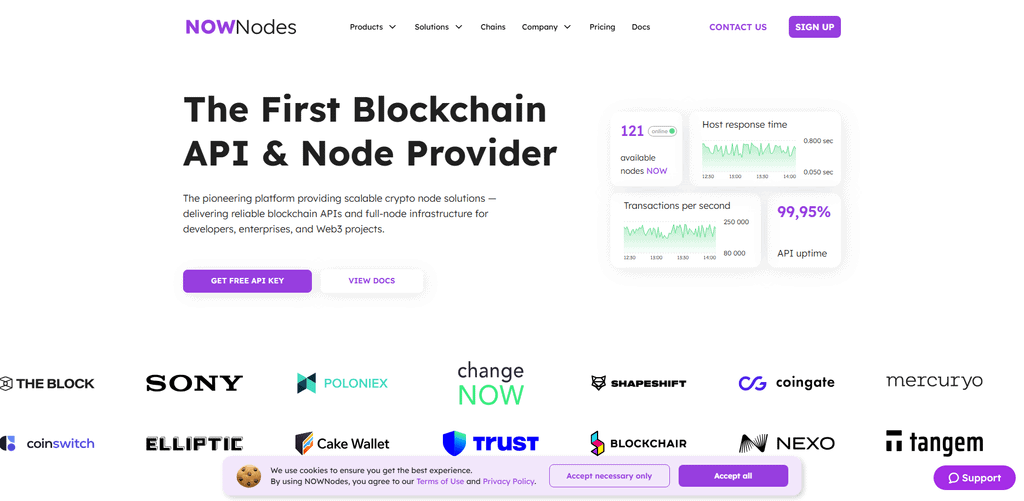
NOWNodes claims 200ms response time and 99.95% API uptime. It built its infrastructure using geo-balanced servers, load balancing, and automatic failover. Developers are able to use shared and dedicated nodes, websocket connections, archive nodes and a number of APIs including Blockbook and indexed APIs.
Paid infrastructure scales dynamically with cluster capacity and has no pre-defined RPS limits. That is why NOWNodes is especially important for applications that need coverage of a wide range of blockchains and scalable access to nodes.
NOWNodes
| Pricing Element | Details |
|---|---|
| Pricing Model | Fixed request-quota plans + Dedicated Nodes |
| Start | Free tier with 100K requests |
| Pro | €20/month for 1M requests |
| Business | €200/month for 30M requests |
| Enterprise | €500/month for 100M requests |
| Billing Metric | API requests |
| Dedicated Nodes | Separate dedicated infrastructure option |
| Request Model | Fixed monthly request allowances |
| Scaling | Higher plans provide substantially larger request quotas |
| Pricing Focus | Predictable multi-chain RPC costs |
9. Gateway . fm
Gateway.fm is all about blockchain infrastructure, with an emphasis on high-performance nodes and Layer-2 deployments. Its technology includes CDK-Erigon, a high-performance fork of the Erigon Ethereum client for Polygon zkEVM networks, used as a sequencer and RPC node in Gateway’s infrastructure.
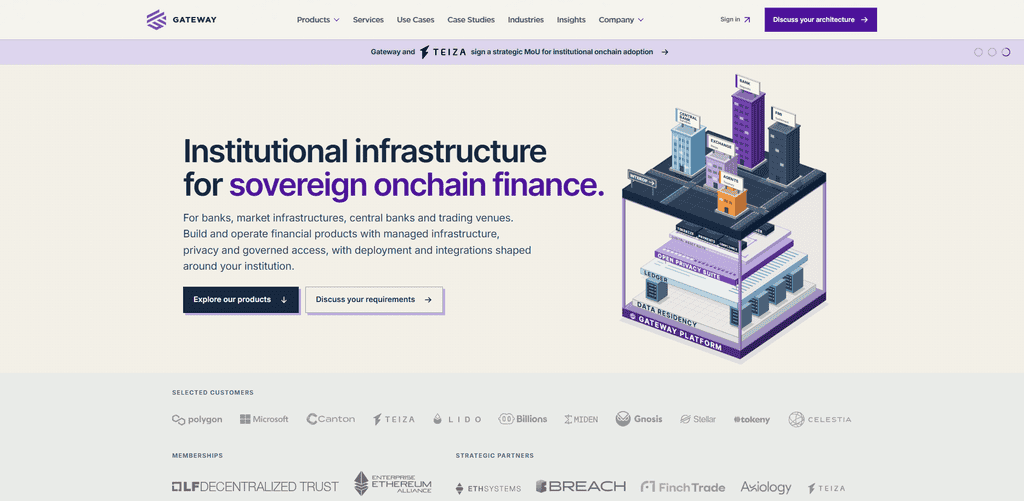
it is built for efficient synchronization and low-latency blockchain operations. The gateway documentation highlights 250ms block times for its relevant L2 infrastructure. Gateway.fm specifically focuses on infrastructure for Web3 builders who want custom node and L2 solutions, rather than just using shared public RPC endpoints.
Its architecture can be suitable for performance sensitive applications where dedicated or optimized blockchain infrastructure matters.
Gateway.fm
| Pricing Element | Details |
|---|---|
| Pricing Model | Custom infrastructure pricing |
| Standard RPC Pricing | Not primarily structured around a broad public credit table |
| Node Infrastructure | Custom deployment-based pricing |
| L2 Infrastructure | Customized according to architecture |
| Sequencer Infrastructure | Custom requirements |
| Enterprise | Contact-based quotation |
| Scaling | Depends on node, L2, validator, and infrastructure requirements |
| Billing Basis | Deployment and infrastructure configuration |
| Performance Focus | High-performance blockchain infrastructure |
| Pricing Focus | Customized Web3 and Layer-2 infrastructure |
10. Coinbase Developer Platform
The Node service of the Coinbase Developer Platform provides managed RPC access, without requiring developers to manage their own blockchain infrastructure. Its current Node API supports Base Mainnet and Base Sepolia.
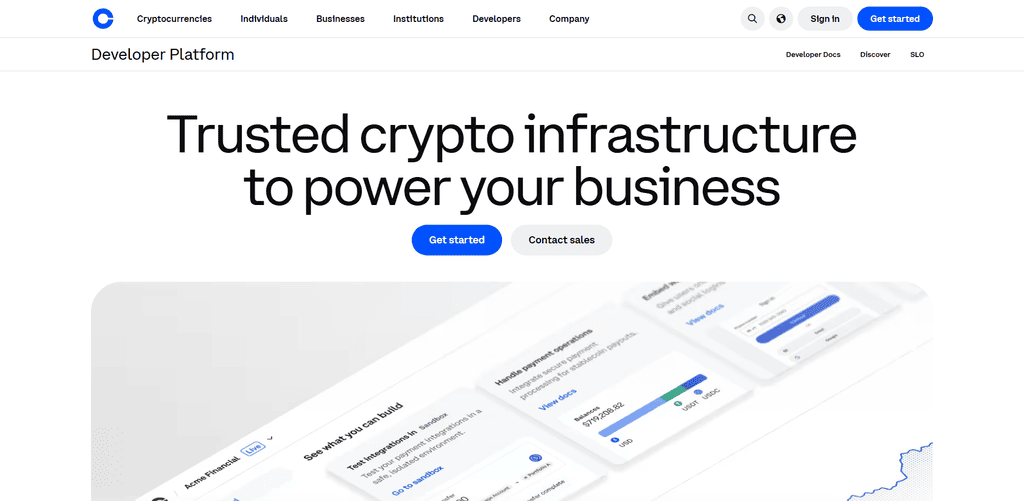
This is primarily aimed at Base ecosystem development rather than extensive multi-chain node coverage. Standard EVM JSON-RPC methods are available to read blockchain data and submit transactions. Other features include paymaster methods and wallet-history queries.
CDP Node is priced on a pay-as-you-go model with 10 million free billing units each month. Usage beyond that is billed on a usage basis. Its officially documented project rate limit is about 50 requests per second (higher limits available on request). This makes it a simple infrastructure option for applications that focus on Base.
Coinbase Developer Platform
| Pricing Element | Details |
|---|---|
| Pricing Model | Usage-based pricing |
| Free Allowance | Monthly free usage is available for eligible developer services |
| Paid Usage | Charges apply after included usage |
| Billing Basis | Depends on the specific CDP product and usage |
| Node Infrastructure | Managed blockchain RPC access |
| Wallet Services | Separate usage-based developer infrastructure |
| Enterprise | Larger/custom requirements can receive tailored arrangements |
| Scaling | Usage scales with application demand |
| Pricing Focus | Developer infrastructure and Coinbase ecosystem |
| Best Pricing Feature | Low-friction entry for developers building on supported Coinbase infrastructure |
Conclusion
The decision of NodeReal alternatives depends on the infrastructure requirements of your Web3 application. Providers such as Alchemy, QuickNode, Infura, Chainstack, Ankr, Blockdaemon, InfStones, NOWNodes, Gateway.fm, Coinbase Developer Platform have different combinations of blockchain coverage, RPC performance, reliability, APIs, scalability and pricing models.
Some are focused on broad, multi-chain access, while others provide dedicated infrastructure, enterprise services, or specialized Layer-2 capabilities. Look at supported networks, latency, throughput, uptime, API features, scalability, security, and total costs before choosing a provider. If you match these factors with your application’s workload, then you can achieve reliable and efficient blockchain connectivity.
FAQ
What is NodeReal?
NodeReal is a blockchain infrastructure provider that offers node, RPC, and Web3 infrastructure services for developers and applications requiring blockchain connectivity.
What are the best NodeReal alternatives?
Popular alternatives include Alchemy, QuickNode, Infura, Chainstack, Ankr, Blockdaemon, InfStones, NOWNodes, Gateway.fm, and Coinbase Developer Platform.
What should you consider when choosing a NodeReal alternative?
Consider supported blockchain networks, node performance, RPC latency, uptime, API features, scalability, pricing, security, and developer support.
Which NodeReal alternatives support multiple blockchains?
Alchemy, QuickNode, Infura, Chainstack, Ankr, Blockdaemon, InfStones, and NOWNodes provide multi-chain infrastructure covering various Layer-1 and Layer-2 networks.
Why is RPC performance important for Web3 applications?
RPC performance affects how quickly applications retrieve blockchain data and submit transactions. Lower latency and higher throughput can help applications handle frequent blockchain requests efficiently.