Real-time payroll is revolutionizing how businesses pay employees, freelancers and global teams, providing more flexible and accessible payments. Zebec Network is one of the platforms that is helping to bring blockchain technology into payment streaming, but it’s not the only one. Alternatives range from continuous crypto payments, payroll automation and international transfers to workforce management. In this article, I’ll look at the Top Zebec Network Rivals for Real-Time Payroll, including their key features, potential risks, and use cases to help businesses find the right solution.
What Is Zebec Network?
Zebec Network is a payment infrastructure built on blockchain technology, which seeks to make digital payments, payroll and financial transactions more flexible and efficient. Its technology allows for continuous payment streaming, enabling companies to make salary, contractor payment and reward payments over time, rather than solely within a monthly payroll cycle.
Zebec offers payment solutions for Web3 companies, decentralized autonomous organizations (DAOs) and global teams. It combines blockchain technology with automated payment processes for enhanced payment transparency and accessibility. Businesses must look at the supported networks, transaction fees, security, and compliance before deploying their solutions.
What Features Should You Look for in a Zebec Network Alternative?
Real-Time Payment Streaming: Select a platform that enables continuous or flexible salary payments, so employees and contractors can get access to their earned money without having to wait for traditional monthly payroll cycles.

Blockchain and Crypto Support: Review supported blockchains, cryptocurrencies, and stablecoins to ensure the platform meets your business needs and facilitates secure and efficient digital asset transfers.
Fiat payment options: Look for platforms that accept bank transfers, local currencies and currency conversion for employees who prefer to receive their salary through conventional financial systems.
Payroll automation: Select solutions that automate recurring payments, salary calculations, payment scheduling and payroll workflows to reduce administrative tasks and minimize manual processing errors.
Security And Smart Contract Protection : Check for security audits, wallet protection, control of access, and smart contract protection to minimize financial risks and safeguard sensitive payroll transactions.
Support for Compliance and Taxes: Select platforms that provide appropriate tax documentation, payroll reporting, and regulatory assistance to help businesses meet employment requirements in different territories.
Transaction Fees and Pricing: Review the platform’s fees, the gas fees on the blockchain, the cost of withdrawing funds, and the rates for currency exchanges. Understanding these will give you an idea of the total cost and help you avoid unexpected payroll expenses.
Integrations and Scalability: Choose a solution that integrates with accounting, HR and monetary systems and can scale as your business grows, with more employees and more international payment requirements.
Key Points
| Rival | Key Point |
|---|---|
| Sablier | A leading on-chain payment streaming protocol that enables continuous token-based salary payments, vesting, and recurring payroll distributions across multiple blockchain ecosystems. |
| Superfluid | Provides real-time token streaming infrastructure, allowing businesses to automate payroll and recurring payments with continuous settlement rather than fixed pay cycles. |
| LlamaPay | Specialized in decentralized salary streaming, enabling organizations to create low-cost, non-custodial payroll streams for employees and contributors. |
| Rise | A global payroll platform supporting both crypto and fiat payouts, offering automated payroll, compliance tools, and cross-border workforce payments. |
| Request Finance | Combines crypto invoicing, payroll automation, and treasury management, helping DAOs and Web3 companies pay teams in digital assets efficiently. |
| Utopia Labs | Focuses on DAO payroll and operational payments, allowing organizations to automate recurring compensation and contributor rewards using crypto assets. |
| CoordinateHQ | A Web3 workforce management platform that streamlines contributor payments, payroll administration, and performance tracking for decentralized teams. |
| Deel | Global payroll and contractor management platform supporting cryptocurrency payouts in selected regions, making it popular among international remote teams. |
| Remote | Offers global payroll, compliance, and contractor payment solutions with support for modern payment methods, including digital asset integrations in certain markets. |
| Papaya Global | Enterprise-grade global payroll provider that automates international salary payments, workforce management, and cross-border payroll operations. |
1. Sablier
Sablier is a payment streaming protocol built on blockchain that allows companies, DAOs and Web3 projects to make continuous payments of salaries and other tokens. Rather than paying out the full salary at the end of the month, companies are able to establish payment streams that allow the recipient to accrue earnings every second, and withdraw the available funds when needed.
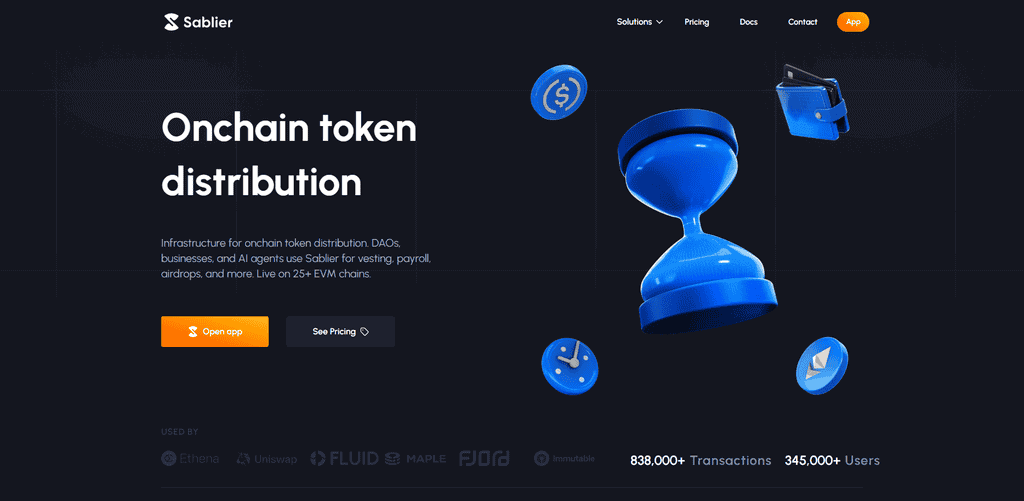
It has features such as custom payment schedules, bulk stream creation, token vesting, and smart contract based transactions. For crypto native teams looking for transparent, programmable payroll and flexible compensation management, Sablier is a great Zebec Network alternative.
Important Features
- Continuous Payment Streaming: Distributes tokens continuously, enabling recipients to earn over time.
- Vesting Schedules: Allows time-based token vesting for employee compensation, grants and contributor rewards.
- Recurring Payments: Enables recurring streams of payments that can be topped or adjusted with supported contracts.
- Token Distribution: Allows airdrops and token distribution to multiple recipients.
- Self-Custody: Constructed on-chain with smart contract technology, allowing users to engage with the protocol via their own wallets.
Big Dangers
- Smart Contract Risk: Smart contract flaws could cause the loss or misdirection of funds.
- Blockchain Fees: Costs for transactions can differ and impact the generation, handling, and withdrawal of streams.
- Token Volatility: If the tokens aren’t stablecoins, the value of the crypto salary could fluctuate a lot.
- Limited Traditional Payroll Tools: Tax withholding, statutory benefits and local employment compliance may require separate systems
2. Superfluidity
Superfluid is a blockchain protocol that enables continuous money transfers, programmable payments, and the distribution of digital resources. This allows businesses and decentralized autonomous organizations (DAOs) to stream salaries, rewards and incentives directly to recipients’ wallets.
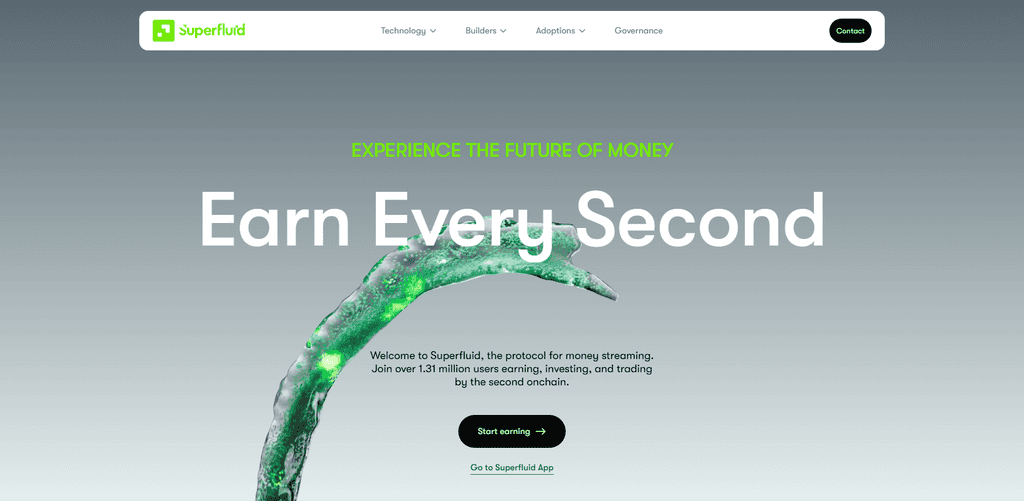
There is a smart-contract framework for payment streams that updates balances over time and allows you to create, modify or cancel payment arrangements.
Superfluid also enables the creation of distribution pools, which can make funds available to a number of recipients. It is a good match for Web3 companies looking for automated compensation, flexible payment flows, and real-time on-chain financial operations as an alternative to Zebec Network.
Important Features
- Payments Per Second : Allows tokens to flow on a continuous basis with a specified flow rate.
- Flexible Stream Management Streams can be created, updated or canceled as needs evolve.
- Distribution Pools: Enables distribution of tokens to multiple recipients via distribution mechanisms.
- Programmable Payments: Smart contract infrastructure for salaries, subscriptions, grants and rewards.
- Non-Custodial Design Users have control of their wallets and approve blockchain transactions themselves
Major Risks
- Vulnerabilities in Intelligent Contracts: Flaws in contracts or integrations may impact funds and payments flows.
- Wallet Security: Wallets may be compromised or private keys lost, leaving funds vulnerable to unauthorized access.
- Balance Depletion: The sender could run out of available balance, leading to the end of a stream.
- Technical Complexity: Onboarding traditional businesses can be difficult due to super tokens, supported networks and integration requirements
3. LlamaPay
LlamaPay is a multi-chain crypto payment streaming protocol for organizations to automate recurring salary payments. This allows employers to set up payment streams so that employees and contractors can access their earned wages without waiting for a traditional payday.
Its main features include: Replenishment of streams, support of multiple tokens, recurring payments and simplified withdrawal procedures.
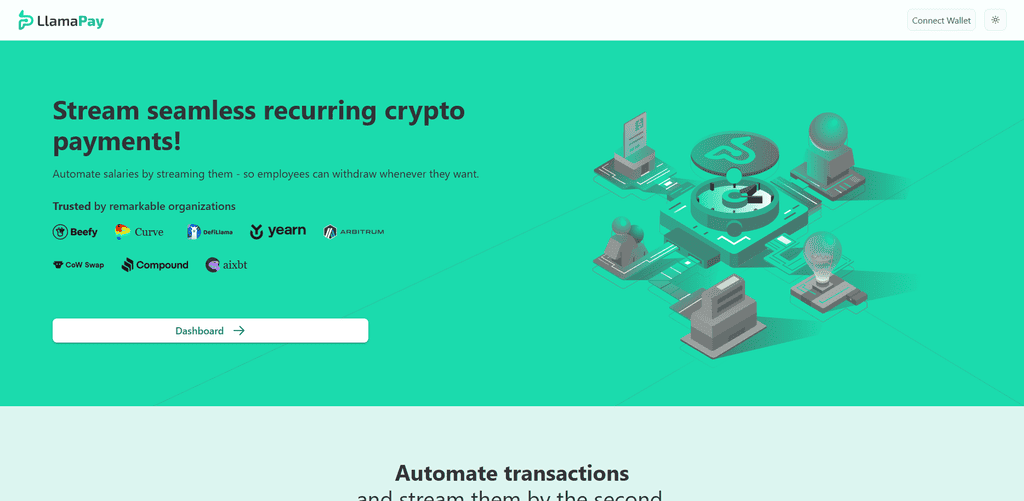
Its focus on reducing transactional complexity makes it relevant to DAOs, DeFi projects and blockchain-based teams. Businesses looking for basic on-chain payroll automation and easy recurring crypto payments may want to consider LlamaPay over Zebec Network.
Main Features
- Streaming Salaries Allows employees and contractors to withdraw earned crypto.
- Recurring Payments: Ability to set up recurring payment flows for salaries, contributor payment, scheduled transfers, etc.
- Multiple Recipients: Allows organizations to send payments to teams and contributors.
- Token Support: Support for eligible tokens and networks, dependent on deployed contracts and their compatibility.
- Low Protocol Fees: While there may be blockchain transaction costs, its outgoing payment contracts are marketed as having no protocol fees.
Main Risk
- Token Support: LlamaPay implementation referenced does not support rebasing tokens and fee-on-transfer tokens.
- Smart Contract Risk: Deposited funds could be lost due to a bug or vulnerability in the contract.
- Network Reliance: Transactions depend on supported blockchains being available and operational.
- Payroll Compliance: A business may require separate tools for tax deductions, employment records and statutory reporting
4. Rise
Rise is a global payroll and contractor payment platform for businesses operating in traditional finance and Web3. This lets companies pay their payrolls via bank transfer or supported cryptos while workers can access payouts via available fiat and crypto options. The platform also includes contractor onboarding, payment scheduling, contracts, compliance support and transaction reporting.
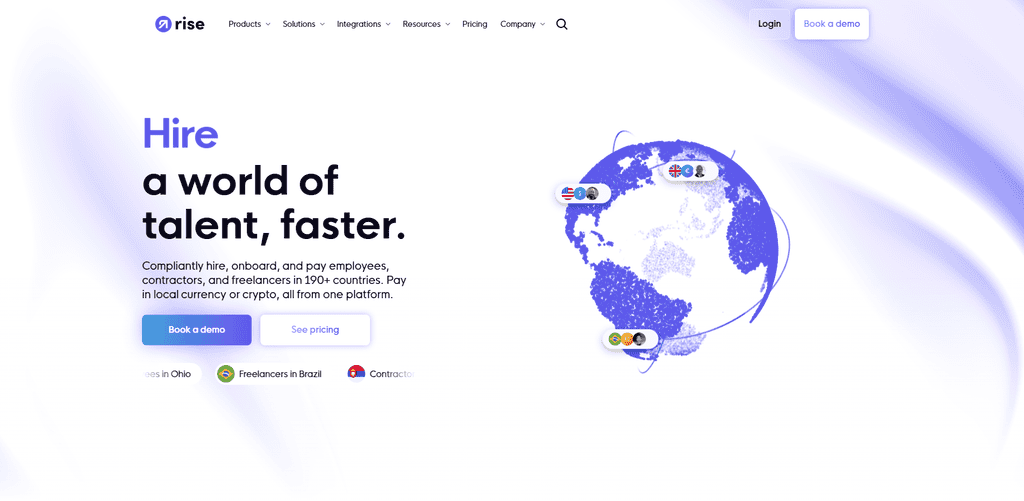
These capabilities help businesses support distributed teams without relying solely on manual spreadsheets or disparate payment tools. Rise is a powerful alternative to Zebec Network, for organizations looking for a combination of global workforce management, crypto payroll and flexible traditional payments.
Main Features
- International Contractor Payments: Allows companies to pay dispersed teams in supported countries.
- Fiat and Crypto Options: Provides supported payment methods for companies hiring traditional and Web3 talent.
- Contractor Management: Helps in structuring worker data, contracts and payment procedures.
- Payroll Automation: Automates the repetitive task of managing recurring pay.
- Payment Flexibility: Offers payout options that are tailored to diverse worker preferences, depending on country and service availability.
main risks
- Country Restrictions: Services and payment methods may vary by location.
- Compliance Requirements Employers are still responsible for comprehending their tax and employment responsibilities.
- Foreign Exchange Costs: Currency conversion and transfer costs can increase total payroll costs.
- Service Dependency: Payment delays or platform outages could affect payroll schedules. ## 5. Request Finance
5. Request finance
Request Finance is a financial management tool designed for businesses, freelancers and Web3 organizations to manage both crypto and fiat payments. Its services include payroll, invoicing, accounts payables, expense management and accounting reports.
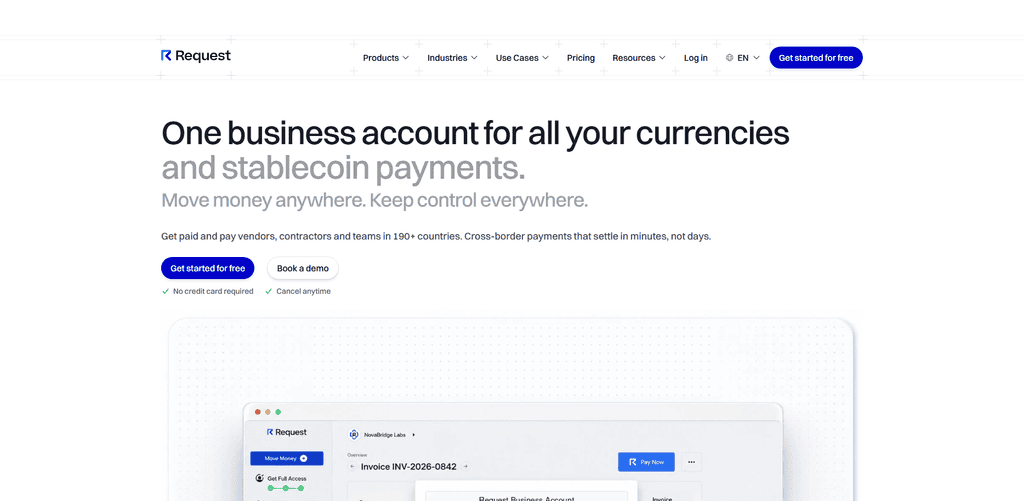
The platform can be used by companies to pay salaries, distribute bonuses, manage token vesting and keep transaction records for financial reconciliation. Batch payment capabilities also help to streamline multiple payouts.
Request Finance is a Zebec Network alternative that’s suitable for businesses that require wider financial administration in addition to crypto payroll, as opposed to the constant salary streaming alone.
Big Features
- Crypto & Fiat Payroll: Process salary, bonus and token-vesting payments using the payment methods you have.
- Batch Payments: Allows for the handling of numerous payments via consolidated workflows.
- Invoice Management: Allows businesses and contractors to create, send and track invoices.
- Expense Management: Workflows for employee reimbursement and business costs.
- Accounting Reports . Keeps transaction records that can be used for reconciliation, bookkeeping, and audit preparation.
Major Risks
- Transaction costs: Network gas fees and some payment-related fees may increase operating costs.
- Payment Errors: Payments may be made to the incorrect wallet address or bank account.
- Regulatory Complexity. Crypto payroll could create tax, accounting and compliance procedures.
- Integration Capabilities: Businesses may require different HR, accounting or tax systems to be integrated to finalize their workflow.
6 Utopia Labs
Utopia Labs built financial operations tools for decentralized autonomous organizations (DAOs) and crypto-native businesses. Its platform was designed to streamline payroll, payment requests, expense management and reporting through workflows customized to organizations managing digital resources.
These capabilities solved common administrative problems like managing payments to contributors and tracking organizational expenses. Utopia also had payroll compliance features for DAOs that paid contributors in native tokens or other cryptos.
As a competitor to Zebec Network, please verify the current availability of the product and its support services. The product description might not reflect the latest operational status of the product.
Key Features
- DAO Financial Workflows: Previously, the focus was on financial operations for decentralized autonomous organizations.
- Contributor Payments: To help organizations coordinate pay for contributors.
- Expense Management: Facilitated financial procedures to track and control expenses of the organization.
- Payment Management: Assisted teams in structuring payment request and approval processes.
- Financial Visibility: Simplifying DAO financials for easier management and review.
Risk Key
- Current Availability: Make sure any relevant Utopia Labs products and services are still actively supported.
- Product Continuity: Interruptions to current workflows as a consequence of changes in product direction or maintenance.
- Blockchain Risk: Crypto transactions can be at risk with wallet security, network, and smart contract functionality.
- Compliance Gaps: DAO payment tools may not automatically cover all payroll taxes or employment obligations for each country.
7. HQ Coordinate
CoordinateHQ is a project execution and client collaboration platform tailored for businesses that deliver services to their clients. It helps teams structure project workflows, coordinate tasks, enhance communication with clients, and automate repetitive administrative tasks.
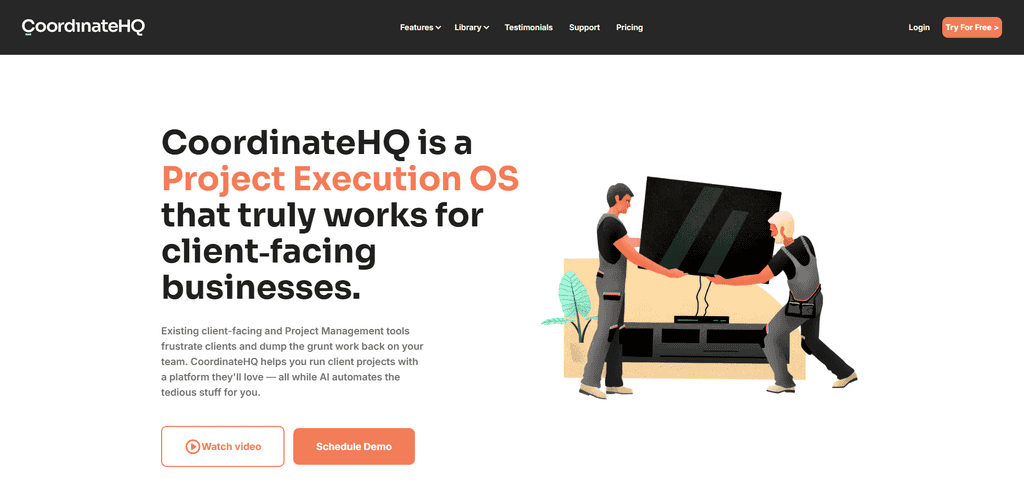
While these features can provide operational efficiency for agencies and service-based companies, CoordinateHQ is not a direct real-time payroll or crypto payment streaming service.
So, it requires careful qualification to be part of a Zebec Network comparison. If you are a business looking for automated salary transfers, then you should be looking at dedicated payroll providers. CoordinateHQ is more relevant for managing the projects and client processes around their business.
Important Features
- Workflow Automation: Creates repeatable processes for client facing projects.
- Client Collaboration: Offers shared workspaces for communication between clients and teams.
- Project Tracking: Helps to keep track of tasks, deadlines, responsibilities and project status.
- Document Management: Facilitates file sharing, forms, and e-signatures.
- Reporting and Time Tracking: Helps companies evaluate workloads, project activity, and time spent on work
Major Risks
- Not a Payroll Solution: It is not a direct replacement for a payroll streaming or salary payment platform.
- Additional Software Costs: Businesses may need to use a separate payroll provider in conjunction with CoordinateHQ.
3.Integration Limitations: Ensure that the required payroll, accounting, and HR integrations are supported. - Data Management Risks: Client and project information needs the right control of access and security practices.
8 Deel
Deel is a global workforce management platform helping businesses hire, onboard and pay employees and contractors in international markets. The services are global payroll, employer of record (EOR), contractor management, compliance support and payroll reporting. A centralized system enables companies to handle salary calculations, tax deductions, benefits and international payments.
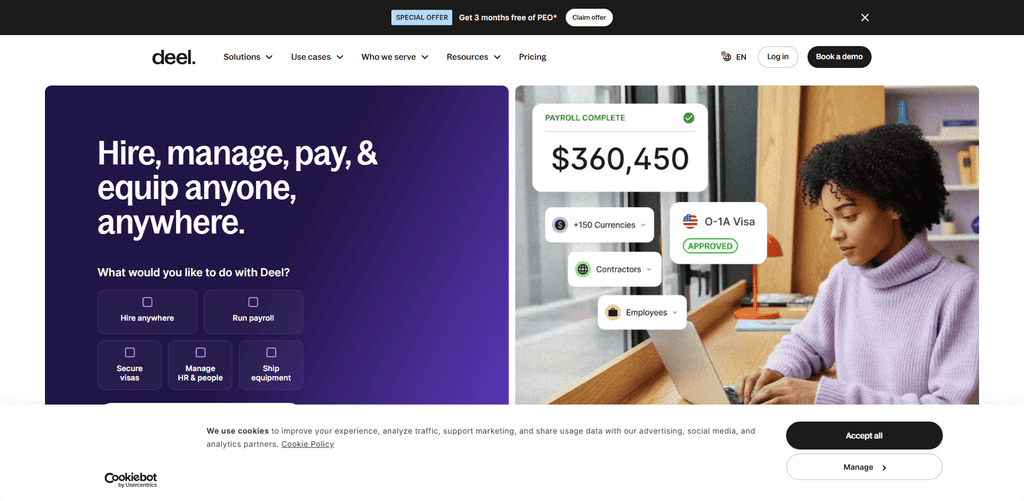
Deel is especially helpful for companies that are growing internationally but don’t want to have to deal with all of the localized employment requirements themselves. Deel is more suited to regular employment and compliant global payroll than blockchain-based, second-by-second salary streaming, versus Zebec Network.
Main Features
- Global Payroll: Enables companies to handle payroll for their employees in supported markets across the globe.
- Employer of Record: Allows businesses to hire employees in countries where they may not have their own local entity.
- Contractor Management – Enables you to onboard, contract, and pay contractors.
- Compliance Assistance – We’ll help you with country-specific payroll calculations, tax workflows and advice on employment issues.
- Integrations & Reporting: Integrates with select HR and accounting systems and provides a centralized view of payroll.
Major Risks
- The cost may vary depending on the type of service, the location of the worker, and additional features.
- Country-specific restrictions: The availability of services and the terms and conditions of payroll processing vary from jurisdiction to jurisdiction.
- Time to Implement: Complex payroll setups and integrations may take time and coordination.
- Dependency on the provider. Service disruption, support delayed or data wrong during processing can impact payroll operations.
9. Remote
Remote is a global employment and payroll platform that allows companies to manage international employees and contractors with centralized workforce tools. Its services include global payroll, employer of record, contractor management, benefits administration and employment compliance.
A single platform allows companies to run payroll, administer country-specific payroll rules and view reporting and payment data. Remote is especially helpful for companies that hire talent in different countries and need reliable payroll management and support with local regulations.
Instead of ongoing blockchain payments, it focuses on international employment infrastructure, as an alternative to Zebec Network.
Main Features
- Global Payroll: Takes care of payroll for employees in various countries.
- Employer of Record Services: Enables companies to hire globally without the need to create a local entity in each market.
- Contractor Payments: Tools to track contractor agreements and payments.
- Benefits Administration: Supports employee benefits and related employment workflows in qualified locales.
- HR and Compliance Tools: Assists in organizing employee data and adhering to country-specific employment regulations.
Main Risks
- Variable Pricing: Prices vary based on the service chosen, the worker’s location, and the needs of the business.
- Jurisdictional Variations: Payroll, benefits and employment services don’t look the same across countries.
- Migration Challenges: Careful planning may be needed to migrate existing employee records and payroll workflows.
- Operational Dependency. Businesses rely on the right data, on time approvals and the provider’s processes to keep payroll running smoothly.
10. Papaya Global.
Papaya Global is a global workforce payments and payroll platform that helps businesses manage employees, contractors, and international salary operations. It can handle global payroll, make cross-border payments, manage contractors, ensure workforce compliance, and track payments. Businesses can monitor transaction statuses, review payment histories, and manage payroll across various countries and currencies.
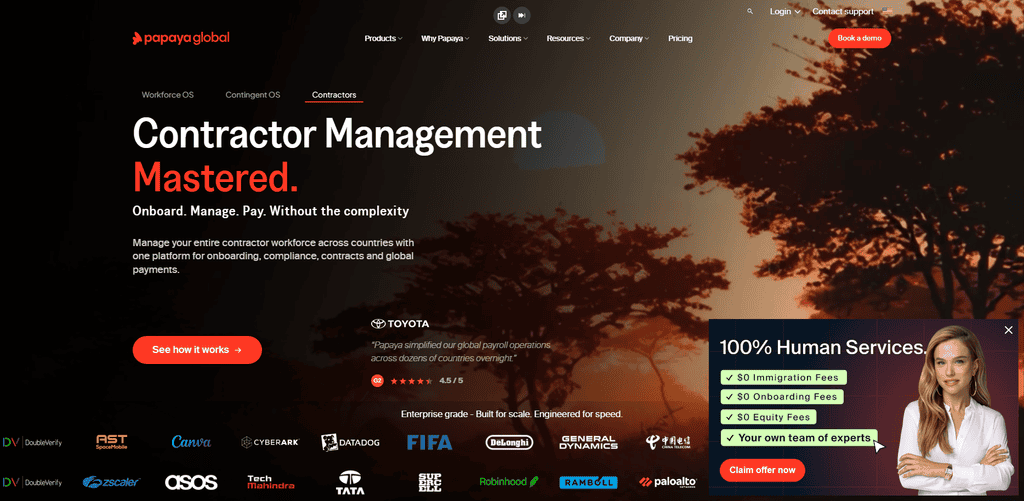
The platform is particularly relevant for businesses with complicated international workforces that require a centralized view of finances and assistance with regulations. Papaya Global is much more focused on traditional global payroll infrastructure and international payments delivery than on crypto salary streaming, compared to Zebec Network.
Major Features
- International Payroll Management: Helps companies manage payroll processes in global markets.
- Cross Border Payments: Provides a payment infrastructure and partners to make international workforce payments.
- Contractor Management: Aids businesses in managing the workforce and payment processes for contractors.
- Payroll Reporting: Summarizes payroll data to increase financial visibility and reconciliation.
- Security and compliance support: Provides security controls and certifications such as SOC 1, SOC 2, ISO 27001, ISO 27701 and GDPR-related compliance.
Big Risks
- Pricing Factors: International payroll costs vary depending on your workforce size, where you’re operating, and what services you need.
- Delays in Payment: Cross-border transfers may be delayed by banking procedures, intermediary providers or local payment systems.
- Changes in Regulations: Companies must comply with constantly changing local tax, employment and reporting requirements.
- Third-party dependence: Some payment services use licensed partners so the availability of partners and the arrangements for the services they provide are important things to consider.
Conclusion
Depending on your business needs, payroll structure and preferred way of paying your staff, you will select the most suitable Zebec Network alternative. Sablier, Superfluid and LlamaPay are all dedicated to payment streaming on the blockchain, while Rise and Request Finance are for crypto-friendly payment management.
Deel, Remote and Papaya Global are better for traditional international payroll and workforce management. Before you decide, consider transaction fees, automation, security, supported currencies, and compliance capabilities.
Businesses should also look into platform reliability and integration options. Ultimately, choosing the right solution can help streamline payroll processes, increase flexibility in payment and contribute toward long-term business growth.
FAQ
What is the best alternative to Zebec Network for real-time payroll?
Sablier, Superfluid, and LlamaPay are options for blockchain-based payment streaming. Rise and Request Finance suit crypto-friendly payroll workflows, while Deel, Remote, and Papaya Global focus on international payroll.
How does Zebec Network differ from traditional payroll platforms?
Zebec Network focuses on blockchain-based payment infrastructure and streaming, whereas traditional payroll platforms generally manage scheduled salary payments, tax calculations, employment compliance, and workforce administration.
Which Zebec alternatives support continuous crypto payments?
Sablier, Superfluid, and LlamaPay are designed for continuous on-chain payment streaming. Their supported networks, tokens, and transaction requirements may differ.
Can businesses use Zebec alternatives to pay international employees?
Yes. Platforms such as Deel, Remote, and Papaya Global support international workforce and payroll operations. Available services depend on the employee’s country and the selected solution.