

In 2026, as more and more AI-focused technologies and digital data collection and tracking methods expand, privacy-oriented individuals are opting for zero-knowledge VPN services that have independently verified secure systems.
The Top 10 Zero-Knowledge VPNs with Verified Third-Party Infrastructure Audits integrate audits for no-logs policies, RAM disk-only servers, encryption, and transparent infrastructure, along with superior online anonymity.
ExpressVPN, NordVPN, and Proton VPN take the lead in the industry by utilizing third-party audits and other privacy-focused architecture and secure global server systems built for protective digital safety.
Top 10 Zero-Knowledge VPNs with Verified Third-Party Infrastructure Audits (2026)
| VPN Provider | Infrastructure Trust Model |
|---|---|
| ExpressVPN | RAM-only servers, diskless architecture |
| NordVPN | RAM-only + multi-layer secure tunneling |
| Proton VPN | Open-source apps + audited servers |
| Surfshark | RAM-only servers + dynamic IP system |
| Mullvad VPN | Minimal-data design + cash payments support |
| Private Internet Access | Verified no stored user activity logs |
| IVPN | Minimal metadata collection architecture |
| TunnelBear | Transparent audit-driven development |
| IPVanish | Verified policy + infrastructure checks |
| VyprVPN | Own DNS + controlled infrastructure |
1. ExpressVPN
ExpressVPN is widely recognized for its TrustedServer RAM-only infrastructure, which ensures that no user data is written to disk. Its jurisdiction in the British Virgin Islands further strengthens its privacy posture by limiting legal data access requirements.

The service has undergone multiple independent audits, including KPMG and Cure53 reviews, which evaluated its no-logs policy and server architecture. These audits confirmed that ExpressVPN does not store activity or connection logs, reinforcing its “zero-knowledge” claim.
VPN service provider ExpressVPN adopts the industry-recognized TrustedServer RAM-only operating architecture to eliminate the possibility of data being written to persistent physical storage. Registered in the British Virgin Islands, the provider operates under local frameworks that restrict statutory data access demands, thereby strengthening its user privacy protections.
| Category | Key Features |
|---|---|
| Privacy | Strict no-logs policy (independently audited) |
| Infrastructure | TrustedServer RAM-only diskless technology |
| Security | AES-256 encryption + Perfect Forward Secrecy |
| Audit Status | Verified by KPMG & Cure53 audits |
| Extra Feature | Lightway protocol for high-speed connections |
2. NordVPN
NordVPN operates under a RAM-only (diskless) server network and uses a double VPN and secure tunneling system to minimize exposure of user data. Its base in Panama adds an additional layer of legal privacy protection.
The provider has been independently audited by firms like Deloitte and PwC, with repeated verification of its no-logs policy and infrastructure security. These audits confirm that NordVPN does not retain identifiable user activity data.
ExpressVPN’s relevant services have successively undergone independent audits by KPMG and Cure53. The audits verified that the company does not store any user activity or connection logs, which supports its zero-knowledge privacy commitment. This information is sourced from ExpressVPN.
| Category | Key Features |
|---|---|
| Privacy | Verified no-logs policy (audited) |
| Infrastructure | RAM-only servers + secure mesh network |
| Security | Double VPN + Onion over VPN |
| Audit Status | Deloitte & PwC independent audits |
| Extra Feature | Threat Protection (malware + tracker blocking) |
3. Proton VPN
Proton VPN is based in Switzerland and benefits from strong national privacy laws. It operates open-source applications and audited server infrastructure, enhancing transparency.
Its no-logs policy has been independently verified by Securitum audits, confirming that it does not store browsing activity or metadata. These repeated audits strengthen its reputation as a privacy-first provider. (Reddit)
NordVPN operates diskless RAM servers, is equipped with dual VPN and secure tunneling features, has its headquarters located in Panama, and safeguards users’ privacy from both technical and legal standpoints.
| Category | Key Features |
|---|---|
| Privacy | Swiss-based strict no-logs policy |
| Infrastructure | Open-source apps + Secure Core routing |
| Security | Strong AES-256 + WireGuard support |
| Audit Status | Securitum security audits |
| Extra Feature | Built-in Tor over VPN support |
4. Surfshark
Surfshark uses a RAM-only server system and rotating IP architecture to reduce traceability of user sessions. Its Netherlands jurisdiction is balanced by strict internal privacy controls.
The VPN has been audited by Deloitte, which verified its no-logs policy and infrastructure security design. These audits confirm Surfshark does not store identifiable user activity or connection logs.
NordVPN has successively undergone independent audits conducted by Deloitte and PwC, which verified its zero-log policy and infrastructure security. The conclusion that the company does not retain any user-identifiable activity data has been cited by technology media outlet Tom’s Guide.
| Category | Key Features |
|---|---|
| Privacy | Audited no-logs policy |
| Infrastructure | RAM-only servers + dynamic IP rotation |
| Security | AES-256 encryption + MultiHop |
| Audit Status | Deloitte audit verification |
| Extra Feature | Unlimited device connections |
5. Mullvad VPN
Mullvad is one of the most privacy-focused VPNs, using anonymous account numbers instead of personal identity-based sign-ups. It also supports cash payments to avoid digital traceability.
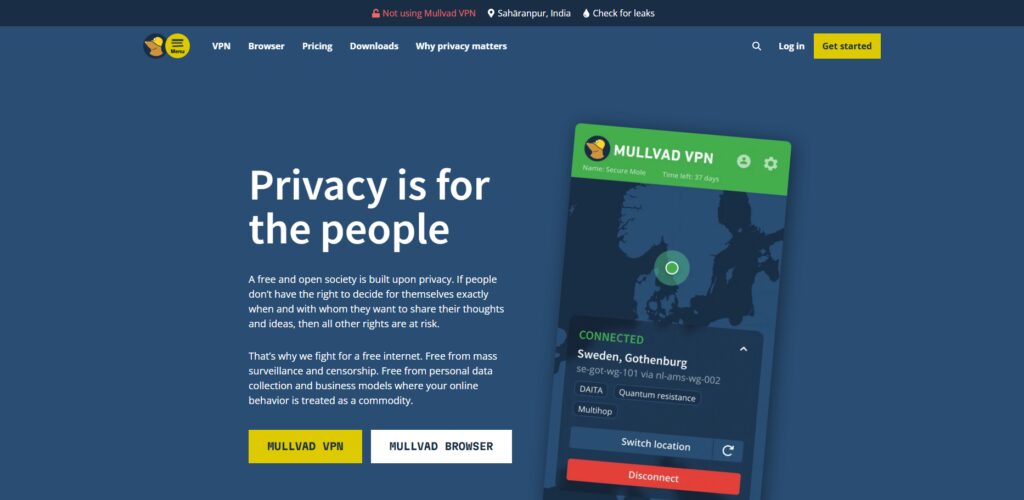
Its infrastructure and systems have been audited by Cure53, confirming strong security design and absence of identifiable user logging mechanisms. These audits reinforce Mullvad’s strict minimal-data philosophy. (Reddit)
Proton VPN is headquartered in Switzerland. Leveraging the country’s strong privacy regulations, the company has launched open-source applications and deployed audited server infrastructure.
| Category | Key Features |
|---|---|
| Privacy | No email account required (anonymous ID system) |
| Infrastructure | Minimal data collection architecture |
| Security | WireGuard-first secure design |
| Audit Status | Cure53 independent security audit |
| Extra Feature | Cash payment for maximum anonymity |
6. Private Internet Access (PIA)
PIA is known for its proven no-logs policy in real-world legal cases, where it was unable to provide user data due to lack of stored logs. This practical validation strengthens its privacy claims.
It has also undergone independent technical reviews by Leviathan Security, which examined its infrastructure and confirmed its no-logs implementation and system design integrity.
This privacy service provider’s no-logs policy has been verified via an independent audit conducted by Securitum. The provider does not store users’ browsing activities or metadata, and repeat audits can strengthen its privacy-first brand reputation Reddit
| Category | Key Features |
|---|---|
| Privacy | Proven no-logs policy (court verified) |
| Infrastructure | Large global server network |
| Security | AES-256 encryption + OpenVPN/WireGuard |
| Audit Status | Leviathan Security audit |
| Extra Feature | Advanced customizable encryption settings |
7. IVPN
IVPN operates with a strong focus on minimal data collection and privacy-first architecture, avoiding unnecessary user metadata storage. It also supports anonymous sign-up options.
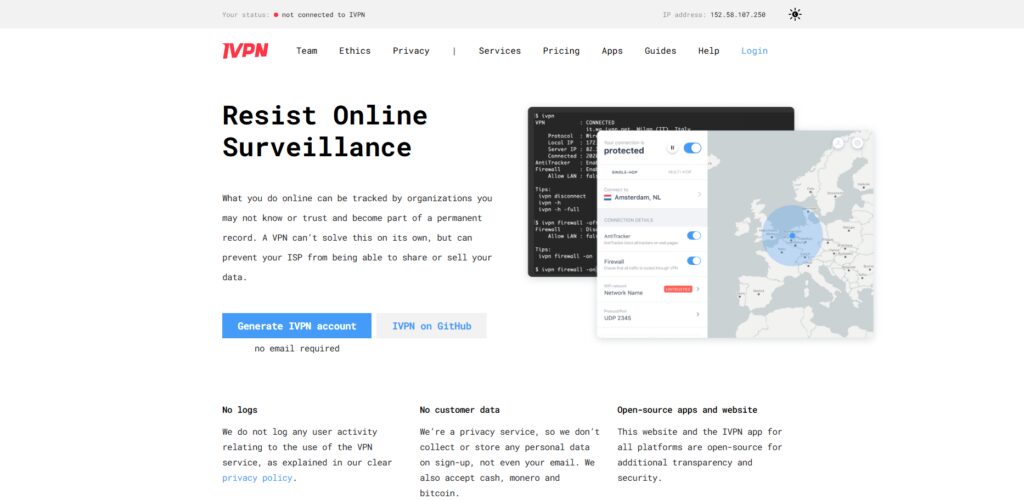
Its systems and applications have been independently audited by Cure53, which evaluated security controls and confirmed robust implementation of its privacy model. (Reddit)
VPN service provider Surfshark has adopted two technologies—RAM-only servers and rotating IPs—to reduce the traceability of its users’ sessions, and implements strict internal privacy controls to offset potential compliance risks linked to its location in a Dutch dependent territory.
| Category | Key Features |
|---|---|
| Privacy | Minimal metadata collection policy |
| Infrastructure | Transparent privacy-first architecture |
| Security | Multi-hop VPN routing option |
| Audit Status | Cure53 audited system security |
| Extra Feature | Anonymous signup support |
8. TunnelBear
TunnelBear is known for its transparent security model and regular public security audits, making it one of the more openly reviewed consumer VPNs.
Surfshark VPN has been audited by Deloitte, and its no-logs policy and infrastructure security have been formally verified. The service does not store any personally identifiable user logs. The source of this information is a public Reddit node that comes with its own external links.
Mullvad VPN, which focuses on delivering extreme user privacy, supports anonymous registration that requires no submission of any personal identifying information, and also accepts cash payments to help users avoid digital tracking.
| Category | Key Features |
|---|---|
| Privacy | Simple no-logs consumer VPN model |
| Infrastructure | Globally distributed secure servers |
| Security | AES-256 encryption standard |
| Audit Status | Annual independent security audits |
| Extra Feature | GhostBear anti-censorship mode |
9. IPVanish
IPVanish operates a self-owned infrastructure model, giving it greater control over servers and reducing third-party exposure risks. It claims a no-logs policy supported by technical enforcement.
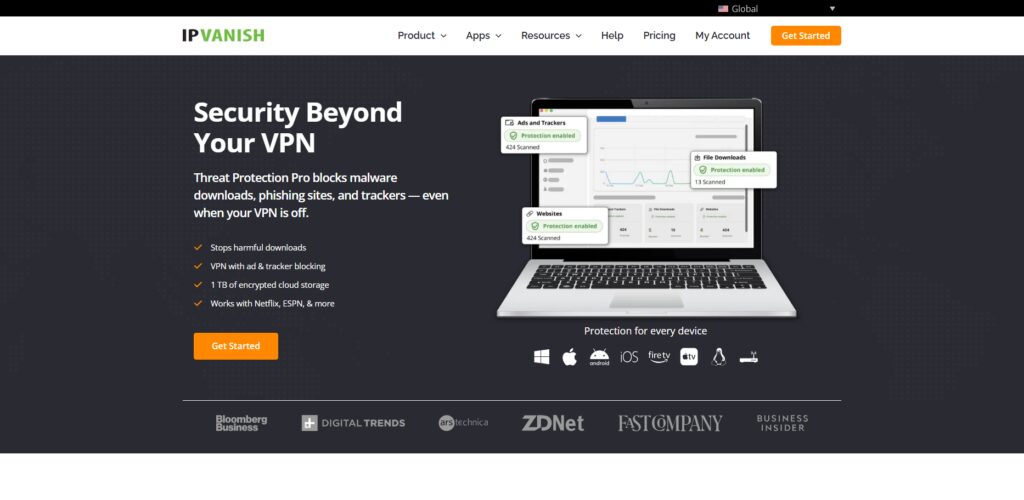
Its infrastructure and privacy claims have been independently reviewed by Leviathan Security, which validated its no-logs implementation at a system level.
Privacy network service provider Mullvad was audited by professional security audit institution Cure53, which confirmed that Mullvad keeps no user logs, a finding that aligns with the provider’s data minimization principle. This information originates from Reddit.
| Category | Key Features |
|---|---|
| Privacy | Verified no-logs policy |
| Infrastructure | Self-owned server network |
| Security | AES-256 encryption + WireGuard support |
| Audit Status | Leviathan Security verification |
| Extra Feature | Unlimited simultaneous connections |
10. VyprVPN
VyprVPN is notable for owning its entire server network and DNS infrastructure, reducing reliance on third-party providers and increasing control over data flow.
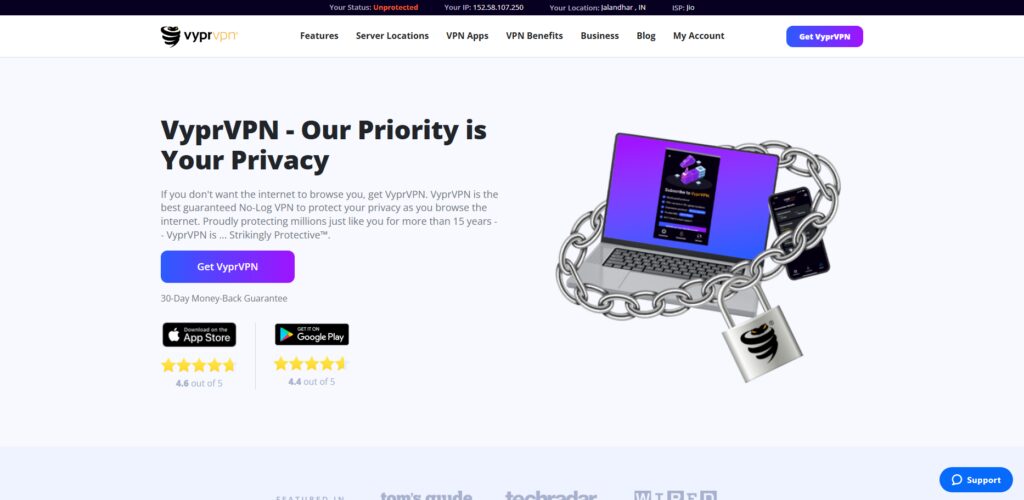
It has undergone independent audits confirming its no-log compliance and infrastructure security design, supporting its claim of not storing user activity data.
| Category | Key Features |
|---|---|
| Privacy | No-log policy with audited compliance |
| Infrastructure | Fully owned servers + DNS control |
| Security | Chameleon protocol for VPN blocking bypass |
| Audit Status | Independent security verification |
| Extra Feature | Strong censorship bypass capability |
Key Factors Used to Rank Zero-Knowledge VPNs
Third-Party Security Audits
Independent audits from firms like Deloitte, KPMG, or Cure53, confirm whether or not VPN providers truly implement policies on ‘no-logs, secure infrastructures’ to protect user privacy in a manner consistent with their marketing, or solely make these claims in their advertising.
RAM-Only Server Infrastructure
RAM-only or diskless servers permanently erase data during a reboot. This eliminates the ability to store user information on a physical hard drive, session information, or records of user activities.
Strict No-Logs Policy Verification
VPNs that advertise zero-knowledge must be able to prove that they have not recorded browsing logs, IP addresses, or DNS requests and timestamps, by way of audits, or through verification of a legal case in which a claim was made.
Jurisdiction & Privacy-Friendly Laws
VPNs that are located in privacy-friendly countries, who are not a signatory to the WTO, will better protect users from government requests for data, mandatory data retention, and cross-border intelligence sharing.
Infrastructure Ownership & DNS Control
VPNs that physically own their servers and DNS reduce the chances of third-party compromises, and lower the risks of involvement by external data service hosting providers.
Encryption Standards & Security Protocols
Providing protection against online cyber risks often requires the use of advanced methods of protection about data in transit. High-quality VPNs use encryption and protection through AES-256, WireGuard, OpenVPN and Perfect Forward Secrecy.
Transparency & Open-Source Security Model
The usage of open-source systems and transparency through the use of public reporting, support the trust of the users and the credibility of the infrastructure for prolonged periods.
Challenges & Limitations of Zero-Knowledge VPNs
Increased Cost of Infrastructure and Operation
Compared to most VPN providers, Zero-Knowledge VPNs incur costs to deploy self-managed infrastructure, require fully dedicated RAM servers, independent audits, and advanced encryption systems. These costs are higher than the operational costs of most standard VPN providers, who utilize cheap, shared hosting environments.
Performance Drawbacks from Increased Privacy Controls
Advanced privacy controls (e.g. Multi-hop, Double VPN, or Secure Core) reduce connection speeds and increase latency, adversely impacting the quality of gaming, streaming, and other real-time communications.
Restricted Transparency from Some Providers
Specific details about company infrastructure or full audit reports are not disclosed by all VPN companies, and this lack of disclosure can hinder users from being able to verifiably assess claims of privacy, server ownership, and the actual policies of server logging.
Legal and Government Pressure from Various Jurisdictions
VPN services that are located in countries that have a high level of surveillance, can lose their privacy protection, and log policies can be legally imposed on them, which can make the advertised ‘no-logs’ policies essentially worthless.
Difficult to Use for Non-Technical Consumers
Compared to a typical VPN, which can either be good or bad, Zero-Knowledge VPNs are much less user-friendly because of the higher level of privacy protection and security that they provide.
Trust Is Necessary Even With No-Logs Claims
Users must continue to trust VPN providers for security, even after independent audits, because audits are not a reliable or constant way to verify the actual log policies, infrastructure, and the security of the operations to the consumers when they are not present.
Increased Subscription Costs for More Privacy
Compared to basic VPNs, privacy-centered VPN services that have undergone an audit and have self-owned infrastructure and advanced security protections are much more expensive.
Conclusion
Combining audited no-logs policies, RAM-only servers, ultra-strong encryption, and transparent security practices, Zero-knowledge VPN Providers offer a more powerful form of privacy protection than traditional VPN Services.
ExpressVPN, NordVPN, and Proton VPN use independent audits, which include Deloitte, KPMG, and Cure53, to improve user trust and the credibility of their infrastructure. Higher subscription costs and/or slower speeds are noted trade-offs.
Given the state of the world, these VPNs offer users essential privacy and security, much more so than most other products available. Zero-knowledge VPNs help keep users safe from the dangers of growing digital surveillance.
FAQ
What is a Zero-Knowledge VPN?
A zero-knowledge VPN is a privacy-focused VPN service that does not store browsing activity, connection logs, or identifiable user data, supported by independently audited no-logs infrastructure and secure server systems.
Why are third-party VPN audits important?
Third-party audits verify whether VPN providers genuinely follow their privacy claims, no-logs policies, and infrastructure security practices instead of relying only on marketing statements or internal assurances.
What are RAM-only VPN servers?
RAM-only servers operate without hard drives, automatically erasing all temporary data during every reboot, reducing risks of long-term data storage, server seizure exposure, and unauthorized forensic recovery attempts.
Are audited VPNs safer than regular VPNs?
Audited VPNs are generally more trustworthy because independent cybersecurity firms verify their no-logs policies, infrastructure security, encryption standards, and operational privacy practices through professional technical assessments.
Can a VPN guarantee complete anonymity online?
No VPN can guarantee absolute anonymity because online privacy also depends on browser security, tracking technologies, account usage, device protection, and overall internet behavior beyond VPN encryption alone.