


When fintech startups innovate with stablecoins, compliance defines confidence in their trust and ability to grow. In 2026, regulators expect full transparency, identify verification, and risk management in each layer of every transaction. These are the focus areas of Stablecoin Compliance APIs.
They provide tools and services to automate compliance across multiple blockchain networks and cover KYC, AML, monitoring of the Travel Rule, and fraud. Beyond avoiding risks and punitive measures, these APIs give startups the confidence to operate internationally. In this review, I will research the best compliance APIs in the stablecoin sector that help build successful fintech initiatives.
What Is a Stablecoin Compliance API?
A Stablecoin Compliance API is designed for fintech startups to integrate regulatory checks in-product. Compliance automation and the Stablecoin Compliance API eliminate regulatory risk and attract regulator trust, and ultimately allow financial technology companies to scale within multiple blockchain networks.
The API uses real-time identity verification, transaction monitoring, screening against sanction lists, and scoring for risk for the automatic compliance of global travel rule (FATF), AML/CTF, and MiCA standards. Stablecoin Compliance APIs protect startups from regulatory risk while allowing them to scale and run a transparent, audit-ready compliance framework across a multi-blockchain environment.

What Should a Stablecoin Compliance API Actually Do?
Real-Time Address Screening
Addresses are screened against sanctions lists, PEP lists, and flagged entity lists in real-time to stop illicit transfers and conduct business in accord with FATF, OFAC, and EU regulations.
Transaction Monitoring
Identification of sanctioned and/or mixer-associated stablecoin transfers across blockchains with real-time tracking and the development of audit trails for regulatory review, complete with time stamps and evidence of compliance.
Risk Scoring & Analytics
Proprietary risk scoring is established using ML to flag potentially criminal activity befoe it occurs via fraudulent stablecoin activity.
Identity & KYC Integration
Identity verification via KYC providers is performed, complete with biometric verification and detection of fraudulent documents. A compliant onboarding of stablecoin users is supported and assured.
Travel Rule Enforcement
Secure cross-border inter-VASP exchange of data in anticipation of transactions is supported to facilitate fully compliant cross-border stablecoin transfers under the FATF Travel Rule.
Audit & Reporting
Automated compliance reports are generated and regulatory SARs packets are documented to ensure compliance start-ups are audit-ready.
Key Points
| Provider | Key Features | Best For |
|---|---|---|
| Chainalysis KYT | KYT API, sanctions screening, case management | Regulator-accepted monitoring |
| TRM Labs | Forensics, chain coverage, risk scoring | Emerging chain compliance |
| Elliptic Lens | Multi-asset monitoring, Navigator, Investigator | Cross-chain fintechs |
| Eco Regulated Routes | At-execution blocking, allowlists | Treasury + settlement |
| Sumsub | Identity verification, MiCA readiness | Full-stack compliance |
| Jumio | Biometric verification, scale onboarding | Large fintech startups |
| Merkle Science Compass | Predictive risk scoring, anomaly detection | Fraud prevention |
| Notabene | Pre-transaction authorization, data exchange | Cross-border transfers |
| Crystal Intelligence | Compliance evidence packs, EU MiCA focus | European fintechs |
| Scorechain | EU hosting, monitoring, audit-ready | EU-regulated startups |
1. Chainalysis KYT
Chainalysis KYT is one of the most well-known compliance API’s for real-time stablecoin and crypto asset monitoring. They charge clients a subscription fee based on the volume of transactions. They cover blockchain networks such as Bitcoin, Ethereum, and most major stablecoin networks like USDT, USDC, and DAI.
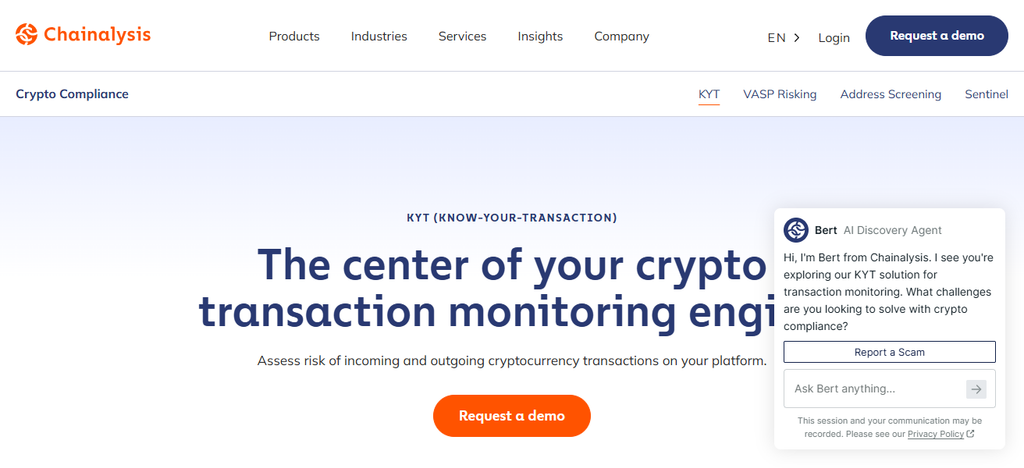
They have one of the most robust stablecoin ready coverages across different stablecoin issuers. As with all Chainalysis products, their knowledge and experience working with law enforcement has directly been integrated into their products, and their KYT offering is no exception.
Their APIs update quickly allowing high growth fintech companies to batch hundreds of thousands of transactions in a matter of seconds while keeping latency around 200ms. Being able to meet most compliance requirements including the FATF, MiCA, and U.S. Treasury makes their product a no brainer for startups.
Pros:
- Recognized by many regulators
- Broad coverage of blockchains
- API for monitoring data in real-time
- Extensive datasets
Cons:
- Expensive for small businesses
- Complex integration
- Less flexibility for customization
- Requires Chainalysis KYT environment
Best For: Monitoring and compliance with FATF/MiCA recommended for small businesses.
2. TRM Labs
TRM Labs provides a compliance API for blockchain forensics and tacking transaction risk. Like most of its competitors, TRM Labs charges a tiered pricing system based on the number of API calls and the enterprise features bought. They cover 30+ blockchain networks including Ethereum, Solana, and Polygon.
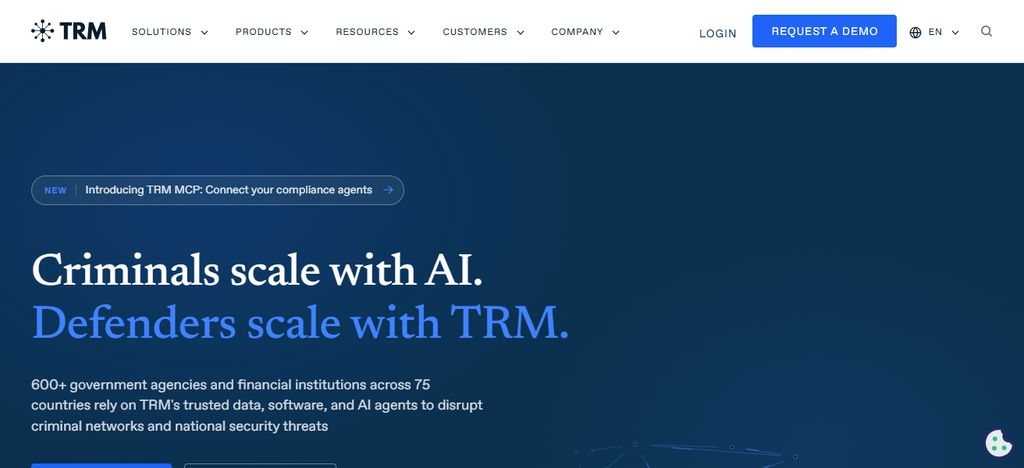
They have robust stablecoin support for USDC, USDT, and other algorithmic stablecoins. They have integrated forensic intelligence alongside cross-chain analytics. TRM Labs’ APIs support real-time monitoring which makes them well positioned for fintech startups because of their built in scalability as they expand across multiple blockchains.
Pros:
- Coverage of 30+ blockchains
- Great analytical intelligence
- Wallet screening in real time
Cons:
- Price increases based on usage
- Requires technical ability
- Not many EU compliance tools
- Smaller dataset compared to Chainalysis
Best For: Startups for cross-chain expansion with the ability to scale.
3. Elliptic Lens
Elliptic Lens integrates blockchain analytics and compliance APIs in one unified package for fintechs. With a modular pricing structure, startups only pay for what they need. Blockchain coverage offers the ability to analyze Bitcoin, Ethereum, XRP, and popular stablecoins USDC, USDT, and BUSD.

Comprehensive stablecoin analysis offers risk scoring on a per-issuer basis to aid compliance efforts. The detection framework incorporates behavioral analysis, anomaly detection, and LOT typology.
APIs have enterprise-grade performance, capable of over a million calls per day with extremely low latency. The compliance coverage of Elliptic Lens allows startups to have solutions for cross-chain monitoring and instant compliance reports to regulators.
Pros:
- Analytics dashboard
- Great detection of anomalies
- Monitoring of multiple assets
- Supports MiCA and FCA compliance
Cons:
- Complexity of price based on modules
- Low coverage of APAC
- Requires training for comprehensive usage
- Smaller partner ecosystem
Best For: Startups for cross-chain monitoring with the ability to scale.
4. Eco Regulated Routes
Eco Regulated Routes offers another layer in the protocol for a compliance API to make sure regulated transaction pathways are complied with. In a similar fashion to Elliptic Lens, its pricing model charges per transaction for compliance check routing. There is blockchain coverage for the sub-ecosystems of Ethereum, Avalanche, and Cosmos.
Stablecoin coverage is for USDC, USDT, and regulated euro stablecoins. The risk detection data is embedded in the execution, and therefore, non-compliant transfers are stopped immediately.
The APIs have settlement speed, and therefore, compliance is enforced without a delay in a transaction. With its compliance coverage of MiCA, SEC, and FATF, Eco Regulated Routes can help fintech startups with compliance for their treasury and stablecoin settlement operations.
Pros:
- Enables compliance at the protocol layer
- Blocking form of compliance at the protocol level in real time
- Supports regulated stablecoins
Cons:
- Low coverage of blockchains
- Mainly focused on treasury operations
- High cost for less flexibility outside of regulated routes
Best For: Startups that operate a treasury with regulated stablecoin settlements.
5. Sumsub
Sumsub has an API that fintech startups can use for KYC/AML compliance. They use a verification pricing model at the user level and offer enterprise packages. They do not cover blockchain transactions but help verify user identities to ensure stablecoins aren’t used for illegal transactions.
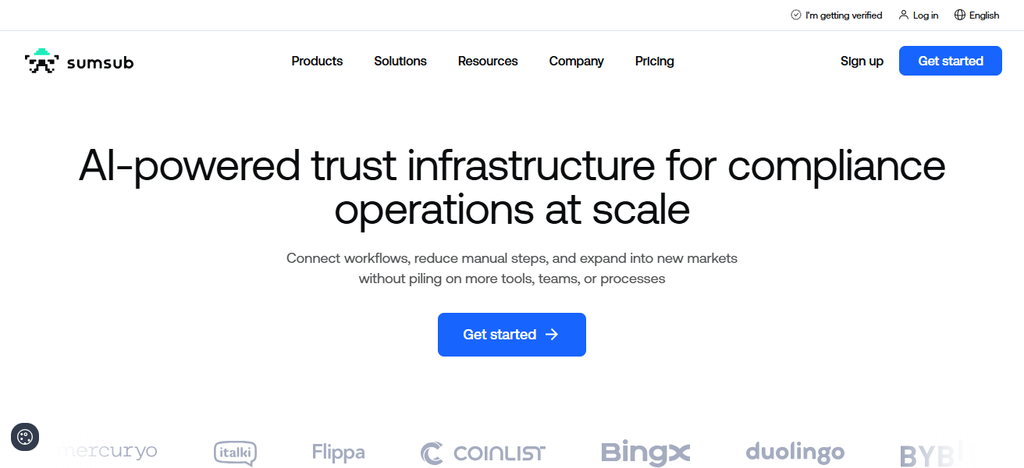
Stablecoins have coverage through partnerships for transaction monitoring. Data on risk detection includes records of document and biometric fraud detection and lists of sanctioned persons.
API verification is optimized for speed, so most transactions take less than a minute. Sumsub has coverage for MiCA, FATF, and GDPR which makes Sumsub an important part of a startup focused on user identity verification and compliance for stablecoin users.
Pros:
- Fast KYC
- Biometric verifications
- Complies with GDPR
Cons:
- Price based on per user
- Indirect coverage of blockchain
- Low transactional monitoring
Best For: Startups that require compliance with identity verifications and onboarding.
6. Jumio
Jumio has a similar product but focuses primarily on the verification and authentication of users for compliance in the fintech space. Their pricing focuses on user verification, offering startups flexibility for volume discounts. Like Sumsub, they do not provide blockchain verification focused on monitoring transactions, but help in verifying user identities in the stablecoin space.

Risk intelligence data for Jumio includes biometric rules and checks for fraud and sanctions screening. Jumio has a high coverage API, verifying users in under 90 seconds around the world. Jumio is an excellent option for fintech startups focused on user identity verification but also focused on compliance for stablecoins.
Pros:
- Verification of identity for enterprises
- Work on a global scale
- Detect fraud using biometrics
- Speedy verifications
Cons:
- Cost prohibitive for small startups
- No direct support for blockchain compliance
- Few tools for stablecoins
- Enterprise focused
Best For: Startups needing identity verification and global compliance.
7. Merkle Science Compass
Merkle Science Compass offers fintechs predictive risk monitoring as an API which prices on a subscription basis related to the volume of transactions. Coverage includes major blockchains like Ethereum and Binance Smart Chain along with major stablecoin hubs. Stablecoin coverage includes major stablecoins as well as algostables.
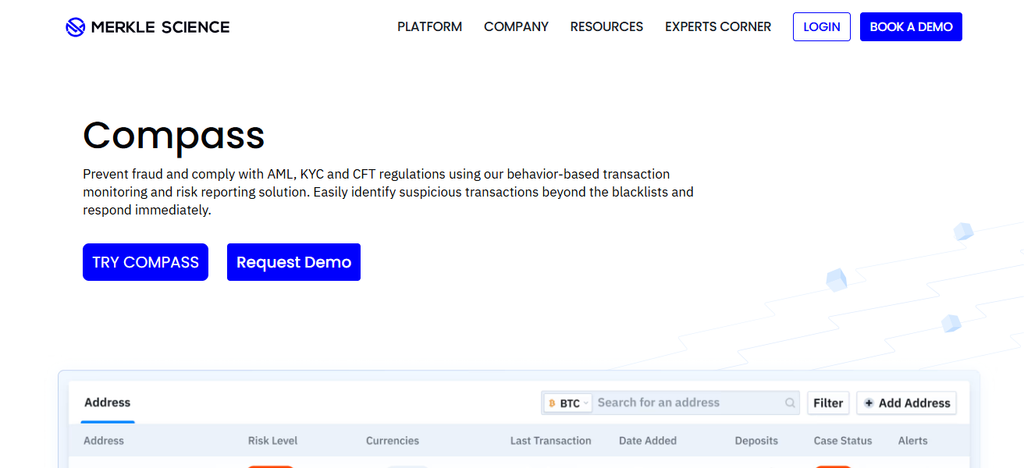
Behavior-based analytics help detect risk of illicit activity before it happens. Optimized for real time monitoring, API performance is under 250ms. Merkle Science Compass offers compliance coverage related to the FATF Travel Rule, MiCA and APAC with its product making it well suited for startups focused on fraud prevention and predictive compliance in stablecoin ecosystems.
Pros:
- Risk assessment based on behaviors
- Monitoring of behaviors
- Fraud detection in real time
- Compliance support for APAC
Cons:
- Smaller than Chainalysis and TRM
- Subscription pricing high
- Few tools for EU
- Integration and support for tech is limited
Best For: Startups concerned with predictive compliance and fraud prevention.
8. Notabene
Notabene also offers compliance APIs related to Travel Rule compliance as well as related tiers and pricing on a subscription basis tied to volume. Coverage includes major blockchains like Ethereum, Bitcoin and stablecoin networks. Strong stablecoin coverage includes USDT, USDC and regulated euro stablecoins.
Risk detection is focused on pre transaction authorization and counterparty verification. Notabene’s APIs help comply with Travel Rule, MiCA, and U.S. FinCEN, making its product well suited for startup focused on compliant international stablecoin transfers.
Pros:
- Enforcement of the Travel Rule
- Pre-approval and verification
- Compliance of counterparties on a global scale
Cons:
- Fast increase in subscription pricing
- Few tools for blockchain
- Travel Rule focused
- Requires monitoring API
Best For: Startups that do stablecoin transfers on a global scale.
9. Crystal Intelligence
Crystal Intelligence has less advanced APIs, but focuses on building blockchain data software designed specifically for regulatory investigations. Their subscription pricing encompasses packaged solutions for Fintech clients. They cover Bitcoin, Ethereum and stablecoin networks, along with USDT, USDC, and DAI.

Risk detection data involves forensic data, clusters of related transactions, and illegitimate cross-border value transfers. API performance counts on investigative reporting as the primary use case, with a focus on generating evidence packs.
Although their offerings are narrow, clients seem to appreciate their MiCA, FATF, and EU regulation coverage, thereby making their solutions attractive for European Fintech clients desiring compliance tools for investigating and reporting interactions with stablecoins.
Pros:
- Great tools for investigations
- Compliance evidence packs
- Clustering of transactions
- Prepared for EU regulation
Cons:
- Price for enterprises is high
- Limited monitoring
- Focus is on investigations
- Limited global reach
Best For: Startups in the EU that need compliance in investigations.
10. Scorechain
Scorechain also focuses on compliance APIs for risk scoring and monitoring. Their pricing model is subscription based, although they also offer EU based hosting. Regarding blockchain technology, they cover Ethereum, Bitcoin, and stablecoin networks, as well as USDT, USDC, and the euro stablecoins.
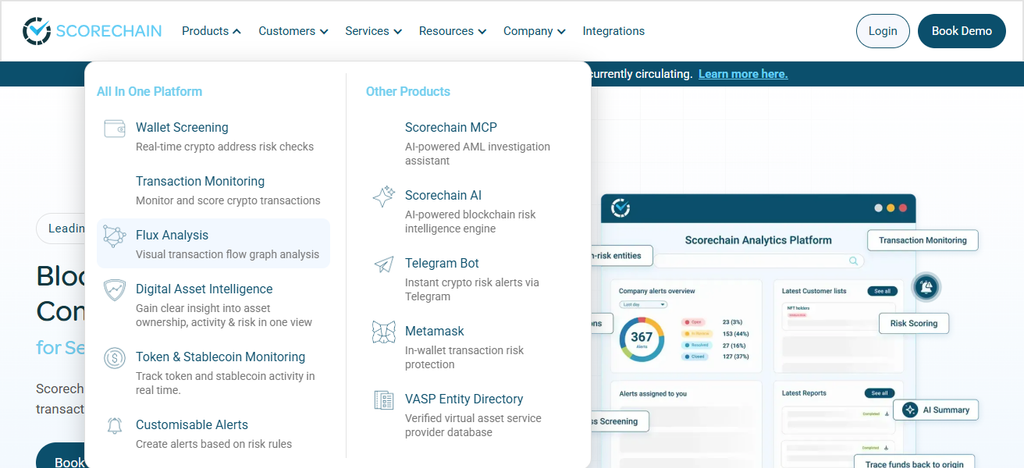
Their risk detection systems include transaction scoring and sanctions, along with anomaly identification. Like Crystal Intelligence, they also support compliance reporting systems with a focus on MiCA, FATF, and the EU framework. This ultimately means Scorechain is a great option for Fintech clients in Europe offering compliance services per regulator demands for interactions with stablecoins.
Pros:
- Hosting in the EU and compliance
- Strong tools for risk scoring
- Reports that are ready for an audit
- Compliance with FATF and MiCA
Cons:
- Limited reach
- Smaller dataset than TRM and Chainalysis
- Subscription pricing is expensive
- Focus is on startups in the EU
Best For: Startups in the EU that need compliance and are fintech services.
Real-Time Risk Scoring: What Fintechs Should Look For
Accuracy of Data
Ensuring the API uses accurate blockchain intelligence coupled with US sanctions lists and forensic data determines the extent to which merchants can trust the risk scores the API provides.
Multi-Chain Coverage
Support for Ethereum, Solana, Tron, Polygon, and stablecoin networks enables fintechs to fill the gaps in monitoring the rapidly evolving ecosystems of stablecoins like USDT, USDC, and EURC, as well as algorithmic stablecoins.
Low Latency Performance
Compliance should not be a constraint on the speed at which a fintech executes a transaction. The risk scores should be computed in less than 200 ms.
Behavioral Analytics
APIs should go beyond simply monitoring user behavior and identify unusual patterns and anomalies to predict potential cases of cyberfraud and circumvention of rules.
Regulatory Alignment
For scoring to remain compliant with the FATF travel rule and the MiCA and AML/CTF frameworks, fintechs should maintain a global conformance posture for the requirements of various jurisdictions.
Scalability
To keep pace with the growth of a fintech and maintain consistent performance and accuracy of compliance for an increasing volume of transactions, APIs should be able to support millions of requests daily.
Audit-Ready Reporting
Should generate regulator-ready evidence packs and audit trails and Suspicious Activity Reports (SARs) to help fintechs maintain compliance during audits or investigations.
Conclusion
The Stablecoin Compliance API is now a core element of the foundation of regulatory trust and operational security among fintech startups for 2026. These APIs implement address screening, transaction screening, and predictive risk scoring, as well as identity verification, Travel Rule processing, and reporting in an audit-ready format. Using these APIs enables fintech startups to comply with the FATF, MiCA, AML/CTF requirements. Several companies, including Chainalysis, TRM Labs, Elliptic, and Notabene, have developed these APIs.
While each company has its own unique benefits, layering across pre-trade compliance, execution compliance, and post-trade compliance is key. Implementing these APIs enables a startup to have scalability and for regulators to have greater confidence in the startup, as well as to prevent fraud. Startups are then enabled to cross borders and ecosystems of stablecoins in a secure manner.
FAQ
What is a Stablecoin Compliance API?
A Stablecoin Compliance API is a software interface that integrates regulatory checks—like KYC, AML, and Travel Rule—into fintech platforms, ensuring stablecoin transactions remain compliant across global jurisdictions.
Why do fintech startups need it?
Fintechs need compliance APIs to avoid regulatory penalties, prevent fraud, and build trust with regulators and investors. They automate compliance, reduce risk, and enable secure scaling across multiple blockchain networks.
Which stablecoins are typically covered?
Most APIs cover major stablecoins like USDT, USDC, DAI, and EURC. Some also support algorithmic stablecoins, ensuring startups can monitor diverse ecosystems without gaps in compliance.
What features should it include?
Key features include real-time address screening, transaction monitoring, risk scoring, identity verification, Travel Rule enforcement, and audit-ready reporting. Together, these functions form a complete compliance stack for fintechs.
How do pricing models work?
Pricing models vary: some charge per transaction, others per verification, and many offer subscription tiers based on API calls or enterprise features. Startups should choose based on scale and budget.