

The choice of API provider you make when building a Solana Web3 app can have a direct impact on how easy it is to access blockchain data and scale your project. Shyft is a popular option but may not meet API coverage, real-time data, RPC performance, pricing, or multi-chain infrastructure requirements for all developers. Here, I’ll go over the best Shyft alternatives for Solana Web3 APIs, contrasting their features, data capabilities, scalability, and key risks to help you get a handle on your choices.
What Is Shyft?
Shyft is a blockchain infrastructure platform, focused heavily on the Solana ecosystem, that offers APIs and developer tools for building Web3 applications. It lets developers access and organize on-chain data without having to build and maintain blockchain indexing infrastructure themselves.
Shyft offers APIs for transactions, tokens, NFTs, wallets, and other Solana data to make integration simpler for dApps, marketplaces, wallets, and analytics platforms. Its infrastructure is built for easy access to blockchain data with minimal development complexity and resources needed to run Solana-focused applications.
How to Choose a Shyft Alternative?
Solana Support: Select a provider with robust Solana infrastructure, extensive API coverage, good uptime, and access to the required blockchain data for your app.

API Coverage: Take a look at transaction, token, NFT, wallet, account, DeFi, and program APIs and make sure the provider has all the endpoints you need without requiring a lot of custom development.
Data Quality: Assess the accuracy of indexing, transaction parsing, historical coverage, metadata availability, and consistency to ensure applications receive reliable and usable data from the Solana blockchain.
Real-time Performance: Think about latency, WebSocket support, webhooks, streaming capabilities and response speeds when building trading platforms, dashboards, gaming applications or any other real-time Solana products.
Pricing Model: Look at free tiers, request limits, subscription plans, enterprise pricing, and overage charges to estimate total infrastructure costs as application usage grows.
Scalability: Select infrastructure that can scale with growing API requests, concurrent users, traffic surges, and production workloads without major performance degradation or limiting constraints.
Developer Experience: Evaluate the documentation, SDKs, code samples, authentication options, API consistency, testing resources, and technical support when choosing a provider for integration.
Reliability & Security: Evaluate uptime, infrastructure redundancy, monitoring, rate limiting, security practices, support responsiveness, and incident history to mitigate operational risks for production applications.
Key POints
| Alternative | Key Point |
|---|---|
| Helius | Solana-native API provider offering Enhanced APIs, Digital Asset Standard (DAS), webhooks, and optimized RPC infrastructure for wallets, NFT platforms, and dApps. |
| QuickNode | Multi-chain infrastructure platform with Solana RPC, APIs, analytics tools, and extensive developer support across numerous blockchains. |
| Alchemy | Enterprise-grade Solana RPC provider featuring high uptime, scalable infrastructure, Yellowstone-compatible gRPC, and advanced developer tooling. |
| Chain | Managed blockchain infrastructure with Solana RPC nodes, dedicated deployments, enterprise support, and predictable pricing. |
| Triton One | Creator of the Yellowstone gRPC implementation, known for low-latency infrastructure and advanced streaming capabilities. |
| Ankr | Multi-chain Web3 infrastructure provider offering affordable Solana RPC endpoints and developer APIs. |
| Syndica | Solana-focused infrastructure platform providing RPC services, node management, and enterprise-grade blockchain access. |
| dRPC | Decentralized RPC network that routes requests across providers to improve reliability and redundancy. |
| Blockdaemon | Institutional-grade blockchain infrastructure provider with Solana node services and enterprise security features. |
| OnFinality | Web3 infrastructure provider delivering Solana RPC endpoints, enhanced performance, and scalable node services. |
1. Helius
Helius was founded in 2022 and is heavily focused on Solana developer infrastructure. It offers Solana RPC, enhanced APIs, Digital Asset Standard (DAS) APIs, webhooks, transaction APIs and real-time streaming with LaserStream WSS and gRPC.
They cover accounts, transactions, tokens, NFTs, compressed assets, historic on-chain data, and parsed on-chain data. Thanks to WebSockets, webhooks, gRPC streaming and transaction subscriptions, Helios can support real-time applications. * Pricing is $49/month for Developer, $499 and $999 levels. Free plan with 1M credits.
Key Characteristics
- Solana-specific RPC and APIs to improve access to blockchain data.
- Supports DAS, Enhanced Transactions, Webhooks & Wallet APIs.
- Delivers real-time transaction and account data.
- Infrastructure for Solana apps and dApps for developers.
- Provides scalable RPC endpoints with dedicated infrastructure options.
Big Dangers
- Heavy Solana focus may reduce multi-chain needs.
- More use could mean more infrastructure costs
- API changes might require integration support.
- Advanced features may lead to vendor lock-in
2. QuickNode
Founded in 2017, QuickNode provides multi-chain RPC and Web3 infrastructure for developers. Its Solana offering includes standard JSON-RPC, WebSockets, gRPC streaming, archival access, webhooks and Streams for real-time and historical blockchain data. Solana coverage includes Mainnet-beta, Testnet, Devnet, and Alpenglow Testnet with archive availability on Mainnet-beta.
These APIs include account queries, transaction processing, program interactions, the state of the blockchain and real-time slot updates. QuickNode also offers Solana-specific products for streaming and transaction infrastructure. Pricing is based on plan and workload, with free development access and paid, usage-based options for higher volume applications.
Core Features
- RPC infrastructure for lots of blockchain networks.
- It offers APIs, add-ons, webhooks and blockchain data tools.
- Offers scalable endpoints for dApps and Web3 applications.
- Offers enterprise and dedicated infrastructure options.
- Offers monitoring and analytics capabilities for developers.
Major Threats
- High volumes of requests can increase prices.
- Features aren’t supported across all chains.
- Overall integration complexity may increase with add-on dependence.
- Provider changes might require changes to endpoints and APIs
3. The Alchemy
Founded in 2017, Alchemy provides blockchain infrastructure for EVM and non-EVM networks such as Solana. Its Solana APIs consist of standard JSON-RPC, Solana Digital Asset Standard APIs, Photon APIs, WebSockets, webhooks and Yellowstone gRPC capabilities. The data coverage is: blockchain state, transactions, NFTs, tokens, transfers and other indexed on chain data.
They also support networks like Ethereum, Polygon, Arbitrum, Base, Optimism, BNB Smart Chain, Starknet etc. along with Solana. Alchemy has a Free plan with 30M Compute Units and Pay-As-You-Go pricing based on compute-unit consumption with pricing listed at $0.525 per million CUs.
Main Features
- Multi-chain RPC infrastructure for Web3 apps.
- APIs for NFT, token, wallet and blockchain data.
- Contains developer tools, dashboards and debugging capabilities.
- Provides scalable infrastructure for applications that have high traffic.
- Allows for monitoring of blockchain data and applications in real-time.
Major Risks
- Costs can go up significantly at higher use levels.
- Some advanced functionality is specific to the provider.
- Multi-chain feature parity may differ across networks.
- Migration may require proprietary API changes
4. Chainstack
Chainstack was founded in 2018 and offers managed blockchain infrastructure for developers and enterprises. It provides Solana services like RPC access, WebSocket connectivity, dedicated nodes, and Yellowstone Geyser gRPC for streaming transactions, account changes, and blocks. It’s data infrastructure is designed for use cases with RPC workloads, indexing, analytics, trading and monitoring.
Chainstack also caters to a broad multi-chain environment outside of Solana, with Ethereum, Polygon, Arbitrum, Avalanche, BNB Chain, Base, Optimism, and other networks. Pricing includes a free Developer plan, and paid plans currently start at $49/month for Growth, with higher Pro, Business and Enterprise options.
Important Features
- Offers blockchain infrastructure and data services to developers.
- Provides API access to blockchain information.
- Built for enterprise and institutional Web3 use cases.
- Infrastructure focused on reliable data connectivity.
- Enables integrations that need scalable access to a blockchain.
Significant Risks
- Check network coverage prior to integration.
- Enterprise oriented services may not be suitable for small projects.
- Prices can vary greatly depending on infrastructure requirements.
- Provider specific APIs can increase the effort of migration.## Triton One
5. Triton One
Founded in 2021 Triton One is very much focused on Solana infrastructure. Its services include standard Solana JSON-RPC, WebSockets, archival data, Yellowstone-based gRPC streaming, custom indexes, Metaplex APIs, Photon APIs and high-performance transaction infrastructure. Triton supports Solana Mainnet, Testnet and Devnet and provides full access to historical archives on all its endpoints.
It has real-time capabilities streaming updates to accounts, transactions, slots, blocks, and entries via Dragon’s Mouth and associated Yellowstone tooling. Pricing is based on usage. The current plans have a minimum deposit of $125. Standard RPC pricing is based on bandwidth and calls. Other services like Metaplex, shred streaming, preconfirmations have their own pricing.
Main Features
- High-performance Solana RPC infrastructure.
- Heavily emphasizes low-latency Solana applications.
- Offers dedicated infrastructure for heavy workloads.
- For traders, validators and performance sensitive applications.
- Offers Solana-specific RPC and infrastructure services.
Major Risks
- Solana specialization restricts wider multi-chain use cases.
- Performance infrastructure is typically more costly.
- Advanced configurations might need technical expertise.
- Dependence on specialized infrastructure may constrain migration
6 Ankr
Ankr offers multi-chain RPC and Web3 APIs, including dedicated Solana access. Its Solana API allows you access to the blockchain by relevant JSON-RPC methods, allowing HTTPS and WSS access to Mainnet and Devnet. Ankr’s API coverage goes beyond the traditional RPC to include advanced Web3 APIs and multi-chain infrastructure.
Its extensive network coverage spans EVM-compatible chains, Bitcoin, Polygon, BNB Chain, Avalanche, Ethereum, and many other supported networks. Pricing is on a ** API Credit** model, with Premium PAYG pricing by request method.
Solana requests are ** 500 API Credits or $ 0.00005 per request** in current documentation. Premium plans also offer subscription-based Deal options from $500-$3,000 per month.
Main Features
- Offering decentralized and traditional RPC infrastructure.
- Integrates different blockchain networks in one platform.
- RPC endpoints, APIs, and developer infrastructure.
- Offers scalable access to dApps and Web3 services.
- Provides infrastructure choices for multi-chain development.
Risks to Watch
- Network Capability Varies Widely.
- Usage costs are high for high-volume applications.
- Performance may vary due to decentralized infrastructure.
- Changing API implementations may require development work
7. Syndica
Founded in 2021, Syndica is specifically focused on infrastructure for the Solana ecosystem. It provides Solana RPC, streaming blockchain data access, streaming infrastructure and validator related services. The data coverage is first rate, built for reading chain state, accessing account and transaction information, monitoring on-chain activity and building data intensive Solana applications.
Syndica’s infrastructure uses geographically distributed RPC endpoints and caching to enhance access to frequently requested blockchain information. It’s not about multi-chain API coverage, it’s about Solana. Pricing is usage-based and service-based, with infrastructure choices that are geared toward developers and larger applications. Solana RPC and real-time infrastructure are core to its offering with that focus.
Key Features
- Offers high-performance blockchain infrastructure with strong Solana features.
- It provides Web3 developers with RPC, APIs, and data infrastructure.
- Access blockchain data in real-time.
- Provides infrastructure intended for high-throughput applications.
- Targets applications requiring reliable, low-latency blockchain connectivity.
Major Risks
- Not all multi-chain projects may be suitable for Solana-oriented features.
- Operating costs are higher with high-performance infrastructure.
- Advanced APIs may require additional integration.
- Switching costs from provider-specific infrastructure.## dRPC RPC
8. dRPC
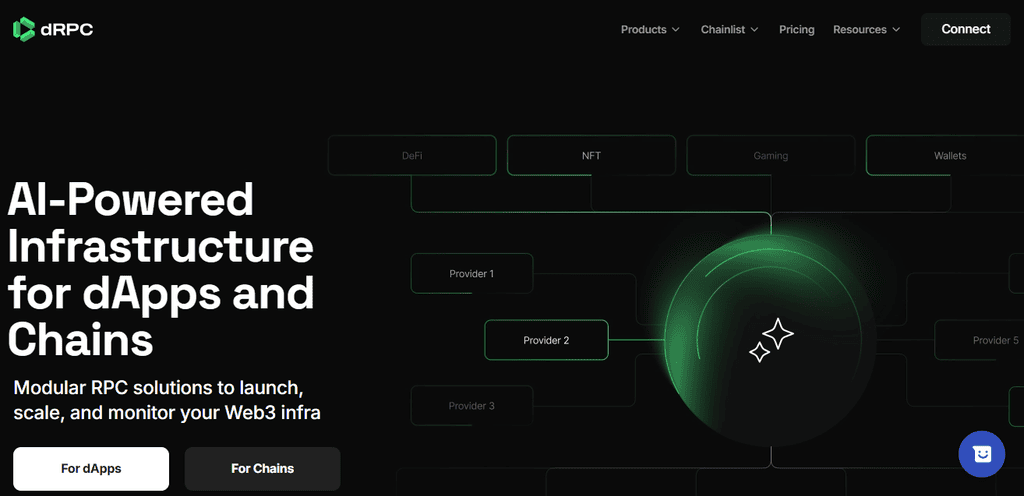
dRPC was founded around 2022 and utilizes a decentralized RPC marketplace, rather than relying on a single provider’s infrastructure. It supports standard RPC methods and real-time subscription capabilities that enable applications to query accounts, blocks, balances, transactions, and the state of the blockchain.
dRPC tracks RPC usage in terms of Compute Units, with 20 CUs for supported RPC methods and a price of $0.30 per 1 million CUs (see current documentation).
The infrastructure pulls capacity from a variety of independent node operators and routes requests dynamically based on availability, latency, synchronization, geography, and cost. This architecture enables multi-provider routing to applications that require distributed RPC infrastructure.
Important Attributes
- Decentralized RPC infrastructure for multiple blockchains.
- Has a network of distributed providers for access to the blockchain.
- Allows RPC connectivity between multiple chains.
- Infrastructure redundancy and availability was improved.
- Offers routing and infrastructure choices for Web3 projects.
Major Risks
- Performance may be affected by underlying RPC providers.
- Troubleshooting can be more difficult in a distributed infrastructure.
- Availability of different networks for supported chains.
- Provider abstraction can make migration and debugging more difficult
9. Blockdaemon
Founded in 2017, Blockdaemon provides institutional blockchain infrastructure for nodes, APIs, staking, wallets and indexed data. Its RPC API offers REST + RPC access for over 20 protocols while its broader infrastructure is built for 80+ blockchain protocols.
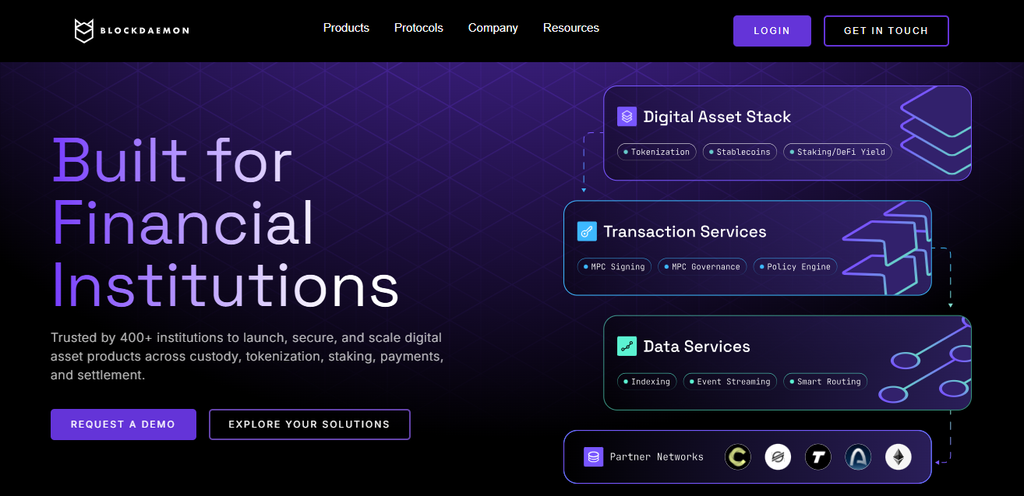
Supported blockchain ecosystem includes networks like Ethereum, Bitcoin, Avalanche, Algorand, Base, Solana and others. API coverage includes accounts, blocks, transactions, balances, blockchain data and infrastructure services.
Blockdaemon’s current API pricing includes a Free tier offering up to 3 million CUs per month and 5 RPS, alongside Starter, Growth, and Enterprise tiers for increased capacity.
Major Features
- Delivers institutional-level blockchain infrastructure.
- Supports blockchain connectivity, nodes, APIs, staking and wallets.
- Supports multiple blockchain networks.
- Enterprise-scale application infrastructure
- Delivers managed blockchain services and operational support.
Major Risks
- Enterprise infrastructure is expensive for smaller projects.
- Contract and service arrangements may be more complex.
- Network-specific features should be evaluated case-by-case.
- Enterprise integrations may lead to heavy vendor lock-in
10. On Finality
OnFinality was born as an infrastructure project in 2018, launched its API service in 2020 and has become multi-chain infrastructure since then. Its Solana product features RPC access via HTTPS and WSS, with public endpoints for Solana Mainnet and Solana Devnet.
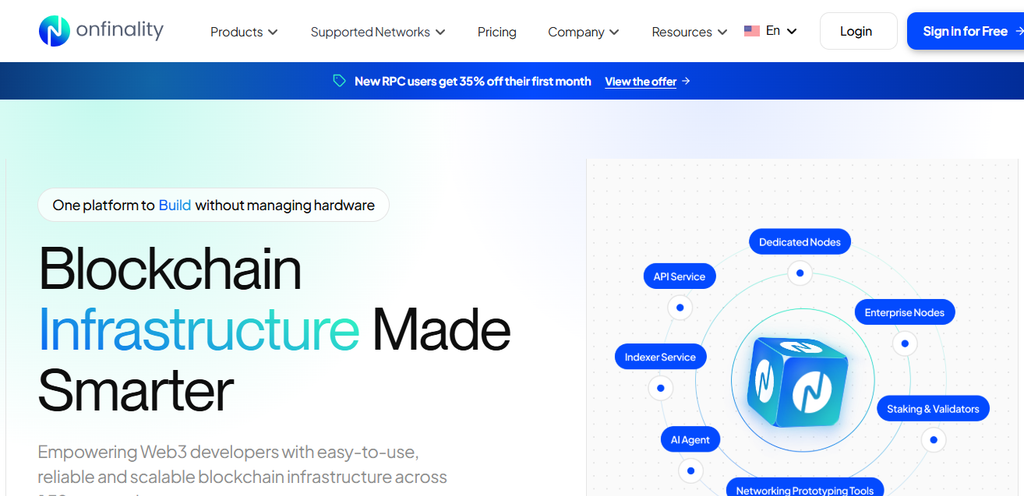
OnFinality’s larger platform supports more than 130 mainnet and testnet RPC networks like Ethereum, Polygon, Avalanche, BNB Chain, Arbitrum, Base, Sui, Aptos, Starknet and more.
Its API infrastructure supports standard RPC access, historical data and production blockchain workloads and dedicated-node options support higher demands. Pricing: Includes a **free Developer plan with 400,000 response units daily. Growth is $49/month with 20M response units.
Main Features
- Delivers managed blockchain node infrastructure.
- Multi-network and blockchain ecosystem compatibility
- Provides API and RPC for developers.
- Specialized infrastructure choices for demanding workloads.
- Supports managed nodes and monitoring capabilities.
Major Risks
- Different blockchain networks support different features.
- Dedicated infrastructure can raise costs.
- Some integrations may require network specific configuration.
- Moving from managed nodes may require changes to your infrastructure
Shyft vs. Alternatives: Key Comparison
| Provider | Solana Support | API Types | Data Coverage | Real-Time Data | Best Suited For |
|---|---|---|---|---|---|
| Shyft | Strong | Data APIs, NFT APIs, transaction APIs | Tokens, NFTs, wallets, transactions | Yes | Solana dApps and blockchain data |
| Helius | Strong | RPC, APIs, webhooks, data APIs | Transactions, tokens, NFTs, wallets, DAS | Yes | Solana applications and analytics |
| QuickNode | Strong | RPC, APIs, add-ons, webhooks | Blockchain, token, NFT, transaction data | Yes | Multi-chain and Solana infrastructure |
| Alchemy | Strong | RPC, APIs, SDKs, webhooks | Tokens, NFTs, wallets, transactions | Yes | Scalable Web3 applications |
| Chainstack | Strong | RPC, node APIs, data services | Blockchain and transaction data | Yes | Multi-chain development |
| Triton One | Strong | RPC and Solana infrastructure APIs | Solana blockchain data | Yes | High-performance Solana workloads |
| Ankr | Strong | RPC, APIs, Web3 infrastructure | Multi-chain blockchain data | Yes | Multi-chain dApps |
| Syndica | Strong | RPC, APIs, data infrastructure | Solana and blockchain data | Yes | High-throughput Solana applications |
| dRPC | Strong | Decentralized RPC, API infrastructure | RPC-accessible blockchain data | Yes | Distributed and multi-chain RPC |
| Blockdaemon | Strong | APIs, nodes, infrastructure services | Blockchain, staking, wallet, node data | Yes | Enterprise Web3 infrastructure |
| OnFinality | Strong | RPC, APIs, managed nodes | Blockchain and node data | Yes | Managed blockchain infrastructure |
Conclusion
Shyft alternatives give developers several options for accessing Solana Web3 APIs, blockchain data, RPC infrastructure, and real-time services. Helius and Triton One focus strongly on Solana, while QuickNode, Alchemy, Chainstack, and Ankr provide broader multi-chain infrastructure. Syndica targets high-performance Solana workloads, whereas dRPC emphasizes decentralized RPC access.
Blockdaemon and OnFinality offer infrastructure suited to larger production requirements. When selecting an alternative, developers should compare API coverage, transaction and token data, real-time capabilities, pricing, scalability, reliability, documentation, and integration requirements. The right provider ultimately depends on the application’s Solana data needs, expected traffic, technical requirements, and infrastructure budget.
FAQ
What is Shyft used for?
Shyft provides blockchain APIs and developer infrastructure for accessing Solana data, including transactions, tokens, NFTs, wallets, and other on-chain information.
What are the best Shyft alternatives?
Popular alternatives include Helius, QuickNode, Alchemy, Chainstack, Triton One, Ankr, Syndica, dRPC, Blockdaemon, and OnFinality.
Which Shyft alternatives support Solana?
The providers covered in this comparison offer Solana-related infrastructure or API access, although the depth of features and data coverage varies between providers.
Which alternative is focused strongly on Solana?
Helius, Triton One, and Syndica have strong Solana-focused infrastructure and can be considered when Solana-specific performance and data capabilities are important.