

In this article, I’ll discuss Top Bloom Bot Rivals For Fast Solana Trading. Let’s see how different platforms deal with Solana token trading. From Telegram-based trading bots to sophisticated web terminals and decentralized exchanges, each offers different features for execution, analytics, token discovery, fees and wallet management. I will compare Photon, Trojan, BONKbot, Maestro, BullX, GMGN.ai, Axiom, Jupiter, Raydium and Meteora to help readers understand their key differences and find what features suit their trading needs.
Why Look for Bloom Bot Rivals?
Reduced Trading Fees: Competitors of Bloom Bot have different fee structures, discounts, cashback programs or transaction fees, so active Solana traders can compare costs before picking a trading platform.
Better Execution Controls: Other platforms may offer more options for slippage, priority fees, transaction settings, and MEV protection, providing traders with greater control over how Solana transactions are submitted.
Better Token Search: Some competitors offer better tools for token screening, charts, wallet tracking, liquidity data and market analytics that make research of Solana assets before trading easier.

Increased Automation: Traders keen on automated strategies can explore platforms featuring limit orders, copy trading, sniping tools, scheduled actions, or other automation capabilities that are either unavailable or restricted on other platforms.
Different Trading Interfaces Bloom Bot alternatives are available as Telegram bots, web-based terminals, and decentralized exchanges, allowing users to select an interface that suits their preferred Solana trading workflow.
More Ecosystem Access: Some of these offer multi-chain functionality or deeper DeFi integrations, while others are Solana-focused, giving traders a number of options for accessing markets, liquidity, and blockchain-based financial products.
Wallet and Security Settings: By comparing rivals, users can see the differences in wallet architecture, custody models, transaction approvals, private-key management and security controls to judge operational risks before trading.
How to Choose the Right Bloom Bot Rival?
Trading Fees: Look at platform fees, swap fees, network costs, and any other execution fees. Think about your trading frequency as small fee differences can make a real difference to active traders.
Execution Controls: Check slippage controls, priority-fee controls, transaction speed controls, and MEV protections. Select a platform with controls aligned to your Solana trading strategy.
Token Discovery: Review charts, token screening, liquidity info, wallet tracking and new-token discovery tools. Good features for research help traders evaluate assets before they make trades.
Trading Features: Compare limit orders, copy trading, automated strategies, sniper tools, DCA and other supported features. Choose a competitor based on the specific trading activities you actually use.
Platform Experience: Do you have a preference for Telegram bots, web-based terminals, or decentralized exchanges? Choose an interface that is easy to use, has reliable transaction controls and offers clear information on trades.
Wallet Security: Review custody arrangements, private key management, wallet permissioning, transaction confirmation, and security protections. Never link wallets or approve transactions without verifying the platform and the destination.
Solana Liquidity: Look at the sources of liquidity supported, how they route, the trading pairs available and the market coverage. More access to the right Solana liquidity can affect execution paths and available trading opportunities.
10 Top Bloom Bot Rivals for Fast Solana Trading
| Bloom Bot Rival | Key Point |
|---|---|
| Photon | Web-based Solana trading terminal focused on rapid execution and token discovery |
| Trojan | Telegram-based Solana trading bot with fast swaps and trading automation |
| BONKbot | Telegram trading bot designed for quick Solana token swaps |
| Maestro | Trading bot offering Solana support alongside other blockchain networks |
| BullX | Trading terminal built around rapid token discovery, charting, and execution |
| GMGN.ai | Combines token analytics, wallet tracking, and trading features for Solana markets |
| Axiom | Solana-focused trading platform emphasizing fast execution and market discovery |
| Jupiter | Solana liquidity aggregator that routes swaps across available liquidity sources |
| Raydium | Solana-native decentralized exchange supporting token swaps and liquidity pools |
| Meteora | Solana liquidity protocol supporting trading through its decentralized liquidity infrastructure |
10 Best Bloom Bot Alternatives to Trade Solana Fast
1. Photon
Photon is a trading platform for fast moving crypto markets. More of a web-based trading terminal than a telegram only bot. Photon is built for Solana token trading and discovery. The interface is designed for fast token buys and sells, with trading controls for active traders.

Charts, token data, and market-discovery tools help traders evaluate assets before executing trades. The fees can change, please check the current official Photon documentation for the exact fee structure.
When connecting a wallet or trading, users should verify the official Photon domain and thoroughly review wallet permissions and transaction approvals.
Main Differences**
- Instead of a Telegram-first bot, a web-based trading terminal.
- Focus heavily on Solana token discovery and active trading.
- All-in-one interface with charts, token data and execution.
- Optimized for fast manual trading workflows.
- Terminal oriented than wallet tracking focused platforms.
Use Cases
- Trading new Solana coins.
- Observing charts and market activity of tokens.
- Performing frequent manual swaps.
- Research of tokens before start trading
2. Trojan horse
Trojan is a Telegram-based Solana trading bot, built for active token trading. It is mainly a telegram trading bot with generated trading wallets. Its main goal is to buy and sell Solana tokens, including newly launched, fast-moving assets.
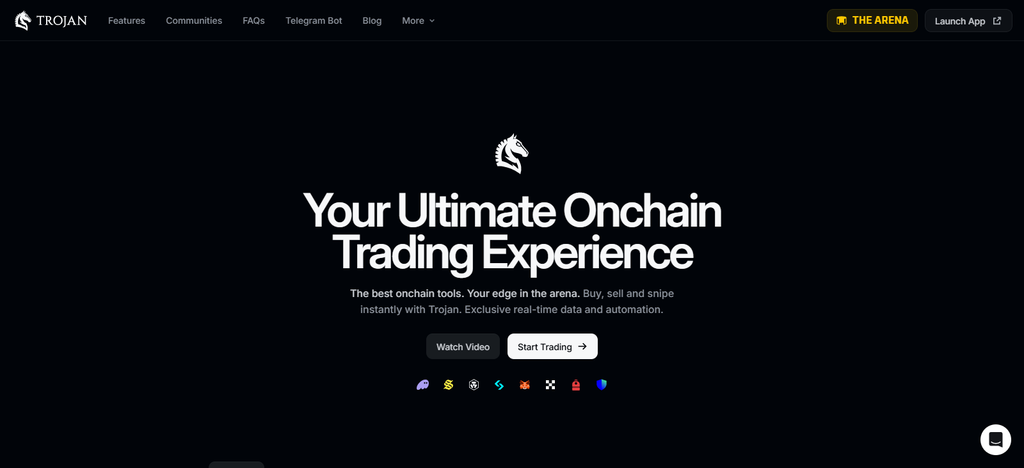
Execution / Trading Features: Trojan offers fast buys, sells, configurable slippage, priority fees, MEV protection, fast fire buying. Fast and Turbo priority fee settings are also documented. It has a trading interface for users to view token and trading data. Trojan takes 1% on successful trades and offers cashback to users. (
The private keys are encrypted and users can export their wallet keys, but Trojan recommends treating the wallet as a hot wallet.
Key Differences Between
- Native Telegram trading experience.
- Solana is the main focus of trading.
- Allows setting custom priority fees and slippage.
- Has transaction controls related to MEV.
- Fast execution based on optimized bots.
Use Cases
- Trade Solana tokens straight in Telegram.
- Rapid buying and selling of tokens.
- Trading newly introduced or volatile tokens.
- Configurable transaction settings for active trading.
3. BONKbot
BONKbot is a Solana trading bot focused on Telegram-based token trading. Platform Type: It integrates its Telegram bot with the larger Telemetry trading platform. Solana Center: The platform is focused on Solana tokens and offers tools to buy, sell and track assets.

Execution/Trading Features: BONKbot allows for preset buys and sells based on percentage, automated limit orders, transaction customization and routing via Jupiter and its own routing logic.Analytics: Telemetry is a tool for active traders that offers token analytics and wallet-tracking functionality.
Fees: BONKbot takes a 1% fee from all successful swap transactions. ([BonkBot Docs][5]) Security: It has a non-custodial Signer system with transaction verification and 2FA protections.
Major Differences
- Telegram trades on Solana.
- Strong integration into the BONK ecosystem.
- Has pre-set buys and sells as a percentage
- Has limit order functionality.
- Extends beyond the bot via Telemetry analytics.
Use Cases
- Fast swaps between Solana tokens.
- Meme coin trading.
- Automated limit orders
- Track wallets and token activity with Telemetry
4. Maestro
Maestro is a crypto trading-bot platform for automated and active token trading. It is not a traditional centralized exchange, but a platform that offers bot-based trading. Maestro trades on Solana as well as other blockchains. This multi-chain approach is a key differentiator.
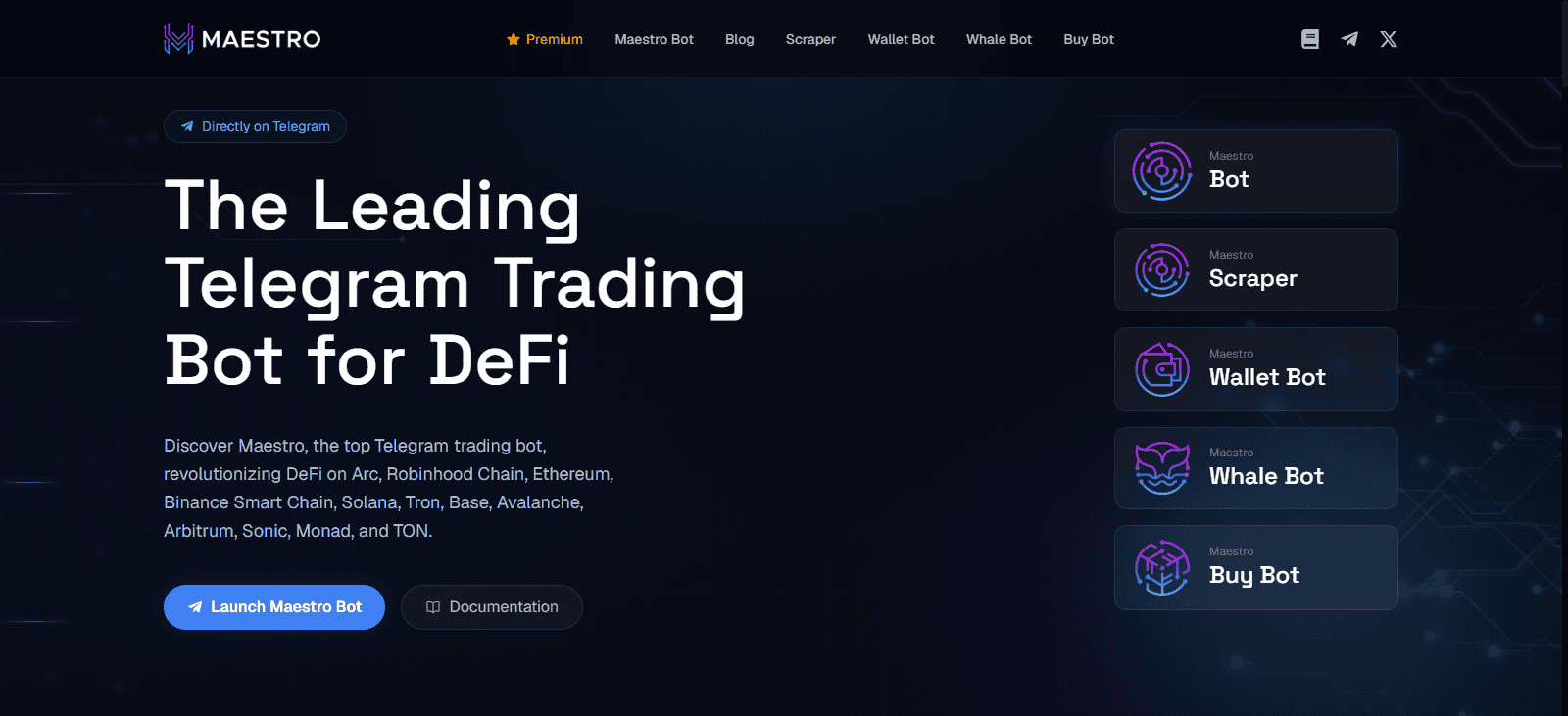
Tools for automated trading workflows, token execution and configurable trading actions for users who want bot-assisted transactions. The platform combines trading with tools for tracking tokens and market information to help users identify possible trading opportunities.
Check the current official Maestro fee schedule before publishing a specific percentage, as fees may vary by network, product or trading function. Users should review the current wallet architecture, key management process, permissions, and transaction-confirmation settings before depositing funds or connecting a wallet
Main Differences
- Multi-chain, not just Solana.
- Bot Based Trading Architecture.
- Supports automated trading work flow.
- Enables access to trading across multiple blockchain ecosystems.
- Better for the users who want one bot across multiple networks.
Use Cases
- Move tokens across supported chains.
- Automating repetitive trading activities.
- Tracking active token markets.
- Handling multiple blockchain trading workflows
5. BullX
BullX is a crypto trading terminal designed for active traders and quick-moving token markets. It’s primarily a web-based trading interface and not merely a Telegram bot.
BullX offers great Solana token discovery and trading, making it relevant for traders seeking Bloom Bot alternatives. Its interface marries token discovery with quick buying and selling and other configurable trading features.
BullX offers market data and token-focused analytics that seek to assist users in tracking active assets prior to trading. BullX Neo docs mention a 1% platform fee on buys and sells, plus any applicable network or protocol fees.
Users should stick to the official platform, review wallet permissions thoroughly and verify transaction details before approving trades, especially when dealing with new Solana tokens.
Big Differences
- Trading-terminal approach, instead of Telegram-only execution.
- Heavy focus on fast moving token markets.
- Integrates token discovery and execution.
- For active traders looking at multiple opportunities.
- Offers a more information-rich interface than basic trading bots.
Uses Cases
- Finding new active Solana tokens.
- Observing token charts and market activity.
- Frequent trading of tokens.
- Doing research on market opportunities before execution
6. GMGN.ai
GMGN.ai is a crypto trading and on-chain analytics platform that is heavily focused on Solana. Web trading, wallet tracking, and Telegram trading tools are available. Solana is a big supported ecosystem especially for new token launches and active meme coin markets.
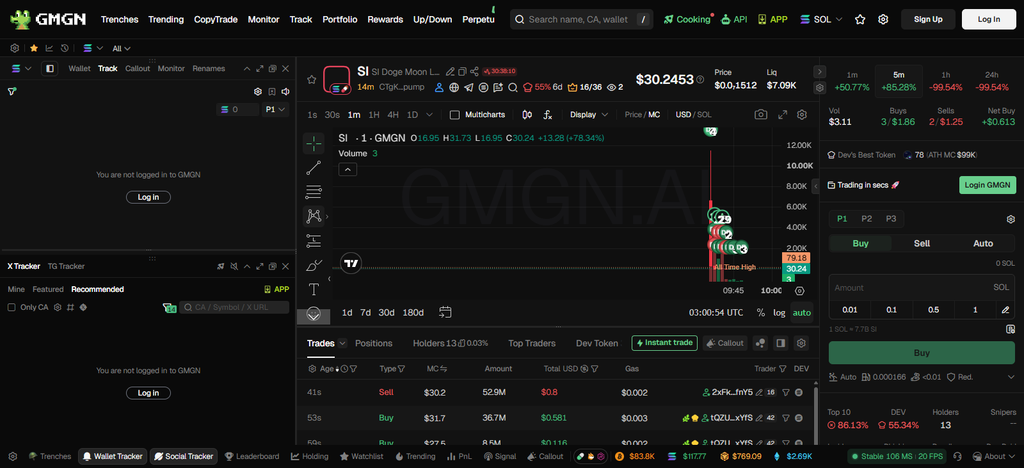
GMGN provides trading features such as limit orders, copy trading, automated trading, and transaction controls. Smart money tracking, wallet activity, trader statistics, token activity and Wallet Radar are major feature set.
GMGN takes a 1% handling fee per transaction, and network priority fees, slippage and other third party costs can be charged separately. GMGN has settings to protect against MEV, and you can customize how your transactions are submitted. However, it’s up to you to keep your wallet credentials safe and review transactions before approving them.
Differences
- Heavy focus on on-chain analytics.
- Key Features: Smart Money & Wallet Tracking
- Powers copy trading workflows.
- Trading + Advanced Wallet Intelligence.
- Available on web and Telegram-centric interfaces.
Use Cases
- Monitor successful or interesting wallets.
- Copying some trading activity from a wallet.
- Be aware of new token launches.
- Token execution + on-chain research
7. Axioms
Axiom is a trading platform with a heavy emphasis on active solana token markets. Type of Platform: It is a web based trading terminal, not a classic bot that works only in Telegram. Solana Focus: Solana’s platform revolves around trading, with transaction parameters geared toward active traders.
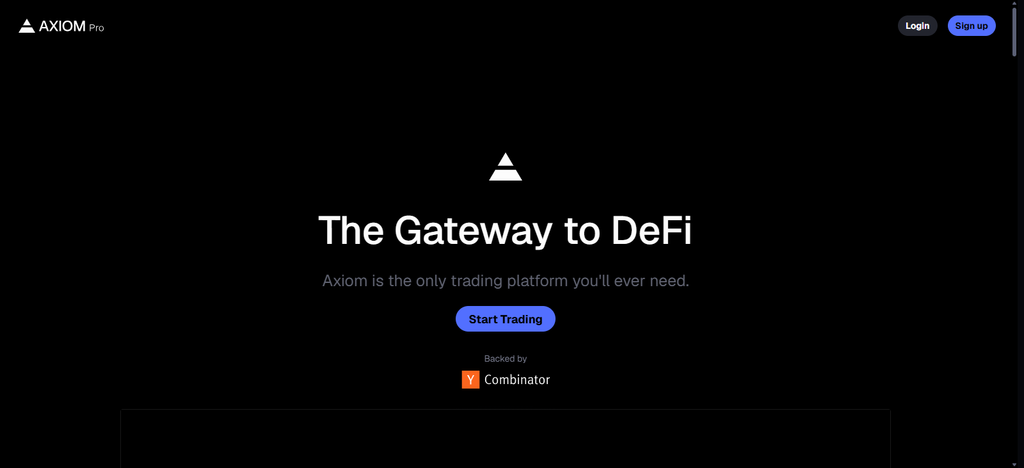
Axiom has controls for priority fees, tips, slippage and MEV-protection settings, allowing users to configure how transactions will be submitted. Analytics: Tracks active assets by combining trading execution and token and market info in its interface.
Axiom uses a tiered reward structure based on volume. Published tiers are 0.95% net fees at Wood, dropping to 0.75% at Champion after cashback. ([Axiom Trade Docs][8]) Security: MEV-protection options and transaction controls are important security features, but users should still verify wallet permissions, contracts, and transaction details before signing.
Top Differences
- Active Traders Web Terminal.
- Strong direction trading in Solana.
- Fine-grained control of priority fee and transactions.
- Offers configurable MEV-protection settings.
- Combines execution with market and token data.
Use Cases
- Actively trade Solana tokens.
- Varying the priority fee for a transaction.
- Monitoring for new tokens launched.
- Management of execution settings in volatile markets
8. Júpiter
Jupiter is a Solana-native decentralized exchange aggregator, not a Telegram trading bot. On-chain trading and liquidity routing platform. Jupiter is deeply integrated with Solana and routes swaps across available liquidity sources for token exchanges.
It’s core functionality is swap routing, but it’s ecosystem has additional trading and DeFi products. Jupiter’s interface shows users token and swap details, available routes and related market data. Jupiter’s fees vary based on the product and transaction, so it’s hard to assume a single fee for all use cases.
Users connect their own compatible wallets and approve blockchain transactions instead of depositing assets into a traditional centralized exchange. Traders should check token addresses, transaction details, slippage and wallet permissions before confirming swaps.
Main Differences
- DEX aggregator instead of an ordinary trading bot.
- Discovery and routing through Solana liquidity.
- Developed in the Solana DeFi ecosystem.
- It provides swap-routing infrastructure, rather than primarily bot automation.
- Opens up more DeFi functionality.
Uses Cases
- Exchanging Solana-based tokens.
- Reviewing available liquidity avenues.
- Performing DeFi transactions.
- Connecting to Solana trading infrastructure through a connected wallet
9. Raydium
Raydium is a decentralized exchange and liquidity protocol built on Solana. It’s an on-chain DEX, not a Telegram trading bot Solana-focused: Raydium is built on Solana and provides a way to trade tokens through its liquidity infrastructure.
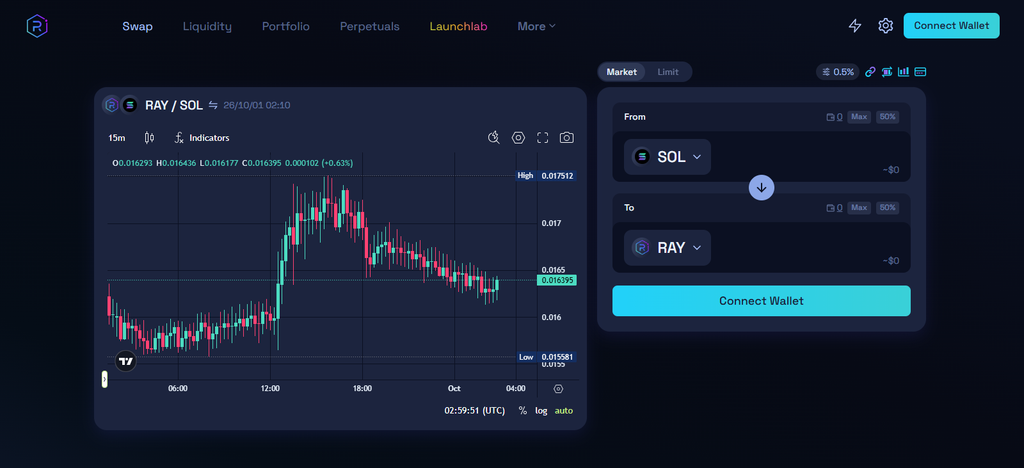
Users can swap tokens through Raydium pools, but its protocol also supports other types of liquidity-pool models. The interface shows information about trading and pools that can help users to evaluate available liquidity and token markets. Raydium fees are dependent on the pool type and trading mechanism used, so you should check the applicable pool before trading.
Transactions are executed on the blockchain through the user’s connected wallet. We advise traders to always check token contracts, liquidity pools, slippage settings and transaction details before signing, especially when trading newly launched or low-liquidity Solana tokens.
Differences
- Solana native DEX
- Based on liquidity pools not on Telegram automation.
- Supports multiple models of pools and liquidity.
- Offers native on-chain token swaps.
- Deeply integrated into Solana DeFi ecosystem.
Uses Cases
- Exchanging Solana Tokens.
- Trading on liquidity pools
- Supply liquidity to supported pools.
- Accessing Native Solana DeFi Markets
10. Meteora
Meteora is not a traditional Telegram trading bot, but a Solana-native DeFi and liquidity protocol. Offers decentralized liquidity infrastructure and trading-related functionality via Solana-based pools. Meteora is built for the Solana ecosystem and provides liquidity for Solana token markets.
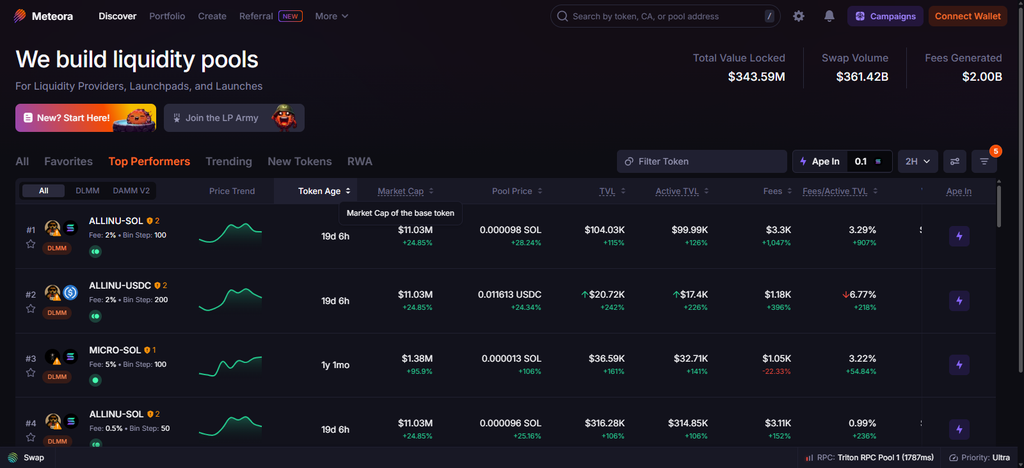
Its ecosystem is built around liquidity management and pool-based trading infrastructure, rather than a traditional bot interface. Users can view pool information, liquidity conditions, token activity and relevant market data for available markets.
Fees vary depending on the particular Meteora pool or product, so don’t expect a uniform trading fee across the entire platform. Being an on-chain protocol, users should always verify the official contracts, pool addresses, wallet permissions, and transaction details before approving any transactions, especially with newer or low liquidity tokens.
Difference
- First and foremost, a Solana liquidity and DeFi protocol;
- Platforms oriented to liquidity-infrastructure instead of trading-bots.
- Supports dynamic liquidity arrangement
- Offers pool-based trading infrastructure.
- It’s very focused on liquidity management on Solana.
Use Cases
- How to access liquidity pools on Solana.
- Trading tokens using supported liquidity infrastructure.
- Liquidity provision or management.
- Tracking liquidity conditions across Solana markets.
Conclusion
Bloom Bot’s rivals use a variety of methods to trade Solana quickly, such as Telegram-based bots like Trojan and BONKbot, and trading terminals like Photon, BullX, GMGN.ai, and Axiom. Jupiter and Raydium are more focused on decentralized liquidity and token swaps, while Meteora is more focused on the Solana liquidity infrastructure.
When comparing these platforms, traders should consider trading fees, execution controls, token discovery, analytics, automation, liquidity access and wallet security. No platform has the same combination of features, so the choice of the platform depends on the trader’s needs, the interface, the workflow of transactions, and the Solana markets to be accessed.
FAQ
What are the top Bloom Bot rivals for Solana trading?
Popular alternatives include Photon, Trojan, BONKbot, Maestro, BullX, GMGN.ai, Axiom, Jupiter, Raydium, and Meteora. They differ in trading interfaces, execution tools, analytics, liquidity access, and supported functionality.
Which Bloom Bot rivals focus specifically on Solana?
Photon, Trojan, BONKbot, Axiom, Jupiter, Raydium, and Meteora have strong Solana-focused functionality. Their exact features differ between trading terminals, bots, DEX infrastructure, and liquidity protocols.
Which Bloom Bot alternatives provide Telegram trading?
Trojan and BONKbot are prominent Telegram-based Solana trading options. Their features include token trading, transaction controls, and tools designed for active traders.
Which Bloom Bot rivals offer advanced analytics?
GMGN.ai places significant emphasis on on-chain analytics, including wallet tracking, smart-money monitoring, trader activity, and token information. Other platforms also provide varying levels of market and token data.
Which alternatives support fast Solana token trading?
Photon, Trojan, BONKbot, BullX, GMGN.ai, and Axiom are designed around active token trading and execution workflows. Actual transaction speed depends on network conditions, liquidity, fees, and transaction settings.