Venture capital investing is no longer just for the wealthy investors and the large financial institutions. Today, retail investors can find opportunities in startups, private companies and emerging businesses via accessible online investment platforms.
But choosing the right platform involves understanding the investment options, minimum funding required, fees, eligibility and potential risks. In this article, I’ll be talking about the Best Venture Capital Platforms for Retail Investors, and I’ll be covering their key features, benefits and differences to help investors make informed decisions.
What Are Venture Capital Investment Platforms for Retail Investors?
Definition: Venture capital investment platforms are online investment opportunities that enable retail investors to invest in private companies, startups, and emerging businesses without needing traditional venture capital connections.
Startup Investments: These platforms allow people to invest in early-stage startups that require funding to develop products, expand operations, and achieve long-term business growth.
Equity Crowdfunding: There are many platforms that use equity crowdfunding, letting multiple investors buy shares in companies, joining funding rounds with relatively smaller investments.
Investment Access: They provide eligible non-accredited investors with access to selected private market opportunities, subject to securities regulations and the requirements of each offering.
Where to Invest: Investors can look at startup equity, private-company stock, venture funds and publicly traded investment funds that target private companies or technology businesses.
Minimum Investment: Some platforms have fairly low minimum investment requirements, which means that retail investors can get involved without having to put up the big sums of money that are usually required for venture capital.
Potential Returns: Investors may benefit from company growth via stock price increases, acquisitions or going public, however returns are uncertain and investments may result in total losses.
Risks of Investing: Investing in these platforms carries risks such as startup failure, limited liquidity, valuation uncertainty, dilution, and long holding periods, so thorough research is a prerequisite before investing.
How to Choose the Best Venture Capital Platform?
Minimum Investment Requirements See the minimum investment amounts on different platforms and choose one that suits your budget and financial objectives and doesn’t require more money than you can afford.
Investment Opportunities: Browse through the investment opportunities offered by startups, private companies, venture funds and industry categories to ensure that the platform offers investments that are aligned with your interests and investment strategy.
Investor Eligibility: Check the platform’s investor eligibility to see if they accept accredited or non-accredited investors, and review country-specific restrictions, securities regulations and eligibility requirements before creating an investment account.
Fees and Charges: Investigate platform fees, transaction fees, management fees, carried interest, and other costs, as these can eat into your overall investment returns over time.
Company Screening: Research how the platform screens startups, confirms business information, assesses financials and performs due diligence before offering investment opportunities to prospective retail investors.
Liquidity and Exit Options: Consider how investments can be sold on secondary markets, transferred to other investors, or exited through acquisitions and public listings, as private shares are often hard to sell.
Security and Transparency: Opt for platforms with transparent offering documents, financial disclosures, ownership information, risk explanations, and appropriate investor protection mechanisms to enable informed investment choices.
Platform Credibility: Do your research before you put your money into private-market investments. Look at the platform’s operating history, regulatory status, investor experience, fundraising track record, and transparency to assess its credibility.
Key Points
| Platform | Key Point |
|---|---|
| Wefunder | Invests in startups through equity crowdfunding and community funding rounds. |
| StartEngine | Provides access to startup equity offerings and selected Regulation A+ investments. |
| Republic | Offers startup investments, private-market opportunities, and alternative assets. |
| MicroVentures | Combines equity crowdfunding with selected private placements and secondary opportunities. |
| Netcapital | Provides an online marketplace for investing in private companies raising capital. |
| DealMaker | Provides investment infrastructure for companies conducting online securities offerings. |
| Crowdcube | Enables eligible investors to purchase equity in privately held businesses. |
| Republic Europe (formerly Seedrs) | Provides access to startup equity and private business investment opportunities. |
| Robinhood Ventures Fund I | Provides publicly traded fund exposure to selected private-market companies. |
| Destiny Tech100 | Offers publicly traded exposure to a portfolio of private technology companies. |
1. Wefunder
Wefunder is a U.S. equity-crowdfunding marketplace that lets everyday investors invest in startups, small businesses, funds and community projects, often through “Community Rounds.” It supports Regulation Crowdfunding, Regulation A+ and some private offerings available only to accredited investors. Each issuer sets minimums (often $100 or so).
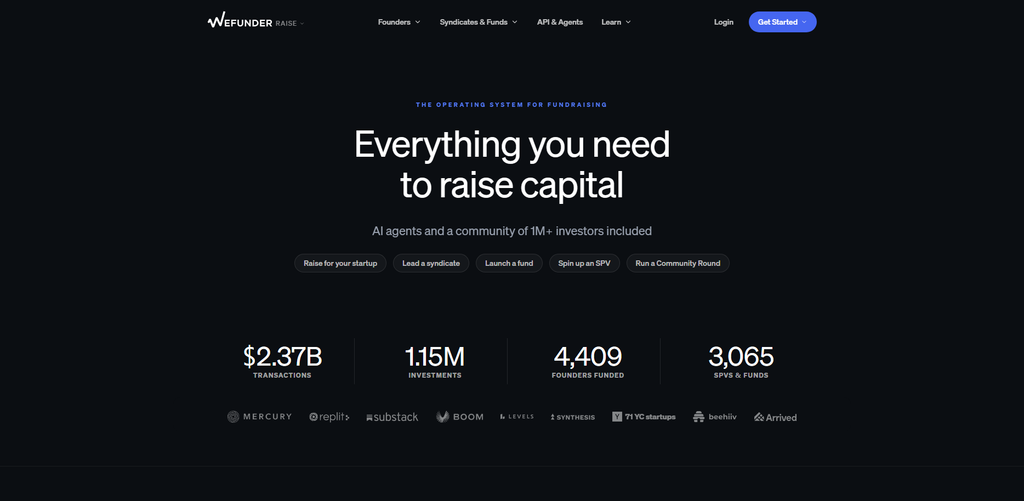
Reg CF investors have limits based on their income/net worth per year. Wefunder generally takes up to 2% off the top from investors for each investment, with a minimum of $8 and maximum of $75-$100 depending on payment method. It’s available generally around the world, but not to Canadian residents or some sanctioned jurisdictions.
Advantages
- Gives access to early-stage startup investment opportunities.
- It allows some offerings to be made to qualified non-accredited investors.
- Promotes community-based fundraising for new businesses.
- Provides a range of startup verticals such as technology and consumer businesses.
- Provides investment information to assist users in evaluating specific offerings.
What’s Different About It
- Heavy focus on community-based startup investing.
- Supports founders who want to raise investment from customers and supporters.
- Access to Regulation Crowdfunding offerings.
- Focus on early stage companies and founder/investor relationships.
2. StartEngine
StartEngine is a leading U.S. equity-crowdfunding platform connecting retail investors with early-stage and growth companies in technology, consumer products, real estate, entertainment and other sectors. Reg CF, Reg A+ and Reg D offerings are open to access both non-accredited and accredited investors depending on the deal.
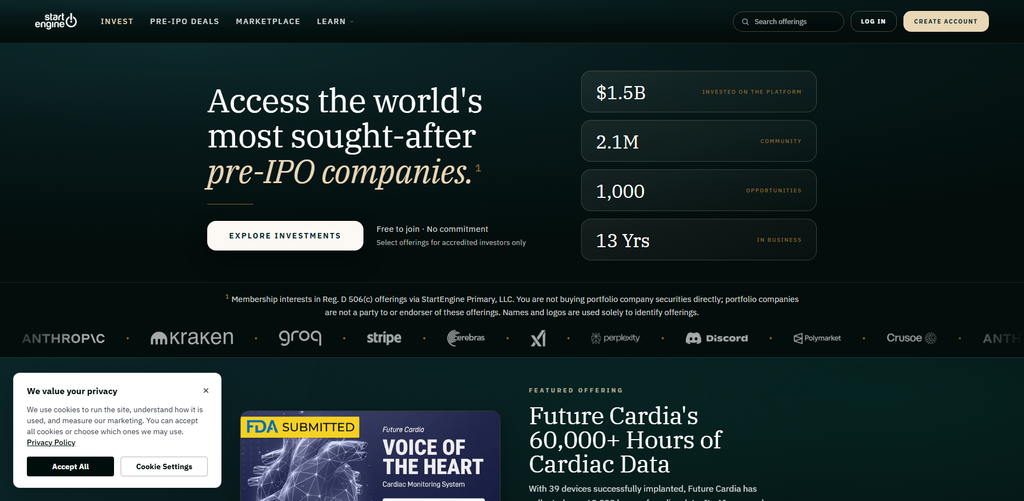
Minimum investments vary from campaign to campaign, but they can be very low, which is good for small-ticket startup investing. Investor fees can be as high as 3.5% (with a cap and terms specific to the offering) and founders typically pay platform and processing fees.
StartEngine focuses primarily on U.S. issuers and investors. Whether or not you are eligible to invest, and whether or not you can actually invest, depends on the securities rules that apply to each individual offering.
Advantages
- Early-stage investment opportunities in startups.
- Supports eligible offerings under Regulation Crowdfunding and Regulation A+.
- Has companies from various industries and business classes.
- Investment information and campaign details.
- Provides secondary market access for certain eligible securities.
Major Diffs
- Operates its own StartEngine Secondary market.
- Supports several securities offering structures.
- Blends startup fundraising with investor-facing investment tools.
- Provides investment opportunities in new consumer and technology companies
3. Republic
Republic is the world’s investment platform for startups, real estate, crypto, funds and alternative assets. It combines retail crowdfunding and accredited investor offerings, with access to Reg CF, Reg A+, Reg D and select international deals. Minimum investments vary by campaign but can begin at $150.

Republic usually charges investors an administrative fee of 2.5% (with a $5 minimum and $250 maximum), although fees differ by offering. Payments via card may be subject to processing fees. Founders usually pay about 7% of funds raised and 2% of securities issued. The platform is available in many countries, but the specific offerings and eligibility of investors are governed by local securities laws.
Advantages
- Offers access to curated investment opportunities for early-stage startups.
- Offers other forms of investment besides equity in startups.
- Supports eligible retail investors via public offerings.
- Provides company information and investment materials.
- Offers opportunities in technology, consumer and other emerging sectors.
Unique Selling Points
- Merges startup investing with wider private-market opportunities.
- Curated approach in selecting investment offerings.
- Supports various investment structures and securities.
- Access to a limited range of international investment opportunities (subject to eligibility).
4. MicroVentures
MicroVentures is a venture capital and private market investment platform. Investment opportunities include early-stage startups, later-stage private companies, funds, and the occasional secondary-market investment. It provides Reg CF offerings for retail investors and Reg D offerings generally limited to accredited investors.
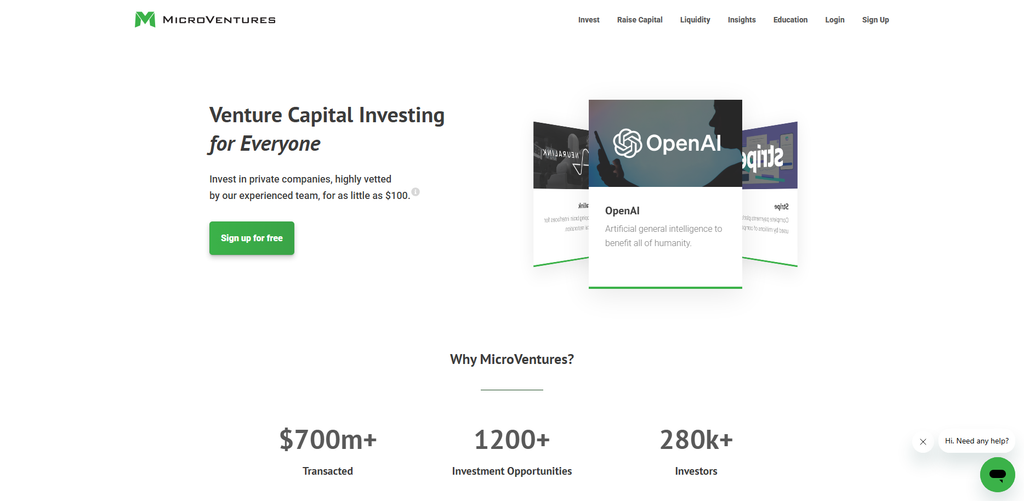
The minimum amount you can invest can range widely; deals on crowdfunding platforms may have lower minimums, whereas venture funds and private placements often require much larger commitments.
Fees are dependent on the investment structure and can include platform, management, carried interest, or offering specific fees. MicroVentures accepts U.S. investors, but non-accredited investors are restricted by Reg CF. Accredited investors typically have access to a larger deal flow. It is focused on curated, venture style private investing.
Advantages
- Gives you access to early stage equity investment opportunities.
- Selected private-company investment deals.
- Provides opportunities in technology and new industries.
- Offered to accredited and non-accredited investors, depending on the offering.
- It provides information about the company and investment documents.
Key Differentiators** *
- Equity crowdfunding and private placement combined.
- Access to select late-stage private company opportunities.
- Permits a variety of securities and investment structures.
- Provides core investment and select secondary opportunities.
5. Netcapital
Netcapital is a U.S. based crowdfunding marketplace that enables investors to purchase shares in private companies, especially early-stage startups looking for growth capital. It is used to facilitate Regulation Crowdfunding offerings and allows non-accredited investors to invest alongside accredited investors within the limits set by the SEC. Minimum investments are issuer-specific and can be very low, making the platform accessible to smaller investors.
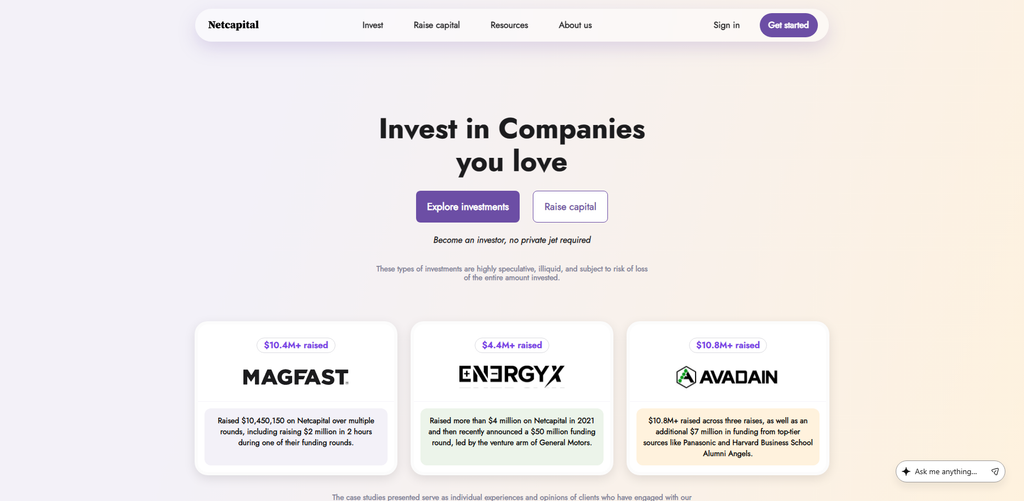
Netcapital’s investor fees and founder pricing vary from offering to offering, so investors should review the campaign’s disclosure and fee disclosures prior to investing. The platform is aimed at U.S. companies and investors in the U.S., with eligibility determined by residency, identity verification, accreditation status and applicable investment limits. Its main opportunity is direct equity ownership of emerging private companies.
Advantages
- Access to private company equity offerings.
- Gives retail investors that meet certain criteria access to startup investing opportunities.
- Companies from different sectors and stages of development.
- Provides company profiles and offering related information.
- Enables an online investment process to participate in eligible offerings.
Key Differentiator
- focus on online equity fundraising for startups.
- Supports Regulation Crowdfunding offerings.
- Offers a single source for private company investments.
- Integrates fundraising tools and access to company offerings for investors.
6. DealMaker
DealMaker is a capital-markets technology platform that assists companies in raising capital through online securities offerings including Reg CF, Reg A+, Reg D and other private placements. Instead of a traditional consumer startup marketplace, it provides issuance, investor onboarding, payment, compliance and transfer-agent infrastructure for issuers.

Therefore, each issuer/offering will set its own investment minimums, investor fees and available asset classes, rather than a single standard across the platform. Retail eligibility is dependent on the exemption used: Reg CF offerings can be sold to non-accredited investors while many Reg D offerings are limited to accredited investors. DealMaker is based in North America and each offering is subject to jurisdictional limitations. Investor-directed private placements are suitable for investors.
Advantages
- Provides the digital infrastructure to take securities offerings online.
- Assists companies in raising capital through a variety of offering structures.
- Streamlined online investor onboarding.
- Supports digital subscription and investment processing.
- Offers campaign management and fundraising technology.
Key Differentiators
- Focus on white-label capital raising technology.
- Provides personalized investment campaign experiences.
- Offers the infrastructure for Regulation CF, Regulation A+, and Regulation D offerings.
- Combines investor management, compliance workflows and digital fundraising tools.
DealMaker is an infrastructure for companies to raise capital, not a standard retail investment marketplace.
7. Crowdcube
Crowdcube is a leading UK equity-crowdfunding platform that lets retail investors invest in start-ups and scale-ups, often alongside venture funds and angel investors. It offers ordinary shares, convertible notes and sometimes fund or bond-like investments. Minimums are usually around £10, but each campaign has its own.
Crowdcube is aimed at everyday investors, not just accredited ones, but investors must go through onboarding on the platform and comply with UK rules on financial promotion and suitability. There can be payment processing or currency conversion fees.
Companies usually pay success and completion fees. The geographic focus is primarily the United Kingdom with some campaigns available to eligible investors in approved European jurisdictions.
Advantages
- Gives access to equity investments in private companies.
- Includes both start-ups and established growth stage companies.
- Select funding rounds are open to qualified retail investors.
- Company profile and information about investment campaign.
- Enables investment opportunities in various business sectors.
What Makes Us Different
- Strong emphasis on investments in UK and European startups.
- Connects businesses to community investors.
- Supports equity crowdfunding fundraisers
- Provides access to select businesses seeking growth capital.
8. Republic Europe (ex-Seedrs)
Republic Europe (formerly known as Seedrs) is a UK and Europe focused equity-crowdfunding platform enabling investors to support private companies, funds and selected secondary opportunities. It offers equity, convertible loan notes and fund investments with minimums that vary by campaign and can be relatively accessible to retail investors.
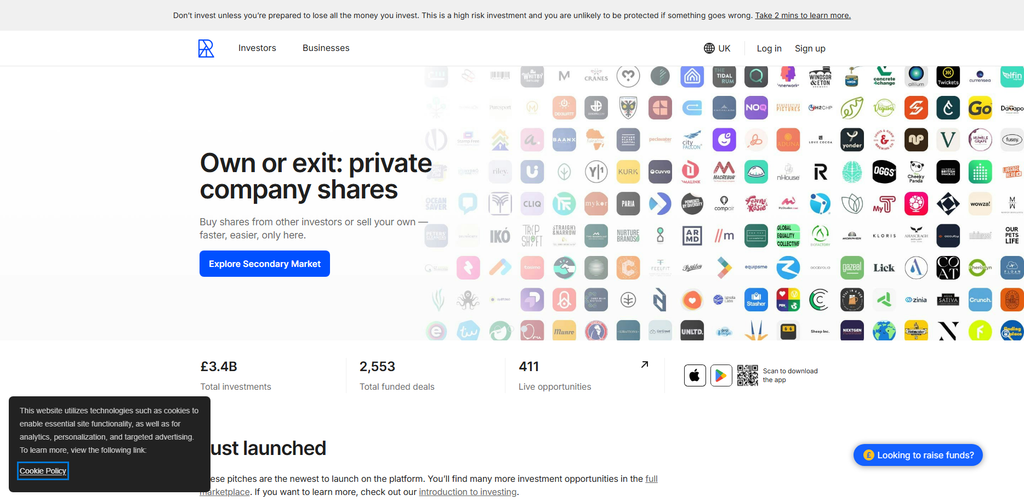
Investors must be authorized on the platform, onboard and meet jurisdictional requirements. Republic Europe says that investment activity takes place within the UK and/or Republic of Ireland depending on the entity and location of investor.
Fees may include payment, currency conversion, and offering-specific charges. Businesses pay success fees to the platform. Its main opportunity is access to European startups, especially the UK’s growth companies.
Benefits
- Gives access to some private company investment opportunities.
- Focuses on early stage and growth stage companies.
- Allows eligible investors to take part in equity fundraising rounds.
- Provides investment documentation and information on the company.
- Creates opportunities across different industries and business sectors.
Distinctive Features
- Utilizes the existing equity crowdfunding business of Seedrs.
- Focus on private companies in the UK and Europe.
- Offers a nominee structure for many equity investments.
- Provides access to certain secondary market investment opportunities, subject to availability and eligibility.
9. Robinhood Ventures Fund I
Robinhood Ventures Fund I (RVI) is a publicly traded closed-end fund on the NYSE that provides retail investors diversified access to private growth companies in sectors such as AI, fintech, aerospace, defense, software and robotics. As opposed to direct startup crowdfunding, investors purchase shares on an exchange using a brokerage account, offering them daily liquidity instead of long lockups.
There is no stated minimum other than the cost of a share, no accreditation requirement and no account minimum. RVI charges a 2.00% annual management fee, calculated quarterly, and no performance fee. The fund is available to U.S. investors through brokers that support NYSE-listed securities, providing a more liquid, fund-based alternative to individual startup investments.
Advantages
- Gives retail investors access to a curated selection of private companies.
- You don’t need to be an accredited investor.
- Access to investment with no minimum investment requirement at the fund level.
- Introduces attendees to innovative businesses from across many industries.
- Enables investors to buy and sell fund shares on the public stock market.
What Makes Us Different
- Functions as a publicly traded closed-end fund.
- Targets privately held companies with industry-leading growth potential.
- No carry charges based on performance.
- Gives access to private companies and shares on exchange.
10. Destiney Tech100
Destiny Tech100 (DXYZ), a closed-end fund listed on the NYSE, provides public-market investors with access to a portfolio of late-stage, venture-backed private technology companies. It is focused on companies that have recently raised more than $50 million from reputable U.S. institutional investors and applies diligence criteria around capital structure, governance, management stability and financial health.
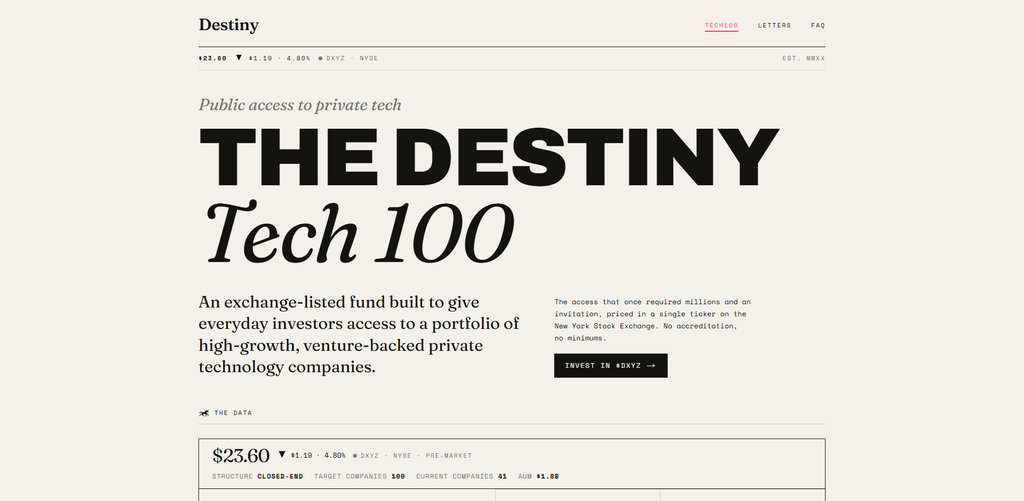
There is no minimum to invest other than the price of one share and no accreditation requirement for an investor to buy shares through a brokerage account. Destiny charges a 2.5% management fee and no carried interest. The shares are traded daily, but the market price may differ materially from the net asset value creating premium or discount risk.
Pros
- Offers exposure to venture-backed private technology companies.
- Gives access through shares of publicly-traded funds.
- Invests in companies in emerging technology area.
- Offers a portfolio approach to private market exposure.
- Enables eligible broker investors to buy and sell shares in the stock exchange.
What makes us stand out
- It’s specifically focused on a portfolio of private technology companies.
- Traded publicly under the ticker symbol DXYZ.
- Provides access to private companies via direct investments and special-purpose vehicles.
- Provides an exchange-traded route for retail investors to access venture-backed technology.
Conclusion
Venture capital investment platforms are making it simpler for retail investors to invest in startups and the private market. New businesses can be explored through platforms like Wefunder, StartEngine, Republic, MicroVentures and Crowdcube, while Robinhood Ventures Fund I and Destiny Tech100 offer exposure to publicly traded funds. Investors should consider minimum investment requirements, fees, eligibility, investment options, company screening and liquidity when selecting a platform.
It is also important to understand the ownership structures and the risks involved. Since startup investments are laden with uncertainty and the potential for capital loss, investors must do their own research and choose investment opportunities that align with their financial objectives and risk tolerance.
FAQ
What Are Venture Capital Investment Platforms for Retail Investors?
Venture capital investment platforms allow retail investors to access startup equity, private companies, and selected venture-backed investment opportunities through online investment services.
Can Retail Investors Invest in Venture Capital?
Yes. Some platforms allow non-accredited investors to participate in eligible startup offerings, while others restrict investments to accredited or otherwise qualified investors.
What Is the Best Venture Capital Platform for Beginners?
Wefunder, StartEngine, and Republic are options worth exploring because they provide access to startup investment opportunities and detailed offering information.
What Is the Minimum Investment Required?
Minimum investments vary by platform and individual offering. Some startup crowdfunding opportunities accept relatively small investments, while private placements may require substantially more capital.
Are Venture Capital Investment Platforms Safe?
These platforms may operate under applicable securities regulations, but startup investing carries significant risks, including business failure, limited liquidity, and potential loss of the entire investment.