
The fintech sector is changing how people, businesses and financial institutions move money, pay for things and access investment opportunities. A number of emerging companies will be making waves in 2026, led by innovations in artificial intelligence, blockchain, digital banking and automated financial services.
In this article, I’ll go over up-and-coming fintech investment companies to watch. I’ll explain their Emerging Fintech Investment Companies to Watch, what makes them unique, and their potential for growth to help readers understand which businesses will shape the future of financial technology.
Why Are Emerging Fintech Companies Worth Watching in 2026?
AI in Financial Services: Start-up fintech companies are leveraging artificial intelligence to automate financial operations, enhance decision-making processes, decrease manual workloads and provide faster, more personalized financial services to clients.
Growth of Digital Banking: The increasing demand for digital banking opens up opportunities for fintech companies providing online accounts, faster transactions, mobile banking, and easy financial management.

Blockchain Innovation: Blockchain technology provides transparent transactions, secure financial records, tokenized assets and improved settlement processes, creating new opportunities for innovative fintech businesses.
Stablecoin Payments Growth: Growing stablecoin adoption offers opportunities for fintechs developing faster cross-border payments, digital settlements, international transfers, and modern business payment infrastructure.
Automated Lending Solutions: Fintech players are innovating lending with automated credit assessments, digital loan applications, alternative financial data and quicker financing solutions for underserved businesses.
Financial Inclusion: New fintech platforms enable individuals and businesses to access digital payments, credit facilities, investment products, and banking services that conventional financial institutions may not adequately provide.
Investment Technology Development: The management of investments is becoming easier with the development of digital asset infrastructure, automated financial analysis, tokenized investment products, and user-friendly portfolio management tools.
Expanding Market Opportunities: The growing use of technology, strategic alliances, interest from institutions and changing customer expectations are driving fintech companies to expand across global financial markets.
Key Factors to Evaluate Before Investing in Fintech Companies
Business Model : Understand how the fintech company makes money , serves financial services , attracts customers , and stays profitable . This will help you determine if its business model is conducive to sustainable expansion over the long term .
Funding and Financial Backing: Review the company’s funding history, investment rounds, major investors, and financial resources to evaluate its financial stability and ability to fund future growth.
Technology and Innovation ** : Review the company’s technology infrastructure, AI capabilities, blockchain applications, automation tools, and product development to gage its potential for innovation and competitive positioning.
Market Demand: Review customer demand, target markets, industry adoption, and market size to ensure that the company’s financial products solve real problems and present opportunities for significant growth.
Regulatory Compliance: Review licensing, financial regulations, data protection standards, and compliance procedures to ensure the company can operate responsibly in its target markets.
Competitive Advantage: Evaluate the unique product lines, pricing strategies, technology capabilities, partnerships and customer experience to understand the company’s differentiation from established financial institutions and competition.
Revenue Growth and Scalability: Look at how the company is growing revenue-wise, its ability to gain customers, operating expenses and its plans for growth to see if it can grow its operations without a huge increase in costs.
Investment Risks: If you invest in emerging fintech companies, consider the risk of cyber assaults, market fluctuations, regulatory changes, liquidity constraints, and operational challenges.
Key Points
| Company | Key Point to Watch in 2026 |
|---|---|
| CARI | Building a tokenized deposit network backed by multiple US banks. |
| Superstate | Bringing traditional investment funds onto blockchain infrastructure. |
| Spiko | Expanding access to blockchain-based money market investment products. |
| Velocity | Developing financial infrastructure around programmable money and stablecoins. |
| Pave Bank | Combining banking services with programmable financial infrastructure. |
| Jia | Using on-chain financing to support small business lending. |
| Spade | Helping financial institutions identify merchants behind payment transactions. |
| Smart Bricks | Connecting investment records and underwriting information to improve AI-driven workflows. |
| Stuut | Using AI agents to improve invoicing, payment collection, and financial operations. |
| bunch | Embedding regulatory and operational requirements into fund management technology. |
1. CARI
CARI is a new fintech company that wants to improve banking infrastructure using tokenized deposits and blockchain technology. It has a platform that connects regulated banks through a common network to allow faster digital money transfers, programmable payments and more efficient financial settlements.

CARI is dedicated to assisting financial institutions in adopting blockchain-based services without displacing traditional banking systems. Its business model is different as it is led by banks, has common infrastructure and focuses on institutional partnerships. Watch this space for CARI in 2026 as banks look to explore tokenization, digital payments and programmable financial solutions.
Core Financial Services
- Tokenized Deposits: It provides the infrastructure for banks to issue and manage tokenized versions of traditional bank deposits.
- Digital Money Transfers: Faster, always-on transfers of digital money between participating financial institutions.
- Programmable Payments: Allows banks to develop programmable payment solutions for their commercial and institutional clients.
- Banking Infrastructure: Provides shared infrastructure for banks to integrate financial services utilizing blockchain.
- Digital Treasury Solutions: Enables programmable movement and settlement of money to support modern treasury operations.
Advantages of Competition
- Bank Led Network: Built around regulated banks not to replace traditional banks.
- Common Infrastructure: Provides banks with access to tokenization technology, without the need to build an entire network themselves.
- Institutional Partnerships: Supported by established banking institutions, driving industry uptake.
- Banking Focus Regulation: Links blockchain innovation to current banking relationships and protections.
2. Super State
Superstate is a U.S. asset-management and tokenization company building regulated on-chain investment-fund infrastructure. Established in 2023, it serves institutional investors, crypto-native funds and asset managers looking for compliant access to tokenized traditional assets. The business model is based on fund management and tokenization technology and platform services including USTB, a tokenized U.S.

Treasury fund and Opening Bell for on-chain equity listings. It raised $14 million in Series A in 2023 and $82.5 million in Series B in 2026, bringing total funding over $100 million. It has the strongest presence in U.S. regulated tokenized funds, as Invesco agreed to manage its roughly $967 million USTB fund.
As tokenized cash and securities become more widely adopted there is huge potential for growth. CARI has a strong regulatory positioning and institutional partnerships. Risks include evolving crypto rules and competition. Investment relevance is high for tokenized-asset infrastructure.
Core Financial Services
- Tokenized Investment Funds: It assists asset managers to bring private funds, mutual funds and ETFs to blockchain networks.
- Government Securities Funds: Offers tokenized investment products backed by short-term US government securities.
- Digital Share Issuance: Opening Bell’s platform supports the issuance of tokenized shares of companies.
- Fund Administration: Handle shareholder registry, subscriptions, redemptions and transfer.
- Institutional Investment Access: Provides eligible investors with access to tokenized investment opportunities.
Competitive Strengths - Regulatory Infrastructure: Merges traditional securities frameworks with blockchain ownership records.
- Multi Blockchain Support: It supports blockchain based financial products on all the major networks.
- Stablecoin Integration: Enables legacy payment methods and USDC for funds’ operations.
- Institutional Fit: Works with existing fund managers, custodians and service providers.
3. Spiko
Founded in 2023 by former French Treasury officials, who worked at Palantir, Paris-based fintech company Spiko. It is offering tokenized money market funds that give businesses and investors a programmable way to access the yields of short-term government debt. Its customers are corporates, fintechs and financial institutions that can invest through Spiko’s apps or embed its funds via API.
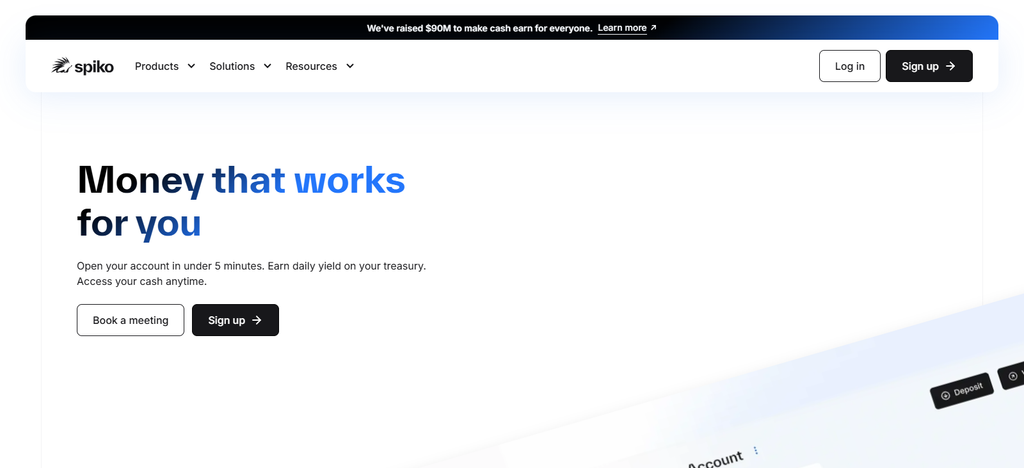
Its business model is centered around regulated fund administration, tokenized share registers and API-based treasury products. Spiko manages some $2.7 billion in euro, dollar, sterling and Swiss franc funds for more than 10,000 clients in over 25 jurisdictions.
What makes it different in Europe is the regulatory first approach, including UCITS compliant funds with blockchain as the legal share register.” There is strong growth potential as European treasuries look for yield-bearing, liquid digital cash products. CARI: regulatory credibility and multi-currency scale Risks: rate-cycle sensitivity and competition Investment relevance: high in tokenized cash management
Main Financial Services
- Money Market Funds: Lets you invest in regulated money market funds.
- Treasury Bill Investments: Provides tokenized funds that invest in immediate government treasury securities.
- Cash Management: It helps companies and banks manage their idle cash and earn daily returns.
- **Multi-Currency Investment . ** Cash management products in EUR, USD, GBP and CHF.
- API-Driven Financial Services: Allowing fintechs to embed investment and yield services within their applications.
Competitive edge
- Blockchain Tokenization: Employs blockchain technology to document and manage fund ownership.
- Regulatory Compliance: Adheres to European financial regulations.
- Daily Liquidity: Daily interest and withdrawal access subject to applicable product terms.
- Institutional Partnerships: Collaborates with existing custodians and asset managers to facilitate fund operations.
4. Velocity
Velocity is a fintech company, started in India, and began operations in 2020 as a provider of revenue-based financing for digital-first businesses. Initially targeting D2C brands, SaaS, EdTech and restaurant businesses, it used marketplace, marketing, GST and bank data to underwrite collateral-free working capital.
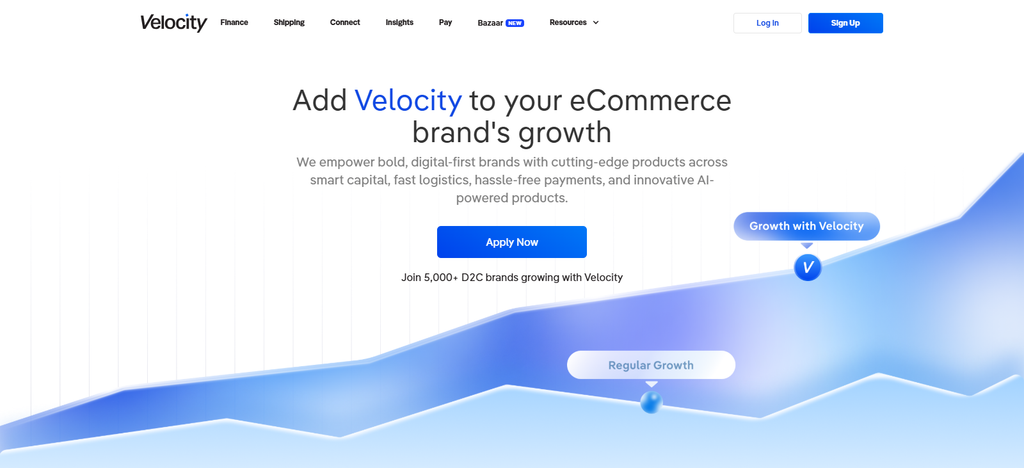
The model was based on revenue-based financing, fixed-EMI loans and overdrafts, with repayment linked to future revenue. Velocity raised $10.3 million in seed funding led by Valar Ventures and later disbursed over INR 900 crore to more than 1,200 brands. More recently, it has moved into stablecoin payments and treasury infrastructure for global merchants, payment providers, fintechs and financial institutions, raising $38 million in 2026.
It has a market presence in India’s digital-commerce financing market and international cross-border settlements. Programmable money and embedded finance have huge growth potential. CARI: proprietary underwriting data, move to stablecoin rails; risks: credit losses and regulatory complexity; investment relevance is high for EM fintech.
Core Financial Services
- Stablecoin Payments: Allows companies to integrate stablecoin payments into their existing financial processes.
- Cross-Border Payments: Facilitates cross-border payment flows on a stablecoin infrastructure.
- Fiat to stablecoin conversion: bridges traditional currencies to stablecoin payment systems.
- Payment Infrastructure: Provides the technology for payment providers and financial institutions to access stablecoin networks.
- Treasury and Settlement: Supports corporate treasury operations and cross-border settlement requirements.
Competitive Strength
- Bridge to Traditional Finance: Links the conventional financial infrastructure to the blockchain payment infrastructure.
- Business-Focused Solutions: Targeted at merchants, fintech companies, payment providers, and financial institutions.
- Cross Border Expertise: Improving the cross-border movement and settlement of money.
- Institutional Funding Support: Secured investment from established financial and tech investors.
5. Pave Bank
Pave Bank is a digital-first business bank founded in 2024 by ex-BigPay executives Simon Vans Colina, Salim Dhanani and Dmitry Bocharov. It is for corporates and institutions that need to operate across both fiat and digital resources. Its platform offers deposits, payments, foreign exchange, treasury management and support for regulated digital currencies including cryptocurrencies and stablecoins.
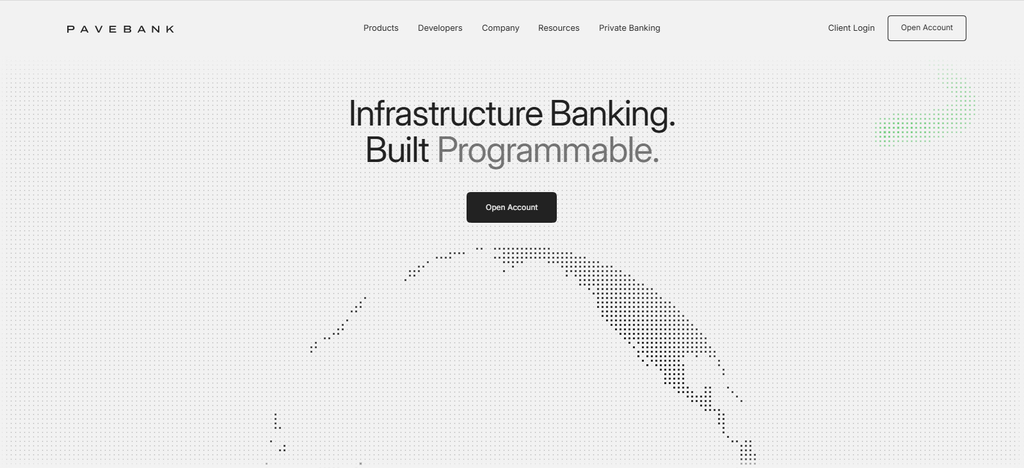
Pave Bank blends traditional banking services with blockchain-native settlement and asset management, running on a banking-as-a-platform business model. Accel led a $39 million round of funding in 2026, showing institutional confidence in its two-pronged fiat-digital approach.
Global market presence, but it is in its infancy and targets enterprises that want programmable, multi-currency treasury operations. The opportunity for growth is high as stablecoin adoption becomes embedded in corporate banking. CARI: full stack fiat + digital bank. Risks: licensing, custody, compliance. Investment relevance: high, next-gen business banking.
Key Financial Services
- Corporate Banking: Offers banking and financial services for corporate and institutional clients.
- Digital Asset Management: Assists institutions with digital asset management via specialized banking infrastructure.
- Multi-Currency Accounts: Has operational and nominal accounts in several currencies.
- Treasury Management: Facilitates liquidity management, access to capital markets, and treasury solutions.
- Trading and Settlement: Allows for the trading of electronic assets and instant settlement via its banking infrastructure.
Benefits
- Programmable Banking: Merges traditional banking services with programmable financial infrastructure.
- **Integrated Digital Assets: ** Merges digital asset management with traditional banking on a single platform.
- API Based Infrastructure: Provides access to the API for developers and automated financial applications.
- Institutional Focus: Tailors its services to meet the needs of corporate and institutional clients.
6. Jia
Jia is a blockchain-powered financial platform for micro and small businesses in emerging markets. It was founded in 2022 by Zach Marks, Cheng Cheng, Ivan Orone and Yuting Wang, who are all former executives of Tala. It targets underserved SMEs in markets such as the Philippines offering invoice financing, supply-chain financing and business accounts.
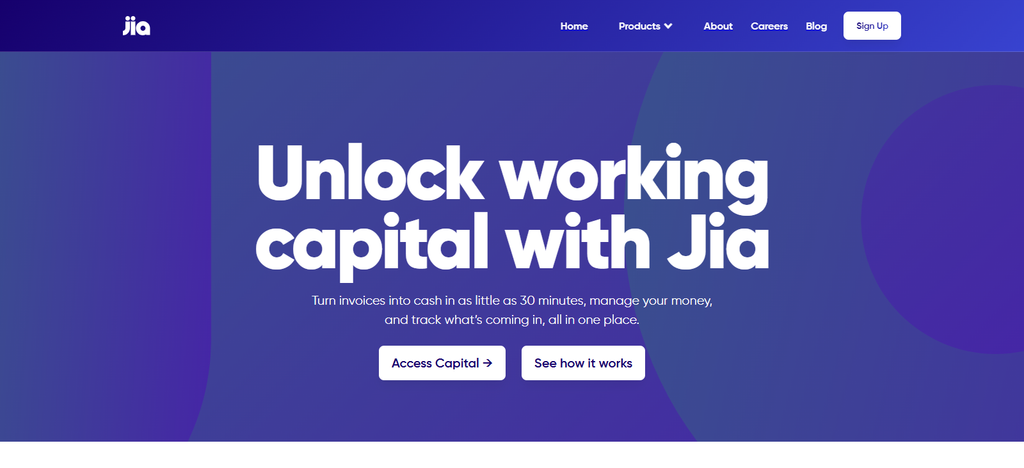
Its model uses decentralized-finance rails and partner integrations to provide capital fast, and borrowers get rewarded with tokens after repayment, giving them a claim on protocol revenue. Jia has raised $4.3 million in seed funding and $1 million for on-chain liquidity in 2023, led by TCG Crypto, and $3 million in 2026 with participation from Coinbase.
It remains a niche player in the market, with about 50 borrowers active and a target of 200. There is large growth potential where credit gaps are large for SMEs. CARI: community ownership, embedded distribution; risks: credit quality, crypto volatility; investment relevance: high, inclusive on-chain lending.
Financial Services Core
- Small Business Lending: Offers financing solutions to small and medium-sized businesses.
- Invoice Financing: Uses business receivables and invoices to secure working capital financing.
- Supply chain finance: This allows companies to get finance based on their commercial transactions.
- On-Chain Credit: Utilizes blockchain infrastructure to originate, service and distribute credit opportunities.
- Tokenization of Real World Assets: Enables tokenization of business receivables, and other real world financial assets.
Strengths in Competition
- Emerging Market Focus: Focuses on businesses operating in markets with limited traditional financing options.
- Receivables-Based Financing: It is based on the current business transactions to support financing decisions.
- Blockchain Infrastructure: Links real-world business credit opportunities to global investors.
- Financial Inclusion for SMEs: Aims to enhance working capital access for underserved businesses.
7. Spade
Spade is a US fintech founded in 2021 by Oban MacTavish, Cooper Hart and Tess Bloch. It provides a real-time transaction-enrichment infrastructure that transforms raw card transactions into verified merchant identities, categories, and geolocation data. Its customers are card issuers, neobanks, anti-fraud platforms and fintech companies such as Ramp, Sardine, Unit and Mercury.
Spade operates on a B2B API model, charging financial companies for enriched transaction data that improves authorization, personalization, fraud detection and analytics. It raised a $5 million seed round led by Andreessen Horowitz and a $10 million Series A led by Flourish Ventures, before a $40 million Series B in 2026.
It has a North American market presence and a merchant database that spans the U.S. and Canada. “The growth potential is high as banks look for better transaction intelligence. CARI: data accuracy, coverage of merchants and speed. Risks are data partnerships and competition. Investment relevance is high for payments infrastructure.
Core Financial Services
- Transaction Data Enrichment: Transforms raw payment transaction data into structured financial data.
- Merchant Identification Assists financial institutions in identifying merchants and locations behind card transactions.
- Payment Authorization Intelligence: Provides richer transaction data to help payment authorization decisions.
- Financial Data Analytics: Provides merchant level data for financial reporting and transaction analysis.
- Fraud and Risk Support: Delivers transaction intelligence to help financial institutions enhance their risk assessment and payment controls.
Competitive Advantage
- Real Time Data Processing: Enrich transactions with low latency processing.
- Merchant Level Accuracy: Provides payment transactions with rich merchant and location information.
- API Integration: Enables fintech platforms and banks to incorporate transaction intelligence into their existing systems.
- Data for AI Readiness: Structured financial data for AI applications and automated analysis.
8. Smart Bricks
Smart Bricks is an applied AI company for real estate investing founded in Dubai and headquartered in the UAE in 2024. It services retail and institutional capital deployers including investors, lenders, developers and advisors throughout Dubai, London, New York, Miami and major cities across the U.S.
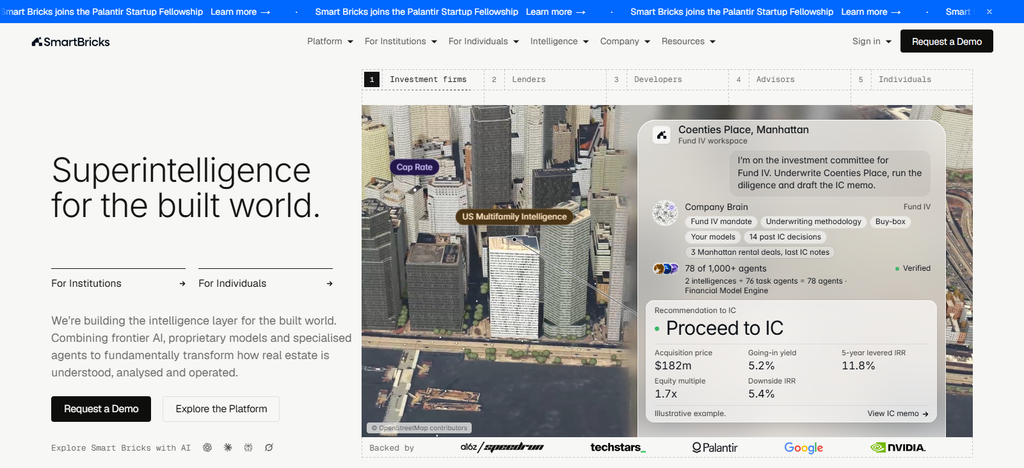
Its platform ingests over one million proprietary and public data feeds, and leverages agentic AI to analyze supply, pricing, liquidity, regulation and risk. The business model integrates AI-powered investment intelligence with workflow automation for valuation, underwriting, due diligence, negotiation, financing and post-deal monitoring.
Smart Bricks raised $5 million pre-seed led by a16z speedrun in 2026 It is early but international in its market presence, with operations in the U.S., UK and the UAE. High growth potential as AI revolutionizes property underwriting. CARI: Full agentic workflow and proprietary data integration; risk is data quality and cyclicality in real estate; investability is strong in proptech ai
Basic Financial Services
- Real Estate Investment Intelligence: AI-powered intelligence for real estate investment companies and financial professionals.
- Investment underwriting support – Provides assistance with property asset analysis, investment opportunities and underwriting requirements.
- Market Intelligence: Information on property markets, regulation, taxation and planning.
- Portfolio Research Assists in the analysis of property types including offices, hotels, multifamily properties and logistics assets.
- AI Investment Workflows: Utilizes specialized AI agents to assist with research and investment-related tasks.
Competitive Benefits
- Real Estate Specialisation: Concentrates on the information and analytical requirements of real estate investment professionals.
- Centralized Intelligence: Consolidates company, asset and market information into one intelligence platform.
- Custom AI Agents: Uses specialized agents for different real estate research and investment workflows.
- Source Traceable Insights: Relates analytic products to their source information.
9. Stuut
Stuut is a New York AI startup founded by Tarek Alaruri and Ben Winter that automates the order-to-cash cycle for enterprises. It targets high invoice volume, complex customer relationships in mid-market to Fortune 50 businesses such as manufacturers, distributors, industrial firms and medical-device companies.
Its AI agents manage existing ERP environments and handle collections, cash application, payments, disputes, deductions and order management by contacting customers through email, SMS and voice. Stuut’s business model is enterprise SaaS—it sells autonomous finance-workflow software, not lends out capital. The company’s total funding to date is $93 million, including a $29.5 million Series A round in 2026 and a $52.5 million Series B led by Insight Partners.

The platform has handled more than $3 billion and counts more than 150 customers including Honeywell, ZoomInfo and Verifone. Finance automation is a sector with a lot of potential for growth. CARI: End-to-end autonomous AR execution; Risks: ERP integration, enterprise sales cycles; Investment relevance: high in AI fintech. EY Announces Alliance with Stuut to Help Organizations Modernize Order to Cash Processes
Core Financial Services
- Accounts Receivable Automation: Automates business processes for outstanding customer payments.
- AI-Powered Collections: AI agents interact with customers and help collect invoices.
- Cash Application: Applies incoming payments to the appropriate invoices and accounting records.
- Payment Handling: Enables inbound payment flows and invoice payment.
- Dispute Management: Helps identify, organize and resolve invoice disputes and payment deductions.
Advantages of Competition
- AI Agent Automation: Employs AI agents to carry out operational tasks, not merely to set reminders.
- End-to-End Workflows: Combines collections, payment matching, and dispute management in a single system.
- ERP Integration Focus: Allows financial transactions between enterprise resource planning systems.
- Operational Efficiency: Helps businesses to streamline their accounts receivable process and improve the payment collection process.
10. Bunch
Bunch is a German wealthtech and private-markets infrastructure company established in late 2021 by Levent Altunel and Enrico Ohnemüller. It caters to general partners, fund managers and limited partners in venture capital and private equity. The platform digitizes the entire fund lifecycle including investor onboarding, capital calls, fund administration, accounting, tax reporting and transactions.
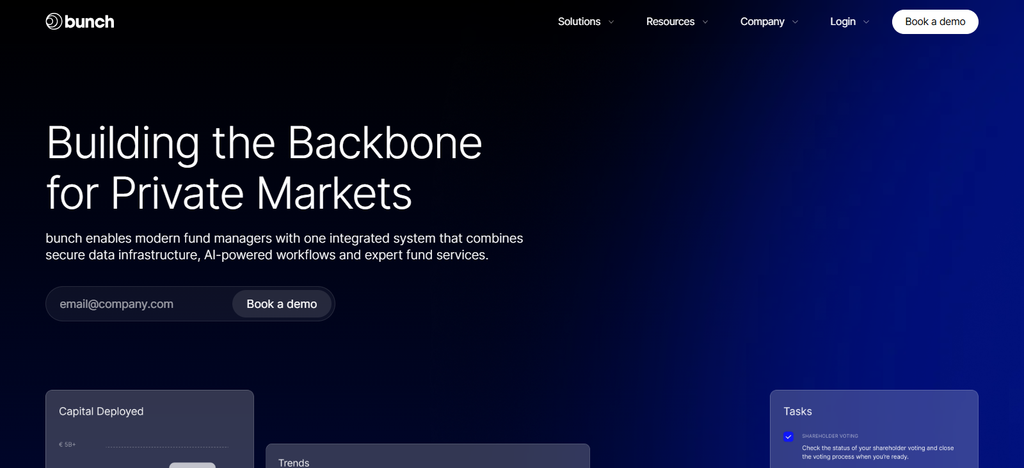
Bunch’s business model is B2B SaaS + fund-services infrastructure, replacing fragmented legacy providers with integrated, AI-enabled workflows. It raised $15.5 million in Series A and a $35 million Series B led by Portage in 2026, showing strong investor interest.
The company enjoys strong traction in European private markets, with more than 150 fund managers and over 12,000 investors. Private-market administration is evolving and the potential for growth is strong. CARI: end-to-end fund lifecycle coverage and AI automation. Risks: regulatory complexity and incumbents competition. Investment relevance: high for private-markets infrastructure.
Financial Services – Core
- Fund Administration: Provides administrative services to private equity, venture capital and other investment funds.
- Fund Accounting: Supports financial statements, NAV calculations, capital accounts and investor reporting.
- Investor Onboarding: Handles investor registration, subscription processes and transfer agency workflows.
- Compliance and KYC: Offers compliance management and investor verification services.
- Capital Management: Supports capital calls, reconciliations, distributions and fund lifecycle activities.
Benefits
- Unified Fund Management: Fund administration, accounting, onboarding, and compliance are all brought together into one platform.
- Automation & Expertise: Merges automated workflows with professional fund administration expertise.
- Lifecycle Management: Supports fund operations from onboarding investors to distributions and exits.
- Institutional Compliance: Addresses regulatory requirements and operational needs of private market fund managers.
Conclusion
In 2026, the fintech industry continues to evolve, presenting new opportunities in digital banking, blockchain, AI-powered financial services, tokenized assets, and automated lending. CARI, Superstate, Spiko, Velocity, Pave Bank, Jia, Spade, Smart Bricks, Stuut and bunch are such companies that illustrate varied areas of financial innovation.
They each offer different technologies, services and business models to respond to changing market demands. But investors should analyze the funding, revenue potential, regulatory compliance, competitive advantages, and business sustainability before making decisions. Knowing these factors will help you find promising fintech opportunities and manage the risks associated with emerging fintech companies.
FAQ
What are emerging fintech investment companies?
Emerging fintech investment companies are businesses developing innovative financial technologies, including digital banking, blockchain, AI-powered financial services, automated lending, payment solutions, and investment management platforms.
Which emerging fintech companies are worth watching in 2026?
CARI, Superstate, Spiko, Velocity, Pave Bank, Jia, Spade, Smart Bricks, Stuut, and bunch are worth watching for their innovative financial products and technology-focused business models.
Why are fintech companies attracting investor attention in 2026?
Fintech companies are attracting attention because of growing demand for digital payments, AI-powered automation, blockchain infrastructure, tokenized assets, digital banking, and more accessible financial services.
How do emerging fintech companies generate revenue?
They generate revenue through transaction fees, subscription plans, payment processing, lending services, software licensing, fund administration, financial data services, and technology infrastructure solutions.
What factors should investors evaluate before investing in fintech companies?
Investors should evaluate business models, funding history, revenue growth, technology innovation, market demand, regulatory compliance, competitive advantages, and potential investment risks.