In this article, I will cover the Best AI Cybersecurity Tools to Protect Businesses Online. I will explain the positive side of modern security technologies powered by Artificial Intelligence to help organizations detect, evade, and tackle cyber threats during their occurrence.
You will become familiar with the best tools that employ several contemporary technologies, such as machine learning, automation, and sophisticated analytics, to shield the data, networks, and digital resources of an organization from the dynamic online threats and attacks.
Key Point & Best AI Cybersecurity Tools to Protect Businesses Online
| AI Cybersecurity Tool | Key Point (Core Strength) |
|---|---|
| CrowdStrike Falcon AI | Real-time endpoint protection with AI-powered threat detection and rapid incident response. |
| Darktrace AI | Self-learning AI system that detects and responds to unknown cyber threats automatically. |
| Palo Alto Cortex XDR AI | Advanced threat intelligence and extended detection across network, cloud, and endpoints. |
| SentinelOne Singularity AI | Autonomous AI-driven endpoint security with instant threat detection and rollback capabilities. |
| Microsoft Defender AI | Integrated security for Microsoft ecosystem with AI-based threat prevention and analysis. |
| IBM QRadar AI | AI-powered SIEM platform that analyzes logs and identifies complex security threats. |
| Fortinet FortiAI | Uses deep learning to detect malware, phishing, and advanced persistent threats. |
| Sophos Intercept X AI | Combines deep learning and anti-exploit tech for strong endpoint protection. |
| Check Point Infinity AI | Unified security architecture with AI-driven prevention across cloud, network, and mobile. |
| Vectra AI | AI-based network detection and response focusing on hidden attacker behaviors and lateral movement. |
1. CrowdStrike Falcon AI
CrowdStrike is a real-time, cloud-native endpoint protection platform fostered to stop external, advanced persistent threats. It replaces traditional methods of signature-based threat detection with behavioral AI and machine learning to identify zero-day, ransomware and malware threats. Its lightweight agent provides a constant overlay on endpoint activity and automatically contains threats.
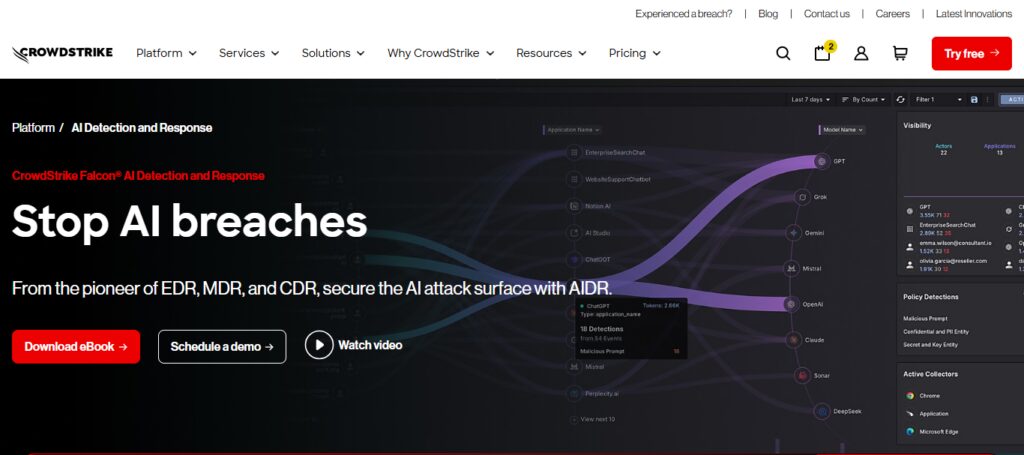
Threat intelligence is delivered at an unprecedented speed, as the product conducts automated investigations and provides real time response. CrowdStrike has gained sponsorship and use from large enterprises to protect attack surfaces, provide endpoint security, and dedicate sustained defensive resources in response to seamless cyber threats in the cloud.

CrowdStrike Falcon AI Features, Pros & Cons
Features:
- Protects endpoints in the cloud
- AI-driven threat detection
- Incident response in real time
- Malware detection via behavior analysis
- Low impact agent
Pros:
- Detects threats in a very short time frame
- Protection against ransomware
- Scalable to large businesses
- Updates threat intelligence in real time
- Simple to set up
Cons:
- Cost prohibitive for small businesses
- Always needs an Internet connection
- Lots of moving parts for the beginner
- Offline response is very poor
- Anything advanced will cost more
2. Darktrace AI
Darktrace is a self-learning adaptive AI that detects abnormal behavior in a digital environment. It learns normal behavior and then applies that to identify anomalies in real-time. Since it does not rely on pre-defined rules, it is highly effective against unknown and emerging threats. It provides visibility of unusual network activity (insider threats and advanced persistent cyberattacks) in real time.
Darktrace AI is also included in the Best AI Cybersecurity Tools to Protect Businesses Online list because of its autonomous response capabilities through ‘Antigena’ technology, enabling the tool to slow or stop attacks on its own. Its value is enhanced further by its minimally invasive and a continuously engaging adaptive learning defense for IoT, enterprise networks, and cloud systems.
Darktrace AI Features, Pros & Cons
Features:
- Self-learning AI for security
- Anomaly detection in real time
- Antigena for autonomous response
- Behavioral analysis for networks
- Cloud and IoT security
Pros:
- Can spot previously unknown threats
- Doesn’t rely on anything in particular to identify threats
- Can respond autonomously
- Great behavioral analytics
- Great coverage in networks
Cons:
- Lots of money to get going
- Complex to program
- RequiresOptimization in order to decrease false positives
- False positives
- Limited visibility to AI decisions
3. Palo Alto Cortex XDR AI
Palo Alto Networks Cortex XDR AI integrates and extends detection and response over endpoints, networks, and cloud. It employs AI-driven analytics to recognize advanced attack vectors and correlations, enabling security teams to conduct investigations on incidents more expediently.
With Cortex’s platform, advanced persistent threats can be identified, and response times can be improved by considerable margins. Cortex XDR AI integrates unified visibility across automated threat hunting, which is why it is one of the Best AI Cybersecurity Tools to Protect Businesses Online.
It empowers organizations to optimize their security operations and reduce alert fatigue whilst leveraging intelligent correlation and behavioral analytics across multiple layers of security to respond to complex cyber threats.
Palo Alto Cortex XDR AI Features, Pros & Cons
Features:
- XDR
- Threat correlation via AI
- Lots of data
- Things to improve response time in IT
- Advanced threat hunting
Pros:
- Great coverage in the enterprise sector
- Greatly reduces alert fatigue
- Greatly improves response time in IT
- Great visibility on threats
- Great suite in Palo
Cons:
- Cost prohibitive to many
- Complex to program
- Requires people in order to be resource efficient
- Resource heavy
- Lots of things to learn in order to be effective
4. SentinelOne Singularity AI
SentinelOne Singularity AI provides businesses with fully automated, AI- and ML-driven endpoint protection. The absence of human oversight in the detection, prevention, and remediation processes sets it apart in the market.
Its platform is designed to analyze processes, files, and system behaviors to detect malicious activities and intrusions. SentinelOne Singularity AI is listed among the Best AI Cybersecurity Tools to Protect Businesses Online due to its exceptional rollback functionality;
it allows businesses to recover rapidly from a ransomware attack by restoring the affected operating systems and files. Its quick response times and high levels of endpoint protection further strengthen its utility across cloud, hybrid, and on-premise deployments.
SentinelOne Singularity AI Features, Pros & Cons
Features:
- Endpoint protection that is autonomous
- Threats are detected in real time
- AI-Based Behavior Monitoring
- Ransomware Rollback Capability
- Cloud And Hybrid Support
Pros:
- Excellent automation of responses
- Fast recovery
- Minimal human intervention
- Exceptional detection capabilities
- Able to function offline in some cases
Cons:
- Elevated costs
- Possible increased resource load
- Requires an advanced setup
- Steep learning curve for the dashboard
- Limited beginner customization
5. Microsoft Defender AI
Microsoft Defender AI is a part of Microsoft’s integrated security solution. It provides protection for Windows devices, cloud services, and enterprise apps. It relies on AI-driven threat intelligence to identify phishing and malware and monitor user behaviors.
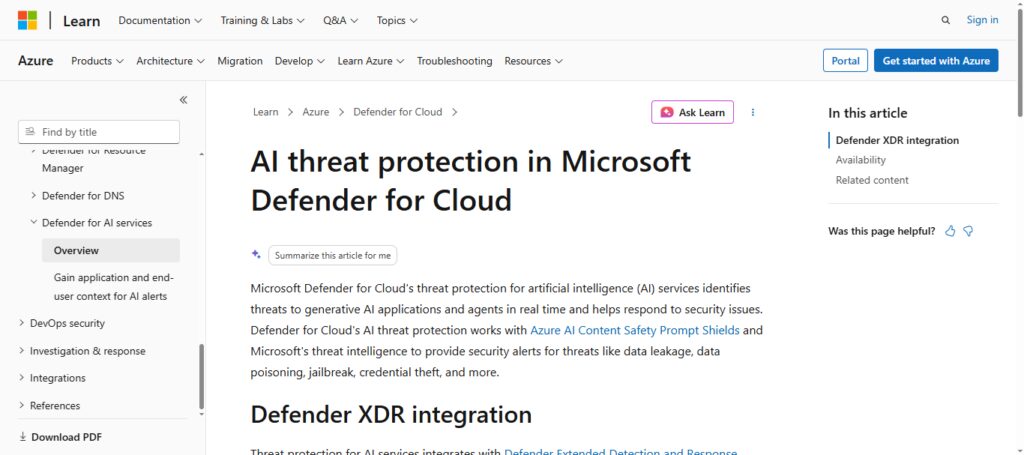
Microsoft Defender AI continuously improves its detection effectiveness by analyzing threat data worldwide. For these reasons, Microsoft Defender AI is in the Best AI Cybersecurity Tools to Protect Businesses Online.
Since it integrates seamlessly with Microsoft 365, Azure, and enterprise systems, Microsoft Defender AI allows centralized control of security, automation of response to threats, and deployment of protective measures. As such, it is the most optimal choice for organizations using Microsoft infrastructure and services.
Microsoft Defender AI Features, Pros & Cons
Features:
- Native Windows Protection
- AI-Based Threat Protection
- Cloud Security Analytics
- Phishing & Malware Protection
- Integrated with Microsoft 365
Pros:
- Easy to use
- Cost efficient for Microsoft users
- High integration capabilities
- High frequency of updates
- Consolidated control of security
Cons:
- Limited advanced enterprise features
- Best within Microsoft ecosystem only
- Requires cloud connectivity
- Not fully customizable
- May lag behind specialized tools
6. IBM QRadar AI
IBM QRadar AI is an AI-driven security information and event management (SIEM) system that collects and analyzes log data from across an organization. Its advanced analytics help it identify suspicious behaviors and rank security threats accordingly. This gives security teams the ability to investigate incidents a lot more efficiently.
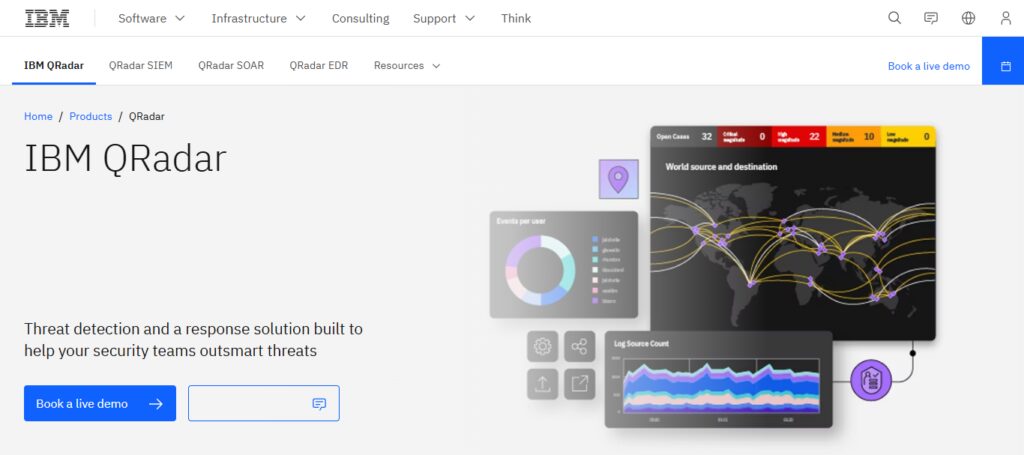
For these reasons, IBM QRadar AI is in the Best AI Cybersecurity Tools to Protect Businesses Online. It provides the visibility of enterprise networks that are necessary to fulfill many compliance needs. It uses intelligent correlation of security data at unprecedented scales and speed to detect hard-to-find threats, lower the amount of security alerts, and enhance the overall security response of an organization.
IBM QRadar AI Features, Pros & Cons
Features:
- SIEM (Security Information and Event Management)
- AI-Based Log Analysis
- Threat Intelligence
- Event Correlation
- Compliance Reporting
Pros:
- High visibility in enterprise
- Strong compliance capabilities
- Excellent data analysis
- High capability for advanced threat detection
- Highly scalable
Cons:
- High cost solution
- Difficult to deploy
- Heavy resource and expert management
- High resource load for users
- Long time to start seeing benefits
7. Fortinet FortiAI
Fortinet FortiAI automates responses to cyber threats and enhances detection through its deep learning capabilities. It captures malicious network traffic and understands phish and advanced threats. When combined with Fortinet’s security systems, it augments protective utilities.
FortiAI is listed in Best AI Cybersecurity Tools to Protect Businesses Online due to its feature to minimize the manual workload of cyber units, while also reducing the time it takes to resolve incidents. It assists businesses particularly for its ability to function at the level of a network, and thus, provide protection and monitoring for complex infrastructures and dispersed digitally integrated systems.
Fortinet FortiAI Features, Pros & Cons
Features:
- AI Threat Detection
- Threat Detection for Network Activities
- Automated Threat Defense
- Targeted for Fortinet Ecosystem
- Phishing and Malware Protection
Pros:
- Fast Threat Detection
- High Protection for Network Activities
- Lessens manual workload
- Scalable enterprise solution
- Dynamic real-time security insights
Cons:
- Perform best with Fortinet only
- Complicated configuration
- Costly for small businesses
- Can’t function without a qualified IT staff
- Less standalone functionality
8. Sophos Intercept X AI
To combat known and unknown threats, Sophos Intercept X AI integrates deep learning and anti-exploit tech to block threats. It protects endpoints by analyzing traffic and halting malicious actions, ultimately providing prevention.
Sophos’s systems include a radical protection mechanism and root cause analysis to improve the understanding of the threat. Sophos Intercept X AI is featured in Best AI Cybersecurity Tools to Protect Businesses Online due to its ability to provide endpoint protection while negatively impacting system performance.
It is very popular among administrators due to its simplicity and efficiency by eliminating complex, advanced cyber threats without the need for continuous security management or user intervention.
Sophos Intercept X AI Features, Pros & Cons
Features:
- Deep learning malware detection
- Anti-exploit technology
- Ransomware protection
- Endpoint behavior analysis
- Root cause analysis tools
Pros:
- Resilient ransomware defense
- Simple to use
- Minimal system impact
- Fantastic for SMBs
- Blocks threats automatically
Cons:
- Missing some advanced enterprise tools
- Can have some false positives
- Updates accessible only through the cloud
- Less ability to configure
- Simplistic reporting
9. Check Point Infinity AI
Check Point Infinity AI is a next-gen security model incorporating AI-enabled threat prevention. Infinity AI helps organizations against phishing, malware, and zero-day threats without relying on detection.
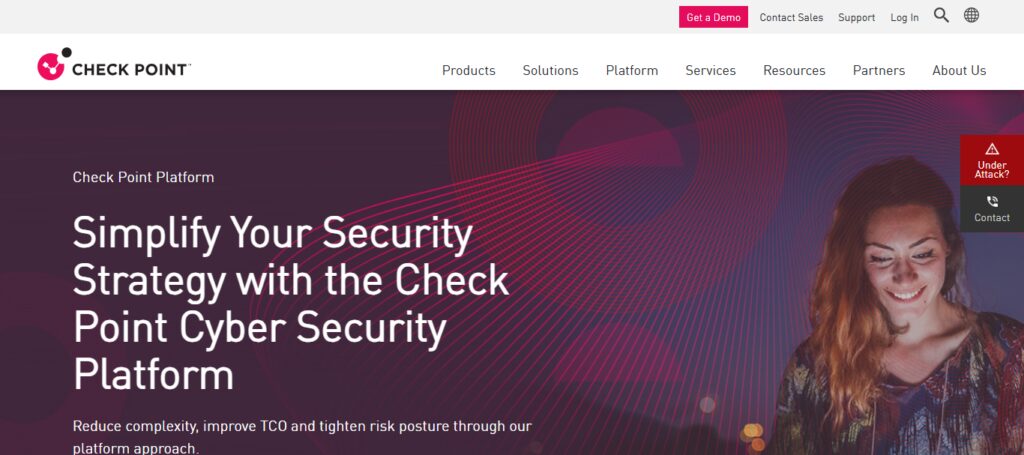
For obvious reasons, we have included Check Point Infinity AI in our Best AI Cybersecurity Tools to Protect Businesses Online. Infinity AI provides safeguarding against evolving cyber threats, through its AI system of self-learning and real-time updates. It sends threat intelligence analyses and blocks attacks while they are in-transit.
Check Point Infinity AI Features, Pros & Cons
Features:
- Unified security architecture
- AI driven threat prevention
- Protection for cloud, mobile and networks
- Global threat intelligence sharing
- Centralized security management
Pros:
- Fantastic all in one protection
- Best in class threat prevention
- Gets the job done with real time scanning
- Enterprise scalable
- Incredible control over policy
Cons:
- Very costly
- Complicated enforcement
- Requires qualified staff
- Heavy system resources
- Time consuming integration
10. Vectra AI
AI Vectra aims to gain awareness and prevention of internal threats through behavioral analysis of lateral movement. Like Check Point, Vectra AI is incorporated in Best AI Cybersecurity Tools to Protect Businesses Online due to its detection of advanced attacks on cloud and enterprise networks.
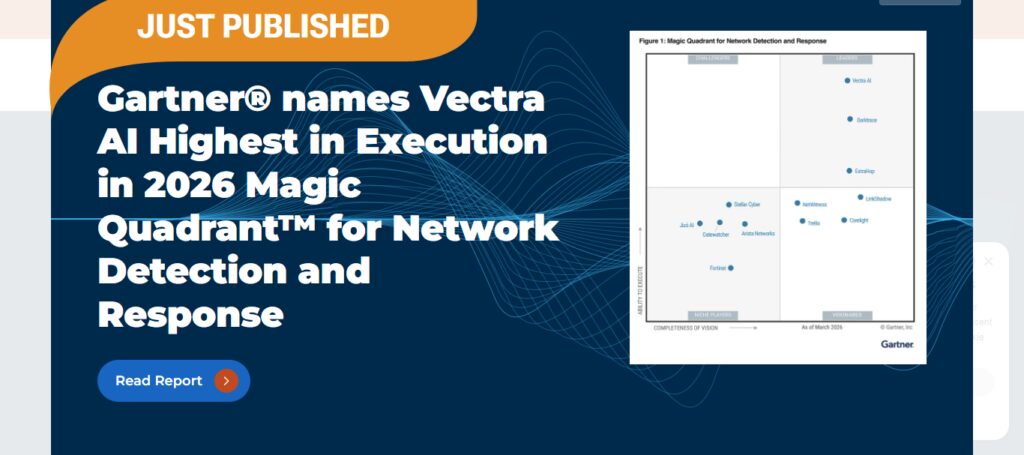
In a highly competitive world of cyberattack prevention, Vectra helps security teams prioritize real threats, reduce detection time, and allows teams to respond to events in a timely manner. AI Vectra is constantly at work to improve the cybersecurity defenses of an enterprise.
Vectra AI Features, Pros & Cons
Features:
- AI driven network detection and response
- Behavioral threat analytics
- Cloud and SaaS security monitoring
- Lateral movement detection
- Attack prioritization system
Pros:
- Great at finding hidden attacks
- Strong behavioral threat intelligence
- Less alerts
- Great at threat scanning
- Great at working with hybrid systems
Cons:
- Very costly
- Requires a sophisticated staff
- Very complicated to use
- Can’t focus on endpoints
- Some System Integration Issues
Conclusion
Today’s digital environment is more challenging with sophisticated and stealthy cyber threats. This drives the growing need for the use of AI-based cybersecurity tools. The Best AI Cybersecurity Tools to Protect Businesses Online which include CrowdStrike Falcon AI, Darktrace AI, Palo Alto Cortex XDR AI, SentinelOne Singularity AI, Microsoft Defender AI, IBM QRadar AI, Fortinet FortiAI, Sophos Intercept X AI, Check Point Infinity AI, and Vectra AI offer remarkable defense against advanced threats.
Compared to traditional security tools, these tools stop cyber threats with the use of AI and other methods such as ML and threat intelligence at lagging speeds. The adoption of these AI-based tools offers a business better protection of their data, lowers the loss of operational time, and fortifies the business network. Undeniably, these AI-based cybersecurity tools offer a critical layer of defense in the protection of an organization’s operations in the changing and unpredictable digital business world.
FAQ
What are AI cybersecurity tools?
AI cybersecurity tools are advanced security solutions that use artificial intelligence and machine learning to detect, prevent, and respond to cyber threats in real time. They help businesses identify unusual behavior, malware, ransomware, and phishing attacks faster than traditional systems.
Why are AI cybersecurity tools important for businesses?
They are important because modern cyberattacks are more complex and frequent. AI tools provide faster threat detection, automated responses, and predictive security, helping businesses reduce risk, protect sensitive data, and maintain uninterrupted operations.
Which are the best AI cybersecurity tools for businesses?
Some of the best AI cybersecurity tools include CrowdStrike Falcon AI, Darktrace AI, Palo Alto Cortex XDR AI, SentinelOne Singularity AI, Microsoft Defender AI, IBM QRadar AI, Fortinet FortiAI, Sophos Intercept X AI, Check Point Infinity AI, and Vectra AI.
How do AI cybersecurity tools detect threats?
They analyze large volumes of data, monitor user and system behavior, and use machine learning models to identify patterns that indicate suspicious or malicious activity in real time.