

Agora is a growing name in dollar-based digital asset infrastructure in a world where yield-bearing stablecoins are gaining traction across DeFi and tokenized real-world assets. But that’s not the only option. In this article, I will walk Top Agora Rivals for Yield-Bearing Stablecoins, detailing their yield sources, collateral, redemption models, blockchain availability, DeFi use cases, and major risks to differentiate these platforms.
What Are Yield-Bearing Stablecoins?
Yield-bearing stablecoins are digital currencies created to hold a steady value while providing income for their owners. Instead of being pegged to the U.S. dollar like traditional stablecoins, these can earn yield from U.S. Treasury securities, lending markets, staking rewards, perpetual funding, or other DeFi strategies.
Returns can be paid out in rebasing, increasing token value or savings mechanisms. Their risk profile is a function of the underlying collateral, the yield source, custody, liquidity, smart contract, and the redemption structure.
How to Choose the Right Agora Alternative?
Source of Yield: Know whether the yield is from U.S. Treasuries, lending, staking, derivatives, or DeFi strategies. Choose a model that has a yield mechanism that fits your risk and use-case needs.

Collateral Quality: Assess the collateral supporting the stablecoin, whether it is Treasuries, cash equivalents, crypto assets or a diversified collateral basket. Greater transparency and a higher quality of reserves can boost confidence in the underlying asset.
Yield Mechanism: Check whether the yield is delivered via rebasing, value appreciation, savings rates, or direct rewards. The mechanism affects token balances, accounting, integrations and overall defy compatibility.
Redemption Model: Review the rules and procedures for token redemption, including eligibility, redemption fees, minimum redemption amounts, redemption processing periods, and redemption settlement assets. Flexible redemption can aid better liquidity management.
DeFi Support: Look for supported lending protocols, decentralized exchanges, vaults and collateral markets. Strong composability can make a yield bearing stable coin more useful across multiple on-chain financial applications.
Blockchain Availability: Before you decide on an alternative, be sure to check out the supported networks and cross-chain infrastructure. With broader deployment you get better accessibility, liquidity, transactional flexibility and integration opportunities across different blockchain ecosystems.
Risk Exposure: Review depeg, smart contract, custody, counterparty, liquidity, governance, regulatory & market risks. It’s not enough to just compare headline yields – you need to understand where the returns are coming from.
Best Fit Use Case: Choose the stablecoin that fits your purpose payments, DeFi liquidity, Treasury exposure, institutional settlement or programmable infrastructure. The right choice will depend on the specific needs.
Key Points
| Platform | Key Point |
|---|---|
| Ethena (USDe) | Synthetic dollar backed by delta-neutral hedging strategies. |
| Mountain Protocol (USDM) | Fully backed stablecoin distributing U.S. Treasury yield to holders. |
| MakerDAO / Sky (DAI & sUSDS) | Decentralized stablecoin ecosystem offering savings-based yield. |
| Ondo Finance (USDY) | Tokenized Treasury-backed dollar asset providing yield exposure. |
| Usual (USD0) | Stablecoin designed to redistribute protocol value to users. |
| OpenEden (USDO) | Yield-bearing stablecoin backed by tokenized U.S. Treasury bills. |
| M^0 Protocol | Stablecoin infrastructure allowing partners to issue yield-generating dollars. |
| Frax Finance (frxUSD / sfrxUSD) | DeFi-native stablecoin ecosystem combining stability and yield. |
| Aave GHO | Decentralized overcollateralized stablecoin issued through Aave. |
| Reserve Protocol (Yield Stable Assets) | Multi-asset stablecoin framework with yield-generating reserve baskets. |
1. Ethena (USDe)
Ethena was founded in 2023 and offers USDe, a synthetic dollar rather than a traditional fiat-backed stablecoin. USDe is collateralized by spot crypto assets including BTC, ETH, SOL, liquid-staking assets and stablecoins, as well as offsetting derivatives positions.
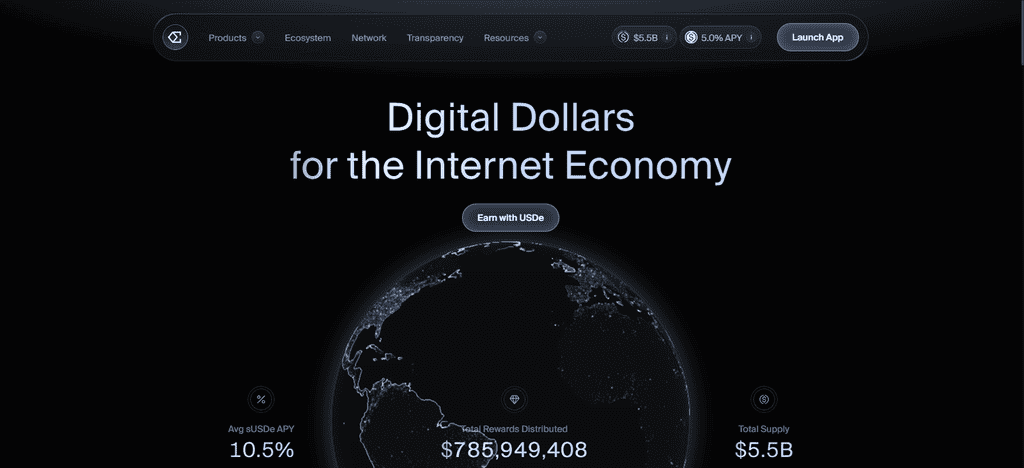
Its yield engine is driven mainly by staking rewards, perpetual-futures funding rates and futures basis, while holders can stake USDe into sUSDe for protocol-generated rewards through value accrual instead of rebasing. “Mint & Redeem: Eligible users can mint and redeem USDe for supported backing assets.
It’s primarily deployed on Ethereum with broader ecosystem and exchange/DeFi integrations. The model competes with Agora via dollar infrastructure that focuses on yields, but has different risks in the derivatives and crypto-markets.
Risks to Watch Out For
- Funding-Rate Risk: The yield of USDe is partially influenced by perpetual futures funding rates, which may decrease or turn negative, diminishing the protocol’s revenue.
- Derivatives Risk: Hedging relies on derivatives infrastructure, which increases exposure to exchange, counterparty, liquidation and operational risks.
- Depeg Risk: USDe is not a cash-backed stablecoin, but rather a synthetic dollar, so stress on the market can impact its secondary-market price.
- Custody Risk: The underlying assets and hedging positions are subject to custody and infrastructure dependencies that differ from those for traditional Treasury-backed stablecoins.
- Market Risk. Crypto collateral, such as BTC, ETH and SOL, is highly volatile, so you need to manage your hedges and liquidity well.
Why It Competes With Agora
- Yield-bearing dollar: Both offer dollar-denominated products with the goal of giving users exposure to stablecoin-linked returns.
- Institutional Infrastructure Ethena and Agora are targeting professional users, applications and wider financial infrastructure, not just retail holders.
- DeFi Integration: Both can be used in on-chain financial applications, such as trading, lending and liquidity ecosystems.
- Stablecoin Ecosystem: They are all building infrastructure around a dollar-based digital asset, but their reserve and yield-generation models are substantially different.
2. Mountain Protocol (USDM)
Mountain Protocol launched USDM, a rebasing yield-bearing stablecoin backed by short-duration U.S. Treasuries and similar reserve assets. USDM produced yield from the interest on its Treasury-backed reserves, and the rewards were paid out through a daily rebasing mechanism that increased users’ balance of tokens.
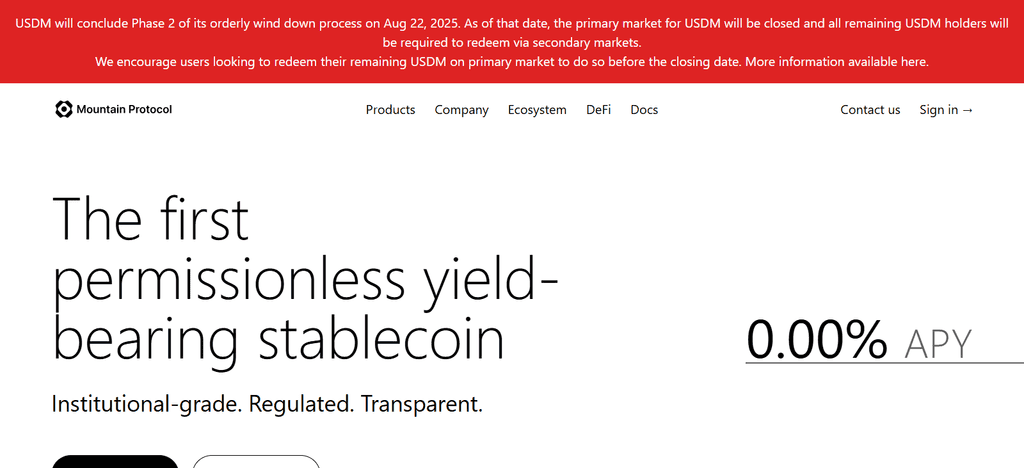
The token was created as a fully-backed dollar asset with 1:1 primary redemption and was ready for use on Ethereum, Polygon, Arbitrum, Optimism, Base, zkSync Era, Avalanche and Celo. It also helped DeFi applications with its ERC-20 format and wUSDM ERC-4626 wrapper.
USDM is now winding down with new issuance disabled and Mountain no longer providing primary issuance or redemption after the final wind-down phase. A 2026 comparison should clearly state the current status.
Major Risks
- Risk of Wind-Down: USDM is currently undergoing a product wind-down and, consequently, its availability today and future utility is materially different from active stablecoin products.
- Liquidity risk: Secondary market liquidity can be less predictable as the issuance and redemption activity changes in wind-down.
- Operational Risk: When a product is near discontinuation, the user should be aware of the operational risk of that product.
- Redemption Risk: As the protocol moves away from active issuance, redemption availability and timelines become more important.
- Product Transition Risk: Integrations and applications that use USDM may have to transition to other stablecoins.
Why It Competes With Agora
- Yield-bearing dollar. USDM was built as a yield-bearing dollar product, following the same rewards-based stablecoin model as Agora.
- Treasury Yield: Both frameworks link stablecoin economics to yield generated by reserve assets.
- DeFi Utility: USDM is designed for onchain use and DeFi integrations — similar to Agora’s wider stablecoin infrastructure approach.
- Institutional Positioning: Both target users seeking regulated or professionally managed online assets in dollars.
3. MakerDAO
MakerDAO, which is now named Sky Protocol, released DAI in 2017 and has developed its savings offering to incorporate USDS and sUSDS. DAI/USDS are over collateralized stablecoins backed by diversified protocol collateral, and sUSDS is an ERC-4626 yield generating token representing access to the Sky Savings Rate.
This yield is funded from the aggregate Sky protocol surplus, rather than a single lending pool or asset. For sUSDS , value is accumulating , which means the token balance is not changing , but its redemption value in USDS is increasing .
This is now live on Sky’s Ethereum infrastructure, with large DeFi integrations and liquidity. sUSDS can be redeemed for USDS by users without a lockup, which makes the product a strong yield-bearing stablecoin competitor with a different revenue architecture than Agora.
Major Risks
- Collateral risk. DAI and USDS rely on diversified collateral systems whose value and liquidity can change in stressed markets.
- Governance Risk: Parameters such as collateral types, rates and risk controls are affected by decentralized governance.
- Smart-Contract Risk: The protocol relies on complex intelligent contracts that govern collateral, issuance, and savings mechanisms.
- Depeg Risk: While designed to trade at parity with the dollar, market stress or collateral disruptions can impact secondary market pricing.
- Yield Sustainability: sUSDS yield does not depend on a single guarantyd external yield source but rather the economics and surplus of the Sky ecosystem.
What Makes It Go Against Agora
- Dollar Assets: Both ecosystems have dollar denominated assets designed for use across digital financial markets.
- Yield Products: sUSDS provides a direct savings/yield mechanism to users, similar to Agora’s yield and rewards offering.
- DeFi Infrastructure: Both are designed for DeFi applications, liquidity markets and onchain financial products.
- Stablecoin Growth: The expansion of stablecoin infrastructure for both Sky and Agora is aimed at applications needing programmable digital dollars.
4. Ondo Finance
USDY is a 2023 launch from Ondo Finance that is a yield-bearing tokenized note that is mostly backed by short-term U.S. Treasuries and bank demand deposits. Unlike traditional $1-pegged stablecoins, USDY generates yield through a rising redemption value, while its rebased variant provides an alternate distribution structure.

The underlying structure utilizes a bankruptcy-remote special purpose vehicle, and collateral and investor protections are built for the tokenized debt model. USDY can be minted and redeemed by non-US investors subject to applicable onboarding requirements, with secondary liquidity supporting onchain use.
Its biggest deployments are Ethereum, Solana, Mantle, Sui and Aptos. USDY’s DeFi utility, cross-chain availability and direct exposure to Treasury-generated yield make it a significant RWA-oriented alternative to Agora.
Major Risks
- RWA Risk:**USDY depends on tokenized real-world assets and the legal, custody and operational structures supporting those assets.
- Interest Rate Risk: Treasury-based returns are subject to volatility from short-term interest rates.
- Liquidity Risk — Trading in the secondary market may have different liquidity characteristics than traditional cash or Treasury instruments.
- Limitations on Eligibility: Some issuance and redemption functions may have requirements regarding geographic location, regulation, and investor eligibility.
- Counterparty/Custody Risk: The product is dependent on external financial institutions, custodians and legal entities associated with the underlying asset structure.
Why It Competes With Agora
- Yield-Bearing Dollar: USDY is for users who want a dollar asset that generates yield.
- RWA Infrastructure: Agora and Ondo link stablecoin infrastructure and conventional financial assets and institutional markets.
- Institutional Users Both products are meant for purposes other than simply speculating with crypto trades.
- Onchain Utility: USDY & Agora’s stablecoin infrastructure can be plugged into DeFi, payments, and tokenized-asset ecosystems.
5. Standard (USD0)
Usual launched its USD0 ecosystem, a stablecoin architecture supported by a Treasury. USD0 is a permissionless, USD-pegged ERC-20 backed by short-duration U.S. Treasury Bills and similar sovereign instruments through tokenized RWA providers such as Hashnote, M0 and Spiko.
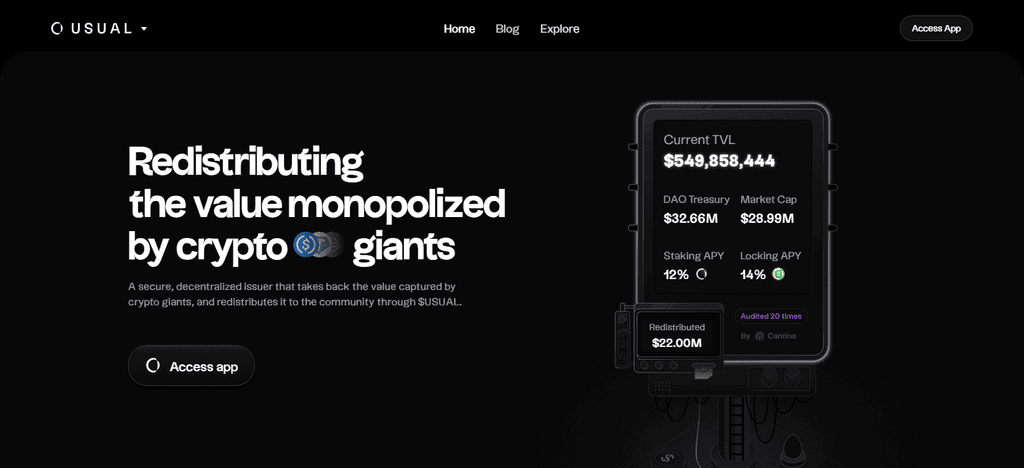
The collateral underneath it earns yield in the real world that can be fed into yield products related to it like sUSD0 and bUSD0 rather than simply relying on emissions of the token. USD0 can be minted and redeemed 1:1 against eligible collateral, and secondary DEX liquidity is also available.
It is live on Ethereum, Arbitrum, Base, and BNB Chain and integrates with DeFi protocols like Curve, Morpho, Aave, and Pendle. Usual has a Treasury-backed yield architecture, so it is directly relevant for comparing Agora to RWA-based stablecoin infrastructure.
Risks to Watch
- RWA dependency: USD0 depends on tokenized Treasuries and other real world assets, which creates legal, custody and operational dependencies.
- Collateral Concentration: Changes to the composition or providers of underlying collateral can affect the overall risk profile.
- Liquidity Risk: Not every chain and venue has the same liquidity in the secondary market.
- Depeg Risk: USD0 may trade temporarily off its intended dollar value due to market volatility or liquidity disruptions.
- Smart-Contract Risk: USD0 and similar yield products rely on intelligent contracts and integrations that carry technical risks.
Why It Competes With Agora
- Stablecoins: Both offer dollar-denominated digital currencies for financial applications on the blockchain.
- RWA Yield: Both can connect stablecoin economics to yield generated on real-world assets.
- DeFi Compatibility: USD0 and Agora related assets can be used in DeFi ecosystems for liquidity and financial applications.
- Stablecoin Infrastructure: Usual and Agora both go beyond a basic payment token to more comprehensive programmable stablecoin infrastructure.
6. OpenEden
USDO is a rebasing yield-bearing stablecoin backed by tokenized U.S. Treasury assets such as TBILL and BUIDL that OpenEden is developing. It distributes its yield via daily rebasing which increases the holder’s USDO balance rather than simply increasing the exchange value of the token.
OpenEden Digital issues USDO under a segregated-account structure with reserves separate from the issuer’s general assets. Eligible users can redeem USDO for USDC via the primary redemption process, with additional liquidity available via secondary markets.
OpenEden also provides cUSDO, a non-rebasing wrapped version for DeFi protocols that aren’t easily compatible with rebasing tokens. Main operations are on the Ethereum network and secondary utility is provided by Curve and other places in the DeFi space.
Key Risks
- Treasury Exposure: USDO’s economics are sensitive to interest-rate and underlying-asset conditions as USDO relies on short-term US Treasury-related assets.
- Risk of custody: The product depends on custodians and legal structures that hold or manage the underlying assets.
- Rebasing Complexity: Rebasing can cause integration headaches for DeFi apps not built to handle changing token balances.
- Liquidity Risk: Secondary market liquidity may differ from USDO and underlying assets.
- Smart Contract Risk: USDO, cUSDO and related integrations within the DeFi ecosystem carry smart contract and integration risk.
Why Does It Compete With Agoras
- Dollar that yields: Both are targeted at users looking for dollar-denominated digital investments that can earn yields.
- Yield produced by reserves: Their models link stablecoin economics to the yields of reserve assets.
- Institutional Use: Both are also well-suited for businesses and financial applications looking for tokenized dollar infrastructure.
- Onchain Integration: Both can support DeFi and other financial applications on the blockchain.
7. M0 Protocol
M0 Protocol established its programmable stablecoin infrastructure on the M token, an immutable ERC-20 that is 1:1 backed by approved collateral. M itself is not a typical yield-bearing stablecoin but the unique aspect of M is the dual-balance design separating normal balances and earning balances where approved holders can earn continuously accruing tokens.
M0 creates yield via its interest mechanism. Minters pay a rate set by the protocol and approved earners receive an earner rate that is limited by the economics of the system.
M0 is an infrastructure provider for the Treasury-oriented and multi-collateral stablecoins space with support across Ethereum, Arbitrum, Base, Optimism, Linea, BNB, HyperEVM, Mantra, Soneium, Plasma, Citrea, Nexus and Solana. The programmable, multi-issuer architecture makes it a contender at the stablecoin infrastructure level.
Biggest Risks
- Infrastructure risk: M0 is infrastructure for stablecoins so failures of issuance, collateral or ecosystem components can impact connected products.
- Collateral risk: The quality and liquidity of approved collateral still matter for maintaining the stability of M.
- Governance Risk: Protocol parameters and approved participants can impact economics and risk profile.
- Smart-Contract Risk: M0’s programmable token and infrastructure layer relies on intelligent contracts and protocol integrations.
- Ecosystem Dependence: The value of M is somewhat dependent on the breadth of adoption by issuers, applications, exchanges and DeFi protocols.
Why It Is Competing With Agora
- Stablecoin infrastructure: M0 and Agora both offer infrastructure to support scalable dollar-pegged digital currencies.
- Issuer-Focused Model: Both can be used by businesses and applications that require more than a basic stablecoin token.
- Yield Economics: M0 provides an option to share the earnings of the protocol with eligible participants.
- Programmable: They both focus on infrastructure, APIs or programmable components that can support customized stablecoin applications.
8. Frax Finance
Frax Finance launched frxUSD, a fully collateralized digital dollar backed by tokenized U.S. Treasury funds and other approved cash-equivalent assets. The yield-bearing product is sfrxUSD, an ERC-4626 style token that tracks the appreciation of frxUSD as yield accrues.
Frax’s Benchmark Yield Strategy may deploy capital into a wide array of governance-approved strategies such as carry trades, algorithmic market operations and Treasury/IORB-linked returns. frxUSD can be minted and redeemed at a 1:1 ratio against supported assets and sfrxUSD can be converted back to frxUSD without any lock-up or price-impact redemption mechanism.
Frax massive cross-chain DeFi utility, with frxUSD deployed on 20+ networks including Ethereum, Arbitrum, Base, Avalanche, BSC, Optimism and more.
Major Risks
- Strategy risk: SfrxUSD yield may be based on multiple approved strategies, so the return and risk are depending on the strategy selected.
- Collateral Risk: frxUSD relies on the quality, liquidity and custody of its underlying collateral.
- Smart-contract risk: Frax’s vault and DeFi contracts are integrated with the stablecoin, which creates technical dependencies.
- Governance Risk: Changes to the approved strategies and parameters may change the risk/return profile of the product.
- Yield Fluctuations: Returns can vary based on Treasury rate fluctuations, market conditions and protocol strategies.
Why It Competes With Agora
- Yield-Bearing Dollar: sfrxUSD directly competes for users looking for yield on onchain assets denominated in dollars.
- Reserve-Backed Model: frxUSD utilizes collateralized reserves, which is akin to Agora’s reserve-backed model.
- Cross-Chain DeFi: Frax’s cross-chain deployments on many chains are a natural fit for Agora’s onchain stablecoin ambitions.
- Institutional & DeFi Infrastructure: Both looking for use cases across DeFi, payments and wider digital-asset financial infrastructure.
9. Aave GHO
In 2023, Aave launched its native decentralized overcollateralized stablecoin for the Aave ecosystem called GHO. GHO is minted against approved collateral provided to Aave markets and governed by facilitator caps set by governance.
To compare yields, the product to consider is Savings GHO (sGHO), an ERC-4626 vault where users deposit GHO and receive sGHO shares that grow in value as the savings rate accrues. Deposits and withdrawals should be instant and without cooldown or rehypothecation of deposited funds.
GHO is live on Ethereum, Arbitrum, Base, Avalanche, Gnosis, Mantle, Monad, Plasma, and other networks with approved cross-chain infrastructure. Its biggest competitive angle isn’t Treasury-backed yield but deep DeFi integration via Aave’s lending ecosystem.
Major Risks
- Collateral risk: GHO’s stability is a function of the collateral available in Aave’s lending markets and the risk parameters applied to that collateral.
- Liquidation Risk: Sharp drops in collateral prices can trigger liquidations, affecting the broader lending system.
- Governance Risk: Aave governance controls key parameters, facilitators, and interest-rate settings for GHO.
- Smart-Contract Risk: GHO and Savings GHO rely on complex lending, stablecoin and vault smart contract.
- Yield Dependency: Savings GHO yields depend on the savings rate set by Aave governance and protocol economics.
Why It Competes With Agora
- Dollar Based Asset: GHO and Agora are both dollar based, native to the blockchain financial assets.
- Yield Product: Savings GHO has an explicit yield product that directly overlaps with yield-focused stablecoin products.
- DeFi Integration: GHO is supported by Aave’s deep lending ecosystem and Agora is all about the broader DeFi and financial infrastructure.
- Programmable Finance: Both can serve as infrastructure for applications requiring stable, dollar-denominated on-chain liquidity.
10. Reserve Protocol
Reserve Protocol builds the infrastructure to issue asset-backed RTokens, including Yield DTFs which are meant to generate yield from underlying DeFi assets. Instead of minting a single stablecoin, Reserve lets issuers build diversified baskets of collateral with yield-bearing receipt tokens from protocols such as Aave, Compound, Uniswap and Convex.

Yield is taken from those underlying positions and paid out according to each DTF’s governance and revenue model. RTokens are collateralized and can be redeemed against their underlying collateral via permissionless on-chain mechanisms.
Reserve’s Yield Protocol is live on Ethereum, Base and Arbitrum, and different DTFs can have different collateral and governance systems. Programmable stablecoin infrastructure, allowing issuers to customize collateral, yield sources, governance and revenue distribution, is its main competitive relevance to Agora.
Main Risks
- Underlying Asset Risk: RTokens are subject to the risks of the assets making up their collateral baskets, including DeFi and RWA exposures.
- Smart-Contract Risk: More collateral and yield-generating protocols mean more technical dependencies.
- Governance Risk. Each RToken may have different parameters of governance and collateral affecting its risk profile.
- Liquidity Risk: The tradeability or redeemability of an RToken may depend on the liquidity of its underlying collateral.
- Strategy Risk: Yield is dependent on the performance and availability of underlying DeFi strategies, not a single fixed source.
Why It Competes With Agora
- Stablecoin issuance infrastructure: Reserve offers tools to create custom asset-backed stablecoins, directly overlapping with Agora’s infrastructure focus.
- Yield Generation: Reserve’s Yield DTFs are capable of taking yield-generating collateral, competing with other users seeking productive dollar assets.
- Customizable Architecture: Both enable the creation of stablecoin infrastructure that can be tailored for various applications and financial use cases.
- DeFi Integration: Reserve’s RTokens are designed to be composable onchain, and can integrate nicely with Agora’s DeFi-centric stablecoin ecosystem
Why Look for Agora Alternatives?
Multiple sources of yield: Alternatives can provide exposure to Treasury interest, DeFi lending, staking, derivatives funding, or RWA income. This offers several ways for users to access yield according to their requirements.
Improved DeFi Interoperability: Some alternatives integrate with more lending markets, DEXs, vaults and liquidity protocols. This increased composability makes yield-bearing assets more useful in a variety of DeFi applications.
Enhanced Blockchain Compatibility: Users can find alternatives on Ethereum, Solana, Arbitrum, Base, Avalanche or other networks. Multi-chain availability can mean more access and possibly lower transaction costs.
Different Collateral Models: Agora alternatives use Treasury assets, crypto collateral, tokenized RWAs or diversified baskets. Comparison of these structures allows users to choose the assets with their preferred collateral and exposure.
Flexible Yield Distribution: Protocols can pay yields through rebasing, value appreciation, savings rate or vault mechanisms. Such mechanisms can affect accounting, token balances, integrations and usability of DeFi.
Institutional Requirements: Certain custody arrangements, redemption processes, compliance, reporting, or APIs may be required by businesses. Alternatives may provide infrastructure that is more closely aligned with specific institutional or operational requirements.
Liquidity Preferences: Liquidity differs for various stablecoins across exchanges, chains, lending markets, and redemption channels. Exploring alternatives can help users find products that meet their liquidity and exit preferences.
Different Risk Profiles: Yield-bearing stablecoins expose the users to different risks such as collateral, smart-contract, counterparty, liquidity, governance and market risks. Users are able to view the differences of products by comparing alternatives before they choose.
FAQ
What is Agora?
Agora is a stablecoin infrastructure company behind AUSD, a dollar-denominated stablecoin designed for onchain financial applications. Its model focuses on reserve backing, rewards, redemption, and stablecoin infrastructure.
What are Agora alternatives?
Agora alternatives are stablecoin projects or infrastructure providers offering similar dollar-denominated, yield-generating, RWA-backed, DeFi-native, or programmable stablecoin products. Examples include Ethena, Sky, Ondo, Usual, OpenEden, Frax, Aave, M0, and Reserve.
What are yield-bearing stablecoins?
Yield-bearing stablecoins are digital dollar assets designed to maintain stable value while generating returns from sources such as Treasury securities, lending, staking, derivatives funding, or DeFi strategies.
How does Ethena USDe generate yield?
USDe generates yield through a combination of staking rewards and derivatives-based funding or basis strategies. Its model differs from traditional Treasury-backed stablecoins because it relies substantially on crypto assets and hedged derivatives positions.
Which Agora alternatives use U.S. Treasury assets?
Several alternatives use Treasury-related assets or tokenized real-world assets, including Ondo USDY, Usual USD0, OpenEden USDO, Frax frxUSD, and other RWA-oriented products. Their exact collateral structures and yield mechanisms differ.