

The Top Subsquid (SQD) Alternatives for Data Lakes depend on your data requirements, supported blockchains, scalability, pricing, and development workflow. The Graph is still a great option for decentralized indexing and GraphQL applications, and Goldsky is a good choice for real-time pipelines and data warehouse integrations.
Envio and Ponder focus on developers who want high-performance, customizable indexing, while Chainbase and Moralis offer easy multi-chain APIs. Covalent/GoldRush is more about standardized blockchain data, Dune is great for analytics and research in SQL and PARSIQ is more suited to event driven monitoring and automation. When assessing their ideal blockchain data-lake platform, teams should also consider historical data, real-time capabilities, query options, integrations, performance and costs.
How to Choose a Subsquid Alternative?
Blockchain Coverage: Select a platform that provides support for the networks your apps require, whether that means Ethereum, Solana, Layer-2s, or new chains, and eliminates the need to build separate infrastructure for each ecosystem.
Data Types: See if the provider has transactions, blocks, logs, traces, token transfers, smart-contract events, wallet activity, NFT data and any custom data sets you need for your workloads.

Historical Data: Look for options that offer complete historical blockchain datasets, reliable backfilling, and easy access to archived data for analysis, research, machine learning, and building applications.
Real-Time Streaming: Choose platforms that support low-latency streaming, event processing, webhooks or pipelines when apps require blockchain data that’s always current for trading, monitoring, analytics and workflows automatically.
API & Query Options: Make it simple for developers to access, filter, transform, and integrate blockchain data into existing applications by comparing REST, GraphQL, SQL, SDKs, RPCs and other query interfaces.
Scalability: Assess throughput, indexing speed, query performance, infrastructure reliability, concurrency, and enterprise capacity to ensure that the platform can accommodate growing blockchain datasets and demanding workloads.
Pricing: Look at free tiers, API credits, compute limits, data-access costs, subscription plans, and enterprise pricing to find an alternative that scales economically with your needs.
Data Storage & Integrations Your team needs direct integrations with PostgreSQL, ClickHouse, S3, Kafka, warehouses and other destinations for flexible, scalable blockchain data-lake infrastructure.
Why Look for Subsquid Alternatives?
More Extensive Blockchain Support: Some alternatives support more blockchain networks, allowing developers to create multi-chain applications without needing to maintain separate indexing systems or infrastructure for each ecosystem they need.
Better Real-Time Data: Alternatives might have faster streaming, event delivery, webhooks, and low-latency pipelines, making them better for applications that require constantly updated blockchain data.
Simpler APIs: Platforms that provide REST, GraphQL, SQL, or pre-built APIs can make development easier and allow teams to query structured blockchain data without having to build a lot of indexing infrastructure themselves.
More Data Integrations Some competitors have direct integrations with databases, warehouses, object storage and streaming systems, allowing blockchain data to plug into existing enterprise data architectures.
Specialized Analytics: Alternatives like Dune, focus heavily on blockchain analytics, dashboards, and SQL-based research, offering specialized capabilities that may be better suited for analytical and research-focused workloads.
Flexible Pricing: Teams have more options for managing infrastructure costs based on actual needs, as different providers offer subscriptions, API credits, usage-based pricing, or free tiers.
Easier Development: Managed indexing services and developer-friendly APIs can reduce the burden of infrastructure management, allowing teams to focus on building applications rather than maintaining complex blockchain data pipelines.
Enterprise Scalability: Certain options offer dedicated infrastructure, increased throughput, enterprise support, better integrations, and scalable data pipelines for organizations with large blockchain datasets and demanding workloads.
Key Points
1. The Graph
The Graph is a decentralized blockchain data indexing platform founded in 2018 that uses Subgraphs and Substreams. Its pricing starts with a free tier offering 100,000 monthly queries and then shifts to usage-based pricing, which keeps it affordable for developers and scalable projects.
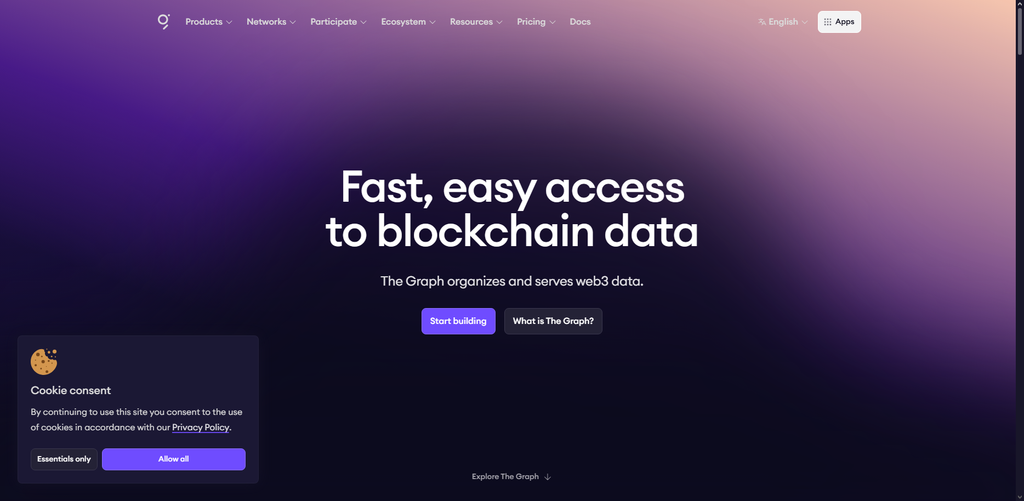
The platform transforms raw blockchain activity into structured, queryable datasets and supports 60+ networks including Ethereum, Arbitrum, Base, BNB Chain, Solana, Bitcoin and more. Data coverage includes blocks, transactions, token transfers, contract events, DeFi activity and application specific entities.
GraphQL Subgraphs allow developers to query indexed information and Substreams provide high-throughput streaming. It supports historical indexing and real-time data delivery for scalable applications.
Use Cases
- dApp Data Indexing – Create queryable blockchain backends for decentralized applications.
- DeFi Analytics – Monitor swaps, liquidity pools, lending activity, and protocol metrics.
- Web3 Dashboards – Build dashboards from structured, indexed on-chain data.
- Token & NFT Tracking – observe transfers, ownership, balances and marketplace activity.
- Blockchain Data – Search historical blockchain datasets for analytics and research.
Major Differences from Subsquid
- Subgraph Model – The Graph uses Subgraphs extensively, whereas Subsquid has a more flexible architecture for data processing and extraction.
- GraphQL Focus – The Graph is strongly focused on GraphQL querying, while Subsquid allows more flexibility for custom data pipelines and storage.
- Decentralized Indexing Marketplace – The Graph has a decentralized marketplace for indexing and a query ecosystem.
- Ecosystem Positioning – The Graph is more suited to application-specific indexed datasets, and Subsquid is more suited to customizable blockchain data lakes and large-scale extraction.
2. Goldsky
Founded 2022, Goldsky is a managed blockchain data infrastructure company specializing in indexing, pipelines, APIs and real-time data delivery. It comes with a $100 free credit and its paid plans scale according to usage and infrastructure needs. Goldsky’s Turbo Pipelines can write blockchain data directly to PostgreSQL, ClickHouse, S3, Kafka and other destinations.
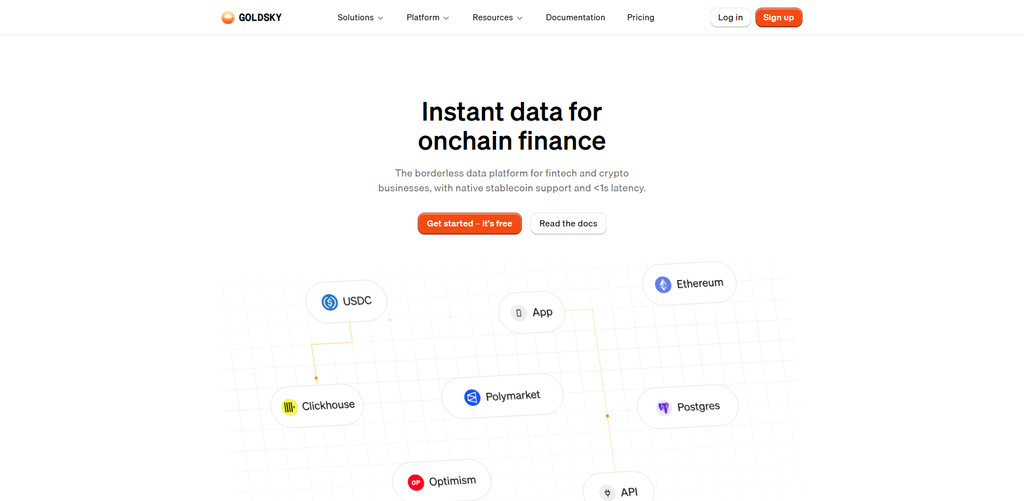
It currently supports 150+ chains and 270+ networks spanning EVM and select non-EVM ecosystems. Data available as blocks, transactions, logs, traces, smart-contract events, and indexed subgraph data. GraphQL APIs Pipelines HTTP Data APIs and RPC endpoints for developers. Its infrastructure is robust enough for historical backfills and real-time streaming, with automated reorg handling and scalable delivery.
Use Cases
- Real-Time Data Pipelines – Stream blockchain events to databases and data warehouses in real-time.
- DeFi Applications – Enable real-time trading, liquidity, and protocol monitoring systems.
- Analytics Platforms – Build blockchain dashboards and analytics products that are continuously updated.
- Data Warehousing – Push blockchain data to PostgreSQL, ClickHouse, S3, Kafka, etc.
- Event-Driven Applications – Trigger application workflows based on smart-contract and blockchain events.
Main Differences from Subsquid
- Managed Pipelines – Goldsky is centered around managed real-time data pipelines, while Subsquid allows more control over custom data extraction.
- Direct Destinations – Goldsky can directly stream data to external databases and warehouses.
- Real-Time Focus – Goldsky is especially strong for the delivery of continuously updated blockchain data.<br
- Operational Simplicity – Goldsky lessens the load of infrastructure management, while Subsquid offers more customization options for teams building their own data infrastructure.
3. Envio
Founded in 2023, Envio is a high-performance blockchain indexing platform for developers to quickly access structured on-chain data. Its pricing model is designed around developer friendly access and scalable hosted infrastructure with options that are suitable for development and production workloads.
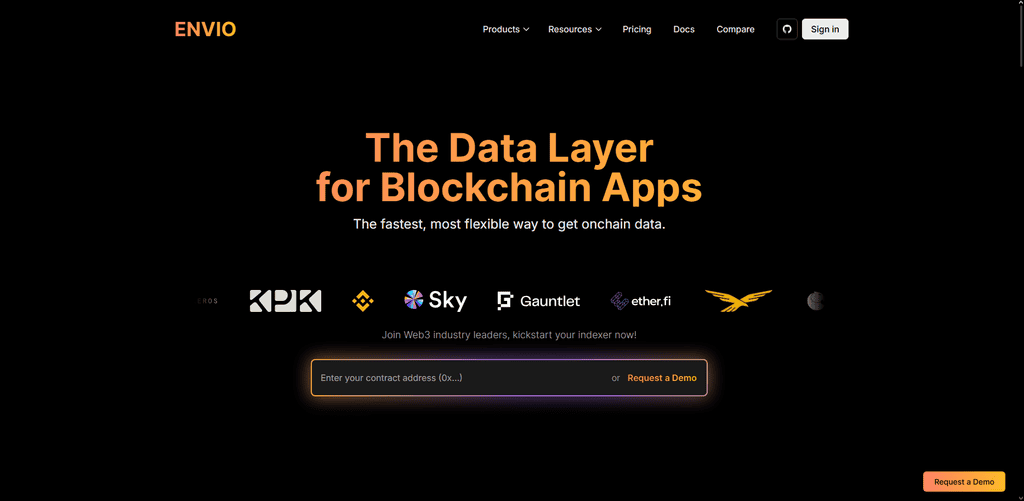
Envio’s HyperIndex engine turns blockchain events into application-ready datasets and is multi-network across the EVM ecosystem. Data can be transactions, logs, contract events, token movements, custom application entities. Developers are able to query indexed information through APIs and generated interfaces, and can develop indexing logic using familiar development tools.
Envio supports both historical sync and near real-time event processing, which makes it a good fit for dashboards, analytics systems, trading apps, and data-heavy Web3 backends.
Use Cases
- High-Speed Indexing – Index smart-contract events for performance-sensitive apps.
- DeFi Backends – Deliver structured protocol data to decentralized finance applications.
- Trading Applications – Blockchain event processing for trading and market monitoring systems.
- Analytics Dashboards – Create fast dashboards with indexed blockchain data.
- Multi-Chain dApps – Develop backends that fetch data from different blockchain networks.
Main Differences from Subsquid
- Performance-Oriented Indexing – Envio is very focused on high-performance event indexing and application responsiveness.
- Developer Workflow – Envio provides a developer-first indexing experience, whereas Subsquid is more geared toward customizable data extraction.
- Backend-focused – Envio is especially useful for powering dApp backends and APIs.
- Indexing Architecture – Subsquid provides more flexibility to build larger data pipelines and data-lake workflows in addition to application indexing.
4. Ponder
Born in 2022, Ponder is a blockchain indexing framework, centered on TypeScript, for developers crafting custom application backends. Ponder is not only a managed data marketplace but also provides developers with greater control over how blockchain events are indexed, transformed and stored. Its pricing approach is developer-centric with the framework available to build indexing infrastructure and teams managing their own preferred deployment environment.
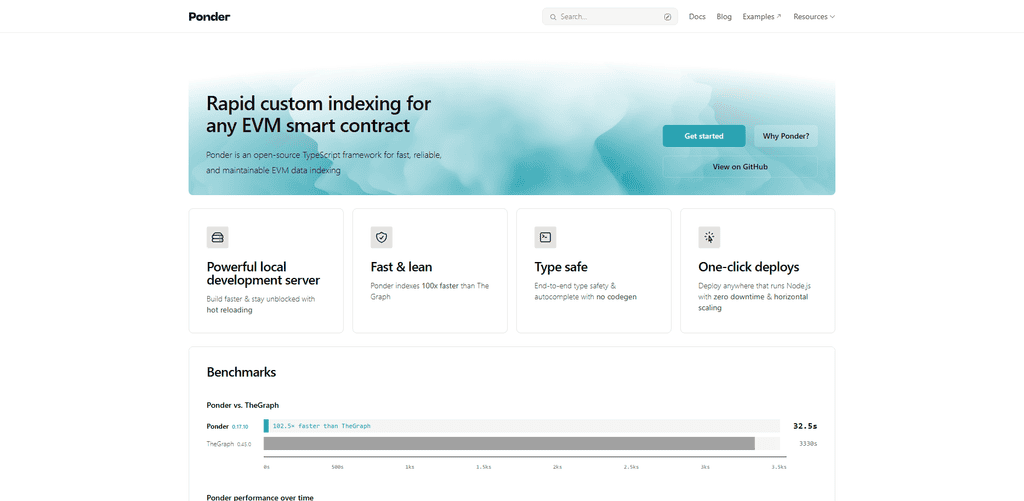
The main focus for Ponder is EVM-compatible networks like Ethereum, Base, Polygon, Arbitrum, Optimism, and other supported chains. Developers are able to index smart-contract events, transactions, token transfers, and application-specific data into databases and expose that information via APIs. It supports historical synchronization and continuous event processing, making it useful for scalable dApp backends and custom data pipelines.
Cases of Use
Custom dApp Backends – Build blockchain data services for your apps.
2. Smart-Contract Indexing – Index contract events and make them into usable application data.
3. DeFi Apps – Monitor protocol-specific events, transactions, and user activity.
4. Token Applications – Develop custom token, NFT, and wallet trackers.
5. Developer-Managed Infrastructure – Create indexing systems that give developers more control over deployment and storage.
Major Differences with Subsquid
- TypeScript Framework – Subsquid offers a more generic indexing and data extraction stack, Ponder is designed around a TypeScript development workflow.
- Developer Control – Ponder provides developers with a high degree of control over their indexing application and infrastructure.
- Application Backend Orientation – Ponder is primarily built to power custom dApp backends.
- Data-Lake Flexibility – Subsquid is a better fit for large-scale extraction, transformation, and storage workflows for blockchain data lakes.
5 Chainbase
Chainbase was founded in 2021 as a multi-chain data infrastructure platform that aims to provide unified access to blockchain data with APIs, indexing infrastructure and developer tools. It is priced according to usage and data-access requirements, and there are options for developers and larger applications.
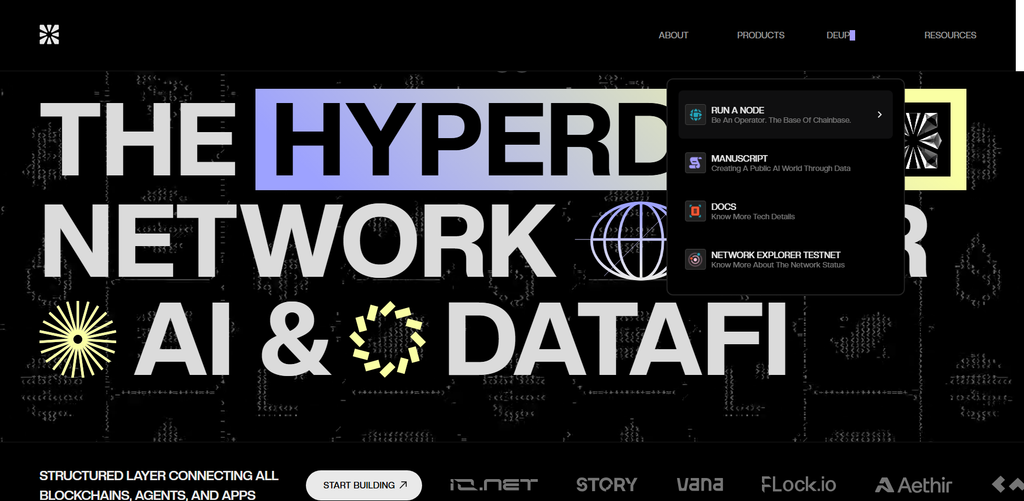
Chainbase supports many blockchain ecosystems, allowing teams to work with data without maintaining separate indexing infrastructure for each network. Available data sets include blocks, transactions, wallet activity, token information, smart-contract activity, and other structured on-chain data.
APIs and query-oriented data tools offer developers access to information, reducing the need for custom index systems. Chainbase’s historic blockchain data as well as live data is perfect for analytics, AI, dashboards, and multi-chain data products.
Applications
- Multi-Chain APIs – Unified interfaces for accessing structured blockchain data across multiple networks.
- AI Applications – Provide access to blockchain datasets to AI agents and data-driven applications.
- Wallet Analytics – Analyze wallet balance, transactions, token holdings and activities.
- Web3 Analytics – Build dashboards and apps using standard blockchain data.
- Data Infrastructure – Enable developers with reusable datasets without the overhead of maintaining individual chain indexers.
Major Differences from Subsquid
- Unified Data Access – Chainbase aims to make multi-chain access simple, through standardized APIs.
- AI Orientation – Chainbase has more advantages in AI-ready blockchain data and AI applications.
- API-First Approach – Chainbase focuses on ready-to-use data interfaces instead of developer managed extraction pipelines.
- Infrastructure Control – Subsquid gives teams more flexibility to customize their extraction and data-storage workflows.
6. GoldRush
GoldRush (formerly Covalent) was founded in 2017 and offers a unified blockchain data API to assist developers in working across various networks. Pricing is on a credit-based model, with a free trial giving 25,000 API credits, and paid access scaling with usage. GoldRush provides coverage across 100+ chains and provides decoded blockchain information through standard APIs.
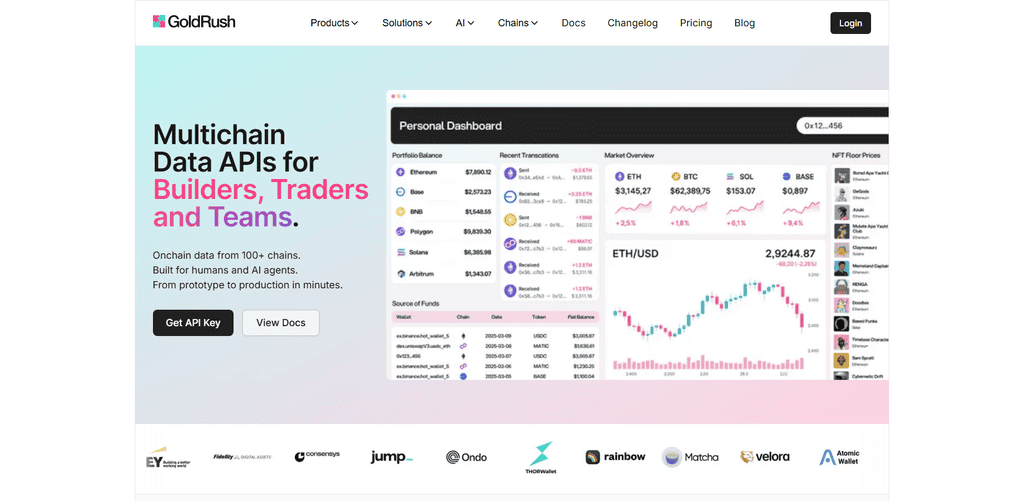
Data includes wallet balances, past transactions, token transfers, contract activity, pricing information, logs and other blockchain entities. Developers are able to access the data via REST APIs, WebSocket streaming and pipeline infrastructure for ongoing delivery into databases or warehouses.
The platform combines historical data with real-time streams and supports scalable wallets, portfolio applications, analytics platforms, trading tools and data pipelines.
Ways to Use
- Wallet Apps – Check balances, transactions, token holdings and wallet history.
- Portfolio Tracking – Create multi-chain portfolio and asset-tracking applications.
- Token Analytics – Analyze token transfers, history and pricing information.
- NFT Applications – Access NFT ownership, metadata, transactions, and activity.
- Enterprise Data APIs – APIs to plug standardized blockchain data into applications.
Differences from Subsquid
- API Simplicity – GoldRush has APIs that are ready to go, but Subsquid allows for more complex data extraction.
- Wallet Data – GoldRush has great pre-built wallet, token and portfolio endpoints.
- Standardized Schemas – GoldRush provides standardized data structures for multi-chain development.
- Less Infrastructure Management – GoldRush is a more turnkey solution, whereas Subsquid is better for teams who want more control over their indexing and data pipelines.
7. Dune Analytics
Dune Analytics is a SQL-based querying and blockchain analytics platform for large-scale on-chain datasets founded in 2018. Explore for free or choose from paid plans and API-centric options for teams who need more usage and programmatic access. Dune provides indexed multi-chain data, and its platform says it has over 1 petabyte of indexed blockchain data.
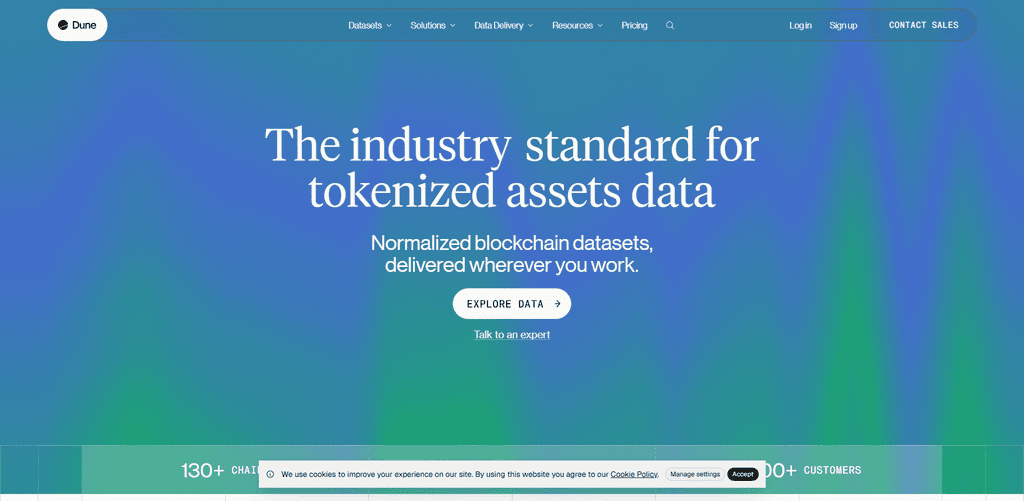
Datasets include transactions, token activity, DeFi protocols, NFTs, smart-contract interactions, and other on-chain metrics. For developers and analysts, we offer DuneSQL, dashboards, REST APIs, and connectors to plug blockchain analytics into outside workflows.
Dune is especially strong for historical analysis, research, dashboards and analytics pipelines. Its APIs and connectors also make it easy to programmatically access constantly updated blockchain data.
Use cases
- Blockchain Analytics – Analyzing large amounts of historical on-chain activity.
- DeFi Research – Liquidity, trading, user behavior, study protocol usage.
- Custom Dashboards – Create SQL-powered blockchain dashboards and visualizations.
- Crypto Research – Protocols, tokens, wallets and trends in the ecosystem.
- Data APIs – Provide query results and blockchain analysis to third-party applications.
Major Differences with Subsquid
- SQL Analytics – Dune is very much SQL based analytics, whereas Subsquid is more about programmable extraction and pipelines.
- Dashboard Ecosystem – Dune has a mature, community-driven dashboard and analytics ecosystem.
- Focus – Dune is primarily geared toward analysts and researchers, while Subsquid is aimed at developers building data infrastructure.
- Fewer Custom Pipelines – Subsquid gives you more flexibility to build custom extraction and transformation workflows.
8. Morals
Founded in 2020, Moralis provides Web3 APIs to give enterprise access to structured blockchain, wallet, token, NFT, DeFi, and pricing data. Pricing starts at $149-per-month Starter plan for annual billing and then Pro at $249, Business at $749 and custom Enterprise pricing. Moralis supports all major networks like Ethereum, Base, Solana, BNB Smart Chain, Polygon, Avalanche, Arbitrum, Optimism, zkSync and more.
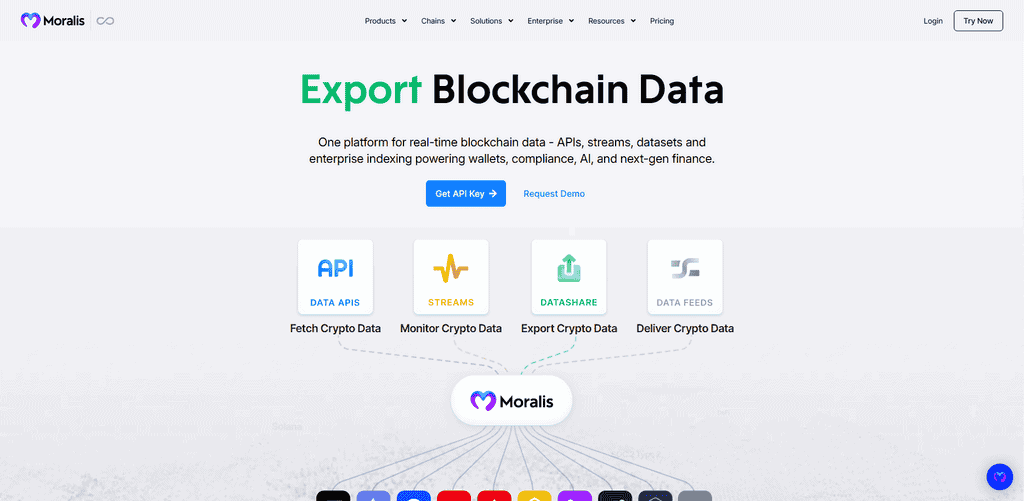
Its APIs include wallet history, transactions, balances, token transfers, NFTs, DeFi positions, token prices and blockchain information. Developers are able to use REST-style APIs, RPC infrastructure, and Moralis Streams for event delivery. The platform offers a complete history and streams of data in real time. Higher plans include more compute units, higher throughput, increased RPC capacity, and enterprise scalab
Use Cases**
Wallet APIs – Get wallet balances, transaction history, token transfers, and activity.
2. Token Applications – Develop token discovery, tracking, pricing and portfolio features.
3. NFT Platforms – Power NFT markets, trackers and ownership apps.
4. DeFi Applications – View DeFi positions, swaps, prices and protocol information.
5. Real-time Web3 Apps – Push blockchain events to applications using streams and APIs.
Major Differences to Subsquid
- Pre-Built APIs – Moralis provides out-of-the-box endpoints, alleviating the burden to build your own indexing infrastructure.
- Wallet & Token Focus – Moralis offers a wide range of APIs built specifically for wallet, token, NFT and DeFi apps.
- Easier for Developers – Moralis is simpler for teams that want instant API access and don’t want to manage data pipelines.
- Customization – Subsquid provides more control over extraction, transformation and data-lake architecture for specialized workloads.
9. PARSIQ
2018 – PARSIQ was founded to build the infrastructure to monitor and access blockchain data via APIs and make it more accessible and processable to developers. Its API pricing was based on a Computational Unit (CU) model, with costs based on the base endpoint fee, the complexity of the input, and the complexity of the blockchain.
its data infrastructure included data around blockchain data, blocks, transactions, tokens, NFTs and wallets. Supported networks for relevant APIs include Arbitrum, BNB Smart Chain, Avalanche, Metis, Polygon, Polygon zkEVM and Ethereum.
Developers could query data through REST style endpoints and the PARSIQ Javascript SDK. Its APIs supported historical queries to the blockchain, and current information to the blockchain. But PARSIQ has now pivoted its larger mission to focus on **Reactive Network, an EVM-compatible execution layer for event-driven, cross-chain intelligent contracts.
Use Cases
- Blockchain Monitoring – PARSIQ can monitor on-chain events, transactions, wallet activity, token movements and smart contract interactions for applications that require automated monitoring of blockchain data.
- Real-Time Alerts – Developers are able to use PARSIQ-style event monitoring to detect particular blockchain events and trigger alerts, workflows, or application responses when certain events happen.
- Wallet & Transaction Tracking – PARSIQ APIs allow apps to retrieve and analyze wallet balances, transactions, token transfers, and other on-chain address activity.
- Cross-Chain Applications – The technology is especially useful for applications that need to respond to events on multiple blockchains and coordinate actions across chains.
- Event-Driven Web3 Automation – PARSIQ’s technology can enable automated workflows where blockchain events can trigger smart-contract execution, notifications, or app logic.
Key Differences with Subsquid
- Event-focused – PARSIQ concentrates more on the tracking of blockchain events and acting on them, while Subsquid is mainly to extract, process, and store blockchain data.
- Reactive Architecture – PARSIQ has developed its technology to Reactive Network that allows intelligent contracts to react to on-chain events. Rather, the company is focusing on customizable indexing and data pipelines.
- Data-Lake vs Automation – Subsquid is more suitable to build big blockchain data lakes, historical data sets, and custom indexing pipelines, while PARSIQ is more powerful for event-driven automation and blockchain monitoring.
- Developer Objective – Subsquid generally lets developers decide how to extract, transform, and store blockchain data; PARSIQ is more about turning blockchain events into programmable triggers and automated actions.
Conclusion
The best Subsquid alternatives depend on your data requirements, supported blockchains, scalability, pricing, and development workflow. The Graph is still a great option for decentralized indexing and GraphQL applications, and Goldsky is a good choice for real-time pipelines and data warehouse integrations. Envio and Ponder focus on developers who want high-performance, customizable indexing, while Chainbase and Moralis offer easy multi-chain APIs.
Covalent/GoldRush is more about standardized blockchain data, Dune is great for analytics and research in SQL and PARSIQ is more suited to event driven monitoring and automation. When assessing their ideal blockchain data-lake platform, teams should also consider historical data, real-time capabilities, query options, integrations, performance and costs.
FAQ
What is the best Subsquid alternative for blockchain data lakes?
Goldsky, The Graph, Envio, and Chainbase are strong alternatives, depending on requirements. Goldsky is particularly useful for real-time pipelines, while The Graph is strong for decentralized indexing and Envio for high-performance indexing.
Is The Graph better than Subsquid?
The Graph can be better for applications requiring Subgraphs, GraphQL queries, and decentralized indexing. Subsquid is generally more flexible for custom extraction, transformation, and large-scale blockchain data-lake workflows.
Is Goldsky a good Subsquid alternative?
Yes. Goldsky is a strong alternative for teams needing real-time blockchain pipelines, historical backfills, and direct integrations with databases, warehouses, and other data destinations.
Which Subsquid alternative is best for real-time blockchain data?
Goldsky and Envio are strong choices for real-time blockchain data. Goldsky emphasizes streaming pipelines and data delivery, while Envio focuses on fast event indexing for application backends.
Which Subsquid alternative is best for blockchain analytics?
Dune Analytics is particularly strong for blockchain analytics because it provides SQL-based querying, dashboards, and extensive on-chain datasets for research and data analysis.