


Selecting the proper blockchain indexing platform can really make a difference in the speed and efficiency in which Web3 applications can access on-chain data. The Graph remains a popular choice but a number of competitors now offer broader chain coverage, faster indexing, a flexible API, customizable data pipelines and different hosting models.
In this guide, I’ll present the Best The Graph Competitors for Blockchain Indexing, comparing their main features, performance, pricing models, and use cases to help developers identify an indexing solution that suits their unique project needs.
What Is Blockchain Indexing?
Blockchain indexing is the process of transforming raw blockchain data into structured and easily searchable information that can be queried by applications in an efficient manner. An indexer collects, processes and stores relevant data such as transactions, token transfers, smart-contract events, wallet activity and balances, rather than scanning each individual block and transaction.
Developers are able to then query that indexed information with APIs, GraphQL, SQL or other interfaces. Blockchain indexing is the engine behind a lot of Web3 applications, including DeFi platforms, NFT marketplaces, wallets, analytics dashboards, and blockchain explorers. Indexing platforms not only speed up data retrieval but also reduce the infrastructure and processing effort that developers have to deal with.

Why Look for The Graph Alternatives?
Faster Indexing — Some alternatives offer faster historical sync and real-time indexing, enabling applications to access newly confirmed blockchain data with lower delays and improving performance for data-intensive Web3 applications.
Broader Chain Coverage — Developers may have to cover EVM and non-EVM networks beyond their existing infrastructure. Alternative indexers offer wider multichain coverage via unified data platforms and APIs.
Flexible Query Options — Various platforms support GraphQL, REST, SQL, SDKs and custom APIs. The flexibility lets developers pick the query methods that best suit their application’s architecture and data needs.
Custom Indexing — Alternatives may provide more control over schemas, event handlers, data pipelines and indexing logic, which can be useful for applications that require a highly customized blockchain dataset and processing.
Real-Time Data – Trading platforms, DeFi applications, wallets, and monitoring tools often require low-latency blockchain data. Others favor real-time streams, webhooks, and rapid event processing.
Hosting Flexibility — Developers may opt for managed cloud infrastructure, self-hosted indexers, decentralized networks, or hybrid deployments, providing greater control over the infrastructure, customization, maintenance, and operational requirements.
Pricing and Scalability — Pricing models suitable for start-ups, growing applications, or enterprises. Long-term costs can be optimized by comparing usage limits, free tiers, infrastructure costs and scaling requirements.
Key Points
| Competitor | Key Point |
|---|---|
| Subsquid | High-performance blockchain indexing with customizable ETL pipelines and multichain support. Frequently viewed as a direct alternative to The Graph. |
| Covalent | Provides structured on-chain data across 100+ blockchains through a unified API. |
| Goldsky | Real-time blockchain data infrastructure focused on indexing, data streaming, and on-chain automation. |
| Helius | Specialized indexing and data services for the Solana ecosystem, including APIs and webhooks. |
| GhostGraph | Blockchain indexing platform that enables developers to create custom index transformations and query via GraphQL. |
| Alchemy | Managed indexing solution that simplifies querying blockchain data and building decentralized applications. |
| Chainbase | Unified Web3 data infrastructure offering indexed blockchain data and developer APIs across multiple chains. |
| Env | Modern indexing framework designed for fast data synchronization and near real-time blockchain analytics. |
| Blocksc | Open-source blockchain explorer and indexing platform that enables access to indexed on-chain data. |
| Dune | Allows users to query, index, and analyze blockchain datasets through SQL-based dashboards and analytics tools. |
1. Subsquid
Subsquid is a blockchain data indexing kit launched in 2021 for developers who want customizable historical and real-time data pipelines. It provides open-source tooling with self-hosting options and its decentralized SQD Network infrastructure, with pricing based on deployment and data needs. Subsquid supports Ethereum, EVM-compatible networks, Substrate-based chains and Solana.

It uses TypeScript ETL workflows and efficient data extraction for its indexing model, rather than the traditional hosted subgraph model. Developers are able to build custom schema database-backed applications and APIs. It is highly beneficial for processing large historical datasets and complex indexing workloads due to its high-performance binary data processing.
Major Features
- Blockchain data indexing customization
- Extraction of historical and real-time data
- EVM and non EVM chains support
- Typescript development workflows
- Deployment options: self-hosted, decentralized
Key Risks
- More technical setup than fully managed platforms
- Managing the infrastructure adds to the operational burden
- Pricing can get complex with big data workloads
- Indexing support may be network specific
2. Covalente
Covalent is a blockchain data infrastructure platform launched in 2018 that helps developers, analytics platforms and AI applications access structured onchain data. GoldRush ecosystem includes APIs, SDKs, UI Kits and decoders with free, usage-based and enterprise access.
Covalent supports 100+ blockchains including Ethereum, Polygon, Base, Avalanche, BNB Chain and more. It offers standardized indexed datasets via its unified API infrastructure rather than requiring developers to build subgraphs on an individual basis.
Access balances, transactions, token data, historical data through APIs Its wide multichain coverage is useful for applications that need consistent blockchain data across networks.
Main Features
- Unified blockchain data APIs for multichain
- Wallet, Token, Transaction and Balance Data
- Large coverage of the blockchain network
- Standardized, structured datasets
- Developer APIs and SDK support
Main Risks
- APIs are dependent on third-party infrastructure
- Costs can increase with high volume usage
- Data abstraction can lessen heavy customized indexing
- Varies by chain in coverage and data availability
3. Goldsky
Goldsky is a hosted indexing, streaming and query infrastructure from a 2022-founded managed blockchain data infrastructure platform. It provides a free entry option with credits, and paid usage scales based on workloads and products. Goldsky supports 150+ chains, covering EVM networks and expanding to non-EVM ecosystems.

Its indexing approach includes Graph-compatible subgraphs, real-time Turbo Pipelines, and pre-built data feeds. Developers are able to query the indexed data using GraphQL, REST APIs, or stream it to PostgreSQL, ClickHouse, Kafka, and S3.
Goldsky emphasizes sub-second indexing latency, automated reorg handling, and high-throughput data pipelines, and is a solid managed alternative to The Graph.
Major Features
- Subgraph infrastructure management
- Blockchain data pipelines in real time
- GraphQL query support
- Multi-chain indexing capabilities
- Streaming data to external databases and systems
Main Risks
- Usage costs may increase with high workloads
- Complex pipelines may require some technical knowledge
- Managed infrastructure causes vendor lock-in
- Service availability depends on supported networks
4. THE SUN
Helius, a Solana-centric blockchain infrastructure platform built around RPC access, indexed APIs, webhooks and developer tooling, was launched in 2022. It has free and paid plans, but the infrastructure is managed, rather than teams running their own indexing systems.

It deals with mainly Solana, so it’s especially relevant for applications built on this ecosystem specifically. Helius indexes and enriches Solana blockchain activity into developer-friendly datasets so developers don’t have to parse raw transactions themselves.
Developers are able to access data through REST APIs, RPC endpoints, webhooks and dedicated APIs. Its Solana-native infrastructure is optimized for rapid application development, delivery of real-time events and high-volume onchain data workloads.
Features
- Blockchain indexing focused on Solana
- Improved Solana APIs
- High performance RPC infrastructure
- Webhooks for live events
- NFTs, tokens, transactions and wallets data
Major Hazards
- Laser focus on Solana ecosystem
- API use can become expensive at scale
- Reliance on managed infrastructure
- Not well suited for applications requiring wide multichain inde
5. GhostGraph
GhostGraph is a blockchain indexing solution that seeks to enable developers to query onchain data without running complex indexing infrastructure. Its offering is mostly centered around managed indexing and developer accessibility, pricing and hosting depend on the chosen configuration of services.

Coverage varies, so check the current network list for the specific deployment to check the chain coverage. Its indexing model converts blockchain activity into structured datasets that are ready for applications.
API-based access and querying indexed information rather than parsing raw blockchain data over and over is an option for developers. GhostGraph is perfect for teams looking for a simpler indexing workflow, faster development and less infrastructure-management overhead.
Main Features
- APIs that developers love
- On-chain data sets queryable
- Blockchain data indexing
- Basic indexing infrastructure
- less need for self-administered indexers
Major Risks
- Possibly less comprehensive chain coverage
- Smaller ecosystem than the established index providers
- Documentation and integrations may need verification
- More reliance on the provider’s infrastructure
6. Alchemy
Founded in 2017, Alchemy is a major Web3 infrastructure platform that combines RPC infrastructure, APIs, data services and blockchain indexing capabilities. It has a free tier and usage-based paid plans, plus managed cloud hosting, so you don’t need to run indexing infrastructure yourself.

Alchemy supports more than 100 blockchains, including major EVM ecosystems and other supported networks. Its indexing methodology leverages pre-existing APIs, NFT and token data services, address activity, transfers, and application-specific data endpoints.
Developers are able to work with REST APIs, SDKs, GraphQL and RPC interfaces. It has a large infrastructure footprint, and can handle a large number of requests. Suitable for production applications needing scalable access to blockchain data.
Main Features
- Blockchain APIs and Multi-chain RPC
- API for NFT and token data
- Address and transactional activity data
- Developer SDKs & APIs
- Managed scalable infrastructures
Major Risks
- Usage based pricing may scale up
- Vendor lock-in for applications, utilizing several Alchemy services
- Advanced features require paid plans
- Less customizable than building a dedicated indexing stack
7. Chainbase
Chainbase is a multi-chain blockchain data infrastructure platform that indexes, transforms and queries on-chain data at scale. It offers managed infrastructure, with usage-based access and enterprise-oriented options. It supports a large number of blockchain networks, enabling developers to interact with data from various ecosystems in one place.

Its indexing strategy is built to transform raw blockchain data into structured datasets that can be queried and acted upon by applications, analytics systems and AI agents.
Developers are able to access data via APIs, SQL-style querying, and other developer interfaces depending on the product. With its multi-chain architecture, it provides a great tool for applications that need a scalable and unified on-chain data infrastructure.
Things to Watch For
- Indexing data and transformations
- Multi-chain blockchain data infrastructure
- Querying data using SQL
- Onchain access consistency
- AI and Web3 applications infrastructure
Major Risks
- Dependence on indexed datasets platform
- Could increase costs at enterprise scale use
- Custom indexing may require additional technical work*
- Data coverage may vary between supported networks
8. Shipping
Envio is a blockchain indexing framework that was founded in 2022 that turns onchain events into application data that can be queried. It provides managed cloud hosting and self hosting, allowing developers flexibility on infrastructure and deployment costs. Envio is mainly for Ethereum and EVM-compatible chains, making it a strong option for multichain EVM apps.

Using its HyperIndex architecture, developers are able to write event handlers in TypeScript, JavaScript, or ReScript and create custom indexes around smart-contract activity. GraphQL APIs can expose indexed information for application queries.
Envio is all about fast historical sync, real-time indexing, multichain support and automatic reorg handling. It’s an appealing choice for developers looking for customizable indexing without having to build everything from scratch.
Main Features
- Fast indexation of the blockchain
- HyperIndex indexing framework
- Event handler in TypeScript
- Access to GraphQL API
- Deployment: self-hosted and managed
Major Risks
- Mainly optimized for EVM ecosystems
- Custom indexers require development skills
- Self-hosting implies infrastructure responsibilities
- Additional backend components for complex applications
9. Blockscout
Blockscout is an open-source blockchain explorer and indexing infrastructure project providing transparent access to EVM blockchain data. Open source, teams can self-host or use hosted Blockscout deployments, with costs depending on infrastructure and service requirements. It is mainly focused on EVM compatible networks and is used in many Ethereum-based ecosystems.
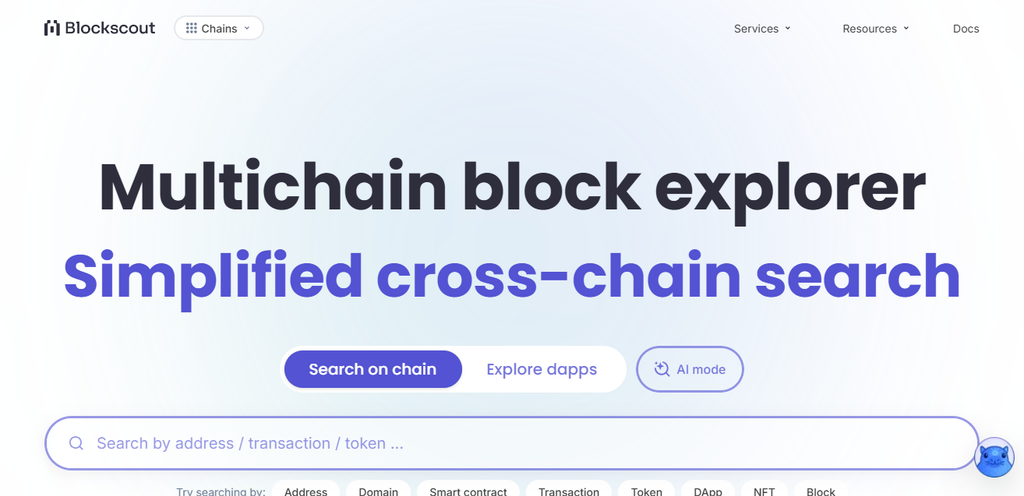
Its indexing system takes blocks, transactions, logs, token transfers, contracts, and other blockchain activity and makes it available to drive searchable explorer interfaces and APIs.
REST APIs and explorer interfaces provide developers access to indexed information and further integrations across the ecosystem. Its open-source nature is especially helpful forchains and organizations that want to have control over their indexing infrastructure.
Key Characteristics
- Open-source blockchain explorer infrastructure *
- EVM blockchain indexation
- Transaction and smart contract data
- Access to REST API
- Self-hosted, customizable deployments
Major Threats
- Infrastructure management for self-hosting
- Maintenance may require experienced developers
- Performance is partly dependent on deployment resources
- Primarily focused on EVM compatible networks
10. Dune
Dune is a blockchain analytics platform launched in 2018 to provide indexed and decoded blockchain data for researchers, developers and Web3 teams. There is a free entry level and paid plans with infrastructure hosted by Dune.

This platform supports over 100 blockchain networks and is very analytics-oriented, rather than traditionally application-specific indexers. The approach combines decoded blockchain datasets with SQL-based querying to enable users to create dashboards, charts and reusable data analyzes.
Developers and analysts can access the query results through APIs based on their plan. Dune is great for historical analytics, protocol research, dashboards and data exploration but it’s not intended to replace application focused subgraph infrastructure.
Major Features
- Blockchain analytics on SQL
Multichain data coverage - Blockchain datasets for decryption
- Custom Dashboards & Visualizations
- API access for data and analytics pipelines
Major Risks
- Large scale usage may require paid plans
- Better for analytics than for application-specific indexing
- More complex queries can require some SQL know-how
- Reliance on datasets indexed and decoded by Dune
How to Choose a The Graph Competitor?
Blockchain support — Ensure the platform supports your required networks, for example Ethereum, EVM chains, Solana and more. Having wider coverage makes it easier to develop multichain applications.
Indexing Performance — Compare historical backfill speed, sync time, real-time indexing, latency and throughput. Ensure you select infrastructure that can handle the volume of blockchain data and traffic your app is expected to receive.
Query & API Support — Assess GraphQL, REST, SQL, RPC, SDKs, and other query capabilities. Choose a platform that offers interfaces that can easily integrate with your existing application architecture and development workflow.
Customization — Look for customizable schemas, event handlers, indexing logic, data transforms and pipelines. More flexibility is helpful when standard subgraph functionality cannot satisfy specialized application needs.
Hosting Options — A comparison of managed, self-hosted, decentralized and hybrid deployment models. When choosing an indexing platform, think about infrastructure control, maintenance responsibilities, security requirements, and operational expertise.
Pricing & Scalability — Free tiers, API limits, usage-based pricing, infrastructure expenses, enterprise pricing. Make sure the platform can scale cost-effectively as the number of users, queries, and indexed data increases.
Reliability & Support — Check uptime, reorganization management, documentation, developer support, monitoring tools, and maturity of the ecosystem. A robust infrastructure reduces data inconsistencies and operational problems in production applications.
Conclusion
The best alternative to The Graph depends on your needs around blockchain coverage, indexing speed, query needs, customization needs, and budget. Flexible indexing and multichain infrastructure is offered by Subsquid, Goldsky, Envio, and Chainbase. Helius is focused on Solana and Dune is very blockchain analytics oriented.
“Alchemy provides a broad developer infrastructure and Blockscout offers an open-source solution and more control over deployments. Covalent offers simple access to standardized multichain datasets while other emerging platforms can address niche needs.
Developers are able to compare performance, APIs, hosting options, scalability, reliability and pricing to select the blockchain indexing solution that best fits their application’s technical and business needs.
FAQ
What are the best alternatives to The Graph?
Popular alternatives include Subsquid, Covalent, Goldsky, Helius, Alchemy, Chainbase, Envio, Blockscout, Dune, and GhostGraph. The best option depends on chain coverage, indexing speed, APIs, customization, and pricing.
Which The Graph alternative is best for multichain indexing?
Subsquid, Covalent, Goldsky, Alchemy, and Chainbase are strong options for multichain applications. Compare supported networks and available APIs before choosing a platform.
Which competitor is best for Solana indexing?
Helius is particularly suited to Solana applications, offering Solana-focused APIs, RPC infrastructure, webhooks, and indexed blockchain data for high-performance applications.
Which The Graph alternative supports custom indexing?
Subsquid and Envio provide strong customization options through programmable indexing workflows, event handlers, schemas, and data-processing logic.
Is Goldsky a good alternative to The Graph?
Yes. Goldsky provides managed indexing, Graph-compatible subgraphs, real-time data pipelines, GraphQL access, and streaming infrastructure, making it useful for scalable Web3 applications.


