


Increased demand for real-world credit lending has created new opportunities in decentralized finance (DeFi), combining blockchain with traditional borrowing needs. Goldfinch is one such platform that explores this space, but it is not the only option in this space.
There are a number of alternatives, such as Maple Finance, Centrifuge, Clearpool, and Huma Finance, that take different approaches to credit markets, institutional financing, and real-world assets. Throughout this guide, I’ll cover the Top Goldfinch Rivals for Real-World Credit Lending and their lending models, key benefits, drawbacks, and investment opportunities so you can understand which platforms are best.
Why investors and borrowers explore Goldfinch alternatives
Flexible Loan Options: Lenders and borrowers have different needs. They look for platforms that offer secured, unsecured or undercollateralized loans that best fit their financial needs, risk appetite and capital requirements.
Competitive Yield Opportunities Investors look at lending protocols and compare them to find good potential returns, transparent interest rates and sustainable yield opportunities, while not ignoring borrower default risks or changing market conditions.

Diversification Opportunities By investing in multiple platforms, investors have the opportunity to diversify their credit exposure across borrowers, industries, geographic markets and categories of real-world assets, rather than relying solely on a single protocol.
Increased Borrower Access: Businesses need and credit originators seek loan options that offer appropriate loan sizes, flexible repayment terms, competitive borrowing costs, and financing for a wide range of credit needs.
Enhanced Risk Management: Alternative protocols may come with different methods of borrower screening, collateral structures, credit evaluations, and default-management processes that allow participants to assess risks before deploying capital.
Blockchain Compatibility: Investors and borrowers compare supported blockchain networks, stablecoin options, transaction fees and cross-chain accessibility to choose platforms that fit within their existing digital-asset infrastructure.
Greater Liquidity Choices: Certain platforms provide alternative withdrawal conditions, lending pool structures or investment terms, allowing participants to evaluate the ease of capital access and liquidity constraints prior to choosing a protocol.
Goldfinch alternatives can offer targeted financing options, such as institutional credit, invoice financing, payment-based lending, or tokenized Treasury assets, to help users meet their unique financial objectives.
How to Choose the Right Goldfinch Competitor?
Investigate lending options: Understand the differences between secured, unsecured, and undercollateralized lending models to find out which protocol fits your borrowing needs, investment objectives, and risk appetite for potential credit losses.
Borrower Quality Assessment: Understand how each platform assesses borrower eligibility, creditworthiness, repayment history, and underwriting standards to assess borrower quality and manage the risk of loan default.
Compare potential returns: Check interest rates, projected yields, platform fees and payment terms; recall that higher returns typically mean higher credit exposure and investment risk.
Review Risk Management: Look into collateral requirements, credit evaluations, diversification plans and default-recovery processes and see if a platform’s safety mechanisms are in line with your financial objectives and risk appetite.
Review Liquidity Conditions: Be aware of withdrawal restrictions, investment lock-ups, pool utilization, and redemption terms before you commit funds, particularly if you might need access to capital unexpectedly.
Check Blockchain Compatibility: Review the supported networks, compatible stablecoins, transaction fees, and smart-contract capabilities to confirm that the platform can work efficiently with the blockchain network you will use.
Know Your Investor Status: Verify whether there are any restrictions based on your location, identification verification requirements, minimum investment amounts or regulatory restrictions that would prevent you from legally using the platform’s financial products.
Align With Your Financial Objectives: Choose a competitor that matches your objectives, whether it’s institutional borrowing, private credit exposure, real world asset financing, payment liquidity, or a variety of blockchain-based investment opportunities.
| Platform | Key Point |
|---|---|
| Maple Finance | Institutional-focused on-chain credit marketplace offering secured and undercollateralized loans to crypto businesses and professional borrowers. |
| Centrifuge | Specializes in financing real-world assets such as invoices, trade receivables, and private credit through tokenized asset pools. |
| TrueFi | Provides unsecured lending based on borrower creditworthiness and on-chain reputation rather than traditional collateral requirements. |
| Credix | Decentralized private credit marketplace connecting institutional investors with fintech lenders and real-world credit opportunities. |
| Polytrade | Focuses on trade finance and tokenized receivables, enabling businesses to access liquidity through real-world asset financing. |
| Clearpool | Decentralized credit protocol where institutional borrowers access unsecured liquidity from DeFi lenders. |
| Ribbon Credit (Aevo Earn) | Offers structured credit and yield products backed by professional lending and risk-managed strategies. |
| Huma Finance | PayFi and income-backed lending network that allows businesses and individuals to borrow against future cash flows. |
| Ondo Finance | Brings traditional financial products and tokenized yield-bearing assets on-chain, serving investors seeking real-world exposure. |
| Celo-based Mento/ImpactMarket Credit Ecosystem | Expands blockchain-based lending and financial inclusion through credit products targeting underserved markets. |
1. Maple Finance
Maple Finance Maple Finance is an institutional digital-asset lending and asset-management platform that connects capital providers with institutional borrowers. Core Professionally underwritten, collateralized loans and managed liquidity pools.
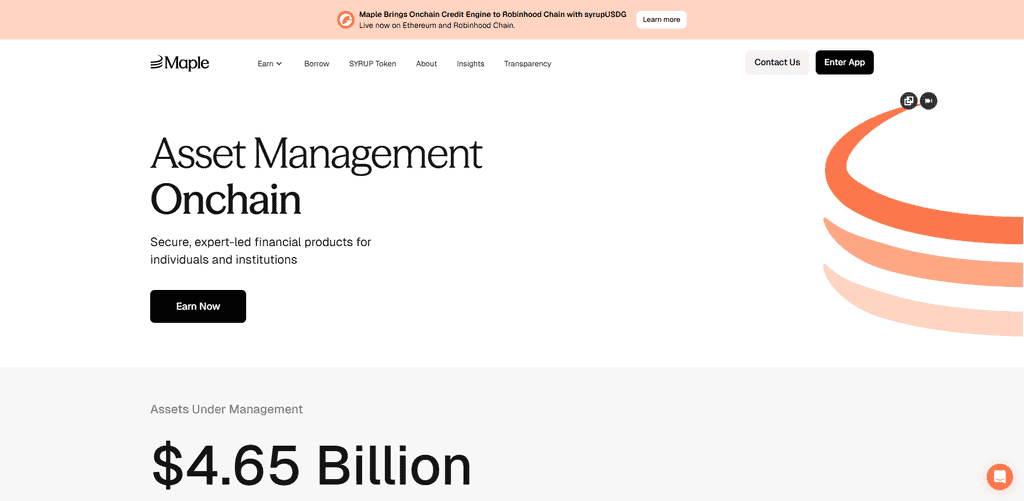
Crypto-native institutions, trading firms and other eligible businesses looking for financing. Investor Opportunities Lenders can deposit supported assets into pools that may be used for lending strategies and earn interest, with access requirements.
Maple is built on Ethereum smart contract technology and supports additional integrations where necessary for the product. Risk Management: Credit underwriting, collateral monitoring, loan terms, and borrower due diligence mitigate the risk of default.
Benefits
- Offers institutional lending and credit underwriting services.
- Delivers on-chain transparency of lending pool activity.
- Allows for potential interest income via eligible lending pools.
- It has secured lending options to manage credit exposure.
- Serves institutional borrowers and qualified providers of capital.
Cons:
- Loss of money if the borrower defaults.
- KYC & Eligibility Restrictions May Apply.
- Returns are subject to the lending terms and market conditions.
- Funds deposited are subject to smart contract vulnerabilities
2. Centrifuge
Centrifuge is a real-world asset (RWA) tokenization protocol that connects conventional financial assets with blockchain-based capital markets. Core Lending Model: It enables eligible asset originators to finance pools of receivables, invoices and other real-world credit assets through structured pools.
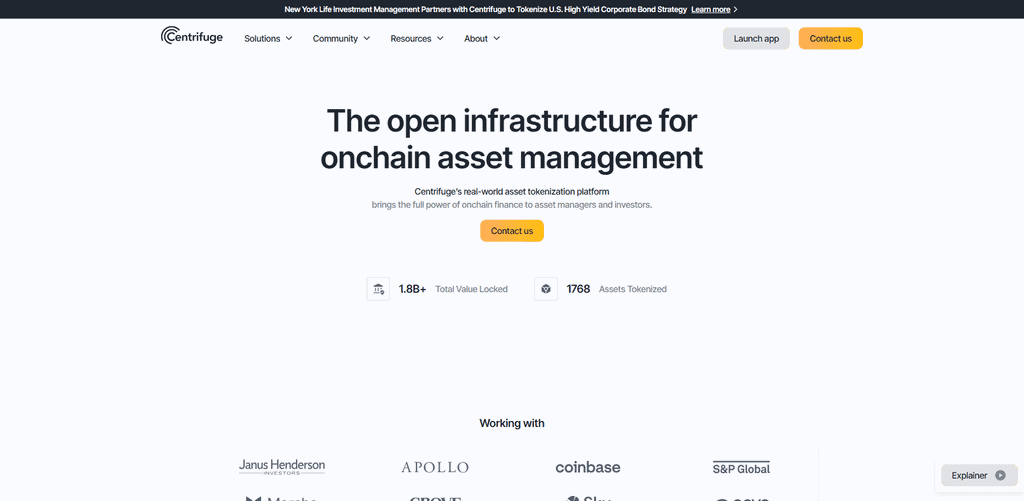
Business, Credit Originators, and Financial Institutions with financeable asset portfolios. Opportunities for investors: Investors can gain exposure to tokenized credit through eligible investment vehicles with the return being based on the performance of the asset and the terms of the pool.
Centrifuge utilizes blockchain infrastructure and tokenized fund structures. The supported networks vary depending on the product. Risk Management: Asset underwriting, pool structures, reporting and risk allocation to help investors understand possible losses.
Pros
- Loss of money if the borrower defaults.
- KYC & Eligibility Restrictions May Apply.
- Returns are subject to the lending terms and market conditions.
- Funds deposited are subject to smart contract vulnerabilities.2. Centrifuging
Cons
- Defaults on the underlying asset can reduce investor returns.
- Certain products restrict participation to qualified investors.
- Secondary market may not be liquid.
- Asset valuation and quality of reporting may vary
3. TrueFi
TrueFi is a decentralized credit protocol that provides on-chain lending infrastructure to lend to qualified borrowers. Core Lending Model: The original model featured uncollateralized loans, lending pools, tokenized loan positions, and community-based credit risk signals.
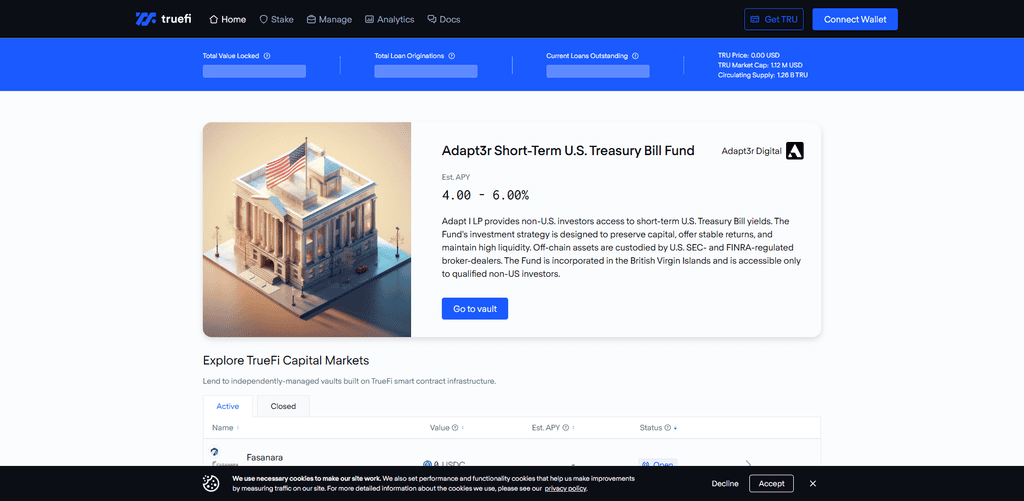
Historically it has targeted institutional borrowers, including crypto native companies and trading firms. Investor Opportunities: Lenders could pool assets and earn interest on loans. TRU-based mechanisms supported governance and credit assessment elements.
TrueFi’s original smart-contract architecture was Ethereum-based, tokenized loans and pool contracts. Risk Management Screening borrowers and assessing risk were important, but there was a significant risk of default in unsecured lending.
Advantages
- Designed for decentralized credit markets.
- Historically supported uncollateralized lending to institutions.
- On-chain infrastructure for records of lending activity.
- Uses borrower screening and credit-risk evaluation mechanisms.
- Offers a model for expanding lending beyond collateral-heavy requirements.
Disadvantages
- Secured loans are the most risky loans to default.
- Credit losses are unavoidable in borrower screening.
- Returns are contingent on successful loan repayments.
- Availability and activity of current product may be limited or changed
4. Credix
Credix Credix is a blockchain-powered private credit marketplace that finances real-world lending businesses, with a focus on emerging markets. Core Lending Model: The model helps connect investors with credit originators that issue loans to underlying borrowers through structured investment pools.
Credit funds, fintech lenders and local loan originators looking for financing for their consumer and small business credit portfolios. Investor Opportunities Eligible investors can access private-credit strategies and interest from the underlying loan repayments.
Credix is known for its relation to the Solana-based infrastructure, but it is important to check the availability of the network and products. Risk Management Originator assessment, portfolio diversification and loan-performance monitoring are important as defaults and regional economic conditions can affect returns.
Advantages
- Focuses on private-credit financing through the blockchain infrastructure.
- Links capital providers with credit issuers.
- Offers possible exposure to emerging-market lending.
- Uses structured investment pools to finance credit.
- Improve traceability of transactions with blockchain records.
Disadvantages
- Losses can occur due to defaults by the borrower or originator.
- Currency and economic instability can plague emerging markets.
- Liquidity may be restricted in relation to investments in private credit.
- The activity on the platform and the access of investors can change in time
5. Polytrade
Polytrade is a RWA-centric platform that seeks to bridge conventional financial assets with blockchain-based investment opportunities. Core Lending Model: Its ecosystem has been focused on tokenized real-world assets and credit-related opportunities, including trade finance and receivables-based financing.
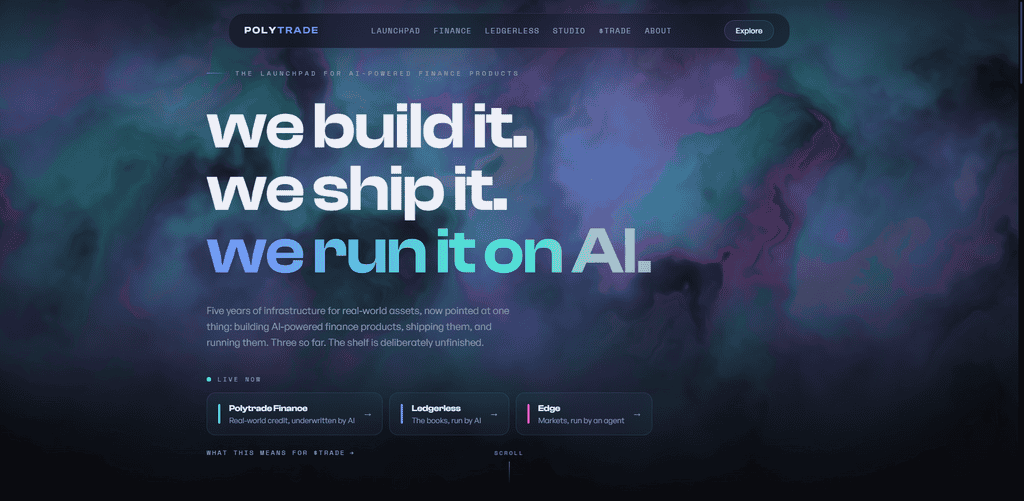
Borrowers may include relevant businesses, trade-finance providers and asset originators seeking liquidity, depending on the product. Investor Opportunities: Qualified investors can access tokenized asset exposure and potential income from underlying financial activities.
Blockchain and Protocol Support Polytrade has utilized multichain infrastructure, subject to availability per product. Risk Management: Before investing, investors should consider asset verification, repayment terms, liquidity restrictions and counterparty exposure.
Advantages
- Focus on real asset and trade-finance opportunities.
- links receivables to blockchain capital.
- Supports the tokenization of eligible financial assets.
- Structured investment classes can spread risk in different ways.
- Provides the infrastructure to manage and evaluate credit opportunities.
Cons
- Repayment is dependent on underlying receivables and counterparties.
- Credit ratings are not a sure way of predicting risk accurately.
- Junior investment jobs can suffer big losses.
- Liquidity and access to investors vary by individual products
6. The Clear Pool
Clearpool is a decentralized credit market connecting institutional borrowers and digital asset liquidity providers. Lending Model: Approved borrowers access capital through lending pools; interest rates/pool conditions reflect demand and risk. Crypto-native institutions, trading firms, market makers and other qualified institutional participants.

Investor Opportunities: Liquidity providers can deposit supported assets into pools and earn interest from borrower repayments. Blockchain and Protocol Support: Clearpool has been active on EVM-compatible networks, but the supported chains and products have changed over time.
Screening borrowers, risk information at the pool level, and exposure monitoring help investors assess risks associated with unsecured or undercollateralized lending.
Advantages
- Links institutional borrowers to credit pools on-chain.
- Provides loan opportunities via pools designed for individual borrowers.
- Gives credit-risk information to help with investment decisions.
- Pool utilization can change interest rates
- Some pools have additional risk-management mechanisms built in.
Cons:
- Unsecured lending puts the lender at risk of borrower default.
2.High utilization may restrict immediate withdrawals. - Credit evaluations can not promise repayment.
- Returns depend on borrower performance and pool conditions
7. Huma Finance
Huma Finance is a decentralized finance protocol for payment financing and real world credit opportunities. Core Lending Model: It connects capital providers to financing opportunities backed by payment streams, receivables and structured real world assets.
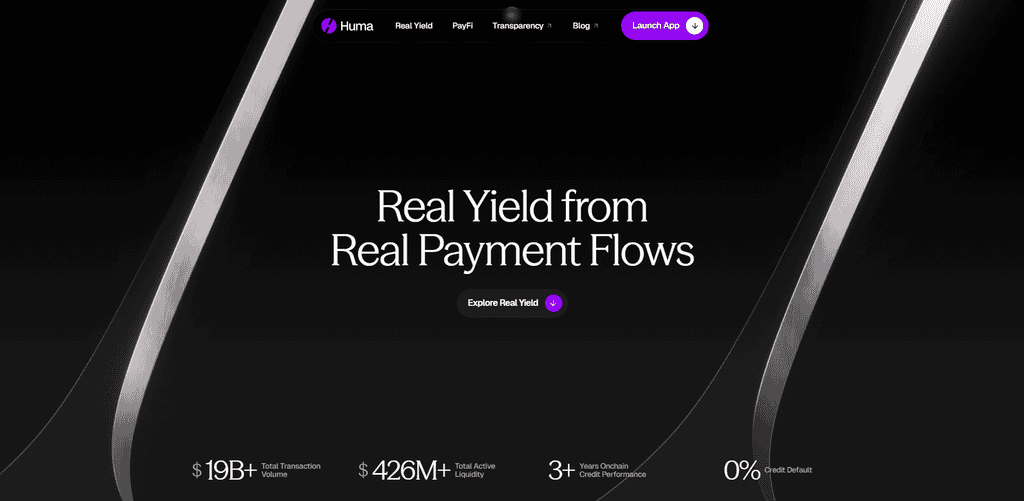
Working capital for payment providers, fintech companies, financial institutions and eligible originators. Investor Opportunities Investors can access pools of payment-financing and tokenized credit structures with payoffs depending on pool terms and underlying performance.
Blockchain / Protocol Support Huma has developed blockchain infrastructure for tokenization and on-chain financing, with network support depending on the product. Risk Management: Limit credit exposure through receivables verification, first-loss protection, structured tranches, and repayment monitoring.
Advantages
- Applies experience in structured DeFi products.
- Options-based historical yield strategies.
- Offers alternative strategy-based investment opportunities.
- Automated vaults can reduce the need for manual trading.
- Exposure to structured financial strategies beyond traditional lending.
Cons
- It is not an exact match with real-world credit lending.
- Options strategies can go wrong in a bad market.
- Risks of smart-contract and transaction execution still exist.
- Former Ribbon products may have changed after the Aevo transition
8. Ribbon Finance
Company Overview: Ribbon Finance is a provider of structured DeFi products while Aevo is a derivatives trading platform. They are not to be considered as one active real-world credit protocol. Core Lending Model: Ribbon has historically relied on options-based strategies and structured vaults, rather than traditional business-credit underwriting.
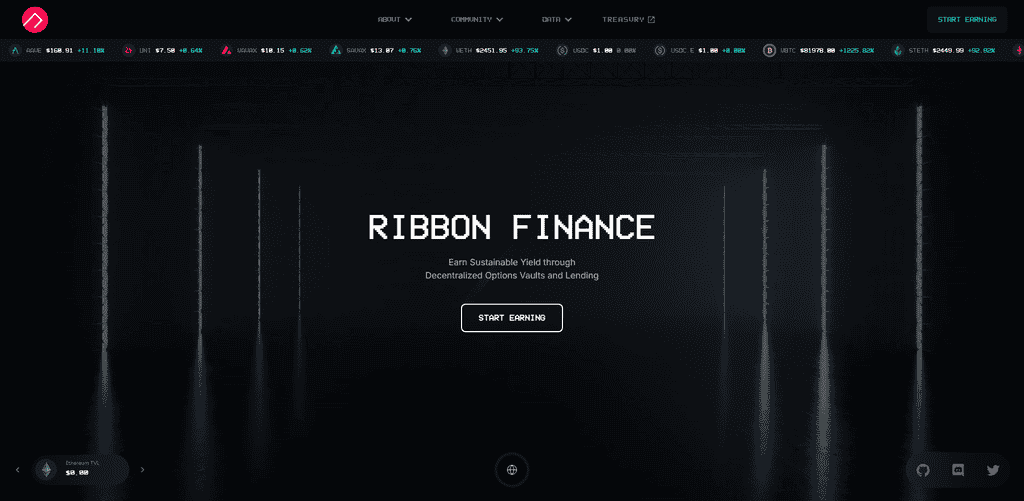
These products are not primarily targeted at traditional business borrowers. Investor Opportunities: Historically, users could access strategy-based yields via structured vaults with market risks.
Ribbon and Aevo have built on top of Ethereum related infrastructure. Risk Management: Relevant risks include smart-contract vulnerabilities, option exposure, liquidity constraints and strategy losses. Check the live status of the product before pitching it as a Goldfinch competitor.
Pros:
- focus on Payment Financing and PayFi Solutions
- Connects liquidity providers to real world financing opportunities.
- Supports payment-linked, receivables-based financing.
- Structured pools can assist in distribution of credit risk.
- Visibility into financing activity on-chain.
Cons
- Payment delays impact expected investor returns.
- Capital losses resulting from defaults of borrowers.
- Withdrawal is subject to terms of pool and available liquidity.
- Risks of smart-contracts, counterparties and regulators are still there
9. Ondo Finance
Ondo Finance is creating conventional financial products, like US Treasury exposure, on blockchain infrastructure. Core Lending Model: Its primary distinction from Goldfinch is tokenized financial assets and yield-bearing products in place of direct unsecured lending to businesses.
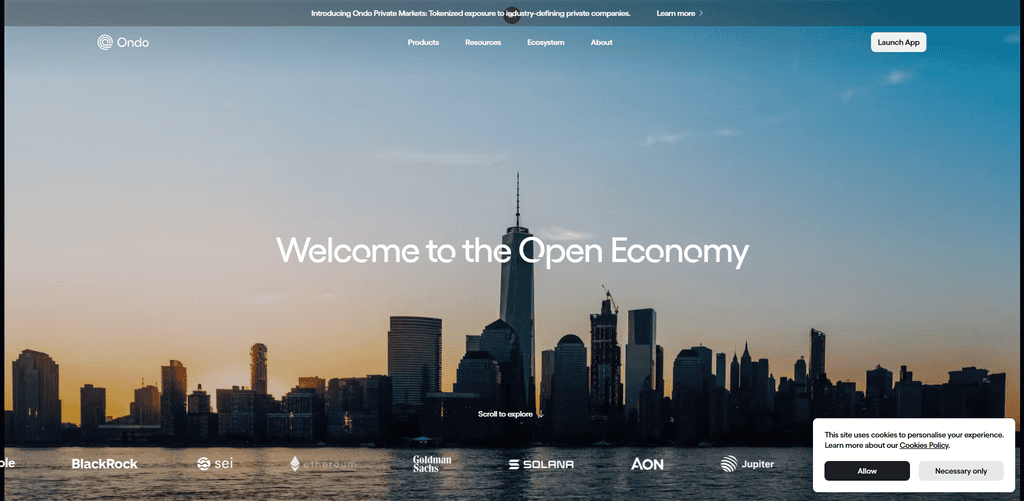
Retail businesses not its defining borrower segment; participates in product-specific arrangements with eligible institutions and financial counterparties. Investor Opportunities: Eligible investors can access tokenized Treasury-related products and other on-chain financial exposures, with jurisdictional restrictions.
Blockchain and Protocol Support: Supported blockchain networks vary by product for Ondo products. Risk Management: Key considerations are the quality of the underlying asset, the custody arrangements, the redemption terms, the intelligent contracts and regulatory compliance.
Pros
- Bringing the conventional financial assets to blockchain networks.
- Offers tokenized investment products related to treasury.
- Supports multiple blockchain networks across chosen products.
- Provides access to traditional fixed income exposures via eligible structures.
- Supports blockchain tracking and transfer of supported assets.
Cons
- Access may be restricted by investor eligibility requirements.
- Product availability is subject to jurisdictional availability.
- Returns depend on underlying assets, fees and terms.
- Tokenized Treasury products do not replicate unsecured business lending directly
10. Mento/ImpactMarket Credit Ecosystem on Celo
Mento and ImpactMarkets are not one unified lending protocol for Celo, but different parts of Celo’s larger financial ecosystem. Core Lending Model: Mento focuses on decentralized stablecoin infrastructure, whereas ImpactMarket has been associated with blockchain-driven financial inclusion and community support.

These are differentiated by initiative, but can include underbanked communities, households and participants in local financial programs. Investor Opportunities Opportunities are specific to the active product; stablecoin or community assistance should not be automatically characterized as investment lending.
Blockchain & Protocol Support Mento is part of Celo’s blockchain ecosystem. Risk Management: Evaluation of stablecoin mechanisms, program funding, borrower repayment capacity and operational sustainability.
Advantages
- Celo provides accessible blockchain-based payment infrastructure.
- Mento offers decentralized stablecoin infrastructure.
- Stablecoins can speed up cross-border financial transactions.
- ImpactMarket has concentrated on community help and financial inclusion.
- Records on the blockchain can improve transparency of fund distribution.
Cons
- Mento is not mainly a business-credit lending protocol.
- Community assistance is not traditional investment lending.
- Stablecoins may have market, reserve and smart-contract risks.
- Availability and operational status of ImpactMarket’s current product may vary.
Conclusion
Goldfinch’s competitors have gone in different directions with real-world credit lending, institutional financing and tokenized assets. Ondo Finance has a greater emphasis on tokenized conventional financial assets, but platforms like Maple Finance, Centrifuge, Clearpool, Credix and Huma Finance provide other opportunities related to lending or credit.
The right option is determined by borrower quality, lending structures, investor eligibility, potential returns, liquidity and risk management. Before selecting a platform, compare existing products, supported blockchain networks, repayment methods, and fees. Most importantly, know that attractive yields do not guaranty profits, and credit defaults or technical vulnerabilities can result in financial losses.
FAQ
What are the top Goldfinch competitors for real-world credit lending?
Maple Finance, Centrifuge, Clearpool, Huma Finance, Credix, and Polytrade are notable alternatives to explore. Each offers different approaches to institutional lending, private credit, payment financing, or real-world asset tokenization.
What makes Goldfinch different from other DeFi lending platforms?
Goldfinch was designed to facilitate crypto-funded lending to real-world borrowers without requiring borrowers to provide traditional crypto collateral for every loan. Its model emphasizes borrower assessment and credit underwriting.
Which Goldfinch alternative focuses on real-world assets?
Centrifuge and Polytrade focus on tokenized real-world assets and credit-related opportunities. Ondo Finance also operates in the RWA sector, particularly through tokenized traditional financial products.
Which platforms support institutional credit lending?
Maple Finance and Clearpool are associated with institutional lending, while Credix and Huma Finance focus on other credit and financing use cases. Their borrower requirements and lending structures differ.