


Institutions need accurate reporting, dependable transaction data, and streamlined crypto accounting, and choosing the right digital asset tax platform is critical. Businesses might want to look at alternatives to Lukka for better integrations, compliance support, or accounting features, although Lukka does provide solutions for institutional tax data and financial reporting.
In this guide, I’ll present the Best Lukka Competitors for Institutional Tax Data detailing their key features, advantages, and disadvantages to help businesses, crypto funds, exchanges, and accounting professionals find the best solution for their operational needs.
How to Choose the Best Lukka Alternative for Institutional Tax Data?
Assess Tax Reporting Capabilities: Select a platform that can offer cost-basis calculations, capital gains reporting, transaction categorization, and tax documentation that is compatible with your institution’s operational and jurisdictional needs.
Make Sure Data is Accurate: Search for solutions that offer trustworthy transaction imports, automated reconciliation, transparent calculations, and traceable records to identify discrepancies and keep consistency in your digital asset tax data.

Assess Crypto Accounting Features: Seek out features such as digital asset subledger management, financial statement production, multi-entity accounting, and reporting capabilities that allow for the integration of cryptocurrency transactions into current financial operations.
Review Compliance Support: Confirm support for relevant tax jurisdictions, regulatory reporting obligations, accounting standards, audit trails, and documentation needs prior to choosing a platform for institutional use.
Compare integrations: Make sure your integrations are compatible with your exchanges, wallets, blockchain networks, ERP platforms and accounting software to minimize manual data entry and ease institutional reporting processes.
Take Security and Data Governance Into Account: Examine controls on access, encryption, data protection policies, permissions and audit logging to safeguard sensitive financial information and address internal governance requirements.
Pricing & Scalability: Look at subscription cost, implementation fees, transaction limits, and additional service charges. Ensure the platform can accommodate growing transaction volumes and business expansion.
Assess Customer Support & Implementation Choose a vendor with adequate onboarding, technical support, documentation and timely assistance to ease the migration process, resolve reconciliation issues and keep a reliable reporting operation.
Key Features to Compare Across Lukka Alternatives
Institutional Tax Reporting: Assess the platform’s ability to generate accurate tax calculations, cost basis methods, capital gains reporting, transaction categorization and tax document generation for your institution’s reporting needs.
Crypto Accounting: Review digital asset subledger functionality, financial statement generation, journal entries, multi-entity accounting, and the capability to integrate cryptocurrency transactions into existing corporate accounting systems.
Transaction Reconciliation: Look for whether the platform merges exchange, wallet, custody and blockchain records and finds missing transactions, duplicate entries, balance discrepancies and classification errors.
Data Accuracy and Audit Trails: Highlight the significance of traceability at the transaction level, transparent calculation methodologies, exception reporting, historical records and audit logs to support financial reviews and reliable institutional reporting.
Compliance & Regulatory Support: Make sure your institution’s digital asset activities are covered by jurisdiction, tax reporting requirements, applicable accounting standards, documentation capabilities and regulatory updates.
Integrations and Data Coverage: Consider supported blockchains, exchanges, custodians, wallets, ERP systems, and accounting software to determine if each solution integrates with your existing financial infrastructure.
Security and Controls of Access: Review encryption, user permissions, authentication options, data governance, audit logging, and security policies to protect sensitive financial information and ensure adequate institutional oversight.
Pricing and Scalability: Look at the costs of subscriptions, implementation, transaction limits, support packages, and multi-entity capabilities to see if the platform still makes sense as your institutional operations grow.
Key Points
| Platform | Key Point |
|---|---|
| TaxBit | Provides institutional-grade crypto tax reporting, accounting, and regulatory compliance tools for enterprises, financial institutions, and government agencies. |
| Cryptio | Offers digital asset accounting, tax reconciliation, and ERP integrations designed for large enterprises and institutional finance teams. |
| Bitwave | Delivers crypto accounting, tax tracking, treasury management, and automated bookkeeping for businesses with complex digital asset operations. |
| Ledgible | Specializes in institutional crypto tax reporting, portfolio accounting, and compliance solutions for enterprises, funds, and accounting firms. |
| TRES Finance | Combines digital asset accounting, tax management, portfolio reconciliation, and financial reporting in a platform built for institutional users. |
| Cryptoworth | Provides multi-entity crypto accounting, transaction reconciliation, tax calculations, and audit-ready financial reporting. |
| CoinTracking Enterprise | Offers detailed transaction tracking, tax reporting, cost basis calculations, and compliance features for professional and institutional users. |
| Koinly Business | Supports enterprise crypto tax reporting with extensive exchange integrations, transaction classification, and audit documentation. |
| CoinLedger Enterprise | Enables organizations to automate crypto tax calculations, reconciliation, and reporting across multiple wallets and exchanges. |
| ZenLedger Enterprise | Provides institutional tax reporting, accounting workflows, portfolio tracking, and compliance support for large digital asset holders. |
1. TaxBit
TaxBit is a digital asset tax and compliance platform designed for business, exchanges, brokers and financial institutions. Its enterprise accounting features enable organizations to aggregate blockchain transactions, reconcile balances, calculate cost basis and gains or losses, and produce financial reports.
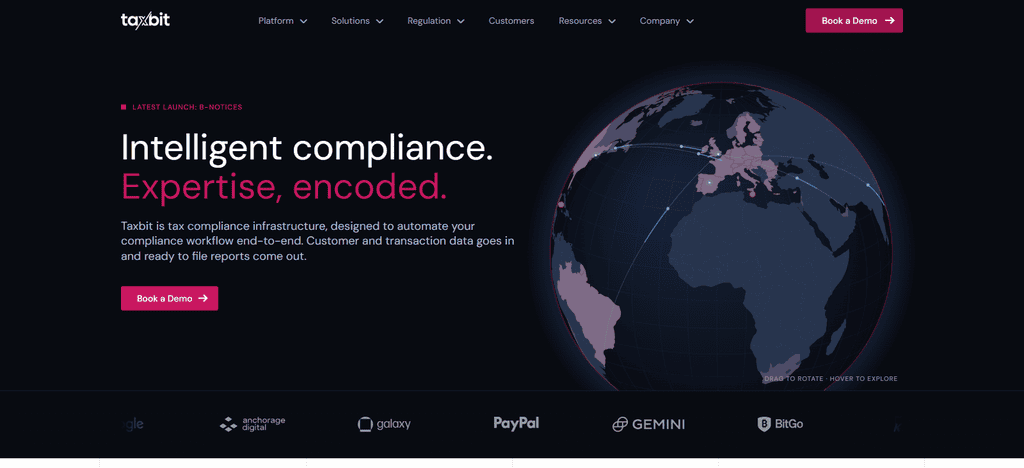
TaxBit supports tax information reporting and regulatory workflows. Its accounting tools include FASB and IFRS reporting support, customizable transaction categorization, and ERP integrations.
Finance teams use data reconciliation and audit trails to investigate discrepancies and maintain traceable records. Its comprehensive compliance focus makes it a strong choice for institutions wanting both digital asset reporting and accounting automation.
Advantages
- Enterprise tax reporting: Supports digital asset tax and compliance reporting workflows.
- Automated Calculations: Facilitates processing of transaction data and calculation of gains and losses.
- Compliance orientation. Best for companies with sophisticated digital asset reporting needs.
- Institutional Use: For brokers, exchanges and financial organizations.
Cons
- Pricing: Enterprise pricing may require a sales consultation.
- Implementation effort: Complex deployments can require technical and accounting resource .
- Configuration requirements: Transaction classification and reporting rules may need to be reviewed.
- Product complexity – Smaller organizations may not require all the capabilities of its full enterprise
2. Cryptio.
Cryptio is an institutional digital asset data and accounting platform built for crypto businesses, exchanges, asset managers and regulated financial institutions. It aggregates and normalizes blockchain and exchange activity for simpler reconciliation, accounting, financial reporting and tax calculations.

Features include cost-basis tracking, realized and unrealized gains, multi-entity reporting and integration with established accounting systems. Cryptio enables finance teams to investigate inconsistencies before closing their books by focusing on data completeness, traceability at the transaction level and automated exception reporting.
Organizations contemplating it against Lukka should assess its coverage of blockchains, reporting requirements, and integration needs.
Benefits
- Crypto Accounting: Accounting and financial reporting for digital currencies.
- Transaction reconciliation: merges records from the blockchain and the exchange.
- Audit-ready: Provides traceable records and financial review workflows.
- Enterprise integrations – Integrates with select accounting & ERP systems.
Cons
- Cost: It can be difficult to compare prices until you get a quote.
- Learning curve: Complex accounting workflows may need specialist expertise to perform.
- Setup requirements: Data sources, accounting rules need proper setup
- Possible overkill: Smaller companies may not need institutional-level functionality
3. Bitwave
Bitwave is an enterprise crypto accounting platform that allows businesses to manage digital currencies within their existing financial workflows. Its key areas of focus are transaction reconciliation, digital asset subledger accounting, financial reporting and integration with accounting and ERP systems.
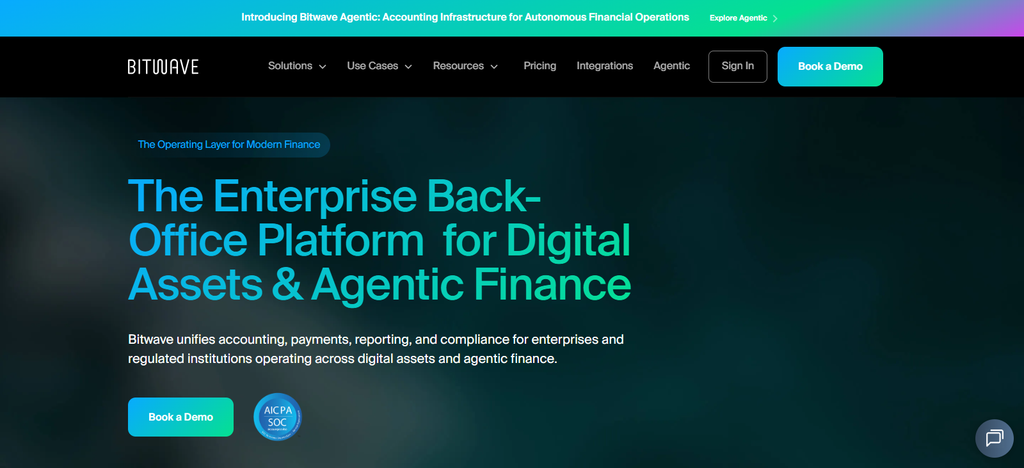
Such capabilities can help finance teams organize blockchain activity, classify transactions and prepare accounting records for review. Companies should review tax calculations, reporting formats and jurisdictional requirements supported by their chosen configuration for institutional tax workflows.
Bitwave is especially relevant for companies that require digital asset accounting in addition to traditional corporate finance functions and not a stand-alone investor tax calculator.
Benefits
- Enterprise subledger: Enables digital asset accounting in the corporate finance function.
- ERP connectivity: Integrates with accounting and enterprise systems of your choice.
- Reconciliation tools: Helps to reconcile and organize crypto transaction records.
- Financial reporting: Enhances accounting workflows for companies with digital or standard assets.
Cons
- Enterprise pricing: Can be pricey for small businesses.
2.Implementation workload: ERP integration needs dedicated technical support. - Accounting knowledge. Teams need to know the accounting requirements for digital resources.
- Too complex: Smaller businesses may not need its extensive feature set
4. Ledgible
Ledgible provides digital asset accounting and tax reporting solutions for accounting professionals, financial institutions and businesses with cryptocurrency transactions. The emphasis is on products that arrange transaction data, assist in crypto tax calculations, and aid professionals in preparing tax-related reports.
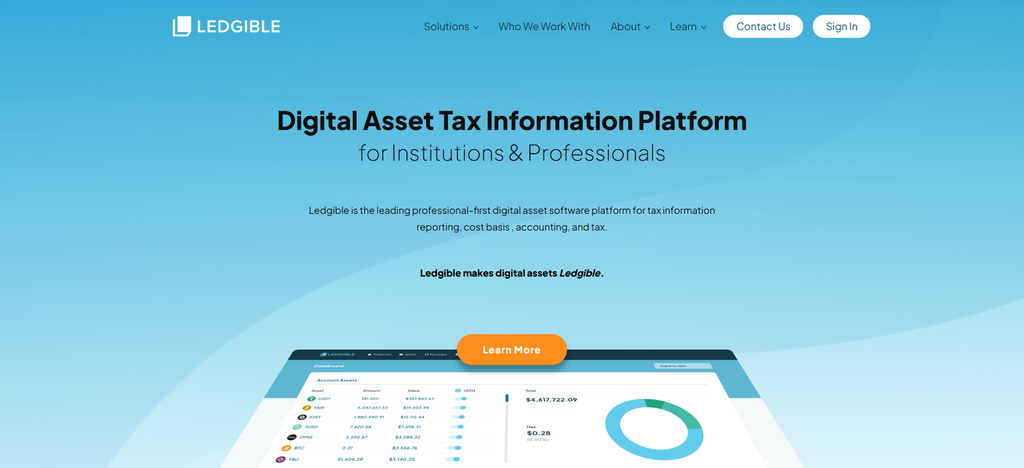
Institutional users primarily evaluate cost-basis methodology, transaction reconciliation, reporting outputs and compatibility with existing accounting workflows. Having source records and calculations that are reliable and traceable is important when reviewing digital asset tax positions or responding to audit requests.
Before choosing Ledgible as an alternative to Lukka, organizations need to verify its current enterprise capabilities, supported jurisdictions, integrations, and whether it can handle their transaction volumes.
Pros
- Tax reporting: Assists in generating digital asset tax calculations and reports.
- Professional Workflows: Relates to accounting firms and tax professionals.
- Transaction organization: Helps to aggregate crypto transaction records.
- Accounting integration: Supports certain accounting and financial reporting workflows.
Cons
- Feature verification: available capabilities in different packages for professional vs enterprise.
- Complex transactions: Unusual DeFi activity may need to be reviewed further.
- Integration requirements: Ensure compatibility with existing systems.
- Manual validation: You might need to correct imported transactions and classifications.
5. TRES Finance
TRES Finance is a digital asset financial data and accounting platform for crypto companies and institutional finance teams. It’s all about collecting blockchain and exchange activity, reconciling transactions and building structured data for accounting and reporting.
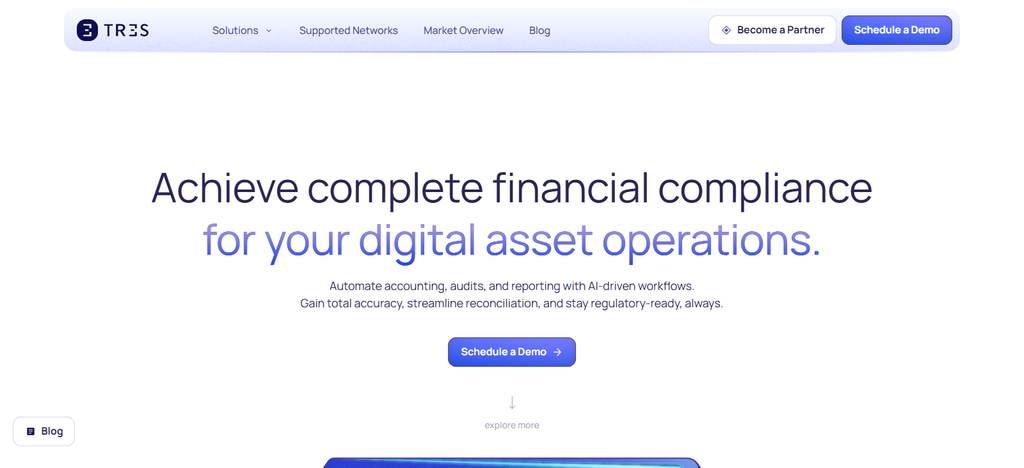
Its coverage of DeFi, staking and other on-chain activity may be relevant for organizations with complex digital asset operations. Data reconciliation enables finance teams to identify discrepancies between wallets, exchanges, and internal records.
If an institution is comparing TRES to Lukka, it should look at things like supported networks, cost-basis methodologies, tax reporting capabilities, accounting integrations and audit requirements to determine whether the platform meets its needs.
Benefits
- Blockchain Data aggregation: Collects digital asset activity from sources it supports.
- Reconciliation functions: Helps to figure out the difference across wallets and exchanges.
- DeFi coverage – for businesses with complex on-chain transactions
- Institutional reporting: Supports structured accounting and audit-oriented work flows.
Cons:
- Check integration: Buyers should ensure compatibility with their existing systems.
- Implementation effort: Complex transaction environments need careful configuration.
- Specialist knowledge DeFi and digital asset accounting may require experienced finance teams.
- Change of ownership: Buyers should check product availability, support and roadmap commitments following Fireblocks’ purchase in January 2026
6. Cryptoworth
Cryptoworth is an enterprise digital asset accounting platform that bridges the gap between blockchain transactions and corporate accounting systems. Features include automated subledger management, wallet and exchange data aggregation, cost-basis tracking and financial reporting built for institutional workflows.
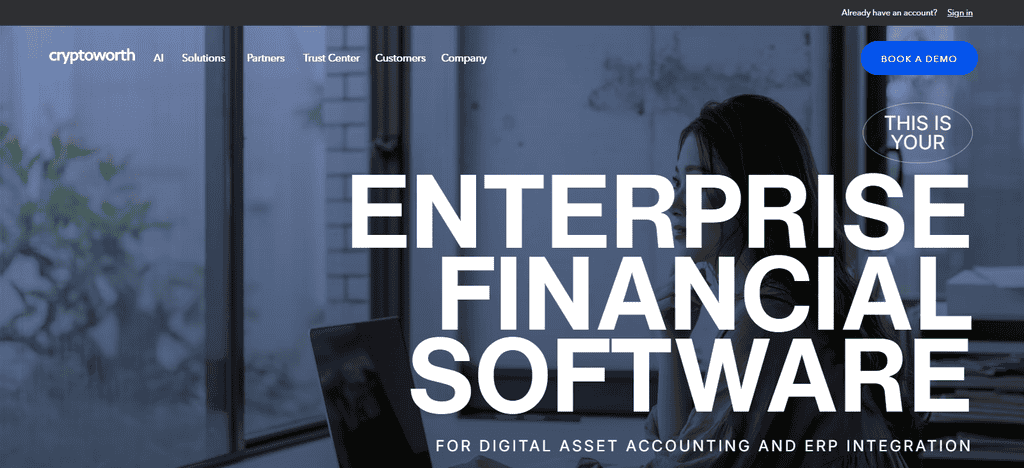
It also supports IFRS and GAAP-based reporting and integrations with systems such as NetSuite, Sage and QuickBooks. Moving transaction records into a structured ledger can help accounting teams with reducing manual data entry and investigating reconciliation differences.
Cryptoworth could be a competitor to Lukka for businesses that are focused on accounting automation, data consistency, audit-ready records, and scalable digital asset reporting.
Pros
- Accounting Automation: Automatically monitor electronic assets and handle transactions.
- Ledger integration. This links crypto transactions with accounting records.
- Data unification: Ties supported blockchain, exchange and custody sources.
- Financial reporting: Enables accounting-focused reporting and reconciliation processes.
Cons
- Accounting knowledge. Complex reporting may require an experienced accountant.
2.Setup complexity: Wallet connections and account mappings need careful configuration. - Data cleanup: Manual correction may be needed for missing or misclassified transactions.
- Enterprise proof: Buyers need to check the specific features and integrations included in their chosen plan.
7. CoinTracking Business
CoinTracking is a platform for tracking cryptocurrency portfolios and calculating taxes; it aggregates the transaction history from supported exchanges and wallets. The core features are import of transactions, tracking of portfolio, capital gains calculations and tax report generation.
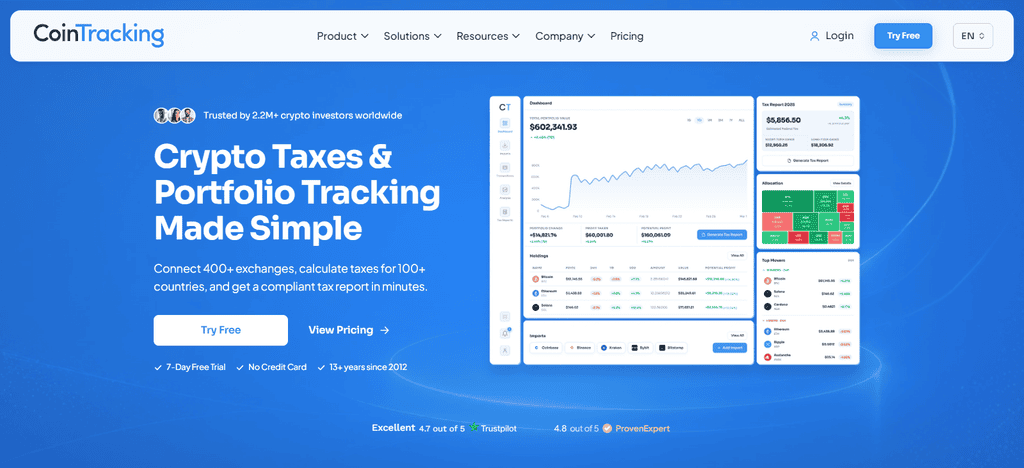
These functions may be useful for professional users who want to combine trading records and review taxable activity across multiple accounts. Institutional buyers should segregate these tax-focused capabilities from enterprise-grade financial accounting, ERP integration and regulatory reporting infrastructure.
Before you consider CoinTracking a Lukka replacement, confirm availability of business or professional plans that meet your needs, supported integrations, transaction limits, report formats and jurisdiction specific tax calculations for your use case.
Benefits
- Transaction history: Records all your crypto transaction history.
- Tax calculations: Capital gains, losses and income reporting supported
- Portfolio analytics: Provides tools to analyze holdings and transaction performance.
- Import options: Offers several options for importing and consolidating transaction data.
Disadvantages
- Interface complexity: Many reports and settings will take some time to learn.
- Import corrections: Incomplete records may require reconciliation work.
- Enterprise Suitability: Portfolio tax tools are not a replacement for a full corporate accounting subledger.
- Plan limitations: Transaction limits and professional features are based on offering selected
8. Koinly for Business
Koinly is a crypto tax platform that imports transaction history from supported exchanges, wallets and blockchain networks to calculate capital gains and income. Key strengths are transaction categorization, cost basis calculations, tax summaries, and downloadable tax reports.
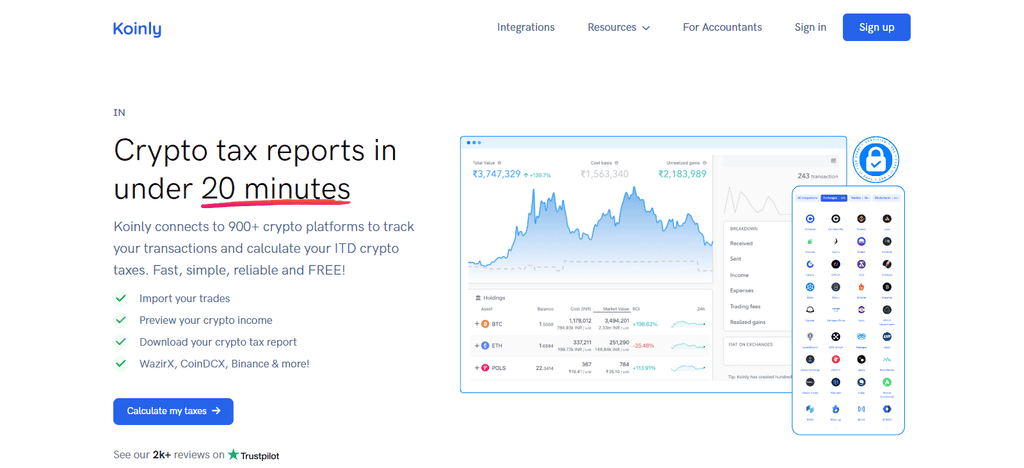
These features can help accounting professionals and crypto businesses organize digital asset activity and identify records for review. But reporting taxes for investors is different from financial accounting and regulatory reporting for institutions.
Organizations looking at Koinly as a Lukka alternative should check for availability of business-plan, multi-client functionality, supported tax jurisdictions, integrations and whether its reporting capabilities meet their accounting and compliance requirements.
Pros
- Automated tax calculations: Calculates crypto gains, losses and income based on imported transactions.
- Wide integrations: compatible with many exchanges, wallets and blockchain data sources.
- Tax reports: Produces reports for supported jurisdictions.
- Accountant work flows: Professional features help tax preparers handle multiple clients.
Drawbacks
- Tax-focused functionality: It may not include all the features of an institutional accounting platform.
- Transaction cleanup: Complex DeFi histories might need manual fixes.
- Cost of reports per year: Downloadable reports may necessitate a paid plan for each respective tax year.
- Business requirements: Multi-entity accounting and ERP requirements should be validated prior to purchase
9. CoinLedger Business
CoinLedger is a cryptocurrency tax reporting software that helps users track transactions, calculate gains/losses and generate tax reports. Its professional services are of interest to accountants and tax practitioners who are facing digital asset reporting for a number of clients.
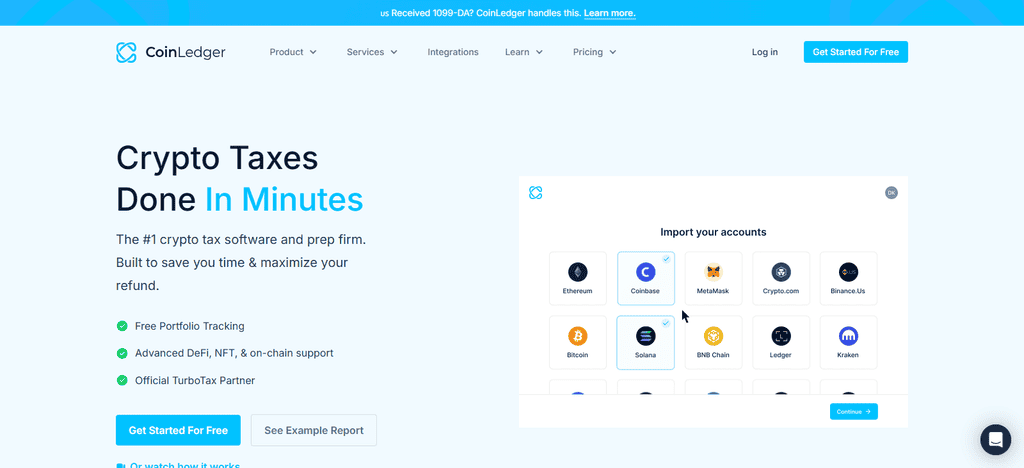
Automated transaction imports and categorization can minimize manual record preparation and consolidated transaction histories can help professionals review taxable activity. Institutional users, in contrast, prioritize key considerations such as supported exchanges, wallet integrations, cost-basis methods, report formats, and data validation processes.
If you’re in the market for a Lukka competitor, make sure to look into the professional and business features and whether they meet enterprise accounting needs.
Advantage
- tax report preparation Helps in calculating crypto capital gains and income.
- Transaction imports: Combines activity from supported wallets and exchanges.
- Professional services: Flows designed for accountants can handle multiple client accounts.
- Easy interface: Guided workflows make routine tax reporting simple.
Cons
- Accounting limitations: Tax reports are not a complete corporate general ledger.
- Complex transactions: Certain DeFi and specialized trading activities may require further review.
- Manual corrections: wrong imports / classification of transactions are affecting the calculations.
- Enterprise verification. Buyers should verify the availability of the enterprise package and required integrations
10. ZenLedger Enterprise
ZenLedger is a cryptocurrency tax software provider that focuses on organizing digital asset transactions and preparing tax calculations and reports. It has been able to import transactions, calculate cost basis, report capital gains and losses and facilitate tax preparation workflows.
These features enable users and tax professionals to consolidate activity across the supported wallets and exchanges. But institutional buyers should not expect investor-focused tax tools to offer the same features as enterprise accounting platforms.
Before you think of switching to ZenLedger, ensure that ZenLedger can provide the following: Enterprise solutions, Support for multiple clients, Can be integrated with other tools, Audit trail, Limits on transactions, Reporting to specific jurisdictions.
Advantages
- Crypto tax calculation Helps to organize transaction histories and calculate taxable gains/losses.
- Import transactions: Allows importing records from compatible wallets and exchanges.
- Generate tax reports: Assists in generating reports for supported countries.
- Professional use: Can help tax professionals dealing with digital asset records.
Drawbacks
- Enterprise availability: See if the enterprise offering you want is available today.
- Accounting scope. Tax reporting may not substitute for a full institutional accounting subledger.
- Data Validation: Manual investigation may be necessary to deal with missing transaction histories and cost basis.
- Integration requirements: Before you commit, verify ERP compatibility, multi-entity support, and audit-trail capabilities.
Conclusion
The key to selecting the best Lukka alternative for institutional tax data is to align with an organization’s reporting requirements, accounting complexities, and compliance focus areas. If you’re looking for enterprise tax workflows, digital asset accounting and financial reporting, platforms like TaxBit, Cryptio and Bitwave are worth checking out.
Other options like Ledgible, TRES Finance and Cryptoworth may serve particular reconciliation and accounting needs, while tax-focused tools need closer assessment for institutional suitability.
Compare the accuracy of data, audit trails, blockchain coverage, ERP integrations, security, pricing and scalability before you decide. The right solution should provide reliable reporting that meets the operational and regulatory needs of your institution.
FAQ
What are the best Lukka competitors for institutional tax data?
Some notable alternatives include TaxBit, Cryptio, Bitwave, Ledgible, TRES Finance, Cryptoworth, CoinTracking, Koinly, CoinLedger, and ZenLedger. Their suitability depends on institutional tax reporting, accounting, and integration requirements.
Which Lukka alternative is best for institutional tax reporting?
TaxBit is worth evaluating for enterprise tax compliance and reporting, while Ledgible may suit professional tax workflows. The best choice depends on jurisdiction coverage, reporting requirements, and available enterprise features.
What features should institutions compare when choosing a Lukka alternative?
Institutions should compare tax calculations, cost-basis tracking, transaction reconciliation, accounting capabilities, audit trails, compliance support, integrations, security, pricing, and scalability before selecting a provider.
Are Lukka alternatives suitable for enterprise crypto accounting?
Yes, several alternatives offer digital asset accounting, transaction reconciliation, and financial reporting. However, institutions should verify multi-entity support, ERP integrations, internal controls, and accounting standards compatibility.
How important is data accuracy in institutional tax reporting?
Data accuracy is essential because missing transactions, incorrect cost basis, and classification errors can affect tax calculations and financial reports. Reconciliation tools and traceable records help identify discrepancies.