

To run a Lightning Network node, you need the right tools to ensure Bitcoin payments run smoothly, monitor channels and keep liquidity. But, it can be hard to pick the best solution as each tool has different features, management options and security controls.
This guide presents the Best Lightning Network Node Management Tools such as Ride The Lightning, ThunderHub, Balance of Satoshis and various other popular options to compare their features, understand the potential risks and find the right tool for your needs.
What to Look for in a Lightning Network Node Management Tool
User-friendliness: Opt for a tool that provides a clean user interface, simple navigation, and intuitive controls that enable both novices and experienced operators to manage their Lightning nodes effectively without getting mired in unnecessary technical details.
Channel Management: Look for features that simplify opening, closing, monitoring, and maintaining payment channels and provide clear visibility into channel status, capacity, connectivity, and operational performance.

Liquidity Management: Select tools that track incoming and outgoing liquidity, pinpoint imbalances, and facilitate channel rebalancing, thereby ensuring payment reliability while controlling associated transaction fees.
Payment Monitoring: Prioritize tools that monitor payment activity, invoice status, forwarding outcomes, and failed transactions, enabling operators to rapidly detect issues and ensure dependable Lightning Network payment operations.
Security and Access Control: Assess authentication, permissions, credentials protection, and secure remote access to reduce unauthorized access, safeguard node operations, and lower the risks of exposing administrative interfaces.
Compatibility and Integration: Verify the compatibility with implementations such as LND and Core Lightning, and integrations for wallets, dashboards, APIs, and any other services you need to support your existing node environment.
Automation and Analytics: Look for tools that provide automated rebalancing, fee management, performance reports, and routing analytics in order to reduce manual labor, improve operational decisions, and monitor node efficiency on a regular basis.
Cost and Maintenance: Look at licensing fees, infrastructure needs, update frequency, documentation and backup options to get an idea of long-term costs, and make sure your choice is practical, reliable and manageable.
How to Choose the Right Lightning Network Node Management Tool
Assess your tech skills: Select a tool suitable to your experience level. Graphical dashboards may be more suitable for beginners while command-line utilities may be more suitable for advanced operators that require more control and customization.
Identify what you need from management: Find out if you need channel management, payment monitoring, liquidity optimization, routing analytics, or node administration. Choose a tool that directly supports your most important operational tasks.
Verify Node Compatibility: Ensure the tool supports your Lightning implementation, such as LND or Core Lightning. Compatibility makes the integration easier, reduces the configuration problems, and provides reliable access to the essential node-management functions.
Security Features: Check for secure authentication, control of access, credential storage, and regular updates. • Understand how the tool handles sensitive node actions and if the configuration meets your security requirements.
Compare Liquidity Management Capabilities If payment routing matters to you, check for features such as channel monitoring, rebalancing, and inbound liquidity. Choose tools that leave payment options open, but don’t add a lot of extra fees or operational complications.
Research Automation Options: Search for automation options that meet your needs, including fee changes, rebalancing and monitoring alerts. Automated operations must be configurable and provide adequate oversight to avoid unwanted operations.
Cost and maintenance evaluation: Subscription fees, hardware requirements, installation effort, documentation, update frequency, etc. When choosing a tool for personal use or business operations, think about the long-term maintenance responsibilities.
Test for Scalability and Reliability: Performance assessment Monitoring accuracy, recovery options and support for increased activity in the channel. Select a solution that can meet today’s requirements, while allowing for future operational needs.
Key Points
| Tool | Key Point |
|---|---|
| Ride The Lightning (RTL) | Popular web-based Lightning node management dashboard that supports LND, Core Lightning, and Eclair, with channel management, payments, reports, swaps, and multi-node control. |
| ThunderHub | Modern browser-based node manager focused on channel management, liquidity monitoring, rebalancing, payments, and detailed Lightning analytics. |
| Balance of Satoshis (BOS) | Powerful command-line toolkit for advanced node operators, offering channel rebalancing, fee management, routing analysis, and automation features. |
| Litd (Lightning Terminal) | Lightning Labs’ management suite that combines node administration, liquidity management, Loop services, and Taproot Asset capabilities. |
| Lightning Shell (lncli) | Official command-line interface for LND nodes, providing complete control over channels, peers, invoices, payments, and routing operations. |
| LNDg | Comprehensive web GUI for LND nodes featuring automated channel recommendations, peer management, fee optimization, and performance analytics. |
| Charge | Lightweight node management interface that simplifies payment requests, invoicing, user accounts, and Lightning service deployment. |
| BTC RPC Explorer | Open-source Bitcoin and Lightning monitoring tool that provides node statistics, channel visibility, transaction tracking, and network insights. |
| Amboss Space | Node reputation and management platform offering liquidity tools, channel marketplace access, network analytics, and node performance monitoring. |
| RaspiBlitz Web Interface | Integrated management dashboard for RaspiBlitz users, allowing monitoring, channel operations, backups, updates, and Lightning service administration. |
1. Ride The Lightning (RTL)
Ride The Lightning (RTL) is one of the most popular web-based tools for managing Lightning Network nodes. The Lightning Network is designed to make Bitcoin transactions fast and cheap by taking payments off of the blockchain, but still keeping Bitcoin’s security.
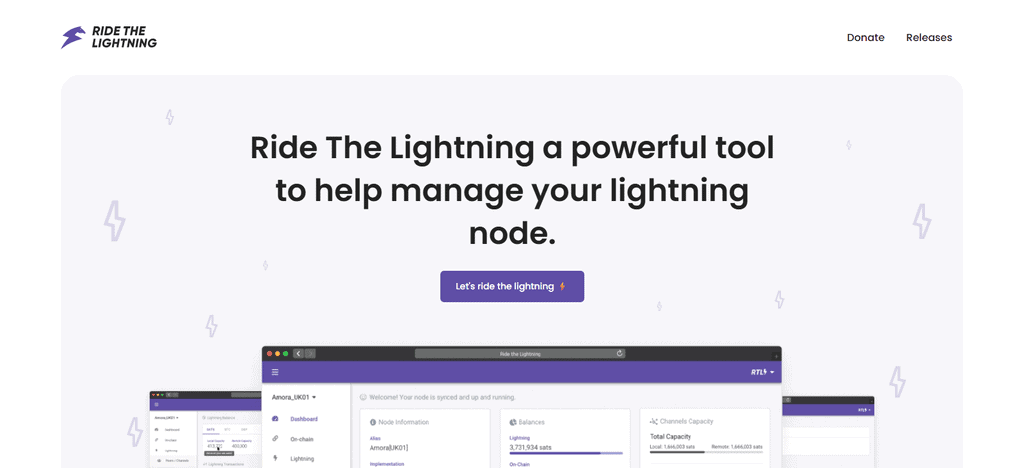
RTL offers a simple dashboard to manage channels, make payments, create invoices, watch peers and track routing activity to simplify node management. It supports a few implementations like LND, Core Lightning and Eclair.
It makes daily operations easier with the monitoring and management features it offers, making it a good choice for both new and veteran Lightning node operators.
Main Features
- Send and receive lightning payments.
- Opening, closing and supervision of channels
- Nodes and transaction reports Dashboards.
- Routing fee and payment activity monitoring.
- Supports multi-node management and channel backup.
Key for risk
- Weak passwords or exposed interfaces may permit unauthorized access.
Payments can be disrupted by incorrect channel operations. - Poor backup practices can make node recovery more difficult.
- Sensitive node controls may be exposed due to misconfiguration of authentication
2. Thunderhub
ThunderHub is a modern lightning network management platform that makes node management easy and visual. The Lightning Network is primarily used to scale Bitcoin by providing instant and cheap transactions.
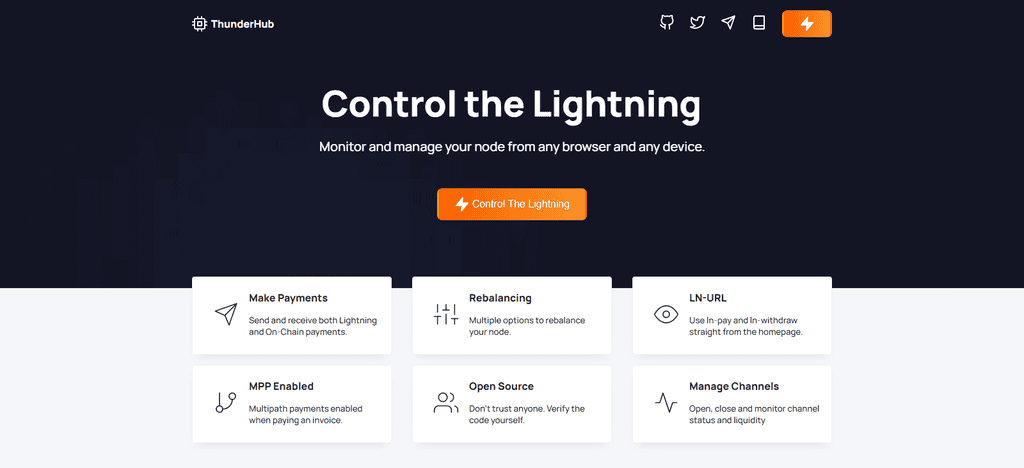
ThunderHub is a web base dashboard that enables users to see liquidity, channel management, payment history and node performance in real-time. It is built mostly for LND based nodes and has a smooth user experience.
Automation isn’t a big focus, but it does offer some useful operational insights that simplify node maintenance. ThunderHub is perfect for people who are looking for a nice and easy to use management solution.
Basic Features
- Management of lightning and on chain payments.
- Monitoring of channel opening, closing and liquidity.
- Rebalancing tools for channels.
- Support for multipath payments.
- Transaction reports and forwarding payments monitoring.
Key Risks
- Web access exposure can open doors to unauthorized control.
- Node compromise from weakly protected credentials
- Wrong rebalancing may generate fees with no improvement of liquidity.
- Old software may have known vulnerabilities that have not been patched
3. Balance of Satoshis (BOS)
Balance of Satoshis (BOS) is a powerful command line toolkit for advanced Lightning Network operators. The Lightning Network depends on good channel liquidity and routing, and BOS helps optimize these with specific management commands.

It is compatible with LND nodes and features automation options for channel rebalancing, fee management, route analysis, and performance tracking. These features help operators to improve routing efficiency and maximize node profitability.
BOS is aimed mainly at technical users, developers and professional operators who prefer scripting and advanced controls over graphical interfaces.
Key Features
- Details of LND balance queries.
- Handling on-chain and Lightning balances.
- Sending payments via command-line operations.
- Retrieving information about channels and peers.
- Reporting on fees, payments, and node activity.
Major Risks
- Errors at the command line can affect funds or payment processes.
- Wrong commands can cause undesired outcomes.
• Having access to privileged node credentials exposes wallet operations. - Limited graphical guidance makes it difficult for beginners to tackle complex tasks
4. Litd (Lightning Terminal)
Lightning Terminal, or Litd for short, is a node management suite developed by Lightning Labs. The Lightning Network is designed to provide scalable bitcoin payments and Litd improves that experience by providing integrated liquidity and node management services.
The platform is well integrated with LND nodes and offers tools for channel management, liquidity optimization and access to Lightning Labs services such as Loop.
Its automation features help to simplify node administration and streamline complex liquidity operations. Litd is especially useful for operators who want advanced functionality while remaining in the Lightning Labs ecosystem.
Main Elements
- A single point of access for Lightning Labs node-management services.
- Control liquidity in the channel with built-in tools.
- Looping for on-chain to Lightning and vice-versa swaps.
- Channel leasing and liquidity services based on pools.
- Management via browser through Lightning Terminal.
Principal Risks
- Remote access misconfigurations can expose node controls.
- Swaps and liquidity operations may incur fees or financial losses.
- Liquidity-management workflows may be affected by service outages.
- Poor credentials management can affect access to node services
5. Lightning Shell (lncli)
Lightning Shell or lncli is the official command line interface to Lightning Network Daemon (LND). The Lightning Network enables scalable Bitcoin payments and lncli puts you in the driver’s seat with direct control over nearly every aspect of your Lightning node.
Users can open or close channels, manage peers, send payments, create invoices, and review transaction activity, all from the command line. lncli supports scripting which provides powerful automation possibilities for repetitive operational tasks.
It is fully compatible with LND environments and best suited for developers, system administrators and experienced node operators.
Key Features
- Control LND node via command line.
- Opening, closing and inspection of channels.
- Lightning invoice creation and payment execution.
- Wallet balance and transaction related questions.
- Node diagnostics and peer management.
Major Risk
- Wrong commands might lead to undesired transactions or channel actions.
- It might leak administrative credentials and compromise the security of nodes.
- Errors in command line may cause interruption in operations.
- The learning curve is steeper as there is limited visual guidance built in
6. LNDg
LNDg is a complete web-based management platform built specifically for LND nodes. Successful operation of the Lightning Network requires well managed channels and liquidity, and LNDg helps operators optimize both. It provides channel recommendations, fee management tools, peer monitoring, performance tracking and routing analytics.
Automation features can assist with operational decisions, and to make things more efficient. For node operators already using that implementation, integration is straightforward, as it is tailored to LND. LNDg is most suitable for intermediate and advanced users that want to gain more insight into node performance and profitability.
Features
- LND node monitoring (web based).
- Analysis of channel performance & cash flow.
- Automation of channel rebalancing.
- tracking fee and routing performance.
- Transmission Statistics and Service Reports
Major Risks
- Automation settings may cause undesired rebalancing activity.
- Misconfigured fees can negatively impact routing performance.
- Poor web interface security may expose node controls.
- Compatibility issues could affect monitoring or automation
7. Charge
Charge is a lightweight management tool for the Lightning Network that focuses on payments and user-facing applications. Charge makes it easy to create invoices and get paid using the Lightning Network’s ability to move Bitcoin fast and cheap. It connects to LND nodes and gives you a simple interface to manage Lightning transactions.

Automation features cut down on manual payment processes and allow for the deployment of services to merchants and developers. It’s particularly useful for businesses, online services and developers who want to incorporate Lightning payments into their applications without having to build out complex infrastructure.
Main Features
- Merchant and application lightning payment processing.
- Creating invoices for customer payments.
- Payment status and settlement monitoring.
- API integrations with applications
- Support for Lightning based checkout workflows.
Major risks
- Checkout operations can be disrupted by payment-processing failures.
- A misconfigured API can expose payment functionality.
- Bad invoice processing can lead to reconciliation issues.
- Service availability might depend on the underlying Lightning node.
8. BTC RPC Explorer
BTC RPC Explorer is a Bitcoin and Lightning monitoring and analytics application. The Lightning Network is based on transparency and proper node oversight and this tool helps users to see channel information, transaction activity and node stats.

It is compatible with Bitcoin Core and related infrastructure, and can be useful for operators looking for operational insights. It’s not going into the weeds of advanced channel automation, but it’s an excellent job of laying out detailed information in an accessible interface. It is widely used by researchers, enthusiasts and node admins for monitoring and analysis purposes.
Main Features
- Looking at the bitcoin blockchain and transactions.
- Block, transaction, and address information look-up.
- Inspection of mempool activity.
- Access to blockchain data self-hosted
- Bitcoin node connectivity and data retrieval based on RPC.
Major Risks
- Security vulnerabilities or node information may be exposed to the public.
- The Bitcoin node is accessible via unrestricted RPC
- Improperly configured, sensitive operational data can be exposed.
- Nodes may have missing or stale data due to lack of sync.
9. Amboss Space
Amboss Space: Professional platform for Lightning Network, focused on node discovery, reputation and liquidity services. The Lightning Network is a network of interconnected nodes, and Amboss offers operators visibility and identifies high-value channel opportunities.
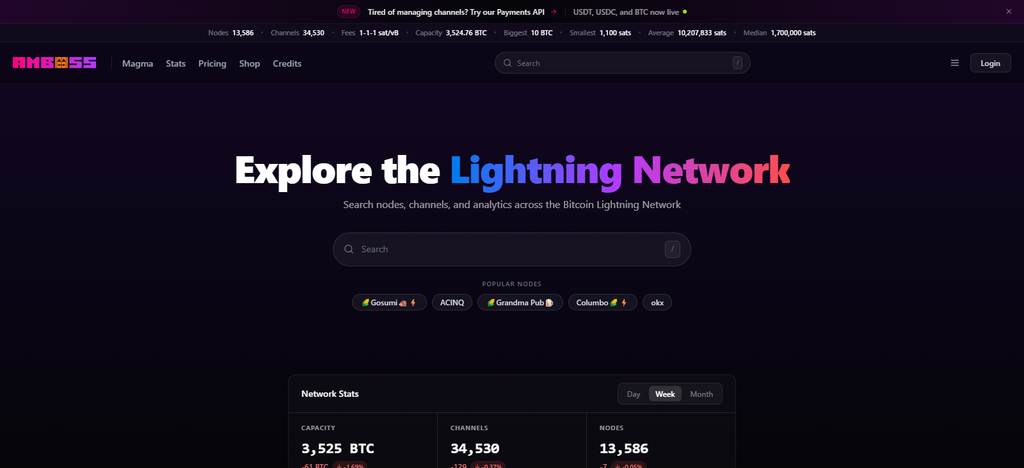
The platform provides network analytics, liquidity tools, node performance monitoring and reputation tracking features. It’s interoperable with major Lightning implementations and helps users to understand better their place in the network.
Amboss Space is a boon for pro operators, routing nodes, and businesses looking to maximize their Lightning Network involvement.
Main Features
- Found lightning node and channels
- Analysis of the public nodes’ channels and capacity.
- Checks for routing fee and channel policy.
- Monitoring node availability and connectivity.
- Performance analytics and network graph exploration.
Important Risks
- Real time channel liquidity may not be reflected in public network data.
- Routing decisions can be impacted by incomplete or delayed data.
- Operational patterns can be inferred from public node information.
- Advanced analytics and monitoring features may be subscription based.
10. RaspiBlitz Web Interface
The RaspiBlitz Web Interface is a management dashboard for Lightning nodes based on RaspiBlitz. The Lightning Network allows instant Bitcoin transactions and this interface makes it easier for home operators to self-host and manage their node. Users can watch channels, do backups, see system health, do updates, and oversee Lightning services through a browser.
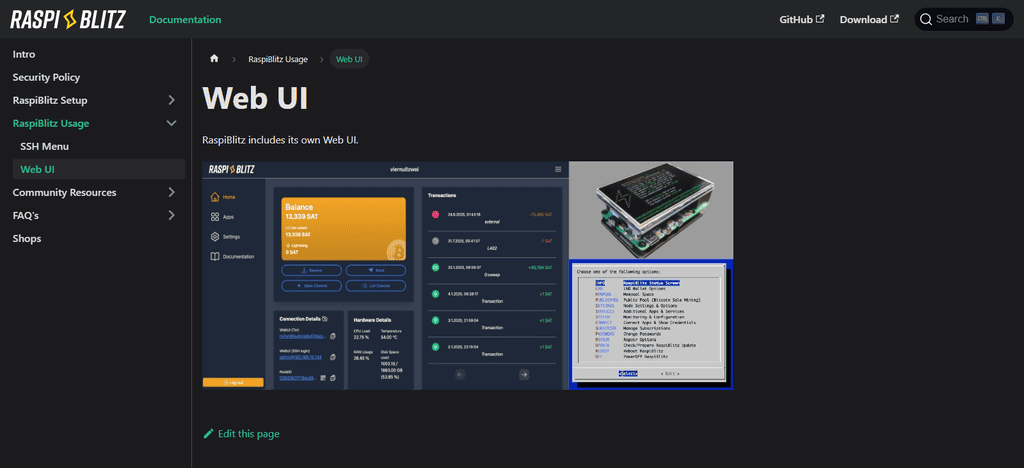
It is designed to integrate seamlessly with RaspiBlitz deployments, while keeping technical complexity to a minimum. It has useful admin tools for easier maintenance. It’s especially popular with hobbyists, beginners and self-sovereign Bitcoiners running nodes at home.
Key Features
- Node management applications via the browser.
- Observing the node’s status and operation.
- Integration with tools like RTL and ThunderHub.
- Access to services of Bitcoin and Lightning node
- Easier maintenance of a self-hosted node setup.
Key Risk Factors
- Node operations may be interrupted by hardware failures.
- Services may be exposed if remote access is improperly configured.
- Storage or power failures can impact the reliability of nodes.
- Bad backups can make it hard to recover from hardware or software failures.
Conclusion
Which Lightning Network node management tool is best for you depends on your technical knowledge, operational requirements, security needs, and budget. Tools like Ride The Lightning and ThunderHub make it easier to manage channels while Balance of Satoshis and Lightning Shell provide command line control. LNDg is a tracking and automation. Litd is a liquidity management solution.
Charge integrates payment workflows, BTC RPC Explorer for blockchain visibility, and Amboss Space for network analytics. RaspiBlitz offers a self-hosted node setup with built-in management capabilities. Select your tool wisely, considering compatibility, reliability, maintenance, and control of access, to ensure the efficient and secure operation of the Lightning Network.
FAQ
What is a Lightning Network node management tool?
A Lightning Network node management tool helps operators monitor nodes, manage payment channels, track transactions, optimize liquidity, and maintain network performance.
Which Lightning Network node management tool is best for beginners?
Ride The Lightning (RTL) and ThunderHub are useful options for beginners because their graphical interfaces simplify channel management, payment monitoring, and node administration.
What is the difference between RTL and ThunderHub?
Both provide browser-based node management. RTL supports LND and Core Lightning, while ThunderHub focuses on LND and Lightning Terminal integrations.
Which tools help manage Lightning channel liquidity?
Litd, ThunderHub, and LNDg offer tools for liquidity management or channel rebalancing. Amboss Space helps operators analyze network channels and liquidity distribution
Are Lightning Network node management tools free?
Many tools are open source or available without a software subscription, but infrastructure, electricity, transaction fees, and optional premium services may involve costs.