


Selecting the appropriate Base RPC provider can significantly affect the seamlessness of your on-chain application. If you are building a DeFi platform, NFT marketplace, Web3 wallet or blockchain game, reliable RPC access allows you to connect to the Base network and manage blockchain interactions efficiently.
In this guide, I’ll take you through the best Base RPC providers for on-chain applications, including Alchemy, QuickNode, Chainstack, Infura, and other top-tier options, comparing their key features, performance, scalability, and pricing to find the right fit for you.
Why Base RPC Providers Are Important for On-Chain Applications?
Blockchain Access: Base RPC providers allow decentralized applications to connect to the Base network, giving developers the ability to access blockchain data, interact with intelligent contracts, and send transactions without the hassle of running their own nodes.
Quicker Data Access: With a robust RPC infrastructure, apps will be able to more quickly request wallet balances, transaction history, block information, and smart contract status, creating a more seamless experience for users across various on-chain services.

Transaction Processing. RPC providers enable apps to push transactions to Base, which helps users execute token transfers, decentralized exchanges, NFT purchases, and other blockchain activities using connected wallets.
Better Reliability: Mature RPC services provide managed infrastructure and monitoring tools that enable developers to provide stable blockchain connectivity, reduce operational overhead and deliver reliable application performance under normal conditions.
Scalability: Base RPC providers help applications to handle growing traffic by providing infrastructure designed to handle growing API requests, helping projects as their user base and blockchain interactions grow.
Real-Time Updates: Providers that support WebSockets allow applications to receive blockchain events and updates, helping developers build responsive dashboards, transaction notifications, and interfaces that react to on-chain activity.
Easier development: By taking care of the RPC endpoints for you, managed services remove a lot of the pain from running blockchain nodes. This allows developers to focus on smart contract development, app features, user experience, and product improvements.
Cost Effectiveness: Managed Base RPC providers can help lower infrastructure maintenance costs, hardware requirements, and operational workloads. This allows development teams to choose services that fit their budget and application requirements.
Key Features to Look for in a Base RPC Provider
Network Support: Select a provider that can support Base mainnet and testnet environments, this will ensure compatibility with your development workflow, smart contract, decentralized applications, and blockchain testing needs.
Performance and Latency: Make use of low latency endpoints to serve RPC requests in a timely manner. This allows your applications to fetch blockchain data, submit transactions and deliver responsive experiences quickly during high network activity.
Reliability and Uptime: Assess the service’s reliability, uptime SLAs, infrastructure redundancy, and monitoring tools to ensure consistent blockchain connectivity and reduce disruptions that could impact users and critical on-chain application operations.
Scalability and Rate Limits: Choose a provider that can support growing API requests, has reasonable rate limits, and can handle increased traffic without creating unnecessary bottlenecks as your application’s user base grows.
RPC Method Support: Make sure that the node supports the necessary JSON-RPC methods needed by your application, such as querying blocks, submitting transactions, invoking intelligent contracts, accessing event logs, and retrieving transaction receipts.
Security and Controls of Access: Choose vendors that offer API key management, access limitations, secure connections, and usage monitoring to safeguard endpoints against unauthorized access, abuse, and accidental use of allocated resources.
Pricing and Free Plans: Evaluate free-tier limits, request limits, paid subscription fees and overage rates to find a provider that matches your budget and can handle expected application traffic.
Developer Tools and Support: Documentation, SDK compatibility, debugging tools, analytics, and technical support simplify the developer’s life by making it easier to integrate, troubleshoot errors, and maintain your Base application during development and production.
Key Points
1. Alchemy
Alchemy ek leading blockchain infrastructure provider hai jo Base network par on-chain applications ko reliable RPC access provide karta hai. The base RPC provider allows developers to read blockchain data, submit transactions and interact with intelligent contracts.

Typical use cases are wallets, DeFi platforms, NFT marketplaces, and Web3 apps. s main services are Alchemy RPC endpoints, WebSocket support, improved APIs, and monitoring tools.
It provides predictable response times with an emphasis on performance and reliability. Iski’s scalable infrastructure can efficiently manage high-traffic workloads and growing user demand.
Pros:
- Base applications developer friendly APIs and tools.
- Strong debugging and application monitoring.
- Scalable infrastructure to grow on-chain projects.
- Developer support and analytics capabilities.
Disadvantages
- Some advanced features require paid plans.
- The limits of use depend on the plan you choose.
- Application traffic adds to costs.
- For smaller projects, some features may be redundant.
2. QuickNode
RPC services in QuickNode Base ecosystem that are fast and developer-friendly takes a shot. Iska role hai ki applications aur Base blockchain ke beech safe communication establish karein, taaki developers node management ki complexity se bach sakein.

This infrastructure is used by on-chain applications such as decentralized exchanges, Web3 wallets, gaming platforms and analytics applications. QuickNode RPC endpoints, archive data access, WebSocket connectivity, aur developer integrations.
Optimized architecture for performance delivers low latency response. Yeh high request volumes aur sudden traffic spikes scalability.
Advantages
- Managed RPC infrastructure with simple integration.
- Base and other multi-chain support.
- Contains performance monitoring and developer tools.
- Scalable options for applications with growing traffic.
Downsides
- More use could raise infrastructure costs.
- Some features are available with a subscription plan.
- Developers must pay attention to request limits.
- Advanced configurations may require additional technical expertise
3. Chainstack
Chainstack is an infrastructure platform offering managed RPC solutions for the Base network. The main purpose of base RPC providers is to make it easy and efficient for developers to connect to the blockchain so they can focus on the applications.

Some common use cases are DeFi protocols, payment solutions, NFT services, aur enterprise blockchain projects. Chainstack provides shared and dedicated nodes, API access, WebSocket services and monitoring features.
This maintains stable node infrastructure for reliability. It has a scalable architecture designed to support growing transaction volumes and enterprise-grade workloads.
Pros:
- Managed blockchain infrastructure for easy node management.
- Offers access to different blockchain networks.
- Provides deployment choices to meet diverse project needs.
- Good for development and production workloads.
Disadvantages
- Pricing based on infrastructure and consumption needs.
- Technical know-how may be required for advanced configurations.
- Free tier has limited resources.
- Available capabilities may differ across network offers
4. Infura
Infura is a well-known name in the blockchain infrastructure business and It also supports base network connectivity. As an RPC provider, it assists developers in building applications without having to run blockchain nodes. The main use cases are wallet apps, decentralized finance platforms, NFT projects, and token-based ecosystems.

It provides infura RPC endpoints, blockchain data access, transaction broadcasting, and network connectivity services. Optimized infrastructure ki performance ko improve karta hai uptime ke liye application High scalability is there to handle large scale projects and continuously growing user traffic.
Benefits
- Existing infrastructure provider for Web3 development.
- Access to supported blockchain networks via API.
- Simplifies blockchain connectivity without the need to self-host nodes.
- Offers application integration and monitoring tools.
Cons
- Quotas of requests depend on the selected plan.
- Paid upgrades for heavy-duty workloads.
- Developers rely on the third party provider of infrastructure.
- The methods and features are dependent on the network.
5. Ankr
Ankr is known for its decentralized infrastructure and RPC solutions, which give Base developers reliable access to the network. Blockchain interactions with RPC providers are simplified and smart contract communication is streamlined.

Ankr is used in wallets, staking platforms, DeFi apps, analytics applications, and enterprise Web3 systems. Iski’s key services include RPC endpoints, multichain connectivity, API access and developer tools.
It talks about efficient processing of requests and network availability for performance. Scalability high transaction demand aur expanding application ecosystems ko smoothly support..
Advantages
- Supports RPC access to multiple blockchain networks.
- Developer infrastructure choices for Web3.
- Enables retrieval of data from the blockchain and submission of transactions.
- Can ease access to Base without self-hosting.
Cons
- Performance varies by use, configuration and other factors.
- Some advanced features may be behind a paywall.
- Developers should verify support for Base-specific methods.
- Usage limits are set by the selected service plan
6. dRPC
dRPC adopts a decentralized RPC network approach which Base applications distributed access infrastructure karta hai. RPC provider ka kaam blockchain requests ko process karna aur decentralized applications ko uninterrupted connectivity provide karna hai.

On-chain use cases DeFi protocols, DAO platforms, wallets, trading applications aur analytics systems hain. dRPC provides key services such as RPC endpoints, redundancy mechanisms and network access.
Reliability distributed architecture ke through improve hoti hai. For scalability, the platform has the capability to manage multiple request flows and efficiently support increasing developer activity.
Benefits
1.Provides a decentralized approach to RPC infrastructure.
2. Access to several blockchain networks.
3. Allows requests to be distributed to infrastructure providers.
4. Useful to explore different RPC access models.
Cons
1.Performance may vary across underlying providers.
2. Troubleshooting is complicated by routing behavior.
3. Features available depend on network and endpoint support.
4. Developers should think about consistency for latency-sensitive applications
7. GetBlock
GetBlock is a managed node provider that makes it easy for developers to interact with the Base blockchain. Base RPC providers blockchain and application ke beech communication layer ke roop mein serve karte hain. DeFi applications, crypto wallets, NFT marketplaces, gaming projects, aur data platforms ke liye iski services ka upyog hota hai.

Provides GetBlock API connectivity, RPC endpoints, aur blockchain data access, dedicated node options. For performance nodes consistent availability is maintained. Scalability architecture helps applications to operate efficiently with increasing traffic and higher ransaction requests.
Benefits
- Managed RPC access for supported blockchains.
- Reduces infrastructure setup complexity for application developers.
- Provides a range of services to suit different usage requirements.
- Reduces the need to operate independent blockchain nodes
Disadvantages
- Pricing and quotas are per subscription.
- Increased cost due to large number of requests.
- Each network has its own supported RPC methods.
- Providers still need to be available to developers
8. Blast API
Bware Labs’ Blast API platform The base developers provide high performance RPC infrastructure. The RPC provider makes blockchain resources easily accessible and improves the application performance. On-chain use cases include decentralized finance, Web3 gaming, NFT ecosystems and data indexing services.

Provides blast API rpc access, load balancing infrastructure, api services, and network monitoring capabilities Reliability is ensured by robust backend infrastructure. It also works with platform scalability, enabling developers to efficiently support large user bases and expanding workloads.
Advantages
- Designed for blockchain API connectivity.
- Provides infrastructure services for Web3 applications.
- Can facilitate access to supported blockchain networks.
- Avoids the need for developers to manage all node infrastructure themselves.
Cons:
- Confirmation of base specific support prior to integration.
- Performance depends on the available endpoints and service configuration.
- Some workloads may be subject to pricing and usage limits.
- Assessment of the coverage of existing product and features
9. Blockdaemon
Blockdaemon is an institutional-grade blockchain infrastructure provider and they have Also offers useful connectivity solutions for base ecosystem. RPC providers play an important role in making blockchain interactions secure and efficient. It is used in financial institutions, enterprise blockchain projects, wallets and digital asset platforms.

Blockdaemon offers RPC access, managed nodes, security-focused services and infrastructure management capabilities. It maintains an enterprise-oriented architecture for reliability. Scalability capabilities help organizations to run their operations stably with business growth and increasing transaction demand.
Benefits
- Businesses are provided with managed blockchain infrastructure.
- Facilitates and supports infrastructure needs across multiple blockchain ecosystems.
- It offers enterprise level infrastructure and operational services.
- Can help alleviate the burden of managing blockchain nodes.
Cons
- Enterprise solutions may be more expensive than small project budgets.
- Pricing may be tied to specific infrastructure needs.
- For simple applications, some features may be overkill.
- Check Base RPC coverage and supported methods
10. NodeReal
NodeReal ek growing provider hai blockchain infrastructure ke area mein jo Base applications are offered for scalable RPC solutions. A base RPC provider’s role is to provide developers with a seamless way to interact with the blockchain network. This on-chain applications are used by exchanges, wallets, DeFi protocols, social dApps and analytics platforms.
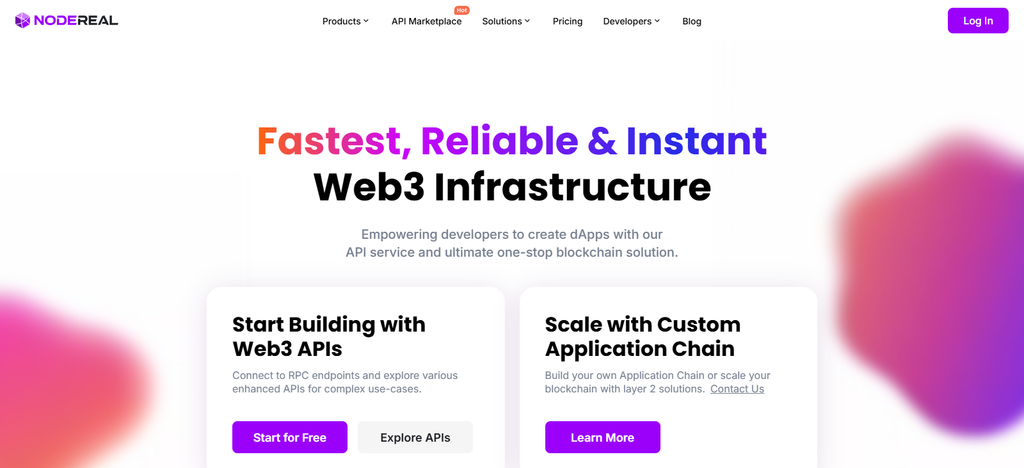
NodeReal offers blockchain APIs, developer services, aur network access solutions, NodeReal RPC endpoints. Efficient request handling performance optimization ke through ensure hoti hai. It’s scalable infrastructure is designed to support high-volume application traffic and expanding blockchain ecosystems.
Benefits
- Provides API services and blockchain infrastructure.
- Offers tools for developing Web3 apps.
- Supports infrastructure needs for the blockchains it supports.
- Maybe make RPC integration and node management easier.
Drawbacks
- Base-specific support must be confirmed before selection.
- Pricing and request limits depend on the service plan.
- Feature availability may vary from blockchain to blockchain.
- Developers should benchmark performance to the application requirements.
Conclusion
Choosing the right Base RPC provider is crucial for building reliable, scalable and efficient on-chain applications. Developers in Web3 can choose from a wide range of infrastructure, with providers like Alchemy, QuickNode, Chainstack, Infura, Ankr, dRPC, GetBlock, Bware Labs (Blast API), Blockdaemon, and NodeReal.
Compare their Base network support, response times, uptime, scalability, RPC methods, security features, pricing and developer tools. Smaller projects may focus on cost-effective plans, while larger applications may require advanced monitoring and higher request limits. In the end, choose a provider that matches your technical needs, budget and long-term application growth.
FAQ
What is a Base RPC provider?
A Base RPC provider connects decentralized applications to the Base blockchain, allowing developers to retrieve blockchain data, interact with smart contracts, check wallet balances, and submit transactions through API endpoints.
Which are the best Base RPC providers for on-chain applications?
Popular options to evaluate include Alchemy, QuickNode, Chainstack, Infura, Ankr, dRPC, GetBlock, Bware Labs (Blast API), Blockdaemon, and NodeReal. The best choice depends on your application’s requirements, budget, and expected traffic.
Why do developers need a Base RPC provider?
Developers need RPC providers to communicate with Base without managing all blockchain node infrastructure themselves. These services simplify data retrieval, transaction submission, smart contract interactions, and application connectivity.
What features should you compare when choosing a Base RPC provider?
Compare Base network support, response latency, uptime, request limits, supported RPC methods, security controls, pricing, WebSocket availability, developer tools, and technical support before selecting a provider.
Can I use a free Base RPC provider?
Yes. Some providers offer free tiers or trial access for development and testing. Check the available request quotas, rate limits, and feature restrictions before using a free plan for production applications.


