

Selecting the right Ethereum node provider is critical to build reliable, secure and high-performing blockchain applications. Whether you’re building a DeFi platform, Web3 wallet, NFT marketplace, or enterprise solution, your node infrastructure has a direct impact on data access, application performance, and scalability.
With multiple providers offering dedicated nodes, shared RPC services and advanced developer tools, it can be tough to find the right one. In this guide, I’ll break down the Best Dedicated Ethereum Node Providers, their main features, pricing factors, and best use cases to help you decide.
How to Choose the Right Ethereum Node Provider?
Dedicated Node Availability: Choose a provider that truly provides dedicated Ethereum nodes with segregated resources, customizable infrastructure and sufficient capacity to handle your application’s workload and performance requirements.
Performance & Latency: Check response times, request throughput, server locations around the world and network latency so that the blockchain data is retrieved quickly and the application runs smoothly even during peak traffic times.

Reliability and Uptime: Look into uptime SLAs, node redundancy, automatic failover, and incident support to minimize downtime and guaranty consistent access to Ethereum blockchain data.
Support for the Ethereum Network: Confirm that the provider supports the Ethereum Mainnet, the required testnets, execution APIs, consensus APIs, and the network environments needed for your development and production workflows.
API and Node Features. Compare JSON-RPC methods, WebSocket connections, archive access, debug APIs, trace methods, and real-time event subscriptions against your application’s technical needs.
Pricing and Scalability: Compare subscription costs and dedicated hardware charges, storage fees, request limits and additional usage charges. Ensure infrastructure can scale with the growth of the application demand.
Security and Access Control: Select providers that provide API key authentication, access restrictions, secure endpoints, monitoring, and configurable permissions to secure blockchain infrastructure against unauthorized access and misuse.
Technical Support and Documentation : Seek a vendor that provides robust documentation, integration guides, troubleshooting resources, responsive technical support, and enterprise support to help you deploy, maintain, and troubleshoot more easily.
Key Points
| Provider | Key Point |
|---|---|
| Alchemy | Offers dedicated Ethereum node infrastructure with high reliability, advanced APIs, enhanced monitoring tools, archive data access, and enterprise-grade scalability. |
| QuickNode | Provides dedicated Ethereum nodes with low-latency global infrastructure, customizable add-ons, WebSocket support, and scalable enterprise deployments. |
| Infura | One of the most established Ethereum infrastructure providers, offering managed node access, enterprise-grade services, and extensive Ethereum ecosystem support. |
| Chainstack | Delivers dedicated Ethereum nodes with predictable performance, archive node options, global deployment locations, and enterprise SLAs. |
| Ankr | Features dedicated and premium Ethereum node services with distributed infrastructure, high throughput capabilities, and multi-chain support. |
| GetBlock | Offers dedicated Ethereum nodes with private RPC endpoints, archive access, flexible deployment options, and enterprise-level uptime commitments |
| NOWNodes | Provides dedicated Ethereum nodes alongside shared RPC services, supporting archive mode, debug APIs, and multi-chain infrastructure from a single account. |
| OnFinality | Delivers dedicated blockchain node infrastructure with Ethereum support, enterprise scalability, archive data access, and performance-focused architecture. |
| dRPC | Offers dedicated and decentralized RPC infrastructure for Ethereum applications, focusing on redundancy, reliability, and enterprise-grade connectivity. |
| Lava Network | Provides decentralized dedicated RPC access for Ethereum through a distributed node marketplace designed for resilience and censorship resistance |
1. Alchemy
Alchemy is a blockchain infrastructure provider that offers access to Ethereum nodes, RPC APIs, developer tools, and dedicated infrastructure for applications that need reliable blockchain connectivity. Its Dedicated Clusters product offers managed, single-tenant node infrastructure with regional deployment, redundant nodes, automatic failover, and observability. Standard services include JSON-RPC, WebSockets, archive data, and APIs for blockchain activity.
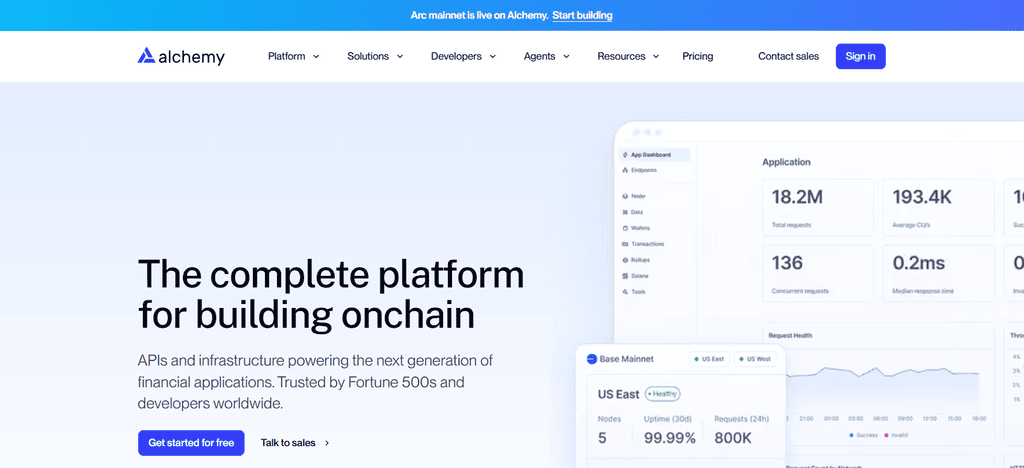
Latency is not a one-size-fits-all guaranty and performance depends on the selected plan, region, and workload. Pricing Alchemy has free and usage based plans. Dedicated cluster pricing is based on configuration. Perfect for dApps, DeFi platforms, wallets and enterprise applications in production.
Features
- Ethereum JSON-RPC API support
- Real time WebSocket subscriptions for blockchain events
- Dedicated Clusters for isolated infrastructure
- Trace API , Debug API , archive data
- Developer tools, monitoring and webhooks
Best For
- Active decentralized applications (dApps)
- DeFi platforms and trading apps
- Blockchain gaming and NFT marketplaces
- Managed the enterprise applications infrastructure
2. QuickNode
QuickNode offers managed blockchain infrastructure with Ethereum RPC endpoints, WebSocket connectivity, developer tools, and dedicated infrastructure options. Developers are able to use it to access blockchain data, interact with intelligent contracts, listen to events and connect apps without running their own node servers.
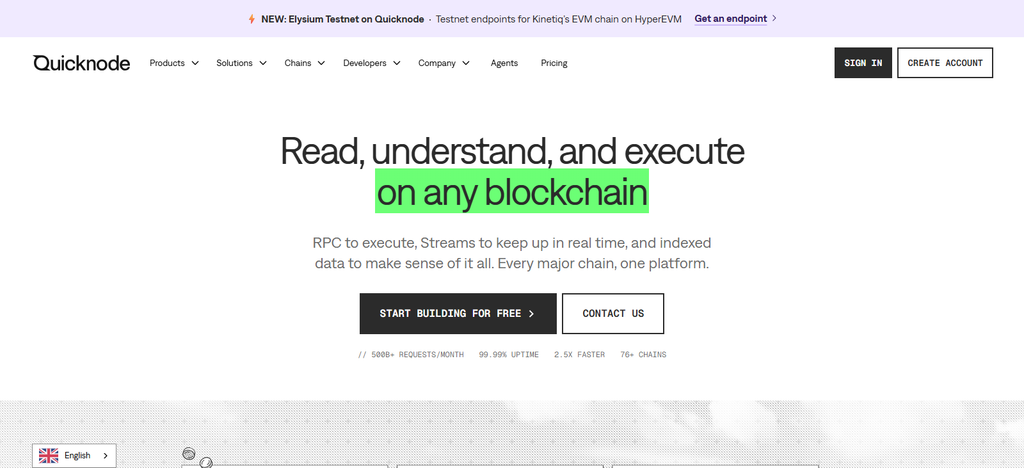
Its dedicated offering is for workloads that require reserved infrastructure, with performance depending on node configuration, network location and service plan.
Check the reliability features, service-level commitments and supported APIs for the selected product. QuickNode offers trial and paid plans, with dedicated infrastructure possibly at an extra cost. It is a good choice for DeFi applications, wallets, trading systems and high traffic dApps.
Features
- Ethereum RPC endpoints + websocket support
- Options for dedicated infrastructure
- Full node and archive-data access where supported
- Blockchain Data APIs & Add-Ons
- Service plans, monitoring of API credits and usage
Best For
- production ready Web3 applications
- DeFi protocols, trading venues
- NFT platforms and wallets
- Developers needing managed blockchain connectivity
3. Infura
Consensys product Infura provides managed Ethereum infrastructure that allows developers to connect applications to blockchain networks through secure APIs. It offers Ethereum JSON-RPC endpoints, WebSocket connection, archive data access, smart contract integration documentation, and blockchain info retrieval.
Performance depends on the complexity of the requests, account limits and selected service plans. Developers should check with the provider for current service commitments before relying on specific uptimes.
Infura uses a credit-based pricing model, with the cost of requests dependent on the RPC method. It is particularly suitable for Web3 applications, wallets, NFT platforms, and developers who require managed Ethereum connectivity without the need to operate their own nodes.
Features
- Operated Ethereum JSON-RPC end-points
- WebSocket-connection
- access to archived data where supported
- API key authentication and usage tracking
- Multichain APIs and Developer documentation
Best For
- Ethereum Development of dApp
Incorporation of Web3 wallets and intelligent contracts - Blockchain platforms and NFT applications
- Teams that want managed RPC access without self hosting
4. Chainstack
Chainstack is a managed blockchain infrastructure provider that offers Ethereum RPC endpoints, dedicated nodes, archive nodes and deployment options for different application requirements. Developers are able to choose node configurations and interact with intelligent contracts, access blockchain data and monitor network activity via HTTP or WebSocket connections.
Shared endpoints aren’t as good as dedicated nodes which provide you with isolated infrastructure, more control over configuration and predictable resources. Performance and reliability are based on your deployment choice, storage needs, and subscription tier.
Chainstack provides a free Developer plan, paid subscriptions, and dedicated-node compute and storage billed separately. It’s a great fit for production dApps, analytics platforms, DeFi applications, and workloads that require historical Ethereum data.
Features
- full-node and archive node options
- Deployments of dedicated Ethereum nodes
- HTTP and WebSocket RPC connection
- Request-routing and global deployment options
- Managed infrastructure, monitoring and usage controls
What’s Best For
- Workloads that need exclusive node resources
- DeFi and high volume blockchain workloads
- Blockchain historical data and analytics
- Enterprise projects requiring configurable infrastructure
5. Ankr
Ankr offers Web3 infrastructure, including blockchain RPC services, developer APIs, and node deployment on multiple networks including Ethereum. Its services enable applications to query blockchain data, submit transactions, and connect over HTTP or WebSocket endpoints (where supported).
Ankr’s RPC infrastructure employs load balancing and node health monitoring to help route requests, and premium services provide extra capacity and features. However, public and premium RPC gateways should not be assumed to be dedicated single-tenant nodes.
Check availability and terms for dedicated infrastructure with the provider. Pricing Free access and paid usage based options. Ankr is ideal for multichain dApps, wallets and blockchain developers.
Features
- Ethereum RPC end points
- Multichain API infrastructure
- Where appropriate, HTTP and WebSocket connectivity
- Load balancing and health checks for nodes
- Service options: free and paid usage-based
Ideal For
- Multichain dApps
- Blockchain wallets and Web3
- Developers looking for flexible RPC access
- Multi-blockchain networks integration projects
6. GetBlock
GetBlock is a blockchain infrastructure provider that provides shared RPC endpoints and fully private dedicated nodes for Ethereum and other supported networks. Developers are able to decide on full or archive node configurations, which client software to support, and infrastructure to support the data and performance needs of their applications.
Dedicated nodes give you private resources, configurable deployment options and usage without the normal shared-plan request limits. GetBlock has Standard and High Performance plans with different throughput and uptime guaranties.
According to its documentation, the Standard plan guaranties 99.5% uptime and the High Performance plan guaranties 99.9% uptime. Dedicated full-node pricing begins at around $1,000 per month, while archive nodes begin at around $1,500. It is ideal for enterprise dApps, high-volume APIs and data-heavy applications.
Characteristics
- Ethereum node options – shared and dedicated
- Full node and archive node configurations
- Private RPC endpoints
- Multiple blockchain client and network choices
- Infrastructure plans with different performance levels
Most Suitable For
- Enterprise use cases of Blockchain
- RPC workloads with high volume.
- Applications that require private node infrastructure
- Data-heavy projects using archive nodes
7. NOWNodes
NOWNodes offers managed access to blockchain nodes, via API endpoints, for Ethereum and numerous other blockchain networks. It offers shared endpoints and dedicated nodes with choices for private infrastructure, chosen deployment regions, dedicated clusters, and priority technical support.
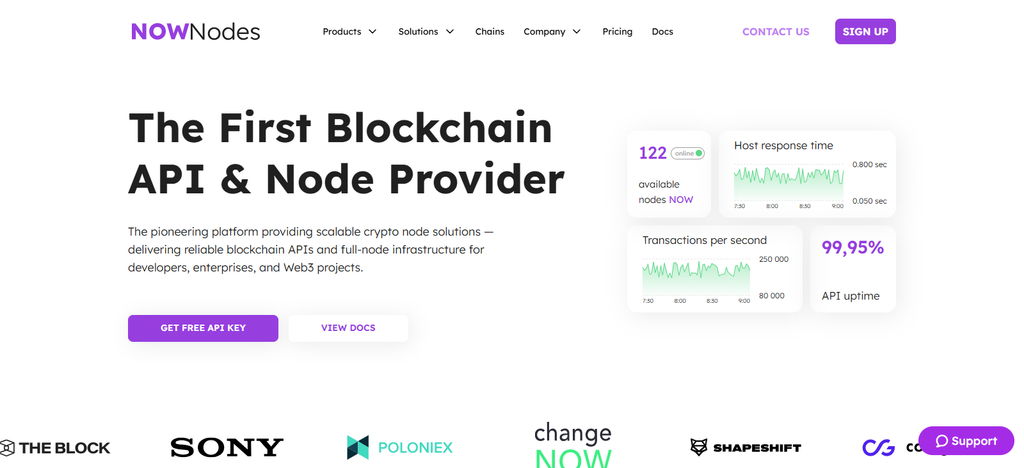
Developers are able to access blockchain data and connect applications using supported RPC interfaces without having to run node servers themselves. Dedicated deployments are for workloads that require more control and capacity, but the real performance depends on the hardware, network and configuration you select.
Ethereum Dedicated Nodes Price: From €1,000/month (NOWNodes, April 2026) Check the dashboard for current price before publishing. It’s suitable for wallets, exchanges, and production dApps.
Characteristics
- Access to Ethereum RPC API
- Node options: dedicated and shared
- Availability of full-node and archive-node where supported
- Configurable infrastructure and private endpoints
- Technical support options for Multichain access
Ideal For
- Wallets and exchanges for cryptocurrencies
- Apps for connectivity across multiple chains
- dApps in production that require private endpoints
- Projects that need managed blockchain node hosting
8. OnFinality
OnFinality is a managed blockchain infrastructure provider offering RPC APIs, dedicated node hosting and other blockchain data services. The Ethereum infrastructure provides API methods for developers to connect applications, interact with intelligent contracts, retrieve network information and access supported historical data.
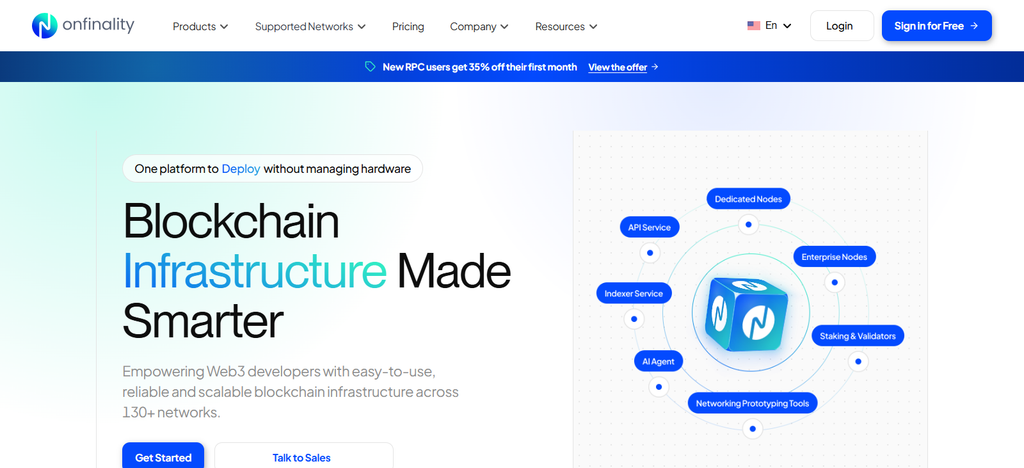
In addition to shared RPC services, the platform also offers dedicated nodes, so projects can choose infrastructure based on traffic, performance and data-access needs. Features offered, rate limits and response capacity depend on plan and deployment configuration.
OnFinality publishes pricing with a free Developer tier, a $49/month Growth plan, and a $249/month Accelerate plan, with node usage costs billed separately. This is good for developers and enterprises that need a managed multichain infrastructure.
Features
- Ethereum node hosting management
- Dedicated node options (where available)
- RPC API access to supported networks
Blockchain Indexing and Data Service Integrations - Infrastructure deployment monitoring and management
Best For:
- Multichain app developers
- Tasks that involve actions on managed nodes
- Data-driven applications and blockchain analytics
- Teams looking for node hosting with indexing capabilities
9. dRPC
dRPC is a blockchain RPC infrastructure and routing platform connecting applications to a distributed pool of independent node providers across Ethereum and other networks. Rather than depending on a single provider’s fleet of nodes, its routing system distributes requests, and also has fallback mechanisms to help maintain connectivity when individual endpoints experience problems.
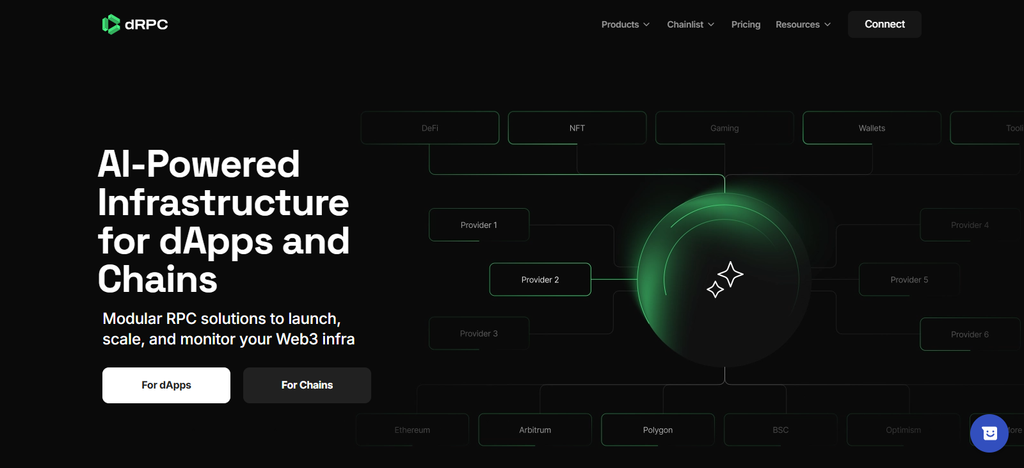
Developers are able to connect to Ethereum via supported RPC interfaces and monitor requests with dashboards and usage controls. The architecture enables provider diversity, but the actual latency, availability and data consistency depend on the underlying providers and routing configuration.
dRPC has a free plan, with 210 million compute units per 30-day period, and paid usage plans. dRPC’s published standard rate is $0.30 per million compute units. It is ideal for multi-chain use cases that want RPC access flexibility and infrastructure redundancy
Characteristics
- Access to Ethereum RPC and Websockets
- Distributed infrastructure provider routing
- Retry and fallback path routing
- Support for multichain endpoints
- Usage controls and request monitoring
Perfect for
- Applications requiring RPC provider redundancy
- Multichain dApps & Web3 services
- Projects looking for alternative RPC routing
- Developers working on robust blockchain connectivity
10. Lava Network
Lava Network is a decentralized RPC protocol that connects blockchain applications to independent infrastructure providers including Ethereum infrastructure providers. Lava doesn’t offer a traditional, centralized node-hosting service. Instead, it orchestrates requests through a distributed marketplace to offer alternative routes to access data and reduce dependence on a single provider.
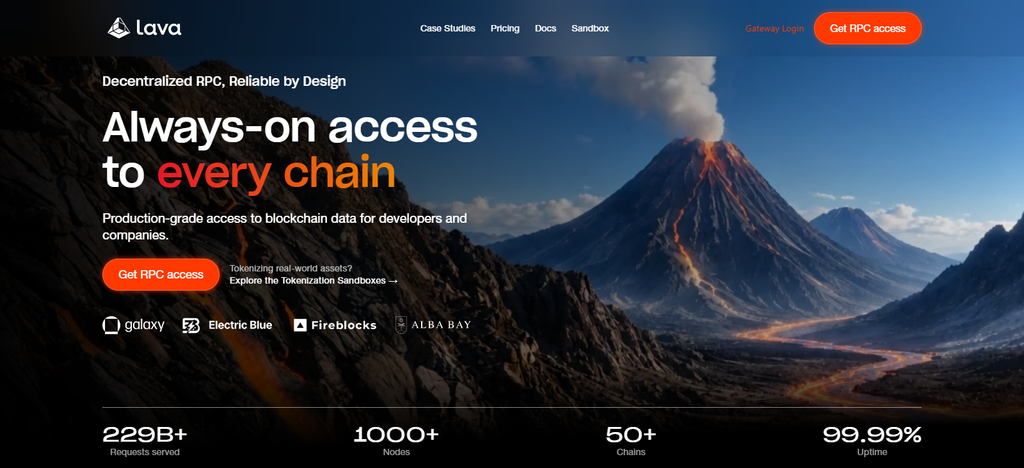
Developers are able to query supported endpoints to obtain information on the blockchain, and interact with intelligent contracts, and the performance is affected by the selection of a provider, routing and participation in the network. Also supported by Lava (where available) are archival and tracing as well as Ethereum Mainnet access through participating providers.
The published service information from the company states a free tier of up to one million requests per day per endpoint, subject to stated limits. This is well suited for use cases where diversity of providers, decentralized infrastructure and resilient RPC access are paramount.
Properties
- Decentralized Ethereum RPC access
- Interdomain routing between independent infrastructure providers
- mechanisms for provider selection and request routing
- Cross-chain interoperability
- Incentives for participation in decentralized infrastructure
Perfect for
- Web3 Projects That Reduce Reliance on One Provider
- Multi-chain applications with alternative endpoints
- Requests for decentralized RPC access
- Developers focusing on infrastructure diversity
Comparison of the Best Ethereum Node Providers
| Comparison Factor | Dedicated Ethereum Nodes | Shared RPC Providers |
|---|---|---|
| Infrastructure | Resources are reserved for a specific customer or deployment. | Infrastructure is shared among multiple customers. |
| Performance | More predictable performance with allocated resources. | Performance may vary with shared demand and provider configuration. |
| Request Limits | Limits depend on the dedicated plan and allocated capacity. | Usually governed by plan-based rate limits and usage quotas. |
| Reliability | Can offer greater control over redundancy and node configuration. | Reliability depends on provider-managed infrastructure, routing, and failover. |
| Customization | Often supports configurable hardware, storage, and node settings. | Typically offers limited control over underlying node configuration. |
| Pricing | Generally higher costs due to reserved resources and infrastructure. | Usually more affordable, with free tiers or usage-based plans. |
| Scalability | Scaling may require additional resources or configuration changes. | Capacity can often scale through provider-managed infrastructure and plan upgrades. |
| Maintenance | Provider-managed options reduce operational work; self-hosted nodes require maintenance. | The provider generally manages node operations and infrastructure maintenance. |
| Security and Isolation | Offers stronger resource isolation when the deployment is genuinely single-tenant. | Uses shared infrastructure with provider-managed access controls and security. |
| Best Use Cases | High-volume dApps, DeFi platforms, enterprise workloads, and specialized data access. | Startups, prototypes, smaller dApps, and applications with variable traffic. |
Conclusion
The best Dedicated Ethereum Node Provider depends on your performance requirements, budget, scalability needs, and reliability expectations of your application. Providers such as Alchemy, QuickNode and Chainstack provide managed infrastructure and developer tools, while GetBlock and NOWNodes offer dedicated node options for workloads that require private resources. Managed RPC access is handy, Infura and Ankr are two examples.
Other infrastructures and connectivity solutions include OnFinality, dRPC and Lava Network. Compare dedicated node availability, API capabilities, uptime commitments, pricing, and technical support before making a decision. Finally, pick a provider that offers reliable Ethereum connectivity and can support your project’s long-term growth.
FAQ
What is a dedicated Ethereum node?
A dedicated Ethereum node is a blockchain node provisioned with resources reserved for a specific customer or deployment. It provides greater control over infrastructure, configuration, and capacity than a typical shared RPC service.
Which are the best dedicated Ethereum node providers?
Popular options include Alchemy, QuickNode, Chainstack, GetBlock, and NOWNodes. The right choice depends on dedicated node availability, performance requirements, API features, pricing, and workload.
What is the difference between dedicated Ethereum nodes and shared RPC providers?
Dedicated nodes offer reserved resources and potentially greater configuration control, while shared RPC providers serve multiple customers through common infrastructure. Shared services are generally more affordable, whereas dedicated deployments can provide more predictable resource allocation.
How much does a dedicated Ethereum node cost?
Pricing varies by provider, node configuration, storage requirements, and service level. Shared RPC services may offer free plans, while dedicated nodes typically involve higher monthly costs or customized enterprise pricing.