

The provider of the Avalanche RPC node you select can have a significant impact on the performance of your Web3 app. Whether you are building DeFi platforms, crypto wallets, NFT marketplaces or blockchain explorers you need reliable blockchain access, responsive performance and cost-effective pricing.
Yet, providers vary in network support, API limits, uptime and scalability. In this guide, I will discuss the Best Avalanche RPC Node Providers and compare their core features, pros, and use cases to help you find the right one.
What Is an Avalanche RPC Node Provider?
Blockchain Connectivity : An Avalanche RPC node provider connects decentralized applications to the Avalanche blockchain , allowing developers to access blockchain data and interact with intelligent contracts without having to maintain their own nodes .
C-Chain Access: These providers expose RPC endpoints for Avalanche C-Chain and enable applications to make smart contract calls, check balances, get transaction details and send blockchain transactions.

API Endpoints : RPC providers offer HTTP and WebSocket endpoints (where applicable) to allow applications to communicate with Avalanche nodes using standard JSON-RPC methods for blockchain operations.
Managed Infrastructure: Node deployment, synchronization, maintenance, and infrastructure operations are managed by providers, reducing the technical complexity for developers and allowing them to focus on building decentralized applications and Web3 services.
Performance and Speed: Reliable providers optimize request handling, network connectivity, and infrastructure capacity to deliver fast blockchain responses, supporting applications that depend on up-to-date transaction and contract data.
Scalability: Avalanche RPC providers offer service plans and infrastructure options that scale to accommodate changing request volumes, helping applications manage increased traffic as user bases and transaction activity grow.
Security and reliability: Providers may provide uptime guaranties, monitoring, API authentication, and control of access to improve service reliability and protect endpoints from malicious use and excessive requests.
8. Applications for Developers Avalanche RPC services can be highly beneficial for DeFi platforms , crypto wallets , NFT marketplaces , blockchain explorers , trading tools and Web3 games that need constant access to blockchain data and smart contract technology .
How to Choose the Best Avalanche RPC Provider for Your Needs?
Avalanche Network Support: Pick a provider that supports Avalanche C-Chain mainnet and Fuji testnet; this will ensure your smart contract, development environment, and application deployment requirements are met.
Performance & Latency – Measure the response times of RPCs, request throughput, and network performance to make sure your application retrieves blockchain data fast and processes transactions well during periods of high activity.
Uptime and Reliability: Look for published uptime statistics, service-level agreements, monitoring features, and failover options to minimize connection interruptions and ensure consistent blockchain access for your application.
Pricing and Free Plans: Compare free-tier allowances, monthly subscriptions, request limits, and overage charges to find a provider that fits your budget and avoids unanticipated infrastructure costs.
API Methods and Connectivity Ensure the provider supports the JSON-RPC methods, HTTP endpoints, WebSocket subscriptions, transaction broadcasting, and event logs your app needs so that it fulfills all the technical requirements.
Scalability and Capacity: Pick a provider that offers adequate request limits, scalable infrastructure, and dedicated node choices when needed. This ensures your application can handle increasing traffic without frequent service disruptions.
Security and Access Control: Ensure the API offers API-key authentication, request throttling, control of access, and traffic protection to safeguard endpoints from unauthorized use and minimize the risk of service abuse.
Historical Data and Developer Support: Assess the availability of archive data, the quality of documentation, the existence of troubleshooting tools, and the provision of technical support to assist in development, debugging of blockchain issues, and maintenance of applications needing historical information.
Key Points
1 QuickNode
Node is a blockchain infrastructure provider providing Avalanche RPC access for developers building decentralized applications on the Avalanche network. Services include Avalanche C-Chain compatibility for smart contract deployment, wallet integration, and real-time blockchain data access.
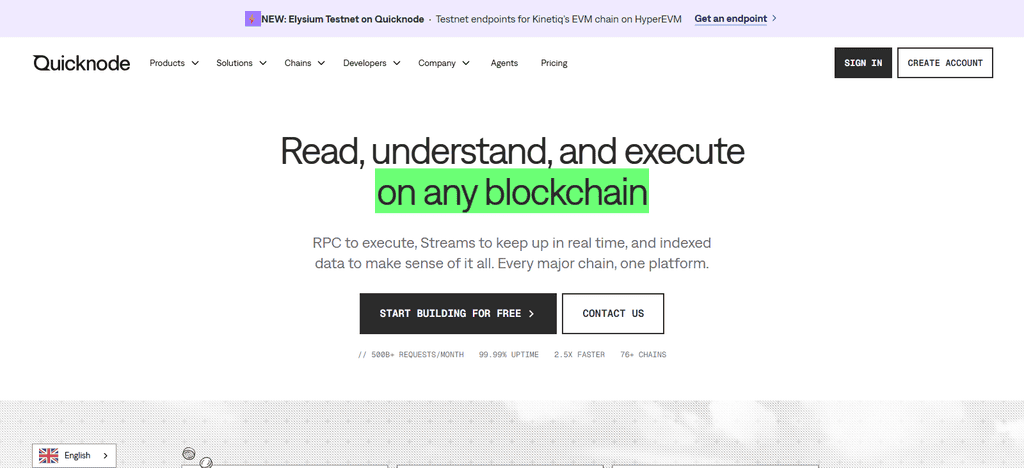
The platform is optimized for fast request processing, low latency and reliable connectivity for production workloads. Performance is engineered to manage increased transaction volumes, while maintaining consistent uptime.
Pricing Generally offers flexible plans Developer-friendly options for small projects. Node is a scalable, enterprise-grade Avalanche node that can grow with demand, making it perfect for startups and enterprises alike.
Important Features
- Avalanche C-Chain RPC: Managed RPC access to read blockchain data, query smart contract data, and send transactions.
- HTTP and WebSocket Access: Supports standard connection methods for application requests and real-time subscriptions for blockchain events.
- Developer Tools: Provides APIs, documentation, and integration options for building and debugging Web3 apps.
- Scalable Infrastructure: Offers various service options for projects varying from prototypes to high-volume applications.
- Monitoring & Reliability: Provides options for endpoint management & service to support production workloads.
Application
- DeFi Apps: Read liquidity pool data, query smart contract data, and send transactions.
Blockchain Explorers: Get block information, transaction receipts, and event logs. - Trading Bots: See on-chain activity and get blockchain data to power trading strategies.
- Web3 Wallets: Check balances, estimate transaction costs, broadcast signed transaction
2 Alchemy
Alchemy is one of the most popular blockchain infrastructure platforms and, along with its broader multi-chain ecosystem, it provides Avalanche C-Chain RPC endpoints. It provides standard RPC access with advanced developer tools, analytics, monitoring and application debugging features.
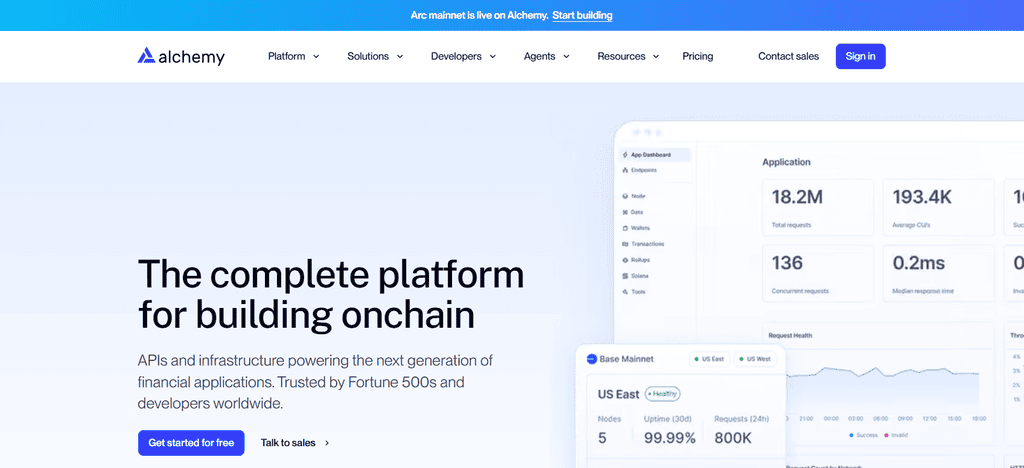
The platform is built for high performance, low latency response times and infrastructure optimized for high traffic decentralized applications.
Alchemy offers a free tier for testing and building on Avalanche, as well as premium plans with higher throughput and more advanced features. Its scalable architecture enables projects to scale from small prototypes to enterprise-grade applications without changing infrastructure providers.
Main Features
- Avalanche RPC Support: Provides API access to interact with Avalanche C-Chain and invoke supported blockchain methods.
- HTTP/WebSockets: Standard RPC requests and subscriptions for supported blockchain events.
- Developer Dashboard: Provides developers with a dashboard to monitor API usage, manage applications, and debug request errors.
- Debugging Tools: Provides development and transaction-inspection tools, as long as Avalanche-specific methods are available.
- Usage-based Plans: Offers free and paid plans with usage limitations and capacity depending on the plan selected.
Use Cases
- dApp Development: Connect the frontends and backend services to Avalanche intelligent contracts.
- DeFi Analytics: Explore contract data and event logs to track decentralized finance activity.
- NFT Platforms: Verify supported contract data and monitor NFT related transactions.
- Portfolio Apps: Access to supported on-chain data to show wallet balances and transaction activity
3. Chainstack
Chainstack offers managed Avalanche node infrastructure with a focus on simplicity, reliability and enterprise deployment. Avalanche C-Chain support allows developers to connect decentralized apps, wallets, and intelligent contracts through dedicated RPC endpoints. The platform is built around high uptime, predictable performance and global infrastructure coverage.
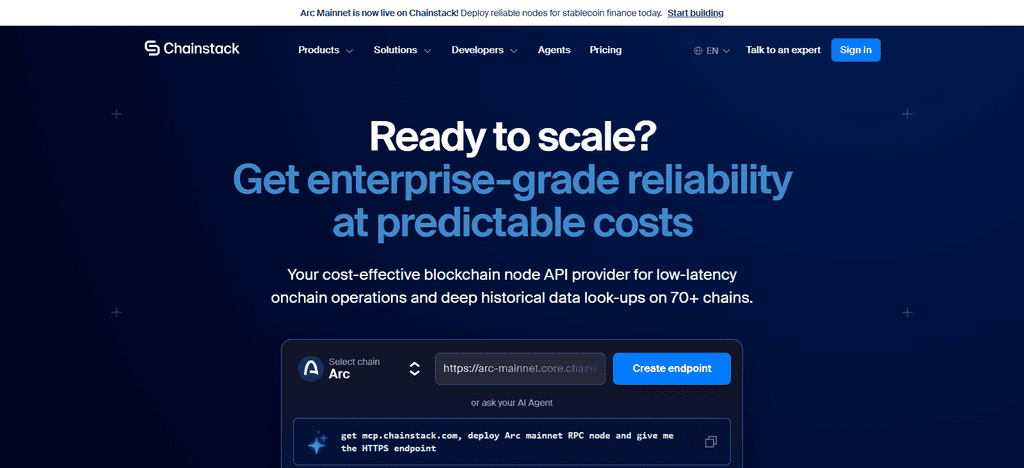
Chainstack is particularly appealing to teams that want managed services and do not want to run their own node servers. It gives developers free access to try it out, and flexible paid plans for production workloads. Chainstack’s scalable infrastructure is capable of handling larger volumes of requests with consistent performance and operational reliability as use cases expand.
Features That Count
- Avalanche RPC Endpoints: Offers managed blockchain connectivity for applications that interact with supported Avalanche networks.
- Mainnet & Testnet Access – Provides network environments for development and production based on current Avalanche plans availability.
- HTTP and WebSocket Connectivity: Supports RPC requests and real time subscriptions when available.
- Node Deployment Options: Offers managed infrastructure options to lighten the burden of operating your own nodes.
- Infrastructure Management: Provides tools for managing deployments, monitoring usage, and scaling blockchain connectivity.
Use Cases
- DeFi Protocols: Retrieve contract states and transaction data for DeFi applications.
- Blockchain Indexers: Gather blocks, logs, and transactions to build searchable databases.
- Enterprise dApps: Integrate business applications with Avalanche, avoiding node infrastructure management.
- Development & Testing: Test intelligent contracts and application integrations before deploying in production
4. Ankr
Ankr is one of the biggest blockchain infrastructure networks, supporting Avalanche C-Chain with its distributed RPC services. The platform enables developers to access blockchain data, send transactions and power decentralized applications without needing to run their own nodes.
Ankr is known for wide chain coverage, high throughput features and wide infrastructure distribution. A generous free tier lets developers launch projects affordably, with premium plans offering extra performance and request capacity. The infrastructure is designed to be scalable, so Avalanche apps can scale with user activity while maintaining reliable uptime and optimal response times.
Important Aspects
- Multi-Chain RPC: Access to blockchain APIs of multiple networks like supported Avalanche endpoints.
- Standard JSON-RPC: Supports Balance Query, Smart Contract Call, Transaction Submission, and Blockchain Data Retrieval.
- HTTP and WebSocket Support: Provides connection methods for standard requests and supported real-time subscriptions.
- Decentralized Infrastructure – Provides blockchain connectivity via a distributed network of node providers.
- Flexible API Access : Free and paid options available with different limits and costs depending on the service chosen.
Cases of Use
- Multi-Chain dApps Connect apps that operate with Avalanche and other supported chains.
- DeFi Platforms: Read token balances, contract state, transaction details.
- Web3 Gaming: Pull blockchain data for in-game assets and smart contract interactions.
- Wallet Apps : Show balances of supported tokens and send signed transactions.
5. dRPC
dRPC is a decentralized RPC provider which provides Avalanche C-Chain access through a distributed network of infrastructure providers. To improve reliability, dRPC does not route requests through a single server network, but instead through multiple regions and operators.
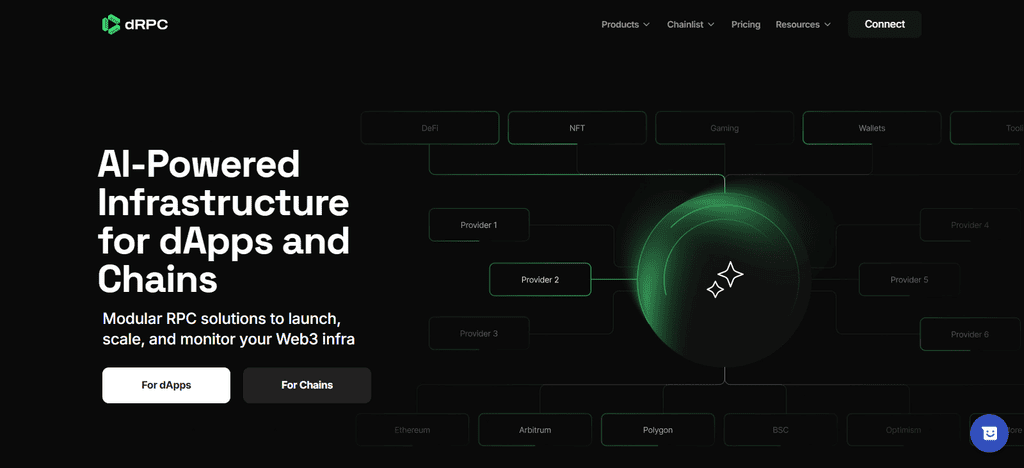
The platform is built for applications that need redundancy, uptime, and resilient blockchain connectivity. Developers receive scalable RPC services for testing and production environments.
Free tiers are for initial development, and paid plans support larger workloads. Its distributed architecture reduces dependence on any single provider and delivers high-performing Avalanche deployments.
Main Features
- Decentralized RPC Network: Provides blockchain connectivity with a network-oriented RPC infrastructure model.
- Multi-Chain Connectivity: Multiple blockchain ecosystems are supported, individual network availability depending on its current offering.
- RPC Routing – Facilitates routing of application requests over available infrastructure.
- Developer Integration: Provides blockchain API connectivity to applications using compatible RPC methods.
- Flexible Infrastructure Approach: Provides an alternative to the exclusive use of a single centralized node operator.
Case Studies
- Web3 Applications: Connect application backends to supported blockchain RPC endpoints .
- DeFi Services: Query smart contract data and get the relevant blockchain information.
- Blockchain Data Tools: Get supported blocks, transactions and logs for data processing.
- Multi-Chain Platforms: Manage blockchain connectivity on multiple networks via an RPC-centric service
6. GetBlock.
GetBlock provides Avalanche RPC access via shared and dedicated node infrastructure. Avalanche C-Chain support allows developers to quickly connect dApps, wallets, DeFi protocols and blockchain services with ready-to-go endpoints. The platform provides easy deployment, stable network connectivity, and quick integration.
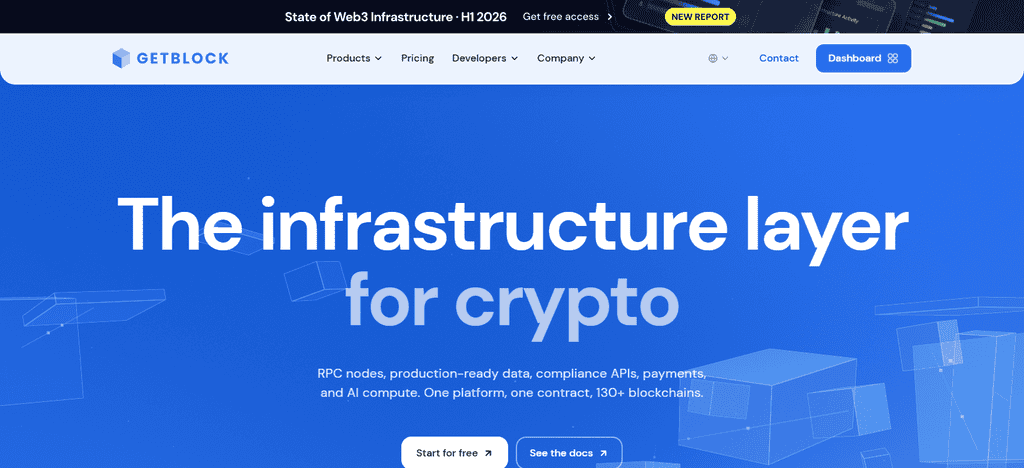
GetBlock provides plans for solo developers and organizations that need dedicated resources. Performance is built to scale with increasing blockchain workloads, and to deliver reliable access to network data and transaction broadcasting. With flexible pricing and scalable infrastructure it offers a viable option for Avalanche projects at different stages of growth.
Salient Features
- Managed Node Access: Provides access to blockchain RPC without the need for developers to run node infrastructure.
- Avalanche Network Connectivity: Before deploying, check the status of the Avalanche C-Chain and its connectivity options.
- API Integration: Allows applications to interact with compatible blockchain nodes using RPC endpoints.
- Dedicated Infrastructure Options: Provided that it is available, it offers various dedicated infrastructure options to fulfill the needs of different projects.
- Usage and plan options: Providing service plans with different limits and capabilities based on the product you choose.
Usecases
- Blockchain Explorers: Get block and transaction data for explorer user interfaces.
- Crypto Wallets: Connect wallets to supported networks to check balances and transactions.
- DeFi Apps: Read intelligent contract data and broadcast transactions.
- Backend Services: Bring blockchain data to applications without the need to run self-hosted nodes
7. NOWNodes
NOWNodes offers blockchain nodes and RPCs services supporting Avalanche C-Chain and other networks. Developers are able to access blockchain data, transaction histories and smart contract interactions without having to deploy their own infrastructure. The service is focused on accessibility, with fast integration through API keys and managed end points.
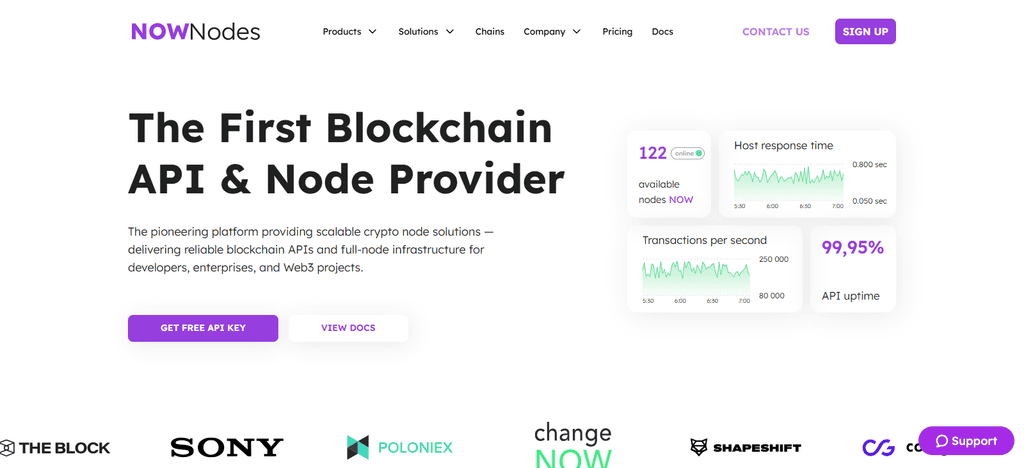
It is optimized for regular application workloads and improved performance with uptime and reliability suitable for production environments. NOWNodes has entry level plans for developers and scalable subscriptions for businesses with larger requirements. Its multi-chain ecosystem is especially appealing to projects with multiple blockchain network support.
Essential Features
- Blockchain Node Access: API endpoints to access supported blockchain networks.
- Avalanche Compatibility: Check for current C-Chain mainnet and testnet availability before choosing a plan.
- Standard RPC Methods: provides support for blockchain queries and transaction operation for compatible network and interfaces.
- Managed Infrastructure: Eliminates the need to deploy, sync, and maintain individual blockchain nodes.
- API Plans: Provides service options with usage limits and allowances, depending on the package selected.
Applications
- Wallet development Get transaction details and supported balance information.
- Exchange Integration: Links supported blockchain networks with deposit and withdrawal monitoring systems.
-Payment Applications: Track blockchain transactions and verify payment status. - Blockchain Analytics: Gather supported transaction and block data for reporting and analysis.
8. Blast API 9
Blast API is an Avalanche RPC infrastructure that is built for high availability and efficient blockchain connectivity. Avalanche C-Chain support allows developers to interact with intelligent contracts, process transactions and access network data through managed endpoints. The platform is performance optimized, traffic balanced and infrastructure redundant.
Free access options make it easy for developers to begin and commercial plans provide higher request limits and more reliability features. Blast API supports growing applications with scalable infrastructure to handle the increased transaction volumes. It is focused on stability and ease of integration, which makes it a useful solution for Avalanche development.
Features
- RPC Connectivity – Provides blockchain API access for supported networks of the particular Blast API service.
- Normal RPC Requests: Compatible services can expose methods to read blockchain data and submit transactions.
- Application Integration: RPC endpoints assist in linking backend services and Web3 frontends to supported networks.
- Scalable Access: Capacity and rate limits depend on the service’s underlying provider and plan.
- Network Verification: Verify that the Blast API product is designed for Avalanche C-Chain. Other services with similar names may work on different networks.
Uses Cases
- Smart Contract Applications: Read Contract State & Send Transactions to Compatible Endpoints
Blockchain Data Retrieval: Get information for supported blocks, receipts, and transactions. - Web3 Back-end Integration: Integrate application services with compatible blockchain infrastructure.
- Multi-Chain Development: Use the service for supported networks if you are building applications across blockchain ecosystems.
9. Lava Network
Lava Network is a decentralized infrastructure protocol that enables Avalanche RPC access via a distributed network of service providers. With Avalanche C-Chain support, developers are able to interact with blockchain data and take advantage of decentralized routing and redundancy. The network is designed to increase reliability and reduce reliance on central infrastructure operators.
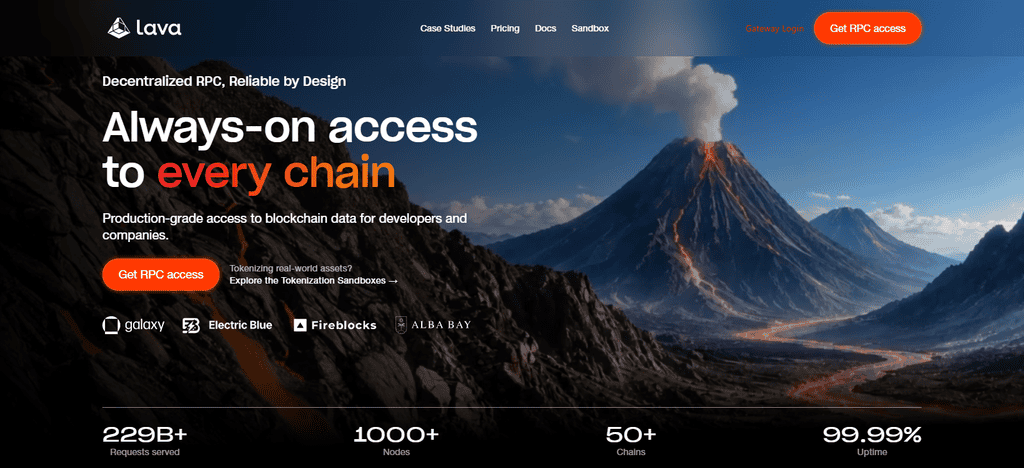
Using multiple providers to serve requests from different regions improves performance. Developers are able to develop applications without the headache of physical node infrastructure management. The decentralized architecture of Lava Network allows for scalability with service continuity as usage grows, making it attractive for modern Web3 apps.
Important Features
- Decentralized RPC Marketplace: A network of decentralized RPC providers that connects blockchain applications.
- Multi-Chain Access: Enables blockchain access to participating networks, as per existing network parameters.
- Provider Selection: Links applications to eligible RPC providers using network mechanisms.
- Reliability Mechanisms: Protocol level mechanisms to help service quality and provider accountability.
- Flexible Connectivity: Provides an alternative to depending on a single centralized RPC service.
Use Cases
- dApps decentralized: Connect apps to supported blockchain RPC infrastructure.
- DeFi Protocols: Leverage supported endpoints to interact with intelligent contracts and access blockchain data.
- Web3 Infrastructure: Develop Apps that require interactions with blockchains on supported networks.
- RPC Service Resiliency: Look into decentralized infrastructure solutions to avoid dependence on one provider
10. Allnodes
Allnodes is a managed blockchain hosting service and Avalanche node provider. Avalanche C-Chain gives developers and validators the infrastructure for reliable RPC connectivity without the hassle of managing complex servers.
The platform is designed with simplicity in mind and offers tools for the easy deployment and maintenance of blockchain projects. Its performance is designed to support steady transaction processing and application connectivity.
Monitoring uptime and infrastructure are key to keeping production workloads running reliably. Pricing options typically range from developer-friendly to larger enterprise configurations. Allnodes provides scalable resources to meet increasing RPC demand and maintain operational reliability as projects scale.
Important Features
- Node Hosting Services : Offering blockchain infrastructure hosting and node-related services for supported networks.
- Managed Infrastructure: Alleviates the operational overhead of running and maintaining blockchain nodes.
- Network-Specific Options The services and node types depend on the blockchain and product you provide.
- Infrastructure Management – Offers tools and service options for managing supported hosted infrastructure.
- Operational Support. Provides service and support options based on the hosting product selected.
Use Cases
- Node Operators: Host supported blockchain infrastructure without having to manage each component individually.
- Blockchain Infrastructure Projects: Run network services with managed hosting options where available.
- Developer Environments: Hosted nodes for development and blockchain connection supported.
- Infrastructure Management: Lower the maintenance overhead of node deployments you support.
Conclusion
The best Avalanche RPC node provider for you will depend on your application’s performance, reliability, budget and technical requirements. Providers like QuickNode, Alchemy, Chainstack, Ankr, dRPC, GetBlock, NOWNodes, Blast API, Lava Network and Allnodes pursue different strategies for blockchain connectivity and infrastructure.
Compare Avalanche C-Chain support and API methods, request limits, pricing, uptime commitments, and scalability options before you make your decision. For developers building DeFi platforms, wallets, NFT marketplaces or blockchain explorers, consistent performance and reliable access should be top of mind. And always verify network availability and features before you choose a provider for production workloads.
FAQ
What is an Avalanche RPC node provider?
An Avalanche RPC node provider offers API endpoints that allow decentralized applications to interact with the Avalanche blockchain, retrieve transaction data, query smart contracts, and submit transactions without operating their own nodes.
Which are the best Avalanche RPC node providers?
Popular options to evaluate include QuickNode, Alchemy, Chainstack, Ankr, dRPC, GetBlock, NOWNodes, Blast API, Lava Network, and Allnodes. Confirm each provider’s current Avalanche C-Chain support before choosing.
What is Avalanche C-Chain RPC?
Avalanche C-Chain RPC enables applications to communicate with Avalanche’s EVM-compatible chain, supporting smart contract interactions, transaction submissions, balance queries, and blockchain data retrieval through compatible JSON-RPC methods.
Are there free Avalanche RPC providers?
Some providers offer free plans or trial access with usage limits. Check request allowances, rate limits, supported RPC methods, and upgrade costs before selecting a free endpoint for your project.
How do I choose an Avalanche RPC provider?
Compare C-Chain compatibility, response latency, uptime commitments, API limits, pricing, WebSocket support, security features, archive data access, and scalability to identify the provider that matches your application’s requirements.