

Selecting the appropriate RPC provider may significantly affect the performance of a Web3 project on Optimism. Developers require dependable infrastructure to keep their applications fast and scalable, whether they are retrieving blockchain data, broadcasting transactions or calling intelligent contracts.
But with so many providers offering different features, price plans and performance levels, it can be difficult to choose the right one. In this guide, I will take a look at the Best Optimism RPC Providers for Web3 Projects and compare their key features, benefits, and use cases to help you make an informed decision.
Why Do Web3 Projects Need an Optimism RPC Provider?
Blockchain Connectivity Optimism RPC providers allow Web3 application connectivity to the blockchain, allowing developers to access on-chain data, interact with intelligent contracts, and send transactions without managing infrastructure.
Faster Data Access: With reliable RPC endpoints, applications can access balances, transaction receipts, block information, and contract data quickly, leading to more responsive and seamless user experiences across decentralized applications.

Transaction Submission: RPC providers enable applications and wallets to submit signed transactions to Optimism, allowing users to transfer tokens, interact with decentralized exchanges, and utilize other blockchain services.
Smart Contract Interaction: During application development on the Optimism network, developers utilize RPC methods to query contract state, invoke contract functions, estimate gas costs, and monitor transaction results.
Enhanced Reliability: Established RPC providers provide managed infrastructure and redundancy options that help minimize connectivity interruptions, failed requests and service disruptions impacting Web3 applications and their users.
Scalability: RPC providers help projects handle increasing traffic via configurable usage limits, higher-capacity plans and infrastructure options that support growing numbers of users and blockchain requests.
Enhanced Security: Many providers provide API key controls, encrypted connections, access restrictions, and usage monitoring, assisting developers in securing RPC endpoints from unauthorized usage and excessive request consumption.
Lower Infrastructure Costs: With managed RPC services, many projects no longer need to run their own Optimism nodes, which reduces infrastructure maintenance and monitoring responsibilities as well as ongoing operational complexity.
How to Choose the Right Optimism RPC Provider?
Performance Assessment: Select a provider that offers low latency, quick response times, and reliable request handling to ensure your Optimism-based applications provide users with a seamless and responsive experience.
Check Network Stability: Assess uptime history, redundant infrastructure, failover capabilities, and service-level agreements to reduce downtime and ensure constant blockchain access during sudden traffic surges.
Compare Pricing Plans Analyze free-tier quotas, call limits, pay-as-you-use fees, and subscription plans to choose an Optimism RPC service that matches your budget and anticipated application traffic.
Confirm RPC Method Support: Check that the provider supports the JSON-RPC methods, WebSocket connections, transaction broadcasting, contract calls, and history access pertinent to your particular Web3 use case.
Scalability is Key: Choose a provider that can scale to handle more requests, simultaneous connections, and greater user engagement, without excessive throttling or major performance hits when demand spikes.
Review Security Capabilities – Look for security features such as encrypted connections, API key management, access control, request monitoring, and abuse mitigation measures to help prevent access to your RPC endpoints by unauthorized parties and limit unwarranted resource use.
Evaluate Developer Tools: Pick vendors that offer complete documentation, debugging tools, analytics dashboards, and responsive technical support. This will make integration easier, troubleshooting faster, and app development quicker.
Match Your Project Needs: Consider providers according to your application needs, whether you’re building DeFi applications, NFT marketplaces, wallets, analytics, or multi-chain dApps that require consistent access to Optimism.
Key Points
1. Alchymie
Alchemy is one of the most established and trusted Optimism RPC providers for Web3 projects that require reliable infrastructure and robust developer tooling. The platform offers a free tier for testing and early-stage applications, as well as usage-based and enterprise plans for larger workloads.
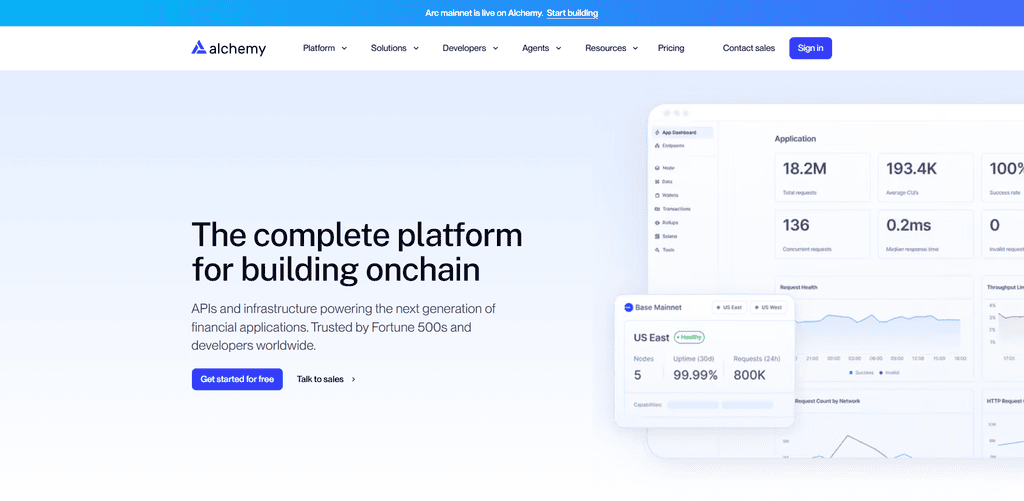
Its infrastructure has been built to handle low latency requests and to provide stable performance for dApps, wallets and DeFi protocols. Alchemy supports all standard Optimism JSON-RPC methods, WebSocket connections, archive data access and enhanced developer APIs. The platform scales efficiently with traffic growth and includes monitoring, analytics, authentication controls and enterprise-grade security features for production deployments.
Main Features
- Managed Optimism RPC endpoints for connecting to the blockchain.
- JSON-RPC support compatible with Ethereum.
- Monitoring of developer dashboard and API usage.
- Improved blockchain data APIs & developer tools.
- Webhooks and event notification on the supported workflows.
Best Use Cases
- DeFi apps that needs reliable access to the blockchain.
- NFT marketplaces fetching token and contract data.
- Wallet apps for making transactions and checking balances.
- dApps that need integrated developer tools and monitoring
2. QuickNode
QuickNode is a leading Optimism RPC provider with fast response times and a globally distributed infrastructure. It provides trial access and commercial plans that scale based on application needs making it suitable for both startups and enterprise teams. The service provides reliable Optimism connectivity, allowing developers to keep their applications running smoothly even during periods of high demand.
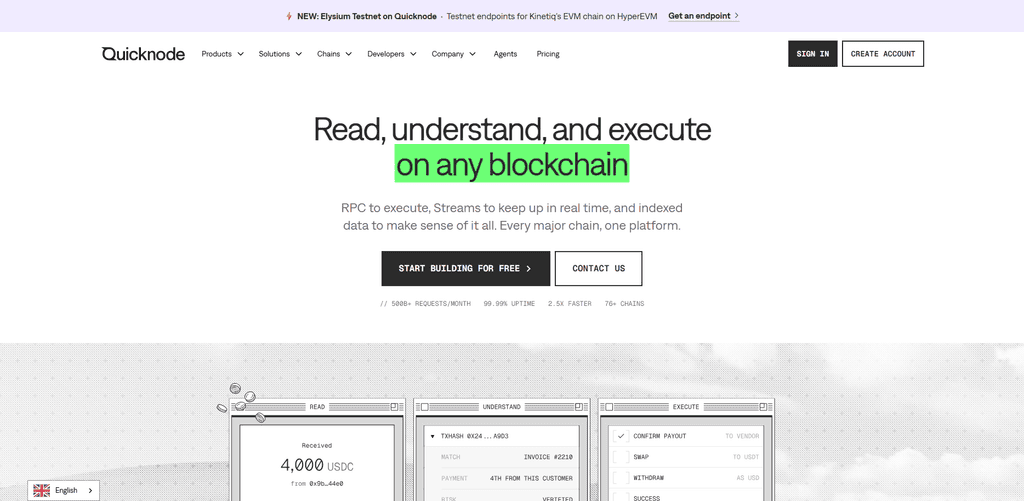
QuickNode supports popular JSON-RPC methods, WebSocket endpoints, archive data options and other developer plugins. The architecture is horizontally scalable which means that projects can scale as the number of transactions grows. Production environments have security, account controls and redundant infrastructure to help ensure consistent availability.
Features
- Maintained Optimism RPCs endpoints.
- Supports standard blockchain queries and transactions.
- Endpoint and usage management developer console.
- WebSocket connectivity for real-time workflows that are supported
- More APIs, add-ons and infrastructure options.
Use Cases
- DeFi platforms handling a high volume of blockchain requests.
- dApps that run on multiple blockchain networks cross chains.
- Marketplaces for NFTs that scrape token and blockchain data.
- Applications that need to monitor events on a blockchain and manage data workflows.
3. Infura.
Infura is a popular blockchain infrastructure provider that allows developers to connect to Optimism nodes without having to run their own infrastructure. It provides developer-friendly access options, and paid plans for apps that need higher throughput and reliability. Infura is built to provide consistent performance and reliable request processing for wallets, decentralized applications, and enterprise blockchain solutions.
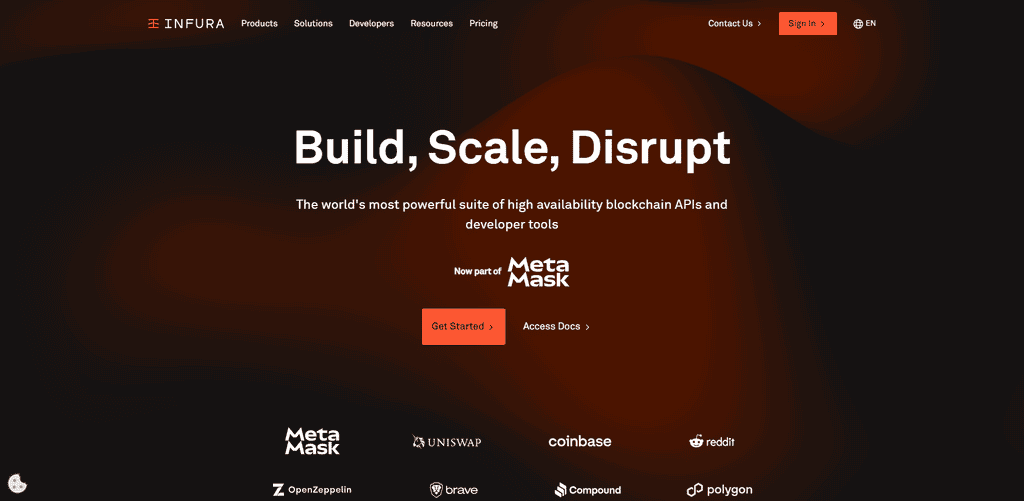
It implements the standard RPC methods needed to interact with the Optimism intelligent contracts and blockchain data. It’s infrastructure is designed to handle increasing application traffic with guarantyd reliability. It’s backed by security controls, managed access systems, and strong operational practices that make it a trusted choice for production-grade deployments.
Salient Features
- Managed RPC access for Optimism’s supported networks;
- Ethereum-compatible JSON-RPC API.
- To propagate transactions and retrieve data from the blockchain.
- API credentials and usage handling.
- Developer infrastructure building on top of the Consensys ecosystem.
Best Use Cases
- Ethereum-compatible dApps migrating to Optimism.
- Transactions and wallets interacting with intelligent contracts.
- DeFi apps fetching balances and blockchain state.
- Developer teams looking for managed blockchain connectivity
4. Chainstack
Chainstack offers managed Optimism RPC services with an emphasis on reliability, flexibility and multi-chain infrastructure management. The platform offers developer-friendly plans and scalable paid options for both small projects and enterprise users. Chainstack provides high network performance through distributed infrastructure for low latency and downtime.
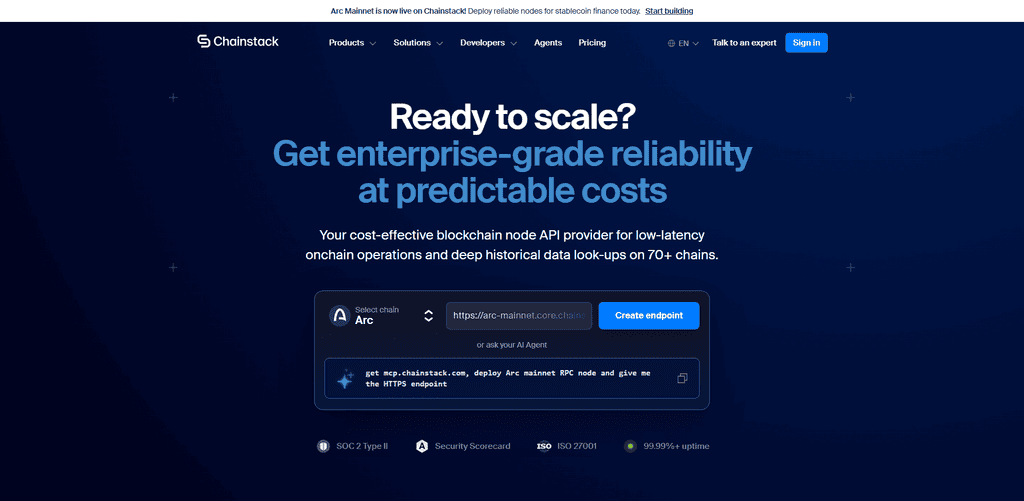
Optimism developers will have access to standard JSON-RPC functionality, WebSocket connection and advanced node deployment options. The platform is built to scale well with increasing transaction volumes, making it perfect for growing web3 ecosystems. Security features such as control of access, infrastructure monitoring and operational standards designed for the enterprise help create a secure and resilient environment.
Highlights
- Managed infrastructure for blockchain nodes.
- RPC access to supported Optimism deployments.
- Infrastructure options that are configurable based on plan.
• Blockchain query and transaction capabilities - Tools for deployment and infrastructure management.
Best Use Cases
- Production dApps that need managed node infrastructure.
- DeFi applications requiring constant access to the blockchain.
- Development teams testing intelligent contracts on Optimism.
- Projects that need to be able to configure infrastructure as they grow.
5. Ankr.
Ankr is a large blockchain infrastructure network that provides developers, enterprises and Web3 apps with access to Optimism RPC. It has generous usage allowances and a flexible pricing structure, making it accessible for projects at different stages of growth. Ankr is a trusted platform with a globally distributed infrastructure that helps reduce request latency.
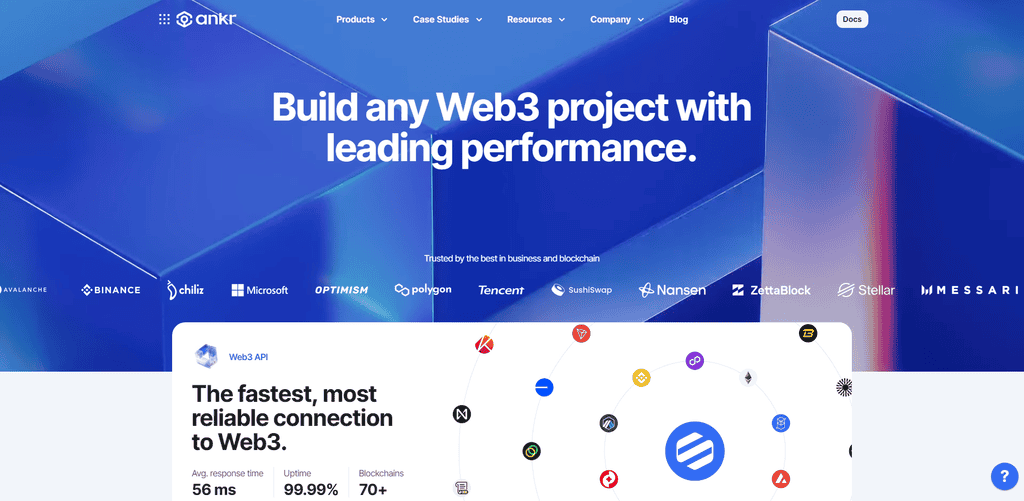
It supports a wide range of Optimism RPC methods, WebSocket features, and blockchain data services. Architected to scale up for additional workloads without losing responsiveness. Reliable and secure connectivity of the blockchain is provided by security protections, traffic management systems, and infrastructure redundancy.
Features
- RPC endpoints for Optimism supported networks.
- Distributed blockchain infrastructure and routing of requests.
- Access via JSON-RPC and WebSocket where available.
- APIs for advanced indexed blockchain data
- Tools for monitoring usage and testing APIs.
Best Uses Cases
- dApps that need to access multiple chains.
- DeFi apps which query for balance and smart contract data.
- Wallets receiving blockchain info.
- Supported blockchain data APIs for AI-powered Web3 tools
6. dRPC
dRPC is a decentralized RPC provider that offers Optimism connectivity through a distributed network of infrastructure providers. The service is designed to add resiliency by reducing reliance on any one backend source. It provides developer-friendly access options and scalable options for higher-volume applications. Intelligent routing helps improve performance by sending requests across the available infrastructure resources.
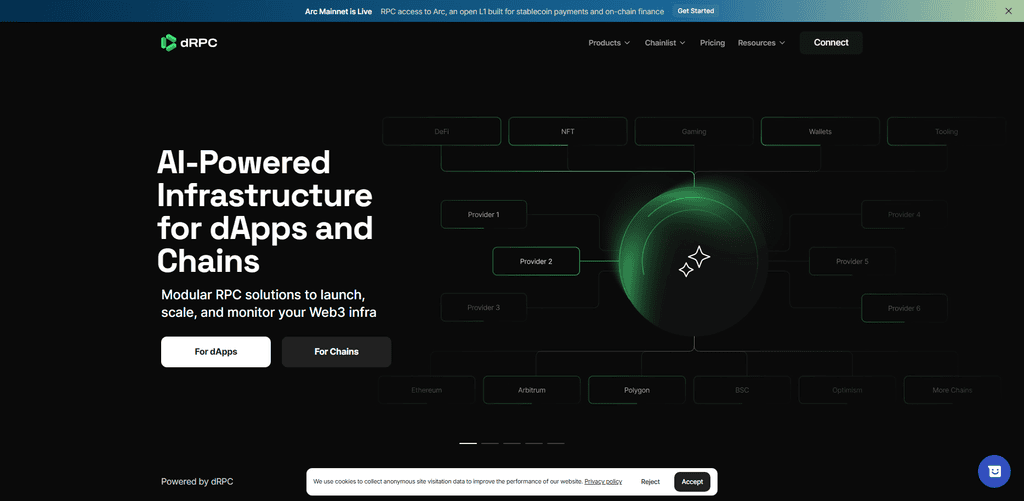
dRPC supports standard Optimism RPC calls, WebSocket functionality and blockchain data retrieval operations . The decentralized architecture helps to accommodate the growing workloads while maintaining the reliabilities. Security benefits include a distributed infrastructure, fault tolerance, and mechanisms that help ensure endpoint availability across production environments.
Main Features
- RPC access distributed across independent provider nodes.
- Load balancing and dynamic request routing.
- Automatic retries and routing to alternate provider.
- WebSocket support for the supported networks.
- Usage based access, optional answer checking.
Best Use Cases
- dApps seeking alternatives to single provider infra.
- DeFi apps that need reliable access to blockchain data.
- Multi-chain applications that use different blockchain networks.
- Projects that need RPC redundancy and provider flexibility
7. GetBlock.io
Managed Optimism from GetBlock RPC endpoints for developers who want fast deployment and reliable node connectivity. It offers both shared and dedicated infrastructure options, so users can choose the services that meet their scale and performance needs. GetBlock supports basic Optimism JSON-RPC methods, blockchain queries, and WebSocket connections to enable real-time application functionality.
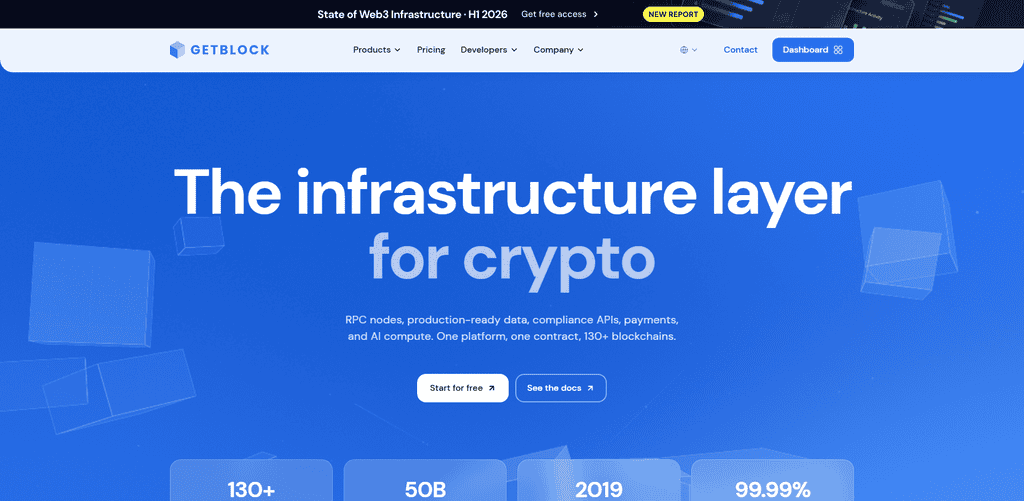
Its infrastructure is built to ensure consistent performance across decentralized applications and blockchain integrations. Scalability features enable projects to grow as adoption and traffic increase. Authenticated API access, infrastructure monitoring and operational controls enforce security and help provide reliable service availability for production workloads.
Key Features
- Maintained RPC endpoints for supported Optimism networks.
- Choices for shared and dedicated node infrastructure
- Standard blockchain queries and transaction propagation.
- Access to the archive and specialized methods if supported
- Infrastructure choices for various workloads and traffic levels.
Best Use Cases
- DeFi applications that need access to the blockchain.
- Wallets which keep balances and broadcast transactions.
- Blockchain analytics and historical data platforms.
- Web3 apps that see a lot of traffic and need dedicated infrastructure
8. Lava Network
Lava Network is Decentralized Optimism RPC access to a distributed marketplace of infrastructure providers. This approach seeks to improve reliability by pulling blockchain data from multiple participants, rather than depending on a single centralized provider. The network aims to provide developers with the tools they need to build resilient applications across blockchain ecosystems.
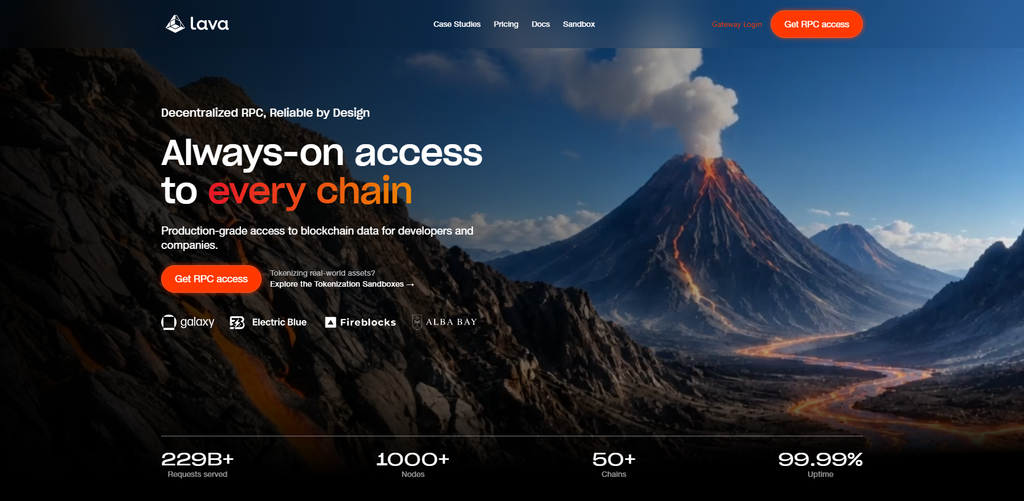
It provides standard RPC functionality, but optimizes the routing of requests for better performance and availability. Scalability is achieved by adding more network participants and provider resources. The decentralized structure improves fault tolerance and network resilience, while distributing service delivery enhances security and helps to minimize single points of failure.
Features in Brief
- Decentralized RPC infrastructure that connects apps to providers.
- Provider selection and request routing procedures.
- Based on coverage, support for multiple blockchain networks.
- Incentives for infrastructure providers to participate.
- Protocol based access to prevent dependence on a single provider.
Best Use Cases
- Web3 projects building decentralized infrastructure
- dApps looking for a substitute for centralized RPC services.
- Multi-chain apps with flexible access to providers.
- Developers who want decentralized blockchain data connectivity.
9. Tenderly Node RPC
Tenderly Node RPC combines access to an Optimism node with enhanced developer observability and debugging. The platform is especially helpful for development teams that need both robust RPC infrastructure and sophisticated transaction analysis tools. It provides access plans suitable for test, development and production environments.
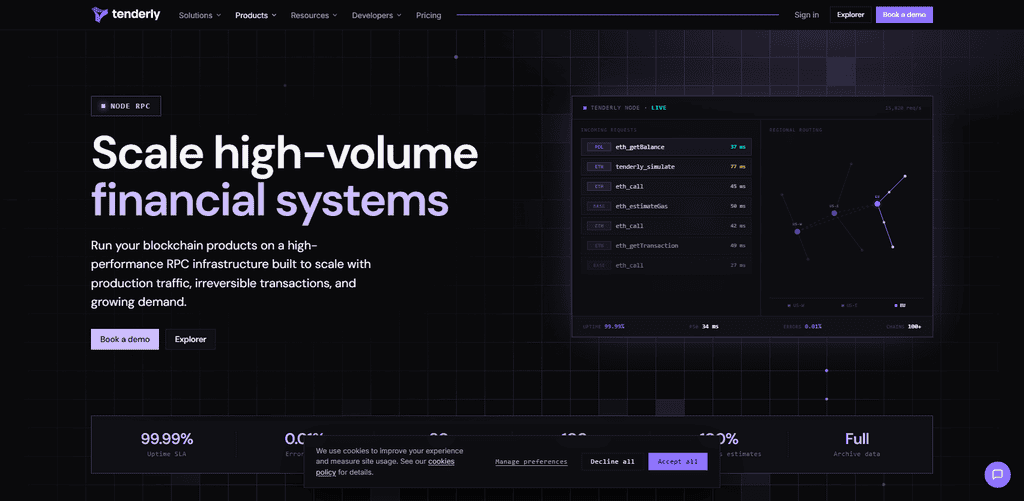
Managed infrastructure provides performance optimization and ensures stable request processing and blockchain interaction. Tenderly supports standard optimism RPC methods, simulation capabilities, monitoring tools and improved debugging workflows.
Its architecture scales as your application needs grow. Developers are able to build secure and reliable blockchain applications with security features, access management controls and extensive monitoring.
Main Features
- RPC access to supported EVM chains.
- Tools for simulating transactions and debugging intelligent contracts.
- Transaction level inspections and execution traces.
- Virtual TestNets to test in controlled blockchain environments.
- Monitoring & alerting tools for supported development workflows.
Top Use Cases
- Smart contract developers troubleshooting transaction failures.
- DeFi teams experimenting with complex transaction execution.
- QA teams test contracts before deployment.
- dApps that require simulation, testing and production troubleshooting.
Conclusion
Selecting the correct Optimism RPC provider is essential for creating dependable, scalable and efficient Web3 apps. Blockchain providers like Alchemy, QuickNode, Infura, Chainstack, Ankr, dRPC, GetBlock, Lava Network, and Tenderly Node RPC can be used by developers for blockchain connectivity, developer tools, and infrastructure management.
Review performance, uptime, supported RPC methods, security, scalability, and pricing plans before deciding. Evaluate your application traffic, technical requirements and budget to find the best fit. Ultimately the right provider will ensure your project has reliable access to the blockchain and support your future growth and development .]
FAQ
What is an Optimism RPC provider?
An Optimism RPC provider connects Web3 applications to the Optimism blockchain, allowing developers to retrieve blockchain data, interact with smart contracts, check transaction status, and broadcast transactions.
Which are the best Optimism RPC providers for Web3 projects?
Popular options include Alchemy, QuickNode, Infura, Chainstack, Ankr, dRPC, GetBlock, Lava Network, and Tenderly Node RPC. The best choice depends on your performance, pricing, reliability, and development requirements.
Are there free Optimism RPC providers?
Some providers offer free tiers with limited request allowances. Availability, rate limits, supported features, and usage restrictions vary, so developers should review current plans before selecting a service.
How do I choose the right Optimism RPC provider?
Compare response times, uptime, supported JSON-RPC methods, scalability, security controls, pricing, and developer tools. Select a provider that matches your application’s expected traffic and technical requirements.