The right infrastructure is key to building fast, reliable and scalable applications on Solana. Developers need reliable node providers to power everything from DeFi platforms and trading bots to NFT marketplaces and blockchain analytics applications, with low latency, real-time data and consistent transaction performance.
In this guide, I will introduce the Best High-Performance Solana Node Infrastructure Providers with their key features, pros, and cons, so you can compare the best options available and select the right solution for your project’s technical needs, growth plans, and budget.
How to Choose the Right Solana Node Infrastructure Provider?
Check Performance: Select a provider that guaranties low RPC latency, fast response times, and consistent performance during network congestion to back trading bots, decentralized applications, and real-time blockchain interactions.
Verify Reliability: Examine uptime metrics, redundancy of infrastructure, and failover strategies to ensure your Solana application remains accessible during node outages, traffic spikes, and unanticipated network interruptions.

Compare RPC Features: Search for HTTP endpoints, WebSocket subscriptions, enhanced APIs, and Yellowstone gRPC streaming to satisfy your application’s requirements for blockchain data retrieval and real-time event monitoring.
Evaluate Transaction Delivery: Look for providers that have reliable transaction submission, proper priority-fee advice, and transaction landing tools to increase execution reliability in times of high activity on the Solana network.
Review Pricing Plans: Review request limits, pay as you go pricing, dedicated node pricing, and premium features to select infrastructure that fits your budget with no compromise on key performance and reliability.
Analyze Historical Data: If your application needs analytics, historical research, blockchain indexing or financial reporting, find providers that have the right archive access, transaction history, and account data retrieval capabilities.
Security Focus: Examine authentication, control of access, monitoring tools, and service level agreements available to protect sensitive infrastructure credentials and ensure reliable operations for production applications.
Test Scalability and Support: Put the providers through their paces with real-world workloads, assessing technical support, documentation, and scaling options to ensure the infrastructure can handle growing traffic, new features, and long-term business expansion.
10 Best High-Performance Solana Node Infrastructure Providers
| Provider | Key Point |
|---|---|
| Helius | Solana-focused infrastructure provider known for high-performance RPC nodes, enhanced APIs, DAS support, webhooks, and developer-friendly tools for production dApps. |
| QuickNode | Popular multi-chain node platform offering reliable Solana RPC endpoints, Yellowstone gRPC support, global infrastructure, and enterprise-grade scalability. |
| Alchemy | High-performance blockchain infrastructure provider with Solana RPC, multi-region architecture, advanced analytics, and extensive developer tooling. |
| Triton One | Specialized Solana infrastructure provider recognized for low-latency RPC services, Yellowstone gRPC development, and trading-focused performance |
| Chainstack | Enterprise-grade node infrastructure offering scalable Solana RPC access, dedicated deployments, archive nodes, and strong uptime reliability. |
| Syndica | Solana-native infrastructure platform providing RPC services, indexing solutions, and enterprise-grade support for high-throughput applications. |
| dRPC | Distributed RPC network delivering Solana node access through decentralized routing, helping improve redundancy and availability. |
| Blockdaemon | Institutional blockchain infrastructure provider offering managed Solana nodes, staking infrastructure, and enterprise security features. |
| Ankr | Cost-effective Web3 infrastructure provider supporting Solana RPC endpoints, API services, and scalable blockchain connectivity. |
| GetBlock | Managed blockchain node provider delivering Solana RPC and API access with shared and dedicated node options for developers. |
1. Helius .
Helius is a Solana infrastructure provider, built for developers building high-performance apps on Solana. It offers scalable RPC services, improved transaction APIs, Digital Asset Standard (DAS) support, webhooks and real-time blockchain data tools. The platform provides shared, dedicated and enterprise-grade node access to suit projects of all sizes.
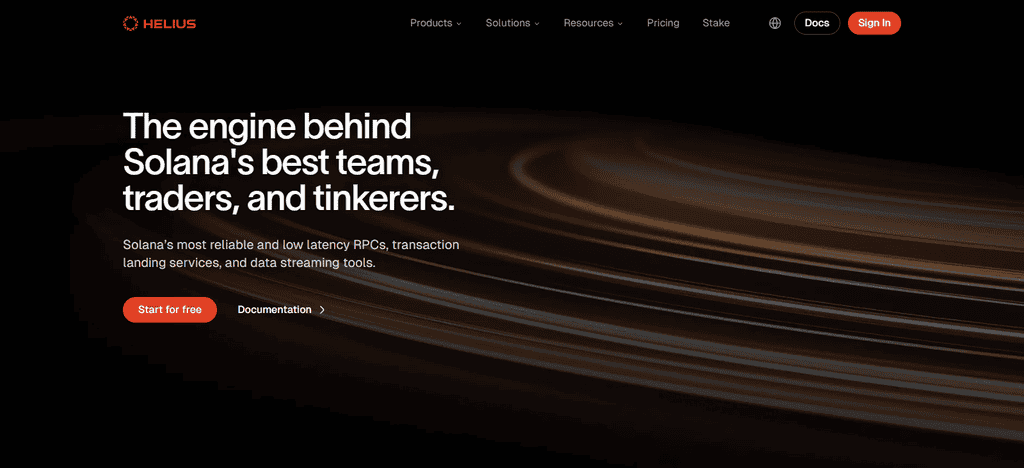
Helius is known for its high request throughput, strong reliability, and low latency. It’s optimized for Solana workloads, allowing applications to process blockchain data efficiently. Its security features, monitoring tools and developer support make it a popular choice for DeFi, NFT and Web3 apps.
Main Features
- 1. Solana-Focused Infrastructure Solana RPC Access: Helius provides Solana RPC access to help developers connect their applications to the blockchain data and interact with on-chain programs with efficiency.
- 2. Improved APIs: It provides dedicated APIs to get parsed transactions, token info, NFT data and other Solana blockchain info.
- Transaction Webhooks: Developers are able to be notified of events on the blockchain, making it easier to monitor an application and removing the need to poll continuously.
- Developer-Friendly Tools: Documentation, SDK support, and debugging utilities make it easier to build, test, and maintain Solana applications.
- Scalable RPC Services Helius is built with infrastructure to handle a variety of workloads, from early stage applications to more demanding blockchain projects.
Major Limitations
- Solana Focus: Since it is dedicated to Solana, it is not the best choice for developers who want a single provider for multiple blockchain networks.
- Usage-based cost: As applications scale, operating costs can increase with more requests and premium features.
- Plan Limitations: Rate limits, request quotas, and feature access are determined by the chosen service plan. 4. Dependency on Provider: Applications that are tightly integrated with Helius-specific APIs might need extra development work to switch to another provider
2. QuickNode
QuickNode offers high-performance Solana node infrastructure and supports a number of other blockchain networks. The platform features managed RPC endpoints, Yellowstone gRPC support, analytical tools, and enterprise-grade infrastructure. Depending on their performance needs, developers are able to choose from shared, dedicated and custom deployment options.
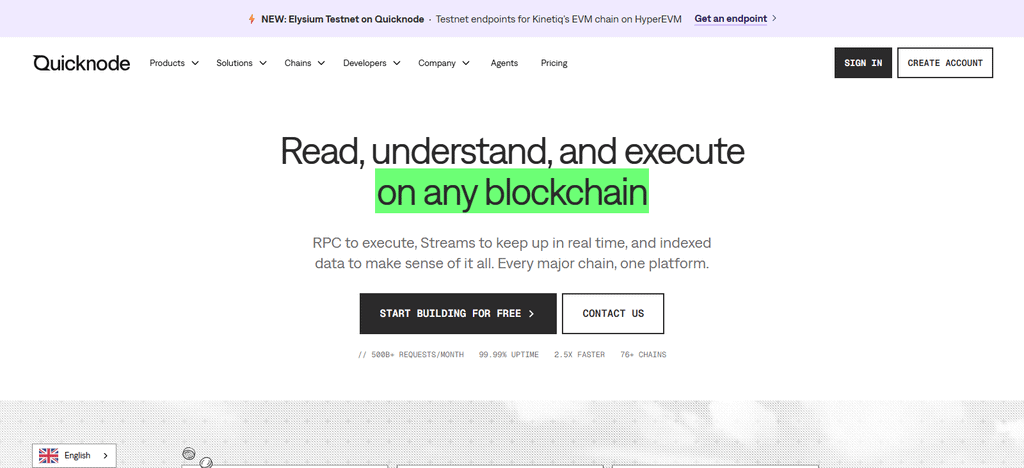
QuickNode is committed to uptime, scalability and global network coverage to allow reliable access to blockchains. It supports applications from small startups to large enterprise. As transaction volumes and user traffic increase, developers are able to employ sophisticated monitoring, security controls and technical support to maintain service stability.
Main Features
- Multi-chain Support: QuickNode infrastructure supports many blockchain networks, enabling developers to build applications on different ecosystems.
- Secure RPC Access – Managed endpoints allow applications to read blockchain data and submit transactions without having to run every node themselves.
- Improved APIs : APIs that address the use cases for NFTs, tokens, transaction information, and other blockchain data. 4. Developer Tools : SDKs, documentation, and monitoring features help in making application development and troubleshooting easier.
- Scalable Infrastructure: Different service levels are available to suit projects with varying traffic levels and infrastructure requirements.
Major Limitations
- 1. Potentially More Expensive : As services improve, traffic increases and premium features are added, it can become expensive for high volume apps .
- Limits by plan: Request allowances & throughput, features available, Varies by subscription level
- Differences in features: The features and availability of the API may be different for the supported blockchains.
- Lock-in to Managed Services: Applications that rely on proprietary features may require modification if the provider changes, or if the infrastructure is running standalone
3. Alchemy
Alchemy is the top blockchain infrastructure platform, providing high-performance Solana RPC services through a global network of distributed nodes. The service is designed for low-latency access, advanced monitoring and robust transaction processing for production-grade applications. Developers are provided with APIs, tools for analytics, and scalable infrastructure to handle large workloads.
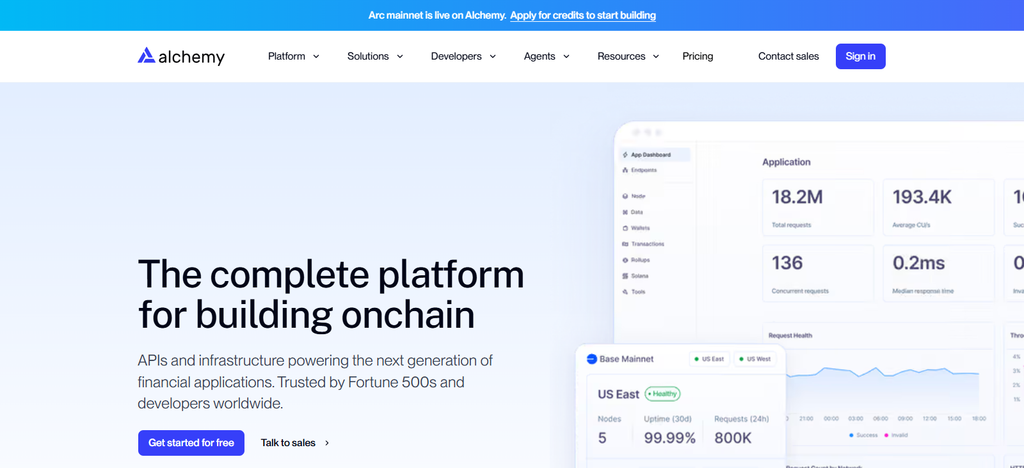
The architecture of Alchemy allows for multi-region deployment and failover capabilities that increase reliability at times of high network demand. It has the infrastructure to support both startups and enterprise organizations. Alchemy is a powerful choice for demanding Web3 applications, offering solid security, speed optimization, and extensive developer resources.
Key Features
- Improved Blockchain APIs: APIs make it easier to access information about NFTs, token balances, transaction data and activity on the blockchain.
- Wide Blockchain Support: Alchemy integrates with a variety of blockchain networks, making it suitable for applications that need to work across different ecosystems.
- Developer Dashboard: Usage analytics, request monitoring and diagnostic tools help developers to identify issues and optimize performance.
- Webhooks and Notifications The event-driven notifications enable applications to monitor wallet activity, transactions, and other blockchain-related events.
- Advanced Infrastructure Tools: Alchemy provides services for smart contract development, transaction simulation and application infrastructure.
Restrictions
- Usage-Based Billing: Since compute-unit consumption varies by request type, it can be challenging to forecast costs without diligent monitoring.
- Throughput Limits: The limits on your plan and resources impact requests/second and total capacity.
- Availability of Features: Some premium services and features may only be available on paid plans or in certain settings.
- Platform Lock-In: Applications developed on specialized Alchemy APIs may have to be altered to function on other infrastructure providers.
4. One Triton
Triton One is focused on Solana infrastructure for low latency trading, MEV and institutional use cases . The company is known for its work in developing Yellowstone gRPC technology and for its advanced streaming solutions. Triton is dedicated node infrastructure, high-performance RPC access and tools optimized for real-time blockchain data delivery.
Its services are based on speed, reliability and efficiency of transactions, fitting for trading firms and infrastructure providers. Users can manage demanding workloads with consistent performance across Solana applications with strong scalability, specialized networking and professional support.
Key Features
- Solana Infrastructure: Triton One is focused on Solana infrastructure for applications requiring solid blockchain connectivity.
- Yellowstone gRPC: The streaming infrastructure provides access to real-time Solana account, transaction, and slot updates.
- Low-Latency Data Streaming: Infrastructure designed for demanding workloads enables trading systems and analytics applications to process blockchain events quickly.
- Validator Infrastructure Know-How: Its history in serving the Solana ecosystem benefits developers and organizations running performance-centric blockchain services.
- Streaming-optimized advanced data access tools allow apps to consume blockchain info without having to rely on repeated RPC polling
Limits
- Limited blockchain coverage: The focus on Solana might not be sufficient for applications needing a broad multi-chain infrastructure.
- Technical Complexity: Streaming integrations might require more development expertise than basic HTTP RPC connections.
- Overkill for the Job: Its infrastructure might be overkill for projects that only need to query the blockchain from time to time.
- Cost of Evaluation: High-throughput streaming and special infrastructure may require careful budgeting based on actual usage
5. Chainstack
Chainstack provides enterprise-grade Solana node infrastructure with the focus on reliability, flexibility and scalability. The platform offers developers and businesses shared nodes, dedicated nodes, archive access and managed blockchain services. Chainstack offers customizable infrastructure options to support the growth of your project from development environments to large scale production deployments.
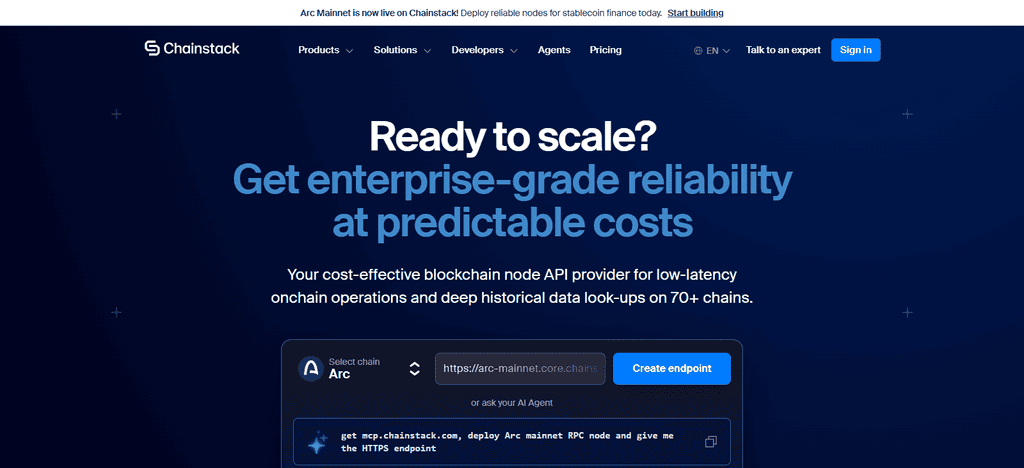
Its geographically distributed network reduces latency and increases service availability. The provider also provides APIs, monitoring and support to enable ongoing operations. Organizations can deploy and operate blockchain applications with more confidence and operational efficiency by implementing security controls and infrastructure automation.
Key Features
- Multichain Infrastructure: Chainstack offers managed blockchain nodes across several networks, enabling a variety of Web3 apps.
- Dedicated Nodes Developers may also choose dedicated infrastructure if they need more control over performance and resource allocation.
- Deployment Flexibility: Managed and self-hosted deployment options cater to diverse operational and infrastructure needs.
- Access to Archived Data: Applications requiring historical blockchain records and older state information can use the archiving capabilities.
Important Limitations
- Plan Dependent Features: Access to the archive, throughput and additional features may vary depending on the purchased plan or configuration.
- Cost scaling. As requirements grow, larger deployments and dedicated nodes can increase operational costs.
- Configuration Requirements: Configuring more complex deployments requires knowledge of the infrastructure and additional configuration effort.
- Network-Specific Differences: The APIs and capabilities are different from one supported blockchain to another
6. Syndicate
Syndica is a Solana-native infrastructure provider focused on providing reliable RPC, data indexing and enterprise-grade blockchain access. It is built for organizations that need high throughput, fast data retrieval and reliable network connectivity. Syndica offers optimized node infrastructure & special Solana tools for large scale applications.
Its services enable developers to efficiently access blockchain data and maintain performance during periods of increased network activity. At the core of its platform is security, scalability and operational reliability. Syndica is ideal for companies developing long-term Solana-based products and services with dedicated support and infrastructure management.
Main Features
- Solana Focus: Syndica focuses on Solana infrastructure for developers building apps on Solana.
- High-Performance RPC: The infrastructure enables blockchain requests for applications with responsive data access.
- Streaming Capabilities: Real-time data services allow developers to monitor transactions and blockchain activity as they happen. 4. Developer Infrastructure: Its services are used to support applications that require reliable access to Solana network data and transaction information.
- Production-Oriented Services: Infrastructure options can meet demanding workloads that require predictable access and operational stability
Main Limitations
- Limited Multichain Support: Being Solana-centric, it is less suitable for projects that need a broad cross-chain infrastructure from a single provider.
- Enterprise Accessibility: Some offerings might require direct discussions with the provider instead of a simple self-service setup.
- Specialized integration: More advanced infrastructure and streaming services might need additional engineering work to integrate properly.
- Workload suitability: Smaller applications with simple RPC needs might not need its more specialized infrastructure features
7. dRPC
dRPC provides a distributed RPC infrastructure model, which improves reliability and resilience for blockchain applications. Developers on Solana get scalable RPC access to the platform through a network designed to minimize single points of failure. Its architecture ensures service continuity even if the underlying infrastructure is disrupted.
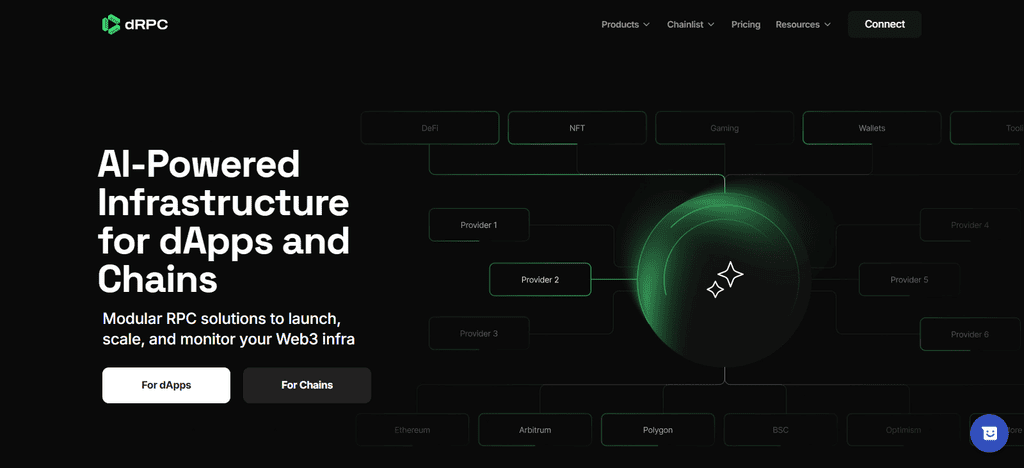
dRPC enables developers requiring reliable node access with scalable options. It’s built to be performant, highly available and easy to integrate using standard APIs. dRPC is a good option for projects that need redundancy and infrastructure diversification. It is stable due to its secure mechanisms and intelligent request routing.
Main Features
- Multichain Connectivity: dRPC enables access to multiple blockchains through a shared infrastructure layer.
- Decentralized RPC Architecture: The network spreads the requests across the infrastructure providers, so that the network does not depend on a single node operator.
- Intelligent Request Routing: Routing mechanisms help direct blockchain requests across available infrastructure based on network and service conditions.
- Flexible Access: Developers are able to integrate blockchain endpoints into wallets, decentralized applications and other Web3 services.
- Infrastructure Resilience – Distributed access can help applications stay connected when a particular provider has performance issues.
Major limitations
- Variable Response Performance: Latency and reliability might vary across networks and underlying infrastructure providers.
- Less Direct Control: Developers may have less direct control over each backend node than dedicated infrastructure.
- Provider Consistency. Variability among underlying node operators can impact response behavior and capabilities supported.
- Specific API Differences: Certain advanced methods and features may not be consistently available across all networks and routes
8. Blockdaemon.
Blockdaemon offers institutional-grade blockchain infrastructure including Solana node hosting, staking solutions and managed services. The platform is aimed at enterprises, validators and financial institutions that need secure and reliable blockchain connectivity. Blockdaemon provides dedicated node deployments optimized for performance, uptime and regulatory needs.
It is backed by a full complement of monitoring, security controls and professional support services. Blockchains can be deployed globally, enabling organizations to efficiently access blockchain assets globally. Blockdaemon provides reliability, scalability and operational expertise to enable organizations to run blockchain applications without the need to manage complex infrastructure themselves.
Key Features
- Institutional Infrastructure: Blockdaemon offers blockchain infrastructure services for enterprises and organizations with demanding operational requirements.
- Multichain Node Access: Its infrastructure enables access to multiple blockchain networks for applications that demand reliable connectivity.
- Staking Services: Staking infrastructure enables organizations to engage in proof-of-stake networks without needing to develop all operational components in-house.
- Enterprise Security: Infrastructure management and organizational controls for business environments with security and governance requirements.
- Broader Blockchain Services: It goes beyond RPC access. It provides infrastructure and services for institutions to operate on the blockchain
Major Limitations
- Potentially higher costs Infrastructure and services aimed at enterprises may not be economically feasible for smaller developer teams.
- Sales-Led Access: Some services and configurations may need commercial discussions before deployment.
- Configuration complexity: Enterprise integrations may require additional planning around security, operations, and infrastructure.
- Overkill for Simple Projects Developers who only require access to basic blockchain APIs may not require its broader suite of institutional services.
9. Ankr (ANKR)
Ankr, a blockchain infrastructure provider, offers Solana RPC services and support for many other networks. It offers cloud-based infrastructure for affordable, scalable, and developer-friendly node access. The platform makes blockchain integration easy with APIs, managed nodes, and performance tools.
Ankr’s network scales with the needs of your application, while guaranteeing reliable uptime and responsiveness. Its services are popular with startups and developers looking for low-cost infrastructure solutions. Security protections, monitoring systems, and global coverage allow stable and efficient access to blockchain resources.
Key Features
- Broad Network Support: Ankr supports access to blockchain on many networks which is helpful for multi-chain applications.
- Decentralized Infrastructure: Its infrastructure model utilizes distributed blockchain resources to provide access to network data.
- Flexible Pricing: With usage-based services, developers are able to choose infrastructure that is compatible with their traffic and budget needs.
- Developer APIs: RPC endpoints and other APIs allow applications to pull blockchain data and interact with supported networks.
- Scalable Connectivity: Its services can handle projects from initial development to applications demanding higher volumes of requests
Limitations
- Historical Data Limitations: The availability of transaction history and archiving capabilities can vary across networks and service levels.
- Network Specific Performance: Latency and request reliability can vary based on the blockchain and infrastructure setup.
- Usage Management: Developers should be aware of credits, request limits and billing to manage infrastructure costs.
- Variations in Features: You might observe that supported blockchain networks offer varying advanced functionality and available methods
10. GetBlock.com
GetBlock is a managed node infrastructure provider that provides Solana RPC connectivity through shared and dedicated node solutions. The platform allows developers to connect to blockchain networks without needing to run their own infrastructure. GetBlock is a simple, scalable and reliable access to blockchain data for Web3 applications.
Its services support a variety of development and production use cases, with stable node performance and flexible deployment options. The geographic distribution allows to improve speed of access and reliability of service. Security features, infrastructure monitoring and technical support ensure a reliable environment for projects that need consistent blockchain connectivity and data access.
Main Features
- Multichain RPC Access: GetBlock provides access to a variety of blockchain networks, utilizing managed node infrastructure.
- Shared and Dedicated Nodes: Developers may choose shared endpoints for common workloads, or dedicated infrastructure for more specialized needs.
- Multiple Access Protocols: The supported connection methods allow the applications to communicate with the blockchain nodes through appropriate communication options.
- Support for Historical Data: Archive services available help the developers to fetch the historical information from the blockchain for analytics and application features.
- Flexible deployment options. Projects have different traffic and infrastructure requirements and hence different service configurations work best
Large Limitations
- Plan-Based Rate Limits : The capacity for requests and throughput are determined by the plan chosen and the node configuration .
- Dedicated Infrastructure Costs: Dedicated nodes can be more expensive than shared RPC access, particularly for smaller applications.
- Different Network Capabilities: Support for methods, archive availability and other features can differ on blockchain networks.
- Migration Considerations: When changing services, endpoint, authentication or integration changes may be needed to accommodate provider-specific configurations.
Common Problems When Using Solana Node Infrastructure
Network Congestion: High transaction volumes can cause longer processing delays, impact transaction landing rates and lead to unpredictable execution costs. This makes it hard for applications to achieve consistent performance during periods of high network activity.
High Latency: Slow RPC responses can affect trading bots, dApps and real-time analytics, particularly when infrastructure routing, server locations or backend node performance cause additional delays.
Rate Limits: Providers often impose limits on the number of requests, which can restrict application performance during traffic spikes. To overcome these limits, developers need to optimize queries, manage workloads, and upgrade infrastructure plans.
Transaction Failures: Transactions can fail due to lack of priority fees, stale blockhashes, account conflicts, or due to congestion. Applications need to implement retries, monitoring and transaction-status verification.
Historical Data Access : Accessing historical transactions, states and large blockchain data may require specialized archive infrastructure, which leads to increased storage, processing complexity and overall operating costs.
Streaming Reliability : WebSocket and gRPC connections can disconnect , delay , or lose updates during disruptions . Therefore , reconnection strategies , data reconciliation , and mechanisms for reliable event-processing are needed .
Infrastructure Costs: To scale Solana applications, careful resource management is necessary to prevent cost escalations from high request volumes, dedicated nodes, premium streaming services, and advanced APIs.
Provider Dependency: Dependence on a single infrastructure provider can make applications susceptible to downtime, service limitations, and unexpected performance changes. It is important to have backup endpoints and tested failover strategies.
Conclusion
Selecting a Solana node infrastructure provider is crucial to developing fast, resilient, and scalable blockchain apps. RPC providers like Helius, QuickNode, Alchemy, Triton One, Chainstack, Syndica, dRPC, Blockdaemon, Ankr, and GetBlock offer RPC access, real-time streaming, transaction delivery, and historic data retrieval.
But when they make a decision, developers have to consider latency, network congestion, rate limits, transaction failures, pricing, and infrastructure reliability. If you test performance with realistic workloads, you will learn which solution works best. Ultimately, the best provider will balance technical requirements, operational stability, scalability and long-term affordability.
FAQ
What is Solana node infrastructure?
Solana node infrastructure provides access to blockchain data and transaction processing through RPC endpoints, validators, and streaming services, enabling developers to build and operate decentralized applications.
Which are the best Solana node infrastructure providers?
Popular options include Helius, QuickNode, Alchemy, Triton One, Chainstack, Syndica, dRPC, Blockdaemon, Ankr, and GetBlock. The best choice depends on performance requirements, features, and budget.
Why is low latency important for Solana infrastructure?
Low latency helps applications retrieve blockchain data quickly and submit transactions efficiently. It is particularly important for trading bots, DeFi platforms, and applications requiring real-time updates.
What is the difference between RPC and Yellowstone gRPC?
RPC provides methods for interacting with Solana and retrieving blockchain data, while Yellowstone gRPC supports efficient streaming of real-time updates, including account changes, transactions, and slot information.