

As Web3 applications continue to grow, having reliable and decentralized node infrastructure has become more important than ever for developers. DRPC is one way of interacting with blockchain networks, but it’s not the only one.
In this article, I will discuss the Top DRPC Alternatives for Decentralized Nodes such as Alchemy, QuickNode, Ankr, Chainstack, Lava Network and more. To give you an idea on how they are different, I’ll be comparing their support of blockchains, RPC access, performance, node distribution, key features and practical use cases.
Why Look for DRPC Alternatives?
Enhanced Blockchain Coverage: There are DRPC alternatives that support more blockchain networks, Layer-2 solutions and emerging ecosystems, allowing developers to build multi-chain applications without having to run seperate infrastructure for every network.
Performance Improvements: Alternative providers can help applications that handle large amounts of blockchain traffic respond more quickly by offering lower latency, higher throughput, better request routing, and geographically dispersed infrastructure.

Improved Reliability: Thanks to redundant infrastructure, automatic failover, load balancing, and multiple node locations, you can depend on RPC to be available over time, even if one node goes down or there are network problems.
More APIs for Developers: Some alternatives provide better APIs, WebSockets, access to the archive, indexed blockchain data and specific endpoints, which can reduce the amount of work developers need to do when their applications require more than just simple RPC functionality.
Flexible Pricing: Providers come with varied pricing structures such as free tiers, pay-as-you-go plans, shared infrastructure and dedicated nodes, enabling projects to pick infrastructure matching their usage needs.
Dedicated Node Options: Projects with high-demand workloads may need dedicated resources, predictable performance, higher request capacity, or greater control over infrastructure, which may not be available through every decentralized RPC provider.
Advanced Development Tools: Some alternatives combine RPC access with transaction simulation, debugging, monitoring, analytics, testing environments and smart-contract development tools to create a broader infrastructure environment for Web3 teams.
Different Decentralization Models: DRPC alternatives differ in node ownership, request routing, infrastructure distribution, and provider participation, enabling developers to choose an architecture that better suits their decentralization and reliability requirements.
How to Choose a DRPC Alternative?
Blockchain Support: Ensure that the provider supports all the necessary networks, including mainnets, Layer-2 chains, testnets, and emerging ecosystems, to enable seamless multi-chain connectivity for your application.
Decentralization Model: Investigate how nodes operate, are distributed, and are selected for requests. Look at provider diversity, routing, redundancy, and if the infrastructure reduces dependence on central node operators.
Performance and Latency: Compare response time, throughput, capacity per request, and latency by region. Select infrastructure that can cope with the traffic your application will generate, without creating RPC bottlenecks.
Reliability and uptime: Review historical uptime, redundancy, automatic failover, load balancing, and node availability. Reliable infrastructure provides applications with the ability to continue processing blockchain requests despite individual nodes or regions experiencing disruptions.
API features: Look for JSON-RPC, WebSockets, REST, GraphQL, archive access, tracing, debugging and better APIs support. Choose features based on your application’s blockchain data and development requirements.
Pricing and Cap: Compare free tiers, monthly costs, request limits, compute-unit models, overage charges and dedicated node pricing. Ensure that the pricing model is realistic with the increase in application traffic.
Security and Infrastructure: Review policies for authentication, endpoint protection, data handling, infrastructure monitoring and operational security. Strong security controls can lower the risks of exposing blockchain infrastructure to applications.
Development Tools & Assistance: Think documentation, SDK compatibility, dashboards, analytics, debugging tools, technical support, and integration resources. Good developer tools can accelerate implementation and ease ongoing management of infrastructure.
Key Point
| Alternative | Key Point |
|---|---|
| Alchemy | Enterprise-grade blockchain infrastructure with support for 100+ networks, advanced APIs, analytics, and developer tools. |
| QuickNode | High-performance RPC provider known for low-latency endpoints, global infrastructure, and extensive chain coverage. |
| Ankr | Combines decentralized infrastructure with RPC services across numerous blockchain networks and public endpoints. |
| Chainstack | Multi-cloud node provider offering managed RPC access, dedicated nodes, and deployment flexibility. |
| Infura | One of the most established Ethereum infrastructure providers, widely used for Ethereum and Layer 2 connectivity. |
| NOWNodes | Supports a large number of blockchains through shared and dedicated node services with simplified access. |
| Lava Network | Decentralized RPC protocol that routes requests through distributed node operators for enhanced resilience. |
| GetBlock | Provides instant access to shared and dedicated blockchain nodes through a unified API platform. |
| Blast API | Multi-chain blockchain infrastructure platform offering managed RPC endpoints and node services. |
| Tenderly Node RPC | Developer-focused RPC infrastructure with integrated debugging, simulation, and monitoring capabilities. |
1 Alchemy
Alchemy is a managed Web3 infrastructure platform that offers RPC and API access to the largest EVM and non-EVM networks. Infrastructure supports Ethereum, Solana, Polygon, Arbitrum, Optimism, Base, BNB Smart Chain, Avalanche, Starknet, Sui and many more.
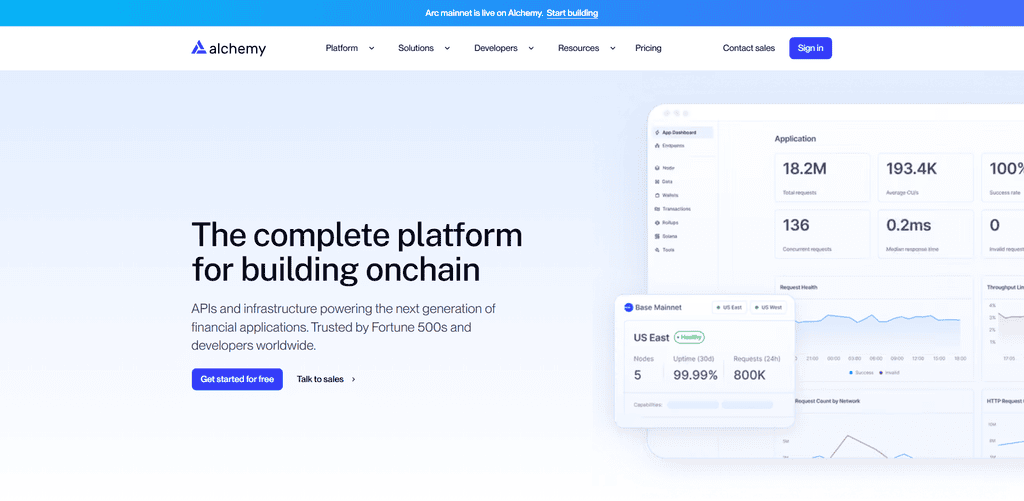
Developers are able to read blockchain data, submit transactions and develop dApps using standard JSON-RPC, WebSockets, Trace APIs, Data APIs and Wallet APIs. Alchemy is about high throughput, reliability, and scalable infrastructure, not a permissionless decentralized node model.
The free plan provides 30 million Compute Units each month. Paid options are also available for higher-volume apps & businesses.
Main Features
- Multi-chain RPC infrastructure for connecting applications to supported blockchain networks.
- WebSocket for real-time blockchain events and application updates.
- Improved APIs for accessing blockchain, token, NFT and account data.
- High-volume Web3 apps built on scalable infrastructure.
- Developer tools and APIs to simplify dApp and wallet development.
Top Use Cases
- Decentralized scalable apps development.
- Building Wallets and Web3 Apps.
- Backing DeFi protocols with reliable blockchain integration.
- Building apps that need data from multiple chains and RPC access.
2. QuickNode
QuickNode is a managed blockchain infrastructure provider, offering RPC endpoints, APIs, archive nodes, WebSockets, and other developer add-ons. It supports network coverage like Ethereum, Bitcoin, Solana, Arbitrum, Base, Avalanche, BNB Smart Chain, Polygon, Blast, Starknet, Sui, TON, TRON and many more ecosystems.
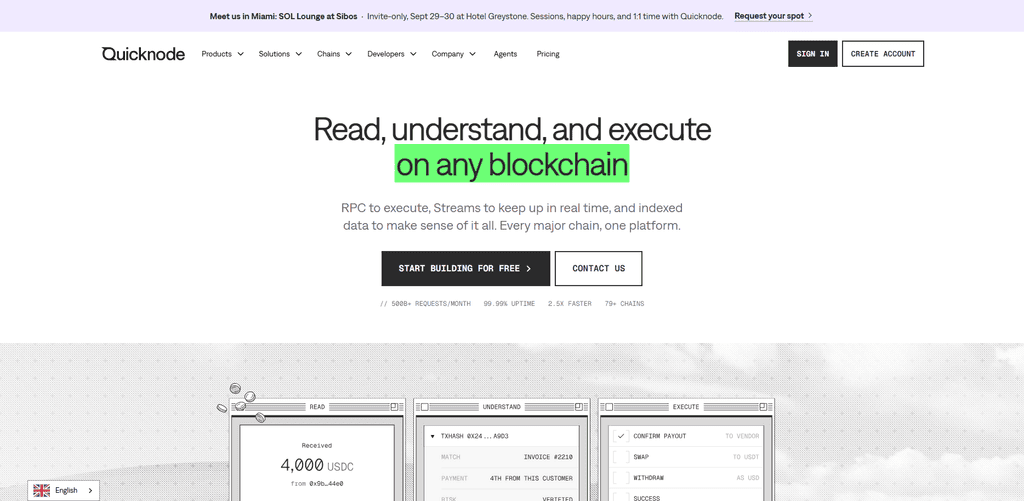
Developers are able to connect through standard JSON-RPC and WebSocket interfaces, and there are add-ons that give specialized data and development functionality.
QuickNode operates globally distributed, managed infrastructure for production applications and high volume workloads. The availability of archive depends on blockchain . Chain specific documentation is important when historical data is needed .
Main Features
- Managed RPC endpoints for various blockchain networks.
- Support for WebSocket for real-time communication with the blockchain.
- Archive node access for applications needing historical blockchain data.
- Add-ons and APIs for extending standard blockchain infrastructure
- Infrastructure dedicated to applications with demanding traffic requirements.
Ideal Applications
- High-traffic dApps that need scalable RPC infrastructure.
- DeFi apps that need reliable blockchain connectivity.
- Wallets and trading apps requiring real-time network access.
- Web3 projects that require archive data and specialized APIs
3. Ankr
Ankr is a multi-chain blockchain platform that provides node infrastructure globally and a Web3 API platform. Its RPC service supports over 80 networks including Ethereum, Solana, BNB Smart Chain, Arbitrum, Base, Bitcoin, TRON, TON, Sui, Polygon, Avalanche and many more.
Developers are able to query for blockchain state, transactions, balances, gas estimates, and broadcast transactions via standard JSON-RPC endpoints.
Ankr also offers WebSockets and Advanced APIs for indexed, multi-chain queries. Its infrastructure is distributed globally, service plans offer different rate limits and performance capabilities.
Highlights**
- Multi-chain RPC infrastructure for multiple blockchain ecosystems.
- Node infrastructure distributed around the world for blockchain connectivity.
- High-level APIs for querying structured data of the block chain.
- Real-time blockchain events enabled via WebSocket.
- Infrastructure designed for scalable multi-chain apps.
Top Use Cases
- Development of multi-chain dApps.
- Wallet apps that need access to multiple networks.
- DeFi platforms that needs to connect to blockchain RPC.
- Web3 apps that are dependent on the blockchain data of multiple ecosystems
4. Chainstack.
Managed blockchain infrastructure provider Chainstack provides RPC nodes, Global Nodes, dedicated nodes and self-hosted deployment options. It supports 70+ blockchain networks including Ethereum, Solana, BNB Smart Chain, Polygon, Arbitrum, Base, Avalanche, TON, Starknet, TRON and newer ecosystems .
Its global node architecture leverages a geo-distributed, geo-load-balanced infrastructure to route requests to the right regions, ensuring applications can access them consistently, even as traffic shifts.
Developers get standard RPC endpoints compatible with Hardhat, Foundry, ethers.js and web3.js. Chainstack offers dedicated and unlimited node options for production workloads that need higher throughput.
Highlights
- Managed RPC nodes for different blockchain networks.
- Global nodes in a distributed infrastructure.
- Application-specific nodes that require more control over resources.
- WebSocket and regular RPC connectivity for developers.
- Infrastructure tools to deploy and manage production blockchains.
Appropriate For
- Blockchain applications for the business.
- Managed nodes for DeFi and Web3 applications.
- Developers creating multi-chain infrastructure.
- Projects requiring dedicated or geographically distributed RPC nodes
5. Infura
Infura is a hosted blockchain infrastructure that gives developers remote access to the blockchain via APIs, without them having to maintain full nodes. Its ecosystem started with Ethereum and has grown to Layer 2, EVM and non-EVM networks.
JSON-RPC APIs, WebSockets, archive data and other infrastructure services for blockchain application developers Infura is a managed infrastructure provider, not a permissionless decentralized RPC network, so its architecture differs from that of decentralized systems like Lava. Its primary use cases include dApps, wallets, DeFi apps, and apps that need reliable Ethereum and multi-chain connectivity.
Key Features:
- Managed Blockchain APIs to connect to supported networks.
- Broader multi-chain connectivity with Ethereum-focused infrastructure.
- JSON-RPC endpoints for interaction with blockchain networks.
- WebSocket connection for real-time blockchain communication
- Infrastructure that removes the need for self-hosted nodes.
Best Uses
- Development of Ethereum dApp.
- Managed RPC access for DeFi applications.
- Wallets and Web3 apps which need blockchain connectivity.
- Developers who prefer managed infrastructure over self-operating nodes
6. NOWNodes
NOWNodes offers managed full-node infrastructure and API access to over 120 blockchain networks. Supported ecosystems: Ethereum, Bitcoin, BNB Smart Chain, Polygon, Solana, Arbitrum, Dogecoin, Litecoin, Polkadot and many more.
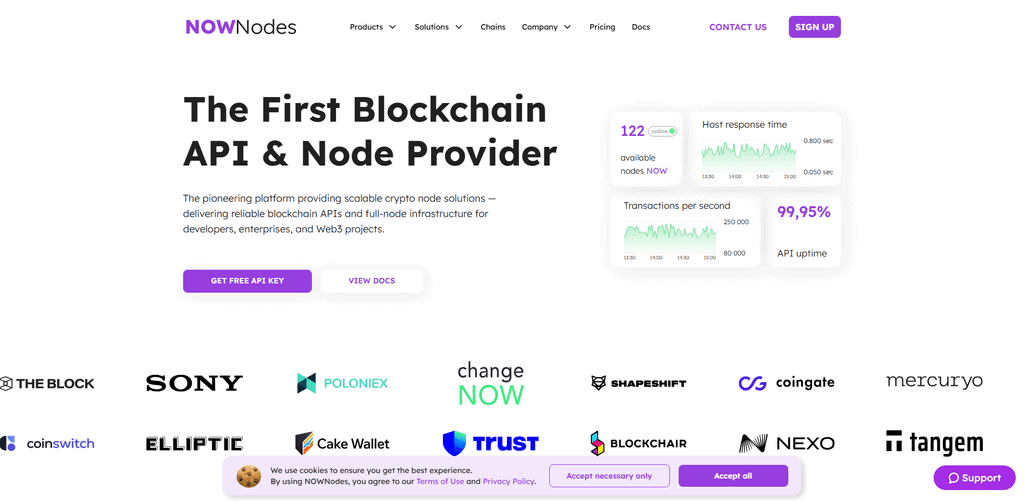
Depending on the chain availability, developers are able to connect to the networks via JSON-RPC, WebSockets, Blockbook, Trace/Debug APIs, and archive nodes. The infrastructure is based on geographically balanced node clusters, load balancing and failover mechanisms for availability.
At present, NOWNodes service pages show about 200 ms response time and about 99.95% API uptime. Shared and dedicated nodes are available for various workload needs.
Features**
- RPC access to many different blockchain networks.
- Full-node infrastructure for various blockchain ecosystems.
- JSON-RPC and WebSocket access on supported networks.
- Node options for high demand apps.
- APIs and Blockchain Data Access for App Development.
Optimal Use Cases:
- Multi-chain applications with extensive network coverage.
- Crypto wallets, payment apps.
- Analytics of blockchain and data driven platforms.
- Projects that require dedicated blockchain node infrastructure
7. Lava Network
Lava Network is the closest thing to the decentralized-node concept, in that it provides a permissionless decentralized RPC network rather than relying on a single centralized provider. Independent RPC node providers are part of the network and Lava’s RPC Routing Engine routes requests to the nodes based on performance and reliability.
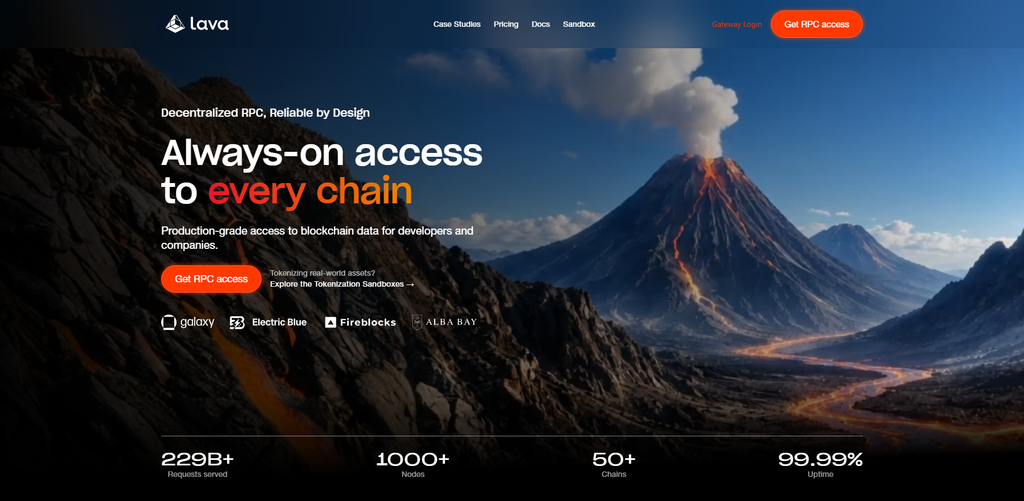
It currently offers RPC access to 30+ blockchains and rollups, with providers located across Europe, Asia and the United States. Developers get standard RPC APIs and providers that are supported can offer archive, debug and trace capabilities.
Lava also has on-chain incentives and reputation mechanism for provider coordination, and to improve reliability, scalability and censorship resistance.
Main Features
- Multiple node providers and a decentralized RPC infrastructure.
- RPC providers can join the network without asking permission.
- RPC routing to select the most suitable providers for requests.
- Ways for participating providers to prove their performance and reliability.
- Infrastructure for accessing multi-chain decentralized blockchains.
Optimal Use Cases
- Applications that need decentralized RPC infrastructure.
- dApps that need options to centralized RPC providers.
- Web3 projects building censorship-resistant infrastructure
- Developers building applications across multiple supported chains
8. GetBlock
GetBlock offers managed RPC infrastructure with shared, dedicated and specialized node options on 130+ blockchain networks. It supports ecosystems like Ethereum, Bitcoin, BNB Smart Chain, Solana, Polygon, Arbitrum, Base, Avalanche, Optimism, Sui, TRON and many others. Depending on the network, developers are able to access JSON-RPC, WebSockets, REST, GraphQL, or some gRPC interfaces.
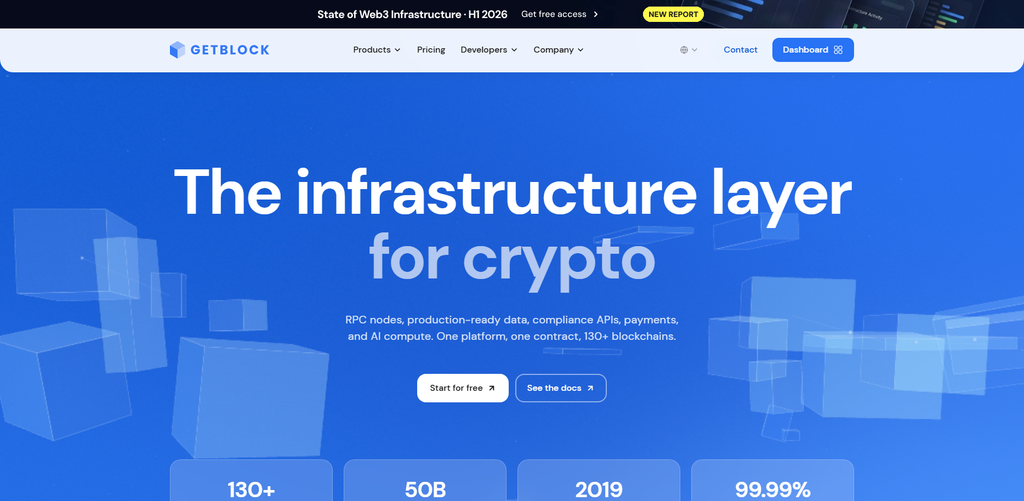
Its infrastructure is built on geographically dispersed locations including Frankfurt, New York and Singapore, with routing and automatic failover designed to reduce latency. GetBlock also offers archive access, MEV-related choices, analytics, and dedicated infrastructure for high-load applications.
Key Features
- RPC infrastructure for a variety of blockchain networks.
- Shared and dedicated node options for varied workloads.
- JSON-RPC, WebSocket, REST and other API options on chains that are supported
- Access to archive nodes for historical blockchain queries.
- Distributed infrastructure with routing and fail-over capabilities.
Best Use Cases
- Massive blockchain coverage with multi-chain dApps.
- Blockchain analytics and data use cases.
- DeFi platforms that need reliable RPC endpoints.
- Organizations requiring dedicated nodes for higher-volume workloads.
9. Blast API
Blast API is a blockchain infrastructure service that aims to provide RPC endpoints and APIs for Web3 developers on supported networks. It has public and dedicated endpoints, and provides services around blockchain data access, throughput and developer integration.

Take Blast as an example: it provides RPC and archive infrastructure for networks such as BOB, enabling developers to query transaction data, historical information, and network status via dedicated endpoints.
Its architecture is managed infrastructure, not a permissionless decentralized node marketplace, which is different from Lava’s decentralized-provider model. Blast API can be useful for dApps, DeFi applications, rollups, NFTs, analytics and developers that require a managed RPC access.
Features
- Added support for blockchain network RPC endpoints;
- Infrastructure options dedicated to application workloads.
- Access to Blockchain data via developer-friendly APIs.
- Infrastructure for scalable Web3 applications.
- Support for selected networks and specialized blockchain ecosystems.
Applications
- dApps that need a managed RPC connection
- Network-powered DeFi apps supported.
- Blockchain infrastructure for Rollup and Layer-2 apps.
- Developers building apps that require dedicated blockchain endpoints
10. Tenderly Node RPC
Tenderly Node RPC combines managed blockchain node access with Tenderly’s development, simulation, debugging and monitoring environment. It supports over 100 EVM-compatible mainnets and testnets such as Ethereum, Arbitrum, Base, Blast, BOB, Mode, Linea and other networks.
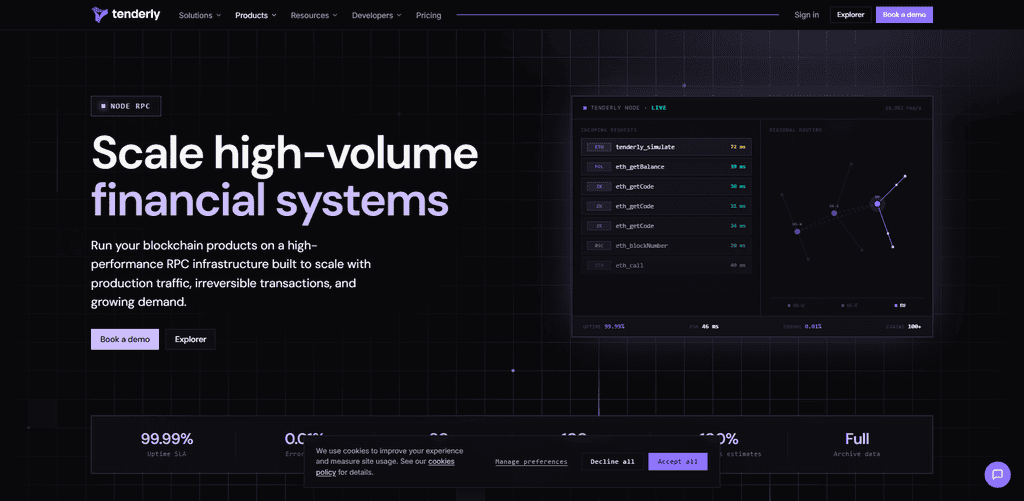
Developers get RPC URLs which can be used to connect applications and can use standard JSON-RPC as well as Tenderly-specific simulation capabilities. It has multi-regional traffic routing infrastructure for low latency and scalable access.
One key differentiator is the integration between RPC infrastructure and tools such as Transaction Simulation, Debugger, Gas Profiler, Virtual TestNets, Alerts and Web3 Actions, making it particularly relevant for development-heavy workflows.
Features
- RPC infra for a number of EVM-compatible networks
- Integrate with Tenderly’s blockchain development environment.
- Transaction simulation and debugging capabilities with RPC access.
- Testing blockchain apps on virtual TestNets before deployment.
- Monitoring, alerts, gas analysis & Web3 tooling for developers.
Best Use Cases
- EVM Dapps Development and testing
- DeFi protocols that need transaction simulation.
- Debugging and optimizing smart-contract transactions by developers.
- RPC infrastructure and teams for advanced Web3 development tools.
DRPC Alternatives for Different Use Cases
Decentralized RPC Infrastructure: Projects that are focused on decentralized RPC access, independent node providers, distributed infrastructure, and less reliance on a single centralized blockchain infrastructure operator are a good fit for Lava Network.
Multi-Chain Applications Ankr and GetBlock both give access to a variety of blockchain networks. This is ideal for wallets, dApps, and platforms that need stable RPC connections across different ecosystems.
High-Traffic dApps: QuickNode and Alchemy both offer scalable RPC infrastructure, robust API features and production-centric resources for apps that manage high volumes of blockchain requests and increasing user activity.
Enterprise Applications. Chainstack and Infura are great for organizations that need managed infrastructure, structured deployment options, reliable RPC connectivity, monitoring capabilities and enterprise support for production blockchain workloads.
Dedicated Node Requirements: Both NOWNodes and GetBlock offer dedicated infrastructure options, good for applications requiring higher resource allocation, predictable performance and more control over blockchain nodes.
Smart-Contract Development: Tenderly Node RPC is useful for development teams that require RPC access combined with transaction simulation, debugging, testing environments, gas analysis and other smart-contract development features.
Blockchain Data Use Cases: Analytics platforms requiring historical transactions and detailed blockchain data can benefit from companies providing archive nodes and better APIs, such as QuickNode, GetBlock, and Alchemy.
Layer-2 and EVM Projects: Developers building on supported EVM and Layer-2 networks can use Blast API and Tenderly Node RPC to get accessible RPC endpoints to build and deploy their applications.
Conclusion
Web3 developers are able to build on a reliable and scalable decentralized node infrastructure through DRPC alternatives. Alchemy, QuickNode, Ankr, Chainstack, Infura, NOWNodes, Lava Network, GetBlock, Blast API and Tenderly Node RPC all have different blockchain coverage, node distribution, RPC performance, APIs, pricing and developer tools.
Unlike other providers that may focus on managed nodes, multi-chain connectivity, dedicated infrastructure, or development capabilities, Lava Network is more directly focused on decentralized RPC infrastructure.
The right choice depends on specific requirements such as decentralization, supported networks, latency, scalability, archive access, security and budget. Developers are able to compare these factors to find infrastructure that matches their application’s workload and technical requirements.
FAQ
What are DRPC alternatives?
DRPC alternatives are blockchain RPC infrastructure providers that offer node access, APIs, WebSockets, data services, or decentralized RPC networks for connecting Web3 applications with supported blockchain networks.
Which are the top DRPC alternatives?
The alternatives covered here are Alchemy, QuickNode, Ankr, Chainstack, Infura, NOWNodes, Lava Network, GetBlock, Blast API, and Tenderly Node RPC.
Which DRPC alternative focuses on decentralized RPC infrastructure?
Lava Network focuses specifically on a decentralized RPC model that connects applications with independent RPC providers through decentralized infrastructure and routing mechanisms.
Which DRPC alternatives support multiple blockchains?
Alchemy, QuickNode, Ankr, Chainstack, NOWNodes, GetBlock, and other providers support multiple blockchain ecosystems, allowing developers to access different networks through unified infrastructure.
What should I compare when choosing a DRPC alternative?
Compare blockchain coverage, decentralization model, RPC performance, latency, uptime, node distribution, API capabilities, WebSocket support, archive access, pricing, security, and developer tools.