
The global shipping and maritime industry is integral in linking businesses, moving vital goods, and facilitating international trade. The rising demand for logistics and ocean transportation is driving interest from investors seeking opportunities across the shipping spectrum in maritime companies.
In this article, I will discuss the Top Shipping and Maritime Investment Companies, their key features, business operations, investment benefits, and potential risks to help the readers better understand this growing industry.
Key Factors to Consider Before Investing in Shipping and Maritime Companies
Fleet Size & Capacity: Analyze the size of the company’s fleet, types of vessels, carrying capacity, and age of the fleet to gage its transportation capabilities, operational strength, and ability to meet global shipping demand.
Financial Performance : Review annual revenue, operating income, net profit, cash flow and profit margins to assess financial stability, business growth and the company’s ability to weather market fluctuations.
Freight Rate Trends: Analyze current freight rates, historical pricing trends and shipping demand, as changes in transportation costs directly impact company revenues, profitability and overall investment performance.
Global Trade Exposure: Assess the company’s international shipping routes, key operating areas and customer markets to gage its exposure to global trade growth and regional economic disruptions.
Debt and Capital Expenditure: Look at the company’s current debt, interest expenses, the cost of buying vessels and investment in expansion to see if the company can meet its financial obligations without undue pressure on its borrowing.
Fuel and Operating Costs: Look into fuel consumption, maintenance of the vessel, crew wages, and port charges. Rising operating costs can erode shipping profits and influence long-term financial results.
Environmental Regulations: Review compliance with maritime emissions standards, fuel efficiency regulations, and sustainability standards to assess potential compliance costs and future fleet upgrading needs.
Dividend & Shareholder Return: Look at the dividend history, payout ratios, consistency of earnings and share repurchase activity to judge shareholder returns and see whether the distributions are financially sustainable.
Benefits of Investing in Shipping and Maritime Companies
Rides the Global Trade Boom: The shipping companies are the middlemen in international trade moving raw materials, finished products, energy products and consumer goods between the world’s major markets.
Varied Investment Opportunities: Publicly traded companies offer investors exposure to various maritime sectors, including container shipping, oil tankers, LNG transportation, dry bulk carriers, and integrated logistics operations.
Possible Dividend Income: Established shipping companies might pay dividends when earnings and cash flows are robust, giving investors the opportunity to receive additional income in addition to potential share price appreciation.
Increasing Demand for Ocean Freight: International businesses rely on ocean freight to transport goods, leading to long-term demand for shipping services in the manufacturing, retail, agriculture, and energy sectors.
Energy Market Exposure: LNG carriers, oil tankers, and petroleum transport firms offer exposure to global energy supply chains and international demand for energy transport services.
Fleet Modernization Potential: Investments in fuel-efficient ships, advanced navigational tools, and modern maritime technologies can enhance operational efficiency and potentially improve companies’ long-term competitiveness.
Logistics Expansion Play: Maritime companies expanding into port operations, warehousing, freight forwarding, and supply chain management can benefit from broader international logistics and transportation activities.
Potential for Long-Term Growth of Investments: As global trade and maritime infrastructure evolves, those with solid financials, fleet efficiencies, diversified activities and competitive shipping networks may have long-term growth prospects.
Key Points
| Company Name | Main Investment Focus |
|---|---|
| A.P. Moller – Maersk | Container shipping, ports, and integrated logistics |
| COSCO Shipping Holdings | Container shipping and port operations |
| Hapag-Lloyd | International container shipping |
| Nippon Yusen Kabushiki Kaisha (NYK Line) | LNG, automobile, container, and bulk shipping |
| Evergreen Marine | Global container transportation |
| Mitsui O.S.K. Lines (MOL) | LNG, energy, automobile, and dry bulk shipping |
| HMM Company | Container shipping and maritime logistics |
| SITC International Holdings | Regional container shipping and logistics |
| Star Bulk Carriers | Dry bulk vessel transportation |
| Frontline plc | Crude oil and product tanker shipping |
1. A.P. Moller – Maersk A/S
A.P. Moller – Maersk is a Danish integrated logistics and container shipping company with its headquarters in Copenhagen, Denmark. It was founded in 1904. It provides a full suite of global supply-chain services including ocean freight, port operations, inland transportation, customs, warehousing, and distribution.
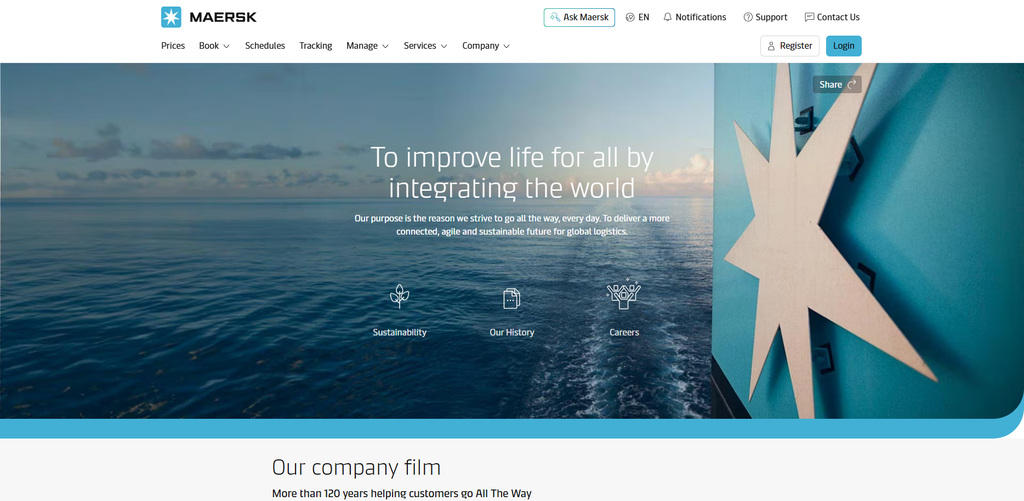
The core business segments are Ocean, Logistics & Services and Terminals, supplemented by digital and customs solutions. Maersk is listed on Nasdaq Copenhagen and trades under the ticker MAERSK B. Its core maritime services are container liner shipping, terminal handling, vessel operations, freight forwarding and integrated logistics for worldwide trade.
Key Features**
- Operates a global container shipping network covering major international trade lanes.
- Delivers integrated logistics services including warehousing, freight forwarding and supply chain management.
- Runs port terminals through its APM Terminals business.
- Provides transportation solutions by sea, air and land freight.
- Investing in digital logistics, fleet modernization and less-emission shipping technologies.
Principal Risks
- Operating revenue and profitability can be materially impacted by volatile container freight rates.
- Geopolitical conflicts and trade restrictions could affect global shipping routes.
- Transportation costs could go up due to high fuel prices and vessel operating expenses.
- Global economic slowdowns can lead to lower demand for containers and lower shipping volumes.
2. COSCO Shipping Holdings Co.
COSCO Shipping Holdings Co., Ltd. is a leading Chinese container shipping and port operating group. It is based in Shanghai, China. The company is owned by China COSCO SHIPPING Corporation and operates under COSCO SHIPPING Lines and OOCL across global East-West, intra-Asia and regional trade lanes.
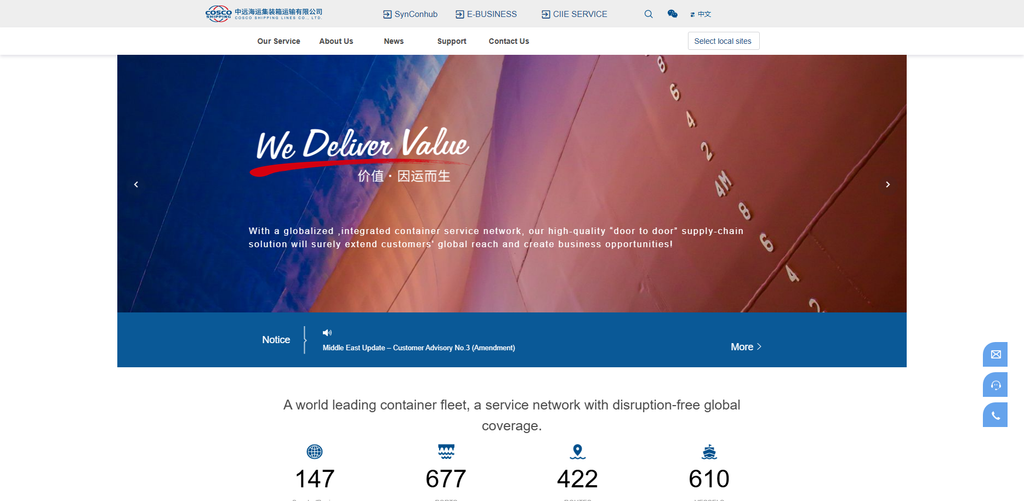
Its main segments include container shipping and terminal operations, and other logistics-related activities. The company is dual-listed on the Hong Kong Stock Exchange (01919.HK) and Shanghai Stock Exchange (601919.SH. Its maritime services include international and domestic container transportation, terminal management, shipping agency and integrated port-and-logistics solutions.
Main Features
- Involved in international container shipping and sea transportation services on a large scale.
- Has a broad global network of investments in ports and terminals.
- It provides container transportation along the major international trade corridors.
- Income from integrated shipping, port handling and logistics businesses.
- Invests in fleet expansion, shipping technology and operational efficiency.
Risk Factors:
- International trade restrictions and geopolitical tensions may affect overseas operations.
- The fluctuation of the freight rate may cause uncertainty of the shipping revenue.
- Operating expenses may be affected by currency movements and fuel prices.
- Weak global trade demand may reduce container volumes and terminal activity.
3. Hapag-Lloyd
Hapag-Lloyd AG. Lloyd AG is a German global container-shipping and logistics company based in Hamburg, Germany. It runs a large container fleet on major international trade lanes and offers customers ocean freight, terminal services, inland transport and digital shipping solutions.
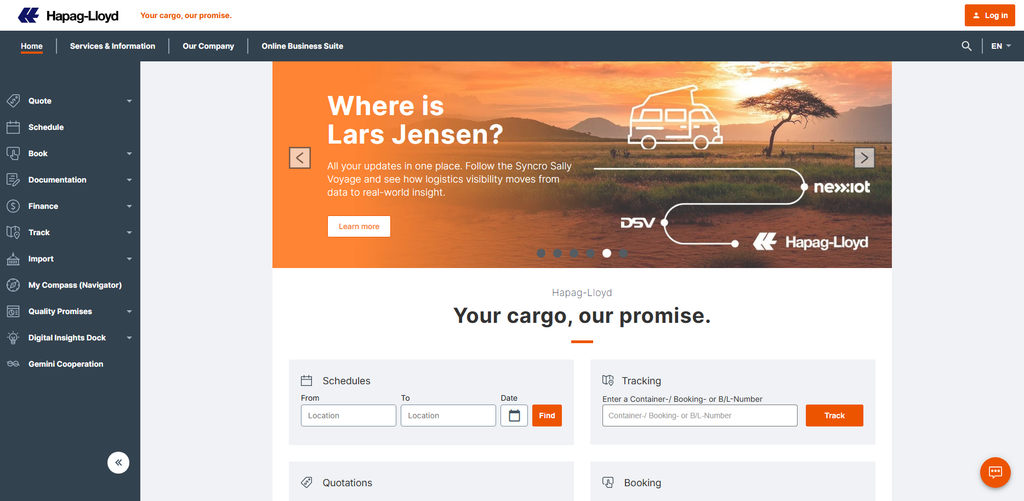
Since 2023 its activities are divided into two main segments: Liner Shipping and Terminal & Infrastructure. Hapag-Lloyd is listed on the Frankfurt and Hamburg Stock Exchanges with the ticker symbol HLAG. Its main maritime services include container liner shipping, port terminal operations, container handling, vessel management and integrated logistics services for the movement of global cargo.
Main Features
- A professional in international container shipping and global liner transportation.
- Has a fleet of container ships operating on the major trade lanes around the globe.
- Provides container transport for industry, retail and commercial customers.
- Offers refrigerated container transport of temperature sensitive cargo.
- Focus on fleet renewal, digital services and operational efficiencies.
Material Risks
- Container freight rate volatility can impact revenue and profit margins.
- A surplus of ships can create competition and force down freight rates.
- Fuel costs and environmental regulations can lead to higher operating expenses.
- Delivery schedules may be affected by congestion at ports and geopolitical disruptions.
4. Nippon Yusen Kabushiki Kaisha ( NYK Line )
Nippon Yusen Kabushiki Kaisha, or NYK Line, is a Japanese comprehensive logistics and maritime transportation company headquartered in Marunouchi, Tokyo. Established in 1885, NYK is engaged in liner shipping, logistics, automotive transport, dry bulk, energy and other businesses.
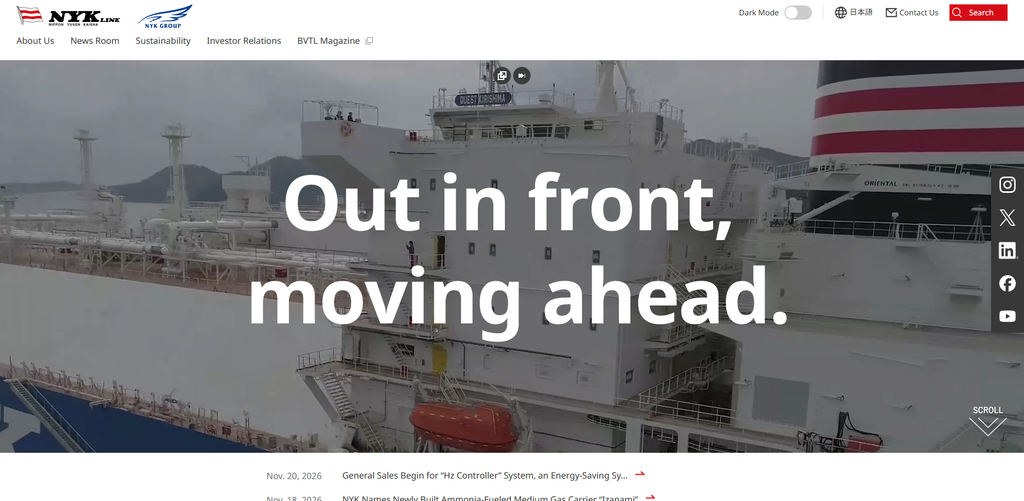
Its reportable segments are Liner Trade, Air Cargo Transportation, Logistics, Automotive, Dry Bulk, Energy and Others. NYK’s stock is traded on the Tokyo Stock Exchange’s Prime Market under the code 9101. The core maritime services are container shipping, car carrier transport, dry bulk shipping, energy and LNG carriage, terminal services and global logistics solutions.
Main Features
- Operates diversified maritime transportation businesses in global markets.
- Provides LNG transportation services using specialized gas carrier vessels.
- Operates automobile carriers for international auto manufacturers.
- Engages in dry bulk, tanker and general cargo transportation.
- Invests in maritime technology, fleet efficiency and environmental improvements.
Primary Risks
- Changes in global energy demand may impact revenues from LNG and tanker transportation.
- There is a need for large capital investment for vessel maintenance and fleet replacement.
- Changes in the shipping market may affect demand for cargo and freight rates.
- Vessel compliance and modernization costs may increase due to environmental regulations.
5. Evergreen Marine
Evergreen Marine Corporation (Taiwan) Ltd. is a Taiwan-based international container-shipping company with its headquarters in Taipei, Taiwan. Founded in 1968, Evergreen is a leading global carrier with a fleet of scheduled container services across Asia, Europe, the Americas and other major trade lanes. Its core business includes container shipping, shipping agency services, container terminal operations and commercial-port ship repair.
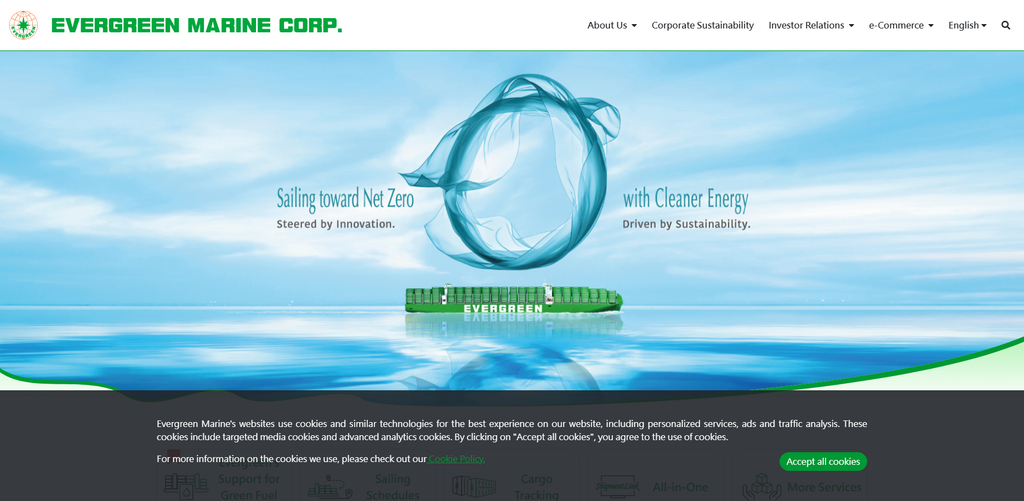
It is listed on the Taiwan Stock Exchange under ticker 2603. Evergreen’s maritime services include container liner transportation, terminal handling, inland logistics support and vessel operations and freight services, which make it a key player in global containerized trade.
Main Features
- Engaged in international container transport and liner shipping.
- Conducts container vessel operations on the main international shipping lanes.
- Offers cargo transportation services to importers and exporters around the world.
- Has a wide network of shipping routes and port connections.
- Invests in the development of its container fleet and modern shipping infrastructure.
Principal Risks
- Declining container freight rates may affect operating profitability adversely.
- Large international shipping companies can create pressure on market shares.
- Higher fuel prices can raise operating costs for vessels.
- Global trade disruptions could impact cargo volumes and shipping schedules.
6. Mitsui O.S.K. Lines (MOL)
Mitsui O.S.K. Lines, Ltd. (MOL) is a Japanese diversified shipping and logistics company with headquarters in Toranomon, Minato, Tokyo. MOL’s maritime portfolio covers dry bulk, energy, container, car-carrier, cruise and logistics markets, one of the broadest in the world. The Company’s business structure consists of Dry Bulk, Energy, Product Transport, Container, Automotive and Other segments.
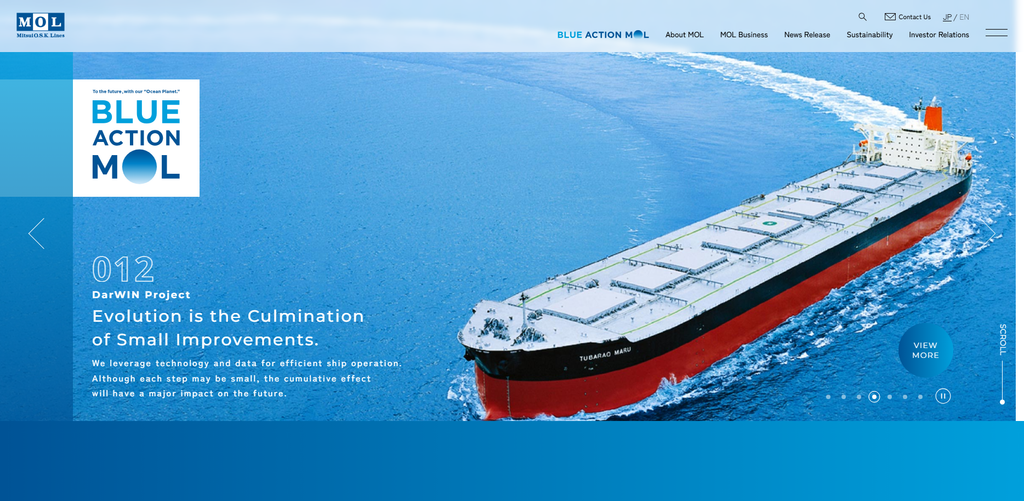
MOL is publicly listed on the Tokyo Stock Exchange. Its principal maritime services include dry bulk cargo transportation, crude oil and product tanker shipping, LNG shipping, container shipping, vehicle carrier services, ferry operations and port-related logistics. The company is particularly strong in energy and bulk shipping.
Key Features
- Conducts diversified maritime transportation services in the global shipping markets.
- Specialist in energy related shipping services and LNG transport.
- Offers transportation of automobiles on specialized car carrier vessels.
- Operates dry bulk carriers and oil tankers for industrial cargo transportation.
- Invests in decarbonization, alternative fuels and advanced maritime technologies.
Principal Risks
- Changes in global energy demand may impact the performance of LNG and tanker business.
- High vessel acquisition and maintenance costs may increase capital needs.
- Changes in oil and gas market affect shipping demand.
- More stringent environmental regulations may necessitate additional fleet investments.
7. HMM Company
HMM Co., Ltd. is a South Korean global shipping and logistics company . It is headquartered in Seoul, South Korea at Parc.1 Tower in Yeouido. HMM (ex-Hyundai Merchant Marine) operates container liner services, bulk shipping and specialized maritime transportation on the main global trade routes. It operates in the fields of container shipping, dry bulk shipping, tanker shipping, LNG transportation and logistics-related services.
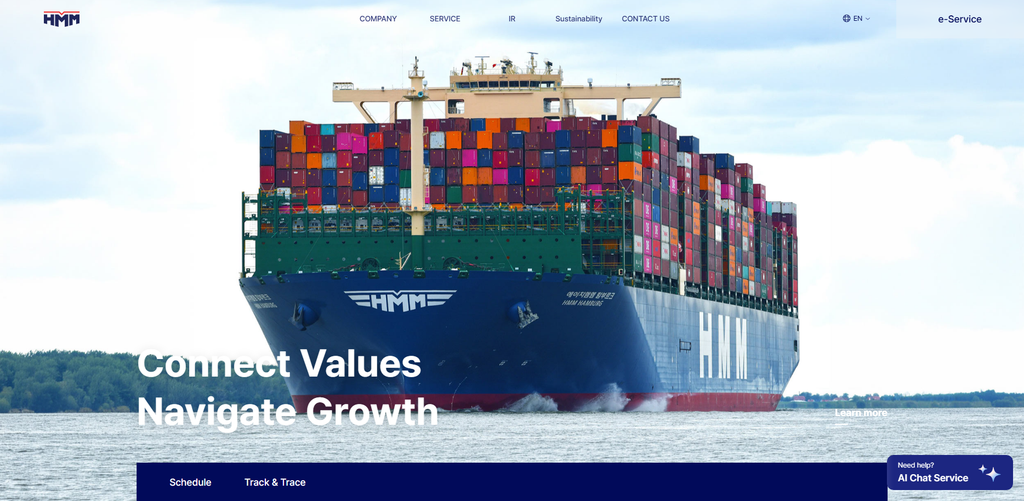
HMM is traded on the Korea Exchange (KRX) under the ticker 011200. Its main maritime services include international container shipping, vessel operation, bulk carrier shipping, energy shipping, terminal-related services, and integrated logistics support for its worldwide clients.
Key Features
- Provides international container shipping and marine transportation services.
- Offers container transportation on the world’s main trade lanes.
- Provides specialized refrigerated container services for temperature-sensitive goods.
- Invests in modern container ships and shipping infrastructure.
- Highlights digital shipping systems and operational efficiency.
Material Risks
- Falling freight rates can hurt revenue and profitability.
- Larger shipping companies can put pressure on pricing.
- Container transportation demand can be reduced by global economic uncertainty.
- Fuel costs, environmental compliance and vessel maintenance can all add to the costs.
8. SITC INTERNATIONAL HOLDINGS
SITC International Holdings Company Limited is a Hong Kong-based shipping and logistics group with a primary focus on intra-Asia trade. It offers integrated transportation and logistics services in Asia, including China, Japan, Korea, Southeast Asia and the Middle East. The company’s business is segmented into sea freight logistics and land logistics segments.
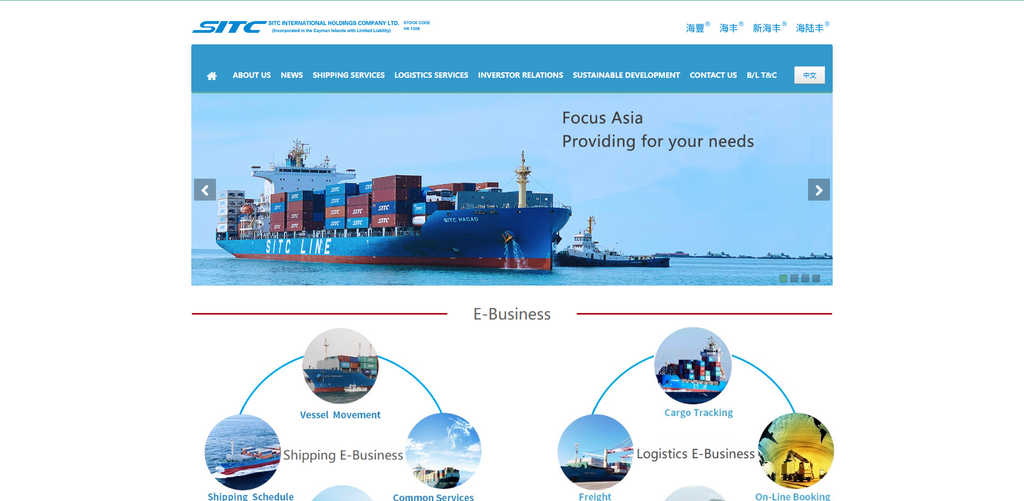
SITC’s stock code is 1308 on the Hong Kong Stock Exchange. Its main maritime services are container shipping, freight forwarding, shipping agency, depot and warehousing, trucking, ship brokerage and dry bulk vessel leasing. It has particular strength in regional Asian container logistics networks.
Main Features
- Focused on regional container shipping, with a focus on intra-Asian trade routes.
- Runs container ships linking China, Japan, South Korea, Southeast Asia and other regional markets.
- Offers integrated logistics, freight forwarding and shipping agency services.
- Provides warehousing, container depot and supply chain management services.
- Focuses on expansion of the regional network and optimization of shipping processes.
Major Risks
- Reliance on Asian trade conditions can raise exposure to regional economic slowdowns.
- Competition in regional shipping can drive down freight rates and compress profit margins.
- Higher fuel prices may increase vessel operating and transportation costs.
- Political tensions and trade restrictions may affect shipping routes in the region.
9. Star Bulk Carriers Corp .
Star Bulk Carriers Corp. is a global shipping company focused on the transportation of dry bulk, incorporated in the Marshall Islands with executive offices in Athens, New York, Limassol and Singapore. It specializes in the transport of major and minor bulk commodities including iron ore, coal, grain and minerals via a fleet of dry bulk vessels.
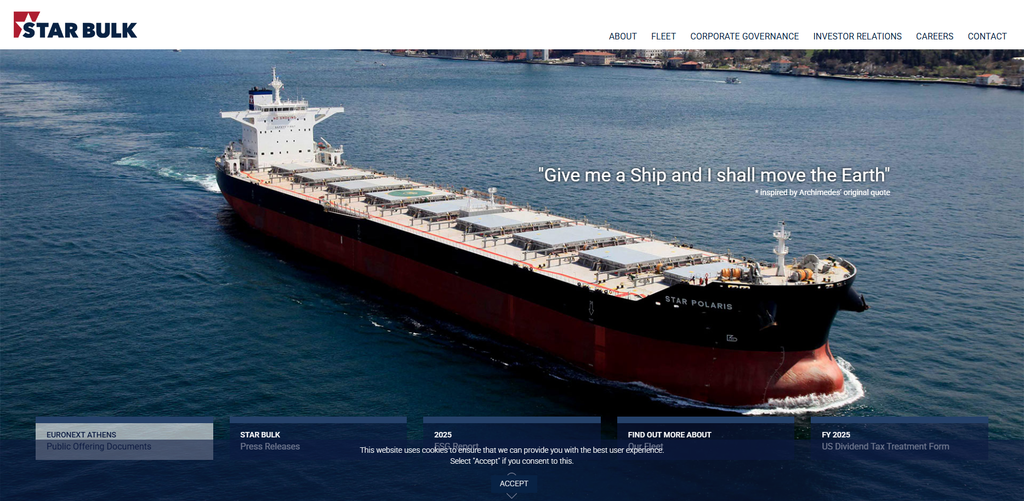
Star Bulk is predominantly a dry bulk transportation company, not a container shipping company. Its shares trade on the Nasdaq Global Select Market under the symbol “SBLK. Its principal maritime services include dry bulk cargo transport, vessel chartering, commercial ship management and global seaborne commodity logistics.
Main Features
- Specializes in the transportation of dry bulk cargo worldwide.
- Operates vessels in various dry bulk shipping segments.
- Carries bulk cargoes such as iron ore, coal, grains and other bulk cargoes.
- Introduces business exposure to global demand for commodity transportation.
- Emphasizes fleet management, vessel utilization and operational cost effectiveness.
The main risks
- Revenues are very sensitive to volatility in dry bulk freight rates.
- Sluggish demand for iron ore, coal and grains may decrease shipping activity.
- Fuel and vessel operating expenses can pinch profit margins.
- Overcapacity in the vessel market and weaker commodity trade can pressure earnings.
10. Frontline ASA
Frontline plc is one of the world’s largest publicly owned tanker shipping companies and is engaged in the transportation of crude oil and petroleum products. Frontline is based in Limassol, Cyprus and has a large fleet of oil tankers including VLCCs, Suezmaxes and LR2 product tankers. It is about the transportation of energy, not the transport of containers.
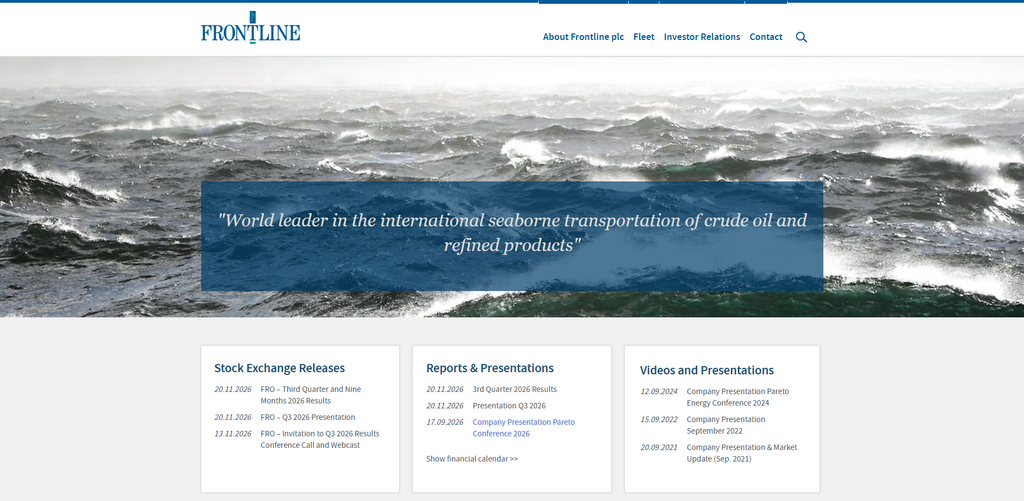
Frontline is listed on the New York Stock Exchange, ticker FRO, and is also listed on the Oslo Stock Exchange. Its principal maritime services include crude-oil transportation, shipping of refined petroleum products, chartering of tankers, vessel management and global energy logistics services. The company is a major player in international oil trade.
Main Features**
- Focus on the transport of crude oil and refined petroleum products.
- Runs a fleet of large oil tankers that serve the international energy markets.
- Provides maritime transport services to oil producers, traders and energy companies.
- Provides exposure to international petroleum transportation and tanker freight markets.
- Focuses on fleet management, vessel utilization and operational efficiency.
Principal Risks
- Tanker freight rates volatility could result in substantial earnings variations.
- Changes in global oil demand and supply will affect vessel utilization.
- International sanctions and trade restrictions may decrease shipping opportunities.
- Volatility in oil prices, fuel costs and environmental regulations may affect operating performance.
Conclusion
Shipping and maritime investment companies play an important role in global trade, energy transportation and international logistics. Investment exposure to the container shipping, LNG transportation, oil tankers and dry bulk markets can be gained through companies such as Maersk, COSCO Shipping, Hapag-Lloyd, NYK Line and Frontline.
Investors should consider fleet capacity, financial performance, freight rates, debt levels, operating costs and dividend sustainability before investing. These companies see opportunities with the growth in global trade and expansion of logistics, but are also exposed to risks from fuel prices, geopolitical disruptions and market volatility. Sound investment decisions are based on careful research and financial analysis.
FAQ
What Are Shipping and Maritime Investment Companies?
Shipping and maritime investment companies are businesses involved in container transportation, oil tankers, LNG shipping, dry bulk cargo, port operations, and international maritime logistics.
Which Are the Top Shipping and Maritime Investment Companies?
Some major publicly traded companies include A.P. Moller–Maersk, COSCO Shipping Holdings, Hapag-Lloyd, NYK Line, Evergreen Marine, MOL, HMM, SITC International, Star Bulk Carriers, and Frontline.
How Do Shipping and Maritime Companies Generate Revenue?
These companies generate revenue through cargo transportation, container shipping, tanker operations, vessel chartering, port services, freight forwarding, and integrated logistics solutions.
What Are the Main Types of Maritime Investment Opportunities?
Major opportunities include container shipping, oil tanker transportation, LNG carriers, dry bulk shipping, port operations, and integrated maritime logistics businesses.
What Factors Should Investors Consider Before Investing?
Investors should evaluate fleet size, vessel capacity, financial performance, freight rates, global trade exposure, debt levels, operating costs, and dividend sustainability.