

The right blockchain infrastructure can have a profound effect on the performance, scalability and cost of a Web3 application. Chainstack provides managed RPC nodes and multi-chain connectivity, but it might not be the right fit for every project’s technical requirements or budget.
Hence the reason to investigate top Chainstack alternatives for managed RPC nodes. this guide I’ll review the Top Chainstack Competitors for Managed RPC Nodes including Alchemy, QuickNode, Infura, and Ankr and compare their key features, use cases and advantages to help you find the right provider for your development goals.
What Is Chainstack and What Does It Offer?
Managed RPC Services: Chainstack offers managed RPC endpoints that allow developers to connect decentralized applications to blockchain networks without the need to maintain their own node infrastructure.
Multi-Blockchain Support: It supports multiple blockchain networks, allowing developers to build and run Web3 applications across compatible ecosystems via a single infrastructure platform.

Dedicated Node Infrastructure – For projects that demand more control over resources, predictable workloads and infrastructure configurations customized to specific application needs, Chainstack provides dedicated node options.
Global Infrastructure: Its distributed infrastructure enables applications to consistently access blockchain networks, providing developers who need stable connectivity across regions and user locations.
Archive Node Access: For supported networks, Chainstack provides archive-node support, which enables developers to access the blockchain’s historical states for analytics, research, and unique application requirements.
Scalability and Performance: Applications can more easily scale to varying volumes of RPC requests due to its managed infrastructure, while also reducing the operational complexity of independently deploying and maintaining blockchain nodes.
Developer Tools and APIs: Chainstack offers APIs and documentation, dashboards, and integration resources for developers to connect applications, manage endpoints, monitor usage, and troubleshoot blockchain connectivity.
Security and Reliability: Chainstack offers infrastructure management and access-control to ensure reliable blockchain connectivity, allowing development teams to manage RPC services and production workloads.
Why Look for Chainstack Competitors?
Pricing and Budget: Organizations may look for alternatives to find pricing plans that better align with their RPC request volumes, infrastructure needs and long-term development budgets.
Blockchain Network Support: Developers may require providers that support specific blockchain networks, testnets or developing ecosystems that fit the needs of their application.
RPC Performance : Providers may be considered for latency-sensitive workloads based on response times, regional infrastructure and documented reliability commitments.
Dedicated Node Requirements: Some projects require dedicated nodes, more resource control or customized infrastructure configurations to support specialized blockchain workloads.
Scalability Needs: Scaling Web3 applications may seek flexible infrastructure solutions that can accommodate growing API traffic, transaction volumes, and user demand.
Archive Data Access: Analytics platforms and blockchain explorers might need access to historical state. Archive-node availability is a key point of comparison.
Developer Tools and Integration: Teams might want alternatives with better APIs, websocket connections, webhooks, SDKs, and documentation for their development flow.
Security and Technical Support: When selecting a managed RPC provider, enterprises can compare authentication controls, monitoring, service-level agreements, incident response and technical support.
Key Points
1. Alchemy
Alchemy is a well-known alternative to Chainstack for developers building Web3 apps as it is a blockchain infrastructure provider. Managed RPC Services: It provides managed RPC endpoints, APIs and developer tools that make blockchain connectivity easier, without the need for teams to run their own nodes.
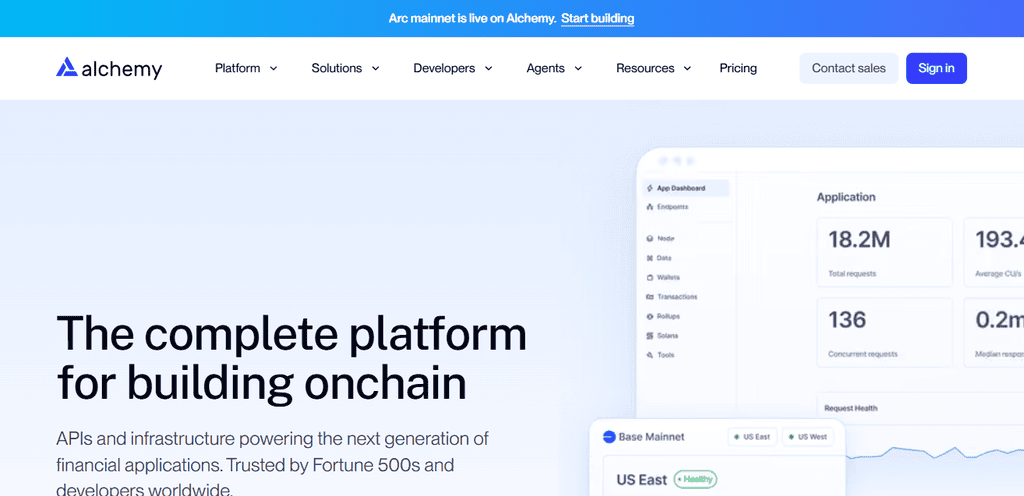
It supports major ecosystems including Ethereum, Polygon, Solana, Arbitrum and Optimism. Availability may vary depending on the service. Node Infrastructure: Developers are able to use hosted infrastructure and improved blockchain APIs.
Alchemy is designed for reliable access, and to optimize the way in which requests are handled. Scalability Usage-based plans scale with your application’s traffic. Its monitoring tools and documentation also assist developers in troubleshooting integration issues.
Best Use Cases
- DeFi Applications: Access to blockchain data and submit transactions for decentralized exchanges, lending platforms and other DeFi protocols.
- NFT Marketplaces: Get collection info, token metadata, and ownership info via NFT APIs and indexed data.
- Multichain dApps: Connect applications to supported blockchain networks with unified APIs and managed RPC endpoints
- Real-time Monitoring: Monitor transfers, transactions and on-chain events using webhooks and WebSocket subscriptions.
- Smart Wallet Apps: Integrate smart wallets, transaction APIs, and gas management to ease user transactions.
Unique Differentiators
- Enhanced Data APIs – Provides custom NFT, token, portfolio, transfer and pricing APIs over simple RPC calls.
- Developer Tooling: Includes dashboards, debugging, simulation tools, and complete documentation.
- Wallet Infrastructure: Smart wallet support, account abstraction, transaction handling, gas sponsorship.
- Broad Blockchain Support: Connect the RPC and application-level services of over 100 supported blockchai
2. Quick Node
Competitor Name: QuickNode QuickNode is a blockchain infrastructure platform that competes with Chainstack by providing managed node access and developer-focused services. Managed RPC Services: It provides dedicated RPC endpoints, APIs, and WebSocket connections for applications that require real-time blockchain data.
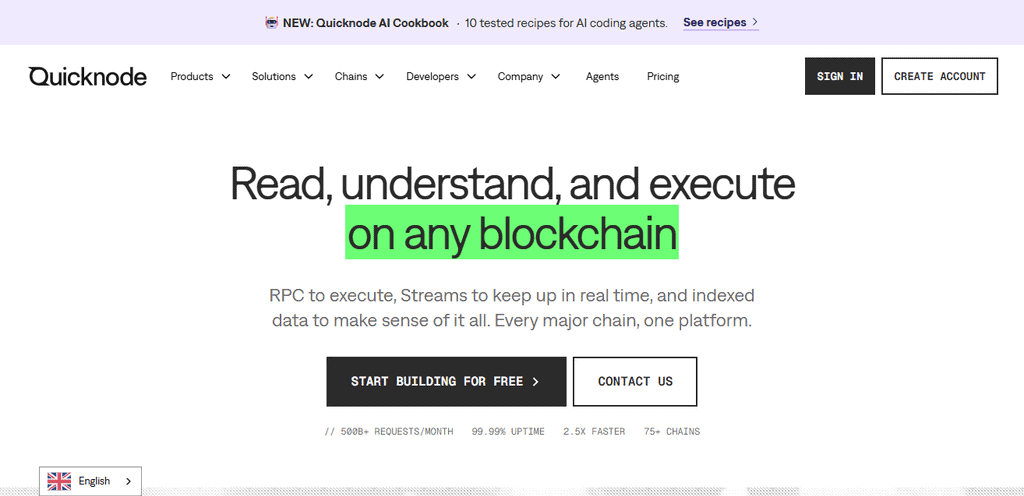
Supported Blockchains: Its supported ecosystems include Ethereum, Solana, Polygon, Avalanche and several other networks depending on the product and plan. Node Infrastructure: Developers are able to configure endpoints and utilize other features of the infrastructure.
QuickNode takes pride in reliable connectivity and fast data delivery. Scalability : Its service options are designed to meet the needs of projects ranging from early-stage apps to high-traffic platforms. Developer documentation, analytics, and add-on tools make deploying and managing your infrastructure over time easier than ever.
Best Use Cases
- High Traffic dApps: Provide blockchain connectivity for consumer apps with fluctuating request loads.
- DeFi Platforms: Retrieve blockchain state, submit transactions, and track protocol activity.
- NFT Applications Create NFT marketplaces and other applications using supported blockchain endpoints and developer tools.
- Real-Time Data Applications: Receive updates from the blockchain using streaming services and WebSocket connections.
- Solana Trading Apps: Use appropriate infrastructure configurations for latency-sensitive trading, arbitrage and other Solana workloads.
Key Differentiators
- Dedicated Infrastructure: Provides dedicated clusters for workloads that require more infrastructure isolation.
- Developer Ecosystem: APIs, SDKs, command line tools and developer documentation.
- Streaming Options: Different ways to deliver data are provided, such as RPC, Streams and gRPC on available networks.
- Multichain platform: Provides access to nodes and other infrastructure services for a broad range of blockchain network
3. Infura
Competitor Name: Infura is a ConsenSys product and established Web3 infrastructure provider and a strong alternative to Chainstack. Managed RPC Services: It provides hosted RPC endpoints and APIs that allow developers to connect applications to blockchain networks without having to manage node hardware.
Supported Blockchains: The service offers Ethereum, Polygon, Arbitrum, Optimism and other supported networks, depending on the service. Node Infrastructure: Infura offers managed access to blockchain nodes and developer tools for querying network data.
Performance and Latency: Its infrastructure is built for reliable blockchain connectivity. Scalability: Usage limits and plans available that help projects to deal with growing API demand. Documentation, authentication, and monitoring capabilities to help support application development and production operations
Best Use Cases
- Ethereum dApps: Connect your decentralized applications with Ethereum to read contract data and send transactions.
- Wallet Integration – Allow RPC connection for crypto wallets and applications running on Ethereum-compatible networks.
- Layer 2 Applications – Create applications on supported scaling networks like Arbitrum and Optimism.
- Web3 Development: Play with smart contract technology and connect to the blockchain without running your own node infrastructure.
- Projects in the Consensys Ecosystem: Support applications that leverage Consensys developer tools and blockchain services that are compatible.
Major Differentiators
- Ethereum Focus: Proven track record working with Ethereum infrastructure and developer ecosystem.
- Consensys Integration: Provides value to existing projects leveraging compatible Consensys products and tools.
- Managed RPC Access – Hosted endpoints and APIs that make it easy to connect to a blockchain.
- Developer Resources: Documentation, API credentials and integration support for supported networks
4. Ankr
Ankr is a Web3 infrastructure provider that offers managed RPC services as an alternative to Chainstack. Managed RPC Services: It offers public and premium RPC endpoints, JSON-RPC access, WebSocket connections and advanced blockchain APIs. Supported Blockchains Ethereum, Solana, BNB Smart Chain, Arbitrum, Base, Bitcoin, TRON, TON, and Sui
Developers are able to deploy blockchain infrastructure with hosted nodes and services. Performance and Latency: It uses network routing and managed endpoints in its architecture to serve blockchain requests. Flexible service tiers support different traffic needs. Other APIs allow applications to pull token, NFT, transaction and other on-chain data.
Top Use Cases
- Multichain dApps Link your apps to supported networks through managed RPC endpoints.
- DeFi Protocols: Access blockchain state, interact with intelligent contracts in supported ecosystems.
- Blockchain Analytics: On-chain data for dashboards, transaction monitoring and application data.
- Cross-Chain Applications: Build applications that communicate with multiple supported blockchain networks.
- Web3 Infrastructure Deployment: Deploy selected nodes and access blockchains via node infrastructure services.
Main Differences
- Distributed Infrastructure: Uses load balancers spread across geography to direct requests to the right infrastructure.
- Advanced APIs: Provides indexed, production ready data endpoints for supported blockchain use cases.
- Multichain Access: Provides RPC connectivity to many blockchain ecosystems.
- Developer Analytics: Usage statistics and tools to test APIs to evaluate the requests and manage integrations.
5. NOWNodes
NOWNodes is a blockchain node-as-a-service provider that allows developers to connect apps to various networks. Managed RPC Services – Access to full nodes and blockchain data via APIs, removing the need to run separate infrastructure. Supported Blockchains: It offers a listing of many networks, including primary cryptocurrency ecosystems, but you need to verify specific endpoint availability prior to integration.
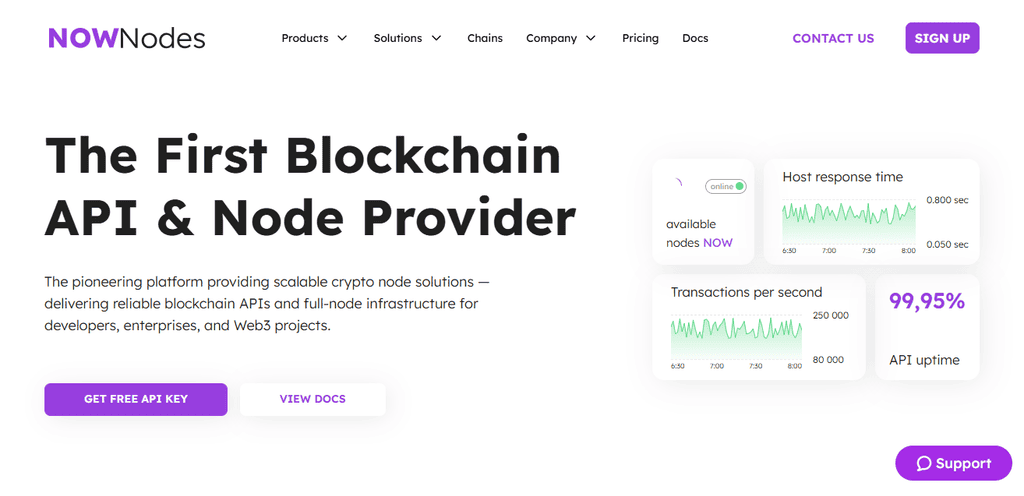
Node Infrastructure: Select shared or dedicated node options to meet your particular workload requirements. Performance and Latency Managed endpoints make it easier to get to blockchain data Actual response times depend on network conditions and the service you choose.
Developers are able to pick the infrastructure depending on the application needs. API documentation and blockchain explorers also help with development and troubleshooting.
Top use cases
- Multichain Wallets: Connect wallets to supported blockchain networks to view balances and transaction history.
- Crypto Exchanges Fetch deposits, withdrawals, transaction statuses and other blockchain information.
- Payment Platforms: Track incoming transactions and verify payment activity on supported networks.
- Blockchain Explorers: Get block, address and transaction data to feed explorer interfaces.
- Custom Blockchain Applications: Get managed full nodes without the pain of building and maintaining the underlying infrastructure.
Major Differentiators;
- Large Network Selection: Provides APIs for a wide variety of blockchain networks.
- Dedicated Node Options – Options for infrastructure for projects that need more control over node resources.
- Multichain data access: Enables developers to access multiple blockchain ecosystems with one provider.
- Simple Integration: Uses API keys and endpoints to simplify access to managed blockchain nodes
6. GetBlock
GetBlock is a managed blockchain infrastructure provider and a possible Chainstack alternative for applications that need multi-network connectivity. RPC services management: Provides APIs to connect to blockchain nodes, enabling developers to access transaction data, query blocks, and interact with supported networks.
The service catalog includes the major blockchain ecosystems with exact availability varying according to the network and endpoint type. Node Infrastructure – We offer shared and dedicated nodes for different development and production needs.
Hosted endpoints are easier to connect to, but performance depends on request complexity and how the infrastructure is configured. Scalable: Projects can increase capacity to meet demand through different service plans. The developer docs make it simple to configure and integrate endpoints.
Top Use Cases
- Crypto Wallets: Retrieve account balances, transaction history and blockchain state.
- Transaction Infrastructure: Enable deposit monitoring, withdrawal verification, and transaction validation.
- DeFi Applications: Link to supported blockchain smart contract interfaces.
- Blockchain analysis of historical data: To query older block data, you will need to use appropriate archive-node services.
- Blockchain Testing: Test integrations using supported testnet endpoints before going into production.
Key Differentiators
- Shared and Dedicated Nodes: Different infrastructure options to suit different workload requirements.
- Archive Access: Provides archive-node service for applications requiring access to historical blockchain data.
- Multi-Chain Connectivity: Allows RPC access to multiple blockchain networks.
- Flexible Infrastructure Options: Developers are able to choose what type of node type and services they require based on their projects
7. dRPC
dRPC is a blockchain RPC infrastructure provider providing an alternative to traditional managed node platforms. Managed RPC Services: Developers are able to connect applications to supported blockchains with RPC access via a distributed network of independent node providers.
It supports Ethereum, Layer 2 solutions, and a variety of other blockchain ecosystems. Node Infrastructure: Distributed routing and provider aggregation coordinate requests across available infrastructure.
Latency and Performance Routing and failover capabilities can help ensure connectivity, but the actual results depend on provider health and location. Scalability. The multi-provider approach provides the application with the ability to grow. Things like endpoint management and control of access can help simplify infrastructure operations.
Best Use Case
- Multi-chain dApps. Enable apps to talk to multiple blockchain networks through a single RPC access layer.
- DeFi Apps: Interact with on-chain data and submit transactions through supported RPC endpoints.
- High-Availability Applications: Utilize distributed provider routing and available failover features to help maintain connectivity.
- Web3 Wallets: Access to the blockchain to query balance, submit transactions and obtain network information.
- Infrastructure Cost Management Evaluate pooled RPC access and pricing options for applications with fluctuating request volumes.
Important Differentiators
- Distributed provider network: Sends requests over infrastructure hosted by multiple node providers.
- Intelligent Routing: It uses routing mechanisms to choose compatible available infrastructure for requests.
- Multiple Chains Support: Offers a single access layer to a large number of supported networks.
- Flexible Pricing Options : Provides pricing solutions to make RPC budgeting and infrastructure management easier
8. Blockdaemon
Blockdaemon is a blockchain infrastructure provider, focused on enterprises, developers and institutional customers. Managed RPC Services It provides managed blockchain nodes and RPC endpoints for apps that require reliable network connectivity. Supported Blockchains: Its infrastructure supports multiple blockchain ecosystems, with specific network coverage depending on the chosen service.
We provide shared nodes, dedicated full nodes, archive nodes, and enterprise infrastructure deployments. Performance & Latency: Managed infrastructure and deployment options allow organizations to fulfilll their operational requirements.
Infrastructure can be scaled based on workload and service needs. Blockdaemon is relevant for enterprise blockchain operations as it provides other capabilities including staking infrastructure, monitoring and technical support.
Use Cases
- Enterprise Blockchain Applications: Deliver managed node infrastructure for business-critical blockchain integrations.
- Institutional Digital Assets : Provide blockchain connectivity for platforms that conduct digital resources and transactions.
- Staking Operations: Infrastructure services for supported proof-of-stake networks and running validators.
- Historical Data Analysis: Retrieve the appropriate archive nodes for research, audit, and historical blockchain inquiries.
- Multi-Network Infrastructure: Manage access to nodes in enterprise infrastructure environments across supported networks.
Key Characteristics
- Enterprise Focused: Designed for organizations that need managed infrastructure and operations.
- Validator & Staking Infrastructure: Connects validator and staking products with blockchain infrastructure.
- Dedicated Nodes: Offers dedicated infrastructure options for workloads that need more isolation.
- Operational Support: Offers infrastructure management and technical support options for business customers
9. Allnodes.
Allnodes is a substitute for some use cases of Chainstack. It provides blockchain infrastructure services such as public RPC access and node hosting. Managed RPC Services: PublicNode service provides public blockchain endpoints including Ethereum RPC access to developers who require simple connectivity.
Supported blockchains: Each product supports different networks, so developers should check endpoint support before deciding on a product. Node Infrastructure Allnodes offers node hosting and public endpoint options for a range of blockchain ecosystems.
Performance and latency The performance of the public endpoint is subject to network demand and availability of capacity. Scalability Services can support basic development and some production workloads. Developers should evaluate traffic limits, availability of dedicated infrastructure, monitoring and support needs before deployment.
Best Use Cases
- Blockchain Application Development: Integrate applications with supported networks using PublicNode endpoints.
- Crypto Wallets – Access blockchain data and communicate with supported networks using RPC endpoints
- Validator Operations Run a node for supported proof-of-stake blockchain networks using hosting services.
- Historical Data Applications: Select appropriate archive-node services for applications querying historical blockchain state.
- Node Infrastructure Hosting: Deploy or host supported blockchain nodes without having to manage all of the underlying server operations yourself.
Key Diffrentiators
- PublicNode Access: Offers public RPC endpoints for supported blockchains.
- Dedicated Infrastructure: Eligible networks can choose dedicated node or archive node options.
- Validator Hosting: Provides node hosting and services for blockchain staking and validator activities.
- Deployment Flexibility: Offers multiple hosting configurations according to network and infrastructure requirements
10. Helius
Helius is a blockchain infrastructure provider focused on the Solana ecosystem. This makes it a useful competitor for developers focused on the Solana ecosystem looking for an alternative to Chainstack. Managed RPC Services: Provides Solana RPC endpoints, advanced APIs, webhooks, and developer tools for transactions.
It’s focused on Solana for its core infrastructure, so teams building multichain applications should see if they need additional providers or not. Node Infrastructure Hosted RPC services enable developers to access Solana blockchain data without needing to run their own node.
It comes with dedicated tooling to allow efficient transaction processing and real-time data access. Scalability: Applications can scale with different service plans. Better transaction APIs and webhooks are good for DeFi, NFT, gaming and other Solana-based projects.
Top Use Cases
- Solana DeFi Applications: Query Solana blockchain data and send transactions to decentralized finance protocols.
- NFT Marketplaces: Use improved APIs to get NFT info and associated on-chain data.
- Trading Bots: Connect your trading systems to Solana RPC infrastructure and proper real-time data services.
- Real Time Blockchain Monitoring Use webhooks and streaming tools to monitor supported Solana events.
- Solana Wallets & dApps: Build applications that need transaction processing, account data and advanced blockchain information.
Unique Selling Points
- Solana Focus: Infrastructure and tooling for developers building on the Solana ecosystem.
- Better APIs: Provides dedicated access to structured Solana data including digital asset info.
- Streaming Infrastructure – Real-time data delivery for supported Solana workloads
- Transaction Tooling: Facilitates efficient transaction submission and creation of blockchain applications
How to Choose the Right Managed RPC Provider
Supported Blockchains: Select a provider that supports the blockchain networks, testnets, and protocols you need for your Web3 application to ensure compatibility with your current and future development needs.
Performance & Latency: Look at RPC response times, geographical availability, and claimed uptime guaranties to ensure reliable blockchain access for apps that make frequent requests and handle time-critical transactions.
Pricing and Plans: Look at subscription costs, request limits, compute-unit pricing, and overage fees to find a provider that meets your budget without sacrificing critical infrastructure capabilities.
Node Infrastructure: Check for the availability of shared, dedicated and archive nodes to ensure the provider has the capacity to handle your application’s workload, historical data needs and infrastructure preferences.
Scalability Options: Choose a provider that can scale up to meet increased traffic, a growing number of transactions and evolving application requirements without complex infrastructure migrations or unplanned service disruptions.
Security Features: Assess API authentication, control of access, endpoint limitations, monitoring and security protections available to safeguard blockchain connectivity and reduce the potential for unauthorized access.
Developer Tools: Look for providers with good documentation, SDKs, WebSocket connections, Webhooks, Analytics and Debugging tools that make it easier to integrate, troubleshoot and continue to develop the application.
Customer Support: Evaluate the availability of technical support, incident communication, service-level agreements, and troubleshooting resources to make sure your team can rapidly address infrastructure issues during critical operations.
Conclusion
The best Chainstack competitor for managed RPC nodes will depend on your blockchain needs, budget, performance expectations and scalability needs. These providers include Alchemy, QuickNode, Infura, Ankr, NOWNodes, GetBlock, dRPC, Blockdaemon, Allnodes, Helius and offer different infrastructure capabilities for Web3 applications.
Some are about multichain connectivity, some are about enterprise infrastructure, some are about distributed RPC access, some are about Solana development.
Review supported networks, pricing plans, dedicated and archive-node availability, security features, and developer tools before you decide. Ultimately, the best provider is the one that offers secure blockchain connectivity, meets your technical requirements, and helps your project scale in the future.
FAQ
What are the best Chainstack competitors for managed RPC nodes?
The top Chainstack competitors include Alchemy, QuickNode, Infura, Ankr, NOWNodes, GetBlock, dRPC, Blockdaemon, Allnodes, and Helius. Each offers different blockchain infrastructure services and developer tools.
Which Chainstack alternative is best for Ethereum development?
Alchemy and Infura are popular options for Ethereum development. Both provide managed RPC access, developer tools, and blockchain connectivity for decentralized applications.
Which Chainstack competitors support multiple blockchains?
Alchemy, QuickNode, Ankr, NOWNodes, GetBlock, and dRPC offer access to multiple blockchain networks. Supported chains and available features vary by provider and plan.
What is a managed RPC node provider?
A managed RPC provider offers hosted blockchain endpoints that allow applications to read blockchain data and submit transactions without independently operating and maintaining node infrastructure.
Which Chainstack alternative is best for Solana applications?
Helius is a strong option for Solana-focused applications because it provides Solana RPC infrastructure, enhanced APIs, webhooks, and transaction development tools.