

Choosing the right RPC provider is crucial to building a reliable and scalable Web3 application, especially when you are working with multiple blockchain networks. Multi-chain RPC providers allow developers to connect to multiple networks, including Ethereum, Solana, Polygon, and Arbitrum, without the need to run separate node infrastructure for each of the blockchains.
But each provider has different performance, supported networks, pricing, security, and developer tools. In this guide, I’ll go over the Best Multi-Chain RPC Providers for Web3 Applications so you can see how they compare on features, benefits, and how well they’ll work for your project.
How to Choose the Right Multi-Chain RPC Provider?
Check Blockchain Compatibility: Choose a provider that supports all the networks you need, including Ethereum, Solana, Polygon, Arbitrum, and BNB Chain. This will make it easier to connect and manage multiple blockchains.
Consider Speed and Latency: Investigate the speed of responses, geographic coverage, and the capacity to process requests to ensure your Web3 app provides frictionless interactions, faster transactions, and dependable access to blockchain data.

Evaluate Reliability and Uptime: Choose a provider with high uptime, reliable infrastructure, and failover mechanisms to reduce service interruptions and ensure seamless connectivity to users across various blockchain networks.
Compare Pricing Plans: Review free tiers, monthly subscriptions, request limits, and additional charges to find a cost-effective provider that meets your application’s current usage and future scalability needs.
Developer tools: Seek out full documentation, SDKs, monitoring dashboards, debugging tools and easy API integration to enable development, troubleshoot problems and cut down on the time it takes to implement.
Verify archive data access: If your application requires historical transactions, past blockchain states, or analytics, ensure that the provider has adequate archive access and can handle the queries you need.
Prioritize security features: Opt for providers that offer API key management, control of access, secure connections, and usage restrictions to safeguard sensitive credentials and minimize unauthorized access to your blockchain infrastructure.
Think about Scalability and Support: Choose a provider able to cope with growing request volumes, flexible infrastructure options, and timely technical support to adapt to evolving application requirements and production loads.
Benefits of Using Multi-Chain RPC Providers for Web3 Applications
Access to multiple blockchains. Multi-chain RPC providers offer unified services to connect applications to networks such as Ethereum, Polygon, Solana and Arbitrum, making it easier to integrate with blockchains and allowing developers to access different ecosystems.
Accelerated Application Development: With pre-configured RPC endpoints and developer tools that streamline infrastructure setup, teams can dedicate more time to developing application features rather than maintaining separate blockchain nodes and network connections.
Lower Infrastructure Costs: Managed RPC services reduce the need for hardware, maintenance, and operational efforts required to operate standalone blockchain nodes. This enables businesses to optimize resources and manage infrastructure costs.
Enhanced Scalability: Multi-chain RPC providers provide scalable infrastructure to manage increasing request volumes. This implies that as Web3 applications attract more user activity, they can scale without developers having to address every scaling challenge on their own.
Reliable Blockchain Connectivity: Established RPC providers offer monitoring, load balancing and, depending on the service, failover options to help maintain connectivity and reduce disruption during periods of heavy network traffic.
Easy Data Access Developers are able to access blockchain data, query transactions, analyze intelligent contracts, and send requests to supported networks through RPC APIs, making it more convenient for applications to incorporate blockchain data.
Enhanced Developer Productivity From documentation and SDKs to analytics dashboards and debugging tools, many providers equip developers with the tools they need to troubleshoot connectivity issues, monitor usage, and improve their Web3 application development workflows.
Supporting Different Web3 Applications: Multi-chain RPC infrastructure allows DeFi platforms, NFT marketplaces, blockchain games, wallets, and analytics applications to connect to multiple networks that are supported and serve users across blockchain ecosystems.
Key Points
1. Alchemy
Alchemy is one of the most popular blockchain infrastructure platforms for Web3 apps. It supports more than 100 blockchain networks, including Ethereum, Solana, Polygon, Arbitrum, Base and Optimism. The platform has a free tier with a monthly allowance of compute units and pay-as-you-go for higher usage.
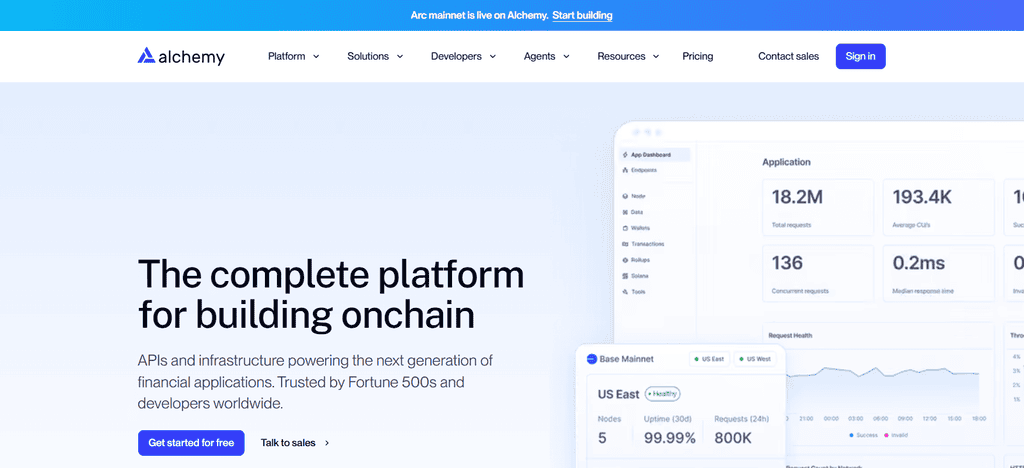
Its infrastructure is optimized for low latency RPC requests, high throughput and large scale decentralized applications. Alchemy also has APIs for NFTs, tokens, wallets and transaction monitoring. Enterprise-grade security, distributed infrastructure, advanced analytics and developer dashboards make it a favorite of startups and large Web3 projects.
Pros
- Compatible with various blockchain networks such as Ethereum, Polygon, Arbitrum & Optimism.
- Provides a dependable RPC infrastructure for Web3 applications.
- Offers developer tools, APIs and debugging features.
- Has analytics and monitoring for tracking application performance.
- Provides scalable infrastructure for applications that handle the growing traffic of blockchain.
Disadvantages
- Some other features may only be available on a paid plan upgrade.
- High volume applications may be subject to free tier usage limits.
- API request consumption may lead to price increases.
- Some specialized blockchain networks or features may not be supported by all plans
2. QuickNode
QuickNode is a high performance RPC & node infrastructure platform for developers building scalable Web3 applications. It supports tens of blockchain networks – including Ethereum, Solana, Polygon, Avalanche, BNB Chain and a host of Layer-2 chains. The platform offers a free plan with limited features and paid plans starting with entry-level developer tiers.
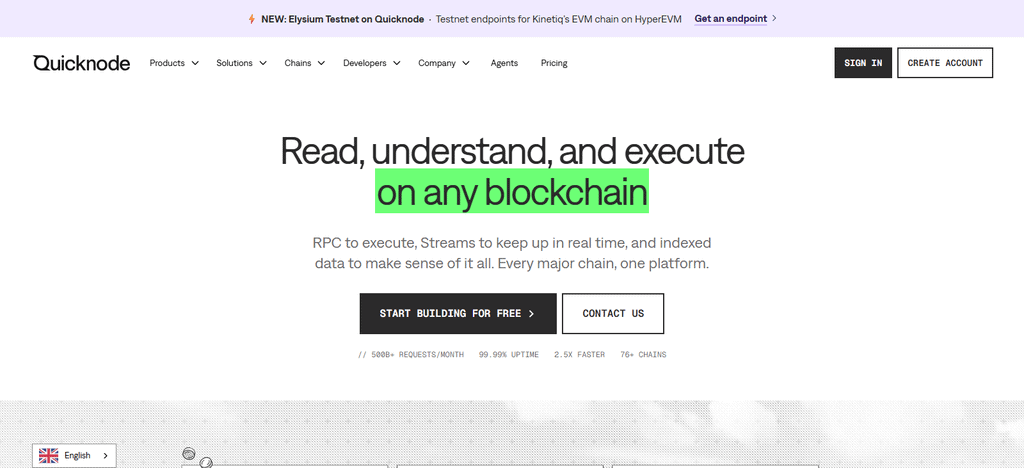
QuickNode emphasizes fast response times, reliable RPC access, WebSocket connectivity, and dedicated node options. It features a developer ecosystem with Streams, Webhooks, analytics and blockchain add-ons. If you need production-grade dapps, QuickNode is the way to go with globally distributed infrastructure, high uptime commitment, advanced monitoring and great scalability.
Benefits
- Managed RPC endpoints to support a vast array of blockchain networks.
- Provides dedicated infrastructure options for performance sensitive applications.
- Offers developer tools and add-ons for interacting with blockchain data.
- Usage monitoring and analytics for tracking requests.
- Provides scalable infrastructure for DeFi, NFT and other Web3 projects.
Disadvantages
- Increased request volumes can lead to higher operating expenses.
- Certain advanced features may need additional services or paid plans.
- Functionalities and limitations vary by blockchain and subscription tier.
- Developers may have to consider add-on charges before choosing a plan
3. Chainstack
Chainstack is a provider of managed blockchain services and multi-chain RPC infrastructure for developers and enterprises. The platform supports over 70 blockchain networks and allows teams to deploy and manage nodes without server infrastructure management. Chainstack has a free developer tier and scalable paid plans for growing workloads.
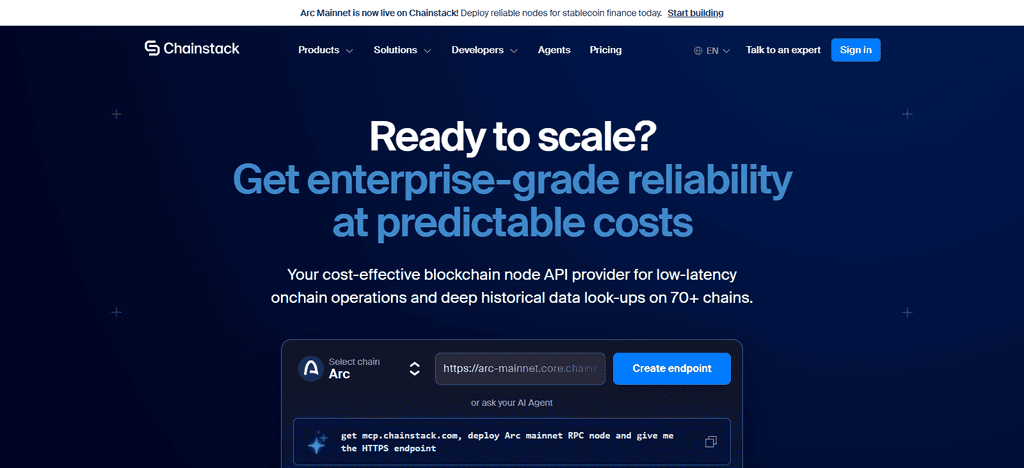
It focuses on predictable RPC performance, low latency and reliable uptime for mission-critical apps. Developer tools include APIs, monitoring dashboards, archive node access and deployment automation. Chainstack’s infrastructure is spread across major cloud environments, and includes security controls, operational monitoring, and enterprise-grade reliability for Web3 services.
Pros
- Managed node infrastructure for multiple blockchain networks.
- Provides dedicated nodes for applications that require more control over resources.
- Offers APIs and tools to simplify blockchain connections.
- Offers monitoring capabilities to track node performance.
- Powers enterprise-grade deployments for demanding Web3 applications.
Drawbacks
- Cost can be expensive for resource-intensive workloads.
- Some advanced infrastructure options are limited to higher-tier plans.
- Availability of protocols and features is determined by the supported networks.
- Developers might need technical expertise to configure specialized deployments
4. Infura
Infura is a major provider of blockchain infrastructure, used widely across the Ethereum ecosystem. It provides access to Ethereum, Layer-2 networks and other supported blockchains via managed APIs and RPC endpoints. Developers are able to start free and then upgrade to paid subscriptions as application demand grows.
Infura is a company that offers reliable blockchain connectivity, scalable request handling, and enterprise infrastructure. It supports HTTPS and WebSocket endpoints, and provides tools for transaction broadcasting and blockchain data retrieval. Infura is trusted by many Web3 platforms for its strong operational security, global infrastructure, and long-standing reputation.
Pros
- Offers ready-to-use RPC infrastructure for Ethereum and other supported networks.
- Simplifies connection to the blockchain without the need for developers to operate their own nodes.
- It exposes APIs to query the blockchain data and submit transactions.
- Seamlessly integrate with popular Web3 development tools and workflows.
- Enables use cases like Decentralized Exchanges, Wallets and DApps.
Cons
- The free tier request limits may not be suitable for high traffic applications.
- Usage-based pricing can rise as demand for the application increases.
- Supported blockchains have different availability of network and API.
- Developers have less direct control over the underlying managed node infrastructure
5. Ankr
Ankr offers RPC access to 90+ blockchain networks on a decentralized blockchain infrastructure platform. Its services cover Ethereum, Polygon, Avalanche, BNB Chain, Arbitrum, Optimism and many other ecosystems. The platform provides a generous free tier, as well as paid plans based on usage.
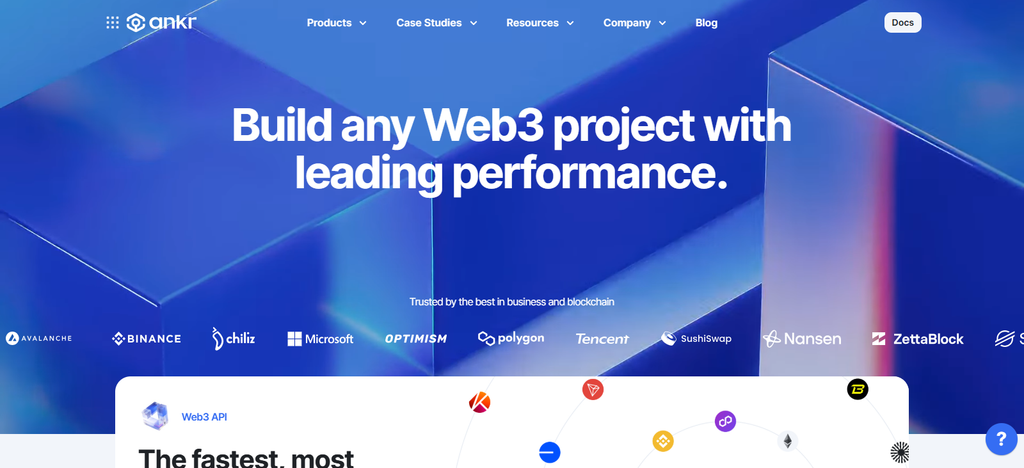
Ankr’s decentralized architecture ensures better availability, redundancy, and fast blockchain queries. Developers get access to RPC endpoints, APIs, Staking services and Web3 development tools. The platform is designed to scale for high-traffic dApps and uses globally distributed nodes, security and performance optimization techniques to provide reliable connectivity.
Benefits
- Supports RPC access to several blockchain networks.
- Offers the infrastructure for decentralized applications and Web3 services.
- Has developer APIs to access blockchain data.
- Connects to blockchains in a scalable way without running own nodes.
- Provides infrastructure options for projects with varying performance requirements.
Downsides
- Service restrictions and capabilities are subject to network and plan.
2.For high volume applications the costs of usage can be high. - Developers should check API compatibility with the network before integrating.
- Special requirements may require additional configuration or infrastructure services
6. NOWNodes
NOWNodes is a blockchain node and RPC service provider, offering access to more than 100 blockchain networks via a single API infrastructure. It supports EVM and non EVM chains which makes it attractive for multi-chain wallets, exchanges and decentralized applications. The platform offers free trial options in addition to paid subscription plans.
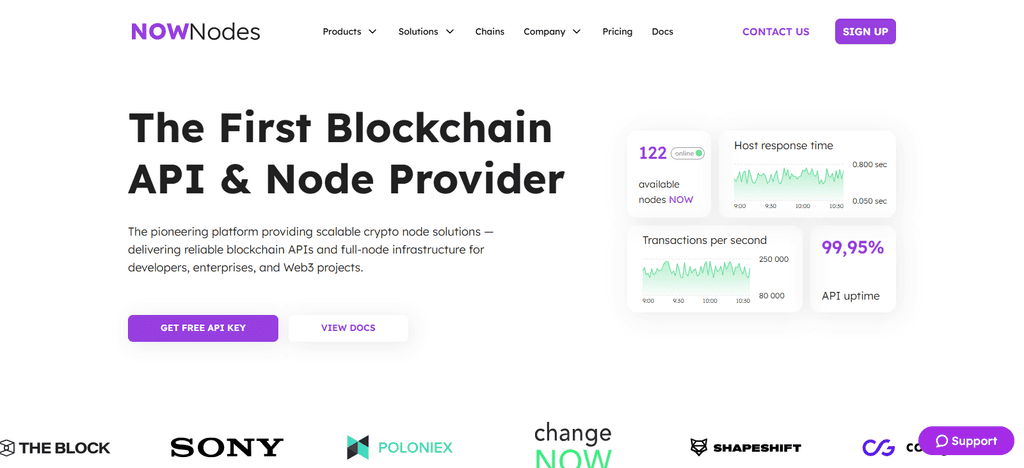
NOWNodes offers easy integration, reliable access to nodes and stable RPC performance. For developers, there are APIs, WebSocket support, blockchain explorers and other data services. We have built the infrastructure to be as simple as possible to manage nodes, while keeping security, scalability and uptime for production apps.
Benefits
- RPC access to many blockchain networks.
- Provides managed node infrastructure, which reduces server maintenance requirements.
- Supports retrieval of blockchain data and transaction-related operations.
- Wallets, exchanges and Web3 apps API connectivity.
- Makes it easier for developers who like managed services to access blockchain nodes.
Disadvantages
- The subscription plan chosen determines the limits of the requests.
- You may need to purchase a more expensive package for heavy use.
- Available methods and capabilities depend on blockchain network.
- Developers should check for availability of archive-data for historical queries
7. Get Block
GetBlock is a Blockchain Node-as-a-Service provider that allows instant access to multiple blockchain networks via RPC and API endpoints. The platform supports multiple popular chains and offers both shared and dedicated plans for nodes. Developers are able to begin with a free tier and then move up to subscriptions with higher capacity.
GetBlock is committed to making blockchain access easy with stable performance and scalable infrastructure. It provides services such as archive nodes, JSON-RPC support, WebSocket connectivity and developer-friendly integrations. Decentralized applications and enterprise blockchain projects benefit from reliable access through security practices, infrastructure monitoring and geographically distributed resources.
Pros
- Managed RPC endpoints for multi-chain support.
- Offers shared and dedicated node types for various workloads.
- Provides developers with blockchain data access without maintaining node infrastructure.
- Supports integration with wallet, exchange and decentralized app.
- Offers plans that can accommodate different project usage needs.
Cons
- Dedicated infrastructure is likely to be more costly than shared access.
- There could be request limits for free or entry-level plans.
- The methods and features supported will vary between blockchain networks.
- Developers need to think about latency and coverage for the regions their users are in
8. dRPC
dRPC is a decentralized RPC infrastructure provider that provides access to blockchains via distributed node networks. It supports 100+ blockchain ecosystems and seeks to eliminate single points of failure found in traditional RPC services. The platform offers a free allowance and scalable paid options for larger workloads.
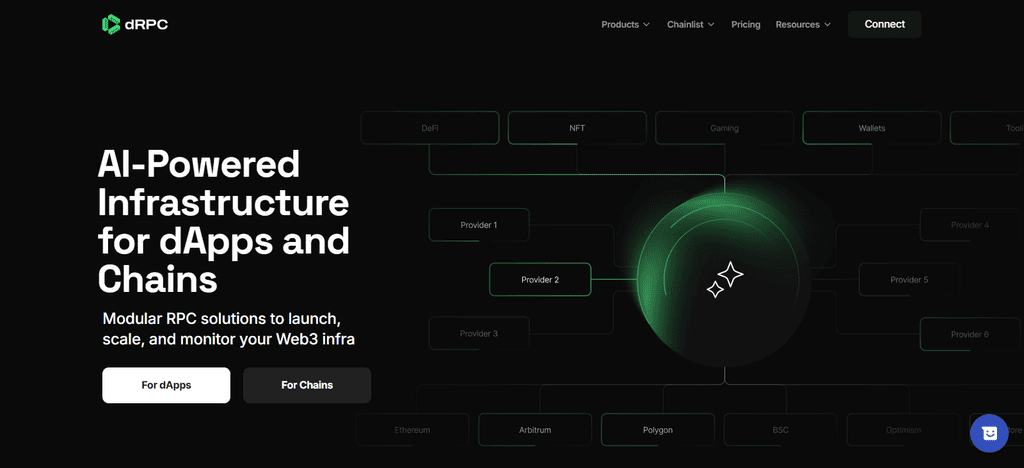
dRPC employs load balancing and decentralized routing to achieve better performance and availability. Developers get RPC access to many chains and benefit from infrastructure redundancy. Its architecture is focused on security, reliability and geographic distribution, making it ideal for Web3 needs where resilient, scalable connectivity is required.
Benefits
- Decentralized applications with multi-chain RPC connectivity.
- Provides infrastructure for improving RPC availability and request routing.
- Enables developers to connect to multiple blockchain networks via API endpoints.
- Helps Web3 projects explore alternatives to relying on a single RPC provider.
- Can assist to reduce reliance on a single infrastructure provider with distributed access options.
Downsides
- Results depend on network conditions and the choice of endpoints.
- Different providers may have different chains and capabilities.
- Developers might need to add extra configuration for advanced routing needs.
- Review the pricing and usage limits in light of expected request volume
9. Blast
Blast is a multi-chain blockchain infrastructure platform for RPC APIs and developer-focused connectivity services. It enables applications to connect to multiple blockchain networks through unified endpoints, making infrastructure easier. Normally, the platform provides free access to developers and premium plans for more sophisticated requirements.
Blast is focused on performance optimization, request routing and reliable access to the blockchain for decentralized applications. APIs, monitoring, and network analysis tools enable developers to effectively manage workloads. Its infrastructure is designed to scale, provide high availability and ensure operational security, enabling Web3 development teams to deploy and maintain reliable blockchain-powered services.
Advantages
- It provides RPC infrastructure for the supported blockchain networks.
- Allow applications to read blockchain data via API endpoints.
- Reduces the operational burden on developers to run their own nodes.
- Support for blockchain application development and transaction workflows.
- Perhaps good for projects that want simple RPC connectivity, depending on network support available.
Disadvantages
- Verify supported blockchain networks against project requirements.
- Perhaps it has less features than large infrastructure platforms.
- Your service configuration determines limits on performance and requests.
- Before deploying to production, developers need to evaluate documentation, support and pricing
10. Tenderly Node RPC
Tenderly Node RPC integrates blockchain RPC infrastructure with observability, debugging and simulation tools. The service can support multiple EVM-compatible networks allowing developers to access reliable blockchain data and monitor application behavior. It also offers developer-oriented plans with free tiers and paid scalable options.
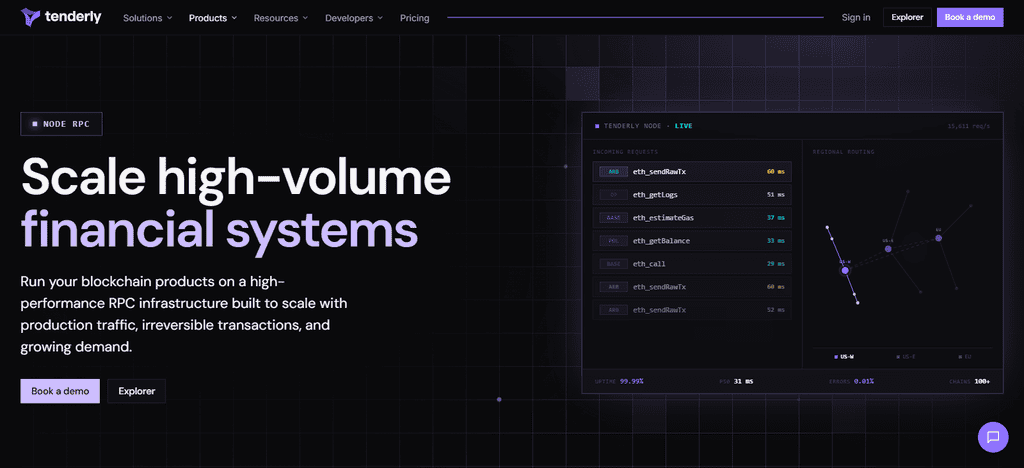
Tenderly emphasizes a lot on performance, with optimized RPC endpoints and a robust backend infrastructure. In addition to the typical access to the blockchain, the platform also provides transaction simulation, error tracking, alerting and debugging tools for smart contract users. Its scalable infrastructure, monitoring features and security make it a particularly useful tool for teams building and maintaining sophisticated decentralized applications.
Advantages
- Offers RPC infrastructure for blockchain application development.
- Fully compatible with Tenderly’s ecosystem for development and transaction debugging.
- Enables developers to inspect and debug smart contract interactions.
- Supports development workflows like transaction simulation and testing.
- Can make debugging and development easier for teams building smart contract apps.
Disadvanatge
1.Its main strengths may be less relevant to teams that only need basic RPC access.
2. Available networks and capabilities are based on current product offering.
3. Advanced development features may be purchased as add-on or separate product entitlements.
4. Teams should assess request limits and pricing for production scale usage.
Conclusion
Multi-chain RPC providers are an essential part of building scalable, reliable, and efficient Web3 applications. Alchemy, QuickNode, Chainstack, Infura, Ankr, NOWNodes, GetBlock, dRPC, Blast and Tenderly Node RPC are some of the platforms that offer various features for blockchain connectivity, data access and app development.
When choosing a provider, consider factors such as supported networks, RPC performance, uptime, pricing, security, access to historical data, and developer tools.
Developers must analyze the technical requirements, anticipated traffic, and budget for their project prior to any decision. Choosing the right multi-chain RPC provider can streamline blockchain integration, boost development efficiency and empower long-term application growth.
FAQ
What Is a Multi-Chain RPC Provider?
A multi-chain RPC provider enables Web3 applications to communicate with multiple blockchain networks through APIs, allowing developers to retrieve blockchain data, query transactions, and interact with smart contracts.
Which Are the Best Multi-Chain RPC Providers for Web3 Applications?
Popular options include Alchemy, QuickNode, Chainstack, Infura, Ankr, NOWNodes, GetBlock, dRPC, Blast, and Tenderly Node RPC. The best choice depends on network support, performance, pricing, and development requirements.
Why Do Web3 Applications Need Multi-Chain RPC Providers?
These providers simplify blockchain connectivity, reduce infrastructure management, support multiple networks, and help applications access blockchain data without requiring developers to operate every node themselves.
Are Multi-Chain RPC Providers Free to Use?
Many providers offer free plans with limited requests or features. Paid plans generally provide higher usage limits or additional capabilities, depending on the provider and selected subscription.
How Do I Choose the Right Multi-Chain RPC Provider?
Evaluate supported blockchains, response times, uptime, pricing, security features, archive data availability, developer tools, and scalability to identify a provider that matches your application’s requirements.