


Startups can be challenging in terms of finding the right funding, particularly when founders want to grow their business without losing ownership. Another choice is revenue-based financing, which provides companies with access to capital and repayment via a pre-agreed share of future revenue. In this guide, I’ll go over theBest Revenue-Based Financing Companies for Startups, including their top benefits, eligibility requirements, repayment structures, and potential costs. Through this comparison, entrepreneurs can better select the right options to finance their business model, financial needs and long-term growth goals.
What Is Revenue-Based Financing?
Revenue-based financing is a form of financing for a business that allows startups to raise capital in return for a percentage of their future revenue. Unlike traditional loans, repayments are flexible and can vary according to sales, subject to the agreement. Unlike equity financing, founders usually remain owners and do not give up any shares of the company.
Funding providers will analyze the revenue history, business performance, cash flow and growth potential before approving applications. The funds can be used by startups for marketing, inventory, hiring, product development or expansion. But financing fees, repayment terms and eligibility requirements differ by provider, so it’s important to shop around for funding.
How to Choose the Right Revenue-Based Financing Company
Compare Funding Amounts: Pick a lender that will give you enough money for your startup needs, marketing, inventory, hiring, expansion, etc. but not more than your business needs.

Review Revenue Requirements: Before beginning the application process, review minimum monthly revenue, annual recurring revenue and operating history requirements to ensure your startup qualifies.
Look over the repayment terms: Know what percentage of revenue will go toward repayments, how often payments will be made, the length of the repayment period and whether payments will be adjusted if your business has slower sales.
Compare Total Costs of Financing: Look at fixed fees, other charges and total repayment commitments to get an idea of the real cost of financing. Avoid costly funding commitments.
Check eligibility requirements. Before you choose a suitable lender, consider factors such as where your business is based, any limitations on the type of industry, the length of time you have been operating, credit checks, collateral you will need to provide and any personal guaranties you may need to sign.
Speed of Funding: How fast will the lender review applications and underwrite and release funds? This is important if you have a startup that needs working capital now to take advantage of a growth opportunity.
Evaluate Flexibility and Scalability: Seek out a lender who can offer appropriate financing structures, reasonable repayment terms, and access to additional funding as your startup’s revenue and operational needs grow.
Check Reputation and Transparency: Check out customer experiences, read the fine print of contracts, and make sure you’ll have continuous funding so you can choose a trustworthy provider with transparent pricing and clear repayment terms.
10 Best Revenue-Based Financing Companies for Startups
| Company | Key Point |
|---|---|
| Clearco | Provides non-dilutive funding based on revenue performance, helping online brands scale inventory, marketing, and growth without giving up equity. |
| Pipe | Enables startups to access upfront capital by leveraging future recurring revenue streams instead of raising equity. |
| Founderpath | Specializes in funding SaaS founders using subscription revenue, helping startups extend runway while retaining ownership. |
| Lighter Capital | Offers revenue-based financing with founder-friendly repayment structures and no equity dilution. |
| Wayflyer | Provides growth capital for online merchants based on sales performance, often with rapid approval and funding |
| Arc | Combines startup banking and revenue-based financing solutions to support cash flow and growth initiatives. |
| TIMIA Capital | Focuses on recurring-revenue companies, offering scalable funding without requiring founders to surrender equity. |
| Decathlon Capital Partners | Delivers revenue-based growth capital tailored to companies seeking expansion without traditional venture funding |
| Outfund | Offers flexible funding tied to business performance and is known for quick funding decisions for growth-focused companies |
| Bigfoot Capital | Provides customized revenue-based financing and growth loans designed for scaling technology businesses. |
1. Clearco
Clearco offers non-dilutive capital to e-commerce, direct-to-consumer and consumer product businesses. Funding amount: Eligible businesses may receive up to $10 million in funding, depending on the underwriting and financing product. Revenue Requirements: Its published criteria include at least $100,000 of monthly revenue for six months in a row.

Generally, applicants must have a U.S.-incorporated business and an active U.S. bank account. Repayment & Cost: Clearco charges a flat fee starting at 3.5% with terms varying by offer. Funding can be delivered in 24-48 hours of initial funding. Rolling funding capacity is available to eligible growing brands, not based on traditional credit scores.
Advantages
- Funding Options – Non-Dilutive
- Ability to obtain working capital
- Supports marketing and inventory investment
- Financing for E-commerce Ventures
- Helps founders keep ownership of their company
Best for
- E commerce companies
- Direct-to-Consumer Labeling
- Online retailers with proven sales
- Marketing and inventory capital for business
2. Trench
Pipe is a revenue-based financing and embedded financial solutions company for businesses and software platforms that provides working capital. Funding Amount: Funding limits are based on your revenue, banking data and performance, not a public maximum for everyone.
Some U.S. businesses with revenue of about $10,000 or more per year, and that can predict it, may qualify. **Eligibility: Applicant must satisfy business verification and underwriting requirements. Payments are taken as a percentage of revenue with no monthly minimum.
Pipe charges a flat fee, which is disclosed, based on the advance and business risk. Approved customers can receive funds within the same business day. Pipe says its process does not require credit checks or personal guaranties, and repeat offers can fuel continued growth.
Key Benefits
- A way to raise equity without traditional fundraising
- Financing options that are tied to business revenue
- Provides working capital needs
- Possible access to capital without sales of equity
- Solutions for financing a recurring revenue business
Best for
- SaaS businesses
- Predictable revenue businesses
- Subscription business
- Companies looking for non-dilutive growth capital
3. Founderpath
Founderpath provides non-dilutive funding to software companies and other businesses with recurring or repeat revenue. Revenue-financing rounds can be as much as $1.5 million. Its revenue-financing product targets software companies with about $1 million to $3 million in annual recurring revenue, while broader eligibility information cites at least $500,000 in prior-year revenue.
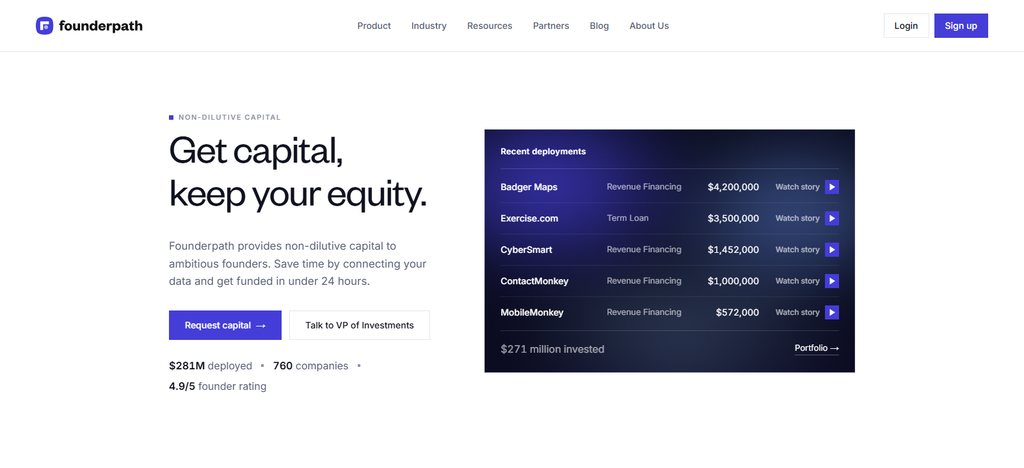
Businesses must have credible recurring revenue, healthy customer retention and appropriate margins. Financing is repaid on the agreed schedule and terms Discount rates begin at 7%. Once accepted, funding can occur within 24 hours. Underwriting is based on business metrics and can add additional capital as the business scales in revenue.
Big Benefits
- Emphasis on software companies
- Provides non-dilutive funding options
- Takes into account recurring revenue and business performance
- Helps you grow your business
- Helps founders keep ownership
Best In
- Startups SaaS
- Software companies on a subscription basis
- Recurring revenue businesses
- Founders reluctant to dilute equity
4. Lighter capital
Lighter Capital offers non-dilutive funding for SaaS, software and technology-service startups. Eligible businesses can apply for up to $10 million total non-dilutive funding, subject to approval. Revenue Requirements: Key criteria include annual recurring revenue of at least $200,000 and revenue from more than one customer.
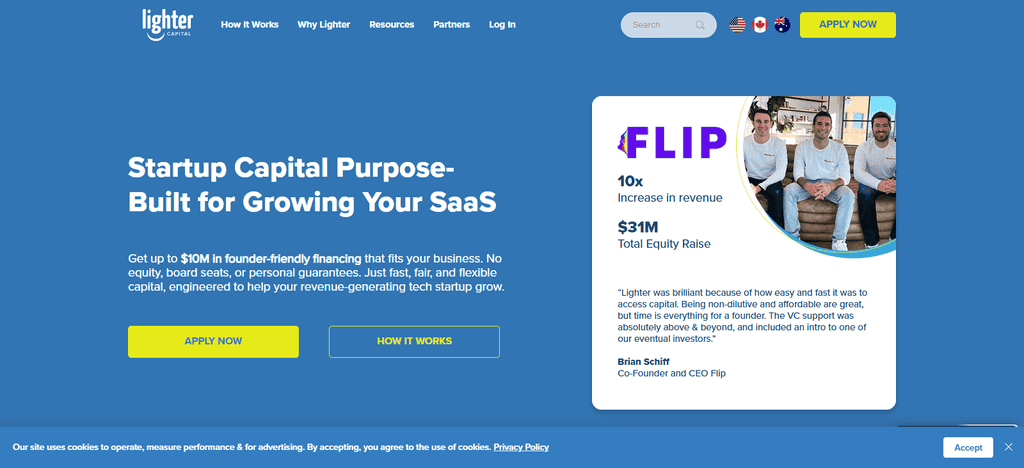
Startups generally need to be based in the United States, Canada or Australia and have a recurring-revenue business model. The startup does not have to be profitable. Revenue-based repayments are a fixed percentage of monthly revenue.
Pricing is determined by underwriting and the financing structure chosen. Most applicants will hear back within 1 business day. The approval process includes a credit assessment and any follow on funding can be used for expansion.
Big Perks
- Concentrates on Technology-Business Financing
- Offers non-dilutive funding sources
- Repayment terms are revenue based
- Supports hiring and product development
- Provides funding for growing software companies
IDEAL FOR
- SaaS businesses
- B2B Software Companies
- Technology startups with repeatable revenue
- Companies looking for growth capital without giving up equity
5. Wayflyer
Wayflyer provides working capital for growing businesses, including e-commerce brands, retailers and selected software companies. Funding amounts are determined by business performance and underwriting. Its published criteria include An average monthly revenue of at least $10,000 over the previous six months for U.S. applicants.
Operating history, location, business model and financial health affect approval. Repayment: Merchant cash advances can be paid back as a percentage of daily sales. Cost of Capital Fixed fees are usually published in the 5%-10% range.
Can be approved in as little as 24 hours and receive funds within one to three business days. Credit and Scalability: Business performance is important for decision making and companies can seek additional growth capital if eligible.
Main Benefits
- E-commerce business financing solutions
- Helps purchase inventory
- Helps to fund marketing campaigns
- Gives the business the cash it needs to grow
- Besides equity financing, it offers funding options
Best For
- E-commerce brands
- direct to consumer companies
- Online retailers with proven sales
- The demands of seasonal inventory for businesses
6. Arc
Arc helps startups with financial technology solutions and financing, particularly for those looking for non-dilutive capital. Determined based on company performance, underwriting assessment and financing product. The requirements vary by product, so startups should check if eligibility is based on recurring revenue, contracted revenue, or another financial metric.
Approval can be based on your business stage, cash flow, financial records and repayment capacity. Repayment Structure: Terms based on the financing arrangement you choose, not on one-size-fits-all revenue sharing.
The price is on offer and should be reviewed before acceptance. Varies with verification and underwriting. ** Credit and Scalability: The financial performance affects the assessment. Adequate financing can back working capital and growth.
Benefits
- Financing options for start-ups
- Alternatives to equity fundraising
- Assists with working capital needs
- Provides technology companies with financial solutions
- Supports qualified companies to finance growth programs
Best For
- Tech start-ups
- Venture-backed companies
- Startups looking for non-dilutive capital
- Companies cutting operating costs
7. TIMIA Capital
TIMIA Capital offers growth capital to technology companies with established business operations and recurring revenue. The amount and structure of funding is determined on a case-by-case basis following financial assessment. Revenue Requirements: Instead of a single published threshold, the company looks at recurring revenue, annual growth, gross margins, customer churn and cash burn.

Eligibility Business performance and financial records are assessed in a multi-stage process. Repayment Structure: The terms are set according to the company’s situation and financing agreement. Cost of Capital Price based on risk analysis, transaction structure.
The published process includes multiple stages of assessment and legal closing. Credit and Scalability: Financial due diligence is important and appropriate financing can help fuel continued growth in technology-business.
Main Advantages
- Concentrates on Technology-Business Financing
- focuses on companies with recurring revenues
- Offers alternatives to conventional equity financing
- Helps you grow your business
- Offers financing structures for each individual business
Best For
- SaaS businesses
- Established technology companies
- Recurring revenue businesses
- Businesses looking for growth capital without losing ownership
8. Decathlon Capital Partners, LLC
Decathlon Capital Partners provides growth capital to established companies looking to raise cash without traditional equity dilution. The size of investment and terms are negotiable depending on business needs and financial performance. Revenue requirements: The published criteria are annual revenues of $4 million to $100 million, at least two years of operating history and annual growth of 10 percent or more.

Generally, companies need to have attractive gross margins, experienced management, North American operations, and visibility to cash flow. Financing packages are tailored, with most transactions for periods of two to five years.
Cost of Capital: Pricing is case by case. Typically three to four weeks after a decision to proceed to close. Due diligence is in depth, so this option is more suitable for established growth-stage companies.
Great Benefits
- Provides tailored growth financing
- Reduces dependence on equity finance
- Assesses existing businesses with growth potential
- Facilitates growth of strategic initiatives
- Provides financing structures to fit the company’s needs
Best For
- Established growth stage companies
- Profitable or financially sound businesses
- Companies looking to grow
- Companies looking for alternatives to traditional equity investment
9. Outfund
Outfund is a revenue-based financing provider, recognized for providing growth capital to businesses with proven sales and online sources of income. Available funding is dependent on revenue performance, business history and underwriting. Please verify the current minimum revenue thresholds, as these vary based on the financing product and market.

Consistent revenue, business performance and the intended use of the funds may affect approval. Revenue-based financing often links repayments to a percentage of the business’s revenue. The total fees and repayment obligations vary according to the precise offer. Depends on assessment and documentation.
Credit and Scalability Business performance is a big consideration, and the right funding can help qualified companies fund marketing, inventory, and expansion without selling equity.
Advantages
- Provides revenue-based financing solutions
- It provides alternatives to equity fundraising.
- Helps with marketing and business growth
- Focuses on companies with measurable revenue
- Can help qualified businesses get capital to grow
Best For
- Businesses that generate revenue
- Online shopping firms
- Companies that invest in acquiring customers
- Non-dilutive financing available to companies, subject to availability at time of request
10. Capital Bigfoot
Bigfoot Capital is focused on providing growth capital to B2B software and technology enabled companies who want an alternative to equity fundraising. The amount of financing will depend on the company’s performance, capital requirements and agreed transaction structure.

Recurring revenue, customer retention, growth trends and cash flow are relevant considerations for software businesses. Eligibility: Companies typically require an existing commercial operation and proof of a market for their products or services.
Terms of repayment depend on the financing agreement and can vary from the traditional percentage of sales structures. Cost of Capital: The price is set by underwriting and negotiation.
Timeline depends on due diligence and documentation. Provider’s financial health and growth potential affect the rating. Worth considering for software companies looking to raise capital but retain ownership.
Advantages
- Specializes in B2B software companies
- Offers alternatives to growth financing
- Helps companies with recurring revenue
- Aids companies in funding expansion plans
- Offers an alternative to equity dilution
Best For
- B2B SaaS firms
- Established software companies
- Recurring revenue technology companies
- Businesses seeking capital while retaining ownership
Conclusion
Revenue based financing is a method for startups to raise growth capital without diluting ownership in the company. Businesses like Clearco, Pipe, Founderpath, Lighter Capital, and Wayflyer have financing solutions for a range of business models and growth needs. When selecting a lender, startups should compare eligibility requirements, repayment structures, total financing costs, credit checks and funding flexibility.
Repayments linked to revenue can help manage cash flow but fees and ongoing obligations can impact profitability. Founders should look for a financing partner that fits their revenue consistency, funding needs and growth strategy and carefully read all terms of the contract before signing.
FAQ
What Is Revenue-Based Financing for Startups?
Revenue-based financing allows startups to receive capital in exchange for repaying an agreed percentage of future business revenue until the required repayment amount is reached.
Which Are the Best Revenue-Based Financing Companies for Startups in the USA?
Clearco, Pipe, Founderpath, Lighter Capital, and Wayflyer are among the providers worth comparing, depending on your startup’s industry, revenue model, eligibility, and funding requirements.
How Does Revenue-Based Financing Work?
A financing provider advances capital to an eligible business. The startup repays the agreed amount through revenue-linked payments or another specified repayment arrangement, according to the contract.
Do Startups Need to Give Up Equity?
Generally, no. Revenue-based financing is designed to provide capital without requiring founders to sell company shares, although the precise contractual terms should always be reviewed.
What Are the Eligibility Requirements for Revenue-Based Financing?
Providers typically assess revenue history, cash flow, business performance, operating history, and repayment capacity. Minimum revenue thresholds and industry restrictions vary by company and financing product.