

Smart asset allocation, effective risk control, and constant analysis of the market are needed for investment portfolios. Algorithmic portfolio management platforms have made this process much more efficient with quantitative models, automated rebalancing and data driven investment strategies.
But not all platforms are designed for the same purpose, some are designed for institutional portfolio analytics while others are meant to help financial advisors or individual investors. In this article, we’ll go over the best algorithmic portfolio management platforms out there, including their key features, risk management, pricing, and best users.
Why Use Algorithmic Portfolio Management Platforms?
Automated Investment Selection: These platforms use pre-set algorithms and quantitative models to analyze market data, identify investment opportunities and execute portfolio strategies with minimal human intervention.
More Diversified Portfolio: They help spread investments across asset classes, securities, and sectors to manage concentration risks and keep investment allocations balanced.
Data-Driven Asset Allocation: Algorithmic tools examine market information, investment goals, and risk tolerance to assist in making informed decisions regarding asset allocation and portfolio construction.
Portfolio Rebalancing: Automated rebalancing will automatically adjust the investments when the market movements change the portfolio allocation to ensure the investor stays within their defined investment targets and strategies.
Advanced Risk Monitoring: The platforms offer portfolio exposure analysis, volatility measurement and scenario analysis to help investment professionals identify potential risks and monitor changing market conditions.
Backtesting of Historical Strategies: Investors can backtest supported algorithmic strategies against historical market data to assess performance, analyze possible weaknesses, and adjust investment rules before applying them.
Less Manual Work: Automating portfolio monitoring, trading workflows, reporting, and allocation management reduces repetitive administrative work, freeing up investment professionals to focus on strategic decisions.
Consistent Investment Execution: Rule-based investment strategies follow pre-defined rules and portfolio guidelines. This can help maintain discipline in the investment process and reduce inconsistent decisions based on emotional responses to market events.
How to Choose the Best Algorithmic Portfolio Management Platform?
Assess algorithmic capabilities: Examine the platform’s quantitative models, automated investment strategies, and rules-based decision-making tools, and assess if they can meet your portfolio management needs.
Check out portfolio optimization tools: See how they can help with asset allocation, portfolio construction, diversification, and optimization to align your investment strategies with your financial objectives and risk tolerance.
Assess Risk Management Features: Look for risk analytics, exposure monitoring, volatility measurement, stress testing, and scenario analysis to gage how well the platform identifies investment risks.
Review Automated Rebalancing: Select platforms offering automatic portfolio rebalancing, custom target allocations, trading constraints, and tax-aware rebalancing to stay disciplined with investments.
Check Backtesting Capability: Verify that the platform offers testing of strategies on historical data, performance evaluation, comparison with benchmarks and analysis of investment rules prior to deploying the strategies on live markets.
Compare Asset Class Support: Look for the platform’s support for stocks, ETFs, bonds, mutual funds, and alternative investments to ensure it can accommodate your portfolio diversification and investment needs.
Pricing and Scalability Comparison: Look at the subscription fees, licensing fees, additional service charges, and scalability to see if the platform fits your budget and future portfolio management needs.
Assess Integrations & Security: Evaluate broker connections, custodian connections, financial data compatibility, user authorizations, data encryption, and regulatory compliance to guaranty trustworthy and secure investment management processes.
Key Points
| Platform | Key Point |
|---|---|
| BlackRock Aladdin | Provides advanced portfolio analytics, risk management, investment modeling, and portfolio construction capabilities. |
| Bloomberg PORT | Supports portfolio optimization, risk analysis, performance measurement, and investment scenario evaluation. |
| FactSet | Combines investment data, portfolio analytics, performance attribution, and quantitative research tools. |
| Morningstar Direct | Offers portfolio analysis, investment research, asset allocation insights, and performance evaluation. |
| Envestnet Tamarac | Provides portfolio management, automated rebalancing, trading workflows, and investment reporting. |
| Orion Trading | Automates portfolio trading and rebalancing through model management and tax-aware investment workflows. |
| SS&C iRebal | Helps advisors automate portfolio rebalancing while managing investment restrictions and allocation requirements. |
| Wealthfront | Uses automated portfolio management, diversified investment strategies, rebalancing, and tax-loss harvesting. |
| Betterment | Provides automated investment portfolios, goal-based allocation, portfolio monitoring, and rebalancing. |
| Composer | Allows users to create, test, and automate rules-based investment strategies without traditional coding requirements. |
1. BlackRock Aladdin
BlackRock Aladdin is a leading institutional investment management platform that combines portfolio analytics, risk assessment, trading and investment operations. Its sophisticated quantitative models help portfolio managers evaluate market exposures, analyze investment risks and make data-driven decisions.
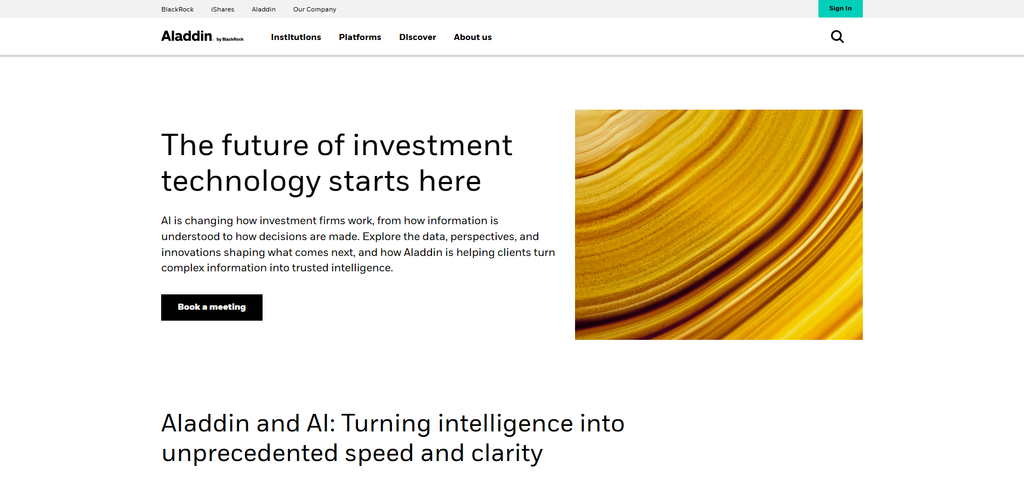
Portfolio optimization tools help to build risk-adjusted portfolios, conduct scenario analysis, and allocate assets. Its built-in optimizer also helps rebalance portfolios to target allocations and benchmarks while considering tracking error. Backtesting-style analysis is backed by historical scenarios and portfolio modeling. Pricing is tailored for institutional customers and is not publicly available.
Risk Control
- Portfolio Risk Analysis: Provides analysis of portfolio-level risk exposures for equities, fixed income, derivatives and alternative investments.
- Stress Testing: Assesses how strong the portfolio was during past market events and potential economic situations.
- Exposure Monitoring: Identifies concentrations of risk across individual securities, sectors, asset classes and investment strategies.
- Risk Factor Analysis: Uses quantitative risk models to evaluate interest rate, currency, market and other investment risks.
- Compliance & Oversight: Provides risk threshold monitoring, mandate compliance, exception tracking and governance workflows.
Who Should Use This?
- Asset managers (institutional)
- Pension funds and insurance companies
- Banking and financial institutions
- Risk management teams and portfolio managers
2. Bloomberg PORT
Bloomberg PORT is a portfolio and risk analysis tool used by professional investors, asset managers and financial institutions. Its quantitative risk models provide analysis of asset exposures, performance attribution and investment scenarios across multiple asset classes. Portfolio optimization features enable users to test hypothetical trades, construct portfolios and assess risk-return objectives.
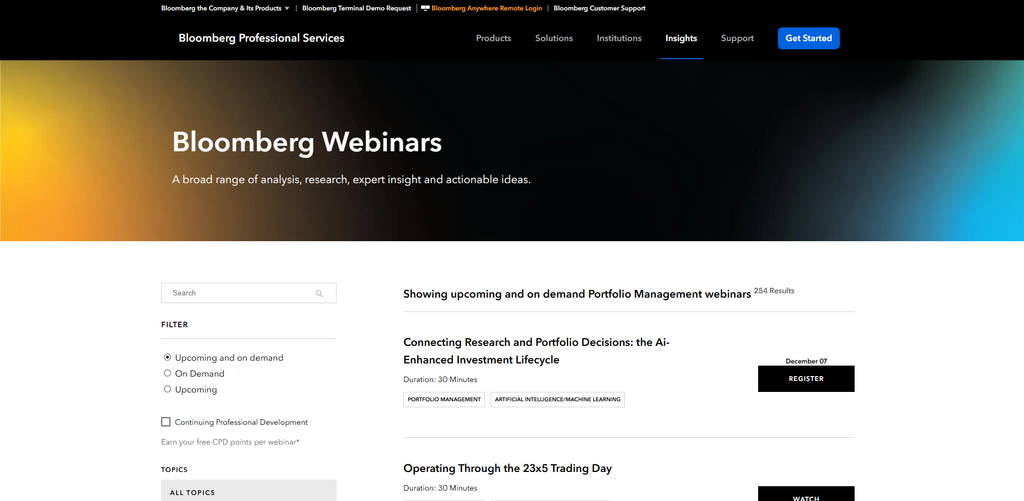
Trade simulation can help test the possible effects of investment decisions before they are executed. Bloomberg also supports historical strategy backtesting and portfolio performance analysis. Typically, pricing is provided through Bloomberg’s commercial subscription arrangements and will vary depending on the services selected.Bloomberg Professional Services
Risk Management
- Portfolio Risk Measurement: Assists investment professionals in measuring the risk of a portfolio and the sources of potential volatility.
- Scenario Analysis: Lets you run hypothetical market scenarios to see how changes in economic conditions might affect investments.
- Performance Attribution: Helps to pinpoint the securities, sectors and investment decisions that drove portfolio performance.
- Exposure Analysis: Understanding of portfolio holdings, asset allocation and concentrations of investment risk.
- Risk Monitoring: Supports portfolio managers in monitoring evolving risk exposures and assessing investment decisions with analytical tools.
Who Should Use It
- -Institutional portfolio managers
- – Fund Managers
- – Investment research professionals
- -Financial analysts and investment advisors
3. FactSet
FactSet provides investment research, quantitative analytics, portfolio management and trading solutions for financial professionals. Its quantitative research capabilities enable investors to create, optimize and manage alpha-oriented investment strategies based on financial data and analytical models.
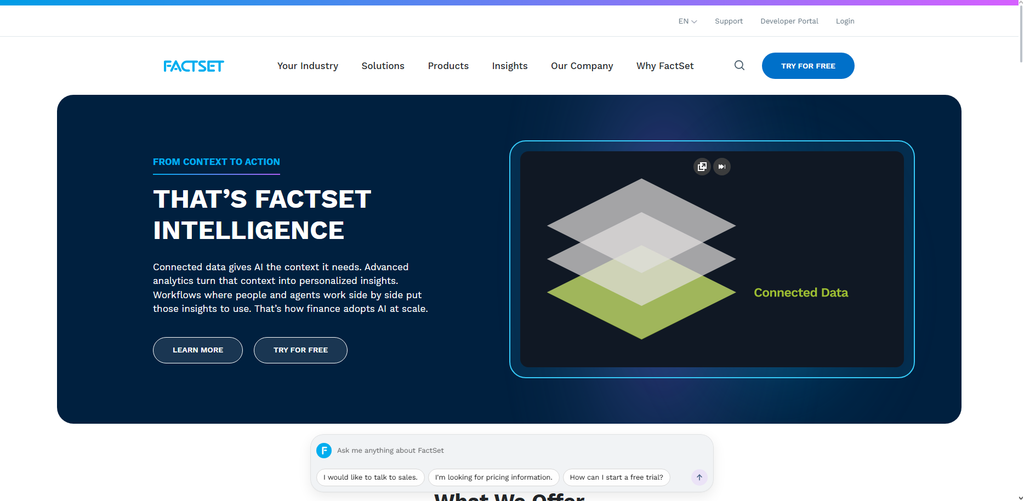
Portfolio optimization enables investment evaluation, risk analysis and strategy development. Integrated trading workflows link research, compliance, orders and execution. Its portfolio management solutions can provide access to automated trading workflows depending on configuration. The ability to test historical data depends on the research tools you select. Pricing is tailored to products, data access and institutional needs.
Risk Control
- Portfolio Risk Analytics: Provides analytical tools to assess investment exposures and portfolio risks.
- Factor Analysis: Assists investors in understanding the impact of various market and financial factors on portfolio performance.
- Performance Attribution: Shows how investment decisions, sectors and securities contribute to portfolio returns.
- Portfolio Monitoring: Enables ongoing review of your holdings, asset allocation and investment performance.
- Scenario Analysis: Assists investment professionals evaluate portfolio results under varying market assumptions and conditions.
Intended audience
- Asset management companies
- Institutional investors
- Investment research analyst
- Professionals in wealth management
4. Morningstar Direct**
Morningstar Direct is an investment research and portfolio analytics platform used by asset managers, wealth managers and financial analysts. Provides investment data, ratings, portfolio analysis and research tools to help make informed investment decisions. Its analytical tools enable users to build portfolios, test asset allocation, review holdings and measure risk exposures.
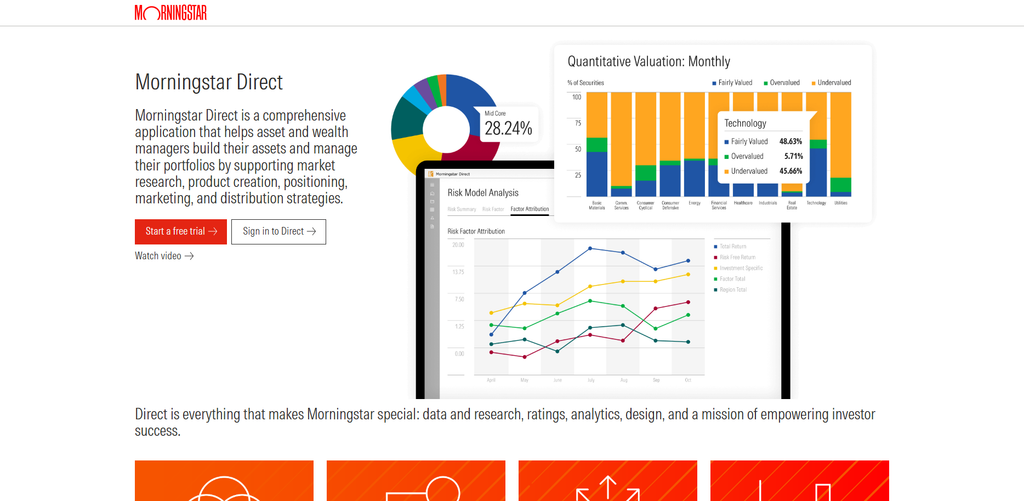
Portfolio optimization and scenario analysis are used to assess investments and the portfolio management tools are used to manage model portfolios and custom benchmarks. It’s more of an analytics and research platform, rather than an automated trading system. Pricing is available via tailored commercial arrangements. Morningstar
Risk Management
- Portfolio Risk Assessment: Assists in assessing portfolio risk based on investment data, holdings analysis and portfolio analytics.
- Diversification Analysis: Looks at asset allocation and investment concentration to find possible diversification issues.
- Performance Measurement: Assists with the comparison of investment performance with appropriate benchmarks and peer groups.
- Asset Allocation Monitoring: Analyzes portfolio exposure by asset class, sector, and investment category.
- Investment Research: It offers fund research, risk data and analytical knowledge to help with investment evaluation.
Intended Users
- Asset management firmsAsset Managers, Fund Managers
- Investment research analyst
- Financial consultants and advisors
5. Envestnet Tamarac
Registered investment advisors and wealth management firms receive portfolio management, trading, reporting and rebalancing solutions from Envestnet Tamarac. Its model portfolio management tools assist advisors in building investment models, tracking account allocations and managing portfolio adjustments.
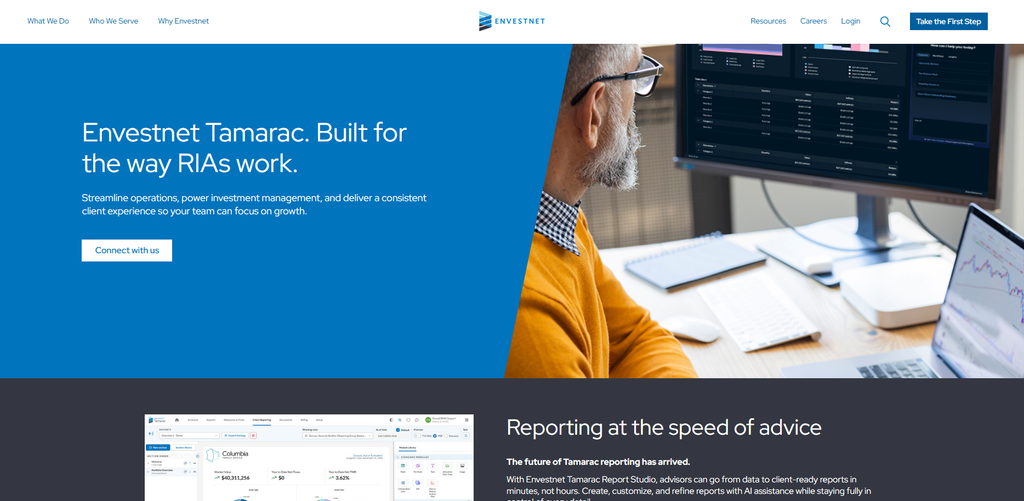
Automated trading workflows identify trading opportunities and allow for rebalancing according to investment models and account needs. Portfolio construction and model management to maintain target allocations across client accounts.
Its main strength lies in the implementation of portfolio and trading automation rather than stand-alone backtesting of quantitative strategies. Prices are usually adapted to the firm’s needs and the chosen services.
Risk Control
- Portfolio Monitoring: Helps advisors monitor client portfolios and see differences between current and target allocations.
- Allocation Controls: Supports model-based investment management and portfolio allocation needs.
- Tax-Aware Trading: Provides workflows designed to include tax considerations when executing portfolio changes.
- Investment Limits: Supports account level investment limits and trading preferences.
- Portfolio Oversight: Advisors can manage multiple client accounts and stay in sync with investment models.
Target Users
- Registered investment advisers (RIAs)
- Financial advisers (independent)
- Wealth management companies
- Portfolio managing teams
6. Orion trading
Orion Trading is a portfolio trading and rebalancing platform designed for wealth managers and financial advisors. Its model-driven trading tools identify deviations of actual holdings from target allocations and generate appropriate buy and sell orders. Among the portfolio optimization capabilities are a host of rebalancing options, tax-sensitive trading preferences and account-level asset location management.
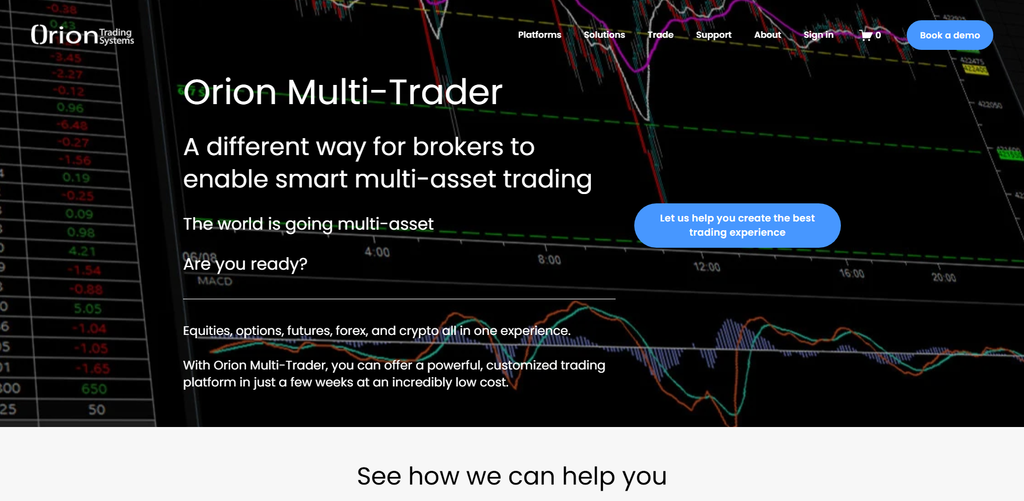
Automated rebalancing assists in preserving portfolio allocations within specified tolerance ranges, and tax-loss harvesting supports tax-aware investment workflows. It is not a historical strategy backtesting platform by itself. The price is generally customized to the company’s needs and services.
Risk Management
- Portfolio Allocation Monitoring: Evaluates portfolio holdings relative to set investment objectives to detect deviations.
- Rebalancing Controls: Enables model-based trading and rebalancing workflows to help control portfolio drift.- Tax-Aware Management: Enables tax sensitive trading and tax-loss harvesting workflows where available.
- Investment Restrictions: Allows advisors to take into account client-specific investment preferences and trading restrictions.
- Account Monitoring: Provides portfolio monitoring across various client accounts and investment models.
For whom this is
- Financial adviser
- Registered investment advisers
- Wealth management firms
- Professional portfolio traders
7. SS&C iRebal
SS&C iRebal is a portfolio rebalancing and trading solution designed to assist investment advisors in managing client portfolios more efficiently. Its rebalancing logic allows a comparison of actual portfolio holdings to target investment allocations, and aids in identifying trades that would correct allocation differences.
Portfolio management workflows can support tax-aware trading, investment restrictions and account-level allocation requirements, depending on implementation. The automated rebalancing is helpful for advisors with multiple client accounts and investment models.
The main evaluation should be for portfolio implementation and not for backtesting of independent quantitative strategies. Prices and features are subject to the prevailing commercial arrangement and configuration.
Risk Reduction
- Portfolio Drift Monitoring: Detects differences between the current portfolio and model portfolio allocation.
- Trading Restrictions: Supports account-level trading requirements and investment restrictions.
- Tax Management: Assists advisors in building tax considerations into portfolio rebalancing.
- Allocation Management: Controls for portfolio allocation to maintain investment model consistency.
Trading Supervision: Empowers workflows to review and manage portfolio trading activity across client accounts.
End Users
- Registered investment advisers
- Asset management businesses
- Financial planning firms
Portfolio managers and trading teams
8. Wealthfront**
Wealthfront is a digital investment management service that uses automated technology to manage diversified portfolios of investments for individual investors. Its software makes investment decisions based on selected portfolio strategies and risk preferences of the investor. Portfolio management stresses the allocation of available funds to various investments in a diversified manner.
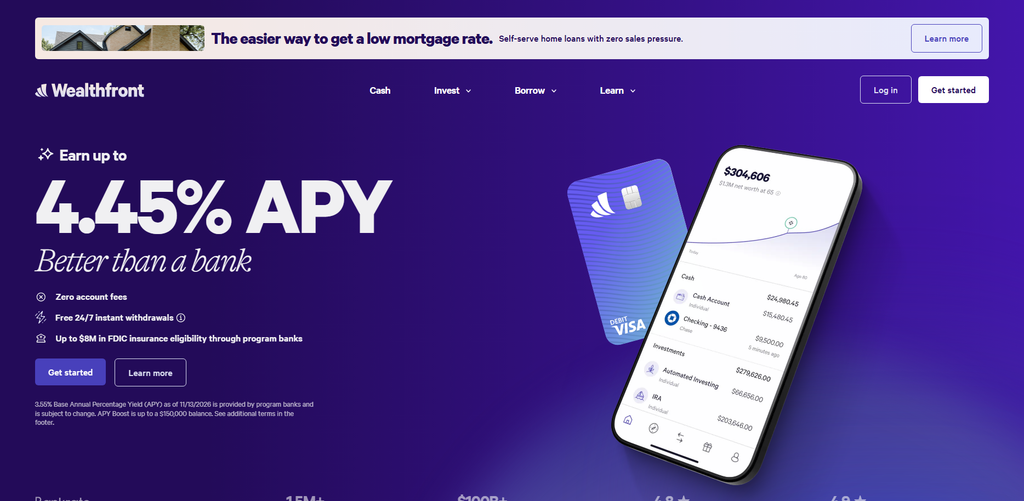
Automatic rebalancing keeps the investment weights at their intended levels as the market values vary. Another important feature for qualifying investment accounts is tax-loss harvesting. Wealthfront charges an annual advisory fee of 0.25% on its Automated Investing Account. It’s designed for automated investing, not for backtesting user-created strategies.
Management of Risk
- Portfolio Diversification: Invests in diversified portfolios to help mitigate concentration in individual securities.
- Automatic Rebalancing: Rebalances the mix of assets when markets move and the investments fall out of target.
- Tax-Loss Harvesting: Helps eligible taxable accounts manage investment losses that may result in tax benefits.
- Risk Based Allocation: Based on the information about the investor and investment objectives to determine appropriate portfolio allocations.
- Portfolio Monitoring: Monitors investments automatically, and manages portfolio allocations through its digital investment management system.
Who is it for
- New investors
- Individual investors long-term
- Those who want to invest passively
- Those who want to automate their wealth management
9. Betterment**
Betterment is an automated investment platform that helps people manage diversified portfolios by using goal-based investment strategies. Its investment technology offers portfolio recommendations, asset allocation and ongoing portfolio monitoring based on investor objectives.
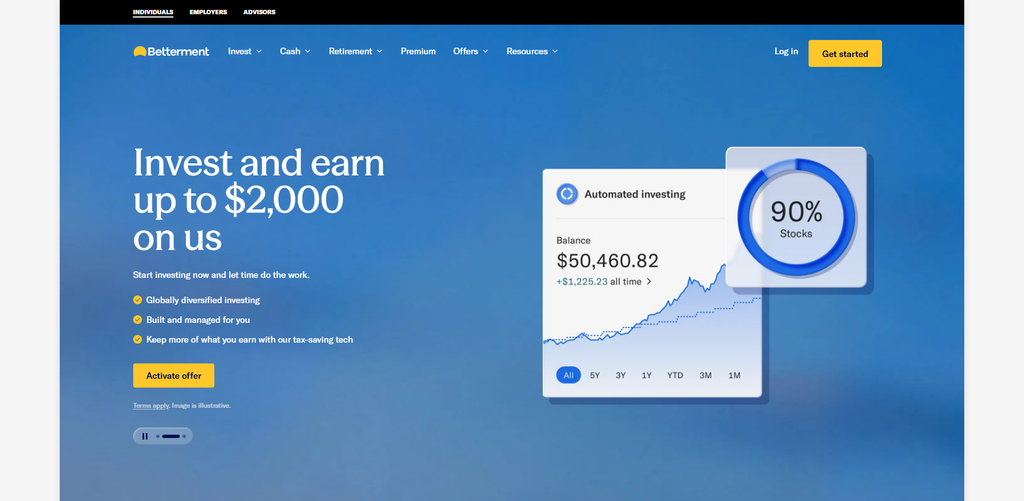
Portfolio construction offers a range of diversified investment options, and automated rebalancing will adjust holdings as allocations stray beyond applicable tolerance levels.
It also employs deposits, withdrawals and dividend reinvestments to help keep the portfolio in balance. Digital investing fee is 0.25% per year or $5 per month, depending on eligibility conditions. Betterment is more geared toward automated investing than backtesting a custom strategy.
Risk Control
- Portfolio Diversification: Applies diversified investment allocations to diversify exposure across various securities and asset classes.
- Automated Rebalancing: Re-balances investment allocations when portfolio weights are not at target levels.
- Tax Loss Harvesting: Provides tax-loss harvesting on eligible taxable investment accounts.
- Goal-Based Investing: Tailors investment portfolios to your personal financial objectives and your chosen level of risk.
- Portfolio Monitoring: Regular monitoring of the portfolio to assist in maintaining investment allocations and tracking performance.
Who Is It For?
- New investors- Individual long-term investors
- Purposeful investors
- Customers who desire robo-advisory services
10 Composer
Composer is an algorithmic investing platform that enables individuals to create, test and automate rules-based investment strategies without traditional coding. The visual strategy builder lets users combine investment signals, conditions and portfolio rules to build systematic trading models. Portfolio optimization enables the diversification of strategies and distribution of funds between various automated strategies.
Automated trading is the use of investment strategies that are based on predetermined rules. Its backtesting tools use historical market data to assess the performance of a strategy in the past. Pricing: Composer has a free Starter plan, Advanced for $10/month, and Pro with subscription pricing as a separate option.
Managing Risk
- Backtest Strategies: Enables users to validate strategies’ performance on historical data before applying investment rules to live portfolios.
- Portfolio Diversification: Permits blending of assets and investment strategies to minimize concentration in portfolios.
- Rules-Based Risk Controls: Automated strategies enable users to create specific rules and investment conditions.
- Strategy Monitoring: allows users to monitor their automated investment strategies and evaluate their performance.
- Allocation Management: Enables systematic portfolio allocation with rules for investment and strategy weights.
Who Are We Targeting?
- Fans of algorithmic trading
- Single systematic investors
- Developers of quantitative investment strategies
- Investors considering automated portfolio management
Conclusion
Algorithmic portfolio management platforms help investors and financial professionals to make investment decisions more efficiently via automation, quantitative analysis, portfolio optimization and risk monitoring.
Institutional investment research and portfolio analytics are served by platforms like BlackRock Aladdin, Bloomberg PORT, FactSet and Morningstar Direct, while advisor portfolio management and rebalancing are served by Envestnet Tamarac, Orion Trading and SS&C iRebal, among others.
Wealthfront & Betterment provide automated investing made simple for the individual, and Composer offers customizable algorithmic strategies and backtesting. Ultimately, the right platform is a function of investment goals, portfolio complexity, risk management needs, automation capabilities, supported assets and pricing.
FAQ
What Are Algorithmic Portfolio Management Platforms?
Algorithmic portfolio management platforms use quantitative models, investment algorithms, and automated tools to manage portfolios, optimize asset allocation, monitor risks, and execute predefined investment strategies.
Which Are the Best Algorithmic Portfolio Management Platforms?
Some leading platforms include BlackRock Aladdin, Bloomberg PORT, FactSet, Morningstar Direct, Envestnet Tamarac, Orion Trading, SS&C iRebal, Wealthfront, Betterment, and Composer.
How Do Algorithmic Portfolio Management Platforms Work?
These platforms analyze financial data, apply predefined investment models, evaluate portfolio risks, determine asset allocations, and automate supported investment activities such as trading and rebalancing.
What Features Should You Look for in an Algorithmic Portfolio Management Platform?
Important features include quantitative investment models, portfolio optimization, automated rebalancing, risk analytics, historical backtesting, asset class support, financial integrations, and performance monitoring.
Do Algorithmic Portfolio Management Platforms Support Automated Rebalancing?
Yes. Platforms such as Wealthfront, Betterment, Envestnet Tamarac, Orion Trading, and SS&C iRebal offer automated or model-based rebalancing capabilities to maintain target portfolio allocations.