


This article outlines the Best Translation APIs for Global Applications. I will cover features, advantages, and sample applications.
As businesses go global, translation APIs (like Microsoft Azure Translator, Amazon Translate, IBM Watson, DeepL, Yandex, SYSTRAN, Lingvanex, Unbabel, Smartling, and Transifex) are crucial for facilitating multilingual communications and global scalability.
What is Translation APIs?
Translation APIs are automated tools for translating text across languages. They employ AI and other technologies to execute translation tasks quickly and reasonably accurately. These programs reduce the time developers spend implementing language features in their tools.
Developers can use Translation APIs in their mobile apps, online shops, support-systems, and content management apps and services.

Many Translation APIs also include functions like automatic language detection, glossaries, document translations, support for real-time translations, and many others. These traits facilitate businesses to access wider audiences and provide them with enhanced support.
Criteria for Choosing Translation APIs for Global Applications
Translation Quality – More sophisticated models of translation will consider the AI in context, so they will yield more correct and/or natural translations.
Coverage – Make certain the translation API has support for the languages and the dialects of your target audiences.
Speed – Translation APIs will need to deliver prompt translations to be useful for support, chat, and other real-time interactions.
Growth – Choose an API that can take many requests, as this will likely be a requirement of growing users.
Cost Effectiveness – Check pricing structures. Some charge by the request, others by the number of characters. Others include a threshold for free requests.
Integration – Look for APIs that provide an SDK or a REST interface, as well as sample usage.
Language Detection – Automatic source language detection circumvents the need to specify the original language.
Flexibility – APIs that support translation of a term or translation of a phrase or that support a model for a specific domain are more likely to suit your business needs.
Translation of Media – Support for translation of web pages, documents, media and subtitles is usually a requirement for large business applications.
Percentage Uptime – Services with strong SLA and prompt support will be ideal.
Ease of Use – Well-commented sample code and support will be a major differentiator for integration.
AI and Neural Machine Translation – Today’s APIs with neural machine translation (NMT) tend to be faster and more accurate.
Usage Analytics – APIs often come with monitoring and reporting features that let you observe API design, usage, costs, and translate performance.
Global Infrastructure – Services with servers around the world can provide better and faster service to their international clients.
Best Translation APIs for Global Applications List
- Microsoft Azure Translator API
- Amazon Translate API
- IBM Watson Language Translator API
- DeepL API
- Yandex Translate API
- SYSTRAN Translate API
- Lingvanex API
- Unbabel API
- Smartling API
- Transifex API
10 Best Translation APIs for Global Applications in 2026
1. Microsoft Azure Translator API
Microsoft Azure Translator API is considered by many to be cost-effective and scalable. It supports 100+ languages. It is pretty extensive with the document formats it translates being PDF, DOCX, and PPTX. batch translation, glossary translation, and tracker translation are also supported. It has a free tier of 2M characters per month.
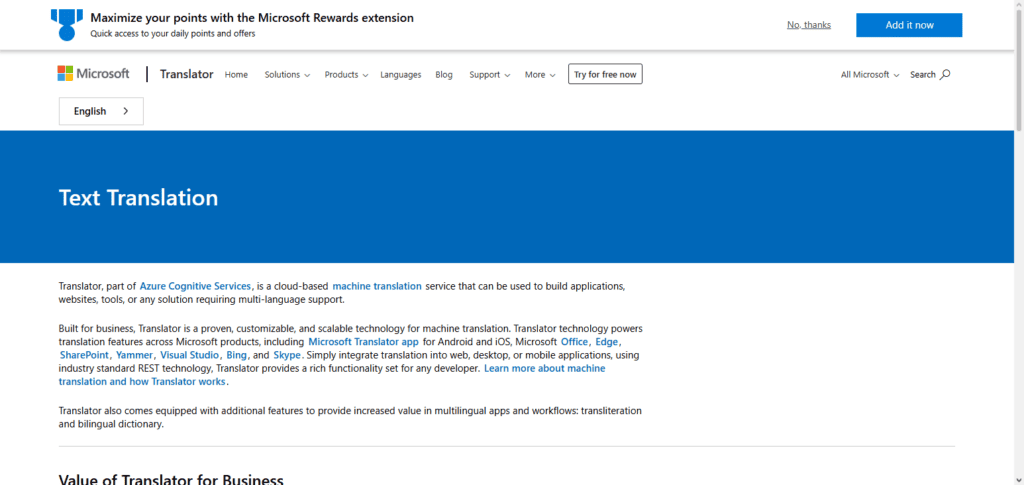
Startups with limited funds and global enterprises can find good use for Azure. Since it works along with the other services provided by Microsoft Azure then it can be integrated on business applications, chatbots, and any platforms built on Microsoft Azure.
With enterprise grade security and compliance, it is the localization tool of choice by many. Of the Microsoft Azure services, Azure Translator is known to the the most cost-effective and flexible translation solution.
| Feature | Details |
|---|---|
| Languages Supported | 100+ |
| Free Tier | 2M characters/month (permanent) |
| Pricing | $10 per 1M characters |
| Key Features | Glossary, batch translation, document translation (PDF, DOCX, PPTX), real-time translation |
| Best Use Case | Affordable large-scale translation for SaaS and enterprise apps |
| Highlight | Part of the Best Translation APIs for Global Applications for cost efficiency |
Microsoft Azure Translator API Pros & Cons
Pros:
- Affordable ($10/1 million chars)
- Free tier (2 million chars/month)
- 100+ languages
- Translates (PDF, DOCX, PPTX)
- Integrates with Azure Cognitive Services
Cons:
- Less customizable than DeepL
- Accuracy struggles with complex European languages
- Requires knowledge of the Azure ecosystem
- Free tier likely won’t meet enterprise needs
- Less customization of tone/formality
2. Amazon Translate API
The Amazon Translate API is an ideal choice for developers using the AWS environment. They offer a lot of options for customization, and the API currently supports 75+ languages. For the first year, the free tier provides 2 million characters a month.
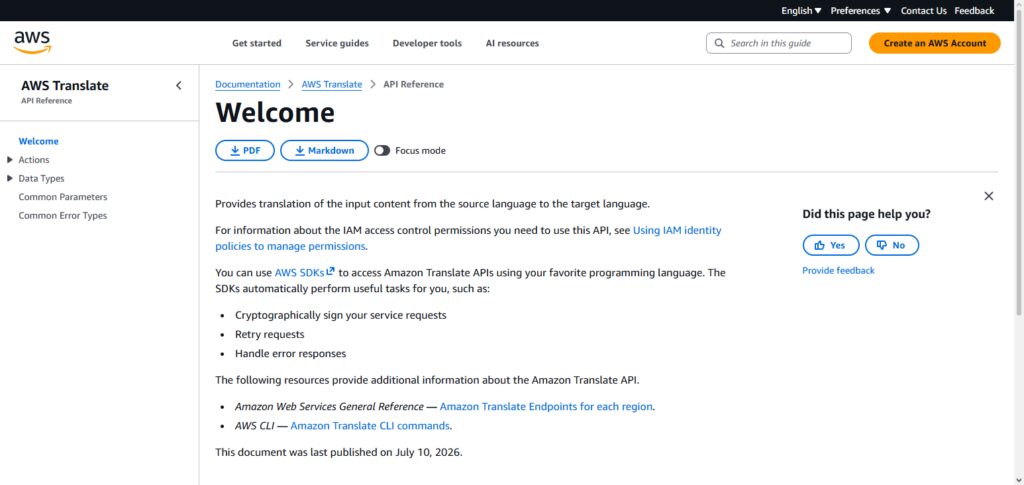
After this 12-month period is finished, the cost is $15 for every million characters. Amazon web services integrates with other tools and helps set up easy, immediate enterprise work flows. For developers, they provide a great tool for translating specialized field jargon into the proper languages.
Amazon Translate has many excellent features, but the top ones include the API’s integration with other tools in the cloud and the scalability to be used in large enterprises.
| Feature | Details |
|---|---|
| Languages Supported | 75+ |
| Free Tier | 2M characters/month (12 months) |
| Pricing | $15 per 1M characters |
| Key Features | Batch translation, parallel data customization, AWS-native integration |
| Best Use Case | Cloud-native workflows with AWS services |
| Highlight | Among the Best Translation APIs for Global Applications for AWS integration |
Amazon Translate API Pros & Cons
Pros:
- Integrates easily with AWS (Lambda, S3, CloudWatch)
- Enterprise ready
- 75+ languages
- Customizable parallel data
- Batch translation
Cons:
- Free tier only 12 months
- More expensive ($15/1 million chars)
- Accuracy struggles with complex European languages
- Requires knowledge of AWS
- Minimal offline and privacy focused solutions
3. IBM Watson Language Translator API
IBM Watson Language Translator API is designed for businesses with compliance and security needs with an emphasis on domain adaptation. With 70+ languages, it has translation memory, customization by domain, and enterprise-grade encryption.
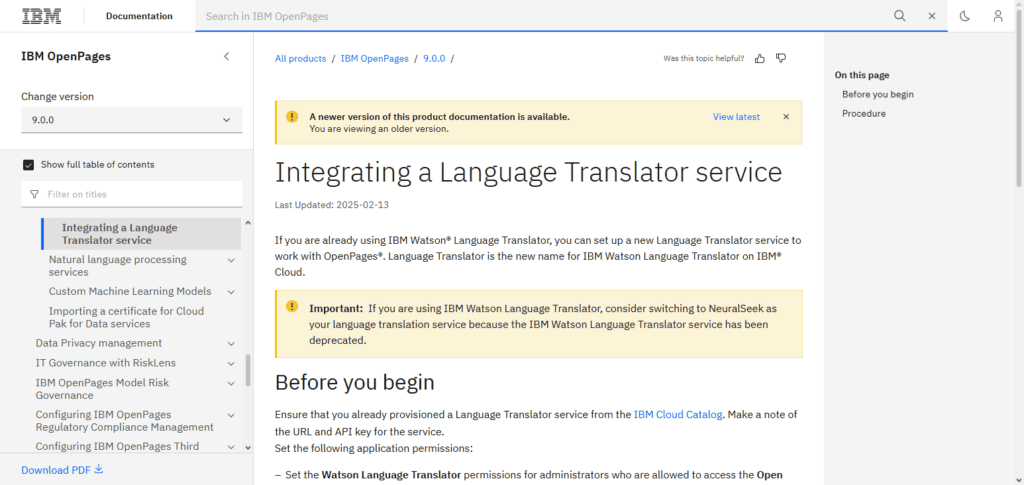
The free tier allows 1M characters each month with ample flexible pricing. IBM Watson makes translation customization via AI simple to adjust for business needs in domains such as healthcare, finance, and legal.
It incorporates with IBM Cloud services, ideal for regulated industries. In respects to Global Applications, IBM Watson is rated for enterprise compliance and domain translation for specialized needs.
| Feature | Details |
|---|---|
| Languages Supported | 70+ |
| Free Tier | 1M characters/month |
| Pricing | Custom enterprise pricing |
| Key Features | Domain adaptation, translation memory, enterprise-grade security |
| Best Use Case | Regulated industries like healthcare, finance, legal |
| Highlight | A leader in Best Translation APIs for Global Applications for compliance |
IBM Watson Language Translator API Pros & Cons
Pros:
- Enterprise grade security and compliance
- Domain customization of industry specific vocab
- Integrates with translation memory
- Free tier (1 million chars/month)
- Predictably used in finance and healthcare
Cons:
- 70+ languages
- Custom pricing is expensive
- Not as easy as Transifex
- Limited free tier (almost nil) as compared to Yandex
- Still nascent outside enterprise usage
4. DeepL API
DeepL API is celebrated for providing the best translations, particularly for the European languages, and for excellent customer service. Offering services for 36+ languages, DeepL boasts features such as tone/formality adjusting, and contextual translations.
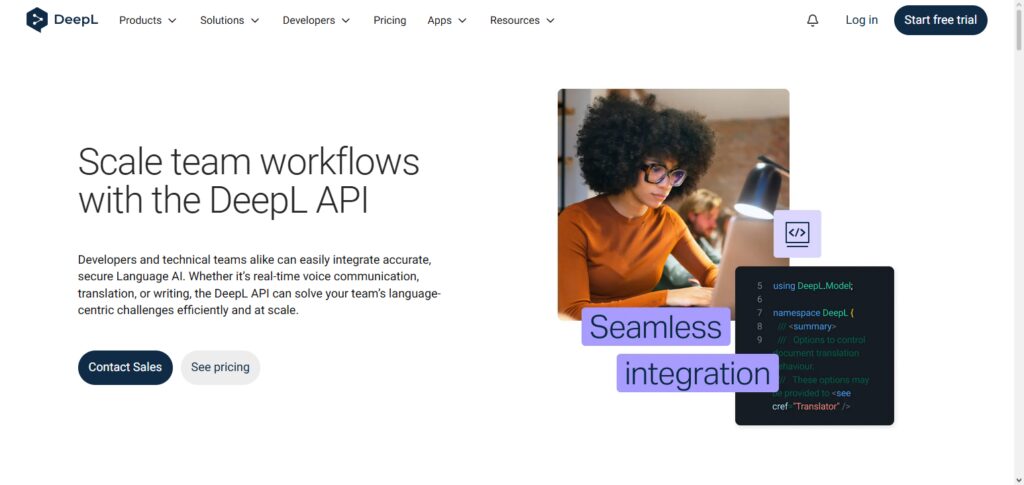
The free trial includes 500K characters a month. Beyond that, each million characters costs $25. DeepL is a popular API in the SaaS, legal, and content-heavy industries because of the precision and nuance involved in the industry.
While it has fewer languages, compared to competitors, the high quality will justify the cost. DeepL is the leader of the best translation API, for global apps, because of superior translation accuracy, and linguistic services.
| Feature | Details |
|---|---|
| Languages Supported | 36+ |
| Free Tier | 500K characters/month |
| Pricing | $25 per 1M characters |
| Key Features | Tone/formality control, glossary, nuanced contextual translation |
| Best Use Case | High-quality translations for European languages |
| Highlight | The most accurate in the Best Translation APIs for Global Applications |
DeepL API Pros & Cons
Pros:
- Best translation quality, especially in European languages
- Price per character is slightly less than competitors at $12 per 1 million characters.
- Amount of supported languages is over 90.
- 5 million character monthly free tier.
- A favorite for many regional European apps
Cons
- More accurate translation for Slavic languages than Western European.
- Missing many features for serious enterprise apps (Gone are the days of Azure DevOps).
- Less popular worldwide than Azure.
- No special features for advanced tone/formality matching.
- Less secure for sensitive data.
5. Yandex Translate API
The Yandex Translate API excels with Eastern European and Slavic languages. It covers over 90 languages. It offers one of the largest freemium offers which is 5 million characters per month making it very appealing to startups. Its pricing is very competitive at $15 million characters. It officially connects to the Yandex ecosystem and translates Russian, Ukrainian, and languages of the region very well.
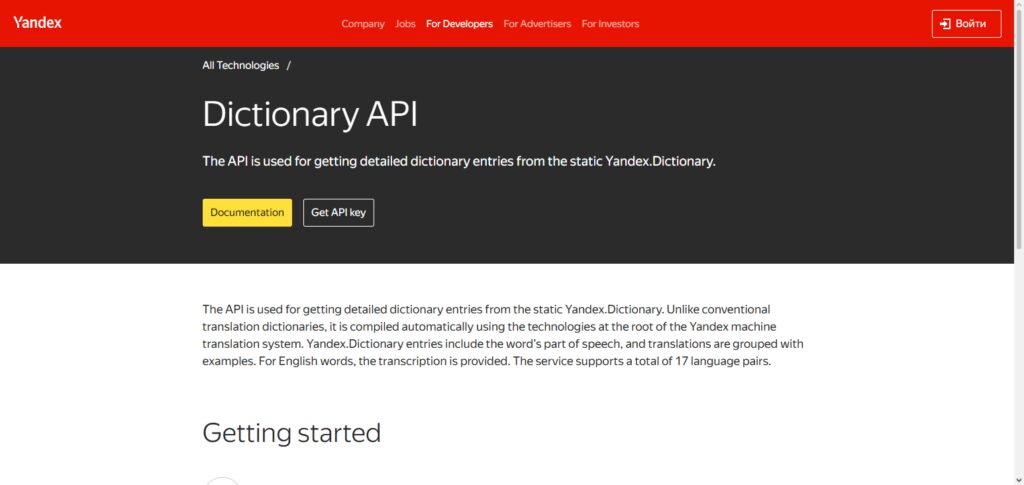
While it still does not have the coverage of Azure or DeepL, for the cost, it is a better option for regional applications. For the Best Translation APIs for Global Applications, it is the reigning champion in cost and regional language coverage.
| Feature | Details |
|---|---|
| Languages Supported | 90+ |
| Free Tier | 5M characters/month |
| Pricing | $15 per 1M characters |
| Key Features | Strong Slavic language support, large free tier |
| Best Use Case | Regional applications in Eastern Europe |
| Highlight | Affordable option in the Best Translation APIs for Global Applications |
Yandex Translate API Pros & Cons
Pros:
- Strong Slavic/Eastern European language support
- Large free tier (5M chars/month)
- Affordable pricing ($15 per 1M chars)
- Supports 90+ languages
- Easy integration for regional apps
Cons:
- Less accurate for Western European languages
- Limited enterprise-grade features
- Smaller global adoption compared to Azure
- No advanced tone/formality controls
- Less secure for sensitive industries
6. SYSTRAN Translate API
SYSTRAN Translate API is a translation solution designed for enterprises. It has a adaptive machine translation and translation memory (TM) that is stronger than most. It supports 50+ languages with customizations per domain, and workflow automation.
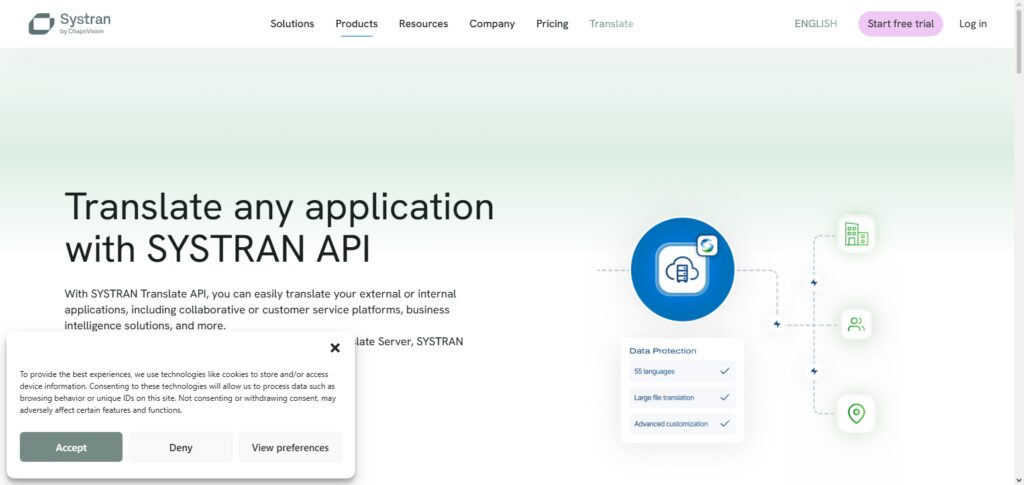
Pricing is customized, with limited free trials. SYSTRAN is used in the government, defense, and large multinational enterprises that need a secure and adaptive translation. Workflows and localization are well supported with the API. Among the Best Translation APIs for Global Applications, SYSTRAN is valued for its adaptive enterprise design and TM.
| Feature | Details |
|---|---|
| Languages Supported | 50+ |
| Free Tier | Limited trial |
| Pricing | Custom enterprise pricing |
| Key Features | Adaptive MT, translation memory integration, workflow automation |
| Best Use Case | Government, defense, multinational corporations |
| Highlight | Enterprise-grade solution in the Best Translation APIs for Global Applications |
SYSTRAN Translate API Pros & Cons
Pros
- Advanced, enterprise-grade, adaptive MT
- Can integrate translation memories
- Automated localization workflows
- Strong adoption for governmental/defense customers
- Can create solutions for specific domains
Cons
- Limited free trial use
- Custom pricing (can get costly)
- Less languages (50+)
- Less user friendly for devs than Transifex
- Not great for small teams/startups
7. Lingvanex API
Lingvanex API, the sole provider of offline translations of 100+ languages, is a game changer in the translation industry. Companies can have their own translation engines, thus keeping their data confidential, by using self-hosted or on-premises translation engines.
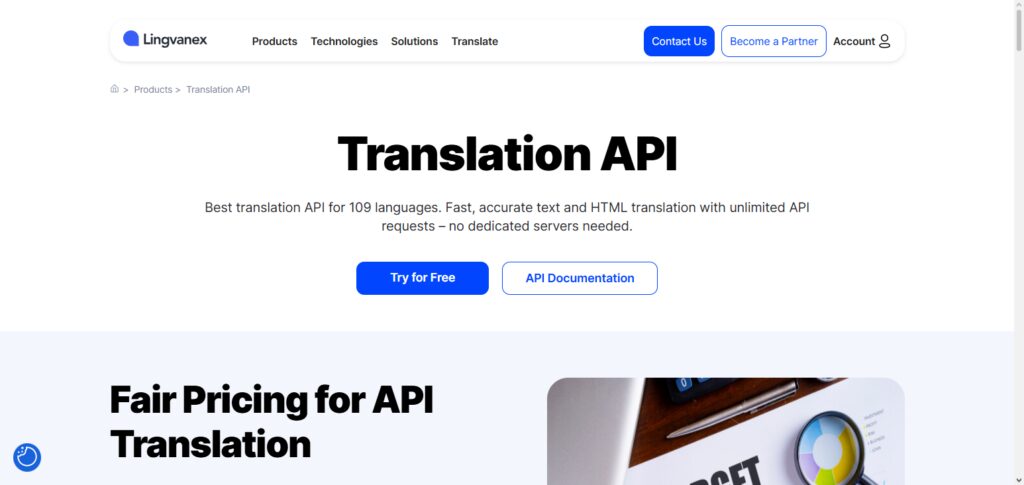
The self-hosted option has no limit usage. Other features of the translation engine include customizable deployment options, speech translations, and even offline translations. Industries such as healthcare, defense, and finance stand to gain the most with the privacy offerings of Lingvanex API.
Listed among the Best Translation APIs for Global Applications, Lingvanex is the leader in the translation industry with its offline applications while keeping privacy a priority.
| Feature | Details |
|---|---|
| Languages Supported | 100+ |
| Free Tier | Unlimited (self-hosted) |
| Pricing | Free for self-hosted, flexible plans |
| Key Features | Offline translation, speech translation, customizable deployment |
| Best Use Case | Privacy-focused industries (healthcare, defense, finance) |
| Highlight | Privacy-first in the Best Translation APIs for Global Applications |
Lingvanex API Pros & Cons
Pros
- Can translate without an internet connection
- Very private, self hosted option
- 100+ languages
- Speech translation included
- Various deployment options
Cons
- Have to create the infrastructure for self hosting
- Less accurate than DeepL, more enterprise adoption than IBM
- Free tier only available if self hosted
- Limited integrations in the ecosystem
8. Unbabel API
Unbabel API offers businesses a way to communicate with their customers in over thirty languages. It uses AI-driven translation with a human editing layer.
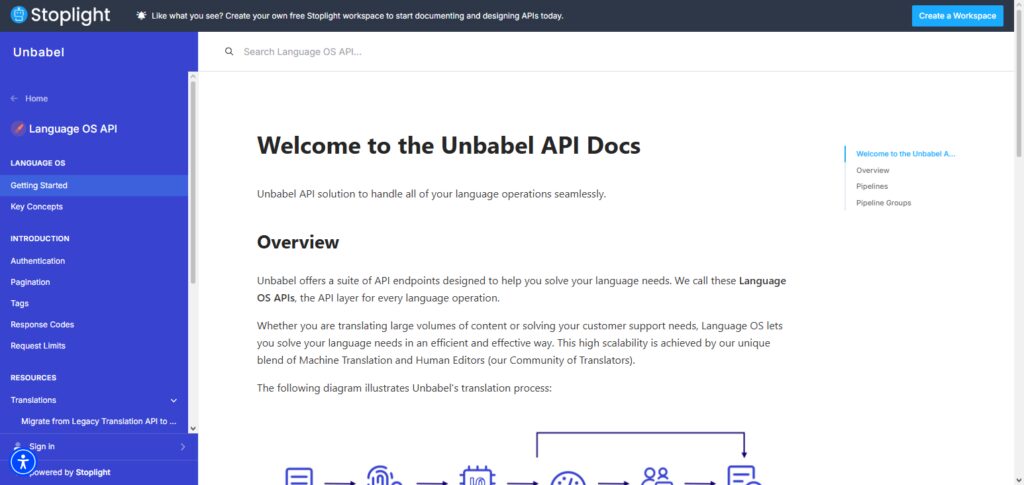
The quality of communication is thus not compromised. Unbabel is a favorite among businesses in customer support and e-commerce, especially SaaS due to its subscription model. It also offers trial credits.
Since maintaining the right tone and accuracy in communication is essential in these areas of business, Unbabel is a customer service localization favorite. It improves AI output by integrating human editors. Unbabel is celebrated in the industry for having a unique, hybrid AI-human translation model.
| Feature | Details |
|---|---|
| Languages Supported | 30+ |
| Free Tier | Trial credits |
| Pricing | Subscription-based |
| Key Features | AI + human-in-the-loop translation, customer support localization |
| Best Use Case | Customer-facing communication in SaaS and e-commerce |
| Highlight | Hybrid model in the Best Translation APIs for Global Applications |
Unbabel API Pros & Cons
Pros
- Hybrid AI + human-in-the-loop translation
- Effective for customer-facing communication
- Offers subscriptions with trial credits
- Excellent for SaaS and e-commerce localization
- Guarantees tone for support teams
Cons:
- Supports 30+ languages
- More expensive due to human verification
- Slower than AI-based competitors
- Poor choice for large-scale, automated translation
- Limited free tier
9. Smartling API
The Smartling API is a SaaS localization API that combines translation memory, workflow automation, and CMS systems integration. Smartling supports over 50 languages.
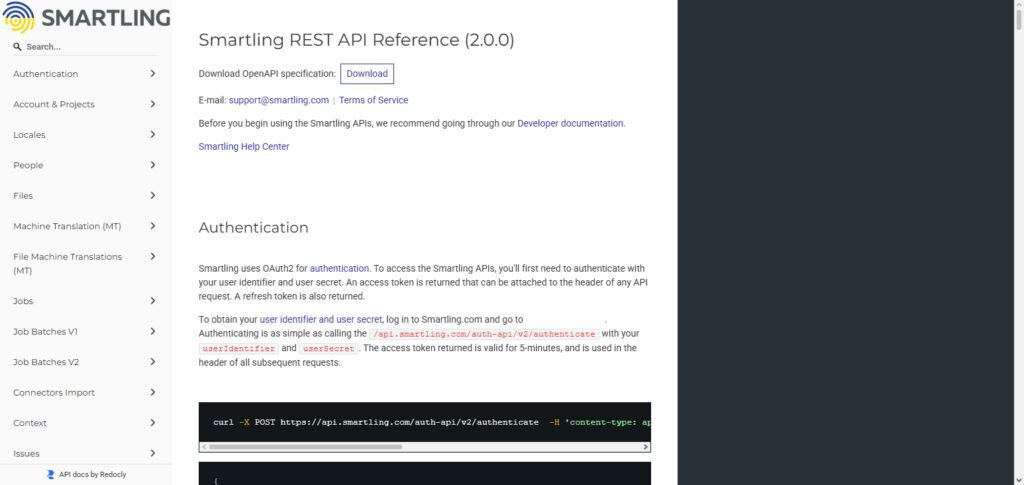
It employs a flexible subscription model with trial access. Smartling is consumer-focused, and aimed at large-scale enterprise localization; Smartling offers automation and valuable analytics to aid the localization process.
Smartling API integrates with all content management systems allowing for localization to be a continuous process. Due to Smartling’s enterprise localization and workflow automation, the API is included in the Best Translation APIs for Global Applications.
| Feature | Details |
|---|---|
| Languages Supported | 50+ |
| Free Tier | Trial access |
| Pricing | Subscription-based |
| Key Features | Workflow automation, translation memory, CMS integration |
| Best Use Case | Enterprise localization workflows |
| Highlight | Workflow automation in the Best Translation APIs for Global Applications |
Smartling API Pros & Cons
Pros:
- Automation of localization workflows
- Translation memory
- Enterprise CMS integrations
- Greater than 50 languages
- Translation efficiency metrics
Cons:
- Subscription-based pricing (not great for startups)
- Limited free tier (only trial)
- Not great for small projects
- Enterprise level required
- Not focused on offline translation
10. Transifex API
Transifex API thrives in situations where localization is a constant concern and the software is developed agilely. Supporting over 50 different languages, the pricing is subscription-based with a trial available. The API is developer friendly, and works in harmony with existing CI/CD practices. This is beneficial for developers of SaaS and mobile applications.
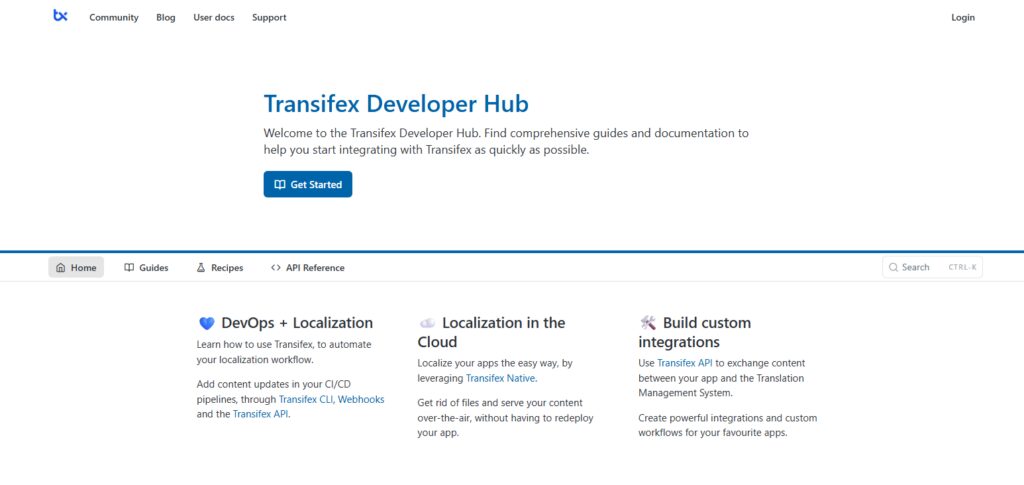
Transifex offers numerous localization tools to include automated workflows and translation memory. Transifex is the go-to for tech companies leveraging agile. Among the best Translation APIs for Global Applications, Transifex is recognized for its localization focus for developers and usability in integrating agile practices.
| Feature | Details |
|---|---|
| Languages Supported | 50+ |
| Free Tier | Trial access |
| Pricing | Subscription-based |
| Key Features | CI/CD integration, continuous localization, developer-friendly |
| Best Use Case | Agile SaaS and mobile app development |
| Highlight | Developer-centric in the Best Translation APIs for Global Applications |
Transifex API Pros & Cons
Pros:
- User friendly API
- Integrations with CI/CD
- Continuous localization for agile teams
- Greater than 50 languages
- Popular in SaaS and mobile apps
Cons:
- Subscription-based pricing
- Limited free tier (only trial)
- Less accuracy on complex text compared to DeepL
- Non-privacy focused, unlike Lingvanex
- Requires development to set
Comparison Tables
| Feature | Google Cloud Translation API | Microsoft Translator API | DeepL API | Amazon Translate | IBM Watson Language Translator |
|---|---|---|---|---|---|
| Translation Quality | Excellent | Excellent | Outstanding | Very Good | Very Good |
| Languages Supported | 130+ | 130+ | 30+ | 75+ | 50+ |
| AI/Neural Translation | ✅ Yes | ✅ Yes | ✅ Yes | ✅ Yes | ✅ Yes |
| Automatic Language Detection | ✅ Yes | ✅ Yes | ✅ Yes | ✅ Yes | ✅ Yes |
| Document Translation | ✅ Yes | ✅ Yes | ✅ Yes | Limited | ✅ Yes |
| Custom Terminology | ✅ Yes | ✅ Yes | ✅ Glossaries | ✅ Yes | ✅ Yes |
| Real-Time Translation | ✅ Yes | ✅ Yes | ✅ Yes | ✅ Yes | ✅ Yes |
| REST API Support | ✅ Yes | ✅ Yes | ✅ Yes | ✅ Yes | ✅ Yes |
| SDK Availability | Multiple Languages | Multiple Languages | Multiple Languages | AWS SDKs | Multiple Languages |
| Security & Compliance | Enterprise Grade | Enterprise Grade | Enterprise Grade | AWS Security | Enterprise Grade |
| Best For | Global Applications | Enterprise Apps | High-Quality Content Translation | AWS-Based Projects | Business & Enterprise Solutions |
| Free Tier | ✅ Limited | ✅ Limited | ✅ Limited | ✅ Limited | Lite Plan Available |
| Pricing Model | Pay-as-you-go | Pay-as-you-go | Character-Based | Pay-as-you-go | Subscription & Usage |
| Overall Rating | ⭐⭐⭐⭐⭐ | ⭐⭐⭐⭐⭐ | ⭐⭐⭐⭐⭐ | ⭐⭐⭐⭐☆ | ⭐⭐⭐⭐☆ |
Conclusion
Ultimately, the finest Translation APIs regarding worldwide applications are those that allow firms to provide multispeech conveniences easily, while also minimizing programmer time and operational costs.
Real-time translation and AI translation, with one or many language translations, are the more common aspects determined by the size, precision, and budget of the application.
By examining the offered characteristics, costs, the languages offered, and the ease of integration, you will be able to select the translation API that is best suited for the needs of your firm with respect to global communication improvement and user experience, as well as the latest market demands for international business operations in 2026 and the years that follow.
FAQ
What is a Translation API?
A translation API is a cloud-based service that allows developers and enterprises to integrate machine translation into applications, websites, and workflows. It enables real-time or batch translation of text and documents across multiple languages.
Which Translation API is the most cost-effective?
The Microsoft Azure Translator API is the most cost-effective, offering $10 per 1M characters and a permanent free tier of 2M characters per month. This makes it ideal for startups and enterprises needing large-scale translation at low cost.
Which Translation API offers the best quality?
The DeepL API is widely recognized for its superior translation quality, especially for European languages. It provides nuanced contextual translation, tone/formality control, and glossary integration, making it the gold standard for accuracy.
Which Translation API is best for enterprise compliance?
IBM Watson Language Translator API and SYSTRAN Translate API are best for compliance-heavy industries like healthcare, finance, and government. They offer domain adaptation, translation memory, and enterprise-grade security.
Which Translation API supports offline translation?
The Lingvanex API is unique in offering offline and self-hosted translation options. This makes it ideal for industries requiring privacy-first solutions, such as defense, healthcare, and finance.