
We have seen a major change in how information is accessed online. The Best AI Search Engines Competing With Google Search make real time answering systems available.
Instead of needing to spend more time to phrase a question as a keyword search, the lengthy, contextual answers will be given as requested.
These big players will enter the market in 2026 with the ability to compete directly with Google for the best services for research, personal needs, and productivity.
Key point
| AI Search Engine | Strength vs Google Search |
|---|---|
| Perplexity AI | Real-time summarized answers instead of link lists |
| Microsoft Bing Copilot | Deep integration with chat + web results |
| You.com | User-controlled search experience |
| Brave Software Brave Search | Strong privacy + no tracking ads |
| Kagi | No ads, high relevance results |
| DuckDuckGo AI Assist | Private AI answers without profiling |
| The Browser Company Arc Search | Full-page AI synthesis instead of links |
| Andi | Minimalist, answer-first interface |
| Komo AI | Clean, distraction-free search results |
| Exa | Deep semantic indexing for developers |
1. Perplexity AI
Perplexity AI is an answer engine unlike any seen before that seeks to eliminate traditional link-based searching by providing conversational-based searching and answering. Perplexity AI boasts real-time web indexing and combines this technology with large language models to deliver summarized answers with citations. This offers a considerable advantage over traditional search engines and is especially useful for those engaged in research-heavy work.

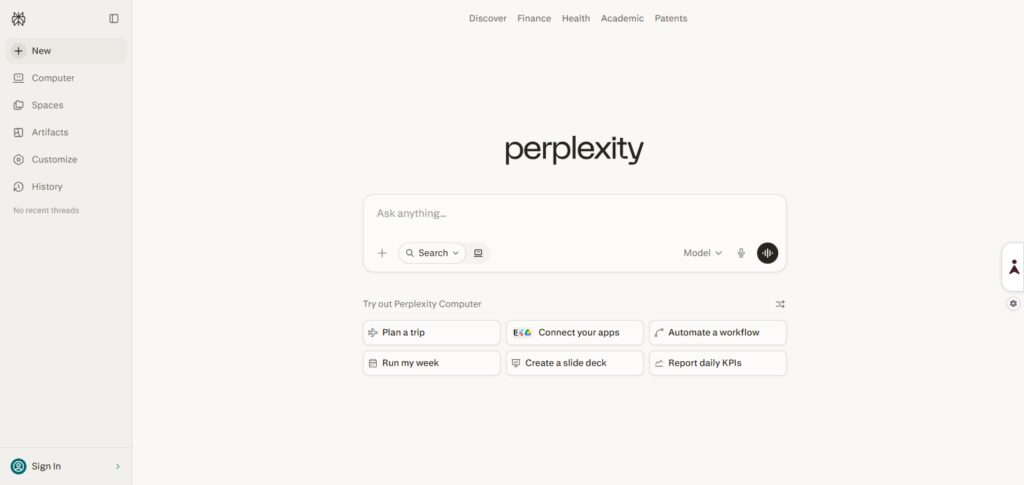
In the case of Best AI Search Engines Competing With Google Search, Perplexity AI is so robust that users are able to forgo the entire tedious process of clicking through multiple webpages. Now there is no need to worry about the lack of speed and clarity when it comes to research.
Key Features
- AI-generated answers plus real-time web searches
- Citations for every response
- Supports follow-up questions
- Multi-model AI framework
- Summarizes dense topics and complex ideas
Best For
- Academic and research work
- Fact-checking
- Content writing plus SEO research
- Questions related to tech and data analysis
2. Microsoft Bing Copilot
Microsoft Bing Copilot represents the integration of some of Microsoft’s most advanced research and AI technologies directly into the Bing search engine. It fundamentally alters the search process by adding the capability to answer, generate, and ask follow-up questions to provide a more interactive searching experience.
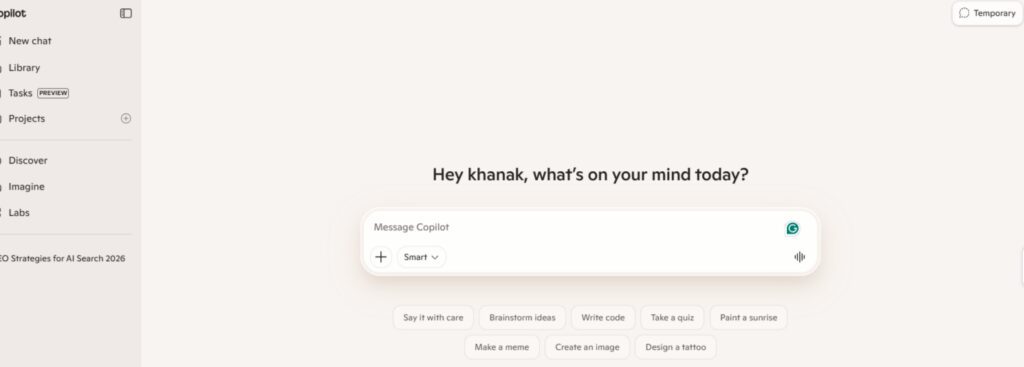
As one of the Best AI Search Engines Competing With Google Search, Bing Copilot also benefits from Microsoft’s integration of its own products, such as Windows and Edge, creating a strong advantage for them in productivity and enterprise-level searching.
Key Features
- Uses GPT for conversational search
- Integrated with the Bing web index
- Supports AI-created images and content
- Contextual, follow-up chats
- Part of the Windows and Edge browser
Best For
- Daily productivity tasks
- Office and enterprise worker aids
- Content generation and summaries
- General web searches using AI
3. You.com
You.com is a search engine that allows one to customize the manner in which the various results are presented, via applications, a summarized version, or a link to the web. This is an incorporation of traditional search methods with AI search techniques to provide users with an experience that is ultimately controlled and personalized.
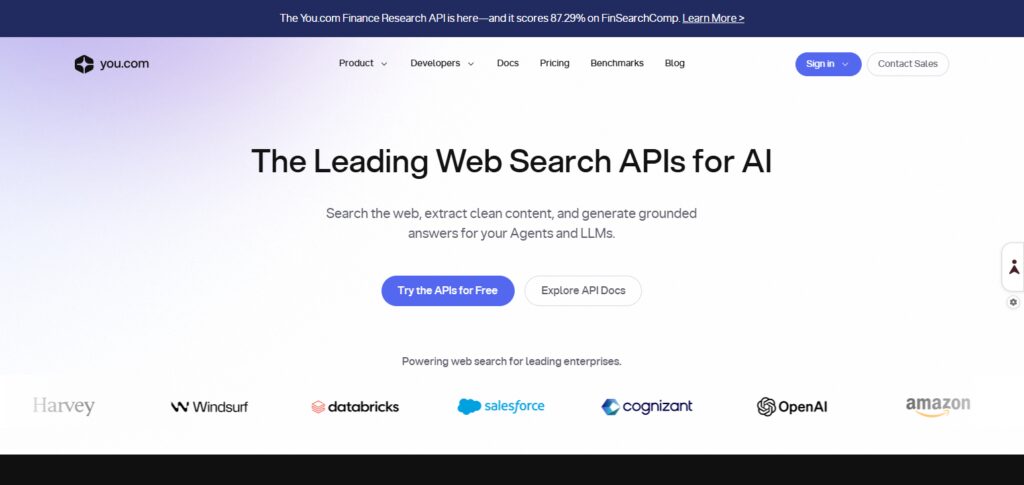
Among Best AI Search Engines Competing With Google Search, You.com is the only search engine that is able to achieve this level of self-customization and personalization. This renders it an indispensable tool for developers, researchers, and ultimate power users.
Key Features
- Personalized search
- Merges AI chat with web results
- App-like search
- Prioritizes user privacy while browsing
- Multiple AI models for answers
Best For
- Developers and tech customers
- Search engine with personalization
- Research with autonomous results
- Automated workflows
4. Brave Search
Brave Search ensures privacy and independence by having its own search index. It doesn’t track and does not rely on the major tech ad networks. This makes Brave Search a powerful alternative to other search engines.
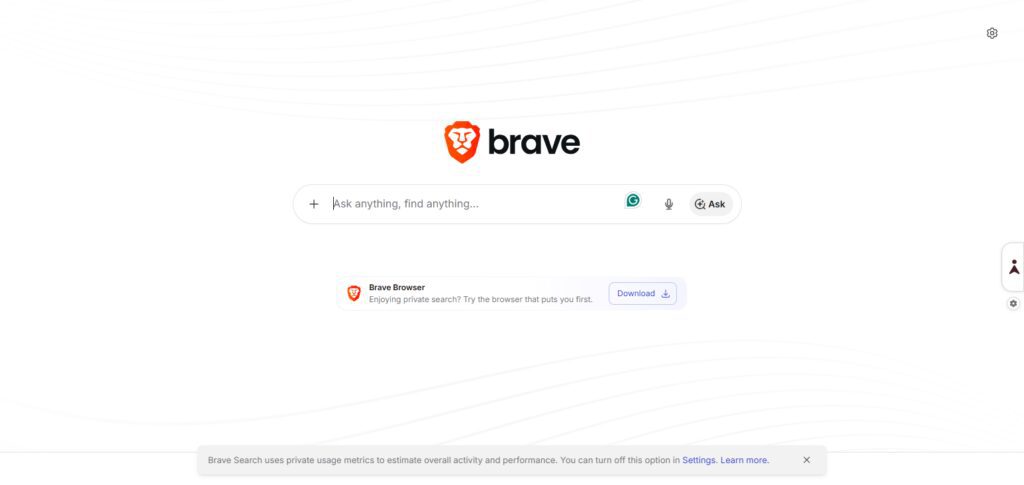
When it comes to the Best AI Search Engines Competing With Google Search, Brave Search is appreciated for having AI-generated summaries and a focus on privacy. It is perfect for users looking for results that are not biased.
Key Features
- Independent search engine with no dependence on Google
- AI-generated summaries with Ask Brave
- Strong privacy protection
- No user tracking or profiling
- Anonymous search
Best For
- Privacy users
- Ad-free browsing
- Web searching with privacy
- Replacement for Google search
5. Kagi
Kagi is a premium subscription search engine that removes ads completely and concentrates on delivering high-quality and relevant results. Kagi is focused on the users’ experiences rather than the advertising revenues.
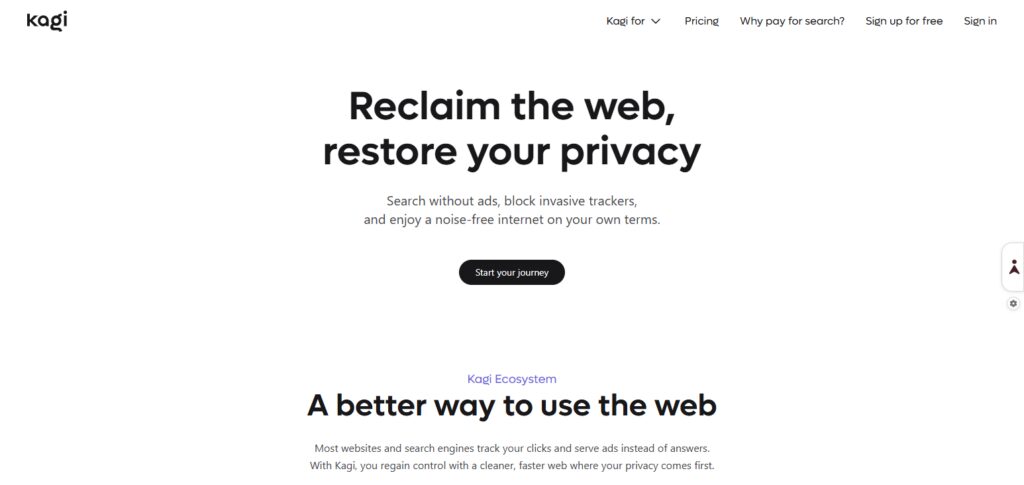
Kagi is one of the Best AI Search Engines Competing With Google Search, offering a focused, distraction-free experience when it comes to search results by offering advanced filtering and ranking controls, which makes it, along with the other best AI competitors, perfect for professionals and researchers.
Key Features
- Paid, ad-free search engine
- High-quality result ranking
- AI-assisted summaries
- Customizable ranking filters
- Focus on relevance over ads
Best For
- Professional researchers
- Power users who want clean results
- Ad-free search experience
- High-accuracy information retrieval
6. DuckDuckGo AI Assist
DuckDuckGo AI Assist is an addition of generative AI summaries to a search engine that is already privacy-focused, meaning the user can quickly get an answer without being tracked or profiled.
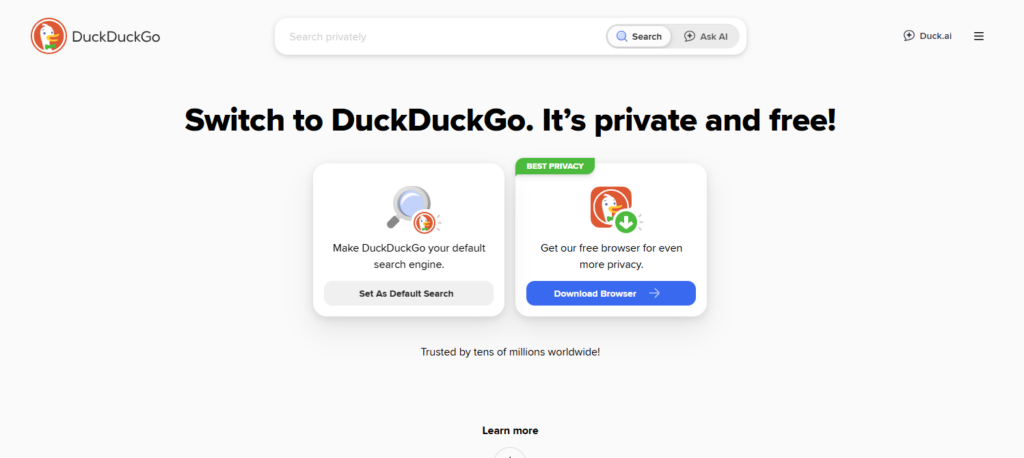
When considering the Best AI Search Engines Competing With Google Search, DuckDuckGo is still relevant because it provides AI convenience along with privacy protection, and therefore is very trusted for daily searches.
Key Features
- Privacy-first AI summaries
- No tracking or user profiling
- Anonymous search results
- Lightweight AI answers in SERP
- Simple interface with fast response
Best For
- Private everyday browsing
- Quick AI answers
- Mobile search users
- Safe anonymous queries
7. Arc Search
Arc Search is the first to introduce a “browse for me” feature which will scan the internet on a user’s behalf and generate the website with a summary. It is no longer about searching for a bunch of links. It is about getting the answers.
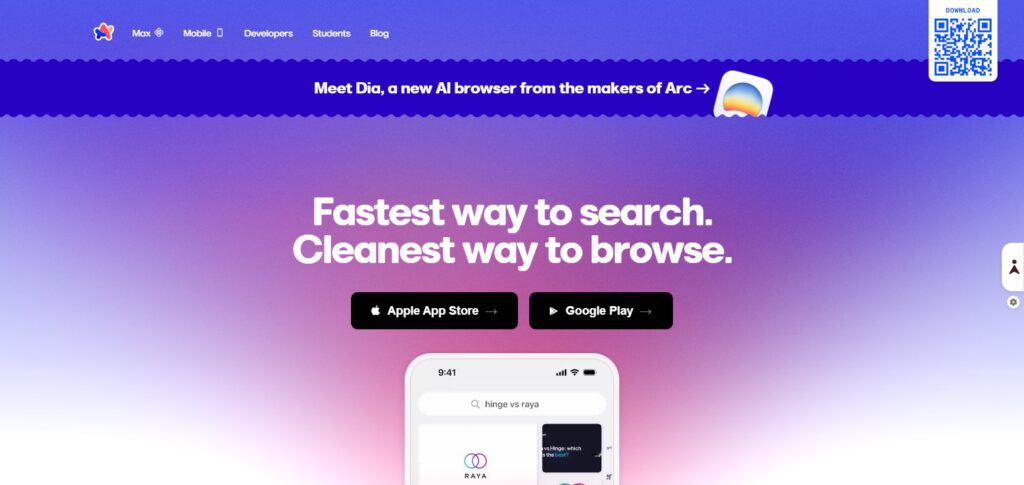
In the article, Best AI Search Engines Competing With Google Search, Arc Search is a standout example because it functions more like a research assistant than a standard search engine, which can save users a lot of time.
Key Features
- “Browse for Me” AI page generation
- Auto-summarized web pages
- Built-in modern browser design
- AI-curated research pages
- Fast mobile-first experience
Best For
- Quick research summaries
- Mobile users
- Reading simplified web content
- Students and learners
8. Andi Search
Andi is an AI-driven search engine that resembles chat and responds to user inputs with answers rather than a list of links. It is intentionally uncomplicated.
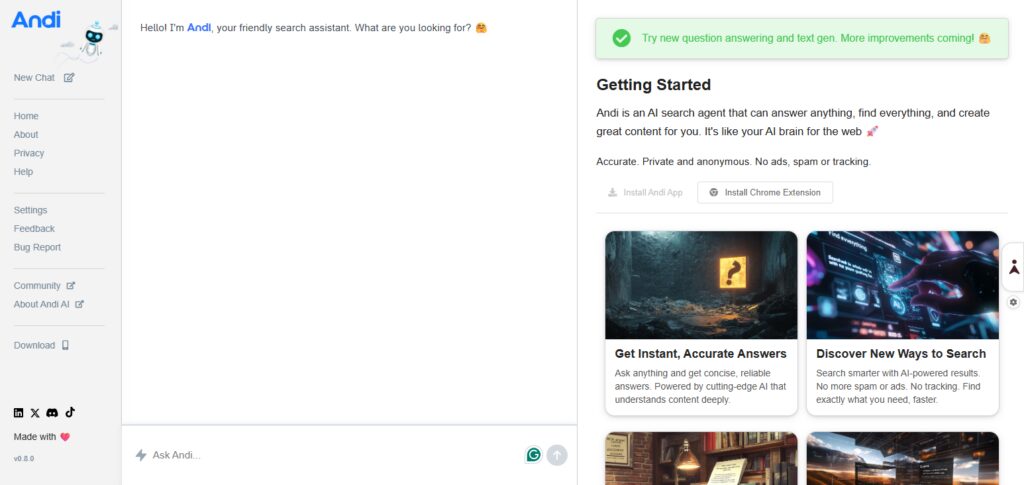
In the article, Best AI Search Engines Competing With Google Search, Andi runs ahead of the pack due to its simplicity and ability to provide clear answers without unnecessary bells and whistles.
Key Features
- Chat-style search interface
- Direct answers instead of links
- Clean, distraction-free UI
- AI reasoning-based responses
- Fast conversational search
Best For
- Simple Q&A searches
- Beginner-friendly AI search
- Fast information lookup
- Minimalist users
9. Komo AI
Komo AI is a rapidly evolving AI search engine that offers brief results in a natural language format, all in a minimalistic and sleek user interface. It is optimized for speed.
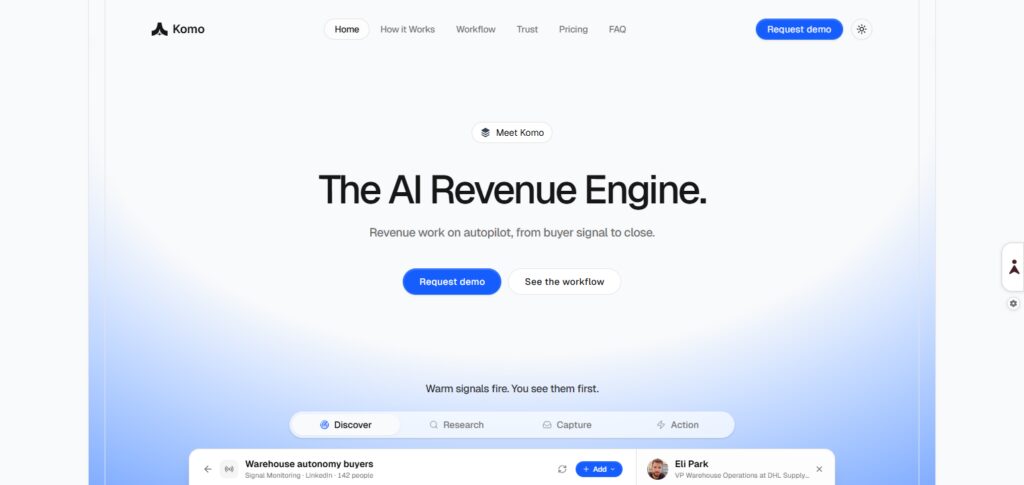
Among the Best AI Search Engines Competing With Google Search, Komo AI secures its position due to its clean and functioning design that allows it to quickly respond with pertinent information without overloading users with responses.
Key Features
- AI-generated search summaries
- Fast conversational responses
- Clean and minimal UI
- Brainstorming mode
- Analyzes real-time internet data
Best For
- Quick online research
- Learners
- Brainstorming
- Minimalist search-based AI interface
10. Exa
Exa is an AI-centered semantic search engine created to meet the needs of the developer and enterprise market, with a focus on understanding concepts over keyword matching.
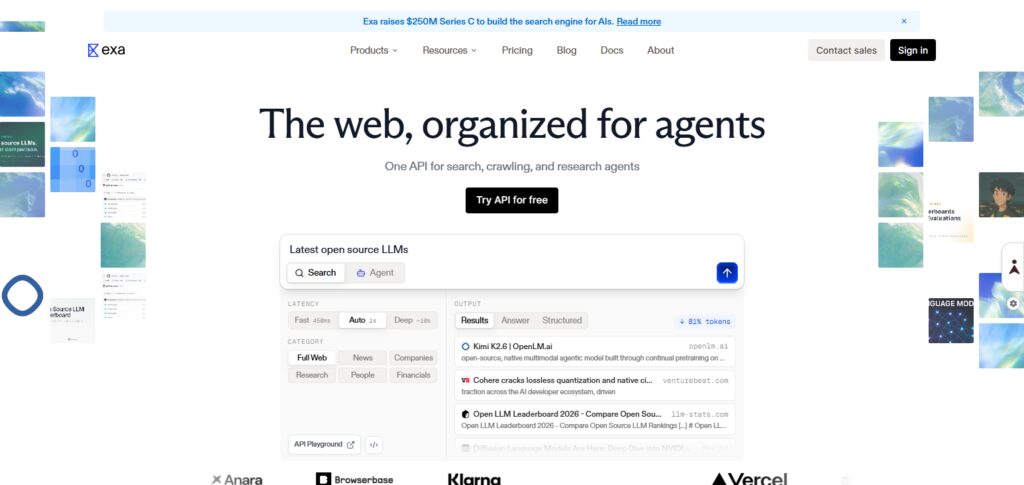
In the field of Best AI Search Engines Competing With Google Search, Exa demonstrates its strength in providing deep information extraction with API connectors for AI and advanced applications and services.
Key Features
- Based on meaning
- API availability
- Retrieval
- Newer AI techniques for indexing
- Enhanced
Best For
- Developers
- Specialized enterprise applications
- Advanced research
- Data-intensive tasks
Importance of real-time, conversational, and citation-based search in 2026
Faster Access to Accurate Information
With real-time search systems, users can receive up-to-the-second answers without a trip to sites. This is essential for 2026, where information rapidly changes in sectors such as news, finance, supplies, and tech. The time spent conducting research and overall productivity are going to improve drastically.
Move from Links to Answers
Having to review sites for answers is because of traditional search engines, unlike conversational AI search, which provides direct, summarized answers. This is going to help users with information overload and also help with efficiency in searches as well as assist with complex queries.
Elevated User Experience with Conversation
With a search system that is conversational, there is the ability to ask follow-up questions. This is almost natural with the interaction akin to speaking to a human. Assistant. This system is going to be a great improvement over traditional keyword search.
Growing Trust via Citation Focused Results
When search systems are citation-focused, all answers are backed by sources. Because the information is verifiable, it all but guarantees trust and lowers the spread of misinformation.
Improved Decision-Making for Users
With real-time and cited data, users can make quick and informed choices in business, education, and investing. This is a system that is quick to provide answers but improves the overall trust as data provides answers are cited.
Improved SEO and Content Discovery
With the ranking systems of 2026, search systems provide results based on their meaning and context rather than key phrases. Because of this, a good majority of the spam results are filtered out.
Foundation for AI-Powered Digital Ecosystem
Conversational search with a rich citation and instantaneous response time is revolutionizing AI foundations. It enables the development of AI agents and automation tools with advanced capabilities such as task execution and reasoning.
Conclusion
As of 2026, search systems undergo real-time, conversation-based, citation-oriented systems. The era of search engines that offer endless links has passed. In a bid for efficiency, modern search engines provide answers that are instant, contextual, and perpetually updated. Users experience a drastic shift as the time spent on search diminishes and the need to sift through information is eliminated.
Citation results output a degree of confidence for a user to verify the answer, which is needed as the problem of ‘fake news’ grows. The introduction of real-time citation in AI search is not a new version of Google. Instead, it has shifted the focus of what a search system should be. From intelligence, transparency, and most importantly, user-oriented systems.
FAQ
What is real-time AI search?
Real-time AI search refers to systems that fetch and process live web data instantly to provide updated answers. Unlike traditional search engines, it reduces delay by summarizing fresh information directly in response.
How does conversational search work?
Conversational search allows users to interact with a search engine using natural language. Instead of typing keywords, users can ask questions and follow up like a chat, making the experience more intuitive and interactive.
Why are citation-based search results important?
Citation-based search improves transparency by showing the sources behind each answer. This helps users verify facts easily and increases trust in AI-generated responses.
How is AI search different from Google Search?
AI search focuses on providing direct answers and summaries, while traditional Google Search mainly displays a list of links. AI systems are designed to reduce time spent clicking and reading multiple pages.
What are the benefits of AI-powered search engines in 2026?
They offer faster results, better context understanding, real-time updates, and improved user experience through conversational interaction and verified citations.