The increase of DePIN monetization apps foreshadows the possibility of converting our individual efforts of machine use, time, and data into value for ourselves. We are provided with the opportunity to invest in the infrastructure of decentralized services. We can offer the use of our GPU’s, solar resources, dashcams, and more.
We as a community, are funding a service that tracks how each and every one of us is fairly compensated for what we have offered. We are redefining the way we view earnings, ownership, and creativity for the better. It means so much to know how our efforts can shift the way we think about earnings and ownership.
What Are DePIN Monetization Apps?
Dpin monetization apps use blockchains to help individuals and enterprises monetize their real-world assets with storage, compute, wireless coverage, AI, mapping, energy, and data services. DePIN monetization apps incentivize participants to offer resources in the form of GPUs, bandwidth, and even data collected by solar panels or vehicles.
This monetization and asset distribution apps makes everyday items building blocks for infrastructure by creating democratized ownership of marketplaces and community controlled ecosystems of highly scalable networks.

Key Factors to Evaluate DePIN Monetization Apps
Revenue Transparency: When developing a monetization app, users must verify if the app provides actual on chain revenue rather than potential rewards. Users must understand the sustainability of monetization.
Blockchain Network: When building an app, consideration must be given to the blockchain that will be used. Factors that must be considered when selecting a blockchain include the performance and adoption of the selected blockchain as well as its ecosystem and transaction cost.
Infrastructure Category: When building an app, consideration must be given to the infrastructure on which the app will be built. Each category of the app infrastructure has a unique cycle of demand and monetization.
Target Users: User demand is the most important factor in building an app. Users will determine how fast the app will be adopted and how much revenue will be generated.
Hardware Requirements: When building an app, the hardware required to participate must be considered. When an app requires hardware, the cost of the hardware may determine how many users participate.
Tokenomics Model: The tokenomics of an app should be evaluated considering supply and rewards.
Enterprise Adoption: Evaluate if the app is adopted by real enterprises. Enterprise adoption indicates that the app will yield real world revenue.
Key Points
| Project | Category | Key Monetization Point |
|---|---|---|
| Bittensor | AI Subnets | $43M Q1 2026 verified revenue from AI subnet compute fees. |
| Render | GPU Rendering | Monetizes GPU cycles for decentralized rendering; projected $4.3M revenue from Salad subnet integration. |
| Filecoin | Decentralized Storage | Paid AI storage deals via Onchain Cloud; ~36% utilization of storage capacity. |
| Akash | Cloud Compute | $5M Q1 2026 compute spend; decentralized cloud marketplace for developers. |
| Helium | Decentralized Connectivity | $11M annualized subscriber revenue from Helium Mobile MVNO model. |
| Hivemapper | Mapping & Mobility | Monetizes driver dashcam data; enterprise client Volkswagen ADMT for autonomous vehicles. |
| WeatherXM | Weather Data | Community weather stations monetized via token rewards and enterprise API subscriptions. |
| GEODNET | Geospatial Intelligence | Monetizes GNSS data for precision mapping and autonomous navigation. |
| Arkreen | Energy Grid | Rewards households for solar/battery contributions to decentralized virtual power plants. |
| DIMO | Vehicle Data | Monetizes connected car data streams for insurance, fleet management, and smart mobility. |
1. Bittensor (TAO)
Bittensor wants to help developers and businesses profit from their AI models by offering compute power and intelligence to subnets. It was launched in 2021, and runs its own Substrate based blockchain. Bittensor is a model similar to Bitcoin with a limited supply to ensure scarcity for long term value.

Bittensor targets AI startups, data scientists, and businesses with a need for scalable ML. The target demographic also includes enterprises and businesses with scalable ML needs. While storage space is low, compute power for the subnets is high, with 256+ active subnets and an estimated quarterly revenue of $43 million.
Features:
- 256+ Active AI Subnets
- AI Compute Based on the Substrate Framework
- Capped Supply Bitcoin Style Tokenomics
- P2P AI Marketplace
- Verified $43 Million Quarterly Revenue
Pros:
- Excellent Revenue Growth
- Knowledge Exchange of Decentralized AI
- Scarcity Retains Value
- Rapid Subnet Growth
Cons:
- Challenging Governance Structures
- High Barriers to Dev Participation
- Volatility on the Token
- Quality Assurance Issues
2. Render (RNDR)
Render was launched in 2017 and runs its blockchain on the Ethereum and Solana networks with a focus on GPU Rendering. Render Network allows unused GPU cycles to be monetized by artists, studios, VFX, and other AI and metaverse creators. Render uses burn-mint equilibrium tokenomics where supply and demand of RNDR tokens get balanced by rewarding users with GPU cycles.
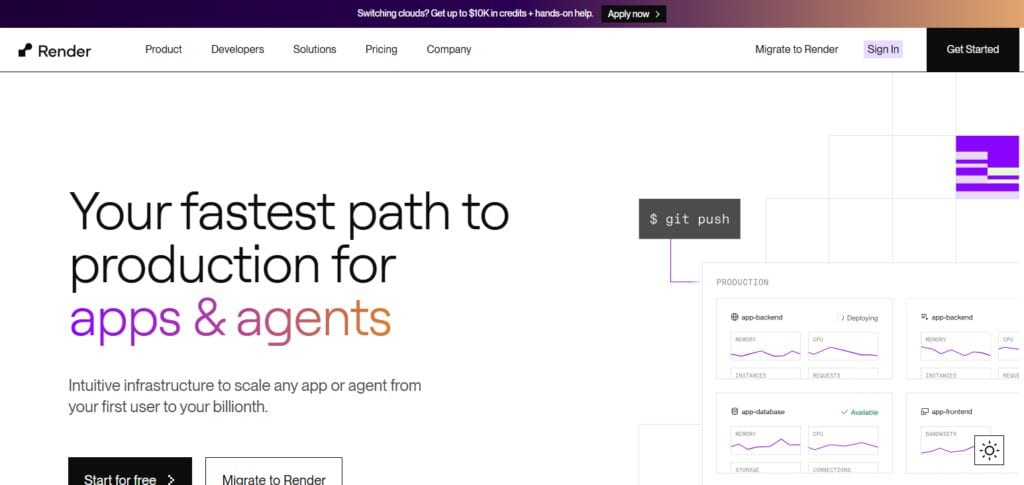
Render’s focus to monetize its service is by allowing decentralized rendering jobs and users paying for GPU time rather than using a centralized cloud service. Render implements an initiative with Salad and notes that it could make $4.3 million in revenue by 2026 and focus on making itself a primary service for visual computing and AI rendering.
Features:
- Integration of Solana and Ethereum
- GPU Rendering Marketplace
- Tokenomics of Burn-Mint Equilibrium
- Processed Millions of Frames
- Salad Subnet Integration
Pros:
- Economical GPU Rentals
- Excellent Adoption in VFX/AI
- Tokenomics Balance Supply
- Growing Use Cases in the Enterprise
Cons:
- Low Enterprise Use
- Relatively Low ($4.3 Million) Expected Revenues
- Dependency on GPU Supply
- Competition from Akash and Centralized Clouds
3. Filecoin (FIL)
In 2020, Filecoin established its blockchain and storage network using IPFS technology. It allows users to store data (even verifiable data) for money. Filecoin’s Storage Marketplace serves developers in web3, AI companies, and enterprise customers providing data backups. Storage makes up about 36% of Filecoin’s network and is Filecoin’s primary market.
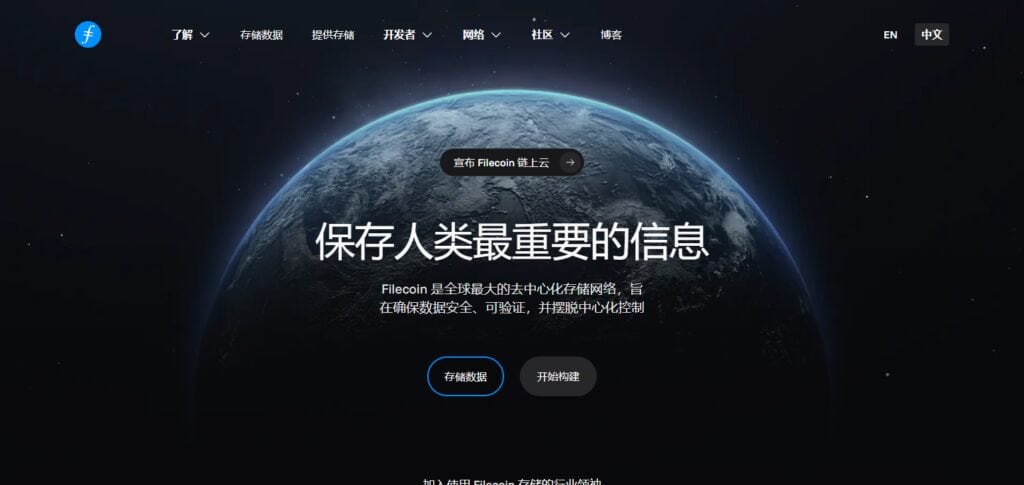
Filecoin’s Proof-of-Storage model verifies data integrity and rewards Storage Miners with FIL. Filecoin has struck deals that incentivize enterprise customers to store AI datasets and backups in the Filecoin network via various decentralized nodes.
Filecoin aims to be the expandable, affordable, and censorship-resistant storage solution for consumers and enterprises across the globe. With a $795M valuation, Filecoin is one of the largest DePin (Decentralized P2P Infrastructure) projects.
Features:
- IPFS Based Blockchain
- Storage Powered By Proof of Stake
- 36% Utilization of Storage Capacity
- Enterprise Adoption Through Onchain Cloud
- Approx. $795 Million Market Cap
Pros:
- The Dominant Decentralized Storage Network
- Verifiable and Censorship Resistant Storage
- Good Enterprise Adoption
- Large Integrated Ecosystem
Cons:
- Costs of Storage Are Cyclical
- Arweave and Centralized Clouds Competition
- Not User Friendly
- Risk of Token Inflation
4. Akash (AKT)
The 2020 launch for the Akash Network built on Cosmos SDK establishes the first Decentralized Cloud Compute Infrastructure. The network allows users to rent out their unused CPU/GPU resources, and allows developers and enterprises to monetize them. Target users include AI startups and blockchain developers.
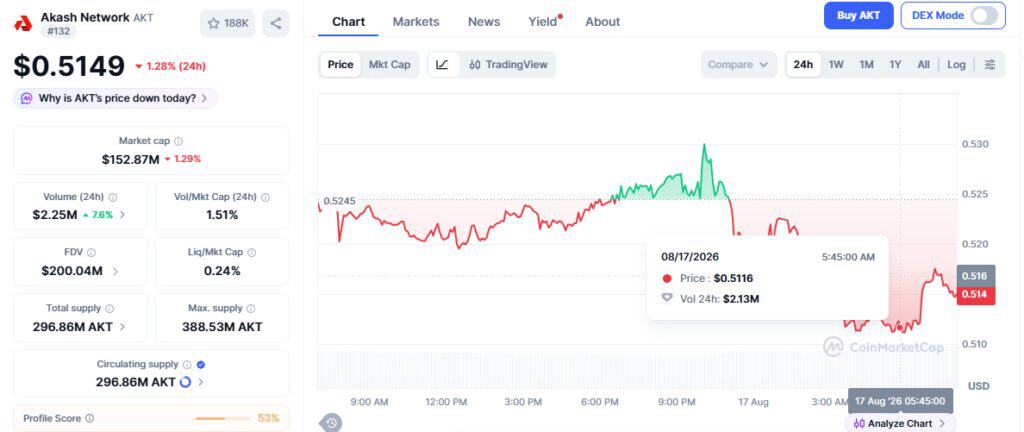
Compute is the primary focus of the Akash Network, with $5M expected to be spent during Q1 2026 on the compute service. Akash pricing is market driven, and providers are rewarded with AKT tokens.
Compute services include AI training, enterprise cloud, and decentralized applications. Akash is building the compute backbone for the growing AI economy at a lower cost than competitors, like AWS and Google Cloud, with a focus on resisting censorship.
Features:
- Cosmos SDK Based Blockchain
- Decentralized Cloud Based Marketplace
- $5 Million of Computing Spent in Q1 2026
- User Friendly Flexible Pricing
- Adoption by AI Startups
Pros:
- Competitive Pricing against AWS/GCP
- Open Marketplace Pricing
- Excellent AI Startup Adoption
Cons:
- Early adopter stage
- Trust with businesses is still limited
- Token use drives demand
- Legal uncertainty
5. Helium (HNT)
Focused on Wireless and IoT Infrastructure, Helium launched in 2019 on the public blockchain. It moved to Solana in 2023. Helium Mobile easily monetizes telecom services and enables mobile subscribers, operators of IoT devices, and enterprises to purchase decentralized connectivity. The primary focus is on wireless coverage and has 600K+ mobile sign-ups. Storage is not a concern, and Helium Mobile participates in a MVNO model.
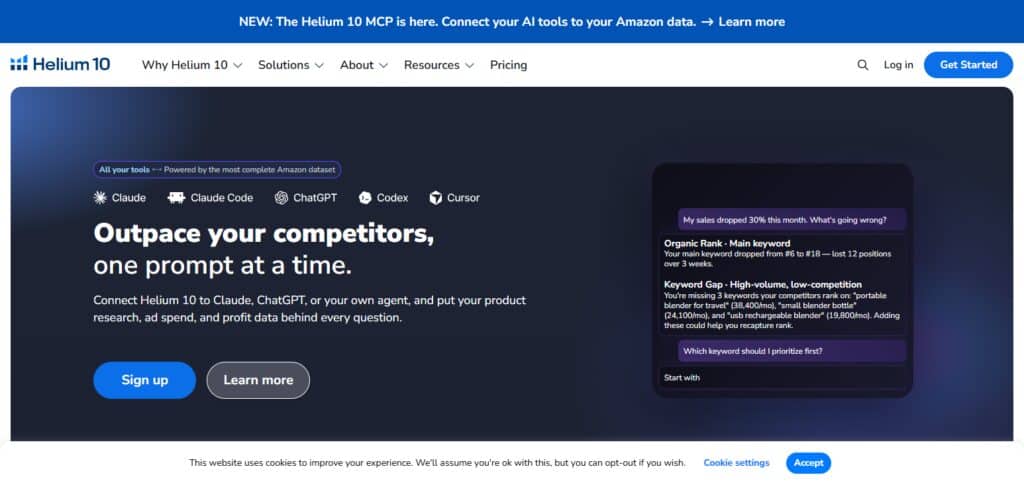
Participants earn HNT. Tokenomics sets aside HNT to TVL burn fees. The primary source of revenue is subscriber fees which projects $11 million in annual subscription revenue. This sustainable cashflow is a positive sign and counter to the speculation in the reward market. Helium Mobile is a cover provider for mobile and IoT connectivity. It is a community-driven, decentralized alternative to the mobile cover market. Participants are compensated for their contributions.
Features:
- Solana approved blockchain
- Shift to the Helium Mobile MVNO
- Over 600,000 mobile sign-ups
- Burn-fee token system
- Covers IoT and telecom
Pros:
- Successful shift to mobile
- Over $11M in annual recurring revenue from subscribers
- Inexpensive wireless services
- Community driven coverage
Cons:
- Declining IoT hotspot activity
- Competition with large carriers
- Limited coverage globally
- Regulatory challenges
6. Hivemapper (HONEY)
Hivemapper launched in 2022, and with Solana, provides Decentralized Mapping Infrastructure. Hivemapper offers dashcam data, and in exchange, users receive rewards, while providing data for global mapping. Expected users are logistics firms and developers of autonomous vehicles. Positioned as a data networking service, contributors are compensated with HONEY tokens.

Mapping data for autonomous driving is the primary source of revenue, provided by clients such as Volkswagen ADMT. Map contributors are offered rewards to provide global coverage, thereby providing a decentralized service similar to Google Maps.
Hivemapper has a $11 million market cap that demonstrates the economic reality of community-based mapping. Hivemapper is positioned as a cornerstone of mobility, logistics, and the smart city movement.
Features:
- Solana based blockchain
- Crowdsourced dashcam mapping
- HONEY awarded for mapping
- Enterprise client Volkswagen ADMT
- Approx $11M market cap
Pros:
- Fast, efficient mapping
- Enterprise client in mobility
- Growth through mapping
- Disrupts centralized mapping agencies
Cons:
- Market cap
- Limited enterprise clients
- Dependence on dashcams
- Competition with Google Maps
7. WeatherXM
WeatherXM launched in 2021 on Polygon to provide Decentralized Weather Data Infrastructure. Participants of WeatherXM can build weather stations and monetize the climate data they gather. Farmers, researchers, and private companies with a need for hyper-local forecasts will be the primary users of this service. WeatherXM has a low storage requirement, but a high demand for data transfer. Users are rewarded in WXM tokens.
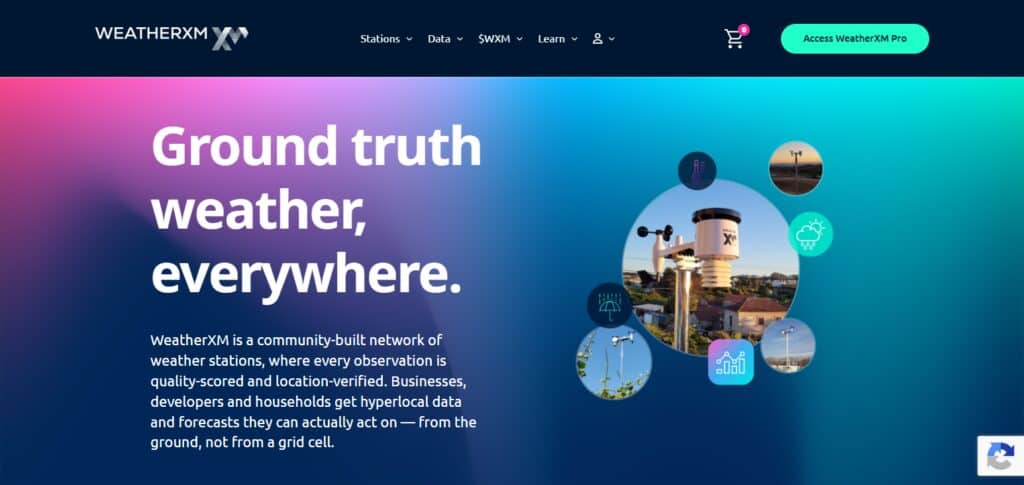
Verifiable weather data will be sold to enterprise clients through an API, which is how WeatherXM intends to generate revenue. WeatherXM takes community-based weather data and infrastructure to serve enterprise-level requirements. Participation is rewarded with tokens and offers on-demand climate data to industries like agriculture, insurance, and environmental monitoring.
Features:
- Blockchain on Polygon
- Weather stations run by the community
- WXM token rewards
- Enterprise API subscriptions
- Hyperlocal weather data
Pros:
- Collecting weather data
- Strong use case for agriculture and insurance
- Token rewards for households
- Enterprise use case through API
Cons:
- Early stage infrastructure
- Dependence on enterprise
- The utility of the token is still undermined
- Centralized weather services
8. GEODNET
GEODNET launched in 2021 on Polygon with Geospatial Intelligence Infrastructure. GEODNET primary focuses on monetizing community-contributed GNSS (Global Navigation Satellite System) data. Primary users of this service will be developers of autonomous vehicles and agriculture and Internet of Things (IoT) technology. Like WeatherXM, GEODNET has a low storage requirement and high data demand.
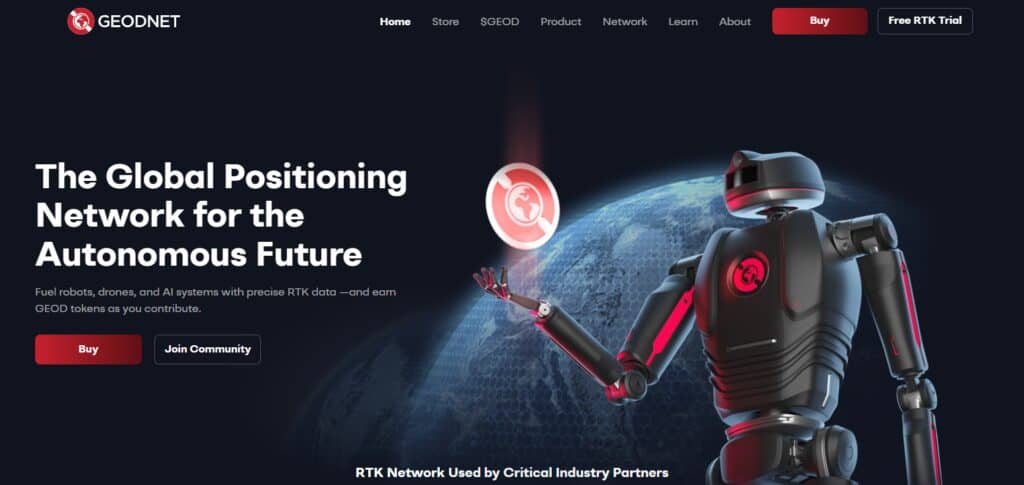
Users are rewarded with GEOD tokens. Like WeatherXM, GEODNET intends to offer GNSS data to enterprise clients for mapping and geospatial analytics with CGNSS data. With its decentralized model, GEODNET aims to provide satellite coverage to a greater area and lessen the market’s reliance on centralized GNSS data.
GEODNET has begun deploying GNSS receivers in households to create a global geospatial data layer that will serve the existing and emerging sectors of the economy like smart farming.
Features:
- Blockchain on Polygon
- GNSS receiver network
- Contributor rewards in GEOD tokens
- Precision mapping for agriculture and logistics
- Growing IoT and satellite coverage
Pros:
- Decentralized GNSS infrastructure
- Enterprise client in autonomous vehicles
- Community driven GNSS coverage
- Incentivized offerings drive coverage
- Precision mapping utility
Cons:
- Early stage revenue
- Limited enterprise traction
- Unproven token utility
- Uncertainty in the regulatory landscape for geospatial data
9. Arkreen
Arkreen offers Decentralized Energy Infrastructure on Polygon and was launched in 2022. Arkreen gives households the option to earn money for their contribution of solar power and batteries to virtual power plants. Omni directed users, such as homeowners, renewable energy providers, and sustainable energy service companies, can support the clean energy economy.
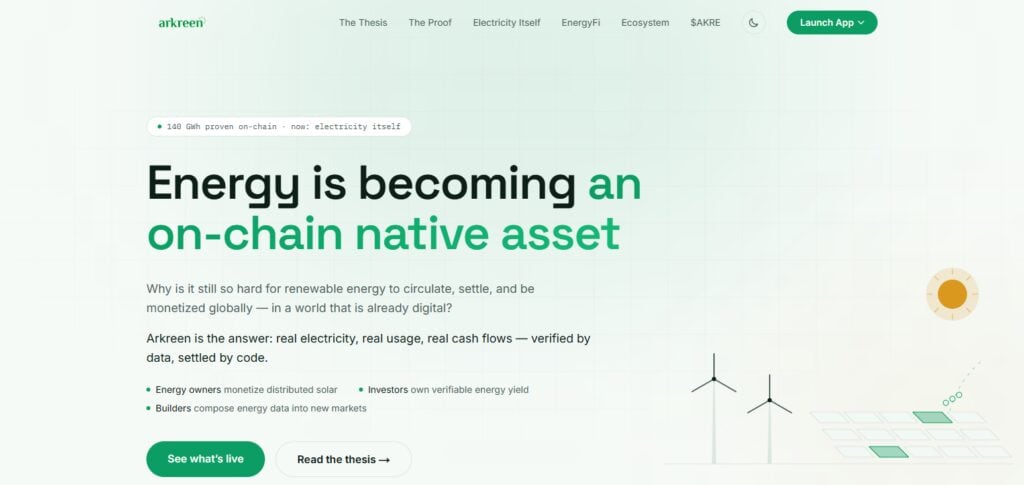
Arkreen uses a centralized architecture for storage of clean energy data and grid compute. Mirroring energy commodity markets that reward clean energy trade, contributors to Arkreen are rewarded clean energy company service tokens (ARK).
Monetization stems from grid balancing and partnerships with enterprises, in which clean energy is tokenized and traded. Arkreen’s model allows individuals to actively participate in communities of Decentralized Grid. As a reward for helping to sustain clean energy markets, households are incentivized to view renewable energy as an economically valuable resource.
Features:
- Polygon‑based blockchain
- Decentralized energy infrastructure
- Household solar/battery monetization
- ARK token rewards
- Grid balancing partnerships
Pros:
- Democratizes renewable energy markets
- Household participation in grids
- Tokenized clean energy trading
- Climate‑focused infrastructure adoption
Cons:
- Early‑stage adoption
- Cycle dependence on renewable demand
- Token utility not fully built
- Regulatory barriers in energy markets
10. DIMO
DIMO was launched in 2021 and provides Vehicle Data Infrastructure on Polygon. Similar to Arkreen, DIMO rewards contributors that provide connected car data. Insurance Companies, Fleet Managers and smart mobility enterprises comprise the user base. Data storage demand is of moderate concern, as is data network centralized demand. Contributors are rewarded DIMO tokens.
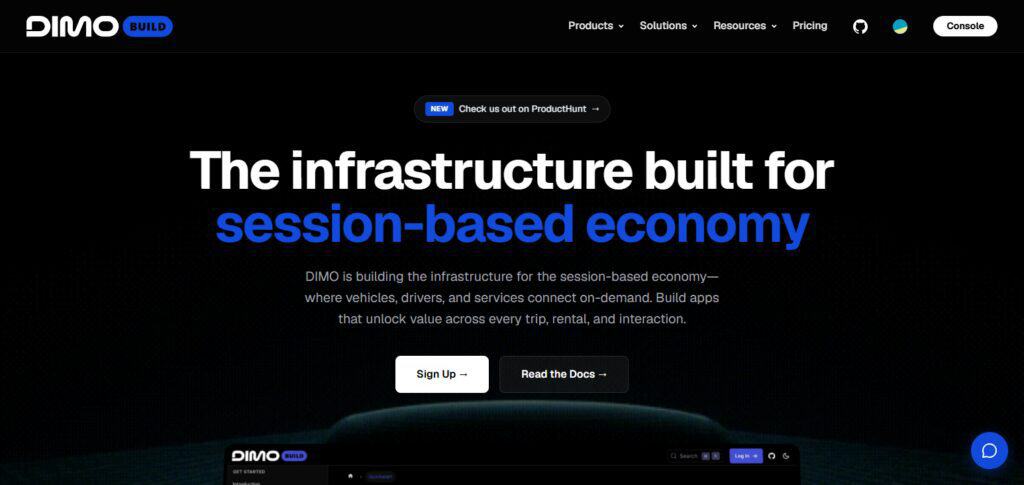
DIMO’s model offers connected car data owners and providers the opportunity to control and monetize their data, thus creating data ecosystems of connected vehicles. By creating incentive, DIMO builds a global passenger vehicle data infrastructure, becoming a foundational element required by insurance, logistics, and the Internet of Things for smart cities and transportation.
Features:
- Polygon‑based blockchain
- Vehicle data monetization
- Contributor rewards in DIMO tokens
- Enterprise clients in insurance/fleet
- Global vehicle data network
Pros:
- Empowers drivers to own data
- Valuable in insurance/logistics
- Transparency in automotive ecosystem
- Increasing enterprise adoption
Cons:
- Early‑stage infrastructure
- Dependent on enterprise demand
- Token volatility
- Threat from centralized automotive data
DePIN Monetization Apps vs Traditional Passive Income
| Factor | DePIN Monetization Apps | Traditional Passive Income |
|---|---|---|
| Infrastructure Source | Real‑world assets like compute, storage, wireless, energy, and data contributed via blockchain. | Financial assets like stocks, bonds, rental property, or savings accounts. |
| Revenue Model | Token rewards tied to usage, enterprise adoption, and network demand. | Cash dividends, rental income, interest payments, or royalties. |
| Accessibility | Low entry barrier; individuals can join with devices (dashcams, GPUs, solar panels). | Often requires significant upfront capital or ownership of assets. |
| Transparency | On‑chain verifiable revenue and token distribution. | Off‑chain, dependent on financial institutions or property managers. |
| Scalability | Global, community‑driven networks expanding rapidly with user participation. | Limited by geography, regulation, and asset management capacity. |
| Risk Profile | Token volatility, adoption uncertainty, and regulatory risks. | Market fluctuations, tenant defaults, or interest rate changes. |
| Ownership | Contributors directly own and monetize their infrastructure/data. | Ownership tied to financial instruments or physical property. |
Conclusion
DePIN monetization apps bring major changes to the way people and businesses earn money through passive income using decentralized technologies. Traditional models are based on financial assets. DePIN allows users to earn tokens in return for their resources, such as computing, storage, wireless, mapping, energy, and vehicle data. These models are proved to generate revenue.
Bittensor, Render, Filecoin, Akash, and Helium are a few examples. More community adoption relies on Hivemapper, WeatherXM, GEODNET, Arkreen, and DIMO. They lack revenue generation. The strongest features of DePIN are its transparency and ease of scaling.
While some risks come with DePIN, such as token price volatility and evolving regulations, DePIN is still a first of its kind and is well positioned to grow the digital economy by combining the traditional economy.
FAQ
What are DePIN monetization apps?
DePIN apps are decentralized platforms that let individuals and enterprises earn tokens by contributing infrastructure like compute, storage, wireless coverage, mapping, energy, or vehicle data.
How do DePIN apps generate revenue?
Revenue comes from enterprise adoption, token rewards, and usage fees. For example, Bittensor earns from AI compute, Filecoin from storage, and Helium from mobile subscribers.
Which are the top DePIN apps in 2026?
Leading projects include Bittensor, Render, Filecoin, Akash, Helium, Hivemapper, WeatherXM, GEODNET, Arkreen, and DIMO. Each focuses on a unique infrastructure category.
What makes DePIN different from traditional passive income?
Unlike traditional models tied to financial assets, DePIN monetizes real‑world infrastructure via blockchain, offering transparency, scalability, and community ownership.
Who can participate in DePIN apps?
Anyone with resources like GPUs, dashcams, solar panels, or vehicles can join. Enterprises also participate by consuming decentralized services.
What are the risks of DePIN monetization?
Risks include token volatility, regulatory uncertainty, hardware costs, and dependence on enterprise adoption for sustainable revenue.