

By 2026, businesses will rely more on high yield checking accounts to optimize idle cash while keeping liquidity. These accounts combine high APY (1.75-4%) and the potential of cashback offers on company spending with everyday banking. High yield checking accounts let companies develop their reserves while still continuing operations and reducing costs, whereas traditional checking does not.
High yield checking accounts offer digital-first banking on a fee-free basis with FDIC insurance and more flexible spending with cashback offers. They let small businesses, startups, and even freelancers better manage their company funds.
What Are High-Yield Business Checking Accounts?
Their APYs for 1.75%–4.0% make them appealing for businesses with idling cash reserves. Because they enable users to earn interest while carrying out basic banking functions, like making payments and receiving deposits, they combine aspects of a typical checking account and a savings account.
Cashback rewards for debit card spending are added features, although APY is the main profit center. The majority rely on FDIC insurance, though alternatives like Mercury Treasury depend on U.S Treasuries. They are intended for small to medium enterprises and even freelancers looking to optimize their profits without negative effects on ease or accessibility.

Why Businesses Need High-Yield Checking Accounts in 2026?
Idle Cash Growth – Businesses have the opportunity to earn 1.75%-4.0% APY on their cash reserves. This converts idle cash to economic assets. They can keep these funds easily accessible to meet their cash demands and still earn a high return with the convenience of not shifting cash to more risky investments.
Cashback Advantage – Rewards on debit card transactions provide cash back on business expenditures. These rewards provide savings to the business and aid in revenue growth within the business.
Fee-Free Efficiency – By eliminating monthly fees and providing flexible pricing, overhead costs to the business are minimized. Therefore, APY and cashback benefits remain substantial for startups, SMBs and freelancers.
Liquidity + Yield – Similar to savings accounts, high-yield checking accounts provide the owner full liquidity to make payments, fund transfers, and carry out the company’s payroll. At the same time, the account owner earns interest on the cash balance. High-yield checking accounts provide maximum liquidity for cash balance with interest earning capability.
Business Suitability – Businesses that fall in the range of small to medium sized businesses (SMB) and start-ups as well as freelancers have account functionalities that fulfill their business needs. These accounts provide flexibility and scalability depending on the industry.
Security & Trust – Business funds are safe and secure with FDIC insurance or safety that is guaranteed by the Treasury Department.
Competitive Edge – The use of a high-yield checking account by a business improves the cash reserve management and cost center budget management. This improves the business over its competitors.
| Bank/Platform | APY | Requirements | Monthly Fee | FDIC Coverage | Best For |
|---|---|---|---|---|---|
| Mercury Treasury | Up to 4.0% | Sweep idle cash to Treasury | $0 | $5M+ (checking only) | Startups with large reserves |
| Bluevine | Up to 3.0% | $500+ deposits/mo | $0 | $3M | Businesses meeting deposit threshold |
| Grasshopper | 2.25% | None | $0 | $250K+ | Businesses wanting no-strings APY |
| Holdings | 1.75% | None | $0 | $3M | Small businesses + bookkeeping |
| Lili (Savings) | 2.50% | Lili account | $0 (Basic) | $250K | Freelancers (savings, not checking) |
| Relay (Savings) | 1.0%–3.0% | Relay Grow plan | $0–$30 | $3M | Multi-account savings flexibility |
| NorthOne (Savings) | 2.5% | NorthOne account | $0 | $250K | Small businesses |
| NBKC Business Checking | 1.75% | None | $0 | $250K | Free business checking |
| Novo Business Checking | 1.5% | None | $0 | $250K | Accountants & bookkeepers |
| Axos Bank | 1.3% | None | $0 | $250K | Cash deposit-heavy businesses |
1. Mercury Treasury
Mercury Treasury can give its customers 4% APY by investing their cash into short-term U.S. Treasury bonds. This also means there are no distractions like cashback rewards. Mercury Treasury has no monthly fees so the only fee businesses will likely have to manage is liquidity in their Treasury.
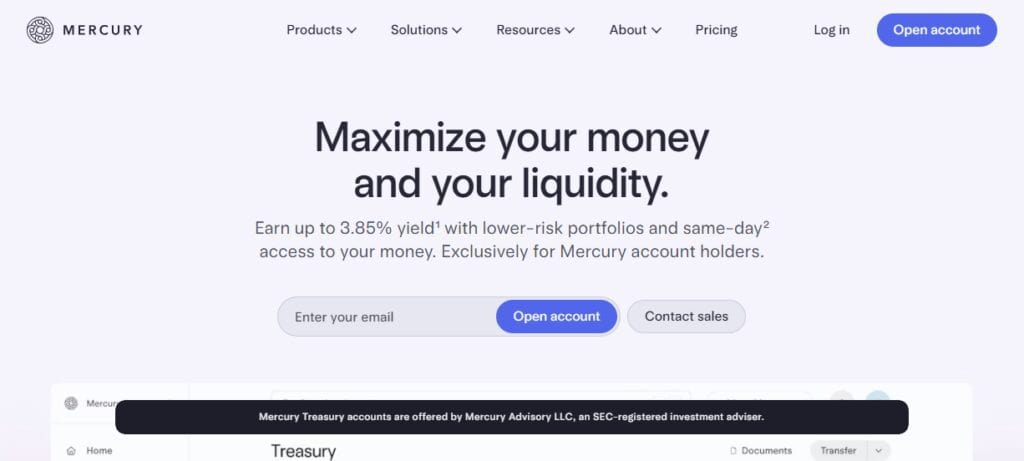
Liquidity in Treasury costs have proven to be good for startups and tech companies with a robust business capital. For other businesses with a few million in cash not in use, this is a good product. Concerns for cash not used being invested into U.S. Treasury bonds should be weighed since the bonds are not protected like cash deposit insurance with FDIC. Trust data have shown a positive trend with startups, but traditional firms may still wait for FDIC protection.
Mercury Treasury
Pricing & Requirements: No monthly fee, no minimum balance, and sweep idle cash into U.S. Treasuries.
Key Features
- Yield up to 4.0% APY on idle cash
- Treasury-backed yield (not FDIC)
- Cash sweeps automated
- Scales for millions
- Designed for startups
Best For:
- Venture-backed startups
- Large tech firms
- Businesses that prioritize cash yield over FDIC protection
- Firms that manage idle cash
2. Bluevine
Bluevine caps their APY at 3% with a limit of a cash balance of $100,000, requiring $500 minimum in deposits or debit card usage each month to gain the APY. Cash back rewards are nonexistent and so is the fee impact due to the complete absence of monthly fees.

Account evaluation suggests Bluevine is a great fit for small to medium-sized businesses with consistent inflows of cash, especially with the FDIC insurance protection offered.
FDIC Insurance is a robust protection offering up to $3 million through partner banks. Traditional firms come up short with this option. The maximum APY is sacrificed for consistent rewards and protection offered by Bluevine.
Bluevine
Pricing & Requirements: No monthly fee and $500+ deposits or debit spend for 3.0% APY.
Key Features
- 3.0% APY on cash
- FDIC coverage of $3M
- No monthly fees
- Using the debit card increases APY
- Digital banking
Best For
- Small and mid sized businesses with consistent cash flow
- Businesses with a digital banking preference
- Firms that need FDIC insurance
- Entrepreneurs that want free checking
3. Grasshopper
Grasshopper’s 2.25% APY with no deposit minimums makes it very accessible for people to open high-yield accounts. The cashback rewards are limited, but the consistency of the APY is strong. The overall effect of the fees is low since there are no monthly fees. Account simplicity scores very high for startups and SMBs.

It’s best for companies that want to earn a yield with no strings. Security is FDIC-insured for up to $250,000, which shows that trust and reliability are key values. Trust data shows that small businesses and freelancers are using this product. Grasshopper’s APY, shown with no strings, is simple, but larger businesses may find the FDIC limits to be a hassle.
Grasshopper
Pricing & Requirements: No monthly fee, no deposit requirement, and 2.25% APY.
Key Features:
- 2.25% APY
- FDIC coverage of $250K
- No monthly fees
- Digital banking
- Yield with no tiers
Best For:
- Freelancers
- Small businesses
- Firms with variable cash flow
- Entrepreneurs that want convenience
4. Holdings
Holdings has a 1.75% APY with no deposit minimums, which makes it a mid-tier yield choice. Cashback rewards are not a focus. The overall effect of fees is low since there are no monthly fees, making it more accessible. Account simplicity scores moderate, appealing to small businesses and startups.
Best for businesses needing bookkeeping and yield integrations. Trust coverage is strong at $3M FDIC. Trust data shows that small businesses are using Holdings. While Holdings balances yield and operational support, the APY is lower than competitors like Bluevine or Mercury.
Holdings
Pricing & Requirements: No monthly fee, no deposit requirement, and 1.75% APY.
Key Features:
- 1.75% APY
- Up to $3 Million in FDIC Insurance
- Bookkeeping tools included
- No fees each month
- Platform centered around digital banking
Best For
- Small business
- Bookkeeping-required startups
- Firms with moderate funds
- Integration-desiring entrepreneurs
5. Lili (Savings)
For savings accounts, Lili has a 2.5% APY that doesn’t carry over to checking balances. They don’t offer cashback rewards. Basic accounts are free, but some tiers can charge fees. Account reviews score higher for freelancers and sole proprietors.
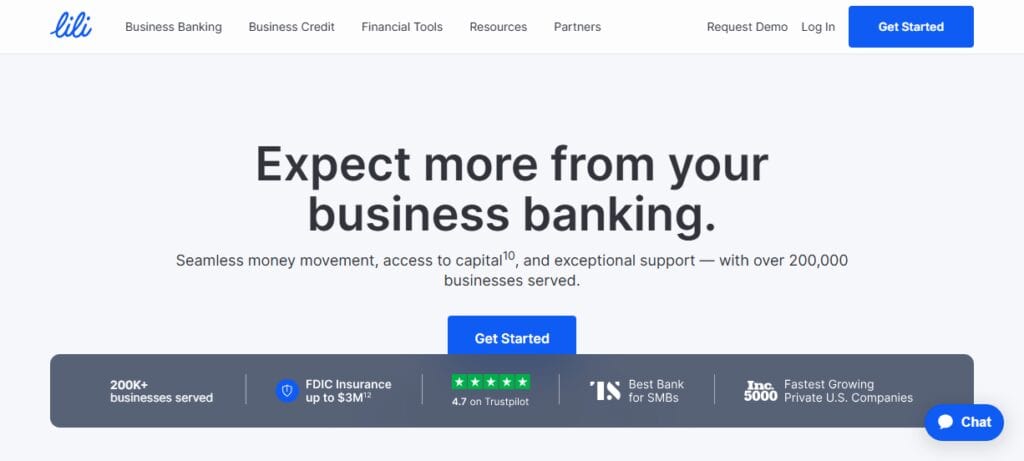
They are best for independent professionals with low balance savings. Trust data shows a high adoption rate for freelancers and gig workers. While Lili’s Savings APY competes well with others, businesses looking for a yield on their checking account balances will likely find better options.
Lili (Savings)
Pricing & Requirements: Fee free (basic) with savings earning interest at 2.5% APY
Key Features:
- Savings tier at 2.5% APY
- Insurance for depositors up to $250,000
- Tools for freelancers
- Fee free (basic)
- Features to optimize your tax
Best For
- Freelancers
- Gig workers
- Sole proprietorships
- Independent professionals
6. Relay (Savings)
Relay offers 1.0%-3.0% APY based on plan selection, with higher yields under Relay Grow. Cashback rewards are not included. Basic accounts are free, with some tiered accounts charged at $30/ month. Account reviews score higher for businesses with multiple accounts and savings needs.
They are best for SMBs with multiple accounts for cash flow segmentation. Strong Trust is established by FDIC insurance coverage of up to $3M. Relay strikes a balance of yield and flexibility with premium accounts and fees, but the net benefit for smaller firms may lessen from the trade-off.
Relay (Savings)
Pricing & Requirements: Basic plan is free, $30 a month for Relay Grow, APY between 1.0% and 3.0%
Key Features:
- Variable savings APY (1.0% to 3.0%)
- FDIC insurance up to $3 million
- Flexibility to create multiple accounts
- APY raised for premium plan
- Digital banking
Best For:
- Small and medium businesses (SMB) with segmented cash flows
- Firms that require multiple accounts
- Businesses that need to manage cash flow reserves
- Entrepreneurs that are scaling their businesses
7. NorthOne (Savings)
NorthOne has a headstart on business checking accounts with innovative savings accounts which earn 2.5% APY. Cash back rewards are currently not offered, but users say the fees are low and transparent. Savings accounts are most frequently recommended for startups and small businesses.
This is largely due to straightforward savings app design. Security is FDIC insured for $250,000 which furthers trust. Trust data shows adoption among small businesses and entrepreneurs. While the savings APY is strong, businesses may prefer Bluevine or Grasshopper for daily checking accounts as they offer income yield.
NorthOne (Savings)
Pricing & Requirements: Clear pricing, savings earn interest at 2.5% APY
Key Features:
- Savings at 2.5% APY
- Insurance for depositors up to $250,000
- Digital banking
- Clear pricing with fees
- Simple to create an account
Best For:
- Small businesses
- Firms that want a digital banking focus with simplicity
- Traditional and digital banking
- No monthly fees
- Reliable customer support
8. NBKC Business Checking
At 1.75%, NBKC offers stable mid tier returns with no minimum balance requirements. Cash back rewards are currently not offered. There are no monthly fees, which leaves a positive account evaluation for cost. This may attract small businesses looking for traditional banking. This is a good option for firms looking for a combination of digital and traditional banking.

FDIC insurance for losses is capped at $250,000, which is the standard, and contributes trust. Trust data shows adoption for small businesses looking for stable banking. While NBKC strikes a good balance between traditional banking and fintech, they offer some of the lowest APY available.
NBKC Business Checking
Pricing & Requirements: $0 monthly, 1.75% APY, No limit
Key Features
- 1.75% APY
- FDIC up to $250K
- No monthly
- No limit
- Digital
Best For:
- Startups
- Growth startups
- Early stage
- Business operations simplification
- Hybrid banking
9. Novo Business Checking
Novo offers 1.5% APY at a minimum balance of $0, which makes it one of the lower options available. Cash back rewards are currently not offered. There are no monthly fees, which leaves a positive account evaluation for cost. Most users of Novo are accountants and bookkeepers. This is a good option for businesses seeking accounting tool integrations.
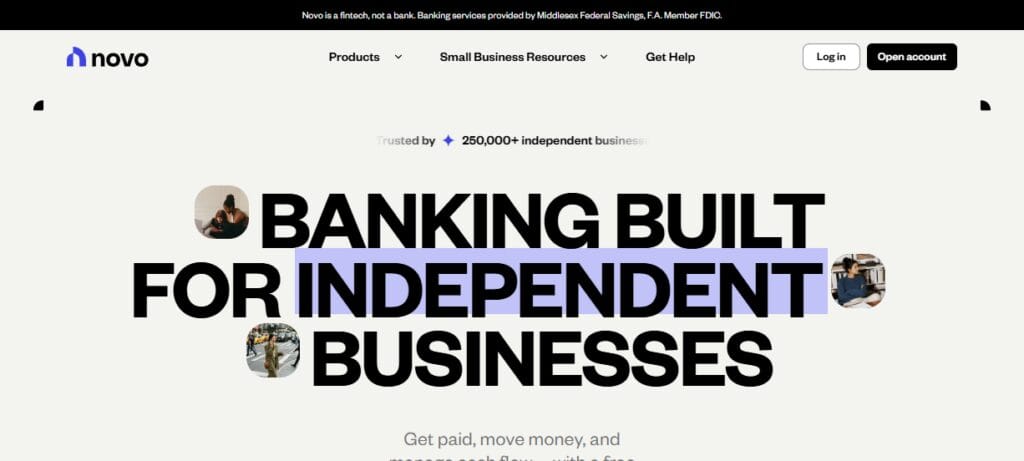
FDIC insurance for losses is capped at $250,000, which is the standard, and contributes trust. Trust data shows adoption among small businesses looking for integrations. While Novo balances yield and operational support, they offer some of the lowest APY among their competitors.
Novo Business Checking
Pricing & Requirements: $0, 1.5% APY, no deposit.
Key Features
- 1.5% APY
- Up to $250K FDIC insurance
- Cash management integrations
- No monthly fee
- All-digital banking.
Best For:
- Small businesses
- Accountants
- Cash management firms
- Data driven entrepreneurs.
10. Axos Bank
At 1.3% APY, Axos Bank is at the lower end of Bank options. They do not offer any cash back rewards. However, they do have an excellent pricing model – no monthly fees. These factors contribute to a solid account evaluation score. That makes them a decent choice for companies who need cash transaction accounts.
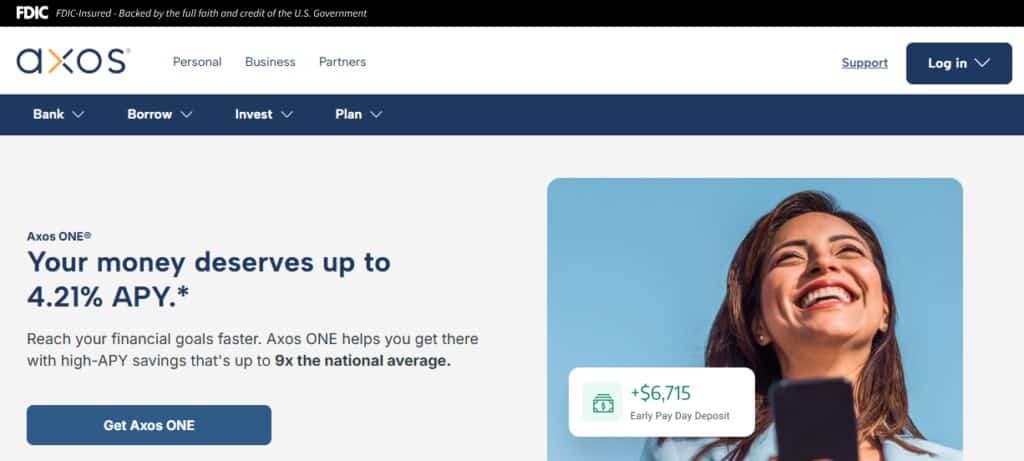
This security is offered by the FDIC and insures up to $250,000. Trust data indicates that they are a good option for Traditional businesses. Axos probably also offers less of a tradeoff between yield and accessibility. However, it is worth noting that competition to Axos, like Bluevine and Mercury, have higher APY.
Axos Bank
Pricing & Requirements: $0, 1.3% APY, no deposit.
Key Features:
- 1.3% APY
- Up to $250K FDIC insurance
- Branch access for cash deposits
- No monthly fees
- The reliability of traditional banking.
Best For:
- Cash heavy businesses
- Traditional firms
- Entrepreneurs needing Branch access
- Stability focused businesses.
How We Selected the Best High-Yield Business Checking Accounts?
APY Strength – To qualify for our list, accounts had to provide high yields in the range of 1.75% to 4.0% APY. These yields ensure a high, double-digit, yield on cash balances, while still providing enough liquidity for daily business cash needs.
Cashback Value – The evaluation of accounts with debit card cashback rewards focused on the balance of APY growth with transaction-based rewards for businesses with high operating cash needs who wanted to maximize rewards for cash-based transactions.
Fee Impact – For all of the accounts, a $0 monthly account fee or transparent pricing was the most preferred. Fee pricing, along with yield, is a key element for small businesses with a limited cash balance.
Requirements Flexibility – For our top accounts, there is little to no balance or transaction minimum requirements, in order to maximize the value of high yield offerings to new and small businesses.
Business Suitability – To ensure high yield offerings were relevant to our target market, we assigned accounts to the appropriate business type – startups, SMBs, freelancers, or cash-intensive businesses.
Security & Trust – The most relevant accounts provided FDIC insurance coverage or safety backed by the U.S. Treasury, to ensure competitive yields and allowing businesses to protect their cash balances.
Account Evaluation Score – To compare all accounts impartially, we created composite scores for APY, fees, rewards, requirements, and trust.
APY vs Cashback: Which Benefit Matters More?
| Factor | APY (Annual Percentage Yield) | Cashback Rewards |
|---|---|---|
| Earning Potential | Compounds over time, grows idle balances automatically | Earned only when spending via card or platform |
| Risk Profile | Low risk, FDIC-insured (except Treasury sweeps) | Depends on spending habits, no growth if unused |
| Business Impact | Best for firms with large reserves or steady balances | Best for firms with high transaction volumes |
| Fee Sensitivity | Minimal fees, APY unaffected by spending | Cashback often tied to card usage or premium tiers |
| Long-Term Value | Builds wealth passively, predictable returns | Variable rewards, higher upside for spend-heavy firms |
| Best For | Startups, SMBs, firms with idle cash | Retail-heavy businesses, high-spend entrepreneurs |
Conclusion
High-yield business checking accounts in 2026 provide liquidity and flexibility with growth through APYs from 1.75% to 4.0%. Unlike traditional business checking accounts, idle funds generate income with reduced opportunity cost. High-yield accounts provide fee-free structures or FDIC insurance as a trust builder while cashback returns build value on transactions.
The benefits of higher APYs for startups, SMBs, freelancers and cash-intensive businesses are apparent across account requirements and security. High-yield accounts build financial efficiency and allow businesses to use resources more effectively, allowing them to lower expenses and use passive income to fund growth, preparing businesses for the competitive market.
FAQ
What are high-yield business checking accounts?
These accounts combine everyday banking with higher APY (1.75%–4.0%), allowing businesses to earn interest on idle cash while maintaining liquidity for transactions.
Which accounts offer the highest APY?
Mercury Treasury (up to 4.0%) and Bluevine (up to 3.0%) lead, though Mercury relies on Treasuries instead of FDIC insurance.
Do these accounts provide cashback rewards?
Some accounts include debit card cashback, but most focus on APY growth. Cashback is best for spend-heavy businesses.
Are there monthly fees?
Most fintech platforms like Bluevine, Grasshopper, and Novo charge $0 monthly fees, while Relay Grow has a $30 premium plan.
Which businesses benefit most?
Startups with reserves, SMBs with steady deposits, freelancers, and cash-heavy firms each benefit differently depending on APY, requirements, and security.